After more than four years of full-scale conflict, Ukraine’s accelerating long-range drone campaign targeting Russian territory is forcing Moscow to shift critical air defense assets to protect high-priority sites, Ukrainian President Volodymyr Zelenskyy announced in his Wednesday evening daily address.
Zelenskyy outlined that Russian military command has repositioned large volumes of air defense missile systems to three core locations: the Russian capital Moscow, the town of Valdai 300 miles northwest of Moscow where President Vladimir Putin maintains an official residence, and the Kerch Strait Bridge — a critical logistical link that connects the illegally annexed Crimean Peninsula to mainland Russia. “In the Moscow region alone, they have amassed hundreds of launchers,” Zelenskyy stated, adding that close to 90 additional launchers have been pulled from other Russian regions and redeployed to Valdai to reinforce defenses there.
This redeployment comes in response to a months-long escalation of Ukraine’s aerial strikes against Russian military infrastructure and energy sites across the country. Kyiv’s successful attacks have already triggered widespread fuel shortages, disrupted Russian army supply chains, slowed Moscow’s forward momentum in the invasion, and left senior Russian leadership unsettled. Recent Ukrainian drone operations have reached as far as Moscow and St. Petersburg, Russia’s second-largest city and Putin’s birthplace, as Kyiv works to cut supply lines to Russian forces occupying Crimea, which Russia illegally seized from Ukraine in 2014. Zelenskyy emphasized that the redistribution of Russian air defenses leaves vast swathes of other Russian territory exposed to future strikes by Ukraine’s modern long-range drones, which now have an operational range of more than 900 miles.
The escalation of Ukraine’s campaign comes as diplomatic efforts remain deadlocked. Zelenskyy noted that the continued Russian military pressure on Ukraine stems from Putin’s refusal to end the war and engage in good-faith negotiations for a just peace. Zelenskyy has already accepted the unconditional ceasefire proposal put forward by U.S. President Donald Trump, but Putin has rejected the offer, leaving a full year of U.S.-led peace talks with no meaningful progress.
In a surprising shift this week, Trump — who has previously been critical of Zelenskyy — praised the Ukrainian leader during a White House appearance Wednesday, calling him “courageous” and saying he is “doing pretty well” leading the war effort. After attending the recent G7 summit, Zelenskyy confirmed he secured pledges of continued Western military and political support, with promised aid set to further bolster Kyiv’s expanding drone campaign. He added that Ukraine’s ongoing operations, including those targeting supply lines to Crimea, are deliberately structured to force Russia to the negotiating table if international partners deliver the agreed-upon support. “We will quickly create conditions in which Russia will be forced to choose peace,” he said, noting that G7 leaders are fully aware of Ukraine’s requirements for this push.
Alongside developments on the strike campaign, Ukraine is closely monitoring potential shifts along its northern border with Belarus, which has long allowed Moscow to use its territory to support the invasion and hosts manufacturing facilities that back Russia’s war effort. Last week, Zelenskyy issued an ultimatum demanding Belarus disable signal repeaters on its territory that Kyiv says were used to guide Russian drone strikes on western Ukraine, threatening military action against the facilities if they remained operational. On Wednesday, Zelenskyy confirmed that Ukrainian intelligence has verified the repeaters have been turned off, but added that “there are many questions regarding Belarus” given its history of enabling Russia’s invasion.
The Washington-based Institute for the Study of War has assessed that Belarusian President Alexander Lukashenko is walking a careful diplomatic line: he continues to delay and push back against growing Kremlin pressure to bring Belarus directly into the war, while maintaining outwardly neutral rhetoric toward Kyiv. In response to ongoing uncertainty, Ukraine has ordered mandatory evacuation for all communities in the Chernihiv border region starting July 1, and Ukrainian Armed Forces Commander General Oleksandr Syrskyi confirmed last week that Kyiv is strengthening northern border defenses, including standing up new dedicated army drone units for the front.
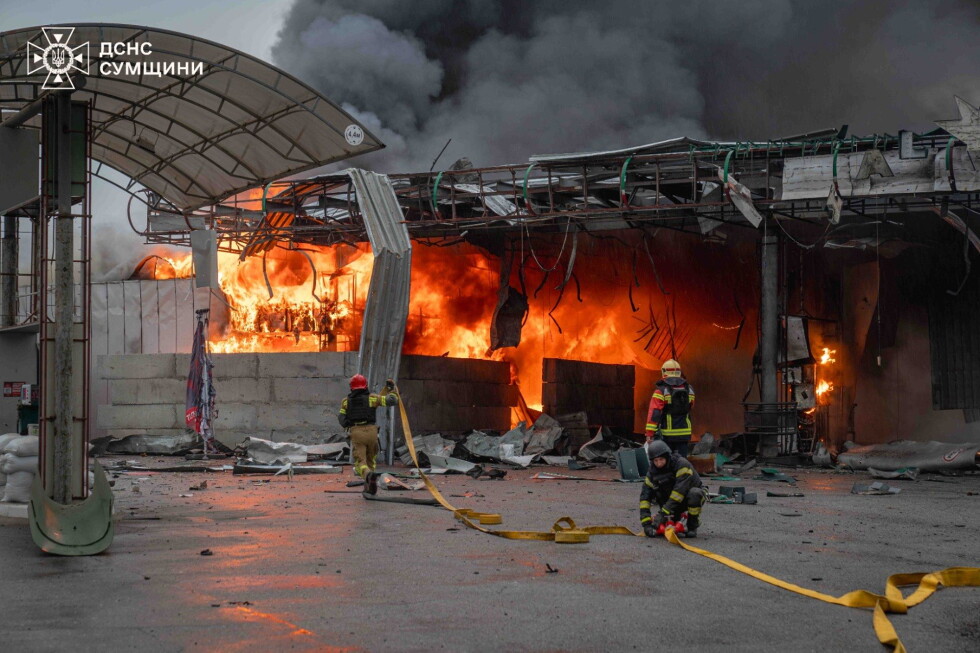
As Ukraine expands its strikes inside Russia, Moscow has continued its own bombardment of Ukrainian civilian and energy infrastructure. Overnight this week, Russia launched one ballistic missile and 90 long-range attack drones across Ukraine, Ukrainian air force officials confirmed. A drone strike on a civilian gas station in the northeastern Sumy region Thursday morning left four people injured, including two station employees, according to regional governor Oleh Hryhorov, who noted that Russian forces have targeted Sumy’s gas infrastructure 13 times in June alone. A separate overnight strike on a gas station in the southern city of Zaporizhzhia left one woman injured and damaged the facility, regional governor Ivan Fedorov reported.
For its part, Russia’s Defense Ministry stated that its air defense systems intercepted and downed 269 Ukrainian drones between late Wednesday and early Thursday, and multiple major Russian airports issued temporary flight restrictions overnight amid reported drone incursions.