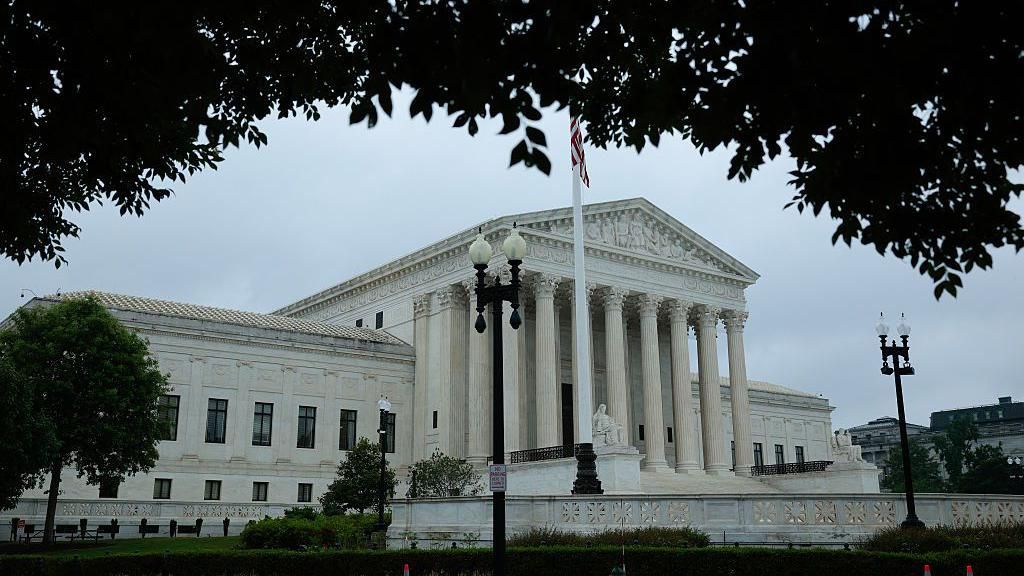
In a decision that marks another major win for gun rights advocates across the United States, the U.S. Supreme Court has invalidated a longstanding Hawaii regulation that prohibited permit-holding gun owners from bringing concealed handguns onto privately owned land open to the general public. The 6-3 ruling, issued Thursday, aligned the court’s conservative majority with gun owners who argued that the geographic restriction on legal firearm carry violated the Second Amendment’s protection of the right to keep and bear arms.
Writing for the majority, conservative Justice Samuel Alito rejected the lower court’s reasoning that Hawaii had the authority to ban concealed-carry permit holders from entering common public-facing private spaces including shopping malls and dine-in restaurants unless they obtained explicit permission from the property owner. Alito emphasized that the regulation placed unreasonable, crippling limits on law-abiding Hawaii residents who had already completed the state’s strict screening and qualification requirements to receive a carry permit. “This regime hobbles what the Second Amendment protects: the right of Americans to carry arms for self-defense as they go about their daily lives,” Alito wrote in the opinion, concluding that “we hold that the law is unconstitutional.”
Critically, the court’s ruling only overturns the broad private property carry ban. It leaves intact all of Hawaii’s other existing gun restrictions, including prohibitions on carrying firearms in sensitive locations such as schools, government buildings, bars, public beaches, and public parks, according to reporting from CBS News, a media partner on the case’s coverage.
The legal challenge originated in 2023, when three Hawaii residents and the Hawaii Firearms Coalition filed suit against the regulation, arguing it violated Second Amendment rights. A federal district court initially ruled in the challengers’ favor, finding the rule most likely contravened the constitutional right to bear arms. But Hawaii state officials appealed the ruling, and the U.S. Court of Appeals for the Ninth Circuit later upheld the challenged law, setting the stage for the Supreme Court to take up the appeal.
The Hawaii regulation, often derisively called the “vampire rule” by gun rights supporters, required permit holders to request explicit permission from every private property owner before entering their land with a firearm. Even a routine stop to refuel a car or pick up groceries at a supermarket could leave a permit holder facing misdemeanor charges, which carried a maximum penalty of up to one year in prison. The former Trump administration threw its support behind the gun owners in the case, echoing arguments that the rule put legally authorized permit holders at unnecessary risk of criminal penalty for ordinary daily activities.
The Supreme Court’s decision is expected to have ripple effects beyond Hawaii, as four other heavily Democratic-leaning states — California, New York, New Jersey, and Maryland — maintain nearly identical restrictions on private property gun carry. Currently, most U.S. states already allow permit holders to carry concealed firearms on publicly accessible private property, so only a small handful of state regulations will be directly affected by this precedent. This ruling marks the second time during the Supreme Court’s current term that the court has ruled in favor of gun rights expansion, building on a series of recent decisions that have rolled back long-standing gun control regulations across the country. The court’s three liberal justices issued a joint dissent opposing the majority’s decision.