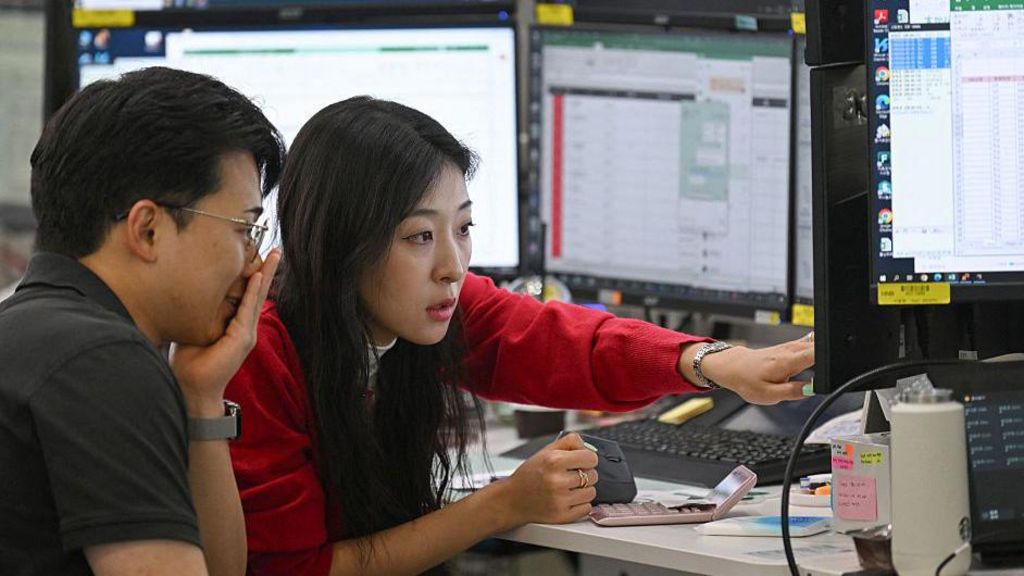
A widespread sell-off across the technology sector dragged Asian stock markets into steep negative territory on Friday, as investors grew increasingly wary that the multi-month rally in tech shares had outpaced realistic fundamentals.
The downturn rippled across the region, starting with severe declines in South Korea’s benchmark Kospi index. An 8% intraday drop triggered the market’s automatic circuit breaker mechanism, designed to stem panic-driven trading, halting all transactions for 20 minutes. By the closing bell, the index had settled 5.8% down. This marked the third time this week alone the circuit breaker has been activated, and the fifth such event in 2026, highlighting the extreme volatility that has gripped South Korean equity markets in recent months.
Friday’s sell-off followed sharp declines in major U.S. tech stocks the previous session. Apple saw its share price plummet 6% on Thursday — its largest single-day drop in over 12 months — after the company announced it would hike prices for its iPad and MacBook product lines to offset skyrocketing computer chip manufacturing costs. Microsoft also recorded losses after it revealed price increases for its Xbox gaming consoles, blaming elevated component costs. These moves stoked broader market fears that rising input costs will dampen consumer demand for tech devices, which could in turn cool demand for semiconductors, undoing much of the recent growth the chip sector has enjoyed amid the AI boom.
Japan’s Nikkei 225 was not spared from the downturn, closing 4% lower, led by a 12.5% plunge in shares of SoftBank, the Japanese investment giant that has positioned itself as a leading backer of AI startups and infrastructure. Major regional benchmarks in Taiwan and mainland China also posted double-digit percentage declines for the session, deepening the regional market rout.
Market analysts point to two core drivers of the correction: escalating input costs across the tech sector and growing skepticism over lofty valuations for AI-focused companies. David Makaryan, senior partner at global investment firm Alpha Pacific Group, noted that many traders are moving to lock in profits after months of steady gains, while the broader market is reassessing how much growth AI investment will actually deliver. “The long term investment case for AI remains compelling, but investors are becoming far more selective about which companies can justify the valuations the market has assigned to them,” Makaryan explained.
Concerns are also growing over the hundreds of billions of dollars that large tech firms have earmarked for AI infrastructure buildout this year. Raymond Woo, an analyst with Kyoto University Innovation Capital, pointed out that the steep costs of commercializing new AI tools are already being passed downstream to consumers. This dynamic “naturally raises questions” about whether consumer demand will scale fast enough to match the massive current investment in AI, and whether current tech stock valuations are rooted in realistic growth projections, Woo said.