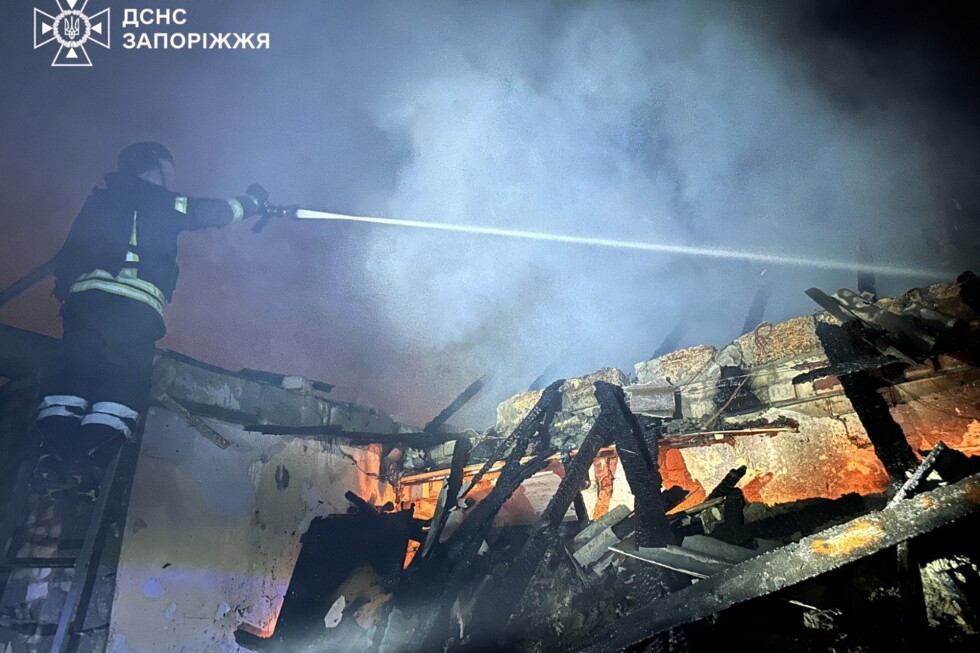
In one of the most significant escalations of cross-border drone strikes since Russia launched its full-scale invasion of Ukraine in February 2022, Ukrainian forces launched a massive overnight drone attack targeting 12 Russian regions, the Russia-held Crimean Peninsula, and adjacent Black and Azov Sea areas, Russia’s Defense Ministry confirmed Friday.
Russian air defense systems successfully intercepted 660 Ukrainian unmanned aerial vehicles in the assault, marking a clear jump from the previous record for a single Ukrainian drone attack in the past year: the 556-drone strike carried out on May 17. The scale of the operation underscores Ukraine’s accelerating campaign to strike deep behind Russian front lines in a bid to turn the tide of the grinding war of attrition that has defined much of the conflict.
For months, Ukraine’s long-range drone campaign has targeted key Russian infrastructure, including oil production facilities and energy networks deep inside Russian territory. Western defense officials and independent analysts note that this sustained pressure has disrupted Russian fuel logistics and military supply chains, slowed Russian territorial advances on the battlefield, and increased political pressure on Russian President Vladimir Putin.
In the hours leading up to the large-scale strike, Ukrainian President Volodymyr Zelenskyy announced on social platform X that he had ordered a 40-day intensification of offensive operations. The operation, Zelenskyy said, is intended to “compel Russia to end the war” after 12 months of U.S.-led peace diplomacy failed to produce any breakthrough toward a negotiated settlement. News of the successful strikes, which reached targets as far north as Moscow and St. Petersburg, has lifted morale across Ukrainian military and political circles.
Zelenskyy also confirmed that he secured new pledges of foreign military support during his recent appearance at the G7 summit, including commitments from U.S. leadership. The Ukrainian leader stated that this promised assistance will enable Kyiv to further scale up its pressure campaign to push Russia to the negotiating table. A NATO summit scheduled for next month is widely expected to bring additional commitments of military support for Ukraine’s defense efforts.
As initial reports of damage emerged from across Russia, official statements from Russian authorities have remained limited, in line with past practice of withholding details of targeted sites and the extent of destruction from Ukraine’s drone strikes. The first confirmed damage report came from Tula Governor Dmitry Milyaev, who said that a private home was damaged in the region south of Moscow, one civilian woman was wounded, and a power line and an unspecified industrial facility in the city of Novomoskovsk sustained damage. Independent Russian outlet Astra reported that the damaged industrial site is a local chemical plant, which caught fire after the strike, alongside a nearby hydroelectric plant. The Associated Press was unable to independently verify the unconfirmed claims, and no official confirmation of the chemical plant attack has been issued by Russian authorities. Moscow Mayor Sergei Sobyanin confirmed that 47 drones heading toward the Russian capital were downed, with no reported casualties or damage in the city.
In a tit-for-tat escalation following Ukraine’s large-scale drone assault, Russian forces carried out retaliatory attacks across Ukraine over the preceding 24 hours. Overnight, Russian strikes on the northeastern Kharkiv region killed two civilians and wounded seven more, regional governor Oleh Syniehubov announced Friday. Russian forces used guided aerial bombs and a fleet of drones to strike the city of Kharkiv and 16 additional settlements across the region, Syniehubov added.
Ukrainian air force officials reported that their air defense systems intercepted 174 out of 189 Russian drones launched in the retaliatory wave, but four out of seven Russian Iskander-M ballistic missiles penetrated Ukrainian defenses to strike multiple unspecified locations. Ukrainian officials confirmed that the Russian strikes caused damage to energy infrastructure, residential buildings, and other civilian sites in Kyiv, the southern Odesa region, and the northeastern Sumy region.
More detailed coverage of the ongoing Russia-Ukraine conflict is available from the Associated Press at https://apnews.com/hub/russia-ukraine.