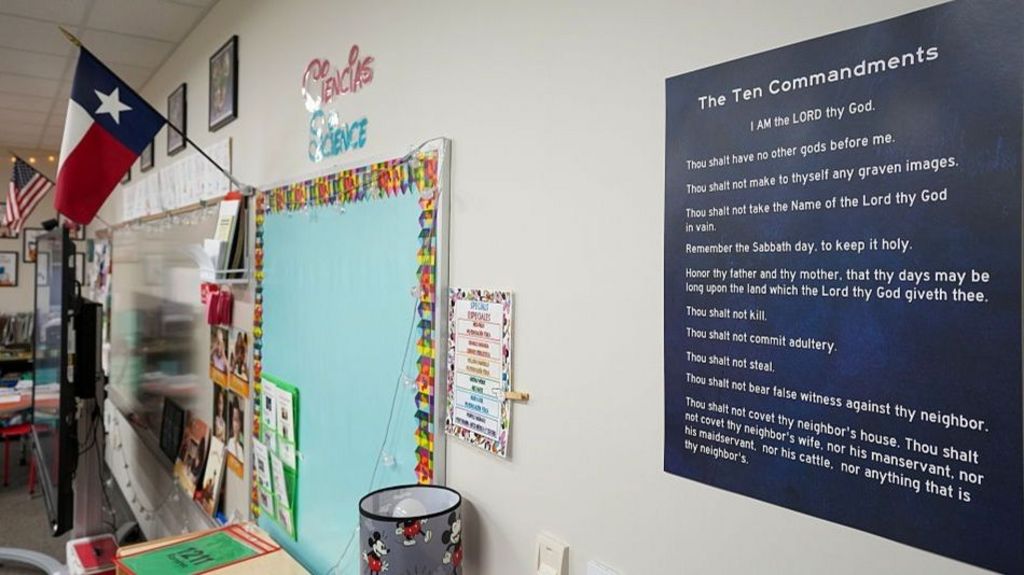
In a decision that has reignited long-simmering tensions over religious influence in American public education, Texas’ Republican-controlled State Board of Education has greenlit a policy that will require all public school students across the state to complete mandatory readings of Bible stories starting in 2030. The measure, which impacts more than 5 million K-12 students in the nation’s second-largest state, includes core biblical passages such as the creation narrative of Adam and Eve and the Book of Exodus’ account of God appearing to Moses through a burning bush. The approved required reading list also incorporates well-known English literary works, including Charles Dickens’ classic novel *Great Expectations*, alongside the religious texts. This new mandate is the latest in a series of conservative education policy shifts in Texas, coming one year after the state made history as the largest U.S. state to mandate that all public school classrooms display a copy of the Ten Commandments, the foundational set of biblical laws central to Judeo-Christian tradition. Critics of the new policy have quickly raised sharp objections, arguing that the mandatory inclusion of Bible stories in public school curricula violates the fundamental constitutional principle of separating church and state, and infringes on the religious freedom rights of students and families from diverse religious and non-religious backgrounds. As the policy will not take effect for another four years, legal challenges and ongoing public debate over the role of religious content in public education are expected to intensify across the state and the country in the coming years.
博客
-

Watch: Native Americans mark 150th anniversary of Little Bighorn victory
Across the rolling plains of southern Montana, where the Little Bighorn River cuts through grasslands steeped in Indigenous history, hundreds of Native American people from dozens of tribes have gathered this week to mark a landmark moment: the 150th anniversary of their ancestors’ decisive 1876 victory over U.S. military forces led by Lt. Col. George Armstrong Custer.
The Battle of the Little Bighorn, fought on June 25 and 26, 1876, emerged from deep-seated tensions over U.S. westward expansion and the displacement of Plains Indigenous nations from their ancestral territories. At the time, the U.S. government was aggressively pushing to seize control of the Black Hills, a region sacred to the Lakota, Cheyenne, and Arapaho peoples, after gold was discovered there. When thousands of Indigenous hunters and families defied government orders to move onto overcrowded, resource-poor reservations, the U.S. military launched a campaign to force them into compliance.
In a remarkable show of intertribal unity, roughly 2,000 Indigenous warriors joined forces to defend their encampment, where more than 10,000 people had gathered for summer hunting and cultural ceremonies. The combined force overwhelmed Custer and his battalion of more than 200 soldiers, killing the commanding officer and every member of his detachment in what remains one of the most lopsided military defeats in U.S. history.
For 150 years, the battle has carried drastically different meanings for different groups. For the United States, it was long framed as a shocking tragedy that galvanized public support for further military action against Plains Indigenous nations, ultimately leading to the end of their independence and confinement to reservations. But for Native Americans, the victory has always stood as a powerful symbol of resistance, sovereignty, and the courage of ancestors who fought to protect their homelands and way of life.
This year’s anniversary events included traditional ceremonies, powwows, storytelling sessions led by tribal elders, and wreath-laying at sites connected to the battle. Many attendees traveled hundreds of miles to take part, passing down stories of the battle to younger generations and reaffirming their connection to the land where the historic clash took place. Speakers at the gathering also highlighted the ongoing fight for Indigenous sovereignty, land back movements, and cultural preservation that continues to shape Native communities today, drawing a direct line from the 1876 resistance to modern advocacy efforts.
-

Pete Buttigieg briefly separated from children after false police report
Pete Buttigieg, the former United States Transportation Secretary and a widely speculated potential 2028 Democratic presidential candidate, has opened up about a traumatic experience that he says counts among the worst moments of his life: a baseless anonymous allegation that forced him to stay separated from his young children overnight.
In a lengthy personal post published on the Substack newsletter platform, Buttigieg detailed how an anonymous tip to authorities claiming he posed a risk to his own children triggered an official investigation that upended his family life. Michigan State Police were required to respond to the report, which involved arranging formal forensic interviews with Buttigieg’s four-year-old twin children. As a standard procedural precaution during the investigation, law enforcement instructed Buttigieg not to be left alone with his children until the interviews were completed, requiring him to spend a full night away from them.
After a full review of the claim, both Michigan State Police and state child protective services concluded the allegation was completely unfounded. Law enforcement officials also shared with Buttigieg that they believe the false claim was politically motivated, a conclusion he echoed in his public account of the incident. When contacted by the BBC, Michigan State Police confirmed their official finding that the anonymous report was false, echoing Buttigieg’s characterization of the ordeal.
Buttigieg, who is married to Chasten Buttigieg and shares the four-year-old twins with him, described the pain of having his young children dragged into a political dispute. “I cannot describe the mix of rage and sadness that I feel at the idea that someone brought our children into this,” he wrote. “They are four years old. Four. They do not know or care what a Democrat or a Republican is.”
The former cabinet secretary also raised concerns about the long-term unseen impact this traumatic experience could leave on his family, including his husband and young children. He drew a parallel between the false child protection allegation and the dangerous practice of “swatting” — a harmful harassment tactic where bad actors make hoax emergency calls to send heavily armed law enforcement officers to an innocent person’s home. In Buttigieg’s framing, this false claim was the child welfare system equivalent of that dangerous hoax.
Michigan State Police echoed warnings about the harm caused by such deliberate false reports. In their official statement to the BBC, department officials noted that baseless allegations like this one are inherently dangerous, as they pull already stretched emergency and child protection workers away from their core work: responding to legitimate threats to children and supporting vulnerable families that actually need intervention.
The incident has sparked new conversation about the rising trend of weaponizing child protection systems to target political opponents, as Buttigieg remains one of the most high-profile young figures in the Democratic Party and is frequently named as a likely candidate for the 2028 presidential election.
-
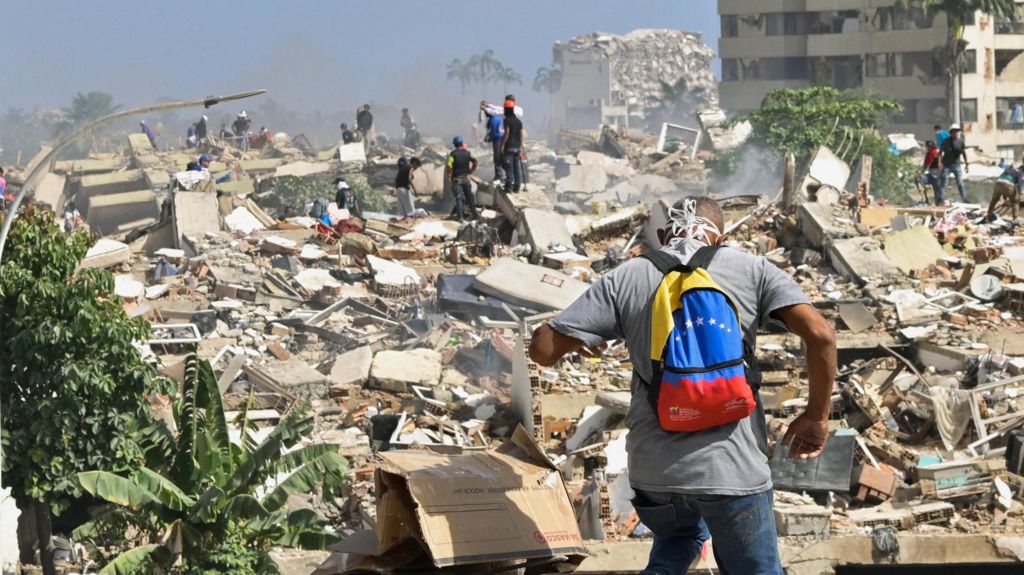
Venezuela earthquakes kill 920 people as families desperate for news
In a devastating geological event that has shaken Venezuela to its core, two massive back-to-back earthquakes struck the nation’s northern regions last Wednesday, leaving a trail of death, destruction, and urgent humanitarian need that has drawn a coordinated global response. The second of the two tremors registered a magnitude of 7.5, marking one of the most powerful seismic events to hit the South American country in more than a century.
Official government updates confirm the disaster has already claimed at least 920 lives, left 3,360 people injured, and left at least 172 individuals still trapped beneath collapsed infrastructure, with hundreds more reported missing. Authorities warn the final death toll is expected to climb as rescue teams work to clear rubble and reach cut-off areas. The coastal state of La Guaira, located just north of the capital Caracas and home to Venezuela’s primary international airport and one of its two largest commercial ports, has borne the brunt of the destruction.
For dozens of families across the hardest-hit region, every passing minute brings a agonizing mix of hope and despair. Natacha Diaz, a resident of La Guaira, is among those clinging to faith as she waits for news of her two daughters, ages 22 and 23, who were working as manicurists inside a collapsed local shopping mall when the quakes hit. “They were with their friends. I just want them to be found. I have faith and hope that they are there,” Diaz told the BBC. “I just want them back with me. They are all I have, please.”
Dozens of structures across northern Venezuela have been reduced to rubble, including multiple hospitals, shopping centers, and residential buildings, with more than 1,000 additional critical infrastructure sites sustaining major damage. Surviving medical facilities have been stretched far beyond capacity, treating injured patients in makeshift outdoor care tents. Long before the disaster struck, Venezuela’s decades-long economic crisis and chronic underinvestment had left the country’s healthcare system severely under-resourced, a gap that has been thrown into sharp relief by the earthquake emergency. “All our hospitals lack supplies, lack medicines, we are not able to provide medical attention to our people in a normal day,” Dr. Pedro Javier Fernandez told the BBC. “Now with this tragedy, the emergency is even bigger and it’s more difficult to face than in other countries.”
Initial rescue efforts were hampered by broken communications links, damaged and blocked roadways, and a critical shortage of heavy equipment and supplies, forcing many first responders and civilian volunteers to dig through debris with their bare hands in a race to pull survivors out. In recent days, hundreds of international search-and-rescue teams have arrived in the country to bolster local efforts, with more personnel and aid en route. A British military flight carrying specialist rescue teams from 14 UK fire services, search dogs, and drone detection equipment departed from RAF Brize Norton on Friday, joining teams already deployed from the United States, the Netherlands, Mexico, and Switzerland. The U.S. has also committed $150 million in humanitarian aid, alongside deploying warships and cargo planes to support relief operations.
Jan Egeland, secretary general of the Norwegian Refugee Council, said international teams on the ground have already witnessed “horrific damage” across the affected regions, noting that Venezuela’s pre-existing crumbling infrastructure left the nation uniquely vulnerable to such a disaster. “Venezuela was ill-prepared and vulnerable in an emergency situation because of its already crumbling infrastructure following decades of underinvestment,” Egeland told the BBC.
Amid the widespread grief and destruction, small moments of hope have lifted morale across the country. In one widely broadcast story on state television, three young siblings were pulled alive from the rubble of a collapsed building in La Guaira, emerging covered in dust after being trapped for days. “Come here, my child, come here,” a rescuer called out to the first child, followed by a young girl, and then the third sibling, who emerged sobbing but alive.
The disaster has also already claimed notable victims, including Andrea, the wife of Venezuelan footballer Héctor Bello, who died while shielding and saving their toddler daughter during the collapse. “I’ll tell her the story of how you saved her, my love – how you gave your own life for our daughter, how you were a brave woman who never abandoned her, even as you took your last breaths,” Bello wrote in an emotional Instagram post. Foreign casualties have also been confirmed: one Portuguese national, two Brazilian citizens, and four Spanish nationals are among the dead, while 106 Spanish citizens remain unaccounted for, per Spanish foreign ministry reports.
Beyond La Guaira, multiple other states across northern Venezuela have felt the impact of the disaster, with the capital Caracas seeing heavy damage in the upscale neighborhoods of Los Palos Grandes and Altamira. More than 214 aftershocks have been recorded since the initial twin quakes, with most concentrated along the northern coastline spanning La Guaira, Aragua, Carabobo, and Falcón.
The earthquake comes at a moment of extreme political uncertainty for Venezuela. Less than six months ago, long-time leftist leader Nicolás Maduro, who had governed the country since 2013, was seized by U.S. forces in Caracas and extradited to New York to face federal drug trafficking charges. Maduro’s ally, former vice president Delcy Rodríguez, stepped into the role of acting president, a move that has been contested by opposition supporters who had expected the U.S. to install opposition leader María Corina Machado to lead the interim government.
Venezuelan opposition leader Leopoldo Lopez, who lives in exile in Spain, described the scale of the devastation as “huge” and said the population remains in “shock.” He criticized the interim government’s inability to mount a timely, large-scale rescue response, but praised the outpouring of grassroots support from Venezuelan civil society. The United Nations has pledged to coordinate the international humanitarian response, with the UN’s humanitarian chief Tom Fletcher saying, “I want people to know in Venezuela that help is coming.”
-

Senegal routs 10-man Iraq 5-0 to boost hopes of reaching World Cup knockout rounds
TORONTO – Heading into their final Group I World Cup group stage match on Friday, Senegal faced a clear and unforgiving mandate: they not only needed a win, but a lopsided, goal-heavy victory to keep their knockout stage hopes alive. By the final whistle, the African side delivered exactly that, tearing through a shorthanded Iraq squad to claim a resounding 5-0 triumph that leaves them on the cusp of advancing to the Round of 32.
From the opening minutes, Senegal came out pressing aggressively, and they earned their first reward just four minutes into the contest when Habib Diarra found the back of the net to put his side up early. The game’s turning point arrived just nine minutes later, when Iraq defender Rebin Sulaka was shown a straight red card for pulling Sadio Mane’s jersey to stop the winger from breaking away on a one-on-one scoring chance. Left down to 10 men for virtually the entire remainder of the match, Iraq was forced into a defensive rearguard that held firm for nearly 40 minutes after the red card, with Senegal unable to extend their lead until the 56th minute, when Ismaila Sarr slotted home the side’s second goal.
What followed was a devastating second-half scoring flurry from Senegal. Midfielder Pape Gueye bagged a brace, both goals powerful strikes from just outside the 18-yard box, before substitute Iliman Ndiaye capped off the rout with Senegal’s fifth goal of the night.
The dominant result leaves Senegal sitting at three points in Group I with a +2 goal differential, currently in third place in the group. With only the eight best third-place teams across all groups earning a spot in the knockout round, Senegal has done everything it can to advance – but now must wait for the remaining six group stage matches across the tournament to conclude to learn their fate. “The job is done, but fate is no longer in our hands,” Senegal head coach Pape Thiaw said in post-match comments. “We have to wait until the other matches are over.”
Gueye echoed his coach’s sentiment, noting that the team executed the game plan they came into the match with. “We had to score as many goals as possible,” Gueye said. “So there you go.” Diarra, who opened the scoring for Senegal, expressed confidence that the side’s strong result would be enough to see them through to the next round. “They gave us problems, but we solved them,” he said. “We played a great match, both collectively and individually. Now, here we are. I can say we are focused on our next match.”
For Iraq, the loss brings an early end to their historic World Cup run, marking their first appearance at the tournament since 1986. They exit the competition winless, having failed to pick up a single point across three group stage matches. “I want to apologize for our fans, for our country, these three games,” Iraqi defender Merchas Doski said after the match.
Even so, Iraq head coach Graham Arnold framed the team’s qualification for the tournament itself as a remarkable achievement. “Hopefully the players will go away from this enjoying the experience of being in the World Cup for the first time in 40 years,” he said, “but also learning from mistakes.”
-
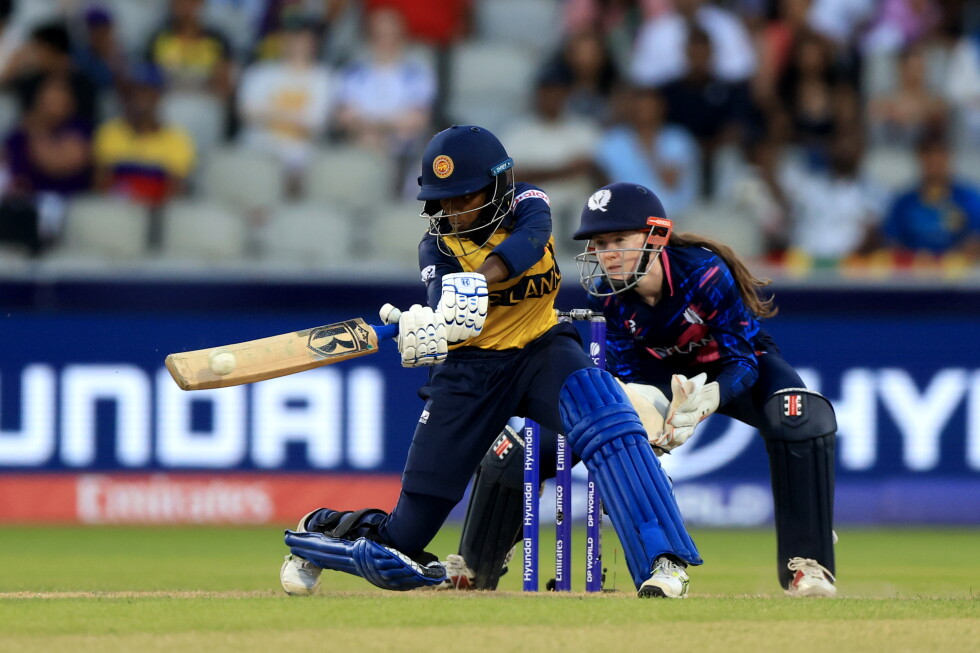
Sri Lanka keep alive Women’s T20 World Cup semifinals hopes after beating Scotland
MANCHESTER, England – A heart-stopping final-over finish at Old Trafford on Friday handed Sri Lanka a narrow three-wicket win over Scotland, keeping alive the underdog side’s slim hopes of reaching the Women’s Twenty20 World Cup semifinals for the first time in tournament history.
Scotland, appearing in its second consecutive T20 World Cup, posted a competitive total of 151 for 6 after 20 overs. Only top-order batter Sarah Bryce put Sri Lanka’s bowling attack under sustained pressure: stepping in after her sister and Scotland captain Kathryn Bryce fell to leave the side 66-2 in the 10th over, Sarah Bryce hit an unbeaten 47 off 33 deliveries, including a boundary off the final ball of Scotland’s innings to push the team past the 150 mark.
Chasing a 152-run target to secure victory, Sri Lanka got off to a blistering start: veteran captain Chamari Athapaththu, competing in her 10th T20 World Cup, smashed 33 runs off just 16 deliveries before being dismissed with Sri Lanka at 57-2 in the sixth over. After Athapaththu’s exit, Sri Lanka’s batting lineup slowed dramatically, dragging out the chase and reaching 154 for 7 on the second-to-last ball of the final over.
The dramatic closing sequence began when Scotland medium-pacer Rachel Slater was tasked with defending seven runs from the six deliveries of the last over. She gave up just one single off each of her first three balls before suddenly pulling up in pain and collapsing to the pitch with a suspected knee injury. Distressed, Slater eventually left the field in tears, forcing Scotland to call on alternate bowler Priyanaz Chatterji to finish the over. Chatterji gave up a single on her first delivery before tailender Sugandika Kumari hit a match-winning boundary to seal the three-wicket victory.
While the win marks Sri Lanka’s third victory of the tournament — its best ever performance at a single Women’s T20 World Cup — the slow, last-ball finish barely improved the side’s net run rate, leaving its semifinal hopes hanging by a thread. West Indies now holds the upper hand for the second and final semifinal spot in Sri Lanka’s group, and will secure qualification if it beats winless Ireland in its final group match on Saturday.
For Scotland, the heartbreaking last-over defeat consigns the side to a fifth-place finish in the group, falling short of the fourth-place spot that would have granted direct qualification for the 2028 Women’s T20 World Cup hosted by Pakistan.
Saturday’s tournament schedule also includes a matchup between the Netherlands and Pakistan, and a group-stage game between already semifinal-qualified England and defending champion New Zealand.
-
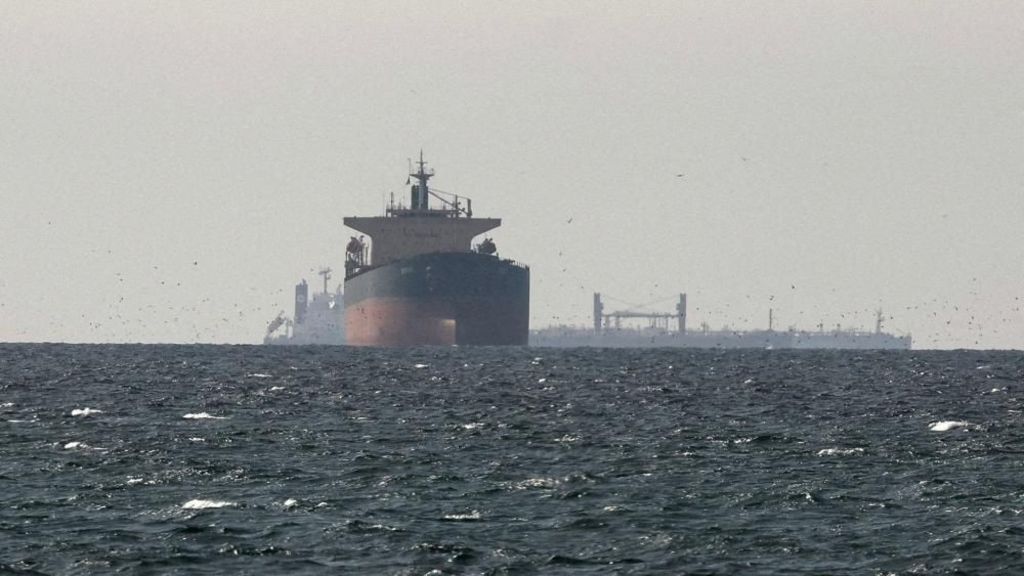
US conducts strikes on Iran after attack on cargo ship
Tensions have reignited in the Persian Gulf after a one-way drone attack on a commercial cargo vessel transiting the Strait of Hormuz, prompting the United States military to launch retaliatory strikes against Iranian assets. The June assault, which Washington blames on Iranian forces, violated a recently brokered ceasefire between the two nations, marking a sharp escalation in a region that remains one of the world’s most critical chokepoints for global energy trade.
The drone strike on Thursday left no reported casualties among the cargo ship’s crew, but it triggered emergency plans to evacuate more than 11,000 sailors who were stranded in the area by heightened regional hostilities. Within 24 hours, US Central Command (Centcom) confirmed it had carried out targeted strikes against key Iranian infrastructure: missile and drone storage facilities, as well as coastal radar positions along the Iranian coastline. As of Friday evening, Iranian officials had not issued any public response to the US strikes.
Speaking to reporters at the White House shortly before the strikes were officially announced, President Donald Trump deflected questions about a potential US military response and the status of the existing ceasefire. When pressed for details, Trump merely told reporters “You’ll find out,” adding that he disapproved of the unprovoked attack: “I don’t like the fact that they took a shot yesterday. They shouldn’t be doing that.” Pressed on why Iran would choose to break the truce, Trump only offered that “they’re a little bit different.”
In its official statement framing the retaliatory action, Centcom characterized the strikes as a measured but powerful answer to the unprovoked aggression against commercial shipping. The command emphasized that the attack by Iranian forces constituted a clear violation of the terms of the ceasefire agreement reached between Washington and Tehran in mid-June. Beyond the ceasefire breach, Centcom noted that Iran’s repeated hostile actions directly undermine the principle of freedom of navigation in the strait, a vital artery that carries a huge share of global commerce, including energy exports and key industrial commodities.
“Furthermore, Iran’s dangerous behavior undermined freedom of navigation as commerce increasingly flows through the vital international trade corridor,” the Centcom statement read. The command added that the US military would maintain its posture in the region to protect commercial shipping: “The United States military will continue to provide safe passage coordination and support to commercial vessels transiting the strait.”
The current escalation follows months of open hostilities that began in late February, when the United States and Israel launched coordinated strikes against Iranian targets across the Middle East. In response to those attacks, Tehran effectively closed the Strait of Hormuz, the 21-mile wide waterway that connects the Persian Gulf to the Arabian Sea and carries roughly a fifth of the world’s daily oil consumption and a large share of global liquefied natural gas exports. The closure sent global oil prices spiking sharply and disrupted supplies of other critical commodities, including agricultural fertilizer, exacerbating supply chain pressures across global markets.
To de-escalate the crisis, the United States and Iran signed a 14-point memorandum of understanding on June 17 that agreed to end all open hostilities between the two nations. A key provision of that truce required Iran to exercise its best efforts to guarantee the safe passage of all commercial vessels through the strait, with no tolls or restrictions on transit, for a 60-day period. Thursday’s drone attack marks the first major breach of that agreement, throwing the future of the ceasefire into doubt and raising fears of a renewed full-scale conflict in the strategic region.
-
UK search team joins Venezuela earthquake rescue effort
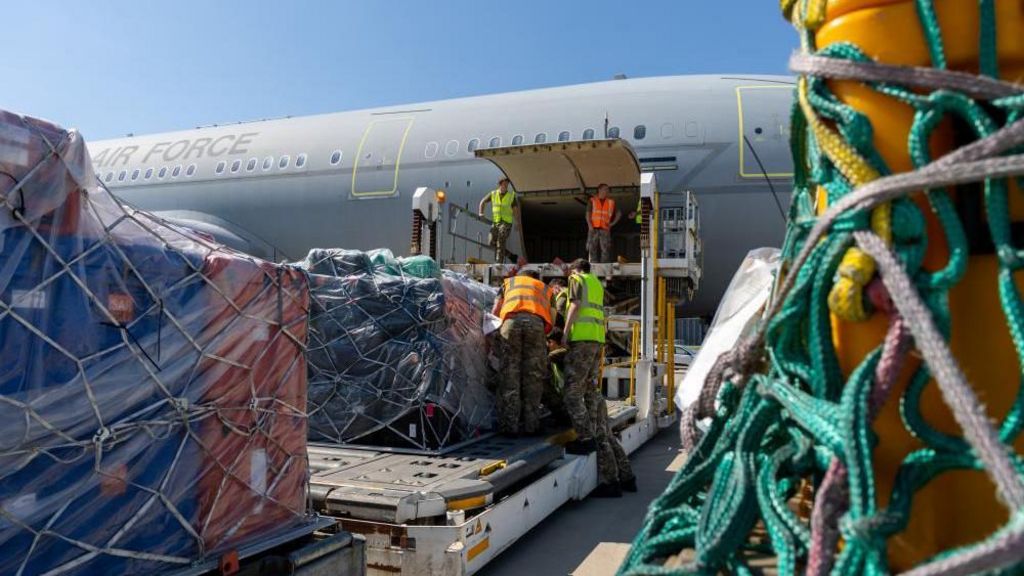
A catastrophic natural disaster has left Venezuela reeling, after two back-to-back powerful earthquakes struck the South American nation earlier this week, pushing the confirmed death toll close to 1,000 and triggering a massive international humanitarian response. On Friday evening, the United Kingdom launched its own contribution to the relief effort, dispatching a specialized search-and-rescue detachment that departed from RAF Brize Norton bound for the disaster zone.
The Royal Air Force flight carries 61 personnel alongside purpose-built rescue equipment that includes search sniffer dogs and aerial drone technology to aid in locating survivors trapped beneath collapsed structures. Coordinated by the Merseyside Fire and Rescue Service, the UK team draws together experienced firefighters, disaster response experts, medical personnel, humanitarian workers, and security specialists from across the country, all tasked with supporting ongoing search operations.
Alongside the deployment of on-the-ground rescue resources, the British government has committed £2 million in dedicated humanitarian funding to address critical needs across the most affected regions. The 7.2 and 7.5 magnitude quakes struck just seconds apart on Wednesday, with their epicenter located approximately 160 kilometers west of Venezuela’s capital, Caracas. The powerful tremors displaced tens of thousands of residents, levelled thousands of structures, and left a growing number of people unaccounted for. As of 9:00 PM BST Friday, a public registry tracking missing persons recorded more than 52,000 people that remain out of contact with relatives.
Local medical infrastructure has been stretched to breaking point in the hardest-hit regions, with local hospitals overwhelmed by an influx of injured patients and facing crippling shortages of life-saving supplies. Hundreds of international aid workers have already arrived or are en route to Venezuela to join the search for any remaining survivors trapped in rubble. On Friday, Venezuelan Acting President Delcy Rodríguez confirmed that authorities had recorded 215 aftershocks in the days since the initial major quakes, adding ongoing risk to relief teams and displaced residents. A national state of emergency has been declared across the affected regions, and all major transportation links including airports, rail lines, and road transport networks have been suspended following the disaster. Thousands of people have been left homeless, creating urgent unmet demand for food, water, shelter, and emergency medical supplies.
In a statement released alongside the announcement of the UK response, Prime Minister Keir Starmer expressed his solidarity with the Venezuelan people. “My thoughts are with the people of Venezuela following this week’s devastating earthquakes,” Starmer said. “The UK stands in solidarity with all those affected, particularly those who have lost loved ones, homes and livelihoods.”
-
Israel bans call to prayer at Hebron’s Ibrahimi Mosque for fifth day
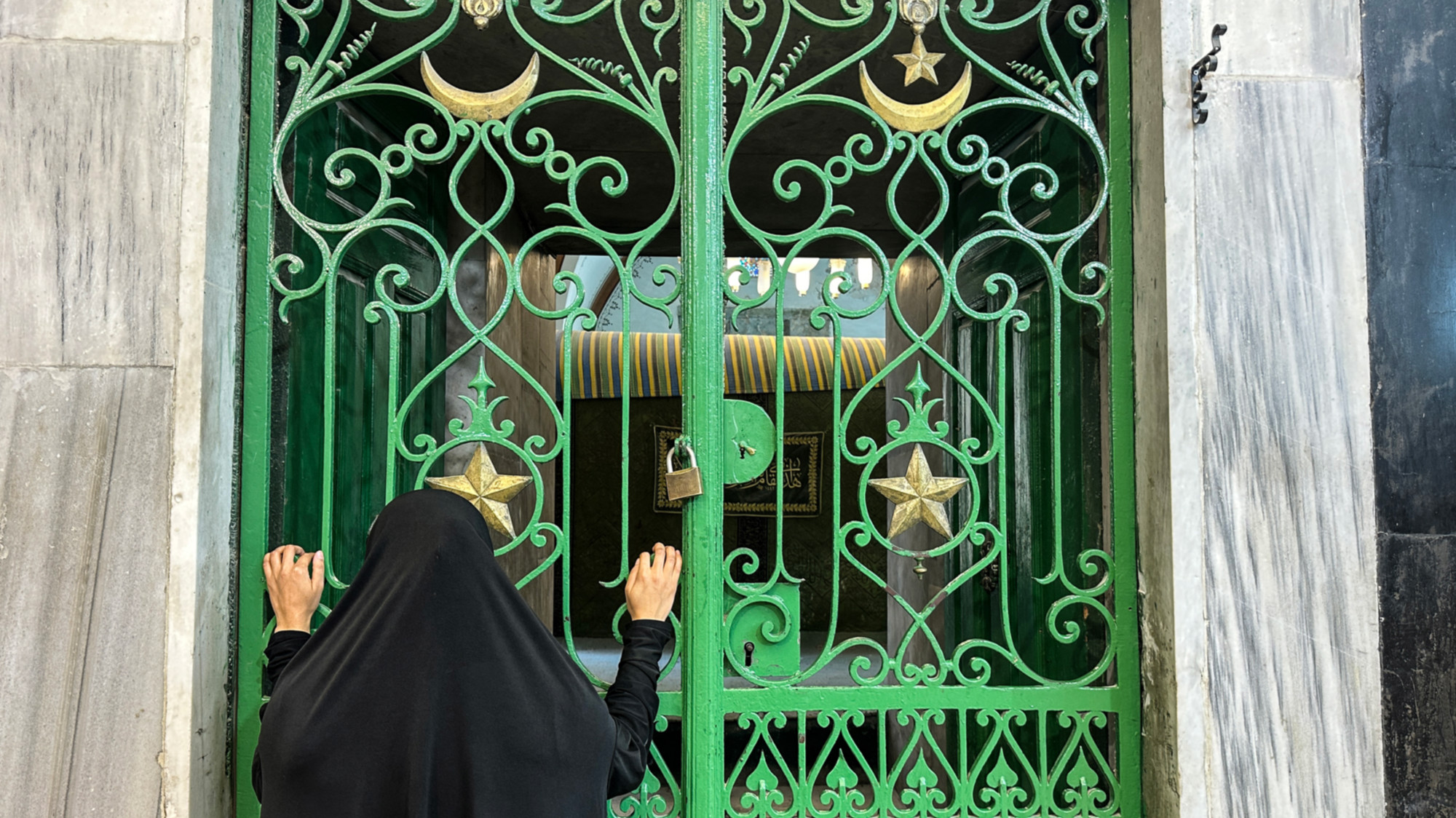
For five straight days, Israeli forces have blocked the broadcast of the Muslim call to prayer, known as the adhan, at the Ibrahimi Mosque in the occupied West Bank city of Hebron, marking the latest escalation of Israeli efforts to reduce Palestinian access and control at the contested religious site. The ongoing ban, which began last Sunday, has been paired with punitive entry bans for two senior mosque officials: Sheikh Mutaz Abu Sneineh, the mosque’s director, and Hammam Abu Murkhiya, head of the site’s custodial team, who have been barred from entering the Ibrahimi Mosque for 12 days under Israeli military orders.
Israeli authorities have framed the restrictions as a side effect of planned infrastructure work, saying the ban is tied to preparations to install a new roof over the mosque’s central courtyard. But Palestinian sources familiar with the situation say the real barrier to the call to prayer is deliberate Israeli access denial: the room from which the adhan is broadcast sits in the portion of the site currently under direct Israeli control, and Israeli soldiers have repeatedly refused to let the mosque’s muezzin enter the space to deliver the five daily calls to prayer. While worship is still permitted to take place inside the mosque, the adhan has been completely silenced since the ban went into effect.
The Ibrahimi Mosque, revered by Muslims, Jews, and Christians as the burial site of the shared patriarch Abraham, has a long history of contested control in Hebron. The 1994 massacre of 29 Palestinian worshippers by an American-Israeli settler set off a major shift in the site’s administration: after the attack, Israel partitioned the holy compound, allocating nearly 60 percent of the space to Jewish worshippers and leaving the remaining portion for Muslim worshippers. Palestinian stakeholders and local activists say Israel has steadily expanded its control over the entire site in the decades since the partition, implementing a series of incremental policies designed to reduce Palestinian presence and entrench exclusive Jewish control.
These long-running restrictions have accelerated sharply since the outbreak of the Israel-Gaza war in October 2023. The new wave of measures includes stricter access controls for Palestinian worshippers, the expulsion of imams and other mosque staff, and the gradual transfer of administrative authority away from the Palestinian Authority.
The Palestinian Authority’s Ministry of Awqaf and Religious Affairs has issued a strong condemnation of the latest restrictions, calling them “escalating repressive and arbitrary measures” targeting the holy site. The ministry said it views the entry bans on Abu Sneineh and Abu Murkhiya “with grave concern,” noting that the orders constitute a direct attack on the mosque’s officially recognized religious leadership and a deliberate attempt to remove the legally and religiously authorized administration from the site. The ministry added that the latest actions are part of a systematic, escalating policy to tighten full Israeli control over the Ibrahimi Mosque.
Local activists emphasize that the current five-day ban is not an isolated or temporary measure tied to maintenance work, but rather the intensification of a decades-long Israeli policy. Hisham Sharabati, coordinator of the Hebron Defence Committee, explained that adhan bans have been a routine practice at the site since the mid-1990s, with the call to prayer regularly blocked on Saturdays and during Jewish religious holidays. Soldiers also frequently block muezzins from accessing the broadcast room arbitrarily, leading to dozens of missed calls to prayer every month.
“In a single month, there can be 70 to 90 missed calls to prayer. The ban on the call to prayer has been ongoing. It’s an old policy,” Sharabati told Middle East Eye.
Sharabati added that restrictions have grown far more severe since Israel’s current far-right government took office in late 2022. Over the years, successive Israeli governments have justified restrictions under different guises: during the COVID-19 pandemic, bans were framed as public health measures, while after the outbreak of the Gaza war, restrictions were justified on security grounds. Even when Israel relaxed gathering limits for other public spaces across the country, those relaxations were never extended to the Ibrahimi Mosque, Sharabati said. Today, Israeli soldiers routinely turn away Palestinian worshippers of all ages and genders at the site’s only Israeli-controlled entrance without explanation, further limiting Palestinian access to the holy site.
Hebron has been under Israeli military occupation since the 1967 Six-Day War, and the broader Israeli occupation of the West Bank is widely recognized as illegal under international law.
-

Anti-drug day features public awareness effort
On Friday, June 26, communities and public institutions across China gathered to observe the 39th International Day Against Drug Abuse and Illicit Trafficking, with a flagship series of outreach events held by the Jiangbei Compulsory Drug Rehabilitation Center in southwest China’s Chongqing municipality.
Organized in partnership with three major stakeholders — the Chongqing Drug Rehabilitation Administration, the Chongqing Municipal Committee of the China Association for Promoting Democracy, and the Liangjiang New Area Committee of the China Democratic League — the multi-event program was designed to advance three core goals: boost widespread public understanding of the dangers of drug addiction, highlight the ongoing progress of China’s drug rehabilitation initiatives, and encourage broader community participation in supporting recovering addicts to successfully reintegrate into family life and wider society.
International Day Against Drug Abuse and Illicit Trafficking, established by the United Nations in 1987, is observed annually on June 26 to coordinate global action to curb the illegal drug trade and reduce demand for harmful controlled substances. This year’s local events in Chongqing form part of a national ongoing effort to destigmatize addiction treatment, strengthen public prevention education, and improve outcomes for people completing rehabilitation programs. A photo of the day’s activities was provided to China Daily by event organizers.