博客

  • Anti-drug day features public awareness effort

    Anti-drug day features public awareness effort

    On Friday, June 26, communities and public institutions across China gathered to observe the 39th International Day Against Drug Abuse and Illicit Trafficking, with a flagship series of outreach events held by the Jiangbei Compulsory Drug Rehabilitation Center in southwest China’s Chongqing municipality.

    Organized in partnership with three major stakeholders — the Chongqing Drug Rehabilitation Administration, the Chongqing Municipal Committee of the China Association for Promoting Democracy, and the Liangjiang New Area Committee of the China Democratic League — the multi-event program was designed to advance three core goals: boost widespread public understanding of the dangers of drug addiction, highlight the ongoing progress of China’s drug rehabilitation initiatives, and encourage broader community participation in supporting recovering addicts to successfully reintegrate into family life and wider society.

    International Day Against Drug Abuse and Illicit Trafficking, established by the United Nations in 1987, is observed annually on June 26 to coordinate global action to curb the illegal drug trade and reduce demand for harmful controlled substances. This year’s local events in Chongqing form part of a national ongoing effort to destigmatize addiction treatment, strengthen public prevention education, and improve outcomes for people completing rehabilitation programs. A photo of the day’s activities was provided to China Daily by event organizers.

  • Sanctioned ICC judges sue Trump in US over ‘attack on judicial independence’

    Sanctioned ICC judges sue Trump in US over ‘attack on judicial independence’

    In a historic legal challenge that tests the boundaries of executive power and the rule of law, three sitting International Criminal Court (ICC) judges have secured a court summons for former US President Donald Trump, forcing his administration to defend sweeping sanctions imposed over the tribunal’s investigations into alleged actions by US and Israeli nationals. The summons, issued Thursday by the United States District Court for the Southern District of New York, gives the administration 60 days to respond to the complaint filed one day prior by the three jurists: Kimberly Prost from Canada, Solomy Balungi Bossa from Uganda, and Reine Alapini-Gansou from Benin. Alongside Trump, the suit names Secretary of State Marco Rubio, Treasury Secretary Scott Bessent, Acting Attorney General Todd Blanche, the Treasury Department’s Office of Foreign Assets Control (which manages the sanctions list), and OFAC director Bradley Smith as co-defendants. This marks the first time that sitting ICC judges have personally taken legal action to contest their designation under Executive Order 14203, the directive Trump signed into law on February 6, 2025. The order invoked a purported national emergency triggered by the ICC’s probes into US and Israeli citizens to authorize asset freezes and travel bans against foreign officials participating in or supporting those investigations. The three judges are not alone in facing penalties: they are among eight ICC-affiliated individuals sanctioned under the order, which has also targeted ICC prosecutor Karim Khan, his two deputies, the United Nations special rapporteur for the occupied Palestinian territories, and three Palestinian human rights organizations. Each of the three plaintiffs sits on judicial panels overseeing high-stakes investigations: Prost and Bossa work on the Afghanistan probe, while Alapini-Gansou handles the file on alleged crimes in Palestinian territories. James Goldston, executive director of the Open Society Justice Initiative and co-counsel for Prost, has denounced the sanctions as “an unprecedented attack on judicial independence and the rule of law.” The measures, Goldston confirmed, have inflicted severe tangible harm on judges who have done nothing more than fulfill their official, oath-bound duties. The complaint itself describes the sanctions as “tantamount to the financial death penalty.” According to Goldston, speaking to independent outlet Middle East Eye, Prost’s personal US bank accounts have been frozen, she has lost access to conventional credit card services, and her accounts with major US-based tech and consumer firms including Amazon, Google and Expedia have been restricted or terminated entirely. Worse, Prost has effectively lost access to health coverage after her existing provider refused to process her medical claims, and no other insurer will agree to underwrite a policy for her. Before joining the ICC in 2018, Prost built a career focused on international sanctions regimes: she served as a federal prosecutor for Canada’s Department of Justice, and later as ombudsperson for the UN Security Council’s al-Qaeda sanctions committee, overseeing the exact type of punitive measures that are now being used against her. “She knows a great deal about sanctions, and in some ways it is rather extraordinary that she is now being subjected to these severe sanctions, really solely for undertaking her job as a judge seriously and professionally,” Goldston noted. The legal team has laid out three core constitutional and statutory arguments for why the executive order must be struck down entirely by the court. First, the plaintiffs argue the order far exceeds the authority Congress delegated to the president under the International Emergency Economic Powers Act (IEEPA), the legislation Trump relied on to impose the sanctions. They further contend that the penalties contradict a separate federal law, the 2002 American Service-Members’ Protection Act (ASPA), which was drafted specifically to address the risk of the ICC opening investigations into US or allied nationals who are not parties to the Rome Statute. Goldston explained that ASPA only permits the president to respond to such investigations through narrow, specific measures: providing legal representation for US citizens, submitting exculpatory evidence to the court, and defending US interests through official diplomatic and legal channels. The law does not grant any authority to impose punitive sanctions on ICC personnel. Even in the extreme scenario that an American citizen is taken into ICC custody, Goldston added, ASPA explicitly bars the executive branch from using financial or personal “inducements” to pressure the court into changing its rulings. The sanctions imposed under Executive Order 14203, he argued, fit exactly that prohibited definition. “They are trying to induce judges to refrain from deciding on the basis of facts and law, and instead take into account their own personal interests, that is, the threats to their own financial and personal well-being imposed by these sanctions,” he said. The plaintiffs also reject the administration’s claim of a national emergency justifying the order. IEEPA can only be invoked to respond to an “unusual and extraordinary” threat to US national security, but Washington’s opposition to the ICC’s exercise of jurisdiction over non-party nationals dates back nearly 30 years. President Bill Clinton first raised the same objection when he signed the Rome Statute in 2000, and earlier this year a senior US official confirmed to the United Nations that none of the concerns cited in the 2025 executive order are new, with Washington having reiterated the same position for almost three decades. Legal observers note that both Afghanistan and Palestine are ICC member states, and the Rome Statute has long enshrined the principle that the court can exercise jurisdiction over crimes committed on a member state’s territory, regardless of the nationality of the perpetrator. The second core argument centers on constitutional protections for property: the asset freeze imposed on Prost and Bossa, who both hold US-based assets, violates the Fifth Amendment in two distinct ways—by depriving them of private property without due process of law, and by seizing private property without just compensation. The third argument holds that the designation of the judges violates the Administrative Procedure Act, because the penalties are “arbitrary, capricious and an abuse of discretion.” The complaint notes that the Trump administration has failed to produce any specific, concrete evidence justifying the sanctions against the individual judges, and also neglected to weigh the severe damage the measures inflict on international accountability efforts—including ICC investigations that the US itself openly supports, such as the probes into alleged war crimes in Sudan, Libya, and Ukraine. Goldston emphasized that all three arguments revolve around the same core violation: the sanctions pressure judges to prioritize their own personal and financial security over their oath to impartially adjudicate cases based on law and facts. “The sanctions seek to compel these judges to refrain from their sworn oath, to decide cases on the basis of an impartial assessment of the facts and the law,” he said. “That is a fundamental threat to the rule of law.” This lawsuit is the fifth legal challenge to Executive Order 14203 to date. In four earlier cases challenging the order, US courts have already ruled that the directive is unconstitutional, finding it imposes unlawful restrictions on the free speech rights of individuals and organizations that cooperate with the ICC. One of those earlier successful challenges was brought on behalf of Francesca Albanese, the sanctioned UN special rapporteur for the occupied Palestinian territories. This current suit, however, is the first to directly challenge the designation of sitting ICC judges. The Open Society Justice Initiative leads representation for Prost, with international law firm Foley Hoag serving as co-counsel. When asked about the prospects of the suit succeeding, Goldston said his team is confident in the strength of their arguments, but noted that the judicial process will ultimately determine the outcome. “We are hopeful that these arguments will be persuasive, but that is what the judicial process is for. We will see what the outcome is,” he said.

  • France forward Ousmane Dembélé scores a first-half World Cup hat trick in 4-1 win over Norway

    France forward Ousmane Dembélé scores a first-half World Cup hat trick in 4-1 win over Norway

    FOXBOROUGH, Mass. — Ahead of the knockout round of the World Cup, French star Ousmane Dembélé announced himself as a top contender for the tournament’s Golden Boot with a historic first-half hat trick that lifted defending champion France to a 4-1 victory over Norway in the final Group Stage match Friday.

    Dembélé found the back of the net three times in just 25 minutes of the first half, striking in the 7th, 20th, and 32nd minutes. His performance marks the first first-half World Cup hat trick in 30 years; the last such achievement came from Russian forward Oleg Salenko, who netted three first-half goals as part of his iconic five-goal game against Cameroon at the 1994 United States World Cup.

    The match opened with a near-immediate chance for France: Kylian Mbappé broke down the right flank just 21 seconds after kickoff, firing a powerful strike that rattled the crossbar past Norwegian backup goalkeeper Egil Selvik. Dembélé opened his scoring tally soon after, slotting a right-footed shot past Selvik off a perfectly placed feed from his Paris Saint-Germain teammate Mbappé. He doubled his lead 13 minutes later, creating space between three Norwegian defenders at the top of the 18-yard box and curling a left-footed shot beyond Selvik’s diving save attempt.

    Norway quickly pulled one back, as Thelo Aasgaard scored just 14 seconds after the restart following Dembélé’s second goal. But Dembélé restored France’s two-goal advantage less than nine minutes later, completing his first-half hat trick before the break. France rounded out the scoring with a late injury-time goal from young substitute Désiré Doué, capping a dominant performance that pushed the side’s total goal tally to 10 through three group matches.

    Both sides had already secured their spots in the World Cup round of 32 heading into Friday’s match, and Norway head coach Ståle Solbakken made the call to rest 10 regular starting players, including star striker Erling Haaland, to keep his squad fresh for knockout round play. Solbakken explained that the short turn-around between matches made the decision to rest key starters an obvious one.

    “The break that we had from the last game to this game was the shortest of any team. … So it’s a no-brainer,” Solbakken said. “The fans around Norway and also in the arena would have liked to see Erling. But that is not really the issue. We want to proceed as long as we can in the tournament.”

    For France, the match carried an undercurrent of emotion: head coach Didier Deschamps missed the fixture after the recent passing of his mother, Ginette Deschamps, returning to France to be with his family. Assistant coach Guy Stéphan stepped in to lead the side, and fans in attendance displayed a large banner reading “AVEC TOI DIDIER” — “With you Didier” — to show their support for Deschamps. Stéphan confirmed after the match that Deschamps would rejoin the team for training Saturday ahead of the knockout round.

    Dembélé, who claimed the 2025 Ballon d’Or as European football’s top player and now has four goals at this year’s World Cup, was subbed off in the 65th minute to rest, replaced by Bradley Barcola. In his post-match comments, the 28-year-old played down his individual achievement, emphasizing that the team’s focus remains locked on knockout round success.

    “It is a unique moment,” Dembélé said. “But the most important was to finish first of the group in the group stage, and we are focused on the round of 32, which is the most important.” He added: “We want to win all our matches, but we remain focused.”

    Historically, Dembélé’s hat trick ranks among the fastest in World Cup history. The record for the fastest tournament hat trick belongs to Hungarian striker Laszlo Kiss, who scored three goals in just 7 minutes 42 seconds as a substitute against El Salvador at the 1982 Spain World Cup. For hat tricks from the opening kickoff, the record is held by Austrian striker Erich Probst, who netted three goals in 24 minutes against Czechoslovakia at the 1954 Switzerland World Cup.

    Looking ahead, both teams will begin their knockout round campaigns on the same day next week. Norway will square off against Ivory Coast on Tuesday in Arlington, Texas, while France will face off against one of the top third-place finishers from the 2026 tournament group stage in East Rutherford, New Jersey.

    In addition to Dembélé’s three goals, Mbappé extended his strong World Cup form: the French captain now has 16 career World Cup goals and four assists across 17 tournament matches, having already scored two goals in each of France’s prior group wins against Senegal and Iraq, entering the knockout round as one of the tournament’s top offensive threats.

  • Tanzania bans political rallies ahead of planned anti-government protests

    Tanzania bans political rallies ahead of planned anti-government protests

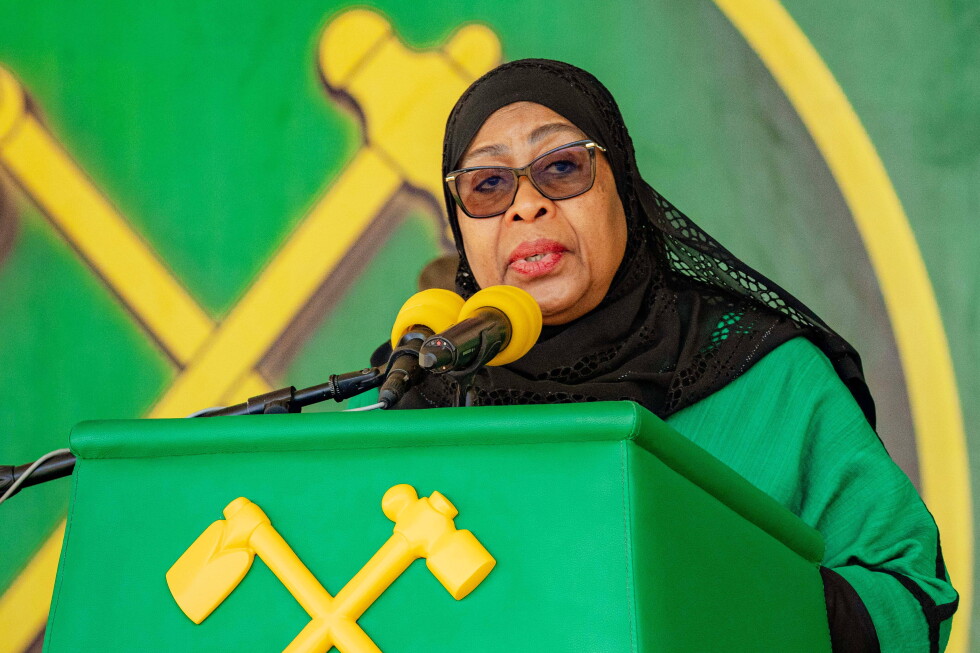
    In a move that has reignited debates over constitutional rights and political freedom in East Africa, Tanzania’s ruling administration announced a nationwide ban on all political gatherings Friday, stepping in ahead of planned mass protests centered on disputed 2024 election results and the ongoing detention of a prominent opposition leader.

    Internal Affairs Minister Patrobas Katambi issued an official order to Police Inspector General Camillus Wambura, directing authorities to halt the processing and issuance of new permits for all political activities across the country, ending a two-year period of relaxed restrictions on opposition organizing.

    This latest policy shift reverses a 2023 executive order from President Samia Suluhu Hassan, who lifted a strict six-year ban on opposition rallies implemented by her predecessor, the late John Magufuli. The new ban comes as young Tanzanian activists prepare to launch nationwide demonstrations on July 7, where they intend to challenge Hassan’s re-election in last year’s general vote and advocate for a complete rewrite of the country’s constitution.

    The 2024 general election, which resulted in a landslide victory for Hassan’s ruling party, has been mired in controversy from the start. Tanzania’s largest main opposition party boycotted the contest entirely in protest of systemic unfairness, while the presidential candidate representing the country’s second-largest opposition bloc was blocked from appearing on the ballot ahead of voting.

    This year will mark the first post-election protests held in Tanzania since 2025, an unprecedented moment of public pushback against the administration’s election outcome. Beyond challenging the election results, protesters are demanding two key changes: the immediate release of opposition leader Tundu Lissu, who faces high-profile treason charges stemming from his calls for political reform ahead of the 2024 vote, and official accountability for the post-election violence that left at least 518 people dead, according to a previously released post-election inquiry.

    Law enforcement has already taken preemptive action, arresting multiple individuals tied to the protest organizing effort, which has been coordinated largely through social media platforms to avoid government interference. Even so, opposition and civil society leaders have pushed back aggressively against the new ban, framing it as an unconstitutional overreach of executive power.

    Boniface Mwabukusi, president of the Tanzania Law Society, emphasized that the government has no legal standing to restrict public meetings that are explicitly permitted under Tanzanian law. “We will convene to determine the legal measures we will take, both domestically and internationally, against anyone who attempts to enforce this unlawful and invalid directive in violation of the Constitution and the laws of the country,” Mwabukusi said in a statement following the ban announcement.

    Opposition parties have echoed this criticism, uniformly describing the ban as a politically motivated effort to silence dissent ahead of the planned protests. Rugemeleza Nshala, chief legal counsel for the leading opposition party Chadema, said the order was a deliberate attempt to “muzzle political freedom.” He confirmed that Chadema is currently drafting both domestic and international legal challenges to overturn the ban. Rashid Ali, shadow minister for defense, internal affairs and security for the second major opposition party ACT Wazalendo, added that the directive is just the latest in a series of government actions that violate the country’s founding constitution.

    The controversy comes amid already strained relations between Tanzania and Western governments: the United States recently imposed sanctions on the country’s national police chief over documented human rights violations connected to post-election crackdowns, adding a layer of international tension to the growing domestic political crisis.

  • Eastern Libyan government releases Gaza convoy activists after month of imprisonment

    Eastern Libyan government releases Gaza convoy activists after month of imprisonment

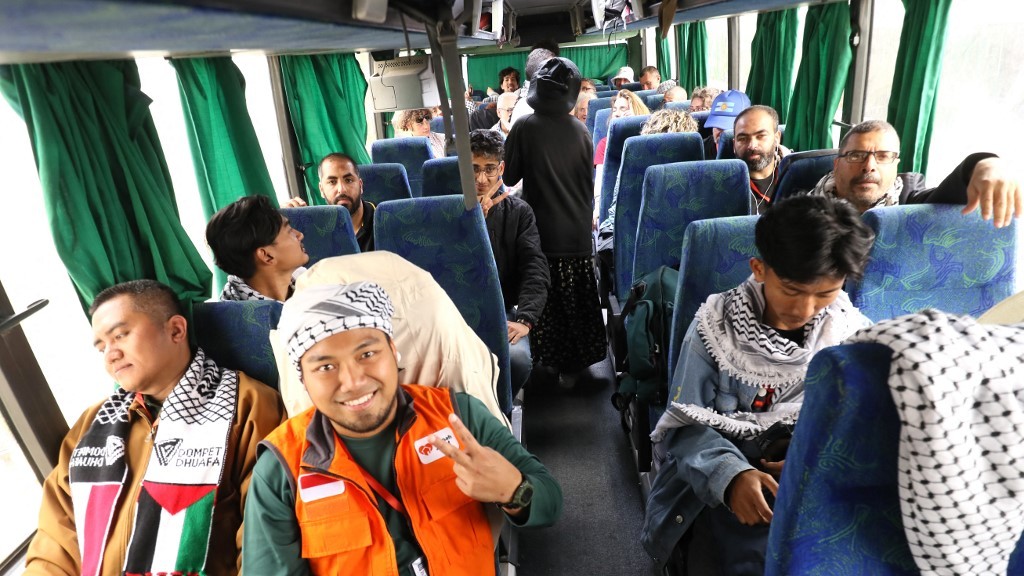
    After 30 days of captivity in Libyan territory controlled by forces loyal to controversial Libyan strongman Khalifa Haftar, 10 international activists from a Gaza-bound humanitarian convoy have been released, official and advocacy group sources confirmed this week.

    The detained activists, who hold citizenship from Spain, Poland, the United States, Argentina, Uruguay, Portugal, Tunisia and Italy, were part of the Global Sumud Convoy, a land-based humanitarian initiative aimed at breaking the years-long Israeli blockade of the Gaza Strip and delivering critical aid and services to the strip’s 2 million residents. The convoy, which was first organized by North African activists before growing to include international participants, carried seven ambulances, 10 aid trucks, 20 mobile homes, and a cohort of medical workers, engineers, educators and independent legal observers. Its organizers sought to follow in the footsteps of earlier sea-based flotillas that attempted to deliver aid to Gaza by challenging the Israeli naval blockade.

    The convoy was halted by Haftar’s Libyan Arab Armed Forces (LAAF) in late May near the coastal city of Sirte, as it attempted to travel east across Libya toward the Egyptian border, from where it planned to enter Gaza. While most of the convoy’s members were deported immediately after the stop, the 10 activists were taken into secret detention in a remote Libyan desert location. In response to their arbitrary detention, the activists launched a hunger strike between June 1 and at least June 4 to protest their confinement and the authorities’ refusal to grant them access to legal counsel and contact with their families.

    Under a recent ruling from the Benghazi Court of Appeal, eastern Libya’s foreign ministry announced this Wednesday that all detained convoy members would be deported from the country. Footage shared on the Global Sumud Flotilla official Instagram account showed six of the freed activists arriving safely at Istanbul’s airport on Wednesday, where they were greeted by waiting friends and fellow activists. It remains unclear when the remaining four activists will complete their deportation process.

    Long-simmering human rights concerns have surrounded the LAAF, which has been repeatedly accused by global monitoring groups of systemic war crimes and widespread human rights abuses across the territory it controls in eastern Libya. Amnesty International has documented that the force and its allied armed groups systematically crack down on freedom of expression and peaceful association, deliberately targeting anyone perceived as a critic or opponent of Haftar’s administration.

    “Libyans, as well as refugees and migrants, detained by LAAF, which exercises government-like functions in areas under its control, risk torture and other ill-treatment, as well as prolonged detention amid flagrant due process violations,” explained Sara Hashash, Amnesty International’s deputy director for the Middle East and North Africa. Before the activists’ release, the organization confirmed the group faced charges of unlawful unauthorized assembly, which carried a potential penalty of up to six months of prison time and an additional fine.

    In the wake of the detention, Haftar’s eastern Libyan administration implemented a new travel restriction: all non-Libyan and non-Egyptian nationals are now barred from traveling onward to Egypt through eastern Libyan territory.

    The incident has also sparked internal debate within activist circles over the planning of the convoy. Some observers and participants have argued that the initiative was flawed from its early stages, pointing to a lack of contingency planning for confrontations with LAAF forces. Felipe, a 29-year-old Chilean-Palestinian activist with experience in previous Gaza-bound aid flotillas, told Middle East Eye that the group bore partial responsibility for the outcome of their journey. After a two-week waiting period in Tripoli, Felipe noted that it became clear the convoy had no backup plan if it was blocked from crossing eastern Libya, and that the group spent nine idle days waiting in the desert without any clear next steps. “If we were not able to go through east Libya, we should not have kept pressuring them because we were going to shift the narrative from Israel to Libya,” he said.

    Libya has remained fractured along political and geographic lines since the 2011 NATO-backed overthrow and killing of longtime authoritarian ruler Muammar Gaddafi. Today, Haftar’s administration controls eastern Libya with military and political backing from Egypt and the United Arab Emirates, while the United Nations-backed Government of National Unity holds authority over western Libya from its capital in Tripoli, with support from Turkey. The 5+5 security zone near Sirte where the convoy was halted was established under the October 2020 national ceasefire agreement, and remains a contested flashpoint between the two rival administrations.

  • Italy’s Meloni rejects Rutte claims of ‘massive’ Italian support for Iran war

    Italy’s Meloni rejects Rutte claims of ‘massive’ Italian support for Iran war

    A public dispute has erupted between Italian Prime Minister Giorgia Meloni and NATO Secretary General Mark Rutte over the nature of Italy’s role in the U.S.-led conflict against Iran, opening a new rift in already strained transatlantic relations amid heightened tensions in the Middle East.

    Speaking to Fox News this Thursday, Rutte pushed back against recent criticisms from U.S. President Donald Trump, who had accused multiple European Union allies of refusing to back the U.S.-Israeli military campaign codenamed Epic Fury. The NATO chief claimed that a large number of allied nations had opened their military bases to support the operation, estimating that between 4,000 and 5,000 aircraft had departed from European bases for strike missions. Specifically, he highlighted that 500 U.S. warplanes had taken off from U.S. bases hosted on Italian territory to support Epic Fury, calling the level of European involvement “massive.”

    Meloni, who is already facing intense backlash from domestic political opponents over accusations that she has hidden the true extent of Italy’s involvement in the conflict from the public, swiftly rejected Rutte’s framing during a Franco-Italian summit held in southern France. She dismissed the NATO chief’s comments as an oversimplified and overly enthusiastic misrepresentation that blurred key distinctions between different categories of authorized flight activity. The Italian leader stressed that Rome had not taken part in active combat operations against Iran, noting that Rutte’s account directly contradicted Trump’s repeated public complaints that European allies have failed to contribute sufficiently to the conflict. “If we had participated in the Iran conflict, there would be no explanation for this disappointment that the US president keeps reiterating very often,” Meloni told reporters. She clarified that Italian bases were only used for logistical support activities, not for offensive combat sorties.

    The disagreement comes against a backdrop of growing friction between Rome and Washington, sparked by a series of hostile comments from Trump targeting Italy and its leadership. Just weeks before the NATO chief’s remarks, Trump drew fierce condemnation from Italian officials after he falsely claimed Meloni had “begged” him for a photo during a side meeting at the G7 summit. Meloni hit back at the accusation on social media, saying she could not understand why the U.S. president repeatedly takes such aggressive stances against his own allies. She added that it was disappointing that Trump shows far more leniency toward the leaders of Western and American adversaries than he does to close partners like Italy. In response to Trump’s “serious and offensive words,” Italy’s foreign minister also announced he would scrap a planned official trip to Washington, further escalating the diplomatic row.

    Iran has also weighed in on the dispute, with Deputy Foreign Minister for Legal and International Affairs Kazem Gharibabadi pointing to international law to back a critical stance. In a post on the social platform X, Gharibabadi noted that United Nations General Assembly Resolution 3314 clearly defines the act of a state permitting its territory to be used by a third country to launch attacks on another sovereign nation as a form of aggression.

    This report was originally published by Middle East Eye, an outlet that provides independent, in-depth coverage of the Middle East, North Africa and surrounding regions.

  • Venezuelans sleep in cars and under trees as they question where they’ll live after the earthquakes

    Venezuelans sleep in cars and under trees as they question where they’ll live after the earthquakes

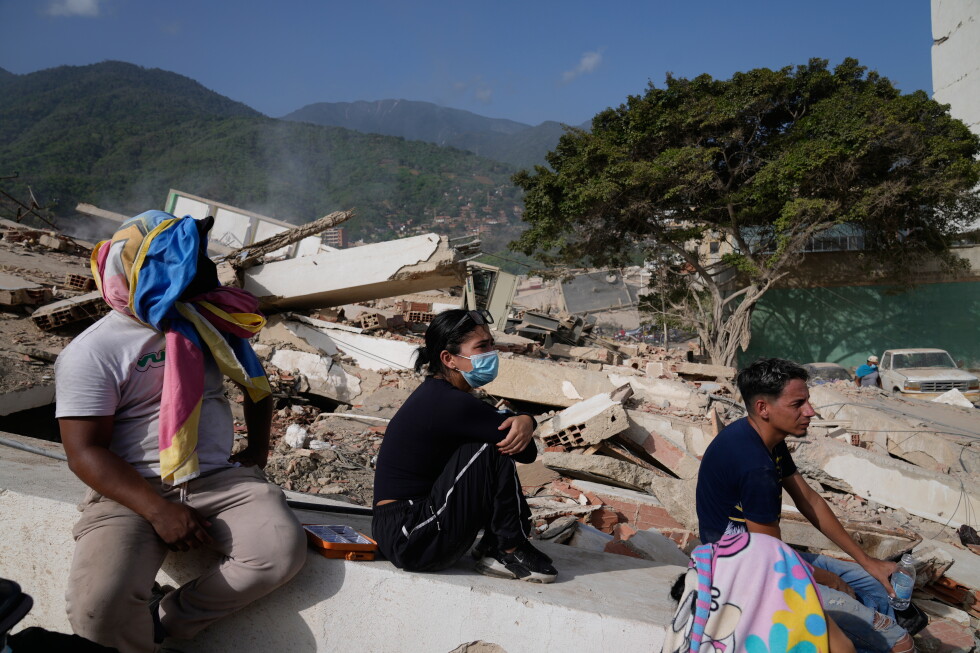
    CARACAS, Venezuela — In the wake of two massive, near-simultaneous earthquakes that devastated northern Venezuela this week, thousands of residents who suddenly lost their homes are now camping in public spaces, their futures hanging in the balance as rescue teams race to find survivors amid a growing death toll.

    On Wednesday evening, a 7.2-magnitude quake and a 7.5-magnitude tremor struck just 39 seconds apart, toppling structures across Caracas and neighboring regions, damaging hundreds of residential buildings. The confirmed death count already numbers in the hundreds, and officials expect that number to climb as search-and-rescue operations continue across the hardest-hit northern coastal areas. As of the latest update, at least 920 people have been killed and more than 3,300 injured, with thousands still reported missing.

    For the Quintero family, the quakes turned a stable apartment life into makeshift nomadism. The entire family now clusters around their small, worn sedan, with children taking the passenger seats, their pet parakeet Paquito and several pet turtles housed in the trunk. Francisco Quintero, a professional musician, says the whole family spends each night searching for a spot to sleep near the vehicle, waiting for official guidance on long-term housing support.

    Thousands of displaced Venezuelans have flooded into city parks, public plazas, and even the shoulders of blocked highways, scrambling for open space to set up temporary shelter. This disaster comes as Venezuela already grapples with decades of economic collapse, leaving more than half of its 30 million people in extreme poverty, with nearly 8 million already reliant on humanitarian aid before the earthquakes struck.

    In Guaira, the hardest-hit state just north of Caracas, displaced families have staked out claims to space on a dusty local baseball field, stretching out bedsheets to mark their territory, with all their possessions stuffed into thin plastic bags. Others have taken shelter under palm fronds. Among them is Alexandra Martínez, a 35-year-old mother of two, who wept as she described the total loss of her apartment: ‘The walls, the kitchen, everything, are destroyed. It split right down the middle.’

    Across Caracas, identical scenes of displacement play out. Desiré Gil, a 37-year-old street vendor who sells mangos and other small goods, now lives with her four children on a small grassy public plaza. Her 6-month-pregnant daughter was turned away from a local hospital Thursday after experiencing contractions, as a section of the facility’s maternity ward collapsed, and the building is already overflowing with patients transferred from other damaged medical centers. Though Gil’s building did not fully collapse, large sections of its structure are crumbling, and she refuses to return, terrified of a secondary collapse in aftershocks. ‘We have nowhere to live,’ Gil said. ‘This is the only option we have for the moment.’

    Like thousands of other displaced residents, Gil and her family are waiting for Venezuela’s civil protection agency to inspect damaged structures and rule on whether they are safe to reoccupy. But there is no clear timeline for when these inspections will begin, as government resources remain focused on search and rescue operations across the affected region. The Ministry of Education has announced that some school buildings will be converted into emergency shelters, but it has not released details on how many facilities will be repurposed or when they will open. For now, Gil says her family will remain on the grassy plaza ‘until the government gives us an answer.’

    Near the Gil family’s camp, other displaced residents use backpacks as pillows and prop up colorful beach umbrellas for shade from the tropical sun, while rescue and military helicopters buzz constantly overhead on their way to disaster zones.

    Civil engineering experts say the widespread structural collapse is no surprise, due to outdated building codes that left most of Caracas’s housing stock seismically vulnerable. José Rangel, a university professor and practicing civil engineer, explained that over half of Caracas’s buildings were constructed before 1982, when the national government first adopted a modern construction code tailored for earthquake-prone seismic zones. ‘Everything that we’ve built before that year is seismically vulnerable,’ Rangel told state broadcaster Venezolana de Televisión.

    Rangel noted that he and other engineering experts had already been working on seismic retrofitting plans and prioritizing infrastructure assessments for schools, hospitals, and bridges before the quakes hit. He called on the government to implement stricter building standards for reconstruction, and warned that it will take weeks to complete inspections and clear buildings for reentry. ‘It’s a process that lies ahead,’ Rangel said. ‘Right now, the most important issue is rescuing people.’ He urged independent engineers and architects to volunteer for the upcoming inspection effort, adding that investigating the root causes of building collapses is critical to avoiding similar damage in future seismic events: ‘The causes of the collapse must be determined. It’s how we learn lessons after an earthquake.’

    Magaly Noguera and her family are among those waiting anxiously for inspections. Their high-rise apartment building sustained heavy damage, and Noguera recalled the terror of the quake, when she, her son, his wife, and 3-year-old grandchild huddled together under a kitchen door frame before they could flee down the stairs to safety. ‘That day, the descent seemed endless to me,’ she said. ‘I don’t want to be in my house.’ The family now sleeps outdoors near a government building, surrounded by dozens of other households in the same situation.

    Down the street, the scope of the displacement is on full display: a man carried a full-size mattress on his left shoulder, his partner hauled multiple pillows under her right arm, and their small child walked tucked between them, heading toward an uncertain temporary shelter. The disaster has added a devastating new layer of crisis to a country already grappling with one of the worst humanitarian emergencies in the Western Hemisphere, leaving thousands of families to wonder how long they will remain without stable housing.

  • In the shadow of Minab: Inside the US testing of ‘new missiles’ on Iran’s Lamerd

    In the shadow of Minab: Inside the US testing of ‘new missiles’ on Iran’s Lamerd

    Six hours after a deadly attack on a school in Iran’s Hormozgan province that claimed more than 150 lives, mostly children, a new chapter of tragedy unfolded in the small southern Iranian town of Lamerd, population 30,000. On that afternoon in late February, four never-before-deployed Lockheed Martin Precision Strike Missiles (PrSM), developed by the United States, struck civilian targets across the town: a local school, its adjacent sports facilities, and nearby residential neighborhoods.

    It was just under an hour before iftar, the evening meal that breaks the daily fast during the holy month of Ramadan, and classes had only recently ended for the day. Had the strike come earlier, local officials confirm, the death toll would have been catastrophic on an unimaginable scale. Even so, the damage and loss of life carried profound, lasting weight for the tight-knit community.

    Rounia, a 12-year-old volleyball player, was mid-practice in the school gym when the first blast ripped through the building. “We were in our practice when we heard the first impact. We rushed to the door,” she recalled to reporters from Middle East Eye, one of the first international outlets to access the site after the attack. A second missile slammed into the complex moments later, filling the sports hall with thick smoke and searing heat that plunged the room into total darkness. The blast force jammed the exit doors shut, trapping the team and their coach inside.

    “We couldn’t see anything,” Rahimeh Shehabi, the girls’ volleyball coach, told MEE. “We could only hear the screams of the children.”

    Outside the gym, a group of young boys were in the middle of a casual football match when the first explosions hit. Shrapnel from the warheads scattered across the pitch, forcing the children to run for cover. Eleven-year-old Mahdiar, one of the players, recounted that his coach, Mahmoud Najafi, called the group to safety under a nearby canopy before rushing with 12-year-old player Ilya Khatami to the gym to free the trapped girls and women. A fourth missile struck the corner of the gym as the pair worked to pry open the blocked doors.

    “The fourth missile hit here,” Ilya’s father, Mohammad Khatami, told MEE, gesturing to the collapsed concrete corner of the gymnasium. “The force of the blast struck Ilya in the back of the head.” Ilya did not survive the strike. Najafi, the football coach, was also killed. For Mohammad Khatami, returning to the scarred gym is almost unbearable, but he finds small comfort in knowing his son died helping others: “It is really painful for me,” he said, “But I’m happy that my son was so responsible that he was with his coach, helping open the door for the girls.”

    In total, the Lamerd strike left 21 people dead, six of them children, and more than 150 wounded. The youngest victim was two-year-old Avina Bazingar, who was struck by shrapnel while playing in her family’s yard. Local surgeon and parliamentarian Dr. Moussa Mousavi, who operated on Avina for three hours as she kept her pacifier in her mouth, said she could not be saved. Among the other child victims were 10-year-old Helma Ahmadizadeh, 11-year-old Elham Zaeri – both Rounia’s volleyball teammates – 12-year-old Abdulmosavar Rahmani, one of Mahdiar’s football teammates, 16-year-old Zahra Gholami, and a young adult nurse killed while praying for the Minab victims in her yard. Months later, the nurse’s mother told MEE an orange residue from the blast still lingers in her home, no matter how many times she cleans.

    Mousavi, a veteran surgeon who treated war wounded during the 1980-1988 Iran-Iraq War, said he has never encountered a weapon as devastating as the PrSM. Each missile carries roughly 180,000 small tungsten pellets designed to disperse at high speed during an airburst detonation, meaning the four strikes that hit Lamerd scattered a total of 720,000 pellets across the residential area – an average of 24 pellets for every resident of the town. Unlike conventional shrapnel that often lodges in tissue, these pellets have an extremely high penetration rate: they tear through entire body parts, explode inside organs, and leave survivors with permanent, life-altering disabilities.

    “These pellets are like bullets fired from a rifle,” Mousavi explained. Comparing the munition to the controversial “butterfly bullets” used by the Israeli military in Palestinian territories, he noted the pellets are designed to not only kill but to leave survivors with mass permanent injury. One 15-year-old girl was left completely blind in the strike; another young girl, once known for her public speaking skill, can no longer speak at all; a third suffered irreversible spinal damage that left her paralyzed and bedridden; multiple young football players had their leg muscles and bones completely pulverized, robbing them of the ability to walk, let alone play the sport they loved.

    Mousavi called the strike a deliberate crime against children, pointing to an early statement from US Central Command (Centcom) that celebrated the first combat use of PrSM just days after the attack. “In a historic first, long-range Precision Strike Missiles (PrSMs) were used in combat during Operation Epic Fury, providing an unrivaled deep strike capability,” Centcom wrote on social media days after the tragedy. Weeks later, however, Centcom reversed its position, issuing an official denial that US forces had carried out the strike. The command instead claimed the damage came from a misfired Iranian Hoveyzeh cruise missile, adding that US forces did not operate within 48 kilometers of Lamerd. The Trump administration echoed this denial, saying that after an internal review, all accusations of US involvement were confirmed to be false.

    Independent investigations and on-the-ground reporting contradict this official US narrative. A New York Times investigation, citing independent weapons experts, found the pattern of mid-air detonation and pellet-style shrapnel damage found in Lamerd matches the design of the PrSM far more closely than Iran’s Hoveyzeh missile. MEE’s on-the-ground observation also confirmed there are no military targets – no Iranian Revolutionary Guard Corps bases, no weapons depots, no military installations – in the areas that were hit. All casualties were civilian, with no reported military personnel among the dead or wounded. Even the US military’s claim of “surgical strike” capability falls apart in Lamerd: every site hit by the missiles was civilian infrastructure, from the school and sports facilities to a local hair salon, neighborhood travel agency, and rows of family homes.

    Introduced into US service in 2023, the PrSM was designed to replace the older Army Tactical Missile System, with a compact frame and a standard range of 300 to 500 kilometers – the US is currently developing longer-range variants that can exceed 1,000 kilometers. The US depleted its stock of PrSM missiles in the early weeks of the ongoing conflict in the region and is currently investing heavily in scaling up production of the system. The damage left by the four PrSM strikes in Lamerd is visible throughout the targeted neighborhoods: concrete walls are pocked with thousands of tiny holes, cars are riddled with shrapnel and burned down to their frames, and destroyed buildings still stand as reminders of the attack. One charred vehicle and wrecked truck remain in public view in the town, permanent markers of the destruction that day.

    Months after the tragedy, the people of Lamerd have begun the slow work of rebuilding their community, bound by shared grief and collective solidarity. In the immediate aftermath of the strike, residents poured into local hospitals to volunteer, queued for hours to donate blood, and organized support for the families of the dead and wounded. “Everyone was volunteering, asking: ‘What can we do to help others?’” one local nurse told MEE. “This unity the Iranian people have doesn’t exist anywhere else.”

    Even among those who survived the strike, the community’s resolve remains unbroken. Rounia, the young volleyball player who escaped the gym trapped, has returned to practice. Mahdiar, the 11-year-old football player who lost his coach and two teammates, still holds fast to his dream. When asked what he wants to be when he grows up, he answered without hesitation: “A football player.”


  • Debris falls after plane hits Beijing’s tallest building

    Debris falls after plane hits Beijing’s tallest building

    A dramatic incident unfolded near Beijing’s central business district on [relevant incident date], when a small general aviation aircraft collided with the city’s tallest skyscraper, triggering a cascade of falling debris that rained down onto the ground below.

    Raw footage captured by bystanders on social media platforms quickly spread across digital channels, documenting the exact moment the wreckage and structural fragments descended from the high-rise after the impact. Emergency response teams were dispatched to the scene immediately to secure the area, assess casualties, and begin investigating the root cause of the collision.

    The crash has prompted immediate reviews of local air traffic protocols for low-altitude general aviation flights in densely populated urban areas, with city authorities urging the public to avoid sharing unconfirmed footage and rely on official updates for further information on casualties, damage, and investigative progress.

  • World Cup fans frustrated by ‘confusing and expensive’ tipping culture in US

    World Cup fans frustrated by ‘confusing and expensive’ tipping culture in US

    As thousands of international football supporters descend across the United States for the World Cup, a long-debated feature of American life has emerged as a top point of friction: the mandatory culture of tipping. Many visitors from countries where gratuity is either baked into menu prices or only offered for exceptional service have reported widespread tipping fatigue, with sticker shock and confusion straining their travel budgets.

    Geoff Pryor, an England fan from Norwich who is traveling across the U.S. to attend matches, acknowledged that tipping makes sense for quality table service at restaurants. Still, he described being asked to tip for even the most basic transactions – including buying a pre-packaged bottle of water – as “weird.” “They try to get a tip for doing nothing,” Pryor told the BBC, noting that while he recognizes U.S. hospitality workers earn lower base wages than staff in the UK, constant requests for gratuity add unnecessary strain to a trip.

    For Australian supporters Chris O’Flynn and Robert McNamara, the combination of already inflated World Cup match tickets and unexpected tipping costs has stretched their travel budgets thin. Unlike Australia, where service fees are included in listed prices, the pair said the constant expectation of gratuity in the U.S. has proven a major culture shock, even as they try to respect local customs. “I still find it a bit confusing why it exists… Sometimes you don’t know how much you’re supposed to tip,” O’Flynn explained. McNamara added that being asked for a tip after every individual drink purchase sends costs skyrocketing quickly: “They’re expecting a tip after every drink so it gets expensive very quick. You’re buying a drink and adding $5 on. It’s difficult to comprehend.” The core sentiment among Australian fans, O’Flynn said, is that employers should cover living wages for staff directly, rather than shifting that responsibility to customers.

    Japanese visitors echoed that frustration. Maiko Asahi, who traveled from Tokyo with her family to watch Japan play in Dallas, said tipping is not a cultural practice back home, and that U.S. prices are already exorbitant even before adding gratuity. “The prices without the tips are already very expensive, with tipping it is way too much,” Asahi said. Another Japanese fan, Akihiro, who is attending the tournament with his son, pointed out that even budget restaurant meals can end up costing far more than expected after tipping. “Even the cheapest meal at a restaurant still costs around $30, and when you add on a tip of say, 13-20% you end up thinking – Oh dear, I could have had another portion for that,” he said.

    But hospitality business owners across the country say the friction cuts both ways, with many reporting that international World Cup fans have a reputation for leaving little to no gratuity, putting already low-paid staff in a tight spot. Chris Keller, owner of Banter, a popular football-focused bar in Brooklyn that draws crowds of British and European fans during the tournament, told the BBC that under-tipping is a consistent issue. “It’s always the case. There’s no getting around it. There’s always a lack of tipping or playing ignorant like they don’t know,” he said. To protect his employees, Keller has adjusted his venue’s policy to require pre-payment for drinks – including an automatic service charge – for customers with reservations.

    Ann Calimano, co-owner of Hurley’s Restaurant & Bar in New York City, said the World Cup has brought an unexpected surge in foot traffic during what is typically a slow season, but many first-time international customers are unfamiliar with American tipping norms. “Europeans don’t tip like the American people. That’s the culture,” she explained. When large groups order hundreds of dollars’ worth of food and drink and leave no gratuity, Calimano said staff have to step in to clarify the unwritten rule: “The bartenders will graciously ask, ‘was the service okay?’ and they’ll say ‘yes, of course,’ And then they’ll explain that the service is not included, whereas in Europe, the service is included in the price of everything.”

    Tipping norms and base wages for hospitality workers vary widely across U.S. states. In Los Angeles, for example, the base minimum wage for tipped employees is $16.20 per hour, one of the highest rates in the country. Joseph Pitruzelli, owner of Downtown LA’s German-themed restaurant Wurstküche, said his venue has not seen a major shift in tipping habits during the World Cup, and keeps its suggested tip rates between 10% and 20%. He added that he has noticed other local venues pushing suggested tips as high as 25% to 30%, a range he calls unreasonable. At his restaurant, all tips are pooled and split among the entire front-of-house and back-of-house team, from dishwashers to chefs, to ensure all staff benefit.

    Rosa Thurnher, owner of El Ponce restaurant and a board member of the Independent Restaurant Coalition, explained that the expectation of 20% tips across the U.S. hospitality industry is rooted in the country’s unique wage structure. While some states set higher base wages for tipped workers, others like Atlanta set the minimum cash wage for tipped staff as low as $2.13 per hour. Federal law requires employers to make up the difference if an employee’s base wage plus tips do not add up to the federal minimum wage of $7.25 per hour, but without tips, Thurnher said it is nearly impossible for hospitality workers to cover living costs in most U.S. cities. “If they don’t receive any tips, it’s impossible to survive in the service industry,” she said. While individual states can set higher mandatory wages for tipped workers, tipping remains codified as a core expected component of hospitality employee income under U.S. regulation.