博客

  • Danger of the US‑Iran ceasefire agreement is what it leaves out

    Danger of the US‑Iran ceasefire agreement is what it leaves out

    After the most recent round of direct military confrontation between the United States and Iran de-escalated, a curious public spectacle emerged: Washington declared its mission a success, Tehran claimed its own victory, and Israel reaffirmed it retained full autonomy to launch strikes against Lebanese Hezbollah. Competing claims over whether Lebanese de-escalation was a formal part of the agreement have left many outside observers writing off the deal as a confused, bad-faith arrangement already teetering toward collapse. But for scholars of war termination and peace durability who have spent decades studying how conflicts end, these apparent contradictions are not a red flag — they are evidence that negotiations are working as intended. The real threat to long-term peace is not competing narratives, but what the Trump-brokered ceasefire leaves unaddressed.

    Diplomacy is never a single negotiation between two parties. Political scientist Robert Putnam famously framed international statecraft as a “two-level game,” where leaders must simultaneously strike a deal abroad and sell that agreement to domestic political audiences. No international agreement survives unless it can win buy-in at home. The U.S.-Iran deal is far more complex: it functions as a five-level negotiating game. Washington must satisfy not only Iran, but also its closest regional ally Israel, a divided U.S. Congress, skeptical Gulf Arab partners, and wary European allies. For Tehran, the domestic and international constraints are equally daunting: leaders must win approval from Supreme Leader Ayatollah Ali Khamenei and the Islamic Revolutionary Guard Corps, Iran’s most powerful military institution, contain widespread public anger over crippling economic sanctions that could spill over into mass unrest, and maintain the support of its key global backers Russia and China.

    Every concession and gain negotiated at the international table has to be packaged for stakeholders who were never present for the talks. This inherent dynamic is exactly what produces the contradictory public messaging that confuses outside observers. Each side is not speaking to its negotiating rival — it is speaking to its own domestic audience. Washington frames sanctions relief as a temporary, reversible move to appease hardline critics at home, while Tehran emphasizes its uncompromised national sovereignty to rally its public. Israel, meanwhile, underscores its unrestricted right to strike to satisfy its own domestic political base. This is not bad faith; it is standard diplomatic practice, with roots stretching back thousands of years.

    The earliest recorded peace treaty in human history, struck between Egypt and the Hittite Empire after the 13th century BCE Battle of Kadesh, follows this exact pattern. Two distinct versions of the treaty survive, each carved into stone for a domestic audience, with framing that serves each side’s narrative. Peace between the two great powers endured not because they agreed on a single public story, but because each could sell the outcome to their own people. The cost of compromise varies by context: in Washington, it may come in the form of electoral backlash, while in Tehran, hardline factions have a long history of extracting severe political costs from leaders who negotiate with the West, as former President Hassan Rouhani and Foreign Minister Mohammad Javad Zarif learned after the 2015 Joint Comprehensive Plan of Action nuclear deal.

    Contradictory public messaging is not the core problem with this latest deal. The real flaw is that the same multilevel negotiating pressures that produce messy public narratives also shape what negotiators are willing to include in the final text. Each side fights hard to secure visible, immediate rewards they can showcase to their domestic audiences, and pushes back hard against binding enforcement penalties that would force them to answer for noncompliance down the line. The result is a deal that is heavy on immediate benefits for all sides, and almost entirely lacking in credible enforcement mechanisms.

    Research on conflict resolution bears out this risk. In research for the 2009 book *Securing the Peace*, it was found that negotiated settlements ending civil wars break down at roughly twice the rate of conflicts that end in clear military victory. While the research focused on internal conflicts, the core lesson applies broadly to all war settlements: agreements fail not because of conflicting public narratives, but because they lack credible enforcement once implementation begins. This weakness is hidden at the time of signing, when all parties are still collecting the immediate benefits the deal promises. It only emerges later, once those rewards are exhausted, and there are no penalties left to deter parties from defecting.

    The 1979 Egypt-Israel Peace Treaty illustrates the alternative path to durable peace. The deal endured not simply because Egypt regained the Sinai Peninsula and Israel earned formal international recognition, but because those gains were embedded in a robust enforcement structure. Israeli withdrawal from the Sinai was phased and tied directly to ongoing compliance, the U.S. committed to long-term economic and military assistance for both nations, and the Multinational Force and Observers was deployed in 1981 to monitor demilitarization. More than four decades later, the treaty remains intact, proving the value of built-in enforcement.

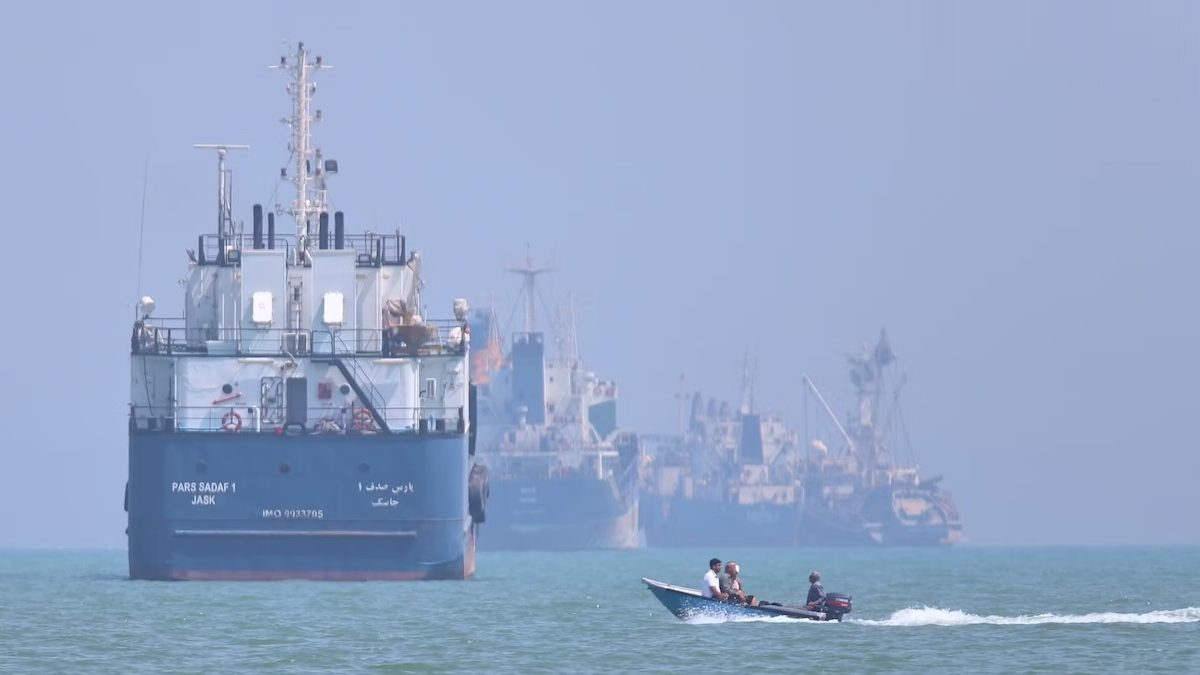
    For the U.S.-Iran deal, this lesson is clear: lasting peace depends not just on what parties gain immediately, but on the institutions and incentives built to enforce compliance long after the signing ceremony ends. Measured by that standard, the current agreement is built on unstable ground. It offers generous immediate rewards: the U.S. lifts economic blockades, issues oil export waivers, releases billions in frozen Iranian assets, and promises over $300 billion in reconstruction support. In exchange, Iran reopens the Strait of Hormuz and agrees to dilute its enriched uranium stockpile on domestic soil, while retaining all the infrastructure to ramp up enrichment again in the future. Almost every step delivers immediate benefit to one side or the other, and almost no step imposes meaningful costs on a party that chooses to walk away from the deal.

    Enforcement is left to a hypothetical United Nations Security Council resolution that has not even been drafted, and the most contentious issue — long-term uranium enrichment limits — has been kicked down the road to a final agreement that may never be negotiated. An even deeper structural flaw is that the most powerful actors capable of derailing the deal are not bound by its terms at all. Israel, Hezbollah, and the broad network of Iranian-backed militias across the Middle East were never signatories to the agreement. They gain little from complying with its terms, and risk nothing if they choose to defect, leaving the deal with no mechanism to impose costs on spoilers that break the peace.

    None of this means the deal is destined for immediate collapse. The history of peacemaking, from the Battle of Kadesh to the Dayton Accords that ended the Bosnian War to the Belfast Agreement that resolved Northern Ireland’s decades-long sectarian conflict, shows that public disputes and threats to walk away are normal growing pains, not proof of imminent failure. But surviving early turbulence is not the same as lasting for the long term. History shows that setbacks are inevitable; the question is whether parties will build robust institutions to deter defection before the immediate rewards are exhausted and the incentives to comply disappear.

    The core task for negotiators moving forward is not what most analysts are focused on: it is not reconciling competing public narratives. It is building automatic, meaningful consequences for any actor that returns to violence — including the powerful regional actors that never took a seat at the negotiating table.

    This analysis is by Monica Duffy Toft, Professor of International Politics and Director of the Center for Strategic Studies at The Fletcher School, Tufts University, republished from The Conversation under a Creative Commons license.

  • Just how much trouble is Canada’s economy in?

    Just how much trouble is Canada’s economy in?

    Canada’s Prime Minister Mark Carney has staked his government’s economic legacy on an ambitious goal: transforming the country into the most dynamic, high-performing economy among the G7 group of wealthy nations. Over the past year, Carney has crisscrossed the globe on trade and investment missions, pitching Canada as an attractive destination for global business capital. But for millions of Canadian households and industry leaders, the gap between this long-term vision and current economic realities is growing increasingly stark.

    To unpack the true state of Canada’s economy, and how it stacks up against peer nations, five key economic indicators paint a mixed picture of sluggish near-term growth, uneven pain across demographics and sectors, and underlying long-term potential that remains untapped.

    Forecasts from leading global economic bodies point to modest growth for Canada in the coming years. The International Monetary Fund projects 1.6% GDP expansion for 2026 – a rate that outpaces all European G7 economies, but still lags behind the United States, Canada’s largest trading partner. The Organisation for Economic Co-operation and Development forecasts a slight uptick to 1.7% growth in 2027 as the country gradually recovers from the slowdown caused by U.S. tariffs. That recovery comes after Canada slipped into a technical recession – defined as two consecutive quarters of contracting GDP – in the final months of 2025 and early 2026, according to Statistics Canada. While most economists have warned against widespread panic, noting the country is unlikely to face a prolonged deep downturn, they agree the underlying trajectory remains weak. “Whether one chooses to divine the fact that we’re in a recession or not really does miss the point,” explained Jeremy Kronick, president of the non-partisan Canadian economic think tank CD Howe Institute. “The economy is weak, right?”

    For most ordinary Canadians, weak growth translates directly to daily financial strain, with cost of living topping the list of national worries. A recent poll from the non-profit Angus Reid Institute found 61% of respondents rank cost of living as their top personal concern, outpacing housing affordability, crime and U.S. trade tariffs. Inflation rose to 3.2% in May 2026, up from 2.8% in April, driven by spiking global energy prices linked to the ongoing conflict in Iran. While that figure remains well below the post-pandemic peak of 7% to 8% hit in summer 2022, and aligns with inflation rates across major European economies (and is lower than the U.S.’s current rate), the steady rise in everyday costs has hit vulnerable households hard.

    Housing costs have emerged as a particularly crippling pressure, described by Paul Kershaw, a University of British Columbia professor and founder of intergenerational fairness advocacy group Generation Squeeze, as a “third kind of inflation.” This dynamic has created a stark divide: current homeowners have seen significant growth in their home equity, while younger and lower-income Canadians are increasingly locked out of homeownership and squeezed by rising rent. Overall, Canadian households carry the highest debt burden of any G7 nation, most of it tied to mortgage debt. While analysts note mortgage debt can build household net worth, the burden remains heavy for new buyers and renters. Recent polling bears out this divide: seven in 10 Canadians rate their current household finances as good or very good, but 27% report being in poor financial shape, with far more pessimism about the future among that group. More than a third of all Canadians say their current living situation is financially tough or very difficult, a share that jumps to 45% for renters. Low-income mortgage holders with household incomes under CA$100,000 also face significant ongoing strain.

    The labor market similarly reflects an uneven recovery. Canada’s overall unemployment rate hit 6.6% in May, with youth unemployment standing at 13.4%. While that marked the first drop in youth unemployment since January 2026, it remains far above the pre-pandemic average of roughly 10%. Kershaw argues that the current economic system is disproportionately failing younger Canadians and new immigrants of all ages, and that Carney’s long-term growth plans – which center on large-scale infrastructure investments and increased defense spending – do little to address the immediate needs of households struggling to make ends meet.

    Carney has not ignored the affordability crisis; his government recently introduced a one-time grocery benefit payment for eligible low- and middle-income Canadians, and has urged the public to be patient as long-term reforms take root. “This government’s been in the process of laying the foundations for a stronger, more resilient, more independent Canadian economy,” Carney said earlier this month. “That process is settling in during that time as the major investments, major changes to how the government operates, how we do major projects, how we have new trade agreements with other countries.” Beyond his global investment push, Carney’s Liberal government has set a target to double Canada’s non-U.S. exports over the next decade by expanding trade ties across Europe and Asia, and to cut red tape to speed up the delivery of major infrastructure projects.

    But business leaders warn that time is running out to deliver tangible progress. Dave McKay, CEO of Royal Bank of Canada, the country’s largest financial institution, warned during a recent Bloomberg-hosted event that global capital is impatient. “We have to see tangible progress on a couple of these big ideas,” McKay said. “The capital is impatient, and it will move where it thinks they can get the most sure and fastest return.”

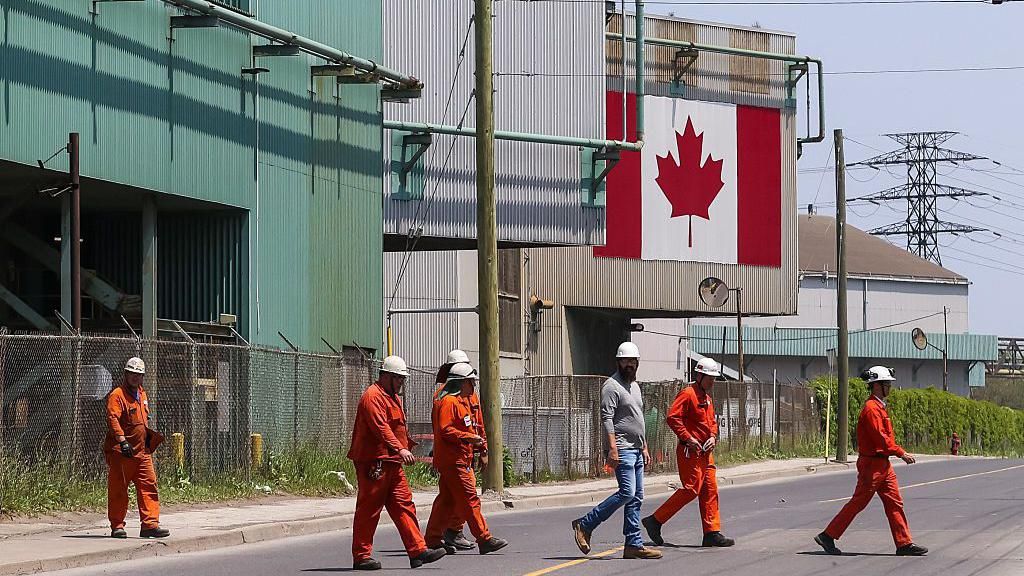
    One of the biggest headwinds facing the Canadian economy remains trade uncertainty with the United States, which receives more than 70% of Canada’s exports and has deeply integrated supply chains with its northern neighbor. While most goods are exempt from tariffs under the USMCA free trade agreement, the White House has imposed targeted sectoral tariffs ranging from 15% to 50% on steel, aluminum and copper, and a 25% tariff on vehicles, after tit-for-tat tariffs were introduced last year.

    Those tariffs have already caused tangible damage for Canadian businesses like Wellmaster, an Ontario-based manufacturer of drilling products owned and operated by the White family. Company president and CEO James White says 60% of the firm’s profitability depends on access to the U.S. market, and since the tariffs took effect, sales have dropped 20%. “I’m being pulled down in my ability to make investments in my people and my technology and my equipment. That’s not happening with my competitors,” White explained.

    The impact of these tariffs is not felt evenly across the country: auto manufacturing hubs like Brampton and Windsor, and regions reliant on metal production, have faced far more acute disruption than urban centers like downtown Toronto, Kronick noted. The Canadian government is currently negotiating with U.S. officials both to roll back the sectoral tariffs and to review the USMCA agreement, but no deal has been reached yet. Kronick says what businesses need most right now is clarity: “If I know it’s 10% fine, it’s a 10% tax, and I can make my adjustments to my business accordingly, and we move on.”

    Beyond trade uncertainty, Kronick says Canada’s slow growth is also fueled by long-standing structural issues, including internal trade barriers between provinces that range from differing trucking regulations to inconsistent professional licensing, and a tax system that is increasingly uncompetitive compared to peer jurisdictions Canada competes with for global investment.

    Even with these near-term challenges, economists remain optimistic about Canada’s underlying fundamentals. “If you were drawing up a country from scratch, a well-educated, well-resourced, not overpopulated country would be what you would want, right? So, I think Canada has all those things, all those features,” Kronick said. “I think we just have to unlock them.”

  • Hit South African show gets the world talking about polygamy and cheating

    Hit South African show gets the world talking about polygamy and cheating

    When the opening credits of Netflix’s breakout hit *The Polygamist* roll, audiences are immediately plunged into a charged, tense moment: the funeral of Johannesburg tycoon Jonasi Gomora, where the carefully constructed facade of his life shatters before viewers’ eyes. Standing front and center as chief mourners are not one, but two of his secret wives, flanked by a third spouse and a long-hidden mistress — all dressed in mourning black, while his public-facing social media influencer widow stands out in a striking white ensemble. What unfolds from this explosive opening is a 22-episode non-English drama that has not only dominated streaming charts across Africa and beyond, but also ignited fierce global conversation about polygamy, infidelity, and intergenerational trauma in modern African families.

    Adapted from Zimbabwean author Sue Nyathi’s 2012 novel of the same name, the Zulu-language series traces the toxic, tangled dynamics of Gomora’s household over five years, unspooling the secrets and betrayals that led to the emotional confrontation at his funeral. Produced through a partnership between streaming giant Netflix and South African production house Stained Glass TV, the series counts two daughters of former South African president Jacob Zuma — a well-known public polygamist with deep roots in Zulu traditional culture — among its executive producers. Gugu Zuma-Ncube, one of the Zuma sisters leading the project, opened up about how her own upbringing shaped the show’s raw, authentic storytelling.

    “A lot of the scenes that you see in the show are taken directly out of our lives. I famously come from a very polygamist family… [so] I brought that in,” Zuma-Ncube told the BBC. She added that the production team was completely caught off guard by the overwhelming global response to the series, which far outstripped even their most optimistic expectations. Within its first week of release on June 12, *The Polygamist* claimed the number one spot on Netflix’s viewing charts in both South Africa and Kenya, cracked the top 10 in Nigeria and Mauritius, and climbed to number four on the streamer’s global list of most-watched non-English series, racking up two million views worldwide. Its popularity extended far beyond the African continent, too, earning top spots in Trinidad and Tobago, Romania, and the Dominican Republic.

    For Zuma-Ncube, the pan-African embrace of the series carries extra weight amid rising continental tensions sparked by recent anti-migrant unrest in South Africa. Beyond geographic reach, the series has struck a surprising emotional chord with diverse audiences, particularly women navigating unfaithful relationships and people raised in fractured family structures. It is the charismatic, ruthless patriarch Jonasi, masterfully portrayed by South African actor Sdumo Mtshali, who has emerged as the show’s most divisive figure, splitting viewers and critics alike.

    Critics and everyday viewers have condemned Gomora as a manipulative serial cheater and narcissistic opportunist, whose secretive, duplicitous approach to multiple relationships has laid bare normalized social ills plaguing modern South African society. Letlhogonolo Mogale, a 35-year-old viewer from South Africa who binged the series shortly after release, told the BBC that the show’s unflinching portrayal of broken family dynamics hit particularly close to home, even though she does not come from a polygamous background. “What stuck out for me personally was how broken families are and how broken society is,” she said. Unlike the culturally rooted, consensual polygamy recognized under South African law and practiced in many traditional Zulu, Xhosa, Ndebele, and Venda communities, Mogale argues that the series depicts a coercive, hidden form of polygamy that warps every relationship in the household — a dynamic she says is rarely discussed openly. The show also confronts overlapping public health and social issues, including HIV transmission risks in plural unions (a particularly pressing topic in South Africa, where 13% of the population lives with HIV), gender-based violence, and intergenerational trauma.

    Not everyone has reacted positively to the series, however. The show has drawn vocal criticism from defenders of traditional polygamy, most notably Kenyan civil servant Geoffrey Mosiria, who has amassed a large social media following calling for *The Polygamist* to be banned entirely in Kenya. Mosiria, who grew up as the youngest of 22 children in a happy polygamous household, argues the series paints a misleadingly negative picture of the practice, which he says builds strong community bonds and is a common cultural norm across parts of Kenya. “Polygamy is the best way to find love,” he told the BBC, adding that the show’s plot will only fuel unnecessary distrust among married couples.

    Prominent South African film critic Phil Mphela pushed back on this criticism, noting that the series is not an attack on cultural polygamy as an institution, but rather a character study of one man’s selfish, harmful behavior. He also framed *The Polygamist* as a pivotal turning point for African television, noting that while South Africa has long produced world-class content, the series’ global breakout marks a major milestone for authentic African stories reaching and resonating with international audiences. “It’s doing exactly what it’s supposed to be doing because these stories are supposed to evoke something within our society,” Mphela said.

    The series’ runaway popularity has already had ripple effects beyond the streaming space: demand for Nyathi’s original source novel has surged, prompting the author to issue a public warning this week about pirated counterfeit copies being sold in Nairobi bookstores. “Please don’t buy pirated copies. I am working day and night (like Michael Jackson) to make sure the book becomes available in the East African region. Copyright infringement is a crime and a violation of my rights,” she wrote on Instagram.

    A-list celebrities from across the globe have also weighed in on the viral hit: Nigerian Afrobeats star Davido tweeted simply, “Yo JONASI is WILD,” while Emmy-winning host and actress Sherri Shepherd joked on Instagram, “I thought Crazy Rich Asians was something, but crazy rich Africans is a whole ‘nother level.” Academy Award-nominated actress Taraji P. Henson replied to Shepherd’s post, admitting the show had her in a “chokehold” and that she binged the entire first season in a single day. The show’s popularity is so intense in Kenya that local matatu minibus taxis have already been redecorated with Jonasi’s face and name to capitalize on the hype.

    As Netflix and the producers celebrate the show’s unprecedented success, fans across the world are already demanding a second season. When pressed for details on future installments, Zuma-Ncube remained coy, telling reporters: “I think ultimately what we’ll be guided by is serving the story and serving the audience… [but] who knows where we end up.”

  • Could you handle a 20-plus hour flight? This airline is banking on it

    Could you handle a 20-plus hour flight? This airline is banking on it

    At a formal announcement held at Airbus headquarters in the French city of Toulouse, Vanessa Hudson, chief executive of Australia’s flag carrier Qantas, declared a defining milestone for global aviation: the decades-long “tyranny of distance” separating Australia and Western Europe has finally been overcome. Last week’s announcement confirms that the world’s first regularly scheduled commercial flight exceeding 20 hours will connect London and Sydney, launching in October 2027, 80 years after Qantas first launched its iconic Kangaroo Route between the two cities.

    When the Kangaroo Route first launched in 1947, the journey between London and Sydney was a multi-day adventure that required seven stopovers across four full days of travel. Over the decades, Qantas has steadily cut the number of layovers, reducing the journey to just one stop in Singapore for its current service. The upcoming non-stop service, powered by custom-modified Airbus A350-1000 ultra-long-haul aircraft, will cut approximately four hours from total travel time, with the full flight expected to clock in at around 22 hours.

    This breakthrough, years in the making and repeatedly delayed, comes on the heels of a period of intense turbulence for Qantas. Executives are betting that premium and time-sensitive travelers will embrace the new marathon flight, despite its longer airborne duration and higher price point. “We feel really confident that this is going to be a success,” Hudson told the BBC in an interview following the announcement.

    Industry analysts widely recognize the launch as a transformative milestone in commercial aviation, but the move has sparked debate over whether the service aligns with what most long-haul travelers actually want. Qantas has already overcome significant technical and operational hurdles to reach this point, but challenges remain. Eliminating a stopover cuts down on costly landing fees, but Hudson acknowledged that the ultra-long flight carries a proportionally higher fuel cost. The modified aircraft also features a reduced total seat count, with 40% of seats allocated to premium economy, business, and first class cabins.

    To address health risks associated with prolonged seated air travel, such as deep vein thrombosis, Qantas has redesigned the economy cabin to add extra legroom and incorporated a dedicated on-board wellness zone. Passengers will be able to follow guided stretching routines on dedicated screens and have additional space to move around during the flight. Hudson pointed to the proven success of Qantas’ existing non-stop Perth-London route, noting that customers have consistently shown a willingness to pay a premium for the convenience of direct service.

    That enthusiasm is shared by many leisure travelers, including Australian travel agent Karis Heemskerk, who has already experienced the 18-hour non-stop Perth-London route multiple times with her family. Heemskerk described direct long-haul service as “amazing” and a far more efficient use of travel time. “I think the direct flights cut time and there is no risk of missed connections and the stress of your luggage being lost,” she explained. “Cons are that it can be gruelling and it is a long time for some individuals to be confined to a cabin. [But] overall, I’m a big fan of the direct flights.”

    Not all frequent travelers share that enthusiasm, however. Tom Gill, a 33-year-old cultural consultant based in Melbourne who travels to London at least once annually, said a 22-hour non-stop flight sounds unappealing. “I don’t mind an airport stopover at all: the idea of sitting in a plane for 20, 21 hours non-stop would be quite unbearable for me,” he said. For Gill, cost is the main barrier: the new non-stop route is expected to be priced roughly 20% higher than Qantas’ current one-stop service, putting it out of reach for his regular travel. “To be clear, I’d try anything once. If it was cheaper I would definitely consider it,” he added.

    Data from the UK Travel Industry Association ABTA shows that travel from the UK to Australia has grown over the past year, with particularly strong growth among travelers aged 18 to 24, reflecting the country’s enduring status as a top bucket-list destination for global travelers. Even so, Bryan Terry, managing director of Alton Aviation Consultancy, warned that demand for the ultra-long-haul non-stop service is likely to remain niche, creating financial risk for Qantas. “Qantas is targeting premium and time-sensitive travellers willing to pay a meaningful premium to avoid a Dubai, Singapore, or Los Angeles connection,” he explained. Terry noted that Singapore Airlines’ existing record-breaking non-stop service between Singapore and New York has already proven that travelers will pay significantly more to eliminate a layover, but the customer base remains limited. Even so, he acknowledged that the new London-Sydney route conquers “one of the last frontiers in commercial aviation.” “Every generation of aircraft has chipped away at Australia’s isolation, but a non-stop Sydney to London or New York has always been just out of reach,” he added.

    The project to develop the non-stop route, codenamed Project Sunrise, was first launched back in 2017, the same year Qantas announced its first non-stop London-Perth service. Previous launch timelines were delayed by setbacks, but the project is now moving forward: the first of 12 custom-modified Airbus A350-1000 aircraft was delivered to Qantas in April 2026. The aircraft are fitted with an additional fuel tank to extend maximum flight time to 22 hours, and feature adjusted cabin lighting and meal scheduling to reduce traveler jetlag upon arrival.

    Malcolm Ridley, Airbus’ chief test pilot, explained that adapting the A350-1000 for ultra-long-haul service required only modest engineering adjustments. While Qantas has exclusive rights to the first 12 modified aircraft, Ridley said other global carriers have already expressed informal interest in the design. “When the aircraft goes into service and people can see what it’s capable of, we may see more interest,” he added.

    The launch of the world-first route comes as Qantas works to rebuild its reputation following a series of high-profile controversies in the first half of the 2020s. In 2024, the airline agreed to pay a A$100 million ($66.1 million) penalty to settle a case with Australia’s consumer watchdog, after it was found to have sold tickets for already-canceled flights, affecting up to 880,000 customers. The following year, Qantas was hit with a record A$90 million fine following a years-long industrial relations dispute over its decision to outsource Australian ground handling operations, which led to 1,800 employees being laid off. These scandals, combined with chronic poor on-time performance, pushed Qantas down to 24th place in the 2024 Skytrax global airline rankings, its worst-ever result and a steep drop from 5th place just two years prior.

    Hudson, who took over as CEO in 2023 and opened her tenure with a public apology for the airline’s past missteps, said Qantas has made rebuilding customer trust its top priority. “It’s been hard work in lifting on-time performance, investing in the customer experience and that’s in all of our fleets, all of our networks,” she said. While she noted that customer satisfaction and operational reliability have improved “leaps and bounds,” she emphasized that the work to rebuild is ongoing. For Qantas, Project Sunrise represents more than a new route: it is a key step in the airline’s efforts to reset its reputation and deliver new value to customers, and the entire global aviation industry is watching closely to see if the historic bet pays off.

  • They quit the West for Russia’s traditional values, but it wasn’t what they expected

    They quit the West for Russia’s traditional values, but it wasn’t what they expected

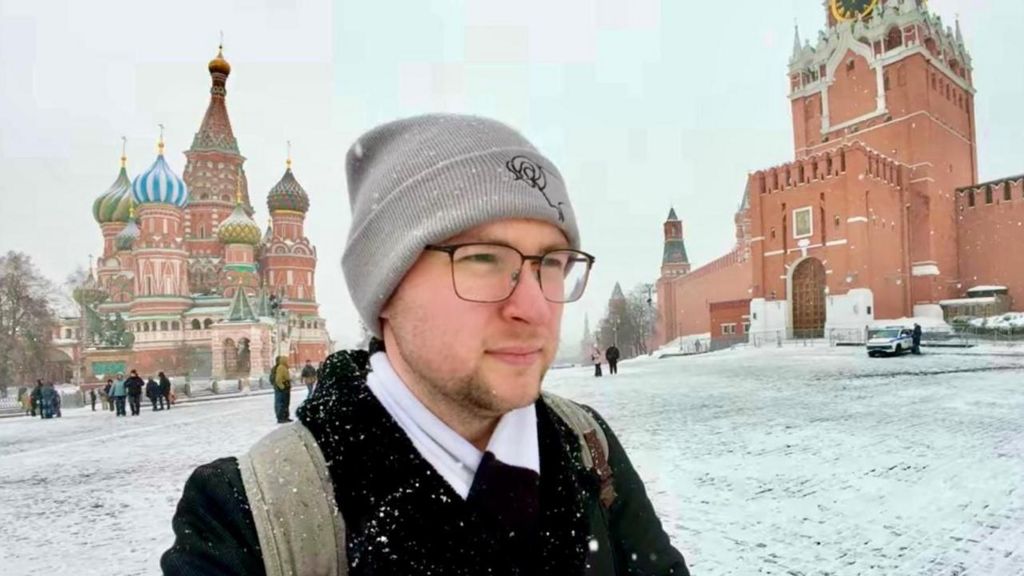
    Against a backdrop of sweeping international isolation following its 2022 invasion of Ukraine, Russia has launched an unconventional immigration initiative designed to position itself as a global bulwark of traditional cultural values, drawing a small but notable stream of disillusioned Westerners to its borders. Introduced by President Vladimir Putin in 2024, one month after Texas native Leo Hare received Russian asylum, the Shared Values visa—colloquially known as the “anti-woke” visa—offers up to three years of temporary residency to citizens of the 47 nations Russia classifies as “unfriendly”, with a uniquely low barrier to entry.

    Unlike standard Russian immigration pathways, the scheme waives mandatory exams in Russian language, Russian history and national law. Instead, applicants need only sign a declaration affirming they align with Russia’s traditional spiritual and moral principles, and reject what the Kremlin labels the “destructive neoliberal ideology” of their home countries. After the three-year temporary residency period, visa holders must either pass the required language and history exams to secure permanent residency or exit the country. The program offers no government-funded housing or financial support; applicants only pay a 1,600 rouble (roughly £17 or $22) administrative fee and clear standard medical and criminal background checks.

    As of spring 2026, Russian authorities report nearly 3,400 people have submitted applications under the scheme—though independent verification of this figure, and of how many applications have ultimately been approved, remains impossible to obtain. The visa program is the practical realization of a policy vision Putin first outlined in a 2022 decree, where he warned that Western ideological influence posed a direct threat to core Russian values such as traditional marriage and family structure, and called for a global rebranding of Russia as a counterweight to perceived Western moral decay. Today, a sprawling online network of relocation services and social media influencers amplifies this narrative, marketing Russia to Western audiences as a haven where family-centric culture remains intact and daily life feels more secure than in their home countries.

    Ilja Belobragin, who runs a firm assisting foreign nationals relocate to Russia, says the most common refrain he hears from clients is that they no longer recognize the communities they grew up in. Many prospective migrants cite grievances ranging from rapid cultural shifts, high levels of immigration, and declining living standards in their home countries. For most of those making the move, Russia’s ongoing war in Ukraine has not proven to be a deciding factor. Some openly back Russia’s military campaign, while others frame their decision as rooted entirely in cultural values rather than geopolitics.

    Philip Hutchinson, a former UK Conservative Party candidate who now resides in Moscow and helps other Westerners relocate, says he deliberately avoids discussing the conflict. “What are my thoughts on it? Look, I don’t really get involved in that. I’m not here as a politician. I’m here to live a nice quiet life with my family,” he explained. When asked if facilitating relocations under the Shared Values visa constitutes a political act, Hutchinson rejects the framing, arguing the program is simply the most accessible pathway to residency currently available for Westerners.

    Leo Hare, the Texas father of three who received asylum months before the program launched, became one of the most high-profile early examples of Western migration to Russia. A devout Christian, Hare had grown increasingly disillusioned with deep political polarization in the U.S., genetically modified food, and what he viewed as the expanding influence of the LGBTQ movement, and saw Russia as a promising alternative built on Christian faith and traditional family values—a narrative actively promoted by the Russian state. After arriving, he threw himself into local life: sampling traditional pelmeni dumplings, milking goats on a rural farm, and creating social media content documenting his experience for followers back in the West. Russian state media even filmed his asylum granting ceremony, where Hare publicly thanked Putin for welcoming his family, and he initially saw himself as a pioneer for what he called an “unprecedented” new immigration policy.

    But the reality of life in Russia quickly grew far more complicated than Hare anticipated. Within weeks of arriving, he and his family were defrauded of 5 million roubles (approximately £52,000 or $66,000) by a trusted contact, leaving them homeless. When interviewed earlier this year, Hare was living separately from his wife in the city of Ivanovo, and his two older children had returned to the United States. He now describes the past two years as both the best and worst period of his life.

    Hare still speaks warmly of ordinary Russian people, recalling how members of his local Orthodox church community stepped in to support his family after they lost their savings, including a local woman who took in his youngest son and taught him Russian free of charge. “My heart is just full of love for these people,” he said. He has since found work as an English tutor, and has experienced life across a range of settings, from an Orthodox monastery to Soviet-era small apartments and modern high-rise developments. But over time, he has grown increasingly concerned about restrictions on access to information and ongoing struggles with Russia’s economy. He has also stepped back from his earlier role promoting migration to Russia, admitting he once bought into the state’s promotional narrative. “I believed in the propaganda,” he said. Though he says he feels bound to stay in Russia by a sense of destiny, he now openly misses the civil liberties that shaped his life in America, noting “[In] Russia you don’t have these human rights values.”

    Other Western migrants have pushed back against the idealized narrative of Russia as a conservative utopia promoted by some influencers and the Russian state. Ben, a UK national from Derby who moved to Russia in 2023 on a private family visa to live with a Russian woman he met on a language exchange website, says he feels safer in his daily life in Russia and praises the warmth of local residents, but rejects the framing of Russia as a perfect conservative alternative to the West. Ben, who now lives in Kursk near the Ukrainian border, says his family initially thought he was insane for moving to a region near active conflict. He points to high rates of single-parent households, widespread acceptance of abortion, and extremely high divorce rates as evidence that Russia does not live up to the conservative ideal promoted online. “Russia isn’t some utopia,” he emphasized, arguing that many influencers promoting the country have hidden political agendas.

    Nearly two years after the Shared Values visa launched, Russia’s experiment in attracting ideological migration remains small in scale. While it has failed to draw the large wave of “anti-woke” migration its creators may have hoped for, it has cleared a path for a small group of Westerners to build new lives in Russia—for reasons ranging from love and faith to a simple desire for a fresh start.

  • Meloni and Trump: A very public fall-out that is proving very hard to fix

    Meloni and Trump: A very public fall-out that is proving very hard to fix

    Viral AI-generated memes circulating across Italian social media have perfectly captured a dramatic shift in transatlantic politics: the once-close alliance between Italian Prime Minister Giorgia Meloni and U.S. President Donald Trump has devolved into a very public, very messy political breakup. The memes, which show Meloni engaging in classic post-breakup activities from getting a new haircut to signing up for a dating app, lean into a joke that has resonated deeply with the Italian public because it reflects a very real rupture that has unfolded over the past six months.

    It was not long ago that Meloni was widely known as Washington’s favorite European right-wing leader, nicknamed the “Trump whisperer.” She held the distinction of being the only European head of government to claim a front-row seat at Trump’s January 2025 inauguration, and just months later, she was tapped as the European Union’s top envoy to the White House for high-stakes talks aimed at defusing rising tensions over U.S. steel and aluminum tariffs on European goods. For Meloni, who spent years rebranding from a fringe post-fascist politician to a mainstream, credible leader of the European right, this close relationship with Trump was far more than a convenient diplomatic tie. It was global validation that she had arrived as a major player on the world stage.

    But Trump’s well-documented unpredictability has created a minefield that Meloni has been unable to navigate, eroding her credibility at home and abroad. The first major crack in the relationship emerged in late March, when Italy’s defense ministry announced it would require parliamentary approval before allowing U.S. military aircraft bound for the Middle East to use the NATO Sigonella airbase in Sicily. The decision aligned with Italy’s constitutional requirements and reflected overwhelming public opposition to expanded conflict in the region, but it set the stage for escalating friction.

    The dispute boiled over in April, when Trump launched a public attack on Pope Leo XIV on Truth Social after the pontiff criticized the U.S.-led campaign against Iran, calling the Pope “weak on crime.” As the leader of a deeply Catholic nation, Meloni had no choice but to push back, labeling Trump’s attack “unacceptable.” The U.S. president reacted sharply, telling Italian daily *Corriere della Sera* that he had been wrong about Meloni’s political courage. “I thought she had courage, but I was wrong,” he said. “She is unacceptable… she is not the same person, Italy is not the same country.”

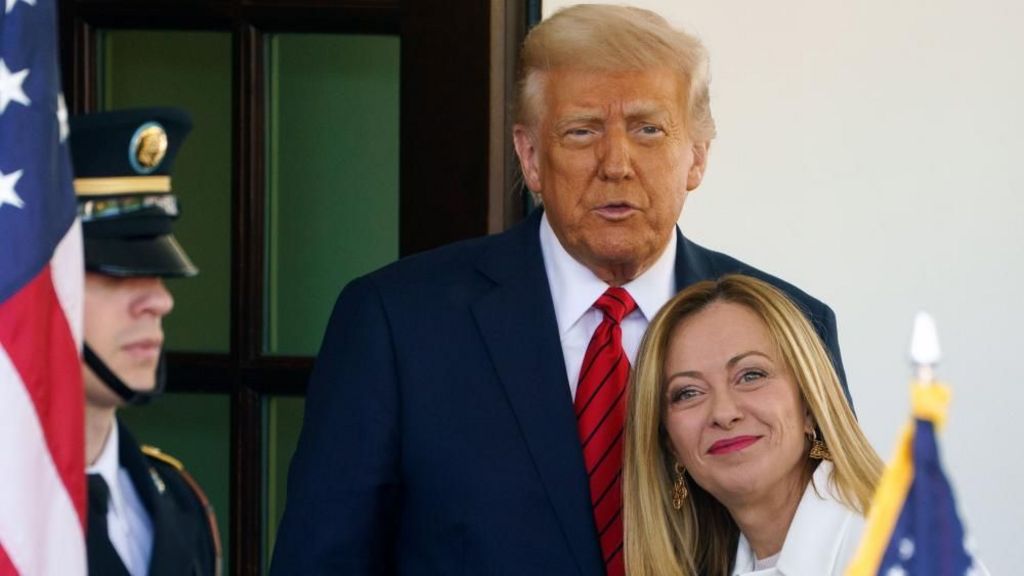
    By the June G7 summit in Évian-les-Bains, France, it looked like the pair had smoothed over their differences. Photographs showed the two leaders holding an extended, closed-door conversation on a summit sofa, and Meloni told reporters the discussion had been “very positive,” with “no friction.” But the truce collapsed within days. In a leaked, Italian-dubbed phone interview with Italian broadcaster La7 that was never aired in English, Trump claimed Meloni had “begged” him for the summit photograph. “She wanted a picture with me so badly,” the voiceover quoted Trump as saying. “I wouldn’t have taken it, but I felt sorry for her.”

    Meloni responded immediately with a scathing video address posted to her social channels, calling Trump’s claims “completely fabricated.” “I don’t know why the president of the United States behaves this way toward his own allies,” she said. “I can only say it’s a pity he doesn’t show the same resolve toward the enemies of the West… But there’s one thing he must remember: neither I nor Italy ever beg.” The political fallout across Italy was swift and unified: President Sergio Mattarella called Meloni to express full solidarity, government lawmakers called the comments an insult to Italian dignity that demanded an apology, and opposition parties joined in condemning the remarks as an unacceptable affront to the entire nation. Italy’s foreign minister Antonio Tajani went a step further, canceling a planned official trip to Washington.

    Trump doubled down on his claims from Camp David, posting to Truth Social that Meloni had asked for the photograph “over and over” and accusing her of only seeking to repair ties now that the U.S. had “defeated Iran militarily.” Before the original dispute could cool, a second controversy erupted over comments from NATO Secretary General Mark Rutte. Appearing on Fox News last Wednesday, Rutte claimed around 500 U.S. aircraft had taken off from bases in Italy to support “Operation Epic Fury,” the U.S.-Israeli military campaign against Iran, framing the movement as part of broad European support for the operation. Rome rejected the account forcefully, with the defense ministry calling Rutte’s claims “fallacious” and “totally misleading,” emphasizing that Italy had only authorized technical and logistical flights, not combat operations, and had rejected all requests that crossed that line. A NATO spokesperson later walked back the comments, clarifying that Rutte had only meant to note that all allies, including Italy, had upheld existing bilateral basing agreements. Still, the incident reignited domestic pressure on Meloni, who has repeatedly insisted her government never authorized the use of Italian territory for direct military action against Iran.

    For Meloni, who is already navigating political headwinds after a recent defeat in a national constitutional referendum and faces a general election next year, the feud has opened up pressing questions about her future political positioning. Analysts point out that her long-held strategy of balancing between competing European and U.S. interests has collapsed. “This might be a tough situation to turn around,” said Gianni Riotta, author and vice chairman of the Council for the United States and Italy, speaking to the BBC. “Meloni’s ability to build a bridge now looks like a mere illusion, she couldn’t stand between Europe and the US. She tried to please both sides, on Ukraine, on tariffs. Then the Pope broke it: she had to back him, and Trump doesn’t accept that. Trump has had a friend-or-foe outlook since his property days in New York, you’re either with me or against me, and once that understanding broke down, he pushed harder, and Meloni played up her tough-woman image.”

    While neither Rome nor Washington is pushing for a full diplomatic rupture, public tensions remain high. Earlier this week, reports circulated that multiple Italian government ministers planned to boycott the U.S. Embassy’s annual Independence Day reception at Rome’s Villa Taverna, brought forward this year to July 2, in solidarity with Meloni, who was already not expected to attend. That talk of a boycott has since softened, with Tajani announcing he will attend “with my head held high” and Meloni’s allies saying ministers are now free to make their own choice about attendance. The real test of the relationship will come next month, when both leaders are scheduled to attend the NATO summit in Ankara, marking their first public appearance in the same room since the explosive G7 dispute.

  • The Bhojpuri singers fighting vulgar tag on one of India’s oldest languages

    The Bhojpuri singers fighting vulgar tag on one of India’s oldest languages

    A haunting century-old Bhojpuri folk song performed on a hit Indian music platform has become a viral overnight sensation, igniting a long-overdue reckoning with harmful stereotypes that have obscured the language’s rich, layered cultural heritage for decades.

    When 29-year-old folk singer Udit Utpal, hailing from the rural Saharsa district of India’s northern state of Bihar, took the stage for *Coke Studio Bharat* — the Indian iteration of the global popular music franchise that amplifies underrepresented regional sounds for cross-South Asian audiences — to perform *Kachaudi Gali* alongside acclaimed vocalist Rekha Bhardwaj, the track quickly amassed millions of views. Beyond launching Utpal’s national career, the unexpected breakout hit has drawn renewed attention to Bhojpuri, a language spoken by tens of millions across northern India and a global diaspora stretching from the Caribbean to the South Pacific, yet one long reduced to harmful, one-note stereotypes in mainstream Indian culture.

    For most modern Indians, Bhojpuri is synonymous with a commercial entertainment industry dominated by crude, sexually charged lyrics and misogynistic tropes. On film and television, Bihari characters and accents are routinely pushed into one-dimensional roles: comic sidekicks, impoverished migrant laborers, or unrefined rural outsiders. This persistent caricature has completely overshadowed Bhojpuri’s centuries-deep literary and folk canon, which includes thousands of folk songs, epic poetry, theatrical works, and oral storytelling traditions rooted in the lived experiences of Bihar’s people. For decades, regional folk artists have worked to preserve these traditions, but their work has been largely eclipsed by the language’s more visible, negative mainstream image.

    For Utpal, changing that misperception has become a life’s mission. Growing up moving across different regions of Bihar for his father’s government job, he absorbed local folk melodies from childhood; in his early 20s, he began diving deeper into the work of iconic Bhojpuri playwrights and poets like Bhikhari Thakur and Mahendra Misir, who shaped the state’s folk artistic identity. A defining throughline of Bhojpuri folk music, he learned, is the experience of migration — a theme that has shaped Bihar for centuries, from the forced colonial labor systems that shipped Bihari workers across the British Empire to the modern pattern of outmigration to India’s wealthy urban centers for work. *Kachaudi Gali* itself embodies this history: it tells the story of a colonial-era woman mourning as her husband leaves to fight in a distant British war, cursing the empire that tore him from her and even imagining taking up arms herself.

    “It hurts when you are deeply connected to the music of your roots, yet others perceive it poorly,” Utpal told reporters. “I really want to change that. I want people to realise that Bhojpuri and Bihari music have much more depth than the stereotypes suggest. I want them to hear the stories the music conveys.”

    To make these stories accessible to new audiences, Utpal shares detailed contextual explanations of the history and cultural meaning of every song he posts to social media, pairing short performances with reflections on colonialism, migration, and the legacies of Bhojpuri’s greatest artists. It was this commitment to context that caught the eye of Khwab, producer of *Kachaudi Gali* for *Coke Studio Bharat*, who discovered Utpal a year ago through an Instagram video of the singer performing the track in his village.

    “Utpal is obviously a brilliant singer, but when I read his explanation of the song’s history, I literally sat up in bed. I knew then that something significant had to come from this,” Khwab recalled.

    For the *Coke Studio* reimagining, Khwab crafted a production that balances modern pop polish with uncompromising respect for the song’s traditional roots: all core traditional instruments — including shehnai, tabla, dholak, harmonium, and dotara — were recorded live, rather than relying on synthesized backing tracks. “It’s about preserving what might be lost while creating something fresh. I wanted others to realise that folk music can be cool too,” Khwab explained of the project’s mission.

    Utpal’s folk revival is not the only effort to rewrite mainstream narratives about Bhojpuri: hundreds of kilometers away, independent rapper Sanket Shikriwal is challenging stereotypes from an entirely different angle, blending Bhojpuri language and themes with jazz, spoken word, and hip-hop to create a completely contemporary sound that bridges Bihar’s rural past and India’s digital present. Where Utpal’s work centers recovering forgotten traditional heritage, Shikriwal’s thrives on creative collision: his verses weave together village childhood memories with references to Franz Kafka and John Coltrane, pairing stories of migration with modern internet culture, and creating an ongoing conversation between past and present, village and city.

    His music often uses raw street language and profanity to express social agitation, a choice he says is no different from the profanity long accepted as a tool for commentary in global hip-hop or even mainstream Punjabi music, which has grown into one of India’s most successful cultural exports under artists like Diljit Dosanjh and Sidhu Moosewala. Shikriwal argues that Bhojpuri is held to a double standard: other regional genres are allowed to experiment and work through raw emotion, but Bhojpuri is constantly expected to sanitize itself to prove its respectability.

    “The question isn’t whether Bhojpuri can be made respectable. It’s why Bhojpuri speakers are always expected to prove that they are,” Shikriwal said. “What I hope for is not a sanitised version of Bhojpuri culture, but a more confident one — secure enough to define itself on its own terms. I want people to look at Bihar and see philosophers again. We call it the Land of Buddha, yet we treat its people with such disrespect.”

    For Utpal, the viral success of *Kachaudi Gali* is already a sign that change is coming. Millions of listeners across India and beyond have connected with the song’s raw, centuries-old story of grief and resistance, proving that audiences are hungry for the full, unfiltered story of Bhojpuri culture. “It was a reminder that one of India’s most widely spoken languages is still waiting to be heard on its own terms,” Utpal said.

  • World Cup what to know: Round of 32 to be finalized after final 6 matches of group play

    World Cup what to know: Round of 32 to be finalized after final 6 matches of group play

    After more than two weeks of cross-border group stage play at the expanded 48-team World Cup, the final batch of six matches on Saturday will lock in the full 32-team field for the knockout round, which kicks off just one day later. With most qualification spots already secured, the remaining fixtures bring high drama: teams are jostling for favorable group positions, fighting for their tournament lives, and sitting on the bubble of elimination, waiting for other sides’ results to shape their fate.

    The format shift to 48 teams has added layers of intrigue, and occasional confusion, to the qualification race. Under the new structure, the top two finishers from each of the 12 groups advance, along with eight best third-place teams, creating a wider range of possible outcomes and putting tiebreakers at the center of many teams’ calculations.

    The headline matchup of Saturday’s slate is the Group K showdown between Cristiano Ronaldo’s Portugal and Colombia, held in Miami Gardens, Florida, where kickoff conditions will see temperatures near 30 degrees Celsius coupled with high humidity. Colombia has already locked in its knockout spot, and a win or draw will give it the Group K title. Portugal, meanwhile, needs three points to top the group, but can still move on with a draw — and in some scenarios, even a loss. For Portugal manager Roberto Martinez, securing the group’s top position is a secondary goal: the only priority is advancing.

    “My experience, probably in my first World Cup, I would have said yes [that winning the group matters]. You sit down and you are so inexperienced, you want to plan everything … and then you realize that doesn’t happen in competitions,” Martinez told reporters. In the end, he added, “you have to be able to beat everybody and anybody.”

    Also in Group K, underdog Congo will look to claim its first ever World Cup win and secure a knockout spot when it faces Uzbekistan in Atlanta. Congo shocked tournament observers by holding Portugal to a 1-1 draw in its opening match, earning the country its first ever World Cup point. It has only qualified once before, in 1974 when it competed as Zaire and lost all three of its matches, including a 9-0 defeat to Yugoslavia. “We are very, very happy to have got this first point and first goal for Congo, but we have a final to play tomorrow,” head coach Sébastien Desabre said. “I hope that I’ll get the Congolese people to dream tomorrow a little bit.” A win against winless, point-less Uzbekistan would punch Congo’s ticket to the knockout round, joining the growing contingent of African nations that have advanced in this tournament.

    In Group L, Ghana and Croatia will face off in Philadelphia with everything on the line. Sitting level on four points alongside England, Ghana only needs a draw to secure its first knockout round appearance since it reached the quarterfinals in the 2010 South Africa World Cup. Croatia enters the match with three points, needing a win to guarantee its spot in the Round of 32. “Everyone’s ready, everyone was real happy with the result against England,” Ghana midfielder Antoine Semenyo said. “It’s going to be a tough game tomorrow, but everyone is excited and ready.” England, tied with Ghana at four points, closes its group stage against Panama in East Rutherford, New Jersey.

    One of the most unusual storylines heading into Saturday’s play comes from Group J, where Austria faces Algeria in Kansas City, Missouri. With group leader Argentina already guaranteed the top spot, the bracket structure creates an odd scenario: finishing third could give Austria a far easier knockout matchup than finishing second. The Group J runner-up will face Group H winner, likely reigning European champion Spain, while a third-place finish would set up a game against Group B winner Switzerland, widely viewed as a more manageable opponent. The awkward dynamic echoes the infamous 1982 “Disgrace of Gijon,” where a fixed result between West Germany and Austria eliminated Algeria and led FIFA to mandate simultaneous kickoffs on the final group stage day to avoid match-fixing risks. Austria’s manager Ralf Rangnick rejected any suggestion his side would play for a loss. “No, definitely not. Once we start we will know, but it will not influence our match. If we have a draw tomorrow, we can go on, but we cannot go into a match and just say, ‘We’ll play for a draw.’” Midfielder Konrad Laimer echoed that sentiment: “We go out, we want to win the game. It doesn’t matter who we face.”

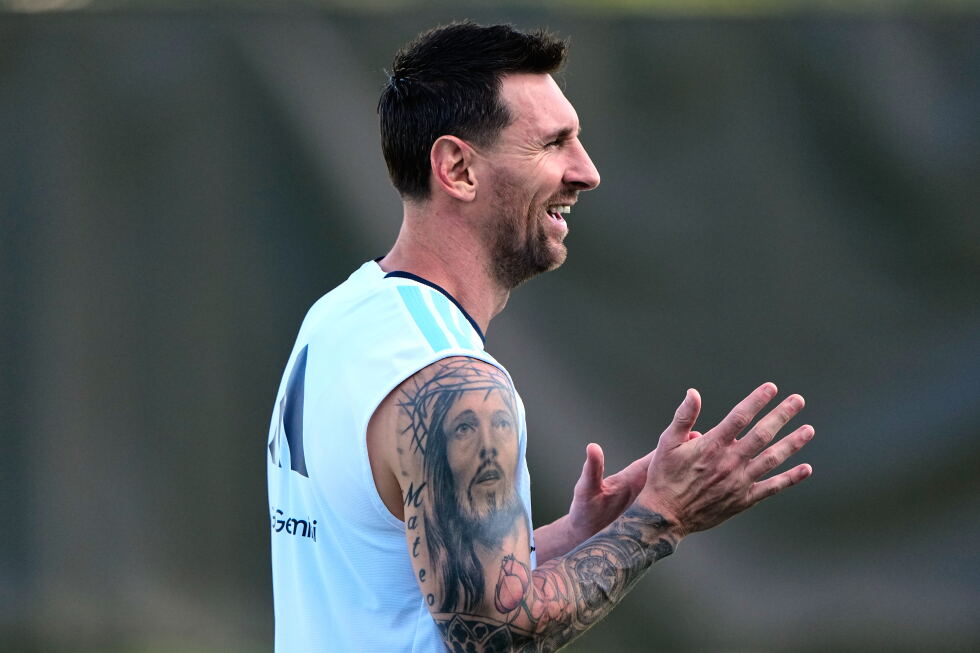
    Closing out the day’s slate in Arlington, Texas, defending champion Argentina will face Jordan already confirmed as Group J winners, leaving head coach Lionel Scaloni with a tough call: play 39-year-old star Lionel Messi to let him add to his World Cup scoring record, or rest his star forward to avoid injury ahead of the knockout round. The match is widely expected to see Messi start on the bench, though the player himself has pushed for playing time in past similar scenarios.

    Beyond the storylines of the final matchday, tournament data reveals a surprising trend: scoring first does not guarantee a positive result. Seven different teams have fought back from first-half deficits to secure group stage wins so far, including South Korea’s late 2-1 comeback over the Czech Republic, Algeria’s 2-1 victory against Jordan, and most recently Turkey’s last-second 3-2 win over the United States. Egypt, Germany, Morocco and Ecuador have also rallied from deficits to claim three points.

  • A Minnesota man accused in a $250M fraud scheme has been taken into custody in Somalia

    A Minnesota man accused in a $250M fraud scheme has been taken into custody in Somalia

    Mogadishu, Somalia — A 42-year-old Minnesota man identified as a core conspirator in one of the largest public fraud schemes in U.S. Midwest history has been apprehended by authorities after years as a fugitive, U.S. federal law enforcement officials confirmed Friday.

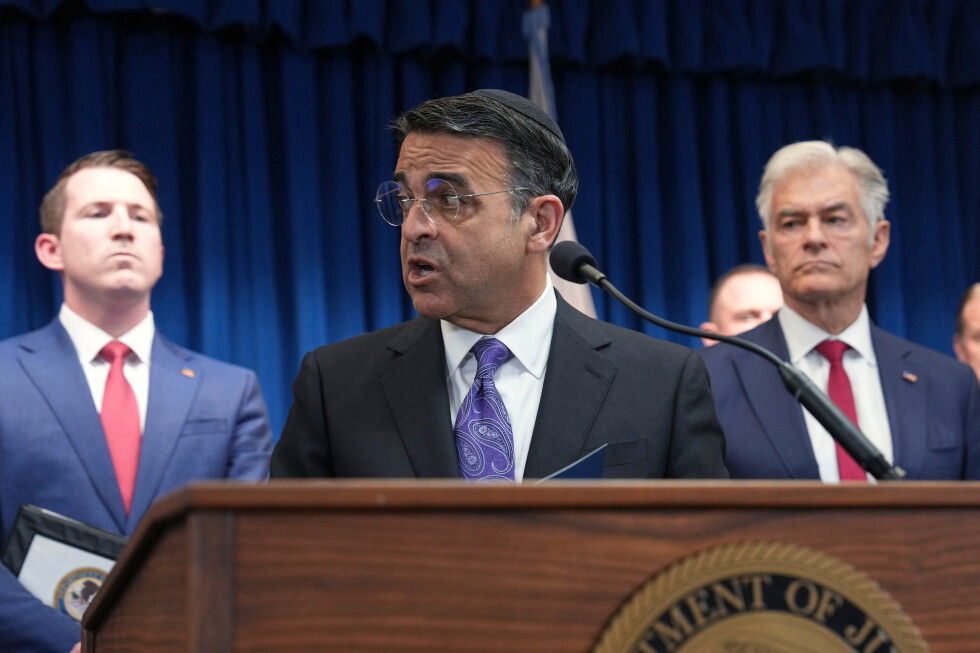
    Abdikerm Abdelahi Eidleh, a resident of Burnsville, Minnesota, was taken into custody on Thursday in Somalia’s capital city of Mogadishu, U.S. Attorney Daniel Rosen announced in an official media statement. As of the latest update, court records have not listed any legal representation for Eidleh, and he has not yet appeared before a judicial officer to enter a plea to the charges against him.

    Eidleh is among more than 40 individuals indicted back in 2022 for their alleged roles in a coordinated, multi-million dollar scam targeting a U.S. federal child nutrition program launched to support vulnerable communities during the COVID-19 public health crisis. At the center of the scheme was Feeding Our Future, a Minnesota-based non-profit that publicly claimed it would use federal funding to distribute millions of free meals to food-insecure children across the state when pandemic school closures disrupted access to regular school nutrition services.

    Court filings lay out damning allegations that only a tiny fraction of the hundreds of millions in taxpayer dollars allocated to the organization actually went toward feeding children in need. Prosecutors say the vast majority of the funds were illegally siphoned off through a network of dummy shell companies, then laundered to fund personal luxuries for the conspirators: high-end residential and commercial real estate purchases, luxury vehicles, and extravagant international vacations.

    As a former employee of Feeding Our Future, Eidleh is accused of taking on a central coordinating role in the fraud. Court documents allege he helped create dozens of fake program meal sites, falsified daily attendance and meal distribution records that claimed the sites were serving thousands of children every day, and set up the fraudulent shell companies that were listed as official meal vendors for the non-existent sites. The grand jury indictment brings six separate types of charges against him, totaling 31 counts: conspiracy to commit wire fraud, substantive wire fraud violations, conspiracy to commit federal programs bribery, substantive bribery charges, conspiracy to commit money laundering, and substantive money laundering charges.

    Colin M. McDonald, Assistant Attorney General for the U.S. Department of Justice’s National Fraud Enforcement Division, emphasized the severity of the alleged crimes in public comments following the capture. “Eidleh was a central figure in one of the largest fraud schemes in Minnesota history,” McDonald said. “He not only stole taxpayer dollars, but he also robbed vulnerable children of critical resources they desperately needed. Rather than answer for his crimes in the United States, he fled to Somalia in a futile attempt to evade justice.”

    The high-profile fraud case has already spilled over into national political discourse. Former U.S. President Donald Trump cited the case as a key justification when he announced a sweeping immigration crackdown targeting the state of Minnesota in late 2023, framing the scam as evidence of weak border security and lax enforcement that enabled large-scale public corruption.

  • ‘Financial death penalty’: How US sanctions are upending the lives of ICC judges

    ‘Financial death penalty’: How US sanctions are upending the lives of ICC judges

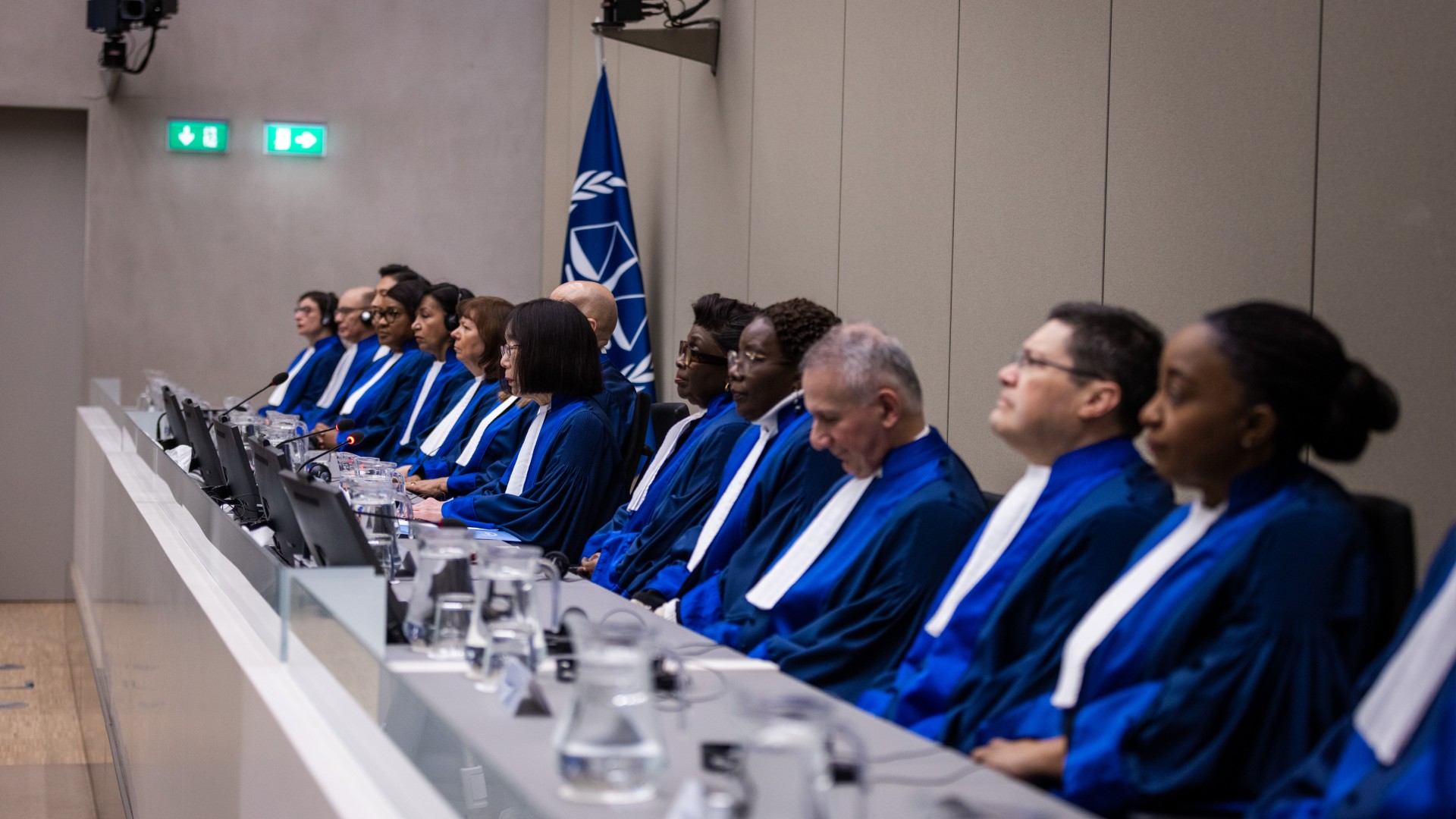
    In a landmark legal challenge that has sparked global debate about judicial independence and the power of unilateral U.S. sanctions, three sitting International Criminal Court judges have detailed the devastating personal and professional harm inflicted by restrictions imposed by the former Trump administration, in a complaint filed last month in a New York federal court.

    The penalties were enacted under Executive Order 14203, signed by then-President Donald Trump in February 2025, targeting the three jurists for official judicial rulings that ran counter to U.S. and Israeli political interests. All three judges—Kimberly Prost of Canada, Solomy Balungi Bossa of Uganda, and Reine Alapini-Gansou of Benin—have served on the ICC bench since March 2018. They are asking the court to strike down the sanctions, which they describe in their filing as “tantamount to a financial death penalty.”

    Prost and Bossa were sanctioned for their participation in a 2020 Appeals Chamber decision that approved an ICC investigation into allegations of war crimes committed in Afghanistan, including claims of abuses by U.S. military and intelligence personnel. Alapini-Gansou was targeted for her role on Pre-Trial Chamber I, which issued widely publicized arrest warrants in November 2024 for Israeli Prime Minister Benjamin Netanyahu and former Defense Minister Yoav Gallant on charges of war crimes and crimes against humanity during the Gaza conflict.

    The complaint, filed June 24 with the U.S. District Court for the Southern District of New York, lays out granular harms that have upended nearly every aspect of the judges’ daily lives, far beyond their professional work at the court based in The Hague. James Goldston, executive director of the Open Society Justice Initiative and co-counsel representing Prost, called the sanctions an “unprecedented attack on judicial independence.”

    “They are trying to induce judges to refrain from deciding on the basis of facts and law, and instead take into account their own personal interests—that is the threats to their own financial and personal wellbeing imposed by these sanctions,” Goldston told Middle East Eye in an interview.

    For Prost, the sanctions have dismantled nearly every ordinary financial service she relied on for decades. Her primary HSBC account in Midtown Manhattan has been frozen, leaving her unable to use credit cards even from institutions based outside the United States. While she retains limited banking access in parts of Europe and Canada, even routine domestic transfers within the European Union are regularly rejected or blocked by financial institutions complying with U.S. rules. When she travels outside the EU or Canada, she is forced to rely entirely on cash, as any currency conversion transaction that passes through the U.S. financial system is barred. Access to mainstream digital services has also been cut off: her accounts with Amazon, Google, and Expedia have been restricted or shut down entirely, turning routine tasks such as booking a hotel, ordering groceries online, hailing a rideshare, or purchasing public transit tickets into difficult or impossible undertakings. Most critically, Prost has lost access to health insurance; her existing provider has refused to pay out on any of her medical claims despite collecting her premium payments, and no other insurer will offer her coverage.

    The harm to Bossa mirrors that of Prost: her account at the UN Federal Credit Union in New York, which she has held since 2003, has been frozen, locking away her personal savings. She is also barred from using credit cards, converting currencies through the U.S. financial system, paying dollar-denominated bills, or transferring funds between dollar accounts. Booking international travel and accommodation has become nearly impossible, and she has lost access to her personal Google email account, cutting off a critical line of professional and personal communication.

    For Alapini-Gansou, who holds no U.S. bank accounts, the impact of the sanctions has still crossed borders, disrupting her life in Europe and West Africa. Her personal account in France has been restricted, and her French-issued credit card no longer works, leaving her unable to cover even basic daily expenses. Like the other two judges, she is barred from conducting any U.S. dollar transactions through the global financial system, making travel planning a major logistical barrier. She has also lost her health insurance coverage, with no alternative provider willing to take on her policy.

    Beyond financial harm, Alapini-Gansou now faces direct threats to her physical security and freedom of movement. The complaint notes that she can no longer walk freely to the ICC’s headquarters in The Hague, and must now be transported by armed security detail for her own safety. She has reduced the frequency of visits to her home country of Benin out of caution, and even routine travel across Europe requires her to notify local law enforcement and arrange dedicated security protection, turning simple professional trips into complicated, stressful ordeals.

    The sanctions have also forced Alapini-Gansou to step back entirely from her longstanding outreach work with African civil society. She has canceled all planned seminars and workshops for non-governmental organizations across the continent, fearing that any collaboration would expose the groups and their staff to severe legal penalties under the U.S. sanctions regime, which allows for up to 20 years of criminal imprisonment for U.S. citizens who provide services to designated individuals. In multiple instances, event organizers have asked her to withdraw from public participation entirely to avoid regulatory repercussions.

    Professionally, the sanctions have isolated all three judges from longstanding professional communities. Prost, who has deep ties to the U.S. academic and legal community, has been barred from entering the U.S. to speak at engagements, and even virtual participation has been blocked. Last October, she was scheduled to deliver the opening keynote address at Fordham University’s annual International Law Weekend, hosted by the American Branch of the International Law Association, but was unable to attend in person or join remotely. She has indefinitely postponed a planned visiting trip to Vanderbilt University and abandoned plans to attend the 2026 annual conference of the American Society of International Law in Washington, D.C. At the December 2025 meeting of the ICC’s Assembly of States Parties, U.S.-based human rights NGOs reportedly received informal guidance to limit interactions with Prost, cutting her off from a professional network she engaged with freely for years. Bossa faces identical professional isolation, barred from U.S. speaking engagements and cut off from collaboration with U.S.-based human rights groups.

    The harm of the sanctions has extended beyond the judges themselves to their immediate family members. Prost’s relatives in Canada, many of whom travel to the U.S. routinely for leisure and work, now avoid trips to the country out of fear of legal repercussions simply for being related to a sanctioned individual. Alapini-Gansou’s son abandoned his plans to attend law school in the U.S., a decision that will permanently alter his career trajectory, and one of her daughters, who works for an international NGO, has been forced to cancel all work-related trips to the U.S., disrupting her own professional progress.

    Despite the severe personal and professional cost of the sanctions, all three judges have continued to fulfill their judicial obligations in line with their oaths of office. “Judges Prost, Bossa, and Alapini-Gansou have resisted this immense pressure because they are committed to upholding the rule of law, including by discharging their judicial duties faithfully and independently, despite the great personal cost,” the complaint states.