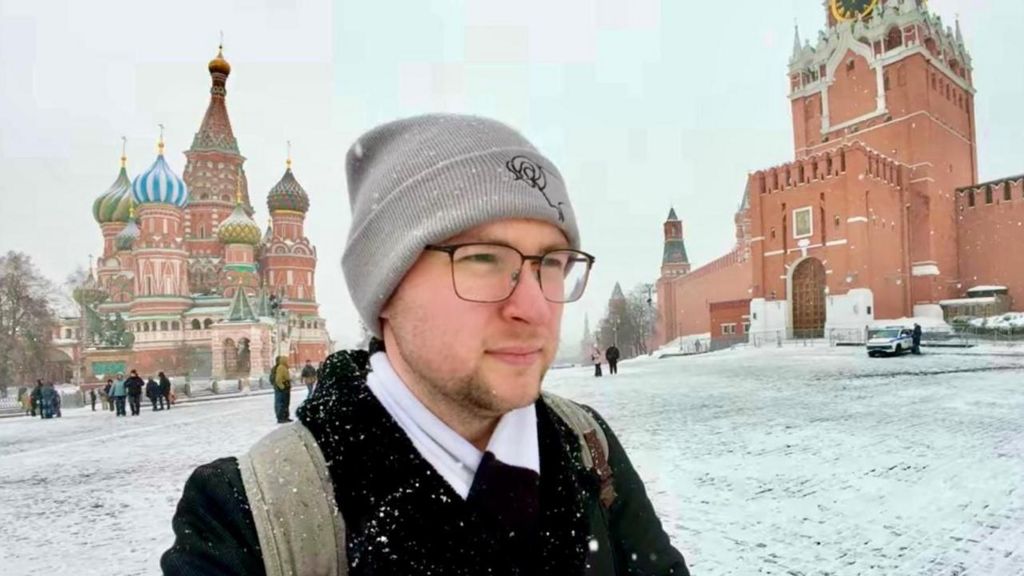
Against a backdrop of sweeping international isolation following its 2022 invasion of Ukraine, Russia has launched an unconventional immigration initiative designed to position itself as a global bulwark of traditional cultural values, drawing a small but notable stream of disillusioned Westerners to its borders. Introduced by President Vladimir Putin in 2024, one month after Texas native Leo Hare received Russian asylum, the Shared Values visa—colloquially known as the “anti-woke” visa—offers up to three years of temporary residency to citizens of the 47 nations Russia classifies as “unfriendly”, with a uniquely low barrier to entry.
Unlike standard Russian immigration pathways, the scheme waives mandatory exams in Russian language, Russian history and national law. Instead, applicants need only sign a declaration affirming they align with Russia’s traditional spiritual and moral principles, and reject what the Kremlin labels the “destructive neoliberal ideology” of their home countries. After the three-year temporary residency period, visa holders must either pass the required language and history exams to secure permanent residency or exit the country. The program offers no government-funded housing or financial support; applicants only pay a 1,600 rouble (roughly £17 or $22) administrative fee and clear standard medical and criminal background checks.
As of spring 2026, Russian authorities report nearly 3,400 people have submitted applications under the scheme—though independent verification of this figure, and of how many applications have ultimately been approved, remains impossible to obtain. The visa program is the practical realization of a policy vision Putin first outlined in a 2022 decree, where he warned that Western ideological influence posed a direct threat to core Russian values such as traditional marriage and family structure, and called for a global rebranding of Russia as a counterweight to perceived Western moral decay. Today, a sprawling online network of relocation services and social media influencers amplifies this narrative, marketing Russia to Western audiences as a haven where family-centric culture remains intact and daily life feels more secure than in their home countries.
Ilja Belobragin, who runs a firm assisting foreign nationals relocate to Russia, says the most common refrain he hears from clients is that they no longer recognize the communities they grew up in. Many prospective migrants cite grievances ranging from rapid cultural shifts, high levels of immigration, and declining living standards in their home countries. For most of those making the move, Russia’s ongoing war in Ukraine has not proven to be a deciding factor. Some openly back Russia’s military campaign, while others frame their decision as rooted entirely in cultural values rather than geopolitics.
Philip Hutchinson, a former UK Conservative Party candidate who now resides in Moscow and helps other Westerners relocate, says he deliberately avoids discussing the conflict. “What are my thoughts on it? Look, I don’t really get involved in that. I’m not here as a politician. I’m here to live a nice quiet life with my family,” he explained. When asked if facilitating relocations under the Shared Values visa constitutes a political act, Hutchinson rejects the framing, arguing the program is simply the most accessible pathway to residency currently available for Westerners.
Leo Hare, the Texas father of three who received asylum months before the program launched, became one of the most high-profile early examples of Western migration to Russia. A devout Christian, Hare had grown increasingly disillusioned with deep political polarization in the U.S., genetically modified food, and what he viewed as the expanding influence of the LGBTQ movement, and saw Russia as a promising alternative built on Christian faith and traditional family values—a narrative actively promoted by the Russian state. After arriving, he threw himself into local life: sampling traditional pelmeni dumplings, milking goats on a rural farm, and creating social media content documenting his experience for followers back in the West. Russian state media even filmed his asylum granting ceremony, where Hare publicly thanked Putin for welcoming his family, and he initially saw himself as a pioneer for what he called an “unprecedented” new immigration policy.
But the reality of life in Russia quickly grew far more complicated than Hare anticipated. Within weeks of arriving, he and his family were defrauded of 5 million roubles (approximately £52,000 or $66,000) by a trusted contact, leaving them homeless. When interviewed earlier this year, Hare was living separately from his wife in the city of Ivanovo, and his two older children had returned to the United States. He now describes the past two years as both the best and worst period of his life.
Hare still speaks warmly of ordinary Russian people, recalling how members of his local Orthodox church community stepped in to support his family after they lost their savings, including a local woman who took in his youngest son and taught him Russian free of charge. “My heart is just full of love for these people,” he said. He has since found work as an English tutor, and has experienced life across a range of settings, from an Orthodox monastery to Soviet-era small apartments and modern high-rise developments. But over time, he has grown increasingly concerned about restrictions on access to information and ongoing struggles with Russia’s economy. He has also stepped back from his earlier role promoting migration to Russia, admitting he once bought into the state’s promotional narrative. “I believed in the propaganda,” he said. Though he says he feels bound to stay in Russia by a sense of destiny, he now openly misses the civil liberties that shaped his life in America, noting “[In] Russia you don’t have these human rights values.”
Other Western migrants have pushed back against the idealized narrative of Russia as a conservative utopia promoted by some influencers and the Russian state. Ben, a UK national from Derby who moved to Russia in 2023 on a private family visa to live with a Russian woman he met on a language exchange website, says he feels safer in his daily life in Russia and praises the warmth of local residents, but rejects the framing of Russia as a perfect conservative alternative to the West. Ben, who now lives in Kursk near the Ukrainian border, says his family initially thought he was insane for moving to a region near active conflict. He points to high rates of single-parent households, widespread acceptance of abortion, and extremely high divorce rates as evidence that Russia does not live up to the conservative ideal promoted online. “Russia isn’t some utopia,” he emphasized, arguing that many influencers promoting the country have hidden political agendas.
Nearly two years after the Shared Values visa launched, Russia’s experiment in attracting ideological migration remains small in scale. While it has failed to draw the large wave of “anti-woke” migration its creators may have hoped for, it has cleared a path for a small group of Westerners to build new lives in Russia—for reasons ranging from love and faith to a simple desire for a fresh start.