博客

  • Gender-bending is now part of menswear. Paris runways show how mainstream it has become

    Gender-bending is now part of menswear. Paris runways show how mainstream it has become

    The just-concluded Paris Men’s Fashion Week told a quiet but transformative story: even in a season dedicated to menswear, women are now an inextricable, intentional part of the narrative, reshaping long-held boundaries around gender and clothing. Across runways, the industry’s shift toward gender-blurred design is no longer a niche provocation—it is a core feature of one of luxury fashion’s most high-profile global events, reflecting both changing cultural attitudes and deliberate commercial calculations.

    Co-ed runways have become the norm across major houses this season. Women walked alongside men at Amiri and Ami, while at Vetements, female models led the presentation of most “menswear” looks, with Hollywood icon Sharon Stone closing the show in a dramatic pair of thigh-high leather boots. Even outside the show space, the trend is on full public display: last year, pregnant pop icon Rihanna made history as the face of Pharrell Williams’ debut Louis Vuitton menswear campaign, featured on a massive Paris billboard posing with her visible baby bump and a full armful of the brand’s signature handbags.

    Fashion insiders emphasize this shift is not a sudden revolution, but the culmination of decades of gradual change. “It’s not something completely new,” explained Joseph McBrinn, an art historian at Ulster University. Women have appeared in menswear presentations for so many seasons that industry veterans barely bat an eye today. Even as Gen Z’s mainstream audience is only now embracing gender-bending style—a trend David Bowie pioneered back in the 1970s—fashion has long operated ahead of popular cultural discourse. Over recent decades, McBrinn noted, the industry has moved “from very binary understandings of gender and fashion to something which is today very fluid,” a shift that directly mirrors how younger generations conceptualize gender identity.

    This blurring extends beyond casting to the very design of the clothing itself. Even at brands that maintained an all-male cast for their presentations, like Issey Miyake’s IM Men line, the entire collection read as inherently androgynous. This season’s menswear designs borrowed openly from womenswear tropes: for Dior, where Jonathan Anderson became the first designer to oversee both the brand’s men’s and women’s lines, male models walked the runway in strings of pearls, soft pink garments, and sheer blouses tied with delicate bows at the collar. Anderson told reporters the collection explored how he “connects with the feminine.” At Saint Laurent, which opened this season’s Paris Men’s Week, male models bared their chests in form-fitting second-skin tops, wore leather-cut briefs, and sported transparent shoes pulled directly from the brand’s women’s runway.

    Beneath the aesthetic shift, however, industry experts point out that commercial incentives are a major driving force behind the move toward blended gender presentations. Saint Laurent, for example, has not only reimagined its menswear aesthetic: the brand has publicly targeted doubling its menswear sales by 2030, according to industry reports. Many major fashion houses have merged separate men’s and women’s shows into single co-ed presentations, a shift that by the late 2010s moved from a radical statement to a standard calendar strategy—equal parts creative experimentation, logistical convenience, and bottom-line calculation.

    Valerie Steele, director of the Museum at the Fashion Institute of Technology, argues that economic logic is often the underpinning of merged runways, not just ideological commitment to gender inclusivity. “I don’t think having men and women on the same runway means a greater belief in nonbinary genders,” she said. “That’s really more of an economic thing.” Hosting one show cuts costs in half, consolidates media attention around a single major event, and allows designers to tell a unified creative story—a particularly attractive advantage for a luxury fashion sector that has faced a period of slowed growth in recent years. The commercial logic is further reinforced by consumer behavior: women have long been major buyers of menswear, a trend that led men’s brand Ami, founded in 2011, to add a womenswear line to its offerings just years after launch.

    The history of gender fluidity in fashion stretches back far longer than modern terms like “nonbinary,” experts note. Yves Saint Laurent introduced women’s tailored menswear-inspired suits back in 1966, Bowie blurred gender lines through his performance style in the 1970s, and Jean Paul Gaultier sent male models down the runway in skirts in the 1980s—decades before mainstream discourse caught up to the idea. Veteran fashion critic Suzy Menkes traces the trend even further back: centuries ago, Menkes pointed out, men regularly wore some of the world’s most dramatic, precious, and glamorous jewelry, without any question that such garments were suitable for male dress. It was only in the 20th century that the boundaries of acceptable male fashion narrowed dramatically, setting the stage for today’s gradual reopening of those boundaries.

    Yet experts note that the erosion of gender lines has not been equal across the board. Sixty years after women in men’s tailored suits became widely accepted, a man wearing a skirt or heels is still widely framed as a transgressive act. “Women’s bodies are still consumed in ways that men’s bodies are not,” McBrinn explained. Men who cross traditional gender lines, he added, “can still be seen as deviant.”

    This tension plays out against a volatile broader cultural context: the rise of combative online masculinity, the spread of “manosphere” influencers, and a growing wave of anti-transgender legislation across many Western countries. Just a few years ago, clothing brand J.Crew sparked intense conservative backlash when it marketed a pink sweater to male consumers, even as major luxury brands including Dior and Paul Smith regularly featured pink garments on their menswear runways. Ironically, the controversy drove sales: industry reports show that sales of pink men’s apparel rose 17% year-over-year during the 2025 spring-summer season.

    Some experts warn that the current openness to gender fluidity could face a backlash amid shifting cultural tides. Openness to androgyny in fashion has crested in previous eras—the 1920s, 1970s, and 1990s, Steele noted—only to recede each time. “Everything is moving to the right,” McBrinn said. “Fashion may go back to being much more entrenched within gender binary” within the next five to 10 years, he warned.

    Against a global backdrop of rolling back legal protections for LGBTQ+ people, with transgender people at the center of cultural and political fights, the question of gender in fashion extends far beyond the runway. “We are seeing tremendous backlash internationally against trans people,” Steele said. Ultimately, she argued, runway shifts matter less than the everyday changes visible in workplaces, public spaces, and family gatherings. Public acceptance grows when people see androgynous clothing worn by friends, colleagues, and acquaintances in daily life. Slowly but surely, what once read as a radical statement is becoming just another part of everyday fashion: increasingly, they are just clothes.


  • France star Antoine Dupont will miss opening rounds of the inaugural Nations Championship

    France star Antoine Dupont will miss opening rounds of the inaugural Nations Championship

    PARIS (Updated) – The French Rugby Federation (FFR) announced a key squad adjustment on Monday, confirming that star French rugby playmaker Antoine Dupont will not feature in the opening rounds of the brand-new inaugural Nations Championship. Taking his place in the traveling squad will be his Toulouse club teammate Paul Graou. As of the announcement, the FFR has not released any additional details regarding the reason behind the last-minute change to the national side’s roster.

    The newly launched Nations Championship introduces a fresh, cross-hemisphere competition structure for international rugby, splitting teams into two groups based on their geographic location – northern versus southern hemisphere. The tournament kicks off with three matchdays scheduled across July, followed by another three fixtures in November, before the whole campaign concludes with a knockout Finals Weekend to determine the overall champion.

    France’s opening run of fixtures in the new competition is grueling, starting with a showdown this Saturday against three-time World Cup champion New Zealand in Christchurch. The side will then travel north to Brisbane to face Australia on July 13, before wrapping up their July tour with a match against Japan in Tokyo the following weekend.

    Widely regarded as the finest scrumhalf in global rugby at present, Dupont was just in action over the weekend leading his club Toulouse to a historic fourth consecutive French Top 14 title. Toulouse secured the championship with a 28-20 victory over Montpellier, and Graou actually came on to replace Dupont in the second half of that title-deciding match as Toulouse lifted the coveted Bouclier de Brennus, the French men’s rugby top-flight trophy, once again.

    The 29-year-old playmaker has built an extraordinary international record across his 64 test caps for France, crossing the try line 16 times to date. Most recently, he played a central role in helping France successfully defend their Six Nations Championship title earlier this year. Two years ago, Dupont made a high-profile temporary switch from the 15-a-side format of the game to lead France’s rugby sevens squad to an Olympic gold medal on home soil at the 2024 Paris Games.

  • Zelenskyy condemns ‘horrific attacks’ as Russian strikes kill 8, wound 35 in Ukraine

    Zelenskyy condemns ‘horrific attacks’ as Russian strikes kill 8, wound 35 in Ukraine

    Four years after Russia launched its full-scale invasion of Ukraine, a new wave of coordinated missile and drone attacks across multiple Ukrainian regions on Monday left at least eight civilians dead and 35 others injured, in what Ukrainian President Volodymyr Zelenskyy has labeled “horrific attacks” that have renewed his call for expanded Western air defense support.

    The large-scale assault targeted both populated areas and critical energy infrastructure, matching Russia’s long-standing strategic bombing campaign aimed at crippling Ukraine’s public utilities and breaking civilian resolve, according to military analysts. United Nations data estimates that more than 16,000 Ukrainian civilians have lost their lives since the invasion began in 2022.

    Zelenskyy detailed the deadliest incidents of Monday’s attacks in a social media post: A Russian missile aimed at infrastructure hit the central Ukrainian city of Dnipro, killing five residents and wounding 29 more. In the southern city of Zaporizhzhia, a Russian drone strike slammed into a civilian passenger minibus, leaving three dead and six injured — one of whom was a child. Ukraine’s National Police added two more fatalities from drone strikes in the northeastern Sumy region, where a 69-year-old woman and 77-year-old man were killed. Ukrainian authorities confirmed additional deadly strikes in at least six other regions across the country.

    Beyond the human cost, the attacks also disrupted critical energy services across eight regions. Grid operator Ukrenergo announced that thousands of customers were left without power at the start of a heatwave, when electricity demand had already spiked from widespread use of air conditioning.

    In response to the assault, Zelenskyy once again urged European allies to accelerate the development and deployment of anti-ballistic air defense systems, a capability Ukraine says it desperately needs to counter Russia’s hard-to-intercept missile arsenal. “People need greater protection from such horrific attacks,” Zelenskyy stated. “Above all, we need anti-ballistic capabilities. It is essential that Europe is as active as possible in developing its own anti-ballistic defense – its own systems and missiles.”

    The latest round of strikes comes amid a widely noted shift in the trajectory of the war over recent months, Western defense officials and analysts agree. Ukraine has ramped up its own long-range drone campaign targeting Russian energy and military infrastructure, a strategy that has created tangible disruptions for Russia’s war effort. On Sunday, Russian President Vladimir Putin publicly acknowledged that repeated Ukrainian drone strikes on Russian oil refineries and other fuel facilities have triggered widespread fuel shortages across the country. The scarcity has already sparked public discontent, with Russian residents waiting for hours in long lines to refuel their vehicles at gas stations.

    Analysts note that Ukraine’s domestic drone innovation has not only weakened Russia’s frontline supply chains for troops in eastern and southern Ukraine, slowing Russia’s offensive advances, but has also positioned Kyiv as a global leader in battlefield drone technology. After years of pleading for foreign military aid, Ukraine is now sharing its tactical and engineering expertise with partner countries around the world.

    Despite the mounting setbacks, Putin has rejected any possibility of diplomatic concessions to end the war, insisting Russia will eventually achieve its invasion goals despite what he called “temporary” difficulties. Kremlin spokesman Dmitry Peskov reaffirmed this stance Monday, telling reporters that Russia’s position on Ukraine remains unchanged and that Russian troops continue their offensive operations across the front line. “[Our effort] makes us confident that our goals will be achieved,” Peskov said.

    Yet independent military analysis casts doubt on Russia’s ability to seize its full territorial objectives. The Institute for the Study of War, a Washington-based think tank focused on conflict analysis, said the Kremlin’s hardline public stance is largely an attempt to pressure the West and Ukraine into accepting Russian territorial demands. The think tank added in its latest assessment that “Russia’s battlefield performance continues to decline in 2026 and Russia’s ability to seize its objectives militarily is in question.”

    Both sides reported significant success in intercepting the other’s drones over the 24-hour period ending Monday morning: Russia’s Defense Ministry claimed its air defenses downed 209 Ukrainian drones, while Ukraine’s air force said it shot down 82 of the 108 drones Russia launched in its overnight assault.

  • A strong aftershock rattles Venezuela as rescue workers race to find survivors

    A strong aftershock rattles Venezuela as rescue workers race to find survivors

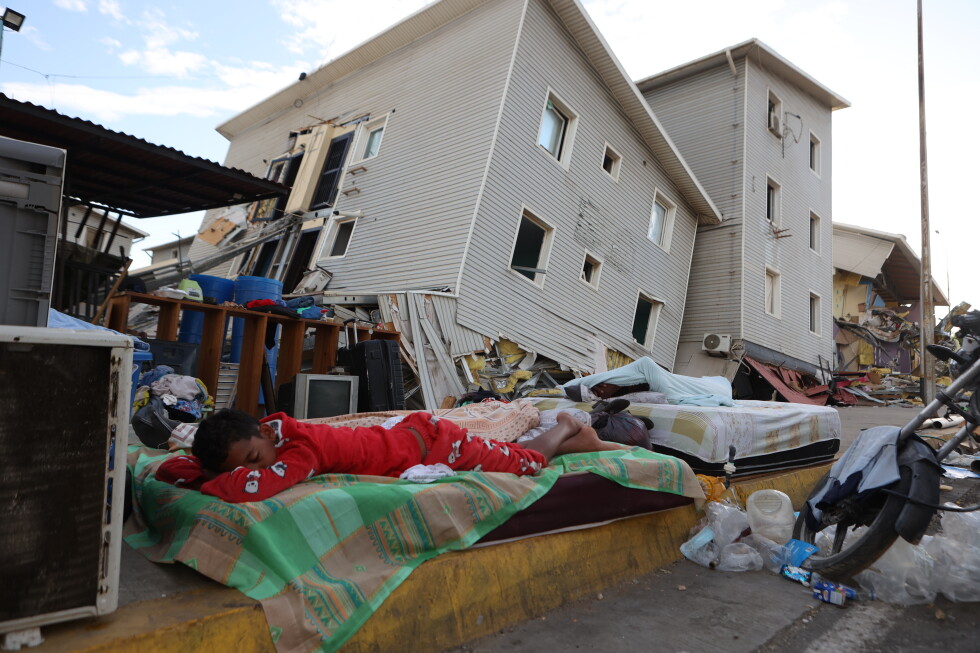
    Early on a Monday morning, just five days after a pair of catastrophic back-to-back earthquakes devastated Venezuela’s northern coastal region, a fresh aftershock rattled the disaster-stricken area, sending panicked residents fleeing into streets already lined with collapsed infrastructure.

    According to data from the United States Geological Survey, the tremor registered a magnitude of 4.6 on the Richter scale, hitting at 7:01 a.m. local time roughly 17 miles north of Caraballeda, along Venezuela’s Caribbean coastline. Colombia’s national geological agency recorded a slightly higher magnitude of 5.1, leaving minor discrepancies in official measurements of the seismic event.

    The aftershock was felt as far inland as Venezuela’s capital, Caracas, where occupants of multi-story apartment buildings rushed to evacuate. Concepción Hernández, a 51-year-old resident of Caracas’ Chacao municipality, spoke to the lingering anxiety that has gripped communities across the region in the wake of the initial disasters. “Here we are again, back in the street. I don’t know when we’ll have a moment of true peace,” she said.

    The tremor also shook the heavily impacted port city of La Guaira, the epicenter of much of the destruction from last week’s quakes. Local teams and international rescuers had already been working around the clock, racing against the clock to pull any remaining survivors from the rubble of fallen buildings when the aftershock hit.

    As of Monday, the Venezuelan government has confirmed a death toll of 1,450 from the initial twin earthquakes, with thousands more people still unaccounted for. The national administration has faced mounting public criticism over its slow and insufficient response to the disaster, with grassroots civilian-led rescue efforts often outpacing official operations.

    While the window for successful live rescues narrows significantly after the critical 72-hour period following a natural disaster — a threshold that passed over the weekend — rescue teams have not called off their searches. In a statement Sunday evening, Venezuelan Acting President Delcy Rodríguez confirmed that search operations would continue as long as there was any chance of finding survivors. To date, more than 2,600 rescue workers from dozens of countries across the globe have deployed to the affected region, bringing specialized search canines and heavy moving equipment to assist in the effort. Even as hope fades for most families of the missing, small, occasional successful rescues from the debris continue to offer a thin sliver of optimism to the crisis-stricken nation.

  • To beat China in the lab, America’s edge is trust not speed

    To beat China in the lab, America’s edge is trust not speed

    As geopolitical competition increasingly extends into the life sciences sector, the United States faces growing anxiety over China’s rapid ascent in global clinical drug research. While this concern is grounded in tangible data, framing reform of U.S. clinical trial systems as a zero-sum race risks overlooking a far more impactful goal: building a faster, safer, globally trusted model for medical innovation that benefits patients worldwide.

    At the center of U.S. reform efforts is a new pilot program launched by the U.S. Food and Drug Administration (FDA), part of a broader initiative led by the Department of Health and Human Services. The program is designed to cut red tape for early-stage clinical trials, with projections that it could shorten overall drug development timelines by 6 to 12 months. This move comes in response to a clear, ongoing industry shift: a growing share of early-stage drug research has relocated outside U.S. borders, drawn to destinations ranging from China to Australia by lower operational costs, streamlined regulatory approval processes, targeted tax incentives and more efficient clinical trial networks.

    The data behind U.S. policymakers’ concerns is stark. Federal officials confirm that China now conducts more clinical drug trials than the United States, and one 2024 estimate places China’s share of all global trials at 39 percent. This shift is far from trivial: early-stage trials are not just routine technical procedures, they are the foundational gateway to global biomedical innovation. The geographic location of these trials shapes which patient populations gain early access to cutting-edge therapies, which academic and medical institutions build specialized research expertise, where billions in global life sciences investment flows, and which nations’ regulatory frameworks ultimately set the global standard for drug development.

    Despite this shifting landscape, the central question facing U.S. leaders is not whether the country can “outcompete” China on trial volume alone. Instead, it is whether the U.S. can restructure its system to be fast enough to retain and attract global research investment, rigorous enough to protect trial participants, and transparent enough to produce clinical evidence that the entire world can rely on.

    The FDA’s proposed regulatory reforms move toward this goal. Under the new framework, the agency will provide pharmaceutical companies with earlier clarity on manufacturing requirements, dose selection and approval pathways, and will offer rolling review of some applications, allowing sponsors to submit materials incrementally rather than waiting to compile a full complete dossier before review begins. The FDA has also reaffirmed a new flexible approach: in select cases, a single high-quality late-stage trial, supported by robust confirmatory evidence, will be sufficient to support drug approval, replacing the longstanding requirement for two separate positive late-stage trials.

    Other federal agencies are joining the push for reform. The National Institutes of Health is set to explore innovative trial designs, integrate artificial intelligence and real-world patient data into research processes, and streamline the slow, fragmented ethics review process. Federal health technology officials are also working to break down data silos, exploring how interoperable electronic health record systems can connect more diverse patient populations to research studies.

    These steps are rooted in a clear diagnosis of U.S. system weaknesses. The American regulatory framework is not slow because regulators oppose innovation. Rather, friction accumulates across a series of disconnected stages: trial activation, contracting, ethics review, site selection, patient recruitment, data collection and communication between sponsors and regulators all operate as separate, uncoordinated layers. While each step was designed to serve a valid purpose, their cumulative effect creates costly delays that drive research activity overseas.

    Yet the reform effort carries a key risk: if speed becomes the only overriding goal, the U.S. could trade its greatest advantage for marginal gains. If faster trials come at the cost of thinner clinical evidence, weaker patient oversight or pressure to rush enrollment to meet arbitrary timelines, the U.S. will not strengthen its global position—it will erode public trust that takes decades to build, and is far harder to recover than a compressed regulatory timeline.

    When assessing China’s rise in clinical research, nuance is critical. China’s growth is not solely the result of subsidies and loose regulation. It reflects decades of deliberate, strategic investment: building dense, coordinated hospital research networks, leveraging its large diverse patient population, cultivating a growing pool of top scientific talent, and aligning industrial policy with public health goals to drive research growth. The U.S. would benefit from studying these strengths honestly rather than relying on caricature; learning from a competitor is not surrender, it is a mark of strategic maturity.

    At the same time, the U.S.’s enduring core advantage has never been primarily speed—it is credibility. FDA approval decisions carry global influence precisely because, for all its imperfections, the agency is widely viewed as methodologically rigorous and comparatively transparent. Instead of copying other nations’ models, the U.S. should anchor its competitive strategy in trust, building a reformed system that prioritizes both speed and credibility.

    One actionable step to achieve this is the creation of a national network of pre-certified “trial-ready” research sites. Rather than treating every study as a one-off project requiring new contracting, ethics review and data standardization from scratch, the government could certify standing research networks that already have master contracts, pre-agreed data standards, robust privacy safeguards, community engagement frameworks and shared centralized ethics review. Sponsors could connect to these networks far faster, and patients and providers would have clear visibility into which sites meet consistent quality benchmarks.

    A second key reform is expanding access to trials beyond major urban elite academic centers, reducing geographic barriers to participation. When patients must travel repeatedly to specialized research centers for trial visits, enrollment remains slow and unequal, excluding large swathes of diverse patient populations. A more practical, accessible model would integrate more trial activities into routine patient care, supported by interoperable electronic health records and strengthened local research networks. This would shift clinical trials from rare, exclusionary events to a normal, accessible part of healthcare for more patients.

    Policymakers also need to distinguish between two distinct forms of speed. Regulatory speed refers to shorter approval queues and clearer, earlier guidance for sponsors—this primarily benefits pharmaceutical companies by cutting development timelines and costs. Evidence speed, by contrast, refers to generating reliable clinical evidence faster through smarter trial designs, improved outcome measures, interoperable data systems, and earlier detection of treatment benefits and harms—this primarily benefits patients. A meaningful, durable reform agenda requires prioritizing both.

    For the broader Asia-Pacific region, the stakes of this reform extend far beyond the U.S.-China bilateral competition. If the U.S. succeeds in pulling large volumes of trials back to domestic sites, regional research centers across Asia could face heightened competition for global investment. But a far better outcome is within reach: a global clinical research ecosystem that is more distributed, interoperable across trusted regulatory jurisdictions, rather than splitting into rival geopolitical blocs. Regulators can compete on quality and efficiency while cooperating on core shared priorities: data integrity, patient protection and universal transparency.

    This collaborative model would benefit all nations: China has a clear stake in building global trust in its research output, the U.S. benefits from learning from efficient systems abroad, and patients everywhere gain faster access to therapies that have been rigorously proven safe and effective, rather than just heavily marketed.

    By this standard, the FDA’s new pilot initiative should be judged against three core tests. First, does it cut unnecessary bureaucracy without lowering standards for clinical evidence? Second, does it expand access to trial participation beyond elite academic centers and large urban hospitals? Third, does it produce transparent, reproducible evidence that other nations can examine, verify and trust?

    If the reforms pass these tests, the U.S. will do more than recapture market share in global clinical trial volume. It will redefine what global leadership in biomedical innovation actually means. In an era of intensifying great power competition, the most successful nation will not be the one that turns scientific research into another geopolitical battlefield. It will be the one that proves speed and public trust can advance together, for the benefit of patients across the world.

    This analysis comes from Y. Tony Yang, an endowed professor at George Washington University in Washington, D.C.

  • Biden blasts Trump ‘vanity projects’, calling him a ‘loser’ at fundraising event

    Biden blasts Trump ‘vanity projects’, calling him a ‘loser’ at fundraising event

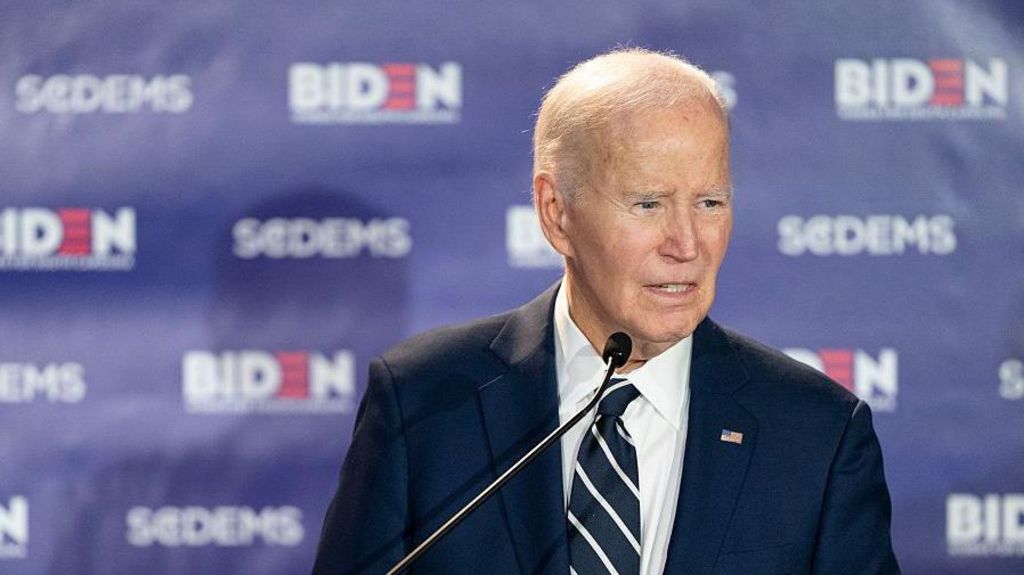
    In a sharp, uncharacteristically blunt rebuke of current President Donald Trump, former U.S. President Joe Biden launched a sweeping attack at a weekend Democratic Party fundraising gala in Hanover, Maryland, calling his successor “a loser” over a series of controversial self-focused projects in Washington D.C.

    Biden’s 10-minute speech marked one of the harshest public critiques Trump has received from his predecessor since taking office in 2025, with Biden calling out multiple high-profile, polarizing initiatives Trump has advanced in the nation’s capital. Among the targets of Biden’s criticism were Trump’s plan to build a presidential ballroom by demolishing part of the White House East Wing, the failed attempt to add Trump’s name to the Kennedy Center for the Performing Arts, a self-named honorary arch project, and Trump’s appointment of a personal associate to oversee renovations to the Lincoln Memorial Reflecting Pool.

    “Woah! What a loser,” Biden added after listing out the projects, leaning into a fiery tone that resonated with the Democratic donor audience.

    Biden’s jabs about the Kennedy Center name change reference a 2024 Trump administration order that was later blocked by federal courts, which ruled the unauthorized addition violated historic preservation rules. For the proposed $400 million ballroom project, Trump has repeatedly defended the construction, framing it as a critical upgrade for national security protocols and to accommodate high-profile state visits and international events. The Reflecting Pool renovation, which cost taxpayers $14.7 million, also sparked public controversy after the project was completed: the iconic landmark quickly suffered from persistent algae blooms and infrastructure failures. Trump and the U.S. National Parks Service have pinned the blame for the ongoing issues on widespread vandalism, rather than flaws in the renovation work.

    Beyond the vanity projects, Biden also targeted Trump’s handling of the 2021 U.S. Capitol insurrection, specifically criticizing the administration’s recent push to provide taxpayer compensation to rioters who claim they were wrongfully investigated or charged by federal authorities. “What makes me angry is that Trump wants to give taxpayers’ money, your money, to the January 6th insurrectionists,” Biden said. That compensation plan was ultimately withdrawn and blocked by a federal judge earlier this year.

    As of Sunday, the White House had not issued an official response to Biden’s remarks, and the BBC’s request for comment remained unanswered. Trump has not directly addressed the latest critique, though he has a long history of attacking Biden on his Truth Social platform. Last month, he labeled Biden a “crooked politician,” and on Monday, he revived his well-known “sleepy Joe Biden” nickname in a post about an unrelated political issue.

    The Saturday fundraiser speech came with a notable historical footnote: it fell exactly two years after Biden’s widely panned 2024 presidential debate performance against Trump. That poor showing triggered a wave of pressure from senior Democratic Party leaders for Biden to drop out of the race, leading then-Vice President Kamala Harris to step in as the party’s nominee. Harris ultimately lost the general election to Trump, clearing the way for his return to the White House.

    The back-and-forth between the two former and current presidents underscores the deepening partisan divide in U.S. politics, as both sides continue to trade jabs ahead of upcoming congressional elections and future presidential contests.

  • Shooting in northern Germany leaves 6 people dead. Suspected shooter arrested

    Shooting in northern Germany leaves 6 people dead. Suspected shooter arrested

    On Monday, a violent shooting incident unfolded at a youth welfare center in the northern German town of Stade, leaving six people dead and multiple others injured in a tragedy that has sent shockwaves across the region, local law enforcement authorities confirmed.

    According to official updates from police, five victims — four women and one man — were pronounced dead at the scene of the attack, which took place at the facility on Dankersstrasse, a residential street just south of Stade’s town center. A sixth adult victim succumbed to their injuries a short time later while receiving treatment at a nearby hospital. Multiple other people were wounded in the attack, with some sustaining life-threatening critical injuries, as reported by Germany’s national news agency dpa. Police have not yet released a precise number of wounded victims or details about the identities of those affected.

    The facility targeted in the attack operates as a youth welfare service, providing temporary supported housing for vulnerable groups including pregnant people and young mothers with small children. A witness, Vitali Mertens, who resides in a home directly across the street from the facility, told reporters he heard multiple gunshots ring out before law enforcement locked down the entire neighborhood almost immediately.

    Authorities confirmed that the suspected gunman has been taken into police custody. Initial reports had referenced a second person being arrested, but official updates have not clarified that individual’s connection to the attack. Law enforcement also confirmed there is no ongoing threat to the general public in the area following the incident.

    Footage captured in the aftermath of the shooting shows a massive emergency response, with dozens of police officers, emergency medical personnel, and multiple ambulances deployed to the quiet residential street. Investigators have confirmed they are still working to piece together the full context of the attack, including the suspected shooter’s motive and the circumstances that led to the violence.

    Stade is a mid-sized community of approximately 50,000 residents, located roughly 25 miles southwest of the major German port city of Hamburg. Mass shootings are relatively uncommon in Germany, which enforces far stricter gun control regulations than the United States, though such events have occurred in the country in recent years.

  • BBC at Venezuela baseball stadium sheltering earthquake survivors

    BBC at Venezuela baseball stadium sheltering earthquake survivors

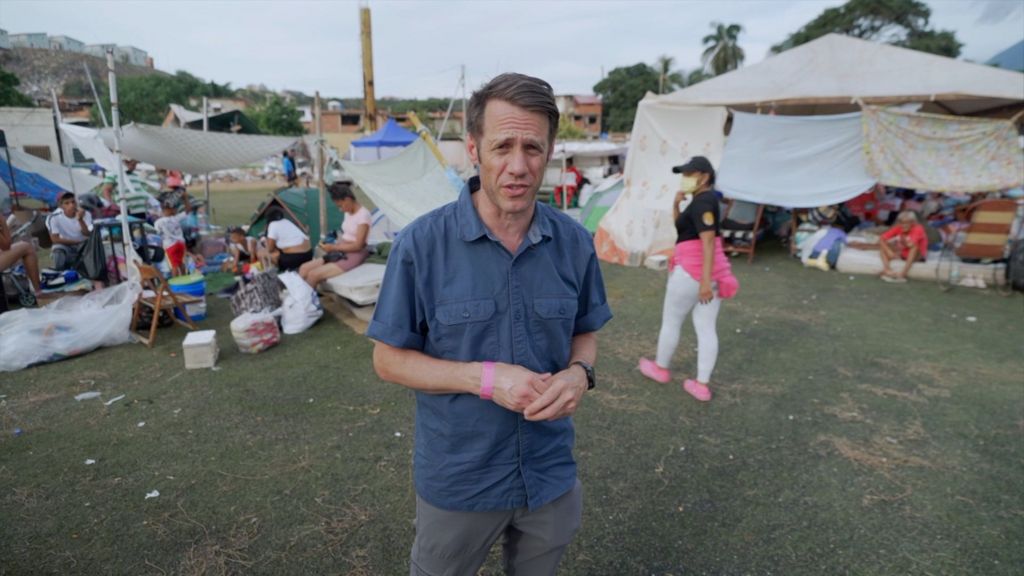
    In the aftermath of a devastating earthquake that has left widespread destruction across parts of Venezuela, a team of BBC correspondents has found itself sharing space with hundreds of displaced survivors taking refuge inside a local baseball stadium. What was once a gathering ground for cheering fans and home to passionate athletic competition has now been converted into an impromptu emergency shelter, crowded with families who lost their homes when the tremor struck.

    For these survivors, daily life currently revolves around waiting for official support and relying on the kindness of donors to meet basic needs. Donated sacks of rice, canned produce, and bottled water form the core of their food supplies, while used clothing donated by communities across the country keeps them protected from changing weather. Many survivors share that they cling to cautious hope that national and local authorities will quickly arrange for more suitable temporary housing as the long process of reconstruction gets underway across the affected region.

    The makeshift shelter at the baseball stadium highlights the gap between immediate disaster response and long-term recovery in a country already grappling with ongoing economic and infrastructure challenges. While aid organizations and volunteer groups have stepped up to deliver critical supplies, survivors report that consistent, coordinated government support has been slow to arrive, leaving thousands in limbo weeks after the earthquake hit. For the BBC team on the ground, the experience has offered an unfiltered, on-the-ground look at the human cost of natural disaster in one of Latin America’s most vulnerable nations.

  • Malaysia extends search for MH370 for another year, keeping families’ hopes alive

    Malaysia extends search for MH370 for another year, keeping families’ hopes alive

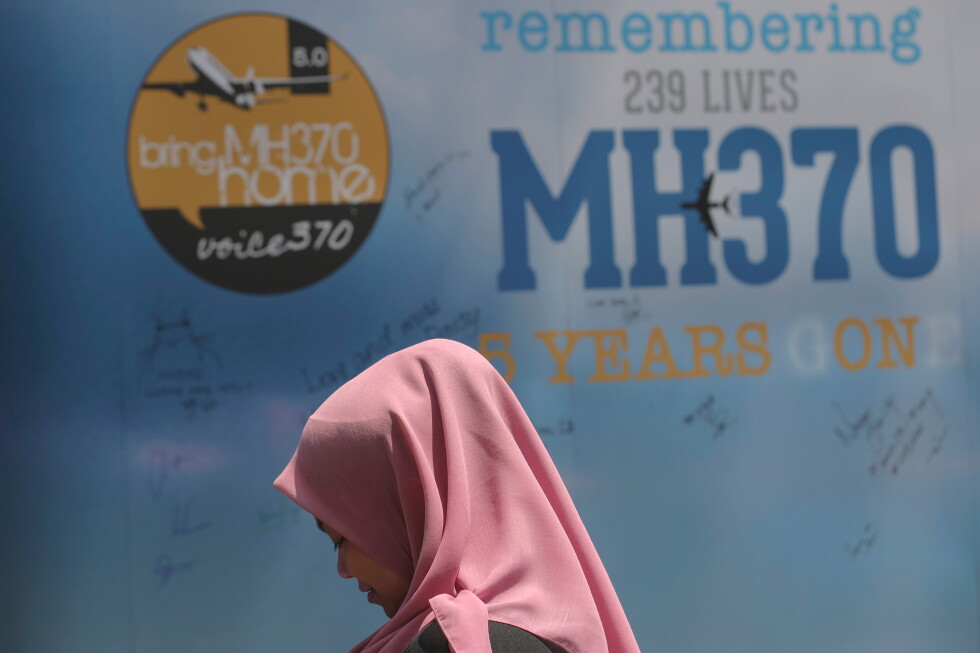
    Nearly 12 years after one of aviation’s most enduring mysteries unfolded, the Malaysian government has greenlit a 12-month extension to its search agreement with U.S.-British marine robotics firm Ocean Infinity, renewing hopes of finally resolving the disappearance of Malaysia Airlines Flight MH370.

    Transport Minister Anthony Loke announced on Monday that the country’s cabinet formally approved the extension of the “no-find, no-fee” contract on Friday, pushing the deadline for the deep-sea search operation in the southern Indian Ocean to June 30, 2025. In an official statement, Loke emphasized that the decision underscores the Malaysian government’s unbroken commitment to delivering closure to the families of the 239 passengers and crew who went missing alongside the aircraft.

    The Boeing 777 vanished from civilian radar screens in the early hours of March 8, 2014, mid-flight from Kuala Lumpur to Beijing. Most of those on board were Chinese nationals. After the jet unexpectedly veered off its planned flight route, satellite tracking data traced its path south into the remote southern Indian Ocean, where experts widely conclude it ultimately crashed. Multiple official searches conducted by a multinational coalition between 2014 and 2017 failed to locate the main wreckage, though a small number of confirmed debris fragments washed up on coastlines across East Africa and remote Indian Ocean islands in the years following the disappearance. Ocean Infinity first ran a private search mission for the wreckage in 2018, which also returned no conclusive findings.

    Malaysia first reactivated the search with Ocean Infinity last year, granting the firm access to a new 15,000-square-kilometer search zone. Under the terms of the original agreement, the company will only receive the $70 million payout if it successfully locates the aircraft’s wreckage. The extension comes after Ocean Infinity temporarily pulled its core search vessels off the MH370 mission to fulfill pre-existing commercial contracts, leaving roughly 7,428 square kilometers (2,868 square miles) of the designated search zone still uncharted. The additional 12 months will give the firm time to fully survey the remaining area.

    Loke noted that Ocean Infinity is scheduled to redeploy its search vessels to the MH370 search area between November 2024 and April 2025, a seasonal window that brings calmer ocean conditions. This period is widely recognized as the safest and most effective time to conduct deep-sea exploration operations in the remote southern Indian Ocean, reducing risks for crews and increasing the likelihood of accurate sonar mapping of the seabed.

  • Why Netherlands v Morocco is more than just a match

    Why Netherlands v Morocco is more than just a match

    The FIFA World Cup has always transcended the boundaries of sport. Held once every four years, the global tournament serves as a powerful intersection of history, mass migration and personal identity, where national team lineups carry stories that stretch far beyond 90 minutes of play on the pitch. Where some nations are famous for exporting tactical ideologies and coaching innovation, others have built their global reputations as exporters of top playing talent. In 2026, many leading nations do both.

    Few fixtures at this year’s expanded 48-team World Cup illustrate this modern trend more vividly than the upcoming round of 32 clash between the Netherlands and Morocco in Monterrey.

    On paper, the matchup already stands out as one of the most exciting ties of the knockout stage. The Netherlands entered the knockout phase undefeated, having topped Group F with seven points and 10 goals – a group stage goal tally that matches the Oranje’s most prolific performance in World Cup history. Morocco, too, progressed to the knockout round without a loss, finishing second in their group behind Brazil only on goal difference after picking up seven points against competition from Scotland and Haiti.

    But the true significance of this meeting runs far deeper than tournament seeding and bracket paths. Football does not exist in a vacuum separate from the social forces that shape the wider world. Across Europe, conversations about identity, belonging and cultural heritage have grown increasingly prominent in public life, and no international rivalry brings these complex themes into sharper focus than this matchup between the Netherlands and Morocco.

    For decades, the Netherlands was seen as the natural international home for talented players born on Dutch soil to Moroccan migrant families. The unspoken rule was simple: if a player of Moroccan descent was good enough to earn a call-up to the Dutch senior side, they would always choose Oranje. Today, that long-held assumption no longer holds.

    This evolving story traces its roots back to Dries Boussatta. Born in Amsterdam’s working-class De Baarsjes neighborhood, Boussatta made history as the first Dutch-born player of Moroccan heritage to represent the Netherlands men’s national team when then-manager Frank Rijkaard gave him his senior debut against Germany in November 1998. At the time, there was no public debate or soul-searching about his international future, because the Moroccan football federation never reached out to him. Boussatta would later switch allegiances after earning just three caps for the Netherlands, making two appearances for Morocco – a swap that was permitted under FIFA’s eligibility rules at the time, since all of his Dutch caps came in friendly matches.

    To reduce this modern shift in player eligibility to a purely political issue would be to miss its core meaning. For most dual-national footballers, the choice of which country to represent is an intensely personal decision, shaped by family background, cultural connection and access to opportunity just as much as passport rules or public discourse. But what has changed fundamentally is the working relationship between the Royal Moroccan Football Federation and the Royal Dutch Football Association, and the proactive approach Morocco now takes to recruiting dual-national talent.

    The scale of this global shift across international football is remarkable. Almost one in every four players at the 2026 World Cup was born outside the country they represent. Eight of the tournament’s 48 squads have an equal number of players born abroad and within their borders, a clear sign that modern international football increasingly reflects global migration patterns. No national team embodies this evolution more clearly than Morocco. Nineteen of manager Mohamed Ouahbi’s 26-man 2026 squad were born outside Morocco. During Morocco’s drawn group stage match against Brazil, the team made World Cup history by fielding an entire starting 11 made up of players born outside the country.

    This demographic shift is no accident. More than a decade ago, the Royal Moroccan Football Federation made a deliberate, long-term investment to identify talented dual-national players of Moroccan heritage across Europe. The federation deployed full-time scouts across France, Belgium, Spain and the Netherlands, with a mandate not just to track promising young prospects, but to build strong relationships with the players and their families years before they were in contention for senior international call-ups. Former Morocco technical director Pim Verbeek later explained that this recruitment strategy focused on more than just the player; family members, he noted, often played just as big a role in a player’s final decision as any footballing factor.

    This proactive policy completely transformed Morocco’s international football fortunes. By the 2018 World Cup, five players in the Moroccan squad were born in the Netherlands. Four years later, when Morocco became the first African nation in history to reach a World Cup semi-final, 14 of the 26 players in their squad were foreign-born.

    Change never happens overnight. In the years following Boussatta’s career, high-profile prospects such as Khalid Boulahrouz and Ibrahim Afellay still chose to represent the Netherlands, drawn by the opportunity to compete for one of the traditional powerhouses of international football. All the while, Morocco steadily refined and expanded its approach, building close bonds with dual-national players long before a senior call-up was on the table.

    No single decision marked this clear shift in the dynamic more than Hakim Ziyech’s choice to represent Morocco. Born in the Dutch town of Dronten and developed entirely through the Dutch youth football system, Ziyech represented the Netherlands at youth international level and even earned a senior call-up in 2015. An injury forced him to miss that debut, but what came next would reshape the narrative for dual-national players across the region. After Guus Hiddink stepped down as Dutch manager and the Oranje coaching structure changed, Ziyech increasingly felt overlooked by the national program. By contrast, Morocco made it clear from the start that he was a central piece of their long-term plan. Federation officials maintained regular contact, laid out a clear multi-tournament sporting vision, and framed Ziyech as one of the public faces of the national team. When Ziyech announced his choice to represent Morocco later that year, he summed up his decision simply: “I’ve always felt Moroccan. You choose with your heart.”

    Ziyech’s decision changed perceptions on both sides of the debate. For years, Morocco had watched many of its most talented dual-national prospects choose to play for established European powerhouses. Suddenly, one of the top players in the Eredivisie had committed his international future to the Atlas Lions instead of Oranje. A wave of players followed: Manchester United defender Noussair Mazraoui, born in Leiderdorp and raised through Ajax’s famous academy, chose Morocco. Midfielder Sofyan Amrabat, who grew up in the Dutch town of Huizen, made the same choice. Defender Anass Salah-Eddine came up through the Dutch youth system before committing to Morocco. Even Ismael Saibari, born in Spain, was almost entirely trained at PSV Eindhoven’s academy before choosing the Atlas Lions.

    Whether all of these players would have earned a regular spot in current Dutch manager Ronald Koeman’s strongest starting side is ultimately beside the point. Collectively, they represent a group of elite players developed within the Dutch football system who now strengthen one of the Netherlands’ direct competitors on the world’s biggest stage.

    This dynamic is rooted in decades of social history beyond football. Moroccan migration to the Netherlands accelerated in the late 1960s through bilateral labor agreements, and later waves of family reunification turned temporary guest workers into permanent, rooted communities. Today, hundreds of thousands of Dutch citizens have Moroccan heritage, creating multiple generations who feel a deep sense of belonging to both countries. But international football requires every player to make just one choice. For some, that choice is the Netherlands. For others, it is Morocco. Neither choice has to be a rejection of the other country. More often than not, it is simply an affirmation of where a player feels most at home.

    Perhaps that is Morocco’s greatest achievement. Today, the question around Dutch-born players of Moroccan heritage is no longer “why would they choose Morocco?” Increasingly, the question is why anyone would ever assume they would choose differently.

    Thirty-two years after Dennis Bergkamp inspired a Dutch victory over Morocco at the 1994 World Cup in the United States, the footballing dynamic between the two countries looks unrecognizable. The Netherlands remain one of global football’s greatest exporters of talent and tactical innovation. Morocco has grown into one of the sport’s most sophisticated and proactive recruiters of dual-national talent. Their 2026 World Cup meeting in Monterrey is about far more than a spot in the quarter-finals. It is the latest chapter in the story of modern football, where nationality is no longer a given, heritage is no longer an afterthought, and two countries connected by decades of migration meet as equals on the game’s biggest global stage.