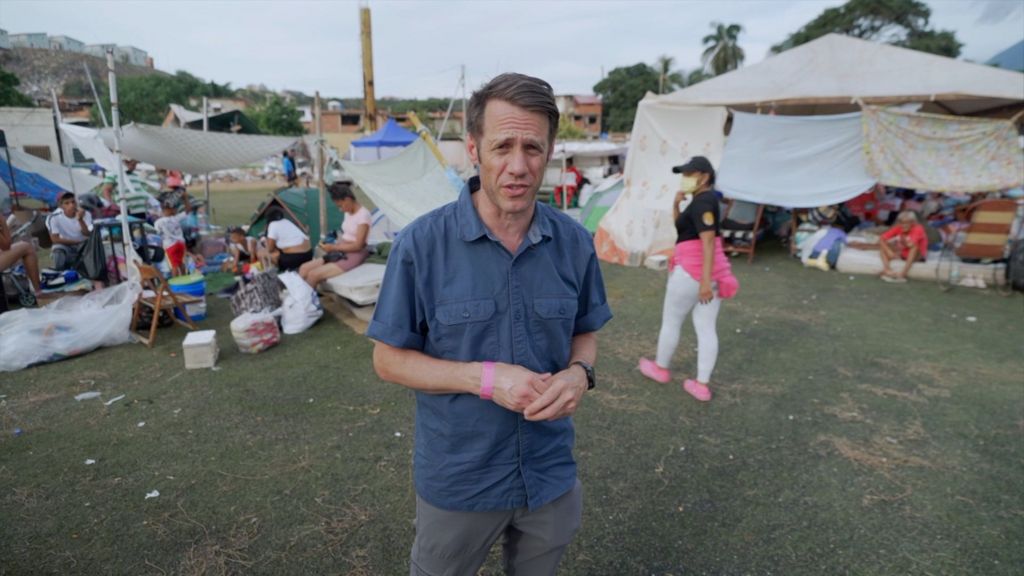
In the aftermath of a devastating earthquake that has left widespread destruction across parts of Venezuela, a team of BBC correspondents has found itself sharing space with hundreds of displaced survivors taking refuge inside a local baseball stadium. What was once a gathering ground for cheering fans and home to passionate athletic competition has now been converted into an impromptu emergency shelter, crowded with families who lost their homes when the tremor struck.
For these survivors, daily life currently revolves around waiting for official support and relying on the kindness of donors to meet basic needs. Donated sacks of rice, canned produce, and bottled water form the core of their food supplies, while used clothing donated by communities across the country keeps them protected from changing weather. Many survivors share that they cling to cautious hope that national and local authorities will quickly arrange for more suitable temporary housing as the long process of reconstruction gets underway across the affected region.
The makeshift shelter at the baseball stadium highlights the gap between immediate disaster response and long-term recovery in a country already grappling with ongoing economic and infrastructure challenges. While aid organizations and volunteer groups have stepped up to deliver critical supplies, survivors report that consistent, coordinated government support has been slow to arrive, leaving thousands in limbo weeks after the earthquake hit. For the BBC team on the ground, the experience has offered an unfiltered, on-the-ground look at the human cost of natural disaster in one of Latin America’s most vulnerable nations.