博客

  • Israel uproots hundreds of West Bank olive trees amid fears of wider destruction

    Israel uproots hundreds of West Bank olive trees amid fears of wider destruction

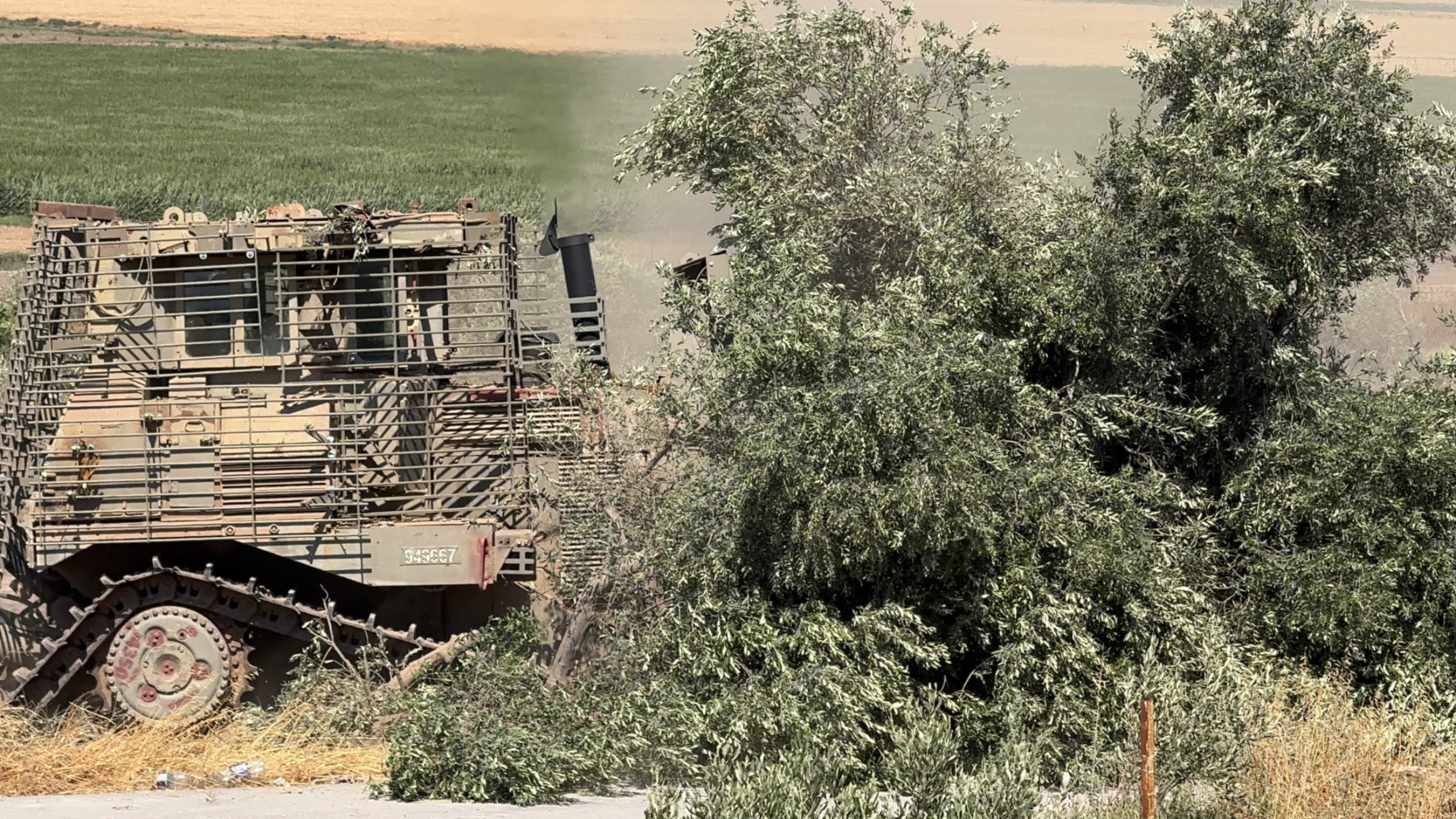
    On Sunday, Israeli military bulldozers carried out a large-scale destruction of Palestinian agricultural land in the village of Zububa, located near the city of Jenin in the occupied West Bank, just meters from the controversial separation wall that splits Israeli and Palestinian territory. Local officials confirm that at least 500 mature olive trees across 50 dunams (roughly 12.4 acres) of farmland were completely uprooted – a devastating blow to local communities just three months ahead of the annual olive harvest, the primary economic lifeline for tens of thousands of Palestinian families across the West Bank.

    What makes the destruction even more alarming for Zububa’s residents is that the operation is far from over. Zaki Jaradat, head of the Zububa Village Council, confirmed to reporters that an additional 120 dunams (nearly 30 acres) of established olive groves are at imminent risk of being razed in the coming days. For affected landowners like Mahmoud Jaradat, the destruction has already erased years of labor and eliminated any prospect of income from this year’s harvest. “All my hard work and years of toil vanished in a single moment,” Mahmoud Jaradat, a Zububa resident whose entire plot of dozens of trees was destroyed, told Middle East Eye. “I’ll have to buy olive oil instead of selling it this year. This is a heartbreaking scene I have no words for.”

    Israeli military officials had previously notified local residents that the land clearing was being carried out to expand a security buffer zone along the separation wall, which already cuts through vast swathes of land that Zububa’s residents have owned and cultivated for generations. The entire at-risk zone holds roughly 2,000 productive olive trees, all of which were being carefully tended by local families in preparation for the critical October harvest. Even more disconcerting for villagers, Sunday’s bulldozing extended far beyond the 127 dunams the military had previously marked for clearing. According to Zaki Jaradat, the total area slated for destruction could ultimately exceed 250 dunams (more than 61 acres), all under the guise of security needs. “They told us they would bulldoze 127 dunams, but from what we see now, what they will bulldoze will exceed 250 dunams from all directions, all under the pretext of security,” Zaki Jaradat said.

    This latest operation is just the latest chapter in a years-long pattern of land dispossession for Zububa. Once encompassing roughly 14,000 dunams (3,459 acres) of territory, the village has lost more than 89 percent of its total land since the 1948 Nakba and the 1967 Israeli occupation of the West Bank. Today, local Palestinian residents can only access roughly 1,500 dunams (371 acres) of their historic territory, with the remainder seized for Israeli infrastructure, settlements, or the construction of the separation wall. The village is already one of many Palestinian communities in the occupied West Bank subjected to routine collective punishment measures, including frequent movement restrictions, road blockades, near-daily home raids, and mass arrests.

    Following Sunday’s destruction, the Israeli military distributed leaflets to Zububa residents warning young people against approaching the separation wall or adjacent security fence, threatening collective consequences for the entire village if any such movement occurs. Data collected by the Colonisation and Wall Resistance Commission, a Palestinian grassroots organization tracking land violations, confirms that this destruction is part of a rapidly accelerating trend across the occupied West Bank. Since 2020, the commission estimates that Israeli forces have uprooted, damaged, or poisoned at least 120,000 Palestinian-owned trees, the vast majority of them productive olive trees critical to local livelihoods.

    Attacks on olive groves have surged sharply in recent years: in 2024, 14,212 trees were destroyed, 10,459 of them olive trees. That figure more than doubled in 2025, when 35,273 trees were uprooted or damaged, including 26,988 olive trees. In the first five months of 2026 alone, more than 10,000 trees have been destroyed, 6,700 of them olive trees, with 4,414 destroyed in April 2026 alone.

  • Supreme Court rejects Trump’s appeal of E Jean Carroll’s sexual abuse case

    Supreme Court rejects Trump’s appeal of E Jean Carroll’s sexual abuse case

    In a development that closes one chapter of the long-running legal battle facing former president Donald Trump, the US Supreme Court has declined to hear his appeal seeking to overturn a lower court verdict that found him liable for sexual abuse and defamation against writer E. Jean Carroll. The ruling marks the end of Trump’s last attempt to undo the 2023 jury verdict, and requires him to pay the $5 million in damages awarded to Carroll nearly two years ago.

    The case dates back to the mid-1990s, when Carroll, a now 81-year-old former magazine columnist, alleged that Trump sexually assaulted her inside a Manhattan department store dressing room. Decades after the alleged incident, Carroll brought a civil claim against Trump, after he publicly denied her accusation in a 2022 post on his Truth Social platform, labeling the allegation a lie. In 2023, a jury in New York found Trump liable for sexual abuse and defamation, though it rejected Carroll’s claim of rape under New York state penal law. The jury awarded Carroll $5 million in compensatory and punitive damages. A separate defamation case later resulted in an additional $83 million in damages being ordered against Trump, an appeal for which he already lost last September.

    Following the 2023 initial verdict, Trump repeatedly pushed to have the ruling thrown out, arguing that the trial judge had improperly allowed damaging evidence that skewed the jury’s perception of him. Specifically, his legal team objected to the admission of the 2005 *Access Hollywood* tape, in which Trump was recorded making lewd comments about grabbing and kissing women without consent. Trump’s appeal was rejected by a federal appeals court in 2024, which upheld the jury’s verdict and ruled that a new trial was not justified. That rejection led Trump to turn to the nation’s highest court as his final option to overturn the ruling. As is its standard practice, the Supreme Court released no explanation for its decision to decline the case.

    Reaction to the ruling split sharply along the lines of the original case. Carroll’s lead attorney, Roberta Kaplan, released a statement saying the Supreme Court’s decision permanently validates the jury’s unanimous finding against Trump. “His multiple efforts to appeal that verdict have all failed and today’s ruling ends his quest to avoid accountability for his actions,” Kaplan added. Prior to the Supreme Court announcement, Carroll’s legal team had not made any public comment on Trump’s appeal.

    For Trump’s legal team, however, the ruling is nothing more than another step in what they frame as a partisan political attack. Speaking to CBS News, a spokesman for Trump’s legal team said, “The American People stand with President Trump as they demand an immediate end to all of the Witch Hunts, including the Democrat-funded travesty of the Carroll Hoaxes.” The statement added, “President Trump will keep winning against Liberal Lawfare, as he continues to focus on his mission to Make America Great Again.”

    The resolution of this appeal comes as Trump navigates a sprawling array of legal challenges even as he campaigns for a second term in the 2024 presidential election, cementing the outcome of one high-profile case that has shadowed his political and personal life for years.

  • Supreme Court blocks Trump’s attempt to fire Federal Reserve governor Lisa Cook

    Supreme Court blocks Trump’s attempt to fire Federal Reserve governor Lisa Cook

    In a landmark 5-4 ruling that reinforces long-standing protections for the US central bank’s institutional autonomy, the US Supreme Court has blocked the Trump administration’s attempt to oust Federal Reserve Governor Lisa Cook from her post over unproven fraud allegations. The nation’s highest court found that the White House failed to grant Cook adequate due process to challenge her proposed removal, sending the entire case back to lower courts for further proceedings. If the administration intends to move forward with firing Cook, it will now need to formally present and prove its claims that she committed mortgage fraud, and Cook will be given full opportunity to contest these accusations in court. Cook has repeatedly and vehemently denied all allegations against her, with supporters of Federal Reserve independence arguing the charges are merely a pretext designed to let former President Donald Trump exert greater political control over the independent central bank.

    Under existing US federal law, the sitting president is only permitted to remove members of the Federal Reserve Board of Governors “for cause” – a requirement intentionally written into law to insulate the central bank from partisan political pressure. This guardrail is designed to ensure the Fed sets monetary policy based on long-term national economic goals, rather than short-term political interests that could destabilize the economy.

    The case stems from an announcement Trump made on social media last August, where he first outlined his plan to remove Cook, citing claims that she improperly listed two separate primary residences on concurrent mortgage application forms. Because financial institutions typically extend lower mortgage interest rates to borrowers purchasing primary residences, misrepresentation of a home’s status is the core of the administration’s allegations. During oral arguments held before the Supreme Court in January, Cook’s defense attorney, prominent conservative lawyer Paul Clement, argued that the administration’s handling of the attempted removal would effectively render the statutory protections for Fed independence “kind of a joke” if left unchallenged.

    Representing the White House before the court, Solicitor General John Sauer contended that Trump’s public social media announcement satisfied the legal requirement for sufficient notice and gave Cook a reasonable opportunity to respond to the claims. Sauer further argued that even if the error was unintended, it amounted to negligence that could erode public confidence in the Federal Reserve, and that courts should defer to the president’s judgment when determining whether cause for removal exists.

  • Kerr joins NWSL side Gotham FC

    Kerr joins NWSL side Gotham FC

    One of women’s football’s most decorated forwards, Australian striker Sam Kerr, has finalized a four-year contract with NJ/NY Gotham FC, bringing her legendary career back to the U.S. National Women’s Soccer League (NWSL) following a trophy-laden five-and-a-half-year stint with England’s Chelsea. The 32-year-old, who departed Chelsea this summer as her contract expired, first announced her exit from the Women’s Super League (WSL) side back in May.

    Kerr leaves Chelsea as one of the most influential players in the club’s women’s history, sitting alongside Fran Kirby as the club’s all-time top WSL scorer. Across 158 appearances in all competitions for the Blues, she found the back of the net 116 times, including a fitting match-winning goal in her final home game against Manchester United before her exit. During her tenure starting in January 2020, Kerr helped Chelsea lift an extraordinary 11 major trophies: five WSL titles, three FA Cups, three League Cups, and one Community Shield. When she first joined Chelsea from the Chicago Red Stars, the transfer was widely hailed as the biggest incoming move in WSL history at that time, and she quickly lived up to the superstar billing, emerging as a cornerstone of former manager Emma Hayes’ title-winning squads.

    Her legendary status extends far beyond the WSL. Kerr still holds the record as the NWSL’s all-time leading top scorer years after leaving the U.S. for England. She claimed the NWSL Golden Boot three consecutive seasons, notching an 18-goal campaign that stood as the league’s single-season record until Temwa Chawinga broke it with 21 goals in 2024. She also previously held the Australian W-League all-time scoring record, and remains third on that league’s goal tally list to this day. In 2023, at the peak of her form, Kerr scored 29 goals in 38 appearances to lead Chelsea to a WSL and FA Cup double, earning her a second-place finish in that year’s Ballon d’Or Feminin voting.

    Her time at Chelsea hit an unexpected setback in January 2024, when she suffered a season-derailing anterior cruciate ligament (ACL) injury. The recovery process stretched more than 18 months, and she only regained full match fitness in the second half of the 2025-26 season, long after Chelsea’s title challenge had faded. Off the pitch, Kerr has marked several major life milestones during her recovery: she married former West Ham United and U.S. international midfielder Kristie Mewis, and the couple welcomed their first son in May 2025.

    For Kerr, the move to Gotham FC marks a homecoming. She previously played for the club between 2015 and 2017, when the side competed under its old name, Sky Blue FC. “I’m incredibly excited to return to Gotham FC and to this city,” the striker said in a statement confirming the transfer. “This club was an important part of my journey, and to come back at this moment, with everything Gotham has built, is really special. The ambition here is clear, and I’m looking forward to helping this team compete for trophies and create more history.”

  • Deadly flash flooding hits Kentucky

    Deadly flash flooding hits Kentucky

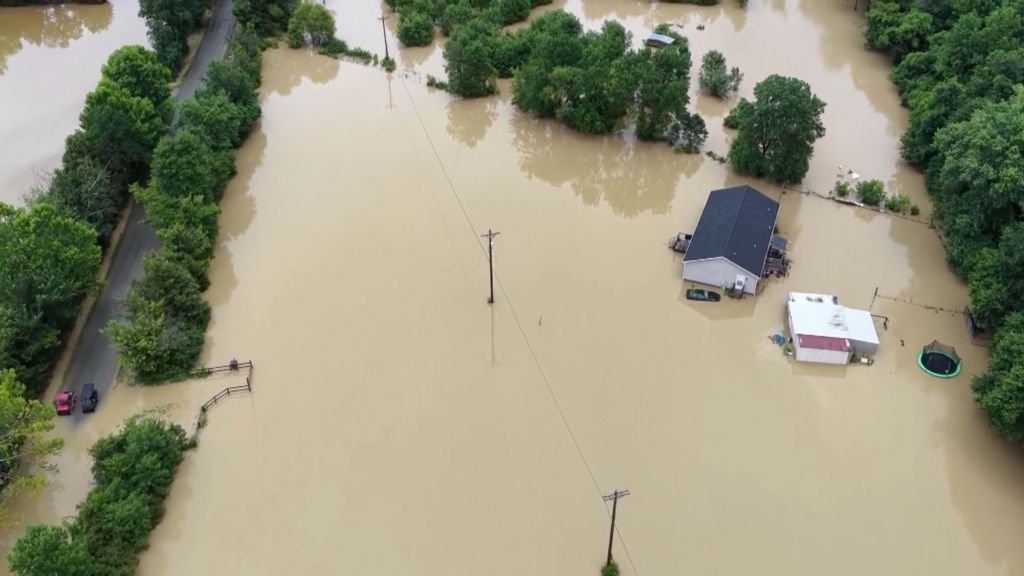
    A catastrophic flash flood event has swept through the U.S. state of Kentucky, bringing devastating loss of life and triggering an urgent large-scale response from emergency teams. As of the latest official updates, at least four residents have been killed by the fast-rising floodwaters, which have inundated roads, swallowed residential properties, and cut off access to critical infrastructure across multiple affected communities.

    In the wake of the sudden downpour and subsequent flooding, emergency responders have launched an aggressive search and rescue operation, conducting no fewer than 60 separate water rescues and mandatory evacuations to move at-risk residents out of harm’s way. First responders have been working around the clock, navigating treacherous, fast-moving floodwaters to reach people trapped in their homes, vehicles, and other stranded locations.

    Local officials have warned that flood damage assessments are still in their early stages, and the death toll could potentially rise as teams regain access to hard-hit, isolated areas. Residents are being urged to heed all emergency orders and avoid flooded roadways, as conditions remain dangerous for even experienced emergency personnel.

  • Africa’s World Cup success leaves Asia looking for answers

    Africa’s World Cup success leaves Asia looking for answers

    The 2026 FIFA World Cup has delivered one of the most dramatic shifts in global football dynamics in recent memory, as African nations have mounted a historic breakout performance that vindicates the controversial tournament expansion pushed by FIFA President Gianni Infantino — a stark contrast to a underwhelming showing from Asian sides that has sparked crisis across the confederation.

    Just eight years ago at the 2018 Russia World Cup, African football hit a historic low point. None of the continent’s five competing nations advanced past the group stage, scraping together only three wins from a possible 15 matches. At the time, critics argued that Infantino’s plan to expand the World Cup from 32 to 48 teams, which allocated an additional four spots for African sides, lacked justification after the confederation’s underperformance. Critics questioned whether adding more African teams would simply dilute the quality of the tournament.

    Eight years on, those doubts have been completely erased. Of the 10 African teams that qualified for the 2026 tournament, nine have advanced to the expanded 32-team knockout round. Only Tunisia failed to progress, with Cape Verde, Egypt, Ivory Coast, Morocco and South Africa finishing second in their groups, while Algeria, DR Congo, Ghana and Senegal claimed third-place spots to punch their tickets to the knockout stage. To put this achievement in context, before the 2022 Qatar World Cup, only three African nations had ever reached the World Cup quarter-finals: Cameroon in 1990, Senegal in 2002 and Ghana in 2010. Four years ago, Morocco made history by becoming the first African side to reach the semi-finals, beating powerhouse sides Belgium, Spain and Portugal along the way.

    Confederation of African Football (Caf) president Patrice Motsepe attributes this turnaround to years of deliberate investment across the continent. “This progress is the result of hard work and targeted investments in youth football development, coaching education and the growth of professional domestic leagues,” he noted. Former Nigeria captain William Troost-Ekong added that Morocco’s success created a replicable blueprint for other African nations. “Morocco spent years and years investing in grassroots football and elite academies. They put in not just money, but time and effort, with a clear long-term vision for progress. The quality of their facilities and consistent development across all age groups is the model every country should follow,” Troost-Ekong told BBC Sport Africa.

    While the expanded 48-team format, which allows third-place group finishers to advance to the knockout round, created additional opportunities for African sides, it cannot fully explain the gap between African and Asian performance. The expanded structure spreads traditional powerhouse nations across 12 groups, with only four groups hosting two top-ranked sides, meaning most groups were more competitive than critics initially predicted. Even with this context, the difference in results is stark: only two of Asia’s nine qualifying nations advanced to the knockout round, a major regression from 2022, when three Asian teams reached the knockout stage.

    Across the group stage, African nations earned 1.33 points per game with 10 wins from 30 matches, while Asian sides managed just 0.67 points per game with only three wins from 27 matches. In five critical final group matches that pitted African against Asian teams for knockout qualification, Asian sides failed to win a single game, dropping four. The outcome has already triggered major fallout across Asian football. South Korea, a consistent World Cup qualifier, crashed out after a shock final-group defeat to South Africa, prompting South Korean President Lee Jae Myung to call for a full investigation into what he called “a failure of organisation and personnel” within the national team program. Within hours of elimination, head coach Hong Myung-bo stepped down. Rookie World Cup qualifier Jordan also lost all three of its group matches, and head coach Jamal Sellami pointed to a key structural gap explaining the performance difference between African and Asian sides: access to top-tier European club football.

    Statistics bear out this observation: 20 of Morocco’s 26-man 2026 World Cup squad play in Europe, 15 of them in the continent’s top five leagues. DR Congo has 24 of its 26 players based in Europe, while even Egypt, the country with the lowest share of European-based players among African qualifiers, has six players competing on the continent. Compare that to Asian sides: Jordan has only one player from its squad competing in Europe, while Iraq and Uzbekistan have three each, and Iran have four. Even Japan, Asia’s most successful representative this tournament, has 23 European-based players, matching the depth of top African sides, while Australia has 16 and South Korea 15, demonstrating that the most competitive Asian nations do share a similar development path with top African sides — but most of the confederation has not kept pace.

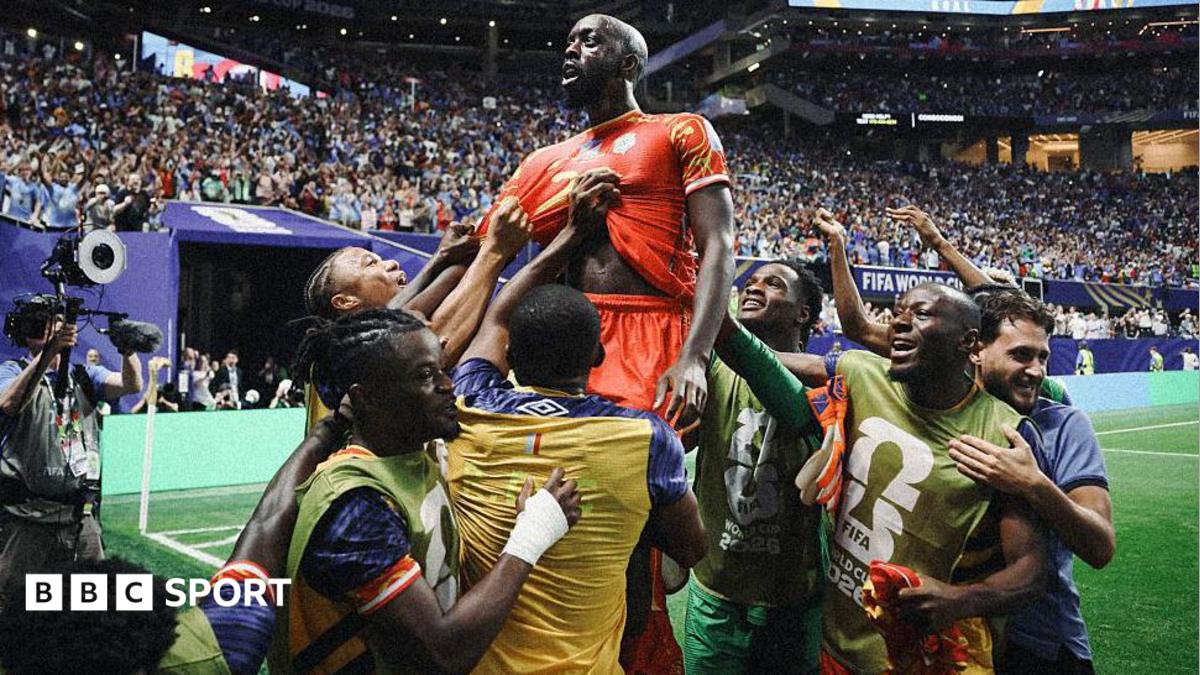
    Now, as the knockout round gets underway, African sides have a historic chance to build on their group stage success. DR Congo, thanks to two goals from Yoane Wissa, will face England in Atlanta on Wednesday, while Algeria, which claimed one of the best third-place spots, will face Switzerland in Vancouver on Thursday. South Africa became the first African knockout side to be eliminated, falling to a late winner from co-host Canada on Sunday, who will next face the winner of Morocco’s clash with the Netherlands. Morocco, currently ranked sixth in the FIFA global rankings — one spot above the Netherlands — enters the match as the slight favourite, a far cry from a decade ago, when the North African side would have been written off as heavy underdogs. A potential quarter-final clash against defending World Cup champions France awaits Morocco if they advance, setting up a rematch of their 2022 semi-final encounter. Defending champions Argentina, who face Cape Verde on Friday, are in a section of the knockout bracket that includes four African nations, setting up the possibility of an all-African last-16 tie between Algeria and Ghana.

  • DR Congo bans mass gatherings in the  capital to prevent spread of Ebola

    DR Congo bans mass gatherings in the capital to prevent spread of Ebola

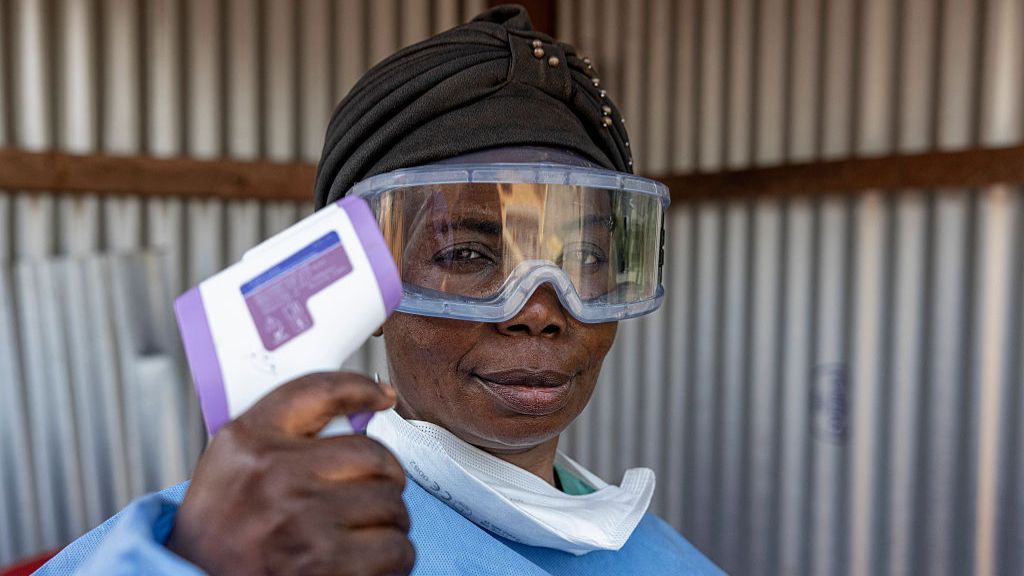
    The Democratic Republic of Congo (DRC) has implemented a sweeping ban on mass gatherings in its capital city Kinshasa and four neighboring provinces, a public health measure aimed at stopping the fast-spreading Ebola outbreak from reaching one of Africa’s most densely populated urban centers, the country’s interior minister has announced.

    As of Saturday, when the new directive was issued, the deadly viral outbreak has been officially confirmed in three eastern DRC provinces — Ituri, North Kivu, and South Kivu — located roughly 1,800 kilometers (1,100 miles) from Kinshasa, a megacity home to 18 million residents. The ban extends beyond Kinshasa to three additional eastern provinces that share borders with the affected regions: Tshopo, Haut-Uele, and Bas-Uele. Mass gathering restrictions have already been in place in the three core affected provinces for weeks, with Ituri bearing the overwhelming brunt of the crisis, accounting for more than 90% of all recorded infections.

    On the day the new ban was announced, health authorities recorded a single-day jump of 47 new confirmed cases, pushing the national total of infections to 1,274, with the confirmed death toll rising to 360. Neighboring Uganda has also detected cross-border spread of the virus, with 20 confirmed infections and two recorded deaths, according to the World Health Organization (WHO).

    This outbreak is unusual in that it is caused by the Bundibugyo strain of Ebola, for which no widely approved vaccine currently exists. Public health bodies including Africa’s Centres for Disease Control and Prevention (Africa CDC) and U.S. health agencies have warned that the outbreak has the potential to become one of the largest on record, because transmission went undetected for several weeks before the virus was formally identified. Ongoing armed conflict in eastern DRC, where the M23 rebel group controls large swathes of North and South Kivu, has further complicated outbreak response efforts, the WHO added.

    The implementation of the ban has already sparked political controversy, with major opposition figures arguing the restriction is a deliberate attempt to block a planned opposition protest scheduled for July 8. The demonstration is organized by the C64 coalition, an opposition alliance opposing a proposed new law that critics warn would allow current President Felix Tshisekedi to extend his time in office beyond the constitutional two-term limit.

    Opposition leaders point out that no Ebola cases have yet been confirmed in Kinshasa, making the public health justification for the ban unconvincing. Prince Epenge, spokesperson for the opposition Lamuka coalition, called the government’s decision an overtly political move. “It is not legitimate. We cannot accept this decision,” Epenge told the BBC Monday. Rodrigue Ramazani, secretary-general of the opposition Envol party, echoed those criticisms, saying the directive “reeks of a political manoeuvre rather than a public health measure,” and urged planned protesters to defy the ban and attend the march. As of Tuesday, the Congolese government has not issued any public response to the opposition’s allegations.

    While Kinshasa has no confirmed local cases to date, the city has been linked to a recent exported case: a doctor who worked at an Ebola treatment center in the outbreak’s epicenter passed through Kinshasa while traveling home to France, where he later tested positive for the virus. Shortly after the doctor’s positive test was announced, the DRC government implemented a 21-day quarantine mandate for all travelers moving from affected provinces to other parts of the country.

  • Watch: Biden calls Trump a ‘loser’ at fundraising event

    Watch: Biden calls Trump a ‘loser’ at fundraising event

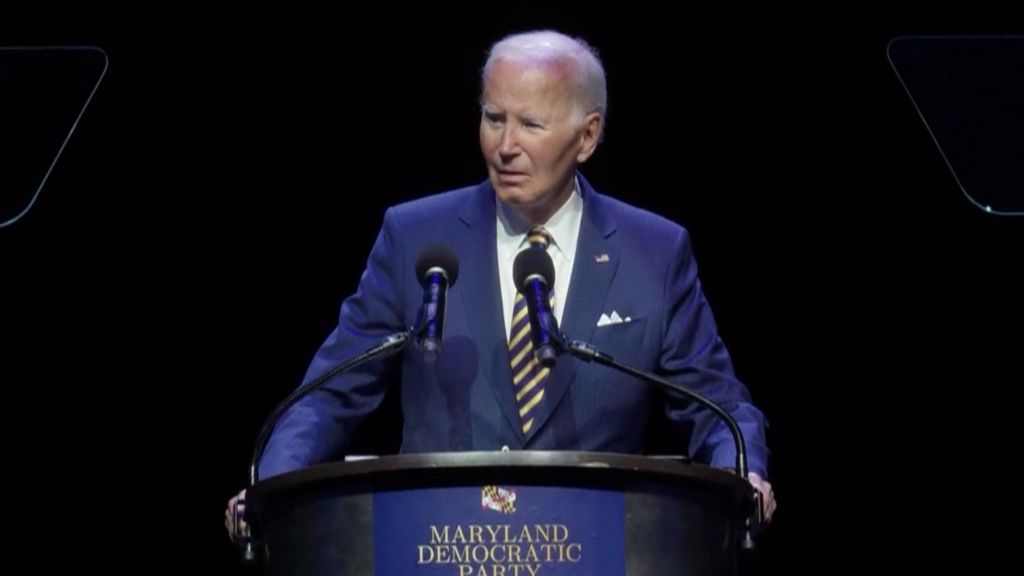
    A tense chapter in American political rivalry took center stage Wednesday at a Washington, D.C. fundraising gala, where former President Joe Biden launched a sharp public critique of his successor, current President Donald Trump. In remarks that underscored the deep partisan divide ahead of upcoming political cycles, Biden did not hold back, labeling Trump a ‘loser’ while taking aim at what he characterized as self-serving policy initiatives pursued by the current administration. The event, held to draw financial support for Democratic political causes, became a platform for Biden to voice sharp disapproval of the Trump White House’s policy priorities, which he framed as ‘vanity projects’ designed more to boost Trump’s personal brand than to deliver meaningful progress for the American public. The public rebuke marks one of the most direct and blunt criticisms Biden has leveled at Trump in a public setting, reigniting speculation about the future of Democratic political strategy and the ongoing friction between the two former and current heads of the executive branch. Attendees at the closed gala reported that the remark drew loud applause from the gathered crowd of donors and Democratic supporters, capping off a speech that focused heavily on contrasting Biden’s past policy record with what he framed as the failures of the current administration.

  • Iran’s Hormuz toll gambit is doomed to fail

    Iran’s Hormuz toll gambit is doomed to fail

    Tensions in the Middle East have reached a fresh boiling point, as the United States and Iran have exchanged targeted strikes near the strategic Strait of Hormuz, one of the world’s most critical maritime chokepoints. This latest escalation comes on the heels of alleged Iranian drone strikes on a commercial cargo ship attempting to pass through the waterway, with both Washington and Tehran now accusing one another of violating the terms of a recently agreed 60-day interim peace agreement.

    In the wake of coordinated attacks on Iranian targets by the U.S. and Israel, Tehran has increasingly signaled its intention to formalize permanent control over the strait, a move that has sparked global anxiety over potential permanent tolls on the roughly 130 commercial vessels that transit the waterway each day. While Iran has framed potential tolls as a stable new source of state revenue, international analysts argue that such a policy is neither legally justified nor practically enforceable.

    Global concern over the situation is well-founded. Since the outbreak of the latest regional conflict, Iran has targeted more than 40 neutral commercial vessels passing through the strait, using drones, missiles, and sea mines to disrupt shipping. These attacks have left multiple innocent merchant mariners dead, and have brought regular commercial traffic through the chokepoint to a near-standstill for more than three months, triggering substantial ripple effects across global supply chains and energy markets.

    Anxiety has been amplified by the careful wording of the 14-point interim peace deal, which only requires Iran to use its “best efforts” to guarantee free, uncharged passage of commercial vessels for the 60-day term of the agreement. The deal states that future transit arrangements will be negotiated between Iran, Oman, and other Gulf states “in line with applicable international law and the sovereign rights of coastal states of the Strait of Hormuz.” This vague language has left policymakers and shipping industry leaders worried that Iran intends to formalize tolls once the interim deal expires.

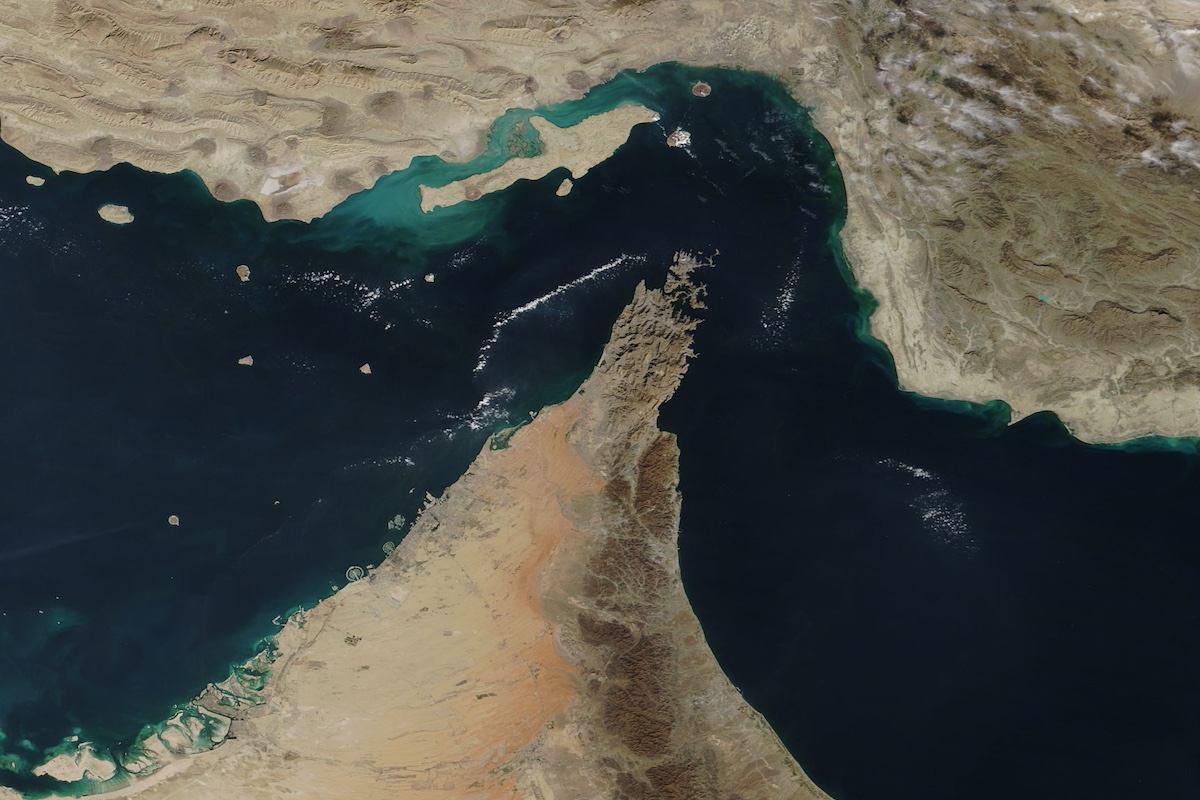
    However, under the United Nations Convention on the Law of the Sea (UNCLOS), the Strait of Hormuz is classified as an international strait, meaning all commercial and military vessels hold an inherent right of unimpeded transit passage that no coastal state can legally suspend. While sections of the strait do overlap with Iran’s territorial waters, the International Maritime Organization’s official traffic separation scheme — the designated shipping lanes that act as maritime “roadways” for safe transit — lie almost entirely within Omani territorial waters, leaving Iran with no legal authority to restrict or charge for passage through the main shipping route.

    Beyond legal barriers, permanent tolls face steep practical challenges that make enforcement nearly impossible. Many point to the Suez and Panama Canals as precedents for tolled waterways, but these routes are fundamentally different from the Strait of Hormuz. Both canals are narrow, man-modified transit routes that lie entirely within the territory of a single state, with a tightly controlled entry and convoy system that makes non-compliance impossible. The Suez Canal, for example, has a navigable channel of only roughly 200 meters wide, requiring all vessels to take on local pilots and follow a rigid schedule that enforces toll payment.

    By comparison, the Strait of Hormuz is nearly 39 kilometers wide at its narrowest point, spanning territorial waters controlled by both Iran and Oman. This vast geographic scale makes it physically impossible to stop, inspect, and coerce every vessel that refuses to pay a toll. Unlike confined canals, there is no single entry point to monitor, and the wide expanse of the strait gives ship captains multiple routes to avoid Iranian enforcement.

    Beyond geography, a permanent Iranian toll would face widespread global opposition. The issue extends far beyond added shipping costs: imposing tolls on transit through an international strait would set a dangerous precedent that undermines the fundamental principle of freedom of navigation enshrined in international law, threatening shipping routes through straits around the world. Even Oman and other neighboring Gulf states have publicly warned that tolling arrangements would destabilize global maritime trade.

    Unlike canal authorities that charge tolls in exchange for maintaining the waterway and providing navigation services, Iran would be charging vessels to exercise a right that all ships already hold under international law. For shipping companies and flag states, there is no incentive to voluntarily comply with such a demand, meaning Iran would have to rely on ongoing coercion to enforce tolls.

    Over the past three months of conflict, Iran has already used military tactics including attacks on commercial vessels to deter transits, killing innocent seafarers and disrupting global energy and commodity markets. However, continuing these aggressive tactics after the conflict ends would draw severe international backlash, including harsh new sanctions, widespread diplomatic condemnation, and pushback even from Iran’s key trading partners such as China. Without sustained coercion, Iran lacks the means to enforce a permanent tolling regime.

    As regional security expert Jennifer Parker, an adjunct professor at the University of Western Australia and UNSW Sydney, notes, Iran is currently leveraging its ability to disrupt shipping through the strait to gain bargaining power in ongoing peace negotiations. But leverage gained through temporary disruption does not translate to permanent, enforceable control. While Iran can disrupt commercial traffic in the short term, it is extremely unlikely to be able to impose and maintain permanent tolls on the Strait of Hormuz.

  • Five dead following shooting at youth centre in Stade, northern Germany

    Five dead following shooting at youth centre in Stade, northern Germany

    A deadly shooting at a youth facility in the northern German city of Stade has left five people dead and multiple others wounded, local law enforcement confirmed. The attack, which unfolded in the community of roughly 50,000 residents located just west of Hamburg, prompted an immediate large-scale emergency response that locked down the area.

    According to a police spokesperson speaking to the BBC, two people have been taken into custody following the incident, with one of those detainees identified as the primary suspect. As of the latest official update, authorities have not released key details about the case, including the ages of the deceased and injured victims, nor have they outlined any potential motive for the violence.

    Hundreds of police officers, paramedics and other first responders have deployed to the youth centre site to process evidence and treat those hurt. Officials have issued a public advisory urging local residents and travelers to avoid the entire perimeter surrounding the facility to allow emergency teams to conduct their work unimpeded.

    Law enforcement confirmed that there is no remaining active threat to the general public after the response operation, bringing an end to immediate safety fears for the community. Investigations into the shooting remain ongoing as authorities work to piece together the full sequence of events and identify any additional details related to the attack.