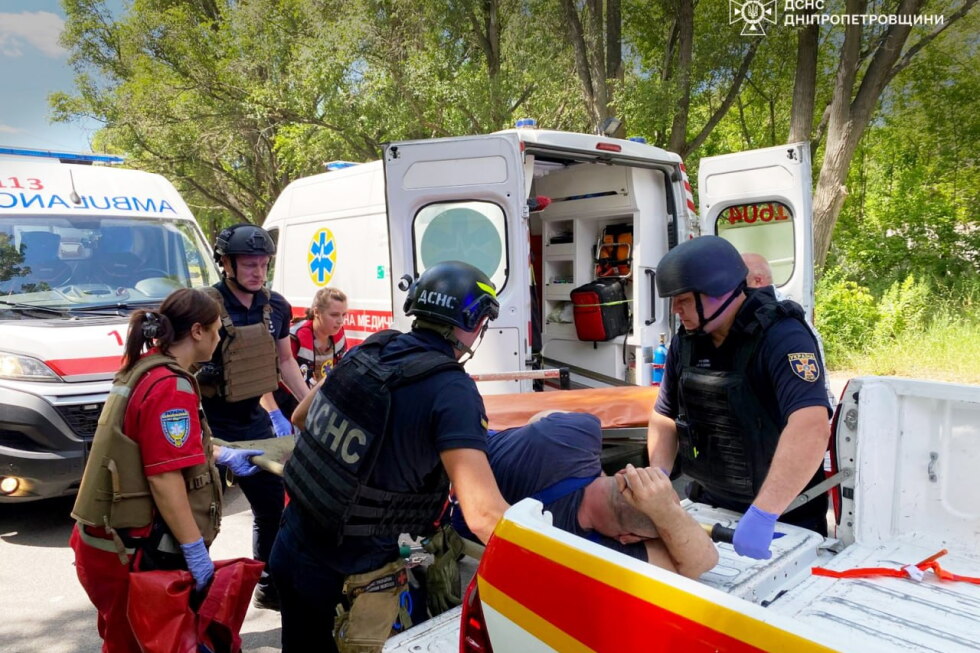
Four years after Russia launched its full-scale invasion of Ukraine, a new wave of coordinated missile and drone attacks across multiple Ukrainian regions on Monday left at least eight civilians dead and 35 others injured, in what Ukrainian President Volodymyr Zelenskyy has labeled “horrific attacks” that have renewed his call for expanded Western air defense support.
The large-scale assault targeted both populated areas and critical energy infrastructure, matching Russia’s long-standing strategic bombing campaign aimed at crippling Ukraine’s public utilities and breaking civilian resolve, according to military analysts. United Nations data estimates that more than 16,000 Ukrainian civilians have lost their lives since the invasion began in 2022.
Zelenskyy detailed the deadliest incidents of Monday’s attacks in a social media post: A Russian missile aimed at infrastructure hit the central Ukrainian city of Dnipro, killing five residents and wounding 29 more. In the southern city of Zaporizhzhia, a Russian drone strike slammed into a civilian passenger minibus, leaving three dead and six injured — one of whom was a child. Ukraine’s National Police added two more fatalities from drone strikes in the northeastern Sumy region, where a 69-year-old woman and 77-year-old man were killed. Ukrainian authorities confirmed additional deadly strikes in at least six other regions across the country.
Beyond the human cost, the attacks also disrupted critical energy services across eight regions. Grid operator Ukrenergo announced that thousands of customers were left without power at the start of a heatwave, when electricity demand had already spiked from widespread use of air conditioning.
In response to the assault, Zelenskyy once again urged European allies to accelerate the development and deployment of anti-ballistic air defense systems, a capability Ukraine says it desperately needs to counter Russia’s hard-to-intercept missile arsenal. “People need greater protection from such horrific attacks,” Zelenskyy stated. “Above all, we need anti-ballistic capabilities. It is essential that Europe is as active as possible in developing its own anti-ballistic defense – its own systems and missiles.”
The latest round of strikes comes amid a widely noted shift in the trajectory of the war over recent months, Western defense officials and analysts agree. Ukraine has ramped up its own long-range drone campaign targeting Russian energy and military infrastructure, a strategy that has created tangible disruptions for Russia’s war effort. On Sunday, Russian President Vladimir Putin publicly acknowledged that repeated Ukrainian drone strikes on Russian oil refineries and other fuel facilities have triggered widespread fuel shortages across the country. The scarcity has already sparked public discontent, with Russian residents waiting for hours in long lines to refuel their vehicles at gas stations.
Analysts note that Ukraine’s domestic drone innovation has not only weakened Russia’s frontline supply chains for troops in eastern and southern Ukraine, slowing Russia’s offensive advances, but has also positioned Kyiv as a global leader in battlefield drone technology. After years of pleading for foreign military aid, Ukraine is now sharing its tactical and engineering expertise with partner countries around the world.
Despite the mounting setbacks, Putin has rejected any possibility of diplomatic concessions to end the war, insisting Russia will eventually achieve its invasion goals despite what he called “temporary” difficulties. Kremlin spokesman Dmitry Peskov reaffirmed this stance Monday, telling reporters that Russia’s position on Ukraine remains unchanged and that Russian troops continue their offensive operations across the front line. “[Our effort] makes us confident that our goals will be achieved,” Peskov said.
Yet independent military analysis casts doubt on Russia’s ability to seize its full territorial objectives. The Institute for the Study of War, a Washington-based think tank focused on conflict analysis, said the Kremlin’s hardline public stance is largely an attempt to pressure the West and Ukraine into accepting Russian territorial demands. The think tank added in its latest assessment that “Russia’s battlefield performance continues to decline in 2026 and Russia’s ability to seize its objectives militarily is in question.”
Both sides reported significant success in intercepting the other’s drones over the 24-hour period ending Monday morning: Russia’s Defense Ministry claimed its air defenses downed 209 Ukrainian drones, while Ukraine’s air force said it shot down 82 of the 108 drones Russia launched in its overnight assault.