博客

  • Justin Bieber joins Madonna, Shakira and BTS for Fifa World Cup final half-time show

    Justin Bieber joins Madonna, Shakira and BTS for Fifa World Cup final half-time show

    The 2026 FIFA World Cup, the largest edition of the global football tournament in history with 48 participating teams hosted across three North American nations, is gearing up for its landmark final match in New York on July 19, which will feature the tournament’s first ever Super Bowl-style half-time show. Canadian pop superstar Justin Bieber has been confirmed as the latest A-list addition to the star-studded performance lineup, joining already announced headliners Madonna, Shakira, and global K-pop phenomenon BTS.

    The 11-minute curated performance, which is organized to raise funds for the FIFA Global Citizen Education Fund, will also feature additional appearances from Nigerian Afrobeats icon Burna Boy, renowned conductor Gustavo Dudamel, the PS22 Chorus with special guests Coldplay, and beloved children’s characters from Sesame Street. This half-time set has been personally curated by Coldplay frontman Chris Martin, with the initiative aiming to raise $100 million (£73 million) to support children’s education access across the globe.

    For Bieber, this high-profile performance marks another major milestone in his ongoing return to live performance. The 32-year-old singer canceled his Justice World Tour several years ago due to serious health issues, and made his big comeback to large-scale live shows this past spring with a nostalgia-driven set at the Coachella Valley Music and Arts Festival in California. During that widely covered performance, Bieber performed many of his early career hits for the cheering crowd, leaning into a fan-favorite format that saw him sing along to retro YouTube versions of tracks like *Baby*, *Never Say Never*, *One Time*, and *Beauty and the Beat*.

    “The FIFA World Cup brings the world together in a way nothing else can,” Bieber said in a statement confirming his participation.

    Shakira and Burna Boy, who both performed at opening ceremonies across the tournament’s host countries earlier this month, will return to the stage for this closing half-time show. The pair’s collaborative World Cup track *Dai Dai* has topped global music charts since the tournament kicked off on June 11, and has become a staple anthem played at matches throughout the competition.

    As the tournament enters its late knockout stage, all three host nations — Mexico, Canada, and the United States — have already been eliminated from contention, leaving just eight teams to compete in the upcoming quarter-final matches. The knockout round action resumes Thursday with France facing off against Morocco in Boston. On Friday, Spain will take on Belgium in Los Angeles, while back-to-back quarter-final matches will take place Saturday: Norway faces England in Miami, and defending champion Argentina meets Switzerland in Kansas City.

    Off the pitch, the individual Golden Boot race remains one of the tournament’s biggest storylines. Argentina’s captain Lionel Messi, who has already broken multiple records throughout the 2026 competition, currently leads the race with eight tournament goals. Trailing closely behind Messi are France’s Kylian Mbappé and Norway’s Erling Haaland, both of whom have netted seven goals, while England’s Harry Kane sits in fourth place with six goals.

  • Nato chief tells BBC that Trump comments are like ‘family argument’

    Nato chief tells BBC that Trump comments are like ‘family argument’

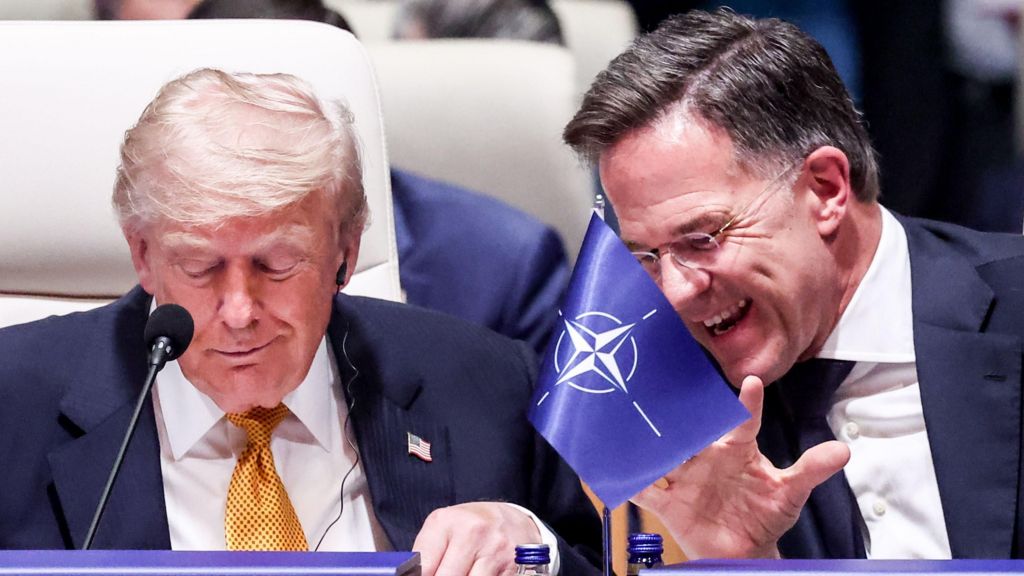
    At NATO’s 2026 summit held in Ankara, alliance Secretary General Mark Rutte pushed back against growing public skepticism over the bloc’s unity, insisting in an exclusive interview with the BBC that the decades-old cornerstone of Western defense remains more robust and cohesive than ever.

    Rutte’s upbeat assessment comes on the heels of a series of inflammatory and divisive comments from former U.S. President and current officeholder Donald Trump, who stirred controversy ahead of and during the summit. Most notably, Trump publicly expressed disappointment that NATO did not formally join his recent military campaign against Iran, despite the fact that the alliance was never consulted on the operation. Even so, multiple NATO member states including the United Kingdom granted U.S. forces access to their domestic military bases to launch strikes against Iranian missile infrastructure, enabling the large-scale operation to move forward.

    Trump also reignited longstanding friction by repeating his unorthodox claim that the U.S. should take control of Greenland, and he publicly labeled Spain a “terrible partner” for the alliance. Still, the U.S. leader sought to soften tensions in his public remarks, noting that the Ankara summit had produced overall “unification” among leaders and claiming there was “tremendous love in that room.”

    When asked to address the obvious disconnect between NATO leadership’s optimistic messaging and Trump’s polarizing public comments, Rutte — a seasoned former Dutch prime minister known for his diplomatic style — framed internal disagreements as a normal part of the alliance’s dynamic. “It’s a bit like in a family: you have families where you never quarrel, and then it bursts out completely,” he explained.

    Despite past comments from Trump suggesting he would not rule out a full U.S. withdrawal from NATO, and his repeated claims that Washington has received poor returns on the trillions of dollars it has invested in the alliance, Rutte said he is 100% convinced of Trump’s commitment to NATO’s mission. He pointed directly to Trump’s recent Iran operation, codenamed Operation Epic Fury, as clear proof of the mutual benefits the U.S. gains from the alliance.

    “[The operation] could not have taken place at this extent without using Europe as a power projection platform,” Rutte noted. He added that over 5,000 U.S. and coalition aircraft launched sorties from European bases over the six-week period between late February and mid-April, before a ceasefire with Iran took effect.

    Beyond Middle East operations, Rutte highlighted NATO’s critical value for U.S. national security in the Arctic region. NATO’s Nordic members sit directly across from Russia’s large nuclear-armed submarine fleet based on the Arctic Kola Peninsula, giving the alliance an unrivaled early warning capability to protect the U.S. homeland. “You don’t want the Russian nuclear submarines to end up at the shores of the United States,” he said. “We prevent that as NATO collectively. So, for all these reasons, we are in this together, 32 countries and nations, because we need each other.”

    Beyond addressing questions of unity and U.S. commitment, the core agenda of the 2026 Ankara summit focused on turning past pledges of increased defense spending into tangible action. The alliance’s top priority is scaling up European defense industrial capacity to counter the massive arsenal of drones, cruise missiles, and ballistic missiles fielded by Russia.

    While some member states, including the United Kingdom, have not yet outlined a clear roadmap to reach the target of spending 3% of national GDP on defense by 2030, Rutte struck an optimistic note on progress made since NATO’s last summit, held in his home city of The Hague in 2025. He reported that European and Canadian members have already added a quarter of a trillion dollars in cumulative defense spending over the past two years, a figure he called “staggering.”

    “Today we took stock… So we are delivering, and now we have to ramp up the defence industrial production even further, making progress and maintaining support for Ukraine,” he said.

    When asked whether NATO would be prepared to fend off a potential Russian territorial incursion into a Baltic ally like Estonia by 2030, a scenario some analysts have warned about, Rutte expressed unshakable confidence. “Absolutely we’ll be ready. Now we’re ready, in 2030 we are ready, at any moment,” he said. “We are defensive. We will never attack another country, but every adversary knows that if they will try to attack us, we are ready. We will defend ourselves.”

  • Yangtze 3 debuts Chongqing-Shanghai cruise route

    Yangtze 3 debuts Chongqing-Shanghai cruise route

    China Yangtze Shipping Group, the country’s leading inland waterway cruise operator, has launched a landmark premium cruise route connecting the southwestern metropolis of Chongqing and the eastern global commercial hub Shanghai, with its state-of-the-art flagship vessel Yangtze 3 marking the milestone service this Wednesday. This new route makes history as the first regular Yangtze River cruise service to include a stop at Shanghai’s Wusongkou International Cruise Terminal, a facility long known as a gateway for international ocean-going cruises that now opens its doors to inland river voyages along the world’s third-longest river.

    The inaugural voyage is scheduled to kick off on October 30, departing from Chongqing’s iconic Chaotianmen Port, a historic trading hub located at the confluence of the Jialing River and the main stem of the Yangtze. After a 9-day scenic journey downstream that will take passengers through the diverse landscapes and cultural sites along the middle and lower reaches of the Yangtze, the Yangtze 3 will dock at the Wusongkou International Cruise Terminal on November 8. The return upstream voyage back to Chongqing will begin the following day, offering passengers a second perspective on the Yangtze’s changing scenery from east to west.

    As the longest-established operator of Yangtze River cruises, China Yangtze Shipping Group brings more than four decades of expertise to this new service. The company first launched commercial Yangtze cruise operations back in 1979, and over its decades of service, it has earned a strong reputation for excellence, having hosted countless domestic and foreign political dignitaries and tourists from around the world. This new route represents a major expansion of the company’s premium cruise offerings, and is expected to boost inland river tourism, trade connectivity, and cultural exchange between China’s western and eastern regions.

  • In a surprise swap, Trump flies back from Turkey in an old Air Force One, not the Qatari-gifted jet

    In a surprise swap, Trump flies back from Turkey in an old Air Force One, not the Qatari-gifted jet

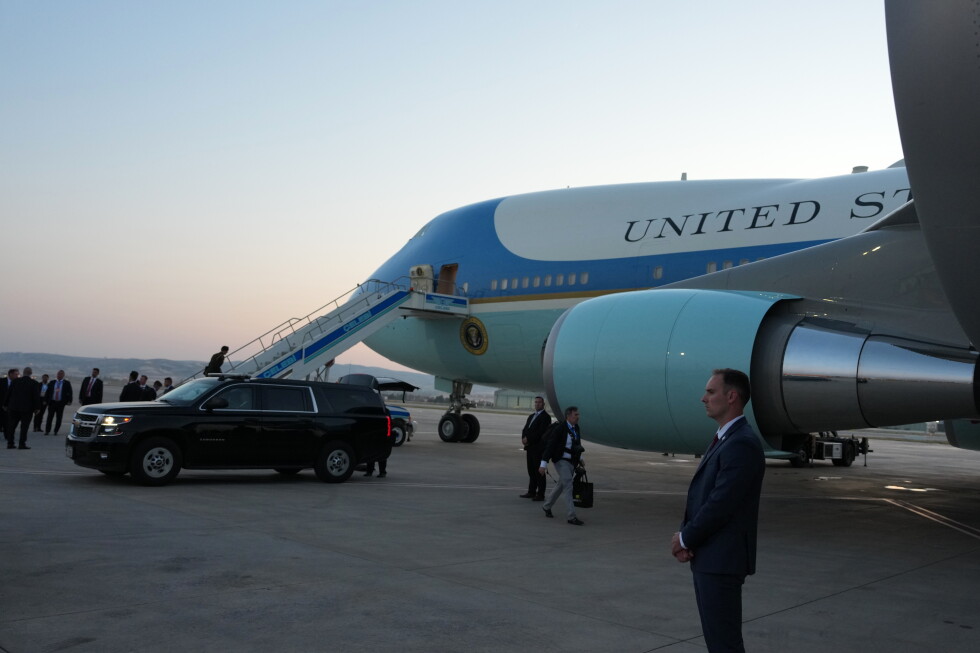
    In an unanticipated shift that has sparked new debate over presidential travel security, former President Donald Trump departed a NATO summit in Turkey on a decades-old legacy Air Force One jet instead of the newly retrofitted Boeing 747-800 he had flown into the event on. The sudden change of aircraft unfolded against a backdrop of renewed armed escalation between the United States and Iran, just hours after U.S. forces launched large-scale retaliatory strikes against Iranian targets in response to recent attacks on regional commercial shipping.

    Trump first broke news of the swap in a social media post, explaining that the gleaming new jet — gifted to the U.S. by Qatar and upgraded at a cost of $400 million — would make an unscheduled stop at Royal Air Force Mildenhall, a U.S. military facility in the United Kingdom, to allow service members to tour the aircraft. He said he would take the older Boeing VC-25A, a plane that has carried U.S. presidents for more than 35 years, back to Washington. When pressed by reporters on whether security concerns driven by rising Iran tensions prompted the switch, Trump declined to give a direct answer, only noting he was “No. 1 on the list for killing” for Iran, and framing the switch as a choice to fly the older jet “for old time’s sake.”

    Independent observers and public records have long raised flags about gaps in the Qatari-gifted jet’s defensive capabilities. Photos published since the aircraft’s unveiling confirm it lacks some of the advanced missile detection and countermeasure systems that come standard on the older VC-25A fleet. The U.S. Air Force, which manages the presidential aircraft fleet, previously acknowledged that the Qatari jet — classified as an interim “bridge” aircraft meant to cover delays to the permanent Air Force One replacement program — had key complex engineering modifications intentionally excluded to speed up its entry into service. While the Air Force has repeatedly insisted no compromises were made to presidential security, it deferred all questions about the last-minute swap to the White House.

    White House spokesperson Steven Cheung defended the new jet’s security protocols in an official statement, calling it a cutting-edge aircraft outfitted with top-tier safety systems to protect the president and his team. Cheung also acknowledged the administration’s use of tactical misdirection to counter threats, noting: “As the President has said recently, there are many enemies of America who have their sights on him, and we use every tool at our disposal — including distraction and misdirection — to address those threats.”

    Further fueling security speculation, flight tracking data showed the transponder on the legacy jet carrying Trump was disabled shortly after takeoff from Turkey, a step typically reserved for travel to high-risk regions rather than scheduled summits hosted by NATO allies. All other world leaders’ aircraft departing the summit, including those from Germany and the United Kingdom, left with fully visible transponders. The new Qatari-gifted jet departed Turkey several hours ahead of Trump’s plane and landed without incident at RAF Mildenhall later Wednesday.

    Geopolitical context adds weight to security concerns: Iran’s military arsenal includes drones and ballistic missiles with a range capable of reaching Turkey from Iran’s borders — a distance of roughly 800 miles. However, Washington-based think tank the Center for Strategic and International Studies confirms Iran does not currently possess weaponry with the range and accuracy to strike the United Kingdom, where the new jet was headed.

    Jeremiah Gertler, senior aviation and defense analyst at industry consulting firm Teal Group, told the Associated Press that the gaps in defensive systems and a reduced number of communications antennas on the interim jet suggest it is only suited for domestic U.S. travel. The permanent replacement program for the aging Cold War-era VC-25A fleet — originally built to withstand nuclear blast effects and equipped with features including an onboard operating room and air-to-air refueling capabilities — has been plagued by delays, with the new permanent aircraft not expected to enter service until 2028. Trump’s flight to North Dakota last week marked the first time he had flown the new Qatari-gifted jet.

  • Egyptian Football Association ‘cannot remain silent’ about officiating in loss to Argentina

    Egyptian Football Association ‘cannot remain silent’ about officiating in loss to Argentina

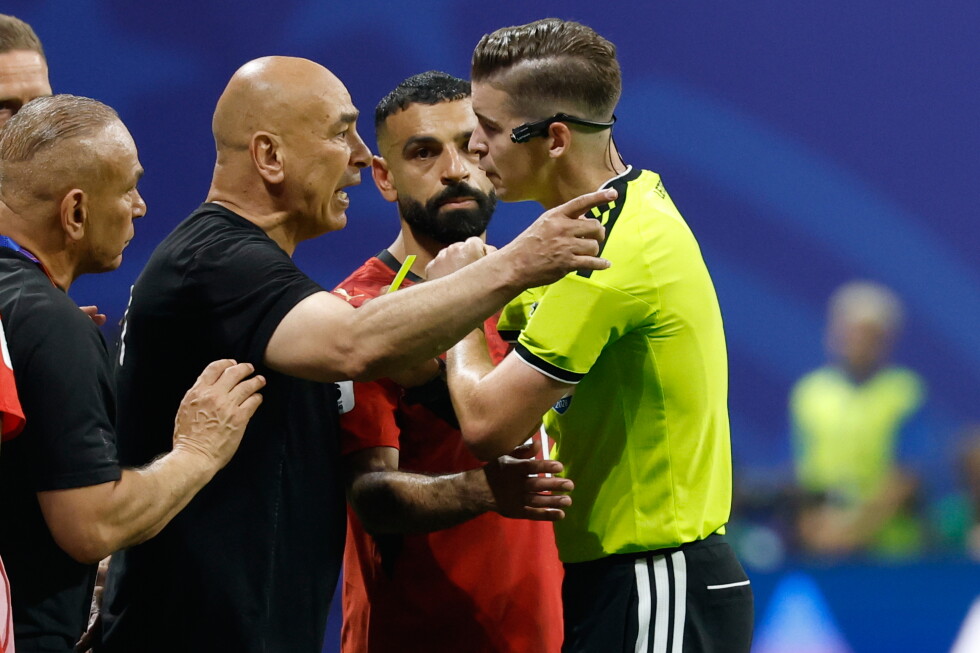
    ATLANTA — The Egyptian Football Association (EFA) has broken its silence to publicly denounce what it calls unjust, biased refereeing decisions that directly led to its 2-3 round-of-16 defeat against Argentina at a men’s World Cup, a match that already goes down as one of the most stunning comebacks in tournament history.

    The result shocked football fans across the globe: Egypt held a solid 2-0 lead for much of the second half, before Argentina’s side led by Lionel Messi struck three unanswered goals in just 13 second-half minutes to seal a dramatic comeback victory. Within hours of the final whistle, Egyptian head coach Hossam Hassan and multiple first-team players had already openly criticized the performance of the match officials, saying they were left stunned by inconsistent calls that altered the game’s trajectory.

    In an official statement released Wednesday, the EFA emphasized that protecting the national team’s legitimate rights is a non-negotiable core responsibility, not an issue that can be sidelined or downplayed. “It is a responsibility that we carry with full conviction and determination,” the statement read.

    The most contentious call came in the 58th minute, when Egypt appeared to score a second goal to double its lead. However, a Video Assistant Referee (VAR) review overturned the goal, ruling that Egyptian midfielder Marwan Attia had fouled Argentina center-back Lisandro Martínez in the build-up. The EFA argues that the on-field referee misapplied the VAR system during this key sequence, an error that it says ultimately swung the outcome of the match.

    “Several key incidents raised serious concerns and left profound questions about the consistency and fairness of decisions that directly influenced the course of the game,” the statement added.

    After the overturned goal, Egypt managed to extend its lead to 2-0 in the 67th minute through a finish from Mostafa Ziko, but the momentum completely shifted in the 79th minute when Messi set up Cristian Romero for Argentina’s first goal, kicking off the 13-minute scoring run that secured Argentina’s win. With Argentina scoring the game-winning goal two minutes into stoppage time, coach Hassan made an “X” gesture with his arms to signal what he says is racially biased officiating, telling reporters post-match that his side had been wronged by a global football system that prioritizes protecting Messi and Argentina.

    In the chaotic closing minutes of the match, Egypt’s goalkeeping coach Saafan Elsaghir was sent off with a red card, and multiple Egyptian players received yellow cards. The EFA noted in its statement that a number of independent football experts and analysts have backed Egypt’s claims, reinforcing that the world’s biggest football tournament requires strict commitment to officiating integrity, fairness, and transparency.

    The statement also gave voice to the widespread frustration shared by Egypt’s players, coaching staff, and millions of supporters across the country and around the globe. “Every player who wears the Egyptian shirt, and every supporter who stands behind the team, deserves fairness, respect, and equal application of the laws of the game,” it concluded.

  • Trump says ceasefire is over and calls Iran leaders ‘scum’, as both sides launch attacks

    Trump says ceasefire is over and calls Iran leaders ‘scum’, as both sides launch attacks

    A month-old ceasefire memorandum between the United States and Iran has collapsed into open hostilities, after a series of tit-for-tat strikes across the Persian Gulf region prompted US President Donald Trump to announce Wednesday that the truce is definitively “over.”

    Speaking to reporters on the sidelines of a NATO leaders meeting, Trump made the declaration just hours after the US launched more than 80 pre-planned airstrikes targeting Iranian military assets across the region. Washington framed the strikes as a direct response to a series of Iranian attacks on commercial shipping vessels transiting the Strait of Hormuz carried out Tuesday.

    According to a formal statement from US defense officials, the overnight American strikes targeted a wide range of Iranian military infrastructure: Iran’s air defense networks, command and control communications hubs, coastal radar stations, anti-ship missile stockpiles, and more than 60 small fast attack boats operated by the Islamic Revolutionary Guard Corps (IRGC), Iran’s elite revolutionary military force. US officials said the operation was designed to permanently degrade Tehran’s capacity to target commercial shipping in the strategic waterway.

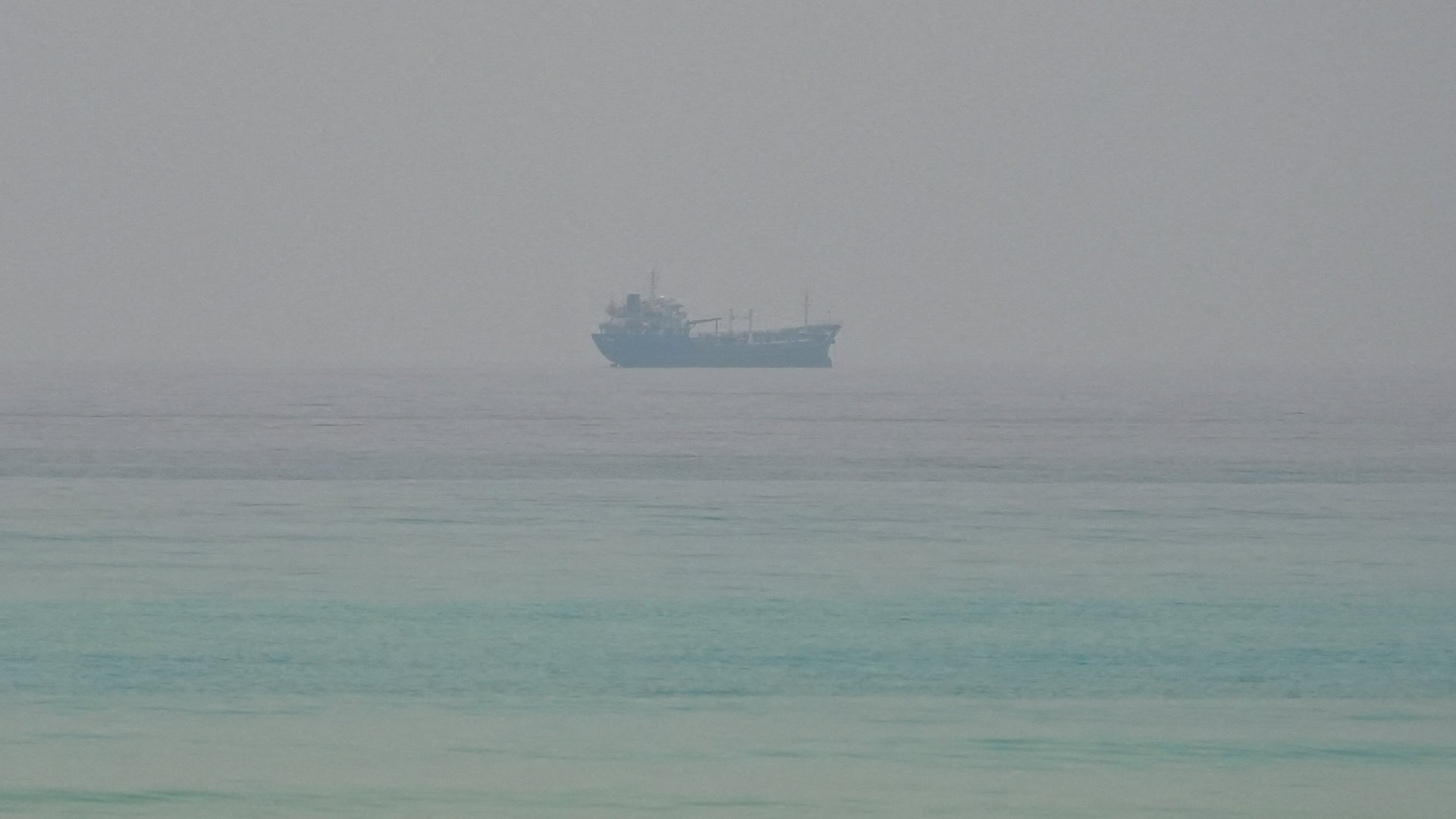
    The Iranian attacks that preceded the US strikes targeted three commercial tankers near Omani waters, including a Qatari-owned liquefied natural gas carrier named the Al Rekayyat. UK Maritime Trade Operations, a UK-based security body that monitors global shipping activity, confirmed the LNG carrier was struck while it was en route to the Gulf of Oman.

    Within hours of the US strikes, Tehran launched a massive retaliatory attack, sending waves of missiles and drones targeting US military installations stationed in Bahrain and Kuwait early Wednesday. The IRGC confirmed it struck exactly 85 separate targets across the two Gulf nations. Local military and security officials confirmed the attacks: Kuwait’s armed forces activated their national air defense systems to intercept incoming projectiles, while Bahrain’s interior ministry triggered public air raid sirens and urged residents to seek emergency shelter.

    In unusually harsh remarks Wednesday, Trump launched a blistering verbal attack on Iran’s political leadership, calling the ruling faction “scum” and dismissing any further negotiations as a waste of time. “They’re scum. They’re sick people. They’re led by sick people, and they’re vicious, violent people,” Trump told reporters. “Far as I’m concerned, it’s just a waste of time dealing with them. They’re liars… there’s something wrong with them. They’re cuckoo. As far as I’m concerned, it’s over.” The president added that while he would allow US negotiating teams to continue talks if they wish, he sees no path to a successful diplomatic outcome. “They can talk, but I think they’re wasting their time. They’re a bunch of lying guys,” he said. “They’re bad people, and frankly, I don’t want to waste my time with them. Now, I’ll let our wonderful negotiators keep talking if they want, but I don’t see it.”

    Qatar, which has served as a key neutral mediator between Washington and Tehran throughout the ceasefire talks, issued a sharp condemnation of Tuesday’s shipping attacks. Majed al-Ansari, spokesperson for Qatar’s foreign ministry, called the strikes on commercial vessels a “serious and explicit violation” of international law, and said Tehran would be held responsible for the act of aggression.

    Tensions over shipping routes in the Strait of Hormuz have been building for weeks. Oman has recently pushed a proposal to reroute international commercial shipping along a new corridor closer to its own coastline, a plan Iran has repeatedly rejected. Tehran has also threatened to impose a navigation toll on all commercial vessels accessing the waterway, and claims US efforts to advance the new shipping route already violate the terms of last month’s ceasefire memorandum.

    Mohammad Bagher Ghalibaf, speaker of Iran’s parliament, accused Washington of multiple “major” violations of the truce even before this week’s hostilities, citing US opposition to Tehran’s position on the Strait of Hormuz, unapproved Israeli military aggression in Lebanon, and the recent US move to reimpose full oil sanctions on Iran. In a post on the social platform X Wednesday, Ghalibaf pushed back against US pressure, writing: “The era of bullying and extortion is over. It leads nowhere. We don’t fold.”

    Hours after Tuesday’s shipping attacks, the US formally revoked a temporary sanctions waiver that had allowed limited Iranian oil exports, another step that escalates the bilateral conflict. The original ceasefire memorandum signed last month launched a 60-day window for negotiations to reach a permanent truce and resolve longstanding international disagreements over Iran’s nuclear program. This week’s open hostilities bring that negotiating process to the brink of total collapse.

  • China sends nuclear missile message as US looks elsewhere

    China sends nuclear missile message as US looks elsewhere

    As the United States redirects much of its strategic and military attention to escalating conflict with Iran in the Middle East, China has carried out a test of a long-range, nuclear-capable submarine-launched ballistic missile, delivering a high-profile demonstration of its expanding nuclear and military capabilities to global observers. The test, conducted earlier this week, comes two years after Beijing launched an intercontinental ballistic missile into waters near French Polynesia, and drew immediate condemnation from Washington and several regional powers. However, just as with prior Chinese military advances that have been overshadowed by other global crises, this demonstration was quickly pushed out of global headlines by the resumption of U.S. strikes on Iran, the latest outbreak of violence between Washington and Tehran that broke a ceasefire reached on April 8.

  • Sam Darcy targets running return as he reveals positive knee injury update

    Sam Darcy targets running return as he reveals positive knee injury update

    For rising Australian Football League star Sam Darcy of the Western Bulldogs, a season-ending anterior cruciate ligament (ACL) rupture has done nothing to dim his competitive fire or alter his signature playing style. The 22-year-old superstar, who suffered the devastating knee injury during the club’s round 6 clash against Geelong, has confirmed his rehabilitation is progressing without any unexpected setbacks, and he is on track to begin light running as soon as next month.

    Darcy opened up about his recovery journey Wednesday, stepping away from his training regimen to help the AFL and hardware chain Bunnings launch the first-ever National Footy Sausage Sizzle, a community fundraiser that will see more than 260 local footy clubs host barbecues this weekend to raise much-needed funds for grassroots programs. The young forward said he had completed the hardest phase of his recovery, the initial months spent reducing swelling and relearning how to walk comfortably after surgery.

    “I saw the surgeon today, and he’s really happy with how everything is progressing,” Darcy told reporters. “Everything is on track. I work closely with the club’s physiotherapy team every day, and we haven’t hit any hiccups so far. The first couple of months were definitely the toughest part — getting the swelling under control, relearning to walk — but now I’m moving around comfortably. I’m doing regular work on the spin bike, swimming laps in the pool, and putting in daily work at the club. The hardest part of this process is behind me.”

    From here, Darcy will shift his focus to building strength and gradually reintroducing weight-bearing movement. He is scheduled to begin sessions on the AlterG anti-gravity treadmill at the 16-week post-surgery mark, with full light running set to start in just over a month. The rehab team is taking a conservative approach to ensure the injured knee heals fully and reduces the risk of future complications, a timeline Darcy says he is comfortable with.

    Notably, Darcy has a genetic predisposition that put him at higher risk of a serious knee injury over the course of his career. Even with that context, the 2025 Mark of the Year winner — who earned the award for a spectacular acrobatic mark against Melbourne — says he has no plans to rein in his aggressive, instinctive style of play when he returns to the field.

    “Not at all — I don’t think I need to change anything,” he asserted. “I just need to focus on building my strength, refining my running mechanics, and making sure everything moves efficiently and smartly. I still want to play with aggression, lean into my strengths, play on instinct, and keep a free mind out on the field. I’m not going to spend every play worrying about getting hurt again.”

    Darcy says he draws inspiration from the dozens of AFL and other professional athletes who have returned to peak form after ACL injuries, and he is fully confident he can get back to his best. “I’m confident I can get 100 per cent back to my top level,” he said. “A lot of players have gone through this same injury across AFL and other sports, and that gives me a lot of motivation. I fully believe this whole process is going to go smoothly.”

    The young star admitted that sidelining him for the rest of the season has been a difficult adjustment. Ever since his junior playing days, game day has always been the highlight of his week, and sitting on the sidelines has been a frustrating experience. Even so, he is keeping his focus on his recovery and his eventual comeback, with his competitive mindset fully intact.

  • New footage shows first look at Ernest Shackleton’s final ship Quest

    New footage shows first look at Ernest Shackleton’s final ship Quest

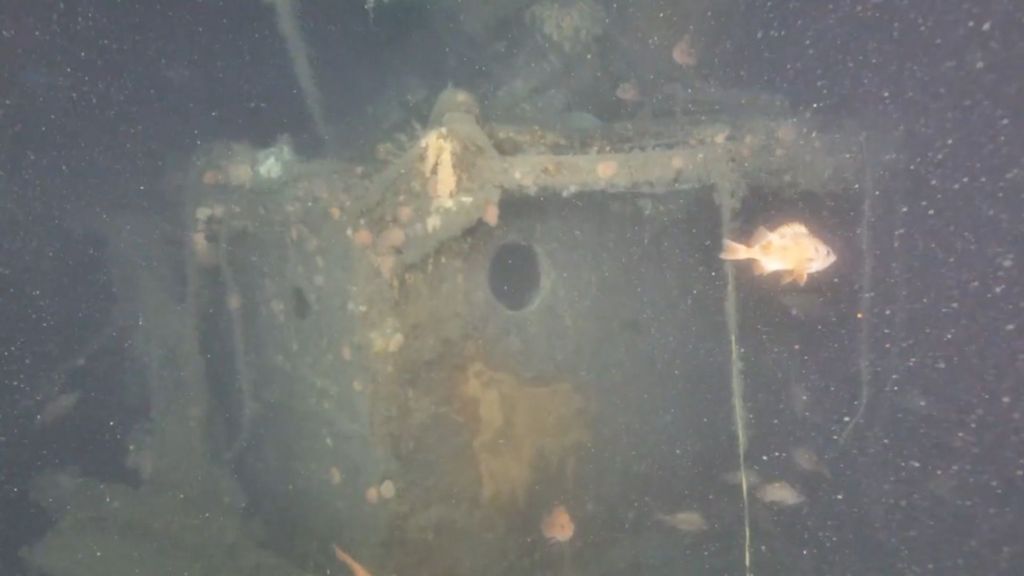
    For more than a century, the final resting place of polar explorer Ernest Shackleton’s iconic last ship has rested out of human sight, hidden beneath the frigid, dark waters of the South Atlantic. Now, a team of marine scientists has changed that, capturing the first high-quality footage of the wrecked vessel Quest, the ship that carried Shackleton on his final Antarctic adventure.

    Shackleton, one of the most legendary figures of the early 20th century’s Heroic Age of Antarctic Exploration, first captured global attention for his daring expeditions into one of the harshest, most unforgiving environments on Earth. His final journey came to an abrupt end in January 1922, when he suffered a fatal heart attack aboard the Quest shortly after the ship arrived at South Georgia Island, a remote outpost in the sub-Antarctic. Following his death, the ship continued on with its expedition, but eventually sank years later under unknown circumstances, leaving its location a mystery for decades.

    The newly released footage marks the first time researchers have been able to document the wreck in detail, after locating the site in recent expeditions. Marine scientists say the footage offers an unprecedented glimpse into a pivotal piece of polar exploration history, allowing historians and the public alike to connect with a story that has captivated adventure seekers for generations. The discovery also opens new doors for archaeological research, giving experts the chance to study early 20th-century polar expedition ship construction and better understand the conditions that led to the vessel’s sinking.

    For the scientific team behind the project, the capture of this footage is more than a technological achievement—it is a moment that honors the legacy of one of exploration’s most iconic figures. “This is a moment we’ve spent years working toward,” said one expedition lead in a statement following the footage’s release. “Shackleton’s story of resilience and ambition has inspired generations, and being able to share the first clear look at his final ship is a privilege that connects past and present.”

  • Ireland passes bill banning goods from Israel-occupied settlements in West Bank and Jerusalem

    Ireland passes bill banning goods from Israel-occupied settlements in West Bank and Jerusalem

    On Tuesday, Ireland’s national parliament passed a historic piece of legislation that bans the import of all goods produced in Israeli settlements located in the occupied Palestinian territories of the West Bank and East Jerusalem.

    Officially titled the Israeli Settlements (Prohibition of Importation of Goods) Bill, the new law targets goods originating from Israeli settlements that fall outside of Israel’s 1967 armistice lines, which are not recognized as part of Israel under international law. The legislation explicitly frames its actions as compliance with Ireland’s binding international legal obligations, as outlined in the landmark advisory opinion issued by the International Court of Justice (ICJ) on July 19, 2024.

    That ICJ ruling, which was formally upheld by the United Nations General Assembly, determined that Israel’s long-term occupation of Palestinian territories beyond the 1967 borders is unlawful under international law, and requires all UN member states to take active steps to avoid complicity in maintaining the illegal occupation. Aligning with this global mandate, the coalition government that backed the Irish bill says the measure is intended to cut off trade ties that enable the perpetuation of the illegal status quo Israel has established in the Occupied Palestinian Territory.

    Ireland has emerged as one of the most vocal critics of Israeli policy toward Palestinians among European nations in recent years. The country formally recognized Palestinian statehood in May 2024, and became the first government in the European Union to officially characterize Israel’s military campaign in Gaza as an act of genocide. This string of pro-Palestine actions has triggered sharp diplomatic backlash from Israel: Israeli Foreign Minister Gideon Saar has already responded to the new import ban by ordering the permanent closure of Israel’s embassy in Dublin.

    The import ban vote is only the latest in a series of escalatory steps taken by Dublin against Israel over the past year. Just last month, Ireland imposed entry bans on two far-right Israeli cabinet ministers, Itamar Ben Gvir and Bezalel Smotrich, who had already been sanctioned in June for repeated public incitement to violence against Palestinian communities. Alongside Spain, Ireland has also taken a leading role in pushing the European Union to conduct a full formal review of the 1995 EU-Israel Association Agreement, the foundational trade and cooperation pact that governs bilateral relations between the bloc and Israel. Most recently, Ireland joined Spain at an emergency international summit co-hosted by Colombia and South Africa in July 2025, where attendees coordinated collective concrete measures to hold Israel accountable for its alleged violations of international law.

    Public opinion in Ireland reflects the government’s hardening stance, with opinion polls consistently showing among the highest levels of popular support for Palestinians in Europe. Current polling data finds that 86 percent of the Irish public agrees with the assessment that Israel is carrying out genocide in Gaza, while 62 percent of respondents — a clear majority — support the EU imposing harsh economic sanctions on Israel, mirroring the restrictive measures imposed on Russia following its 2022 invasion of Ukraine. The country’s recently elected president, Catherine Connolly, who won an overwhelming landslide victory in the October 2025 presidential election, has long been one of the most prominent Western political voices in support of Palestinian rights. Connolly recently spoke publicly about her pride in her sister, Dr. Margaret Connolly, who was one of six Irish citizens detained by Israeli forces in April while participating in the Global Sumud Flotilla, an effort to deliver humanitarian aid to blockaded Gaza.

    Despite this widespread public and political support for Palestinian statehood and accountability for Israel, the new import ban marks a notable shift from Ireland’s prior largely symbolic actions toward concrete policy change. While Ireland is the first EU member state to formally pass this type of settlement goods ban, Spain already implemented its own ban on settlement imports along with a full arms embargo against Israel back in September 2025.

    Still, policy analysts have raised questions about the real-world impact of Ireland’s legislation, noting that watered-down compromises made to secure passage may leave the measure with little tangible effect. The bill retains provisions that allow pre-existing trade contracts to continue uninterrupted and includes broad exemptions for certain types of goods, softening the policy’s potential impact.

    The push for a ban on Israeli settlement goods first emerged in Irish politics nearly a decade ago, with the original version of the Occupied Territories Bill first introduced in 2018. At that time, the sitting Irish government blocked the bill from ever taking effect. The current centre-right coalition government has approved a heavily revised version of the original proposal that only bans physical goods from settlements, and entirely excludes trade in services — a sector that makes up roughly 70 percent of all bilateral trade between Ireland and Israel.

    Diplomatic and economic pressure from the United States political establishment was a key factor driving the decision to weaken the legislation, according to political sources. In October 2025, Democratic Congressman Josh Gottheimer of New Jersey published an open letter to Irish Taoiseach Micheal Martin, warning that passing a full ban on settlement goods would cause significant long-term damage to Ireland’s economic credibility and its commercial partnerships with U.S. businesses.