博客

  • ‘We should all be excited’ – Messi set for first England meeting

    ‘We should all be excited’ – Messi set for first England meeting

    For 20 years of senior international football, across more than 200 appearances and 125 goals for his country, Lionel Messi has never shared a pitch with England’s men’s national team. That long-awaited gap in the 39-year-old’s legendary career will finally close this Wednesday, when Argentina and England lock horns in a 2026 FIFA World Cup semi-final at Atlanta, kicking off at 20:00 BST and airing live on BBC One and BBC iPlayer. The historic showdown became possible only after a hard-fought quarter-final against Switzerland, where Argentina clawed their way to a 3-1 extra-time victory despite the Europeans holding momentum for large stretches of regular play.

    Though Messi went goalless against Switzerland – his first scoreless match of this tournament – he still remains tied with France’s Kylian Mbappe for the tournament’s Golden Boot lead with eight strikes, and retains his status as the men’s World Cup’s all-time leading goalscorer. Ahead of the unprecedented meeting, football pundits have weighed in on what England can expect from the eight-time Ballon d’Or winner, and just how much of a threat the Inter Miami forward poses.

    BBC pundit Micah Richards called the matchup one that all football fans should be excited for, noting that England’s biggest challenge will be containing an otherworldly talent who cannot be marked through traditional means. “Marking him is impossible because he doesn’t run back. He goes into little spaces where he shouldn’t really be. He switches on at the right times [and] he’s got the best technique. His spatial awareness is fantastic. He’s got a great shot,” Richards said. He added that Messi, like England’s own Jude Bellingham, carries an unmatchable on-pitch personality and aura, calling Messi’s aura “next level” among all active footballers.

    Former England striker Chris Sutton offered a more tempered perspective, telling BBC Radio 5 Live that England should view the matchup as an exciting opportunity rather than a daunting one. “I think Thomas Tuchel and the England players will be relishing the prospect of playing this Argentina team in its current guise, its current form, because this isn’t a great Argentina team but they do have a habit of finding a way,” Sutton explained. Ex-England forward Wayne Rooney echoed that take, pointing out that Messi offers little defensive output for Argentina, which could be an exploitable weakness – but warned that the captain can single-handedly change a match with moments of unrivaled quality. “He doesn’t run back, but he has big moments a bit like with Jude Bellingham. He has big moments and moments of quality. The thing with Messi is his decision-making – he comes to life in moments of the game and he makes the right decision,” Rooney said, adding that consistent concentration and communication between England defenders will be key to limiting the Argentine icon.

    South American football expert Tim Vickery emphasized that this semi-final is the matchup Argentina has been waiting for. “Lionel Messi couldn’t possibly end an international career, over 200 matches, without playing the team that Argentina fans see as their biggest rival,” Vickery told 5 Live, recalling that Argentine fans already chanted “he who doesn’t jump is an Englishman” during the Switzerland quarter-final, a taunt that will likely echo through Atlanta on Wednesday.

    The England-Argentina rivalry is one of the most storied and dramatic in international football, with decades of iconic moments shaping the feud. From Diego Maradona’s infamous “Hand of God” goal that knocked England out of the 1986 World Cup quarter-final, to David Beckham’s controversial red card at the 1998 World Cup, every encounter between the two sides has delivered high-stakes drama. What makes this semi-final even more historic is that it will be the first meeting between the two nations in nearly 21 years, and the first ever for Messi in a senior Argentina shirt.

    Messi made his senior Argentina debut in 2005 at 18, after leading the nation to a World Youth Championship title earlier that year. Just months after his debut, England and Argentina met in a friendly in Geneva – but Messi was forced to watch from the sidelines, suspended after being sent off just 30 seconds into his senior debut against Hungary. In that goalless (for Messi) contest, Argentina twice took the lead before Michael Owen scored two late dramatic goals to hand England a 3-2 victory under manager Sven-Goran Eriksson. That friendly remains the only senior meeting between the two nations since Messi entered the international scene, leaving the Wednesday semi-final as a completely new milestone for both sides.

    Messi’s career goal record against other nations shows his consistent dominance across every level of opposition. He has scored 11 goals in 12 matches against Bolivia, his favorite opponent, seven goals against both Venezuela and Ecuador, and five and six against South American giants Brazil and Uruguay respectively. Against European opposition, he has scored three goals each against Croatia, Switzerland, and France – including a memorable double in Argentina’s 2022 World Cup final victory over France. Of all the nations Messi has faced more than once, only Qatar has managed to keep him off the scoresheet across two meetings.


  • US, UK and 12 other nations reaffirm 2016 ruling invalidating China’s claims in South China Sea

    US, UK and 12 other nations reaffirm 2016 ruling invalidating China’s claims in South China Sea

    On Sunday, a coalition of 14 nations led by the United States and the United Kingdom issued a joint statement from Manila reaffirming that China’s sweeping territorial claims over the South China Sea lack any legal foundation, in a public backing of the landmark 2016 international arbitration ruling.

    The statement was timed to mark the anniversary of the July 12, 2016, decision handed down by a permanent arbitration tribunal based in The Hague. The tribunal was convened under the framework of the United Nations Convention on the Law of the Sea (UNCLOS), the global treaty that governs all maritime activity. The joint statement describes the arbitration outcome as a definitive, final and legally binding milestone that settles core legal questions around competing claims in the strategic waterway.

    The arbitration case was first launched by the Philippines in 2013, one year after a tense months-long standoff at a contested shoal ended with China taking effective control of the feature. China declined to participate in the proceedings, and has refused to acknowledge the ruling ever since it was issued. Beijing continues to assert sovereignty over nearly the entire South China Sea, a critical global shipping chokepoint that has been labeled one of the most dangerous potential conflict flashpoints in East Asia.

    The waterway is claimed in whole or in part by multiple governments: China, the Philippines, Vietnam, Malaysia, Brunei and Taiwan. Repeated territorial standoffs between claimant states have played out in the region for decades, with confrontations growing more frequent and high-risk in recent years.

    Beyond the U.S. and UK, the other signatories to Sunday’s statement are the Philippines, Japan, Australia, New Zealand, Canada, Germany, Italy, Estonia, Latvia, Lithuania, Romania and Slovenia. In the text, the coalition explicitly rejected “China’s expansive maritime claims in the South China Sea, including those based on ‘historic rights,’” echoing the core finding of the 2016 tribunal.

    The 2016 ruling sided overwhelmingly with the Philippines’ legal arguments, concluding that UNCLOS provides no legal support for China’s claims to historic resource rights in areas of the South China Sea beyond its internationally recognized territorial boundaries. UNCLOS, which entered into force in 1994, has been ratified by more than 170 countries and regions including both China and the Philippines.

    The 14-nation statement condemned destabilizing unilateral actions across the disputed waters, singling out the use of coast guard vessels, military assets and maritime militia to intimidate and obstruct lawful maritime and air operations conducted by other states. “Such actions endanger the safety of personnel and fishermen and seriously degrade regional peace and security,” the statement read.

    The coalition stressed that freedom of navigation and overflight, as enshrined in UNCLOS, must be protected and preserved, and called for all territorial disputes to be resolved through peaceful diplomatic means consistent with the 1982 UNCLOS framework.

    China had not issued a public response to Sunday’s joint statement as of press time. But in recent public comments through its embassy in Manila, Beijing has repeatedly made clear it will never recognize the 2016 ruling, which it labels “illegal, null and void.” “The award will not alter the historical and factual basis for China’s sovereignty over the islands of the South China Sea and their adjacent waters,” the embassy said in a previous statement, adding that the outcome “will not weaken China’s resolve and determination to safeguard its sovereignty and maritime rights and interests.”

    Territorial tensions in the South China Sea have spiked in recent years, most frequently involving Chinese forces and vessels alongside Philippine and Vietnamese fishing fleets and government vessels. Chinese coast guard vessels have been documented using high-powered water cannons, military-grade laser dazzlers, and dangerous blocking maneuvers against Philippine vessels and fishermen from other claimant states. These actions have led to high-seas collisions and multiple high-risk near encounters between aircraft and vessels in the area.

    Washington has repeatedly pressured Beijing to comply with the 2016 arbitration ruling. Both the current Biden administration and previous Trump administration have reaffirmed that as part of the long-standing mutual defense treaty between the U.S. and the Philippines — America’s oldest treaty ally in Asia — Washington is legally obligated to come to the Philippines’ defense if Filipino forces, civilian or military vessels, or aircraft come under armed attack in the South China Sea.

  • Lionel Messi’s World Cup scoring streak ends, but his assist sparks Argentina’s win over Switzerland

    Lionel Messi’s World Cup scoring streak ends, but his assist sparks Argentina’s win over Switzerland

    ATLANTA — In a tense, physical FIFA World Cup quarterfinal clash that went the distance, Argentine soccer icon Lionel Messi saw his historic nine-match World Cup scoring run come to an end against Switzerland Saturday night — but the living legend still dictated the match’s outcome, setting up the opening goal to help propel defending champions Argentina to a 3-1 extra-time victory. The win books Argentina’s spot in the tournament semifinals, where they will face off against England this Wednesday in Atlanta.

    The match’s first breakthrough came just 10 minutes in, when Messi crafted a corner opportunity with a brilliant display of close control and skillful footwork. The Inter Miami star sent a pinpoint cross into the penalty area, where Alexis Mac Allister converted a clinical header to put Argentina up 1-0. While the opening goal came from Messi’s playmaking, the 39-year-old took a hard blow to the area near his right eye in the second half, requiring on-field attention from training staff to patch him up for the remainder of the match.

    Switzerland held firm to level the scoreline in the 67th minute, forcing the tightly contested knockout match into 30 minutes of extra time. With fatigue setting in for both sides, Julian Alvarez broke the deadlock with an unstoppable 112th-minute strike that curled into the top corner of the Swiss net, before Lautaro Martinez iced the win with a late closing goal to seal the 3-1 final score.

    Heading into the matchup, Swiss head coach Murat Yakin faced widespread media questioning about how his side planned to contain Messi, who entered the match as co-leader in the tournament’s Golden Boot race alongside France’s Kylian Mbappé. Yakin joked that the question was unsurprising, noting that his staff had prepared multiple game plans to stop the Argentine, adding that the real test would be executing those plans on the pitch. In the end, the Swiss side largely delivered on their goal of shutting down Messi’s scoring: they successfully held the all-time tournament leading goalscorer, who has 21 career World Cup goals to his name, off the scoresheet, snapping his streak that included goals in six consecutive knockout round matches.

    Messi’s run of form at this year’s tournament has already cemented his status as the tournament’s standout player. A little over three weeks before the Swiss clash, Messi opened his World Cup campaign at the same venue with his first-ever World Cup hat trick, leading Argentina to a 3-0 opening group stage win over Algeria. He carried that form through the knockout rounds, notching eight goals heading into the quarterfinal. His tournament has not been without close calls, however: he missed penalty chances against both Austria and Egypt, with the second miss leaving Argentina trailing 2-0 and on the brink of elimination. Even in that high-pressure moment, Messi stepped up to turn the tide: he assisted Cristian Romero’s 79th-minute header to get Argentina on the board, then scored an equalizer four minutes later against Egyptian goalkeeper Mostafa Shobeir, before Enzo Fernandez scored a stoppage-time winner to send Argentina through to the quarterfinal.

    With many speculating that this tournament could be Messi’s last appearance on the World Cup stage with Argentina’s national team, Argentine head coach Lionel Scaloni heaped praise on the veteran playmaker, comparing his consistent elite performance to that of a well-oiled machine. “Those that are not so much acquainted with him might be surprised, and at 39 years of age some people might think he will not rise to the challenge,” Scaloni said. “But I’ve said this before, as long as he wants to be the best — and I’m not saying this because I’m coaching him — but because if he wants to continue, he will continue to be the best.”

  • Typhoon Bavi brings strong winds and rain to eastern China as more than 2 million people evacuated

    Typhoon Bavi brings strong winds and rain to eastern China as more than 2 million people evacuated

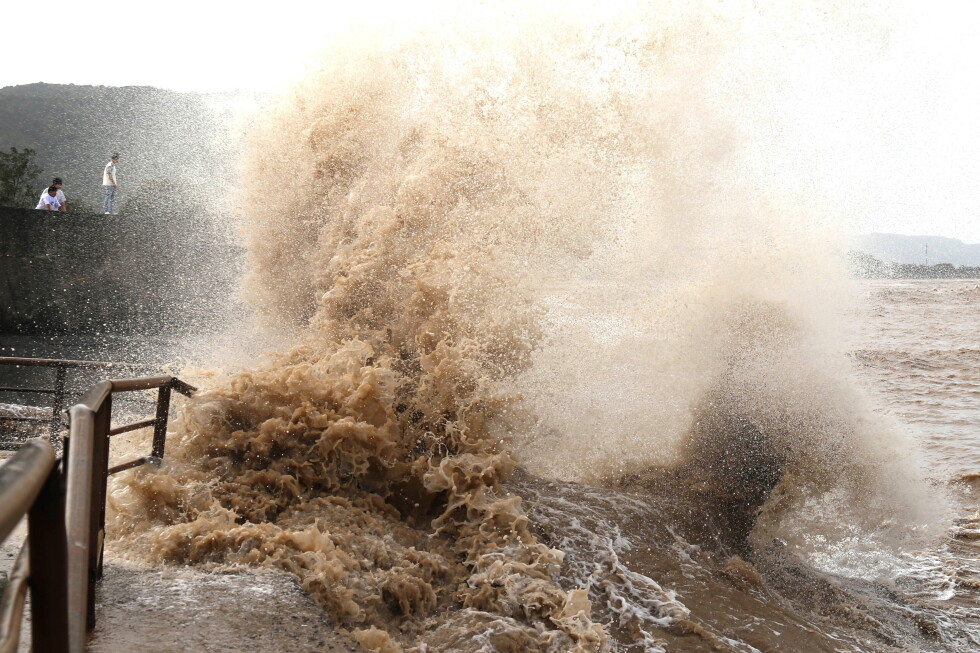
    BEIJING – In the wake of its landfall in China’s eastern coastal province of Zhejiang, Typhoon Bavi has downgraded from a typhoon to a severe tropical storm, though the system continues to batter large swathes of eastern China with gale-force winds and torrential downpours as of Sunday.

    China’s National Meteorological Center confirmed the storm’s weakening in the early hours of Sunday, reporting that maximum sustained winds near the system’s center clocked in at roughly 101 kilometers per hour (63 miles per hour). Meteorologists project the storm will continue tracking northwestward across the eastern half of the country in the coming days.

    Before reaching mainland China, Bavi passed just north of Taiwan on Saturday without making a direct landing on the island. Even so, the storm’s outer bands brought hazardous conditions that left more than 130 people injured across Taiwan, according to the island’s fire department. As of 7 a.m. Sunday, the agency confirmed 134 injuries, most of which occurred when residents fell from motorcycles or bicycles amid strong winds or on rain-slicked roadways.

    The National Meteorological Center has warned that hazardous wind and rain conditions will continue to disrupt daily life across dozens of major eastern Chinese cities through Sunday, prompting widespread emergency preparations from regional authorities. State media reports confirm that Shanghai has evacuated more than 290,000 residents from low-lying coastal and flood-prone areas, while Zhejiang authorities have relocated roughly 2.2 million at-risk residents to emergency shelters. Neighboring Fujian province has also evacuated more than 180,000 people to avoid storm-related harm.

    Air travel across the Shanghai region has been heavily impacted by the storm. Official state news outlet Xinhua News Agency reports that the city’s two major international airports – Pudong International Airport and Hongqiao International Airport – have canceled approximately 653 incoming and outgoing flights as of Sunday, with more schedule adjustments possible as the storm progresses.

    In Yueqing, a coastal Zhejiang city directly in the path of Bavi’s landfall, storm damage has already been extensively documented. State broadcaster CCTV reports that more than 1,300 trees were toppled by the storm’s strong winds, with at least 700 of those trees completely uprooted from city streets and green spaces.

  • West Indies beats New Zealand by 7 wickets in the 1st ODI to lead the 5-match series

    West Indies beats New Zealand by 7 wickets in the 1st ODI to lead the 5-match series

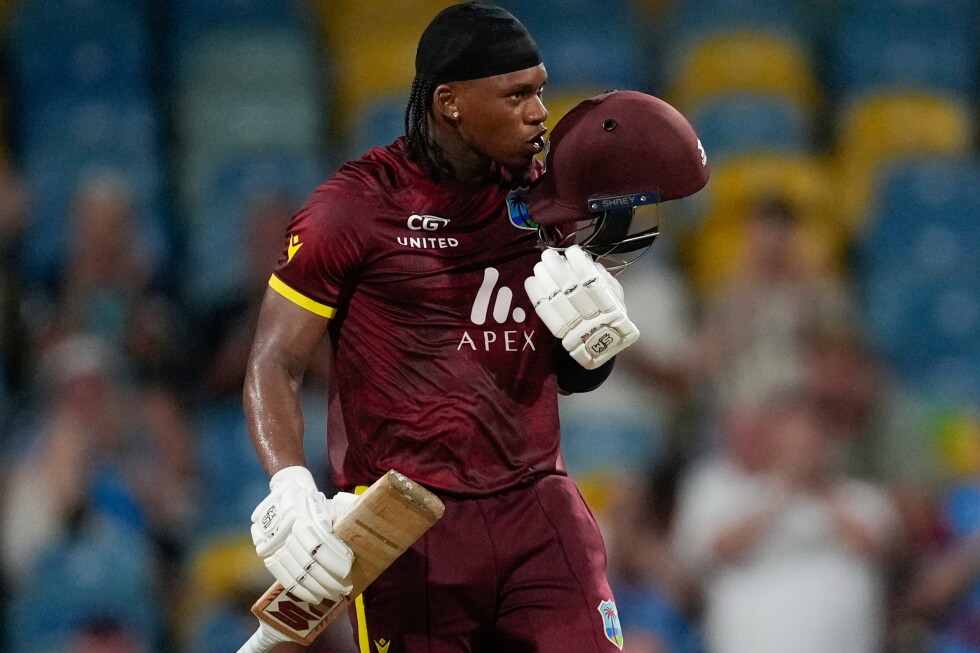
    PROVIDENCE, Guyana – The West Indies kicked off their five-match one-day international series against New Zealand with a confident seven-wicket victory on Saturday, built on a match-defining 131-run third wicket stand between Keacy Carty and Shai Hope that anchored the hosts’ run chase.

    New Zealand won nothing but regret after being sent in to bat first upon winning the toss. All-rounder Daryl Mitchell, fresh off a match-winning century that secured a test series victory over England just weeks prior, carried the Black Caps’ batting lineup with a top-scoring 65 runs. Will Young chipped in with 49, combining for an 80-run opening partnership with Henry Nicholls who made 27, but the rest of the batting order failed to convert promising starts into big scores. Michael Bracewell, Mark Chapman, Tom Latham and Mitchell Santner all reached the 20s but could not push on to match-defining contributions.

    By the 40th over, New Zealand sat comfortably at 216 for four, on track to post a total in excess of 300 that would have put the West Indies under serious pressure in home conditions. But a catastrophic late-order collapse changed the entire course of the game: the Black Caps lost their final six wickets for just 33 runs, folding all out for 267. Debutant West Indies bowler Vitel Lawes was the star of the collapse, claiming three key wickets – Nicholls, Chapman and Bracewell – to finish his maiden international outing with figures of 3 for 54.

    The West Indies got off to a solid start in their run chase, reaching 92 for two in the 19th over with opener Akeem Auguste contributing 38 runs from 58 deliveries before Carty and Hope came together at the crease. The pair controlled the tempo of the innings perfectly, keeping the required run rate below one run per over by ticking along at between five and six runs per over, eliminating any sense of urgency or pressure from the chase.

    Carty, who hit his fourth ODI century exactly one year ago, survived a controversial mid-innings scare when he appeared to dislodge the bails with his bat after hitting a six off Jacob Duffy’s bowling. Umpires ruled the shot had been completed before the stumps were disturbed, allowing Carty to continue batting. He made the most of the let-off, moving to 95 off 112 deliveries – just five runs short of his fifth international century – before holing out to Nathan Smith off Michael Bracewell’s bowling.

    After Carty’s dismissal, Hope anchored the remaining overs to see the West Indies across the line, finishing unbeaten on 87. He shared an unbroken 45-run stand from just 31 balls with Sherfane Rutherford, who ended the innings not out on 22. Even with 37 runs needed from the final five overs, the pair remained unflustered, steadily bringing the target within reach before closing out the win. A six from Hope from the first ball of the 49th over and a second six from Rutherford to the fifth ball of the same over wrapped up the chase with seven full deliveries remaining.

    The second match of the five-match ODI series will return to the same Providence venue on Monday, with the West Indies looking to extend their early series lead.

  • Switzerland’s Breel Embolo given red card for simulation after video review at World Cup

    Switzerland’s Breel Embolo given red card for simulation after video review at World Cup

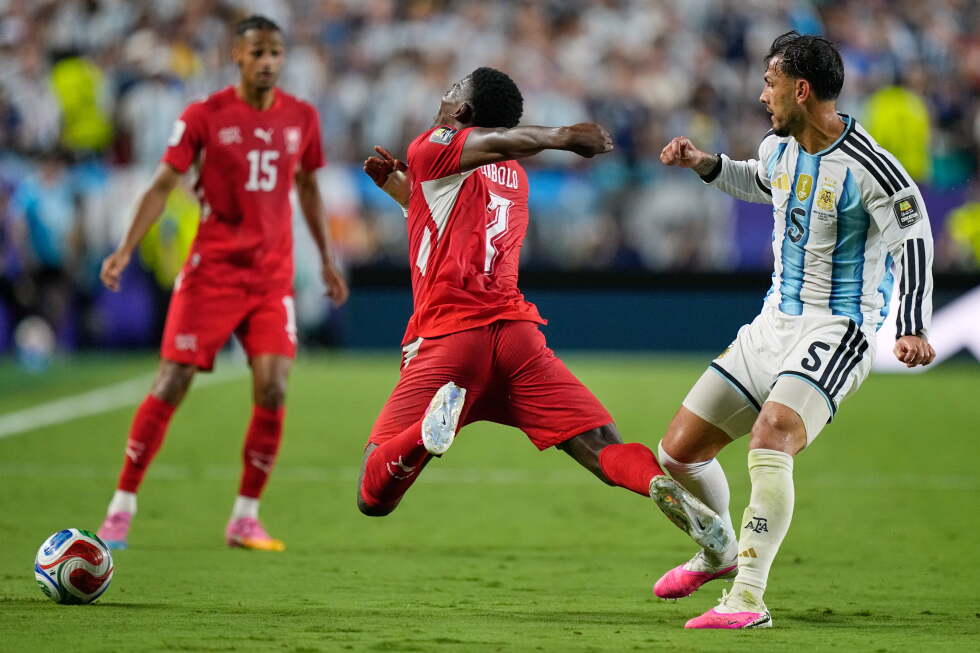
    KANSAS CITY, Mo. — A dramatic turning point unfolded in Saturday night’s World Cup quarterfinal clash between Switzerland and Argentina, as Swiss striker Breel Embolo was ejected from the match following a VAR review that exposed his attempt to feign a foul tackle. The incident, which altered the course of the tightly contested game, marked only the second time the tournament’s “mistaken identity” VAR protocol has been used to reverse a yellow card booking.

    Initially, Argentine midfielder Leandro Paredes was issued a yellow card for what referees believed was a reckless tackle that sent Embolo to the turf. But when the video assistant referee pulled the clip for closer examination, clear footage proved Embolo had already begun falling to the ground before Paredes made any physical contact. What looked like a standard foul was actually a deliberate attempt to draw a wrongful penalty against Argentina.

    The booking fell to Embolo instead, and the timing of the card proved devastating for Switzerland: Embolo had already received a yellow card earlier in the match, so the second infraction elevated to a red card ejection. With the score locked at 1-1, the Swiss side was forced to play the entire remainder of the high-stakes knockout match with just 10 men on the pitch.

    The red card came just moments after Swiss winger Dan Ndoye had scored the equalizing goal to level the match, swinging all momentum back in Switzerland’s favor. Embolo’s ejection immediately flipped that momentum back to Argentina, turning the tide of the quarterfinal in a single, game-altering sequence.

    The reversal of the original booking via the “mistaken identity” protocol is a rare occurrence at the World Cup. This protocol explicitly permits VAR to step in when match officials incorrectly award a card to the wrong player, a rule that was invoked for only the second time throughout this tournament. The sequence added another layer of controversy to a knockout match already packed with tension, highlighting how VAR continues to reshape the landscape of high-stakes international soccer.

  • At least two killed in Toronto street festival shooting

    At least two killed in Toronto street festival shooting

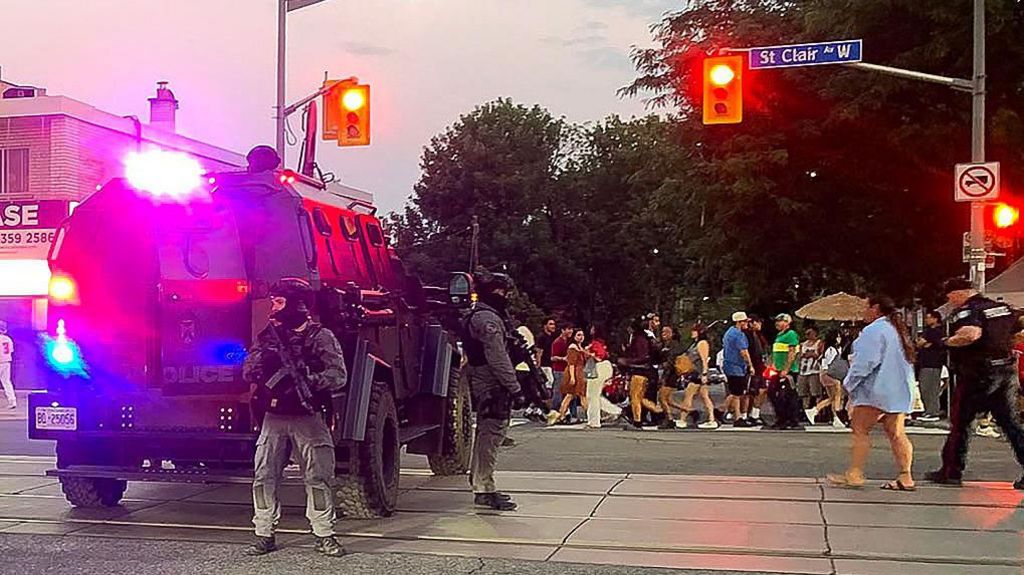
    A deadly shooting has left at least two people dead and six others injured after gunfire erupted at a crowded street festival in midtown Toronto, Canada, law enforcement officials confirmed. The incident unfolded on Sunday evening local time, triggering a large emergency response that locked down the busy commercial corridor and sent attendees fleeing for safety.

    Toronto Police first received emergency calls reporting an active shooter on St. Clair Avenue just after 8:12 p.m. local time, which corresponds to 1:12 a.m. BST Monday. At the time of the attack, the thoroughfare was hosting Salsa on St. Clair, the city’s beloved 22nd annual Latin cultural festival that draws thousands of attendees each year to enjoy live music, open-air dance performances, and food from local vendors.

    When first responders arrived at the scene, they located six people with gunshot wounds. Two of those victims were pronounced dead at the site of the shooting, police confirmed in an initial statement. By early Monday, authorities had secured the perimeter of the attack site and maintained a heavy visible police presence in the area, urging local residents and visitors to avoid the zone to allow for ongoing investigation.

    As of the latest update, no suspects have been taken into custody, and investigators have not released details on a potential motive for the violence. St. Clair Avenue, the location of the festival, is a popular midtown corridor lined with local shops, cafes, and restaurants that was closed to traffic for the two-day celebration that was scheduled to run from July 11 to July 12.

    This is a developing breaking news story, and additional details about the victims, suspect search, and investigation will be published as more information becomes available. Readers can access real-time updates via the BBC News mobile application or by following the official @BBCBreaking account on X for the latest alerts.

  • Messi and Argentina take a 1-0 lead over Switzerland into halftime of World Cup quarterfinal

    Messi and Argentina take a 1-0 lead over Switzerland into halftime of World Cup quarterfinal

    KANSAS CITY, Missouri – The 2024 FIFA World Cup quarterfinal clash between Argentina and Switzerland delivered another iconic early moment from soccer legend Lionel Messi, who helped the defending champions grab a critical 1-0 halftime lead on Saturday night. A perfectly placed corner kick from Messi found the head of teammate Alexis Mac Allister in the 10th minute, putting the tournament favorites ahead before most fans had even settled into their seats at Arrowhead Stadium.

    Coming into the match, Switzerland’s defensive organization had been one of the biggest stories of the tournament. The Swiss side had given up just three goals across their first five matches, and they looked set to continue that form when they controlled possession in the opening minutes of the contest. But Messi, whose career has been defined by game-changing moments on the world’s biggest stage, turned the tide in an instant. After helping force the corner, he stepped up to take the set piece and delivered a cross that cut through the Swiss penalty area perfectly for Mac Allister’s finish.

    The early goal holds multiple notable layers for both sides. It marks the earliest goal Argentina has scored throughout this entire World Cup run, and it is the first time Switzerland has found itself trailing in any match this tournament. For Argentina, the early strike also lifted a tangible weight off the squad heading into the rest of the match. The defending champions have navigated a rocky knockout stage so far: they only narrowly defeated Cape Verde in extra time to open the elimination round, and just days earlier, they needed a dramatic late comeback – three goals in 11 minutes – to erase a 2-0 deficit and defeat Egypt.

    Argentina, a three-time World Cup winner that currently holds the tournament title, is chasing history in this year’s competition. A win against Switzerland would see them advance to the semifinal, putting them one step closer to becoming the first men’s national team to successfully defend a World Cup crown since Brazil accomplished the feat in 1962. Waiting for the winner of the quarterfinal is England, who secured a 2-1 win over Norway earlier the same day to book their semifinal spot. The upcoming semifinal is scheduled to take place Wednesday in Atlanta.

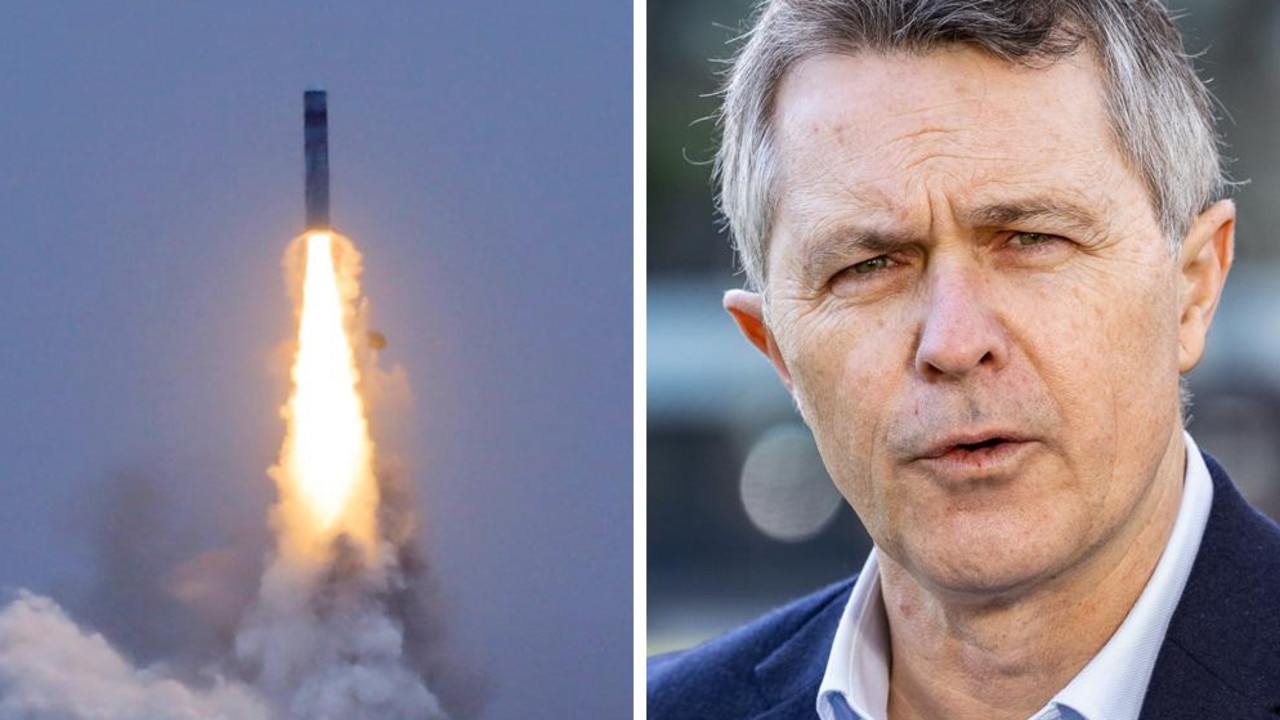
  • China’s Pacific ‘backyard’ missile test not making friends: Education Minister Jason Clare

    China’s Pacific ‘backyard’ missile test not making friends: Education Minister Jason Clare

    Growing international and regional condemnation has followed China’s recent unprecedented ballistic missile test in the South Pacific, with senior Australian government ministers arguing the provocative move will not win Beijing any goodwill among regional neighbors.

    The test, which saw a ballistic missile fired to a location roughly 1,000 kilometers northeast of the Solomon Islands, took place just hours before Australian Prime Minister Anthony Albanese was scheduled to arrive in Honiara for an official visit. Notably, the launch also occurred mere hours after Albanese signed Australia’s fourth bilateral security alliance with Fiji during a stop in Suva, a timing that has sparked widespread scrutiny across Australian political circles.

    Speaking to Sky News on Sunday, Australian Education Minister Jason Clare emphasized the unneighborly nature of the launch, stating, “Good neighbours don’t shoot stuff over someone else’s house.” Clare doubled down on the criticism, noting China would not “make any friends” by conducting missile tests over what he framed as other nations’ backyard territory. He did, however, push back against suggestions that the test was intentionally scheduled to coincide with Albanese’s regional visit.

    For its part, China has defended the exercise, framing it as a routine military test carried out in line with international law. Notably, Australia was not given the standard 48-hour advance notification that typically accompanies such tests.

    Australian Defence Industry Minister Pat Conroy, who recently represented Australia at the NATO summit, warned that the Indo-Pacific is currently experiencing the most rapid military buildup and arms race the region has seen since 1945. “That is occurring without any transparency or strategic reassurance. That is the context that we face,” Conroy explained. He called a direct regional conflict the ultimate “nightmare scenario,” stressing that any major conflict in the Indo-Pacific would have catastrophic global consequences, not just impacts for the immediate region. “We must do all we can to prevent that,” he added.

    Conroy used the controversy to promote the Australian government’s expanded defense investment plans, including acquisitions of advanced SM-6 missile systems and Aegis combat systems. When asked whether Australia would have the capability to intercept a Chinese ballistic missile similar to the recent test in the event of a conflict, Conroy declined to give a direct confirmation, instead noting that the Australian Defence Force already holds a range of active capabilities. He emphasized that stagnation in defense modernization is not an option, justifying the government’s largest peacetime increase in defense funding in Australian history: “This is a race where we need to make sure that the Australian Defence Force has the best possible equipment, and that’s why we’re providing the biggest peacetime increase in defence funding ever.”

    When pressed on the risk of conflict over Taiwan, Conroy stated that Australia maintains preparedness for any regional conflict while all global parties work to avoid escalation. He also told NATO leaders that modern security conflicts are no longer contained to local regions, but have ripple effects across the entire globe.

    The missile test has also drawn sharp condemnation from Pacific regional leaders, including Solomon Islands opposition Prime Minister Matthew Wale, who has been pushing for a region-wide Pacific security pact. The recently signed Australia-Fiji Ocean of Peace agreement includes provisions that allow additional Pacific nations to join the pact in the future, though Albanese ruled out immediate moves to expand the alliance during remarks in Suva on Monday. Clare rejected claims that the missile test would discourage other Pacific nations from entering security partnerships with Australia.

    When asked about Australia’s stance on Wale’s call for a full regional security pact, Conroy confirmed that Australia supports the initiative, but emphasized that any agreement must be led by the Pacific region itself, as Wale currently holds the chairmanship of the Pacific Islands Forum. Conroy declined to share details of confidential discussions with Wale, noting that negotiating and finalizing such a wide-ranging agreement would likely take several years. “Ultimately, it’s a decision of all the Pacific leaders. We act on a consensus approach,” he said. When pressed directly whether Australia would sign on to a region-led pact, Conroy responded clearly: “absolutely.” He added that the initiative aligns with Australia’s existing approach to bilateral partnerships with Pacific nations, saying, “We’re proud to be the security partner of choice for the Pacific, just as we are the development partner of choice. This is all about peace and stability in our region.”

  • Muslim judge in India faces death threats after convicting ‘cow vigilantes’

    Muslim judge in India faces death threats after convicting ‘cow vigilantes’

    A Muslim judge in central India has been subjected to widespread online religious abuse, death threats and rape threats after issuing a life imprisonment verdict against 14 Hindu cow vigilantes convicted of a 2022 mob lynching. The targeted attacks have sparked national outrage over threats to judicial independence and the growing influence of communal rhetoric in the country’s legal system.

    On June 12, Tabassum Khan, additional district and sessions judge in Madhya Pradesh state, delivered a guilty verdict on 14 men on charges including murder, attempted murder, rioting and wrongful confinement. The case stems from a fatal 2022 attack: 50-year-old Nazir Ahmad, a Muslim man, was intercepted by a mob of self-proclaimed ‘gau rakshaks’ (cow protectors) while transporting cattle at night. The mob dragged Ahmad and two companions from their vehicle, beat them brutally with sticks and rods over suspicions of cow smuggling. Ahmad died from his injuries, while his surviving companions testified to the violence in court. In her ruling, Khan explicitly categorized the killing as a clear act of mob lynching.

    Almost immediately after the verdict was announced, unrest erupted. Family members of the convicted men gathered outside the courtroom to protest the ruling, blocking police convoys transporting the defendants to jail and claiming the men were wrongfully punished for ‘protecting cows’. What began as in-person protest quickly escalated into a coordinated online campaign of religiously charged hate targeting Khan personally.

    Multiple videos shared across social media platforms feature Hindu right-wing influencers hurling communal slurs at Khan, issuing violent threats including public calls for her rape and murder. One video even threatened widespread bloodshed across India if the convicted men were not released within 10 days. As of this reporting, many of these threatening videos remain publicly accessible, having amassed thousands of likes and shares, with the perpetrators’ identities and social media accounts clearly visible in the content.

    Mainstream right-wing media figures have also amplified the backlash. A leading anchor with Sudarshan News, a prominent right-wing Hindi news outlet, publicly expressed solidarity with the convicted men’s families, claiming the men had sacrificed everything to protect cows and urging viewers to mobilize in protest. Several major cow protection advocacy groups and Hindutva organizations have held large public demonstrations against the verdict across multiple states. On June 22, the Gau Raksha Parishad held a protest in Punjab where demonstrators burned an effigy of Khan and assaulted it in effigy. Three days later, the Rashtriya Bajrang Dal organized a parallel protest in Uttar Pradesh, demanding the immediate release of all 14 convicted men.

    Critics across India’s legal community have emphasized that the attacks on Khan are not rooted in legitimate criticism of her legal reasoning, but are exclusively rooted in religious bigotry targeting her Muslim identity. Retired Supreme Court judge Markandey Katju highlighted this dangerous trend in a public post on X, noting that protesters and online abusers have sought to delegitimize Khan’s authority solely by reducing her professional identity to her religion.

    “Her Muslim identity became the principal basis upon which the legitimacy of the judgement was questioned. This represented a dangerous inversion of justice. Judicial decisions are meant to be evaluated through legal reasoning, not through the religious identity of the individual delivering them,” Katju wrote. In subsequent comments, Katju shared that Khan had reached out to him to say the relentless abuse had left her traumatized, leading her to question whether she had done something wrong by upholding the law.

    Leading Indian judicial bodies have rallied to Khan’s defense, condemning the threats as an attack on the foundation of democratic governance. The Supreme Court Advocates-on-Record Association (SCAORA) and the Supreme Court Bar Association (SCBA) have both issued formal statements denouncing the harassment and calling for immediate legal action against the perpetrators. Vikas Singh, president of the SCBA, told reporters that threats against sitting judges represent an existential threat to democracy itself.

    “If we allow this to happen, no judge will be able to dispense justice. In a democracy, a judge must be able to perform their duty without fear or favour,” Singh said.

    Local law enforcement officials confirmed that they have registered a criminal case under relevant sections of the Indian Penal Code, with two arrests made so far in connection with the threats. State cyber cells are currently tracing all individuals who have shared the inflammatory videos and are conducting ongoing monitoring of social media platforms to remove additional hateful content.

    Still, prominent legal advocates argue that authorities have not done enough to guarantee Khan’s safety. Senior Supreme Court advocate Sanjay Hegde pointed to a recent precedent involving another targeted judge to argue that equal protection must be extended regardless of judicial rank. In 2024, former Bombay High Court judge Gautam Patel and his family received constant threats for more than 10 months after delivering a verdict in a Muslim community succession dispute. After three judicial organizations filed a public interest litigation, the Bombay High Court ordered the Maharashtra government to provide enhanced security to Patel, ordered the Mumbai police commissioner to supervise the investigation and demanded regular status updates.

    “If a retired judge of a high court deserves state protection and judicial supervision of his case, so does a serving sessions judge in a district court. The principle cannot bend to rank. It cannot bend to religion. It cannot bend to the political weather around a particular verdict,” Hegde wrote in a piece for legal news outlet Live Law.

    In recent weeks, the Madhya Pradesh High Court has stepped in to escalate the response, ordering senior state officials to submit a formal explanation of the steps they have taken to protect Khan and identify the organizers of the hate campaign. The court has also issued a formal order requiring Khan’s enhanced police protection to continue indefinitely. The case has reignited longstanding national debates over the violence of cow vigilantism, the targeting of Muslim public figures, and the protection of judicial independence in an increasingly polarized political climate.