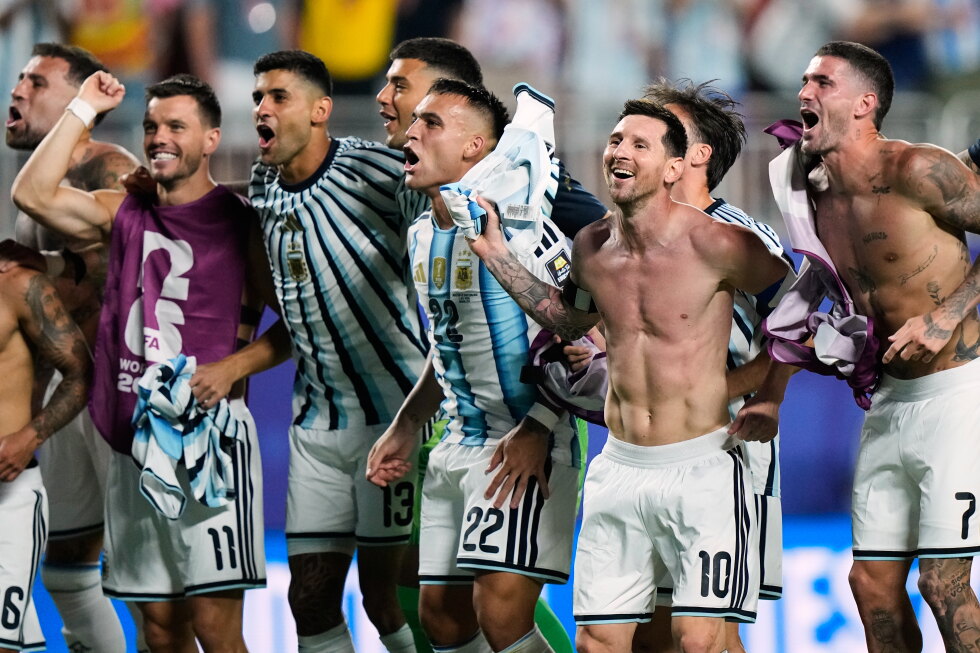
ATLANTA — In a tense, physical FIFA World Cup quarterfinal clash that went the distance, Argentine soccer icon Lionel Messi saw his historic nine-match World Cup scoring run come to an end against Switzerland Saturday night — but the living legend still dictated the match’s outcome, setting up the opening goal to help propel defending champions Argentina to a 3-1 extra-time victory. The win books Argentina’s spot in the tournament semifinals, where they will face off against England this Wednesday in Atlanta.
The match’s first breakthrough came just 10 minutes in, when Messi crafted a corner opportunity with a brilliant display of close control and skillful footwork. The Inter Miami star sent a pinpoint cross into the penalty area, where Alexis Mac Allister converted a clinical header to put Argentina up 1-0. While the opening goal came from Messi’s playmaking, the 39-year-old took a hard blow to the area near his right eye in the second half, requiring on-field attention from training staff to patch him up for the remainder of the match.
Switzerland held firm to level the scoreline in the 67th minute, forcing the tightly contested knockout match into 30 minutes of extra time. With fatigue setting in for both sides, Julian Alvarez broke the deadlock with an unstoppable 112th-minute strike that curled into the top corner of the Swiss net, before Lautaro Martinez iced the win with a late closing goal to seal the 3-1 final score.
Heading into the matchup, Swiss head coach Murat Yakin faced widespread media questioning about how his side planned to contain Messi, who entered the match as co-leader in the tournament’s Golden Boot race alongside France’s Kylian Mbappé. Yakin joked that the question was unsurprising, noting that his staff had prepared multiple game plans to stop the Argentine, adding that the real test would be executing those plans on the pitch. In the end, the Swiss side largely delivered on their goal of shutting down Messi’s scoring: they successfully held the all-time tournament leading goalscorer, who has 21 career World Cup goals to his name, off the scoresheet, snapping his streak that included goals in six consecutive knockout round matches.
Messi’s run of form at this year’s tournament has already cemented his status as the tournament’s standout player. A little over three weeks before the Swiss clash, Messi opened his World Cup campaign at the same venue with his first-ever World Cup hat trick, leading Argentina to a 3-0 opening group stage win over Algeria. He carried that form through the knockout rounds, notching eight goals heading into the quarterfinal. His tournament has not been without close calls, however: he missed penalty chances against both Austria and Egypt, with the second miss leaving Argentina trailing 2-0 and on the brink of elimination. Even in that high-pressure moment, Messi stepped up to turn the tide: he assisted Cristian Romero’s 79th-minute header to get Argentina on the board, then scored an equalizer four minutes later against Egyptian goalkeeper Mostafa Shobeir, before Enzo Fernandez scored a stoppage-time winner to send Argentina through to the quarterfinal.
With many speculating that this tournament could be Messi’s last appearance on the World Cup stage with Argentina’s national team, Argentine head coach Lionel Scaloni heaped praise on the veteran playmaker, comparing his consistent elite performance to that of a well-oiled machine. “Those that are not so much acquainted with him might be surprised, and at 39 years of age some people might think he will not rise to the challenge,” Scaloni said. “But I’ve said this before, as long as he wants to be the best — and I’m not saying this because I’m coaching him — but because if he wants to continue, he will continue to be the best.”