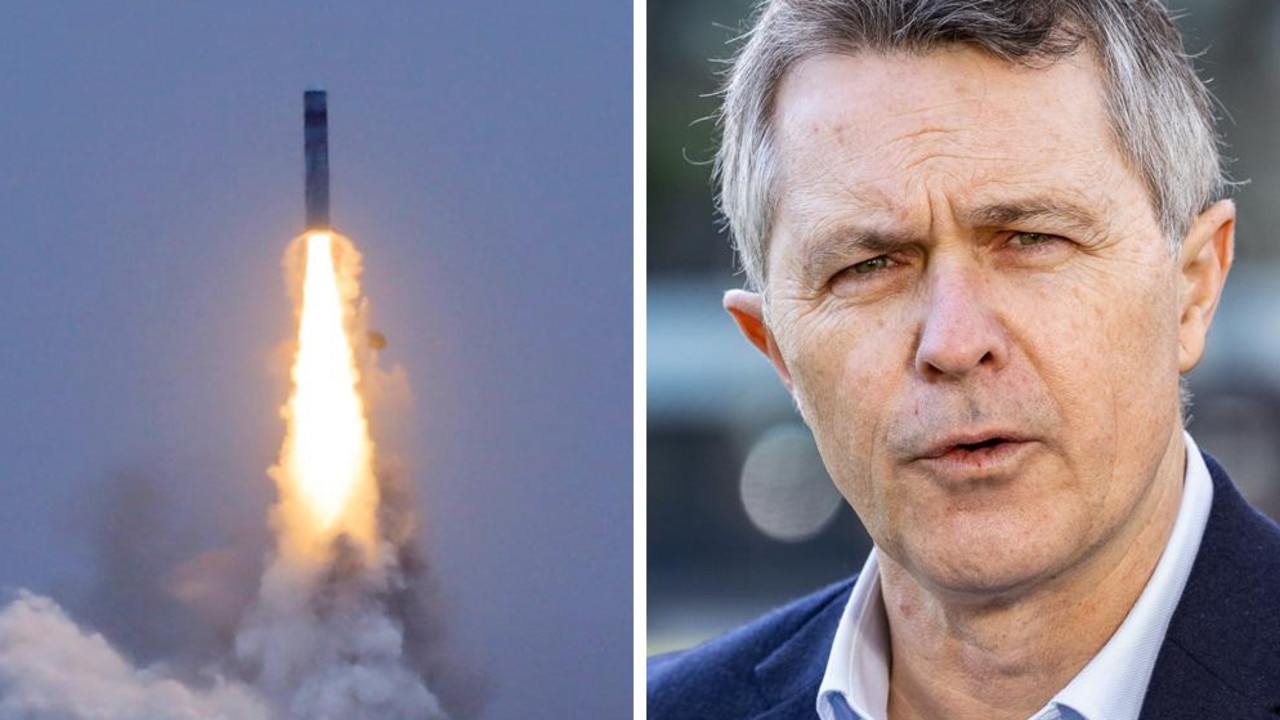
Growing international and regional condemnation has followed China’s recent unprecedented ballistic missile test in the South Pacific, with senior Australian government ministers arguing the provocative move will not win Beijing any goodwill among regional neighbors.
The test, which saw a ballistic missile fired to a location roughly 1,000 kilometers northeast of the Solomon Islands, took place just hours before Australian Prime Minister Anthony Albanese was scheduled to arrive in Honiara for an official visit. Notably, the launch also occurred mere hours after Albanese signed Australia’s fourth bilateral security alliance with Fiji during a stop in Suva, a timing that has sparked widespread scrutiny across Australian political circles.
Speaking to Sky News on Sunday, Australian Education Minister Jason Clare emphasized the unneighborly nature of the launch, stating, “Good neighbours don’t shoot stuff over someone else’s house.” Clare doubled down on the criticism, noting China would not “make any friends” by conducting missile tests over what he framed as other nations’ backyard territory. He did, however, push back against suggestions that the test was intentionally scheduled to coincide with Albanese’s regional visit.
For its part, China has defended the exercise, framing it as a routine military test carried out in line with international law. Notably, Australia was not given the standard 48-hour advance notification that typically accompanies such tests.
Australian Defence Industry Minister Pat Conroy, who recently represented Australia at the NATO summit, warned that the Indo-Pacific is currently experiencing the most rapid military buildup and arms race the region has seen since 1945. “That is occurring without any transparency or strategic reassurance. That is the context that we face,” Conroy explained. He called a direct regional conflict the ultimate “nightmare scenario,” stressing that any major conflict in the Indo-Pacific would have catastrophic global consequences, not just impacts for the immediate region. “We must do all we can to prevent that,” he added.
Conroy used the controversy to promote the Australian government’s expanded defense investment plans, including acquisitions of advanced SM-6 missile systems and Aegis combat systems. When asked whether Australia would have the capability to intercept a Chinese ballistic missile similar to the recent test in the event of a conflict, Conroy declined to give a direct confirmation, instead noting that the Australian Defence Force already holds a range of active capabilities. He emphasized that stagnation in defense modernization is not an option, justifying the government’s largest peacetime increase in defense funding in Australian history: “This is a race where we need to make sure that the Australian Defence Force has the best possible equipment, and that’s why we’re providing the biggest peacetime increase in defence funding ever.”
When pressed on the risk of conflict over Taiwan, Conroy stated that Australia maintains preparedness for any regional conflict while all global parties work to avoid escalation. He also told NATO leaders that modern security conflicts are no longer contained to local regions, but have ripple effects across the entire globe.
The missile test has also drawn sharp condemnation from Pacific regional leaders, including Solomon Islands opposition Prime Minister Matthew Wale, who has been pushing for a region-wide Pacific security pact. The recently signed Australia-Fiji Ocean of Peace agreement includes provisions that allow additional Pacific nations to join the pact in the future, though Albanese ruled out immediate moves to expand the alliance during remarks in Suva on Monday. Clare rejected claims that the missile test would discourage other Pacific nations from entering security partnerships with Australia.
When asked about Australia’s stance on Wale’s call for a full regional security pact, Conroy confirmed that Australia supports the initiative, but emphasized that any agreement must be led by the Pacific region itself, as Wale currently holds the chairmanship of the Pacific Islands Forum. Conroy declined to share details of confidential discussions with Wale, noting that negotiating and finalizing such a wide-ranging agreement would likely take several years. “Ultimately, it’s a decision of all the Pacific leaders. We act on a consensus approach,” he said. When pressed directly whether Australia would sign on to a region-led pact, Conroy responded clearly: “absolutely.” He added that the initiative aligns with Australia’s existing approach to bilateral partnerships with Pacific nations, saying, “We’re proud to be the security partner of choice for the Pacific, just as we are the development partner of choice. This is all about peace and stability in our region.”