博客

  • UK politicians call for sanctions on Israel as Starmer’s Gaza legacy slammed

    UK politicians call for sanctions on Israel as Starmer’s Gaza legacy slammed

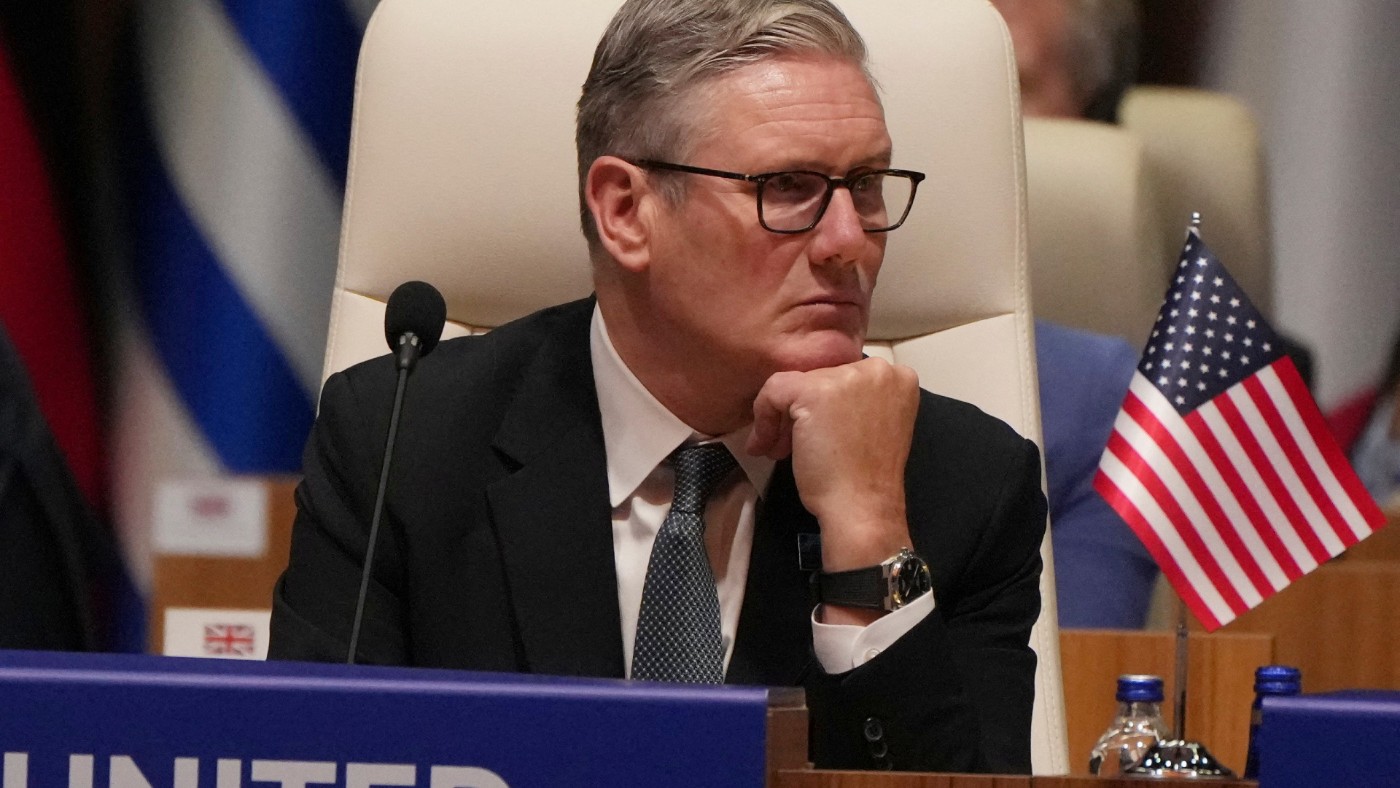
    As the United Kingdom prepares for a change in its prime minister next week, more than 80 members of Parliament and members of the House of Lords have signed an open letter urging the government to implement sweeping, comprehensive sanctions against Israel, while a coalition of leading British humanitarian organizations has issued sharp criticism of outgoing Prime Minister Keir Starmer’s record on Palestinian rights.

    Organized by Labour Members of Parliament Imran Hussain and Richard Burgon, the letter addressed to UK Foreign Secretary Yvette Cooper calls on the government to align its actions with the 2023 advisory opinion issued by the International Court of Justice (ICJ). This July 19 marks exactly two years since the ICJ ruled that Israel’s 56-year-long occupation of Palestinian territories is unlawful under international law, concluding that Israel’s near-total segregation of Palestinian communities in the occupied West Bank constitutes a breach of international prohibitions against racial segregation and apartheid.

    The cross-party group of signatories — which includes former Labour Party leader Jeremy Corbyn, Green Party Members of Parliament Sian Berry and Hannah Spencer, former New Labour cabinet minister Lord Peter Hain, and Jewish Kindertransport refugee Lord Alf Dubs — argues that two years on from the landmark ruling, Israel has only expanded its unlawful occupation. They point to a series of escalatory actions that have erased almost all remaining hope for a two-state solution: Israel currently controls more than 60 percent of the Gaza Strip, a territory it has left largely in ruins after three years of military campaign; it has launched expanded incursions into southern Lebanon and Syrian territory under the pretense of targeting Hezbollah; and it has ramped up annexationist policies in the West Bank. In September 2024, far-right Israeli Finance Minister Bezalel Smotrich, who also serves as de facto governor of the occupied West Bank, unveiled a plan to annex 82 percent of the territory to Israel, a move built on the principle of seizing “maximum land with minimum [Palestinian] population” that would eliminate any possibility of a sovereign Palestinian state.

    “Israel’s actions over the past two years underline how, without much bolder action, the Israeli government will continue to simply ignore the words of condemnation from political leaders and governments and deepen its illegal occupation,” the letter reads. It notes that the ICJ has clearly established that all UN member states hold a legal obligation to recognize the illegality of Israel’s occupation and refrain from economic or trade activity that sustains it. Despite publicly acknowledging the court’s ruling, the letter argues, the British government has failed to take formal action to meet its binding legal and moral obligations. Drawing a contrast to the UK’s robust response to Russia’s full-scale invasion of Ukraine, the politicians point out that London imposed widespread sanctions on Moscow for its violation of international law, but has refused to apply the same standard to Israel.

    The signatories outline a clear set of concrete demands: ban all trade with unlawful Israeli settlements in the occupied West Bank, sanction companies that profit from the occupation, implement targeted individual sanctions against Israeli officials responsible for expanding the occupation, suspend the existing UK-Israel bilateral trade agreement, and end all arms transfers to Israel — including the supply of components for F-35 fighter jets.

    Parallel to the politicians’ appeal, 17 major UK charities have also called on incoming Prime Minister Andy Burnham to take immediate action to end what they describe as Israel’s atrocities against Palestinian people. The coalition includes prominent organizations such as Save the Children UK, Medical Aid for Palestinians, Islamic Relief, and Amnesty International UK, who warned that Palestinians cannot afford any further delay or political inaction on the matter.

    In their statement, the charities delivered a scathing assessment of Starmer’s legacy on Palestine. “Despite a partial arms suspension in 2024, Keir Starmer’s government has continued to enable Israel’s atrocities against Palestinians, their families and children through the supply of F-35 fighter jet parts,” Save the Children UK said, adding that “History will remember your complicity.”

    John McDonnell, a Labour MP and former shadow chancellor who signed the politicians’ letter, emphasized that the incoming prime minister faces a clear moral and legal duty to act. “The Netanyahu government clearly believes it can act with impunity as it destroys any hope of a two-state solution with its total annexation of the West Bank,” McDonnell told Middle East Eye. “The hope is that the incoming prime minister recognises that the UK government has a duty to act.”

    Burnham, who is set to succeed Starmer in office next week, has already sought to distance himself from his predecessor’s approach, issuing a public apology for the Labour Party’s initial response to the conflict in Gaza. “I know many people feel that at the start of Israel’s military action in Gaza, my party didn’t get it right, and I am sorry about that. The response has too often not been good enough. We need to do better,” he said. Burnham acknowledged the “unbearable suffering” in Gaza, describing it as a “scar on our collective conscience,” and has called for increased pressure on the Israeli government to end its expansion of occupation. He has praised the outgoing Starmer administration for its limited steps — including formal recognition of Palestinian statehood, sanctions on a small number of far-right Israeli ministers, and a ban on the supply of British-produced bombs and bullets to Israel — but admitted that the UK was far too slow to call for a permanent ceasefire, and that a more robust approach is now needed.

    Foreign Secretary Yvette Cooper has also softened her rhetoric in recent weeks, acknowledging that Labour’s early response to the Gaza crisis was misaligned with humanitarian concerns. But aid groups warn that a shift in tone does not guarantee meaningful policy change.

    Halla Keir, advocacy and research manager at Medical Aid for Palestinians, stressed that the urgency of the crisis leaves no room for further delay. “Every new prime minister inherits difficult decisions. But this should not be one of them,” Keir said. “Almost three years into Israel’s genocide in Gaza, the need for action could not be clearer. The UK’s obligations under international law are clear. What is needed now is the political courage to act.”

    Save the Children UK echoed this call, noting that “Nothing can change the horrors Palestinians have faced. But the next prime minister has an opportunity to put an end to the UK government’s role as an ally to atrocities.”


  • Israel approves over $400m to fund 34 settlements in occupied West Bank

    Israel approves over $400m to fund 34 settlements in occupied West Bank

    In a controversial move that has reignited global scrutiny of Israeli territorial policy, the Israeli government announced Tuesday it has formally approved a 1.3 billion shekel ($434 million) budget to construct 34 new settlements in the occupied West Bank. According to leading Israeli outlet Ynet, the budget approval was finalized by the country’s security cabinet back in June, but was intentionally kept secret for months over fears of pushback from the United States government. The foundational approval for the 34 settlements themselves was granted in a separate, unpublicized cabinet vote in March, with neither decision disclosed to the public until this week.

    With this latest authorization, the total number of settlements approved by Prime Minister Benjamin Netanyahu’s current far-right government, which took office in late 2022, has climbed to 104. Alongside the new construction projects, the government also signed off on the re-establishment of the Sa-Nur settlement in the northern West Bank. This site was originally evacuated in 2005 as part of Israel’s disengagement from the Gaza Strip, but Israeli settlers have already returned to the location in recent months.

    Top government officials from the ruling far-right bloc have celebrated the decision as a landmark step in their planned expansion of Israeli control over the West Bank. Finance Minister Bezalel Smotrich, who also leads civilian oversight of the occupied West Bank through the Defense Ministry, spearheaded the budget measure and framed it as a core achievement of what his faction calls a “settlement revolution.” Smotrich described the approval as a critical security and strategic decision, tying the expansion to his long-stated goal of blocking the creation of an independent Palestinian state, which he referred to as a “terror state” that would threaten Israeli sovereignty. “We are passing, one after the other, budgetary decisions that fund roads, infrastructure, and now also buildings and caravans,” Smotrich said, confirming that construction on the new settlements would launch as early as this coming summer.

    Settlement Minister Orit Strook, a fellow member of Smotrich’s Religious Zionist party who resides in an existing West Bank settlement, went even further in praising the move, calling it “the greatest Zionist-settlement move since the establishment of the state.” Strook claimed that no comparable pro-settlement decision had been made in the entire history of the Zionist movement, adding that the government’s agenda aims to ensure “no point remains without a settlement” across the occupied territory.

    Just days earlier, Smotrich and Netanyahu signed a separate landmark umbrella agreement with the Samaria Regional Council, committing 8.5 billion shekels ($2.5 billion) to upgrade and expand infrastructure across the northern West Bank. Israeli daily Israel Hayom reported that this is the first time an Israeli government has formalized such a direct agreement with a regional settlement council. The deal allocates funding for 18 previously approved new settlements, the construction of roughly 12,000 additional homes in existing settlement blocs, and broad upgrades to local roads and public services.

    However, the settlement expansion push has drawn sharp criticism both from within Israel and from the international community. All Israeli settlements built in the West Bank are universally recognized as illegal under international law, a position formally upheld by the International Court of Justice and endorsed by the overwhelming majority of the global community. Domestic Israeli anti-settlement advocacy group Peace Now has lambasted the new measures, describing the recent 8.5 billion shekel infrastructure deal as “a fire sale of the State of Israel.” In a formal statement, the organization argued: “Not only is the government thumbing its nose at millions of Israelis and plundering their money for the benefit of a narrow settler sector – it is digging, with its own hands, the diplomatic and security pit in which the State of Israel may end up buried.”

    Earlier this month, Peace Now published a comprehensive report documenting the current government’s rapid acceleration of de facto annexation of the occupied West Bank. The report found that over the past three years, the government has approved more than 100 new settlements and formalized 185 unapproved settlement outposts. These outposts now exert control over more than 1.1 million dunams of land, equal to roughly 18 percent of the total area of the occupied West Bank. The report also added that Israeli settlers, backed by the Israeli military, have forcibly displaced 118 distinct Palestinian communities from their land in the territory to make way for expansion.

  • Earth’s magnetosphere  a natural ‘speed governor’, Chinese study reveals

    Earth’s magnetosphere a natural ‘speed governor’, Chinese study reveals

    A groundbreaking new study published in *Nature Geoscience* on July 15, 2026, upends long-held scientific assumptions about how Earth’s magnetic field interacts with solar wind reaching the Moon, confirming that our planet’s magnetosphere functions as a natural \”speed governor\” that cuts the velocity of solar particles reaching the lunar nearside by nearly half. This discovery draws from the first ever analysis of noble gases in farside lunar samples, collected and returned to Earth by China’s historic Chang’e 6 mission in 2024, and unlocks a new pathway to reconstruct the ancient history of Earth’s magnetic field.

  • NYC’s Rikers Island jail hosts World Cup watch party for inmates

    NYC’s Rikers Island jail hosts World Cup watch party for inmates

    NEW YORK – From downtown office break rooms to waterfront public parks and neighborhood sports bars, soccer fans across the city packed viewing gatherings for Wednesday’s World Cup semifinal between England and Argentina. But one watch party unfolded in a location few would expect to host such a communal, lighthearted event: Rikers Island, New York City’s sprawling, controversial correctional complex long plagued by headlines of overcrowding, mismanagement, and systemic failing.

    On this Wednesday afternoon, more than 100 incarcerated people, clad in standard tan correctional uniforms, filled rows of tables facing a large projection screen set up in the main intake center’s gymnasium. Colorful balloon towers, capped with soccer-ball-shaped balloons, framed the screen, transforming the utilitarian space into a makeshift fan zone for the high-stakes match.

    The jail system first launched these organized watch parties when the World Cup tournament kicked off last month, opening access only to incarcerated people who have maintained good behavior, requiring a minimum of 30 days incident-free to participate. The program has already brought more than 90 fan gatherings to the facility, drawing roughly 4,500 participants out of Rikers’ current population of approximately 6,600 incarcerated people.

    Shortly before kickoff, New York City Mayor Zohran Mamdani arrived to join the event. Ditching his signature dark formal suit jacket, the Democratic mayor rolled up the sleeves of his white dress shirt, took a seat at one of the front tables, and dove straight into casual conversation about the tournament with the incarcerated guests.

    One participant at the mayor’s table shared his prediction: he expected Argentina to defeat England, then go on to face Spain in the final, after Spain’s upset win over France in the earlier semifinal. “You never know,” Mamdani responded, noting he was a vocal supporter of Morocco, which had been eliminated in an earlier round of competition.

    At a neighboring table, another incarcerated person told the mayor he was scheduled to be released from custody later that same day. Mamdani congratulated him warmly, shaking his hand and patting him on the back, saying “That’s amazing.”

    Roughly 20 minutes into the match, the mayor departed the gathering, leaving the crowd of incarcerated fans to enjoy the rest of the game in the transformed gym space. The unusual program marks a rare effort to bring recreational, community-focused activities to a facility that has long been the center of criticism over poor conditions and lack of programming for incarcerated people.

  • Elderly US woman shocked to receive racy new car licence plate

    Elderly US woman shocked to receive racy new car licence plate

    A quirky administrative mix-up has turned a nearly 77-year-old Florida resident into the most talked-about resident of her retirement community, after state vehicle officials accidentally issued her a license plate with a hidden lewd acronym.

    Nancy Dello Stritto, a Pompano Beach local, says she was shocked when she finally looked closely at her replacement plate, which read SQZ A55 — a combination that spells out a crude phrase when read casually. “I went ballistic,” she recalled in an interview with CBS Miami. “I just don’t think a senior who’s almost 77 should be driving around with a plate that says that. How did this even get through the screening process to be issued?”

    Dello Stritto never asked for a custom plate; she was simply waiting for a standard replacement for her old plate when the new one arrived in the mail. She told reporters she did not notice anything off when she first pulled it out of the envelope, and only caught the suggestive wording later.

    Since word spread about the unusual plate, opinions among her inner circle and neighbors have been split. Some friends in her retirement community have urged her to swap it out immediately for a more appropriate combination, while her own sons and other family members have encouraged her to hang onto it.

    After weighing her options, the 76-year-old made a playful decision: she is keeping the plate, just to see how the situation plays out. “I’m resigned to it; maybe it was destined for it to be on my car,” Dello Stritto said. “I can handle it if I get a few honks here and there. Actually, being over 70, I might like a few honks.”

    The background of Florida’s license plate production adds context to the rare error: for close to a century, all state license plates have been manufactured at a state prison in North Florida, before being distributed through official state agencies. Local officials with Broward County confirm that any driver who receives a plate deemed offensive or inappropriate can request a free replacement, meaning Dello Stritto could swap it any time she chooses. For now, though, she is embracing her unexpected local fame.

  • Lebanon’s Mitri says divisive Israel framework still lacks government approval

    Lebanon’s Mitri says divisive Israel framework still lacks government approval

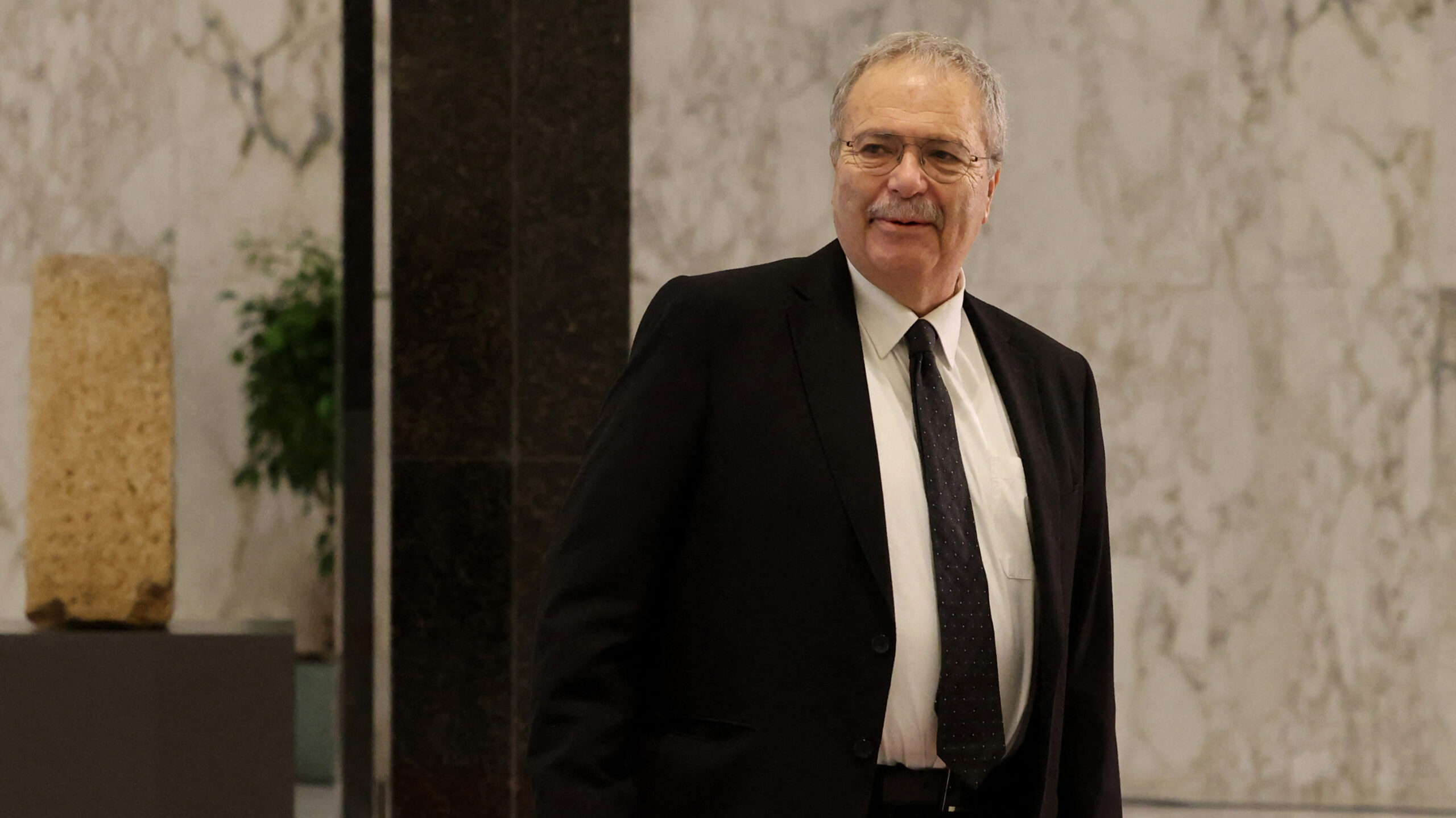
    BEIRUT – Lebanon’s Deputy Prime Minister Tarek Mitri has stated in an exclusive interview with Middle East Eye that the current U.S.-brokered framework between Israel and Lebanon to end hostilities between Israel and Hezbollah is unworkable in its existing form, and cannot gain the status of a legally binding agreement without formal approval from Lebanon’s full Council of Ministers.

    Mitri clarified the distinct constitutional roles of Lebanon’s presidency and cabinet in international negotiation processes, noting that while the president holds the constitutional authority to negotiate on Lebanon’s behalf, all final agreements must receive cabinet approval before they take legal effect. To date, that step has not been completed, meaning the text agreed to by both parties in Washington on June 26 remains a non-binding starting point rather than a finalized deal.

    “The word agreement is nowhere to be seen in this text,” Mitri confirmed during the interview at his Beirut office.

    The U.S.-mediated framework, designed to map a path toward ending months of open conflict between Israel and the Lebanese armed group Hezbollah, has sparked widespread public and political opposition across Lebanon since it was signed. Critics have raised urgent questions about Lebanese national sovereignty, accountability for war crimes, and the framework’s structure that places Lebanon’s obligations ahead of Israel’s formal commitments.

    Hezbollah has publicly condemned the deal for failing to guarantee a full Israeli withdrawal from the roughly 6 percent of Lebanese territory that Israel continues to occupy, and for not securing the return of hundreds of thousands of displaced Lebanese residents to their homes in southern Lebanon.

    Mitri acknowledged that the current proposal does not meet all of Lebanon’s core demands, but framed it as an opening for future negotiation rather than a final settlement. “This is not the last word… It doesn’t meet all the desires and aspirations of the Lebanese. But this is a beginning,” he said, repeating that the text remains “not a solid, well-structured, final binding agreement.”

    He also conceded deep internal political divisions over the framework, noting that significant domestic outreach and negotiation will be required before any final deal can secure broad cross-political support within Lebanon. “You need to make sure that at the domestic level, although there might be disagreement, [a deal] should not exacerbate divisions and should not deepen already existing divisions,” he said.

    Mitri pointed to immediate public statements from Israeli leaders following the framework’s release as clear evidence of its weaknesses, demonstrating that Israel also does not view itself as bound by the text. “Twenty-four hours after the trilateral framework was made public… Netanyahu, the foreign minister, the defence minister said, ‘We’re staying in southern Lebanon. We’re not withdrawing,’” he recalled. Israel’s refusal to publicly commit to a full withdrawal from southern Lebanon directly contradicts Lebanon’s non-negotiable core demands, which also include the return of displaced residents and the release of Lebanese prisoners held by Israel, he added.

    The current conflict, which opened when Hezbollah launched rocket strikes on Israel on March 2 following the U.S.-Israeli killing of Iran’s Supreme Leader Ali Khamenei, has evolved into “a war that Lebanon did not want, did not seek,” Mitri said, emphasizing that what began as a confrontation between Israel and Hezbollah has become a full-scale war on the Lebanese state and people.

    Lebanese authorities confirm that Israeli airstrikes and ground operations have killed more than 4,300 people since the war began in March. A recent assessment from the United Nations Development Program found that more than 11,000 buildings across southern Lebanon have been completely destroyed by Israeli attacks, with a further 2,200 structures partially damaged. “When the war started in Lebanon, it looked like a battleground between Israel and Hezbollah. But Israel has made a war on Lebanon,” Mitri said. “And there are many parts of Lebanon where Hezbollah had no military activity that were severely affected.”

    Addressing widespread criticism of Article 13 of the framework – a provision that suspends mutual legal and political action between the two sides during ongoing negotiations, which Lebanese human rights and legal experts warn could shield Israel from accountability for alleged war crimes – Mitri pushed back against concerns that the article would permanently end Lebanon’s efforts to document and pursue legal action for Israeli attacks.

    As chair of Lebanon’s National Commission on International Humanitarian Law, Mitri confirmed that the state’s ongoing work to document war crimes has not stopped, and “cannot be stopped” by the provisions of Article 13. He noted that Lebanon has never brought formal proceedings against Israel before an international court for a range of historical reasons, pointing out that neither country is a signatory to the Rome Statute that governs the International Criminal Court. Even so, evidence collected by the commission remains available for Lebanese citizens seeking to bring cases against Israel before foreign courts that exercise universal jurisdiction, he said.

    Mitri added that Lebanese officials have received formal assurances that Article 13 does not permanently end legal action against Israel. “We were told that although the word ‘cessation’ is used… it only means suspension,” he said, noting that pausing legal proceedings during active negotiations is a common practice in international peace processes, including the post-apartheid settlement in South Africa and the Algerian peace process.

    One of the most sensitive political issues facing the Lebanese government in the wake of any ceasefire will be the question of disarming Hezbollah and extending full state control over all weapons and territory across the country. Shortly after Hezbollah opened hostilities in March, the Lebanese government banned the group from conducting any independent military activities. Last year, the cabinet instructed the Lebanese army to draft plans for Hezbollah’s disarmament, a move that sparked fears of domestic armed conflict even as top officials including the president and prime minister emphasized they do not seek a military confrontation with the group. Earlier this year, Middle East Eye reported deep tensions between Prime Minister Nawaf Salam and army chief Rodolphe Haykal over disagreements on how to implement the disarmament ban, with unconfirmed sources indicating Salam considered sacking Haykal for refusing to confront Hezbollah during the ongoing war.

    Mitri argued that disarming Hezbollah is fundamentally a political issue, not a military one, rejecting calls for the Lebanese army to confront the group by force to establish state authority. “Disarming Hezbollah is not a technical question,” he said. “It’s not about the military balance of power between the army and Hezbollah’s military structure – it’s first and foremost political.” He noted that there has been little substantive discussion of the issue over the past several months, as open war makes domestic dialogue extremely difficult, but added that negotiations on the question are inevitable, and it must remain an internal Lebanese affair. When asked whether Israel is intentionally seeking to provoke a confrontation between the Lebanese army and Hezbollah, Mitri said: “Possibly the Israelis would be happy if that happens. But I think neither the army nor Hezbollah are willing to fall into the trap of fighting each other.” He noted that the pilot deployment zones outlined in the current framework can serve as a “litmus test” for the army to expand state authority gradually, while allowing Hezbollah to step back without triggering internal armed conflict.

    The current conflict marks the third major confrontation between Israel and Hezbollah since the 33-day 2006 war, which ended with a UN-brokered ceasefire that kept the border largely calm for nearly 18 years. Comparing the current diplomatic context to the 2006 negotiations, Mitri noted that Lebanon is now operating in a drastically shifted global landscape, where the UN Security Council and multilateral diplomacy have been sidelined. “The only party that can mediate, or at least allow for mediation under its auspices, is the United States of America,” he said.

    This reality has left Beirut with little choice but to engage with Washington, despite decades of deep mutual distrust, Mitri explained. Lebanon has long been “a footnote” in U.S. regional policy, he said, but Lebanese officials see a current “window of attention” that they are determined to leverage. He added that some political observers see recent comments from U.S. Vice President JD Vance – who suggested that Washington’s unconditional support for Israel should not be taken for granted – as a potential sign of a gradual shift in U.S. policy toward the region. “The main reason why the Lebanese look towards the United States is… that the US is the only country that has leverage over Israel and can help in resolving the present difficult issues we face,” he said.

    Mitri also emphasized that Israel’s strategic objectives have grown far more ambitious since the 2006 war, pointing to repeated public statements from Israeli leaders outlining a new military doctrine focused on “reclaiming deterrence” by establishing permanent security buffer zones in Gaza, Lebanon and Syria. “Now we are in a totally different, more difficult situation,” he said. “We’re left with very few options.”

    Looking beyond the immediate conflict, Mitri noted growing regional interest in building a new architecture of coordination and strategic alignment among regional states including Syria, Saudi Arabia, Qatar and Turkey, extending beyond narrow security arrangements. He pointed to Turkish President Recep Tayyip Erdogan’s long-held view that regional security is deeply interconnected, with Turkey’s security tied to Syria’s, and Syria’s security tied to Lebanon’s.

    Mitri stressed that Syria is far more than just a neighbor and ally to Lebanon; the two countries’ futures are “inextricably intertwined.” Addressing recent reports that U.S. President Donald Trump asked Syrian President Ahmed al-Sharaa to intervene militarily against Hezbollah, Mitri said Syria’s new leadership has shown no interest in reviving the decades of interference in Lebanese affairs that marked the former Assad regime. Al-Sharaa has publicly denied any plans to take military action against Hezbollah, and Mitri confirmed: “We know that with the present Syrian government, there is no hegemonic design over Lebanon.” Damascus is willing to support Lebanon through diplomatic and political means instead, he added.

    Mitri also rejected claims that Lebanese President Joseph Aoun holds reservations about Syria’s new leadership, despite the fact that neither president has yet conducted an official visit to the other’s capital. “I have not sensed any major reason why the visits… did not take place,” he said, explaining that trust is still being rebuilt after decades of mutual suspicion and Syrian political dominance over Lebanon. “This is all changing and it takes time for the population of both countries to realise that we’re in a totally different dispensation.”

    Despite years of catastrophic economic collapse, persistent political turmoil, and repeated cycles of war, Mitri said he does not believe Lebanon’s national unity and sovereignty face an imminent existential threat. He did acknowledge that deep-rooted sectarian loyalties and communal tensions remain present across the country, creating a widespread sense of social estrangement. While he warned that Lebanon’s future as a unified state depends on successfully resolving the current crisis, he stopped short of ruling out all risk of fragmentation. “Lebanon’s unity is always in the making,” he said, adding that fragmentation will only occur “unless we were unable to manage the present crisis and dissipate the present fears.”

  • Twin attacks by militants kill 3 police officers, wound 20 in restive northwest Pakistan

    Twin attacks by militants kill 3 police officers, wound 20 in restive northwest Pakistan

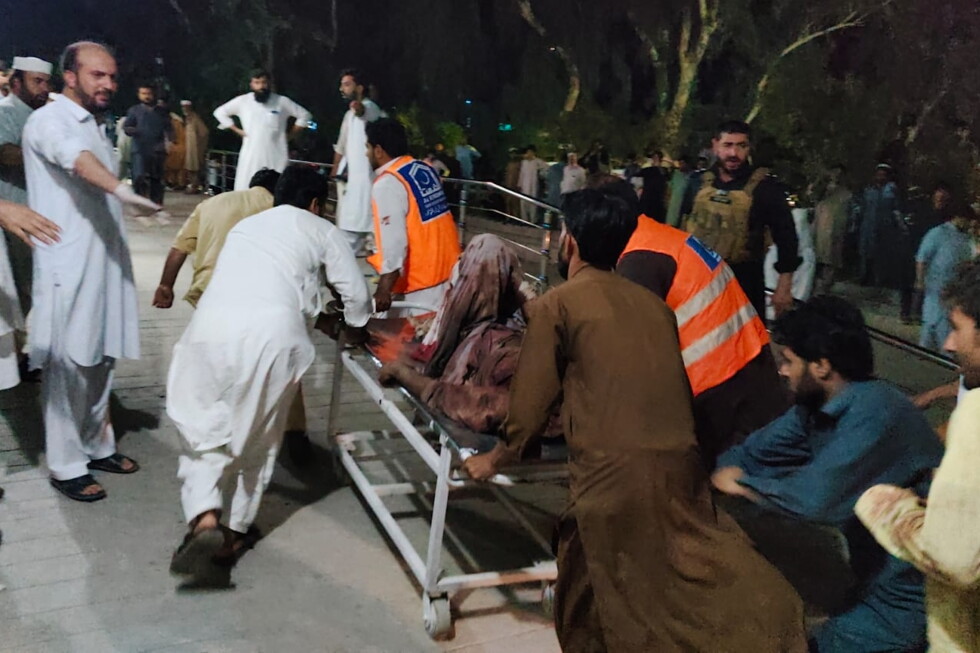
    On Wednesday, northwest Pakistan was hit by two coordinated militant attacks that have underscored a sharp upward trend in instability along the country’s volatile border with Afghanistan. Officials confirmed that at least three police officers were killed and 20 more were injured across the two separate assaults, which unfolded just hours apart in Khyber Pakhtunkhwa province.

    The first strike took place in the remote district of Upper Dir, where unidentified militants ambushed a convoy carrying security personnel. Local police spokesperson Ibrahim Khan confirmed that three officers lost their lives in the opening attack, while 15 other personnel were left wounded. Security forces immediately returned fire against the attacking militants, and armed engagements between the two sides were still ongoing in the area in the immediate aftermath of the ambush. Khan added that there was no immediate confirmation of casualties among the militant group responsible for the ambush.

    Roughly hours after the Upper Dir attack, a second assault targeted law enforcement in the province’s Bannu district. In this attack, a suicide bomber drove a vehicle packed with explosive materials directly into the exterior of a local police station. The resulting blast damaged a substantial portion of the police station building, and five additional police officers were wounded in the explosion. Authorities have not reported any fatalities connected to this second bombing as of initial assessments.

    No militant organization has yet stepped forward to claim responsibility for either of the two attacks. However, counterterrorism analysts and local officials widely expect blame to fall on Tehrik-e-Taliban Pakistan (TTP), an insurgent group more commonly known as the Pakistani Taliban. While the TTP operates as an independent organization from the Taliban government that now rules Afghanistan, the two groups maintain close ideological and operational ties.

    Pakistan has long alleged that the TTP runs its militant operations from safe havens located inside Afghan territory, a claim that both the TTP and the Taliban-led administration in Kabul have repeatedly rejected. This latest wave of attacks comes amid a documented rise in insurgent violence in northwest Pakistan over the past year, fueling growing concerns over cross-border security and the ability of militant groups to operate undisturbed in the border region.

  • Epstein ‘mistakes’ and Trump ties: Key takeaways from Todd Blanche’s confirmation hearing

    Epstein ‘mistakes’ and Trump ties: Key takeaways from Todd Blanche’s confirmation hearing

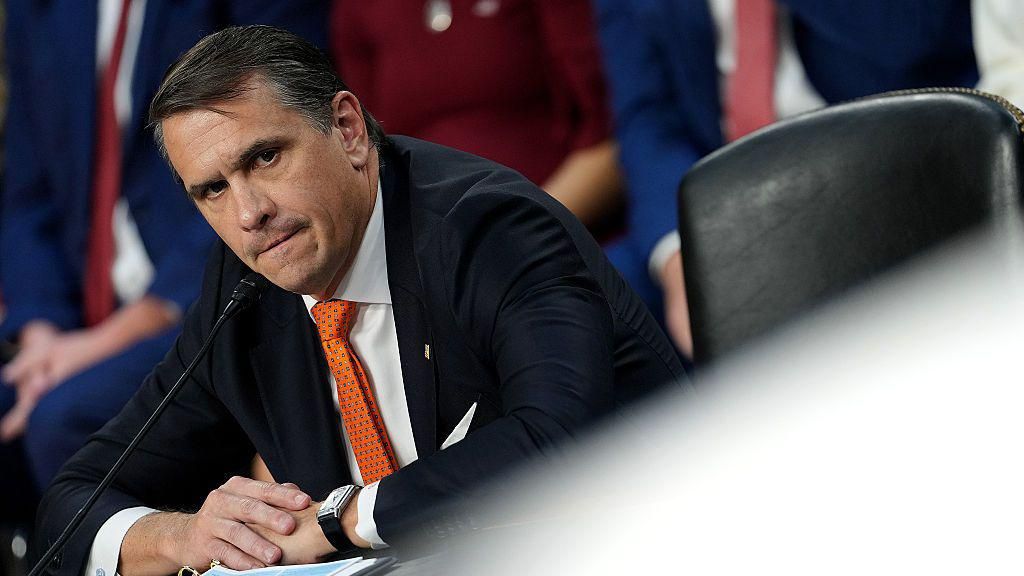
    Acting United States Attorney General Todd Blanche faced his first round of Senate confirmation questions this week, as he vies for a permanent appointment to the nation’s highest law enforcement role. The hearing came on the heels of a series of political upheavals: former AG Pam Bondi was dismissed by President Donald Trump amid widespread backlash over the Justice Department’s handling of the Jeffrey Epstein document release, and a federal judge had just voided a controversial tax settlement between Trump, his business empire and his family, and the Internal Revenue Service (IRS) a day before Blanche took the hot seat. Throughout the session, lawmakers from both parties pressed Blanche on three core contentious issues: his longstanding professional ties to Trump, the fate of the scrapped IRS settlement, and ongoing missteps in the Epstein files release. Below are the five most significant moments from the high-stakes hearing.

    First, Blanche addressed persistent questions over whether he would maintain independent control of the Justice Department, separate from the political interests of the president who appointed him. Ahead of the 2024 election, Blanche served as Trump’s personal defense attorney in three of the four major criminal cases the former and now current president faced, including leading the legal team during Trump’s high-profile New York hush-money criminal trial. Trump has openly pledged to exact “retribution” against his political opponents during his second term, and has repeatedly pressured the Justice Department to pursue prosecutions against high-profile critics, including former FBI Director James Comey and New York Attorney General Letitia James. When Louisiana Republican Senator John N. Kennedy, a generally loyal ally of the Trump administration, asked Blanche if he counted Trump as a personal friend, the acting AG pushed back. “I’m his lawyer — was his lawyer. And now I’m the deputy attorney general,” Blanche said. “I met him as his criminal defence attorney, I’m not sure there’s very many people who have ever had a criminal defence attorney who calls that person their friend.”

    Second, Blanche committed that a controversial provision of the now-voided IRS settlement would never go into effect. The struck-down deal included two contentious terms: full immunity from future IRS audits for Trump, and the creation of a $1.7 billion (£1.2 billion) “anti-weaponisation fund” designed to compensate individuals who claim they were unfairly targeted by government agencies. The proposal sparked bipartisan outrage on Capitol Hill, with lawmakers from both major parties demanding answers on whether the fund would move forward even after the judge’s ruling. Republican Senator Mike Lee pressed Blanche to confirm the fund would be scrapped entirely, asking: “You have no reason to believe that the so-called weaponisation fund will continue because of the settlement, agreement, is that correct?” Blanche responded clearly: “I am confident it will not.” Fellow Republican Senator Thom Tillis went further, demanding the administration issue formal written confirmation that the initiative was permanently abandoned.

    Third, Blanche publicly apologized to survivors of Jeffrey Epstein for redaction errors in the release of the late convicted sex offender’s case files, the most politically explosive issue facing the Justice Department since Trump returned to office. After massive public pressure, Congress ordered the Justice Department to release more than six million pages of internal documents from the federal investigation into Epstein’s crimes. But the slow pace of release and overly broad redactions have drawn fierce criticism from lawmakers and survivors alike, with a dozen survivors attending Wednesday’s hearing wearing shirts printed with images of the heavily redacted files to protest the department’s handling of the process. Senate Judiciary Committee Chairman Chuck Grassley, the panel’s top Republican, pressed Blanche on multiple failures: “problematic redactions”, “insufficient effort” on following unclosed investigative leads, refusal to meet with survivors, and the controversial recent transfer of Epstein’s accomplice Ghislaine Maxwell to a lower-security prison. Blanche argued that processing millions of documents in a compressed timeline was a “Herculean task”, noting that his team reviewed six million pages to apply what they deemed appropriate redactions. He did, however, acknowledge mistakes: “There were mistakes that were made, and so approximately 1% of the redactions had to be fixed. We had dozens of lawyers on call.” When Democratic Senator Richard Blumenthal asked if he would apologize directly to survivors for the department’s missteps, Blanche agreed. “I will absolutely say that any mistake that we made should not have been made,” he said. “And I very much … I very much apologise.”

    Fourth, Blanche broke with Trump on a key constitutional question, confirming that Trump is ineligible to run for a third presidential term in 2028, a position that contradicts open speculation from Trump and some of his allies. The 22nd Amendment to the U.S. Constitution explicitly bars any person from being elected president more than twice. When Democratic Senator Chris Coons of Delaware asked Blanche, a trained lawyer, to rule on the question of constitutional eligibility, Blanche gave a straightforward answer: “I don’t believe he is, no.” Trump has previously said he would “love” to seek a third term, though he has ruled out running for vice president as a constitutional loophole, and has publicly praised top potential 2028 Republican contenders Vice President JD Vance and Secretary of State Marco Rubio as suitable successors.

    Fifth, the hearing saw flashes of the aggressive courtroom style Blanche honed as Trump’s defense attorney, even as he adopted a generally more measured tone than his predecessor Bondi, who repeatedly clashed with lawmakers during her own congressional appearances. While Blanche mostly responded to sharp questioning with technical, lawyerly answers, he pushed back hard against two Democratic senators over their lines of questioning. When Rhode Island Senator Sheldon Whitehouse asked about FBI Director Kash Patel’s professional fitness for the role, Blanche retorted: “That’s an extraordinarily obnoxious question, Senator.” Later, he clashed with New Jersey Senator Cory Booker, who interrupted Blanche mid-answer during questioning about the department’s review of the proposed mega-merger between media giants Paramount and Warner Bros. Discovery. “You don’t even let me answer, man,” Blanche exclaimed, with the rest of their exchange remaining tense.

    Going into the next phase of the confirmation process, most Republican committee members appear ready to back Blanche’s nomination despite lingering criticism of his handling of the Epstein files. Tillis, who was seen as the most undecided Republican on the committee, signaled he would likely support Blanche after receiving confirmation the anti-weaponization fund would not move forward. The only remaining question mark is Texas Republican Senator John Cornyn, another skeptic who has not yet signaled his position. The Senate Judiciary Committee will hold a vote in the coming days to decide whether to advance Blanche’s nomination to the full Senate, where the entire chamber will cast a final vote on whether to confirm him as the permanent attorney general.

  • Americans react to making daylight saving time permanent

    Americans react to making daylight saving time permanent

    In a landmark vote that has split public opinion across the United States, the House of Representatives has approved the Sunshine Protection Act, legislation that would lock the nation into permanent daylight saving time. If enacted into law, the bill would end the longstanding, widely criticized practice of twice-yearly clock changes that has disrupted sleep patterns, economic activity, and public health for decades. The move comes after years of growing frustration from American voters, who have repeatedly called for an end to the seasonal clock shifting tradition that dates back nearly a century in the U.S. As the bill now moves to the Senate for consideration and awaits a potential signature from the White House, Americans across the country are sharing sharply divided reactions to the proposed policy shift. Proponents of the change, including business groups representing retail, tourism, and outdoor recreation industries, celebrate the decision, arguing that permanent daylight saving time will boost consumer spending, create more opportunities for outdoor leisure activities, and reduce energy consumption. Many ordinary Americans also welcome the end of clock changes, saying the twice-yearly shifts leave them groggy, disrupt their daily routines for weeks, and contribute to sleep deprivation that can harm work performance and personal health. However, opponents, including prominent sleep scientists, agricultural organizations, and many parents, have raised significant concerns about the policy. Critics note that permanent daylight saving time would leave northern parts of the country with darker morning commutes and school drop-offs for half the year, raising safety risks for children and workers. Sleep researchers also warn that permanent daylight saving time would shift human circadian rhythms out of alignment with natural solar cycles, leading to long-term negative impacts on public health, including higher rates of chronic conditions and increased risk of cardiovascular events. The legislative step marks the most significant progress ever made toward ending seasonal clock changes in the U.S., after decades of failed attempts at reform. While the House’s action is a major milestone, the bill still faces an uncertain path in the Senate, where previous versions of the legislation have stalled in recent years. As policymakers weigh the final decision, the debate over permanent daylight saving time continues to unfold in households, workplaces, and public forums across the country.

  • US influencer Clavicular’s ‘Israelmaxxing’ propaganda trip ends in national scandal

    US influencer Clavicular’s ‘Israelmaxxing’ propaganda trip ends in national scandal

    A high-stakes coordinated public relations gambit aimed at boosting Israel’s battered global image and rehabilitating a controversial American influencer’s tarnished reputation has devolved into a public embarrassment for all parties involved, ending with an Israeli military spokesperson reassigned and the influencer expelled from venues across the country. The scheme centered on Braden Eric Peters, better known by his online alias Clavicular, a leading voice in the polarizing “looksmaxxing” subculture—an online movement where young men pursue drastic physical changes to outcompete other men in perceived attractiveness. What began as a carefully planned outreach to win over younger, online audiences for Israel amid widespread global backlash over its military campaign in Gaza collapsed into chaos in just days.

    Peters’ brand of looksmaxxing has drawn widespread condemnation for promoting harmful practices. While some adherents stick to conventional grooming and bodybuilding, community leaders including Clavicular have popularized far more dangerous tactics, from unregulated performance-enhancing drug use to “bone-smashing” — the deliberate striking of the jaw, sometimes with heavy tools like hammers, in an attempt to reshape facial structure. The movement’s core end goal is “framemogging,” a slang term for appearing more physically attractive than rivals in photos and online content, a pursuit that has garnered Clavicular millions of followers across major social platforms in recent years.

    But Clavicular’s rise to fame has been marred by repeated scandal tied to antisemitic rhetoric and associations with far-right extremists. Most notably, in January 2024, he was filmed singing along to Kanye West’s widely banned explicitly Nazi-aligned song *Heil Hitler* during a nightclub gathering in Miami that also included misogynistic influencer Andrew Tate and prominent white nationalist Nick Fuentes. The incident sparked widespread outrage from Jewish organizations globally, and cost Clavicular significant support among many online audiences. A second high-profile setback came in early 2026, when he became the target of viral mockery after being “framemogged” by a little-known college fraternity leader from Arizona State University, further eroding his online brand.

    Against this backdrop, Israeli outreach leaders framed a visit from Clavicular as a win-win. For Israel, which has seen global public opinion plummet amid accusations of war crimes in Gaza and the occupied West Bank—an April 2026 poll found 60 percent of U.S. adults hold an unfavorable view of the country, with negative sentiment particularly pronounced among young people—winning the endorsement of a massive online influencer was seen as a way to claw back support among Generation Z and millennial audiences. For Clavicular, the visit was meant to repair his reputation with Jewish communities after the 2024 Nazi sing-along scandal. The trip was publicly championed by Rabbi Yossi Farro, a New York-based Hasidic leader affiliated with the Chabad-Lubavitch movement, which has long documented ties to hardline Israeli settler politics in occupied Palestinian territory. Farro personally courted Clavicular, documented the visit on his public Instagram, and even made several outlandish gestures: he gifted the influencer a custom necklace that merged the OpenAI logo with the Star of David, and claimed in a post that the biblical figure Joseph was history’s first looksmaxxer. Right-wing pro-Israel outlet *The Free Press* celebrated the trip, coining the term “Israelmaxxing” and framing the visit as a fun, casual moment of influencer support for the country.

    The carefully curated image quickly fell apart when Clavicular began collaborating publicly with Shira Braun, an active-duty soldier assigned to the Israeli military’s Spokesperson’s Unit, widely recognized as the military’s official propaganda arm. During multiple of Clavicular’s public livestreams from Israel, the influencer made inappropriate advances toward Braun, joking about touching and kissing her and suggesting he would take her to a hotel. He also openly asked if he would receive $7,000 in payment for posting pro-Israel content to his audience. The clips quickly went viral online, drawing swift backlash from Israeli military officials. Authorities ultimately reprimanded Braun, removed her from her role as a social media coordinator in the Spokesperson’s Unit, and reassigned her to a different role for the rest of her mandatory military service.

    Beyond the military scandal, Clavicular faced widespread public pushback across the country. Multiple Israeli nightclub and venue owners ejected him from their properties, after other patrons threatened to protest his presence over his involvement in the 2024 Nazi sing-along incident. When Israeli public broadcaster Channel 13 interviewed Clavicular and asked if he had traveled to Israel to issue an apology for the Heil Hitler video, the influencer refused to address the question, accused the reporter of “trying to drag me through the mud,” and walked off set. He insisted he had come to improve Israel’s global reputation, which he admitted was “in utter shambles,” but refused to apologize for his own past actions.

    The entire episode has delivered exactly the opposite outcome Israeli officials sought. What was meant to be a polished PR win to soften global criticism of the country’s actions in Gaza has instead become another high-profile public relations misstep, highlighting the risks of partnering with controversial online figures to repair damaged international standing.

    This report draws on independent reporting from Middle East Eye, which provides original coverage of the Middle East and North Africa region.