
博客

  • England’s Tuchel: ‘Easy to say that it was wrong’ to play defensive with lead vs Argentina

    England’s Tuchel: ‘Easy to say that it was wrong’ to play defensive with lead vs Argentina

    ATLANTA — In a stunning, last-minute turnaround at the World Cup semifinals, Argentina pulled off a dramatic 2-1 victory over England on Wednesday, booking their ticket to the tournament final against Spain courtesy of two late goals set up by legend Lionel Messi. The result leaves England’s decades-long dream of reaching their first World Cup final since 1966 in tatters, and has put head coach Thomas Tuchel’s late-game tactical choices under intense scrutiny.

    England had held a solid 1-0 lead since Anthony Gordon found the back of the net in the 55th minute, and looked poised to hold onto the advantage through the final whistle. As the clock wound down, Tuchel made a series of adjustments intended to fortify England’s goalmouth and defend their one-goal advantage: the manager shifted to a five-back formation, substituting defender Reece James for Dan Burn in the 82nd minute, and swapping midfielder Declan Rice for defender Nico O’Reilly to add more aerial presence to the box.

    Tuchel later explained the decision, noting that England had been repeatedly vulnerable to Argentina’s crossing attacks early in the half. “They won every header. They kept crossing and crossing. So we went to a back five to close the gaps inside and be stronger in the air,” he said, acknowledging full responsibility for the result. “Straight after our goal, with no substitutions, we just conceded way too many crosses and way too many chances. So we tried to help. But of course the responsibility is on the coach. And … if it doesn’t go well, it’s easy to say that it was wrong.”

    The tactical shift failed to contain Messi, who orchestrated Argentina’s late surge with masterful play. Just three minutes after Tuchel’s substitutions, the Argentine star played a sharp pass into the path of Enzo Fernandez just outside the 18-yard box. England’s defenders failed to close down the midfielder, who fired a curling precise right-footed strike that left diving goalkeeper Jordan Pickford with no chance, equalizing the score in the 85th minute.

    Argentina kept piling on the pressure as England’s deep-block defense continued to crack. After hitting the crossbar and wasting another close header opportunity, Messi delivered yet another perfect cross in the second minute of stoppage time. England defenders lost track of striker Lautaro Martinez, who powered a close-range header into the net to secure the winning goal.

    Martinez attributed the comeback to England’s tactical choice to drop deep and defend their lead after taking the lead, which drained the English side of energy and gave Argentina room to work. “They got tired. They pressed for 60 minutes and then just ran out of steam. They got their goal and then sat back. That gave us more composure to move the ball around and stretch the pitch,” Martinez said.

    England captain and striker Harry Kane reflected on the devastating loss, noting that the team’s decision to prioritize defending after taking the lead ultimately cost them a spot in the final. “We played a good game for the large majority of it. Once we went 1-0 up, we seemed to just try and hold on, which at this level is not enough,” Kane said. “Just gutted, gutted. Because we’ve worked so hard to get here.”

    Per data from statistics firm Opta, this defeat marks only the second time this century that the team that scored first in a World Cup semifinal went on to miss out on the final. The first time also involved England, in their 2018 semifinal loss to Croatia. Argentina will now face Spain, led by young star Lamine Yamal, in the World Cup title match this Sunday.
  • Crackdown on ‘objectionable’ books in Indian-administered Kashmir sparks row

    Crackdown on ‘objectionable’ books in Indian-administered Kashmir sparks row

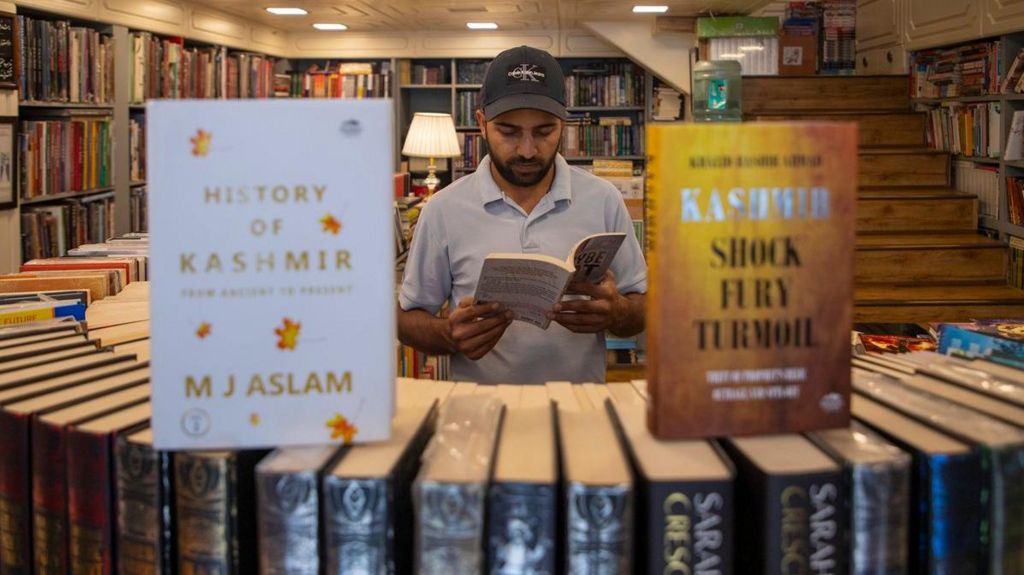
    A sweeping new directive mandating content reviews of all educational materials across Indian-administered Kashmir has ignited intense public and political controversy, raising urgent questions about state control over historical narrative and academic freedom in the long-disputed Himalayan region.

    Issued last week by local education authorities, the order applies to every tier of educational institution — from primary schools and secondary colleges to state universities and private coaching centers. It requires administrators to audit all published materials on their premises, including academic research papers and graduate theses, for content deemed to violate religious sensibilities, national laws, educational standards or social norms. Any materials flagged as inappropriate must be reported immediately to government oversight bodies.

    Regional officials defend the directive as a targeted measure to remove factually incorrect and unlawful content, rather than a broad restriction on access to reading material. In official statements, authorities frame the order as a response to materials that promote, glorify or legitimize terrorism, violent extremism, secessionism and radicalization — all activities defined as prejudicial to India’s national security.

    The order comes in the immediate aftermath of a public controversy stirred by India’s ruling national party, the Bharatiya Janata Party (BJP), which staged protests against two government school library books that it claimed glorified separatist leaders and spread anti-national sentiment. The two biographical volumes, which profled prominent figures from Jammu and Kashmir and had been held in school libraries since 2023, were pulled from circulation within days of the protests. Three people connected to the books’ publication were subsequently arrested by local police, and eight senior education department officials were suspended from their posts pending investigation.

    Despite triggering the new order, the policy itself leaves the definition of “objectionable content” deliberately vague. The directive only notes that inappropriate material includes content that violates religious sentiments or Indian law, harms national interest, or runs counter to educational values, and requires all texts to align with India’s “age-appropriate” national education guidelines. Speaking to the BBC, School Education Director Naseer Ahmad Wani confirmed that a government-appointed committee would conduct the full review of texts across all schools and libraries, but declined to elaborate on specific criteria that would qualify content as objectionable.

    The current controversy is not an isolated incident: just last year, regional authorities banned 25 published works, including titles by Booker Prize-winning author Arundhati Roy and prominent scholar A.G. Noorani, on grounds that the texts promoted “false narratives and secessionism.” That ban is currently being challenged in Indian courts. In February 2025, police carried out raids on independent bookstores in Srinagar, the summer capital of Jammu and Kashmir, and seized hundreds of books, alleging the titles promoted ideology linked to a banned Islamist organization. Critics of that raid noted that most of the seized works simply documented decades of conflict and political repression in the region.

    Critics of the latest order, including opposition politicians, academics and student leaders, frame the directive as a deliberate attack on academic autonomy and an attempt to erase the region’s decades-long history of political turbulence. Kashmir has been a flashpoint for conflict between India and Pakistan for three-quarters of a century: both countries claim the entire region, and each controls only a portion of it, with periodic armed clashes along the disputed Line of Control that divides the two administrations. Since the late 1980s, the Indian-administered portion of Kashmir has seen an armed separatist insurgency against Indian rule, which India has repeatedly claimed is backed by Pakistan — an allegation the Pakistani government in Islamabad has consistently denied.

    In 2019, India’s central government revoked the semi-autonomous special status that Jammu and Kashmir had held for decades, bringing the region under direct federal control. While an elected local government was restored in 2024, critics argue that the move has led to steadily eroding civil liberties and expanded state control over all aspects of public life in the region.

    Many local academics and political analysts warn that the new screening order violates fundamental rights protected under India’s constitution. “Restrictions like this directly go against the right to freedom of speech and expression that the Indian constitution guarantees all citizens,” said Noor Mohammad Baba, a Srinagar-based political scientist. One Kashmir studies instructor, who requested anonymity out of fear of professional retaliation, noted that the region’s history, cultural identity and educational landscape have long been deeply contested, so the widespread screening of educational materials raises “legitimate questions about academic freedom and the state’s role in defining which narratives are acceptable to teach.”

    Regional political leaders have gone further, alleging the order is part of a broader pattern of expanding state surveillance and a coordinated crackdown on political dissent in the region. Altaf Bukhari, leader of the regional Jammu and Kashmir Apni Party, argues that the government cannot systematically remove historical texts under the pretense of banning “anti-national” content. “This looks like a wider conspiracy to deprive us of our own academic content and our collective memory,” he said.

    Government and ruling party officials have rejected all accusations of censorship or an attack on academic freedom. Imran Nabi Dar, spokesperson for the region’s governing National Conference party, clarified that the goal of the order is not to restrict access to reading, but to prevent unnecessary controversy stemming from content taught in classrooms. “Our point is that there shouldn’t be any unnecessary controversies arising from what is being taught in educational institutions,” Dar explained. BJP spokesperson Sunil Sethi echoed that position in comments to the BBC, arguing that “people cannot be allowed to glorify separatists in the name of academic freedom.” He added that “peace has been restored in the region with great difficulty, and we can’t let things get out of control again.”

  • ‘I must get out into the free world’, dissident who fled China on boat tells BBC

    ‘I must get out into the free world’, dissident who fled China on boat tells BBC

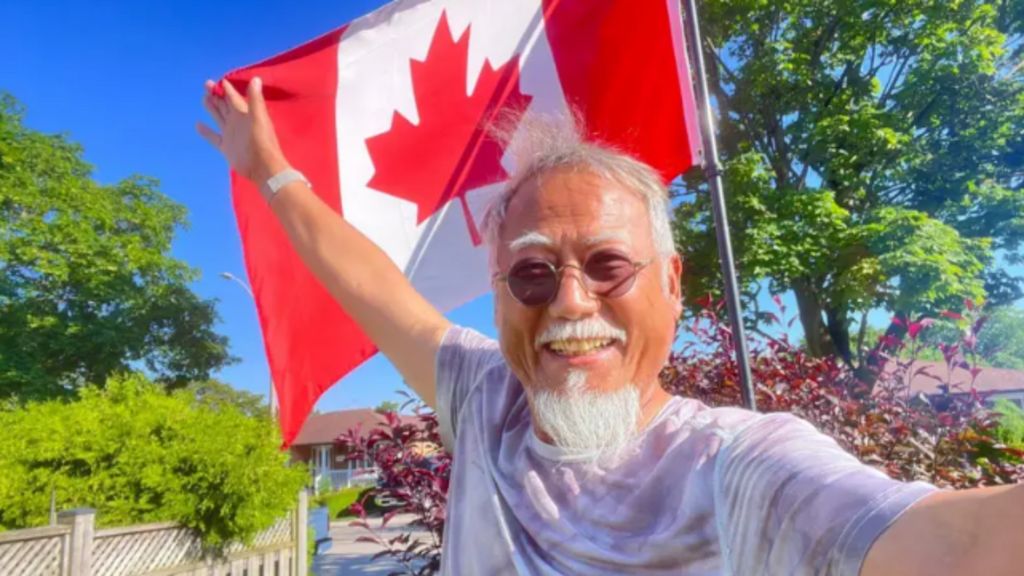
    After years of repeated detention and four foiled escape attempts that sent him back to Chinese custody each time, 68-year-old former police officer turned activist Dong Guangping has finally reached safety, completing a harrowing 40-hour open-sea journey from eastern China to resettle in Canada with his long-relocated family.

    Dong’s decades-long clash with Chinese authorities began in 1999, when he was dismissed from his 13-year career with the Chinese police force after adding his signature to a public petition marking the 10th anniversary of the 1989 Tiananmen Square pro-democracy protests. That first professional penalty was followed by multiple prison sentences: a three-year term starting in 2001 on charges of “inciting subversion of state power”, and another jail stint in 2014 for taking part in another commemoration of the 1989 events, according to human rights organization Amnesty International.

    Over the past eight years alone, Dong tried and failed to leave China four times. In 2015, he and his family reached Bangkok, where the United Nations granted them refugee status and approved their resettlement to Canada. But just days before their scheduled departure, Thai authorities deported Dong back to China, where he received a three-and-a-half-year prison sentence for “inciting subversion” and “illegal border crossing”. After his 2019 release, he tried to swim to the Taiwan-held island of Kinmen, only to be picked up by Chinese fishermen who returned him to authorities, who then imposed an exit ban on him. In 2020, he slipped into Vietnam and hid in Hanoi for two years before being deported back to China, where he served another year-long prison term, and was released again in 2023.

    Each failed attempt only hardened Dong’s resolve to reach the free world. For his fifth attempt, he planned a risky open-sea crossing: a 300-kilometer journey across the Yellow Sea, originally intended for Japan before poor weather forced a last-minute route change toward closer South Korean waters. With just a few hours of basic sailing practice under his belt, the 68-year-old set off from Weihai, Shandong province, in mid-May of this year aboard a 3.3-meter motorized rubber dinghy.

    What followed was an ordeal that tested every ounce of his endurance. Over two full days without sleep, Dong battled choppy, rocketing waves that left him dizzy and exhausted. Severe sunburn burned his exposed skin, his phone battery drained rapidly, and his portable charger died completely, leaving him dependent on his phone’s digital compass to avoid drifting back into Chinese territorial waters. At one point, he dozed off from exhaustion, waking just in time to avoid a catastrophic collision with a large cargo ship — a close call he later said would have ended his life if he had slept just 20 seconds longer.

    After 40 hours adrift, Dong spotted a South Korean fishing vessel close to 8:30 p.m. local time on May 27. He shouted for help, and the fishermen alerted authorities, who rescued him and brought him ashore in Taean County. He was held briefly for immigration processing before being transferred to a refugee center in Incheon, where he completed the political asylum application process for Canada.

    Speaking to BBC Chinese in a recent video interview from his new home in Toronto, Dong said escape was not just a matter of safety: “I can never survive in China. If I didn’t leave, I would never have peace for the rest of my life. I had to show the Chinese Communist Party I was capable of leaving. They cannot stop me, they cannot control me.”

    When the BBC requested comment on Dong’s case, a Chinese Foreign Ministry spokesperson stated that the Chinese government manages citizen entry and exit in accordance with national law, and requires all Chinese citizens to abide by the country’s Constitution and legal framework.

    Dong is not the first Chinese dissident to make a sea escape to South Korea: In 2023, fellow activist Kwon Pyong fled to the country on a jet ski, and after a period of detention on immigration charges, he resettled in the United States.

    Reflecting on the moment he received confirmation of his flight to Canada, Dong said he was overcome with emotion holding his airline ticket. Still, his new freedom carries a heavy regret: just days before he launched his risky escape, he celebrated his mother’s 95th birthday in China, but never told her of his plan to leave. “Not being able to fulfil my filial duties towards my mother will remain my greatest, greatest regret,” he said.

  • Bangkok’s bar fire is the city’s latest deadly blaze – will anything ever change?

    Bangkok’s bar fire is the city’s latest deadly blaze – will anything ever change?

    On a crowded Sunday night in central Bangkok, chaos unfolded inside Rong Beer Na Ladprao pub when a sudden fire erupted. Panicked partygoers rushed toward the venue’s only narrow main exit, their path blocked by thick, toxic smoke that rapidly filled the space. Bodies of those who had already succumbed to smoke inhalation trapped those still alive behind them, turning a manageable small fire into one of Thailand’s deadliest public venue tragedies in recent years. As of the latest update, 32 people have been confirmed dead, matching the grim pattern of two similar catastrophic nightclub fires that shocked the nation over the past 15 years.

    This is not an unprecedented disaster. In 2009, a New Year’s Eve blaze at Bangkok’s Santika Club claimed 67 lives, and four years ago an inferno at Mountain B, a coastal nightclub in Sattahip, killed 26 people. In each case, experts issued urgent warnings after the tragedy, calling for sweeping safety reforms to prevent identical losses. Now, Worsak Kanok-Nukulchai, a leading expert from the Asian Institute of Technology who called for change after the Mountain B fire, is forced to repeat the same warnings.

    Professor Worsak notes that despite differences in location, timing, and initial cause, all three disasters follow an identical deadly template: multiple fatalities in overcrowded indoor venues, rapid fire spread through ceiling or stage structures, thick smoke that eliminates visibility and blocks access to exits, and most deaths caused by toxic smoke inhalation rather than direct burns. For the recent Rong Beer Na Ladprao fire, he says preliminary evidence points to an electrical fault as the likely ignition source, with fire spreading rapidly through flammable acoustic sound insulation installed inside the venue.

    The dramatic bursts of flame seen roaring out of the front entrance, he explains, were likely fueled by fresh oxygen rushing in once the door was opened by fleeing guests. The intense heat and fire at the main entrance drove many patrons to the back of the pub, where two secondary exits were reportedly partially blocked and became impossible to locate once the fire cut power to the building. Most of the victims’ bodies were recovered from this rear area.

    In the wake of the 2009 Santika Club disaster, Thai authorities introduced sweeping updates to nightclub safety regulations. Starting in 2012, venues were required to use fire-resistant materials for sound insulation, install wider outward-opening exits, maintain backup power for illuminated exit signs, and fit sprinkler systems in any space holding more than 500 guests. However, a critical regulatory loophole leaves most of Thailand’s entertainment venues unprotected by these rules: the stricter standards only apply to establishments located in officially designated entertainment zones.

    Bangkok has just three official entertainment zones, meaning the vast majority of pubs and clubs across the city are registered as “restaurants with live music” to avoid the stricter safety requirements. Both Rong Beer Na Ladprao and Mountain B fell into this unregulated category. The loophole, which has now been linked to more than 50 deaths, has been formally acknowledged by Bangkok Governor Chadchart Sittipunt, who revealed the Rong Beer Na Ladprao pub was inspected and declared safe just three months before the fire.

    In response to the tragedy, Governor Chadchart has ordered city officials to begin unannounced random safety inspections of all venues classified as restaurants that operate as de facto pubs or clubs. “From now we will apply the stricter standards to venues like these,” he stated during a recent press briefing. “Even if we do not have full legal powers we will make suggestions. If they don’t follow these, we will try to find ways to stop them from operating. We must be able to shut them down if there’s a risk.”

    Yet serious questions remain about whether the city can follow through on this pledge. There are thousands of unregulated entertainment venues operating across Bangkok, and it remains unclear if the Bangkok Metropolitan Administration has enough trained staff to carry out widespread unannounced inspections. Industry analysts also expect fierce pushback from venue owners if authorities move to close large numbers of non-compliant establishments.

    Compounding these challenges is Thailand’s long-standing open secret of widespread corruption among local officials and police. It is common practice for unregulated entertainment venues to make regular off-the-books payments to law enforcement and inspectors to overlook safety violations. Even if new rules are introduced, experts doubt they will be consistently enforced. This pattern of impunity has played out after previous disasters: after the Mountain B fire, five police officers were suspended on suspicion of turning a blind eye to the venue’s unregulated status, but no further action has been taken against them. The venue owner and three other staff were convicted of safety violations and sentenced to up to 10 years in prison, but they remain free on bail during an appeals process that can take years to resolve in Thailand’s overloaded court system. In the 2009 Santika Club case, the owner and the event organizer convicted of starting the fire remained free on appeal for six years before their sentences were upheld by the Supreme Court, and no public officials have ever been prosecuted for their role in the tragedy.

    This repeated cycle of tragedy, official promises, and little meaningful change extends far beyond public venue safety. Thailand suffers from systemic safety failures across multiple sectors: road fatalities per capita are 10 times higher than in the United Kingdom. In October 2024, a bus fire caused by illegally installed gas canisters killed 23 people, 20 of whom were schoolchildren. Earlier this year, 32 passengers died when an improperly secured construction crane collapsed onto a passing passenger train, and just weeks before the Bangkok pub fire, 10 Buddhist monks were killed by a pickup truck driven by an 11-year-old boy. Every one of these incidents was followed by pledges of reform, yet preventable deaths continue to occur at alarming rates.

  • Argentina fans celebrate World Cup win over England

    Argentina fans celebrate World Cup win over England

    Jubilant scenes erupted across Argentina and major diaspora communities in the United States this week as the national men’s football team sealed a dramatic semi-final victory over England, punching their ticket to the World Cup final. From bustling city plazas in Buenos Aires to suburban neighbourhoods in Miami and New York, millions of fans flooded the streets waving sky-blue and white striped flags, blowing vuvuzelas, and singing traditional chants long into the night. The win, which came after a tightly contested match that kept supporters on the edge of their seats, has united the global Argentina fanbase in collective excitement, with many describing the moment as a once-in-a-generation opportunity to lift football’s most coveted trophy. Local authorities in major Argentine cities reported large but peaceful gatherings, with fans sharing hugs and taking to social media to post clips of their celebrations that have since gone viral across platforms.

  • The World Cup final is set, with Messi and Argentina facing Yamal and Spain for the title on Sunday

    The World Cup final is set, with Messi and Argentina facing Yamal and Spain for the title on Sunday

    The expanded 48-team 2026 FIFA World Cup co-hosted across the United States, Canada and Mexico is days away from crowning a new champion, and the title decider has delivered one of the most anticipated storylines in modern soccer history. When Lionel Messi’s defending champion Argentina faces Spain’s rock-solid defensive side in East Rutherford, New Jersey this Sunday, it will be more than a fight for the golden trophy—it is a clash of contrasting styles, generations, and long-brewing destiny that no soccer fan could have scripted.

    The road to the final began with two breakout semifinal performances. On Tuesday, Spain booked their spot with a commanding 2-0 victory over France, while a day later, tournament comeback kings Argentina pulled off another late rally to defeat England 2-1, punching their ticket to the decider.

    Argentina enters the match chasing history that has not been made in more than 60 years. The South American side is vying for its fourth World Cup title, and would become the first nation to win back-to-back World Cups since Brazil achieved the feat in 1958 and 1962. Leading the charge is Messi, the tournament’s all-time leading goalscorer, who has powered Argentina to a tournament-high 19 goals so far—an explosive attacking record that stands as the best in the competition.

    Standing in their way is a Spanish side built on elite defensive discipline that has been nearly unbreakable throughout the tournament. Spain has conceded just one goal across seven matches, the lowest total of any team, earning their place in the final as they chase their second World Cup title, their first coming in 2010. Ranked second in the pre-tournament FIFA world rankings behind Argentina’s top spot, La Roja have been almost unbeatable for more than a year: they carry a 37-match unbeaten streak across all competitions into Sunday’s final, with 28 wins and nine draws since their last loss, a 1-0 defeat to Colombia in March 2024.

    What makes this final even more remarkable is the twist of fate that brought the two teams to New Jersey, after a planned pre-tournament showcase never came to be. As the reigning South American and European champions respectively, Argentina and Spain were scheduled to meet in a high-profile Finalissima clash in Doha, Qatar last March. The match was ultimately canceled over security concerns, sparked by escalating regional unrest linked to the ongoing conflict involving Iran, the United States and Israel. What was supposed to be a preview of a World Cup final has instead become the main event, with the two sides set to square off not at Lusail Stadium—site of Argentina’s iconic 2022 penalty shootout win over France— but at a venue just outside New York City for soccer’s biggest stage.

    Beyond the team rivalry, the final will deliver a once-in-a-generation meeting between two Barcelona superstars separated by 20 years. A viral 2007 photograph captured Messi, then a rising young star participating in a UNICEF initiative, posing with an infant. That baby was Lamine Yamal, now Spain’s breakout young left-footed talent who followed in Messi’s footsteps to become a star at Barcelona. Two decades after that innocent photo op, the pair will share the World Cup final pitch, capping the tournament with a narrative that feels too perfect to be scripted.

    A look at both teams’ journey to the final highlights their contrasting paths to the decider. Spain have remained unbeaten throughout this World Cup, posting six wins and one draw across seven matches, with 13 goals scored and just one conceded. Their campaign began with a tense 0-0 draw against Cape Verde in the group stage, followed by a 4-0 rout of Saudi Arabia and a 1-0 win over Uruguay. In the knockout round, they dismantled Austria 3-0, edged Portugal 1-0, defeated Belgium 2-1, and shut out France 2-0 to reach the final.

    Argentina, by contrast, has been perfect so far, with seven wins from seven matches and zero draws, netting 19 times while conceding seven. The Albiceleste started their group stage campaign with a 3-0 win over Algeria, a 2-0 defeat of Austria, and a 3-1 victory over Jordan. They have lived up to their “comeback kings” reputation in the knockout round, grinding out tight wins: 3-2 over Cape Verde, 3-2 over Egypt, 3-1 over Switzerland, and the late 2-1 turnaround against England that booked their final spot. Argentina also brings an impressive long-form World Cup unbeaten streak into Sunday: they have not lost a World Cup match since their opening group game defeat to Saudi Arabia in 2022, going 11 wins and two draws over their last 13 outings.

    As the 104-match, five-week extravaganza comes to a close, all eyes turn to the East Rutherford pitch. One side boasts the most dynamic attack in the tournament, the other boasts the tightest defense. One is led by the greatest goalscorer in tournament history chasing back-to-back titles, the other is a youthful defensive juggernaut led by the sport’s next great star chasing a second world crown. After a canceled pre-tournament match and a months-long journey across North America, the biggest World Cup in history is set for a picture-perfect ending that no fan will want to miss.

  • Idaho mother charged with children’s murder must stay in jail, judge rules

    Idaho mother charged with children’s murder must stay in jail, judge rules

    A 23-year-old Idaho mother accused of murdering her 18-month-old twin sons will remain behind bars after a judge revoked her bail earlier this week, in a high-profile case that has intersected with national anti-vaccine rhetoric. Andrea Shaw, charged with two counts of second-degree murder in the May 2025 deaths of her toddlers Dallas and Tyson, has maintained that the children’s fatal health decline stemmed from routine childhood vaccinations. She has not yet entered a formal plea in the case.

    Shaw’s legal team had petitioned the court to cut her original $2 million bail to just $100,000, arguing that she needed to be released to care for her newborn child, born only days before her arrest in the case. Her attorney, Joseph Filicetti, also noted that Shaw had recently undergone a cesarean section and required recovery time while nursing her infant, framing her as a loving mother who posed no risk to the new baby. The BBC has reached out to Filicetti for additional comment beyond his statements to U.S. media outlets.

    Prosecutors in Payette County pushed back aggressively against the bail reduction request, urging the judge to revoke bond entirely. They argued that Shaw should not be granted any form of release that would put her in proximity to children, including her own newborn. “This is not a vaccine case,” one lead prosecutor stated bluntly. “This is a case where a mother unfortunately has killed her two children.” Prosecutors allege that Shaw suffocated the twins, who were found dead in their cribs at the family’s home.

    The judge ultimately sided with the prosecution, agreeing that Shaw poses a clear threat to her youngest child and revoking bond entirely.

    The case has drawn heightened attention due to Shaw’s ties to Children’s Health Defense, a prominent anti-vaccine organization founded by current U.S. Health Secretary Robert F. Kennedy Jr. Months after the twins’ deaths in 2025, Shaw and her husband gave an interview to the group laying out their claim that vaccines caused the children’s deaths. Shaw told the group that the toddlers became ill eight days after receiving routine vaccinations for hepatitis A, diphtheria, tetanus, pertussis and influenza. She said she sought medical care after they developed symptoms, and that clinicians told her the illness could be a vaccine reaction; the children were prescribed pain medication but died two days later.

    Shaw has claimed that law enforcement immediately pinned blame on her rather than accepting a vaccine-related cause, while investigators say her arrest followed a months-long, exhaustive investigation into the deaths. Full autopsy results from the investigation have not yet been made public.

    Shaw is also a named plaintiff in a lawsuit led by Children’s Health Defense against the American Academy of Pediatrics, challenging the organization’s long-standing childhood vaccination recommendations. Mainstream public health experts and practicing clinicians have repeatedly reaffirmed the well-documented safety of routine childhood vaccines. While minor side effects are possible after vaccination, severe adverse outcomes are extremely rare, and vaccines are credited with preventing millions of life-threatening illnesses globally each year.

  • Watch: Is Trump facing a popular backlash on immigration?

    Watch: Is Trump facing a popular backlash on immigration?

    A pair of fatal incidents involving U.S. Immigration and Customs Enforcement (ICE) agents that claimed the lives of two men have sparked growing scrutiny of former President Donald Trump’s immigration policies, with political analysts now weighing whether a widespread popular backlash is building against his stance on the issue. The BBC’s North America correspondent Sarah Smith has launched an on-the-ground investigation into how these two deaths are shifting public opinion and reshaping the political landscape around Trump’s approval ratings on immigration.

    The killings have reignited long-simmering public debate over the tactics used by ICE under the Trump administration, which prioritized aggressive immigration enforcement and expanded detention and deportation operations. Critics argue that the fatal encounters expose deep flaws in the hardline approach that Trump championed during his time in office, while supporters of the former president maintain that ICE agents were following established protocols and that the incidents are being exploited for political gain.

    Smith’s reporting examines the reaction from diverse communities across the country, from immigrant advocacy groups that have organized protests calling for greater oversight of ICE to conservative base voters who remain committed to Trump’s restrictive immigration agenda. The key question driving her analysis is whether these two high-profile deaths will cross a threshold for swing voters, eroding Trump’s support in key demographics and damaging his overall political standing ahead of potential future electoral contests.

    As the fallout from the incidents continues, political strategists are closely tracking shifts in polling to gauge the extent of any backlash. The incident has also pushed immigration back to the forefront of national political conversation, reminding observers of how the issue remains one of the most divisive and consequential in U.S. politics, capable of reshaping public approval of political leaders.

  • Watch: TikTok legend Gangster Granny on her love for Messi

    Watch: TikTok legend Gangster Granny on her love for Messi

    The internet has no shortage of unexpected viral stars, and few have captured global public attention quite like the cultural phenomenon known widely as Gangster Granny. This silver-haired digital icon, who built her massive following through bold, unapologetic content and a delightfully unconventional persona, has recently made headlines for an endearing new chapter of her online story: her open, heartfelt adoration for Argentine football superstar Lionel Messi.

    Footage of the beloved TikTok legend discussing her fandom has been spreading rapidly across social platforms, giving audiences a new look at the warm, enthusiastic side of the creator who built her brand on subverting stereotypes of older internet users. In the clip, she doesn’t hold back when sharing what draws her to the eight-time Ballon d’Or winner, highlighting his skill on the pitch, his sportsmanship, and the universal appeal that has made him a beloved figure across generations.

    What started as a casual confession of fandom has quickly turned into a viral moment of its own, with fans of both Gangster Granny and Messi sharing the clip and reacting to the unexpected cross-over pairing. For a creator who has always thrived on keeping her audience surprised and entertained, this public celebration of one of the world’s most famous athletes fits perfectly with the persona that has made her a household name on TikTok, where millions of followers tune in regularly for her unique take on life, culture, and everything in between.

  • Messi’s Argentina stun England in comeback to reach World Cup final

    Messi’s Argentina stun England in comeback to reach World Cup final

    In a drama-charged World Cup semi-final that will go down as one of the most memorable chapters in the decades-long Argentina-England football rivalry, Lautaro Martinez’s 92nd-minute match-winning header sealed a dramatic 2-1 comeback victory for defending champions Argentina, who will now face European champions Spain in Sunday’s historic final. Played out in front of a packed crowd of 68,239 fans at Atlanta’s Mercedes-Benz Stadium, the contest lived up to every bit of its billing as a clash between two of the sport’s most storied national sides.