博客

  • French MPs approve assisted dying law with strict rules after years of argument

    French MPs approve assisted dying law with strict rules after years of argument

    After decades of fraught public and political debate and multiple rounds of legislative revisions, France’s lower house of parliament, the National Assembly, has passed a landmark bill establishing a legally protected right to assisted dying, subject to narrow eligibility criteria. The final vote on Wednesday split the chamber sharply, with 299 MPs backing the legislation and 241 opposing it — a result that comes after the country’s upper house, the right-leaning Senate, rejected the bill three consecutive times.

    The legislation sets clear boundaries for access to assisted dying: only adult French residents living with a serious, incurable, life-threatening illness that has reached an advanced or terminal stage qualify. To be eligible, patients must also experience constant, unbearable physical or psychological suffering that cannot be relieved by ongoing treatment.

    Under the bill’s terms, patients must explicitly and voluntarily state their intention to access assisted dying to a treating physician, who is required to conduct internal consultations and issue a decision within 15 days of the request being filed. After receiving approval, patients must complete a 48-hour reflection period before confirming their request, and must self-administer the lethal substance in most cases. If a patient is physically unable to self-administer, a licensed physician or nurse may carry out the step instead, and the patient’s decision must be re-verified by the attending medical professional on the day of the procedure.

    Prior to the bill taking legal effect, Prime Minister Sébastien Lecornu has announced he will refer three contentious sections of the legislation to France’s Constitutional Council, the nine-member independent body tasked with reviewing whether new laws comply with the national constitution. The three provisions under review include the 48-hour reflection period, which opponents argue is too short to allow for fully informed decision-making; the rules governing consent for patients placed under legal guardianship due to impaired decision-making capacity; and the role of palliative care-focused healthcare facilities in offering assisted dying services.

    While Macron has long supported end-of-life choice legislation, the process was significantly delayed after he called snap parliamentary elections in 2024, and successive prime ministers have moved cautiously to advance the bill. Lecornu has openly acknowledged holding personal reservations about the legislation’s terms, and his office stated Wednesday that the Senate’s review process failed to adequately address both the hopes of the bill’s supporters and the concerns of its opponents.

    If the Constitutional Council approves the legislation, France will become the latest European nation to decriminalize assisted dying, joining a growing bloc of countries that have formalized end-of-life choice frameworks. The Netherlands and Belgium first legalized physician-administered assisted dying for patients with unbearable incurable suffering in 2002, and multiple other European states have passed similar legislation in the years since. Switzerland has long permitted assisted suicide, provided the person assisting acts without personal motive.

    The debate over assisted dying has similarly divided policymakers in the United Kingdom, where a bill to legalize the practice in England and Wales was put on hold earlier this year and is scheduled to return to parliamentary debate in September.

    In France, the legislation has faced fierce opposition from the Catholic Church and segments of the medical community, and political divisions have kept the bill stalled for years, with the right-wing majority in the Senate blocking it repeatedly. Despite this political opposition, public opinion polling consistently shows a large majority of French citizens support giving terminally ill patients the choice between palliative care and assisted dying, with many critics of the status quo arguing the current system fails to address intolerable end-of-life suffering.

  • More people around the world now favour China over the US, Pew study suggests

    More people around the world now favour China over the US, Pew study suggests

    A landmark new survey from the nonpartisan U.S.-based Pew Research Center has captured a historic shift in global public opinion: for the first time since the organization began tracking global attitudes toward the world’s two major superpowers in 2002, a majority of surveyed nations hold more favorable views of China than of the United States.

    Between February and May, Pew researchers polled more than 42,000 respondents across 36 countries, asking participants to rate their opinions of both China and the U.S. on a four-point scale from very favorable to very unfavorable. The final results showed that in 25 out of the 36 included nations, more respondents reported holding a favorable opinion of China than the U.S. Only six nations — all longstanding close U.S. allies, including Poland, the Philippines, South Korea, India, Japan and Israel — still registered more favorable views of the U.S. than China.

    Jonathan Schulman, a lead researcher on the study, noted that while global approval of the U.S. has dipped in previous years — most notably at the end of George W. Bush’s administration in 2008 and at the start of Donald Trump’s first term in 2017 — China’s favorable ratings never outpaced the U.S. by this margin in prior measurements. This year’s survey saw record-high favorable ratings for China across multiple nations, including Italy, Spain, Colombia, Mexico, Indonesia, Malaysia, Nigeria and Turkey. The largest shifts toward more positive views of China were recorded in Spain, Indonesia, Italy, Greece and Canada.

    Longitudinal analysis from the research team found that median favorable opinion of the U.S. across tracked nations has declined steadily in recent years, while median favorable opinion of China has climbed consistently. The research also identified a broad demographic pattern: middle-income countries generally hold more positive views of China, while wealthier nations tend to report more negative perceptions. Singapore stands out as a clear exception to this rule: as the nation with the highest GDP per capita in the survey, it still recorded high levels of favorable sentiment toward China.

    Regional breakdowns showed that the most extreme divergences in views of China are found within the Asia-Pacific. Roughly 90% of Pakistani respondents expressed favorable views of China, compared to just 11% of Japanese respondents.

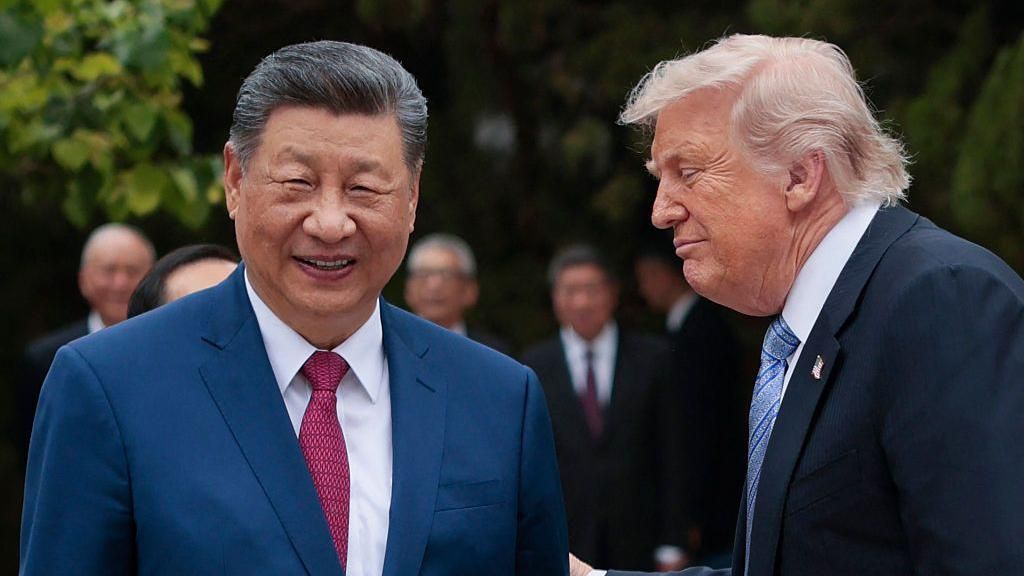
    When asked to rate their confidence in each nation’s leader to handle global affairs correctly, overall confidence scores for both Chinese President Xi Jinping and then-U.S. President Donald Trump remained mostly below 50%. Still, a majority of surveyed nations registered higher confidence levels in Xi than in Trump. Xi received his highest confidence rating (83%) from Pakistan and his lowest (7%) from Japan, while Trump earned his highest score (68%) from the Philippines and his lowest (4%) from the West Bank and East Jerusalem. Schulman observed that respondents tended to hold more polarized extreme opinions of Trump, while views of Xi were generally more muted.

    On questions of governance and foreign policy, the survey found that while more respondents still believe the U.S. government respects personal freedoms more than China’s government does, the gap between the two has narrowed significantly in recent years. When asked about interference in other countries’ internal affairs, a median of 75% of respondents across middle-income nations said the U.S. interferes a great deal or a fair amount, compared to just 45% who said the same of China.

    Pew’s findings align with results from a 2024 Gallup survey, which also found that China had surpassed the U.S. in global approval ratings, marking the largest gap in China’s favor in 20 years. By contrast, a 2025 survey from the U.S.-based think tank Asia Society found that China’s global image, which dipped during the COVID-19 pandemic, has only seen a modest recovery to date.

    Chong Ja Ian, a non-resident scholar at Carnegie China, noted that Pew’s latest results are not unexpected. He pointed out that the survey was conducted against a backdrop of highly volatile U.S. foreign policy, including aggressive rhetoric from Trump about annexing Greenland, the U.S. targeting of Venezuelan leader Nicolas Maduro, and the launch of new military conflict with Iran — all events that left many global observers unsettled. “The volatility of U.S. policy, including the use of force and the resulting economic harm, has put many on edge,” he explained.

    Chong added that while China’s absolute global popularity remains an open question, it is currently seen as a more predictable actor by many global publics, and Beijing has invested significant effort into improving its global image, particularly in developing nations. He also addressed the disparity between high favorable ratings for China overall and relatively low confidence scores for Xi personally, noting that “whether China is absolutely popular is an open question, but it seems like a more predictable entity at present. […] I suppose people attribute the more coercive and economically less helpful policies to Xi personally but associate more positive elements, such as technological advances, to China more broadly.”

  • Lionel Messi delivers again for Argentina, defending champions reach another World Cup final

    Lionel Messi delivers again for Argentina, defending champions reach another World Cup final

    ATLANTA — In a match that will go down as one of the most dramatic chapters in modern World Cup history, Lionel Messi once again cemented his legacy as soccer’s ultimate big-game player, orchestrating a late comeback that lifted Argentina to a 2-1 semifinal victory over England on Wednesday. With just one win now standing between him and a second World Cup trophy for his nation, the 39-year-old superstar did not add to his tournament-leading goal tally, but his vision and precision in the final minutes turned a likely exit into a historic ticket to the final.

    This comeback marks the second unlikely rally Argentina has pulled off in this tournament, coming just eight days after a similarly improbable last-gasp win over Egypt in the round of 16. For a career already widely regarded as the greatest in the sport’s history, Wednesday’s performance added another iconic entry to Messi’s already overflowing collection of legendary moments.

    England looked poised to fulfill its dream of reaching its first World Cup final since 1966, when it claimed its only global title, after Anthony Gordon put the Three Lions ahead in the 55th minute. For the next half hour, England held on tightly to its lead, clinging to the chance of a historic upset. But Argentina, a side that has built its tournament run on resilience and never-say-die spirit, had other plans.

    The turning point came in the 85th minute. Working a short corner routine, Messi received a quick return pass after pushing the ball out along the touchline, spotted Enzo Fernández unmarked 25 yards from goal, and played a perfectly weighted pass into his path. Fernández fired a blistering curling shot that sailed beyond England goalkeeper Jordan Pickford into the top corner, leveling the score and shifting all momentum to Argentina.

    By the time stoppage time rolled around, an Argentine winner felt almost inevitable. Just two minutes into the added stoppage period, Messi delivered again, whipping a pinpoint cross into the six-yard box. Lautaro Martínez slipped between two England defenders and guided a calm header past Pickford for the game-winning goal.

    Argentina saw out the remaining minutes without conceding, and when the final whistle blew, Messi dropped to his knees on the Atlanta pitch, pumping his fists in celebration of yet another unforgettable victory. The win sets up a World Cup final showdown with Spain on Sunday, where Argentina will have the chance to make history as the first men’s national team to repeat as World Cup champions since Brazil accomplished the feat back in 1958 and 1962.

    Individually, Messi remains tied with France’s Kylian Mbappé in the race for the tournament’s Golden Boot, with both strikers having notched eight goals so far. He also holds the record for most goals scored in World Cup history across all tournaments, with a total of 21. Yet for Messi, all individual accolades pale in comparison to the prize that now sits one win away: a second World Cup trophy for Argentina.

  • Train ‘encased in flames’ in Canada wildfire

    Train ‘encased in flames’ in Canada wildfire

    A shocking amateur video captured a harrowing moment this week, when a freight train and its crew became encircled by raging wildfire flames in rural northern Ontario, Canada. As the train pushed through a corridor of burning pine trees near the small community of Armstrong, one anxious crew member can be heard warning the situation was growing critical, saying “This could potentially overtake us here, this has gotten a little scary” as the team requested urgent emergency rescue. In a subsequent update, Canadian National Rail confirmed all crew members had been pulled to safety, though the company offered no additional details on the rescue operation, and has paused all rail traffic through the affected fire zone indefinitely.

    This near-disaster is just one symptom of a far broader national wildfire crisis unfolding across Canada this season. Official data from the Canadian Interagency Forest Fire Centre puts the total number of active blazes nationwide at 838, with more than 100 of those burning just in Ontario, where multiple northwestern communities are already under immediate evacuation threat.

    The scale of the fires has sent a thick plume of wildfire smoke drifting hundreds of miles south, turning skies an apocalyptic yellow across much of southern Ontario and triggering unprecedented air quality warnings. On Wednesday, Canada’s largest city Toronto woke to a thick haze that blotted out much of the sun, pushing the city to the top of IQAir’s ranking of the worst air quality among major global cities – outranking notoriously polluted centers including Kinshasa, Delhi, Dubai and Jerusalem. City officials responded by canceling all outdoor public viewing events for the Women’s World Cup semifinal between England and Argentina, and closing city-operated wading pools to prevent public exposure to toxic fumes. Toronto has also been grappling with a record-breaking extreme heat event this week, compounding public health risks for vulnerable residents.

    Environment Canada has issued detailed public guidance on smoke-related health risks, noting that most people will experience mild symptoms including eye, nose and throat irritation, headaches and mild coughing, but that vulnerable groups including children, the elderly and people with pre-existing respiratory or cardiac conditions face a higher risk of severe reactions including chest pain, persistent wheezing and intense coughing. The agency urged anyone experiencing severe symptoms to seek emergency medical care immediately, and advised most residents to stay indoors with windows closed as much as possible.

    Cross-border tensions are also rising as weather models forecast the smoke plume will continue drifting south into the United States over the coming days, raising concerns over air quality impacts for millions of Americans. The smoke will reach the Northeast as early as this weekend, prompting questions about how it will affect the Women’s World Cup final scheduled for Sunday in New Jersey. Already, 13 separate wildfires are burning in Minnesota, the U.S. state that shares a border with Ontario, sparked by a combination of record extreme heat, persistent drought and strong winds that have helped flames spread rapidly. Extreme heat warnings across Minnesota and neighboring Wisconsin are set to expire by Thursday night, but air quality issues are expected to linger for weeks.

    U.S. emergency officials have moved to reassure the public that this event will not reach the scale of the 2023 Canadian wildfire event, when massive smoke plumes from Quebec blazes blanketed the entire U.S. East Coast for days, bringing air quality in major cities to hazardous levels. “At this time, current forecasts do not indicate a repeat of 2023 conditions,” New York City Emergency Management said in a public statement Tuesday. As a precaution, the city has announced it will distribute free KN95 masks at all public library branches across the city to help residents protect themselves from smoke exposure, should levels rise.

  • Five arrested after Hong Kong police raid independent bookshops

    Five arrested after Hong Kong police raid independent bookshops

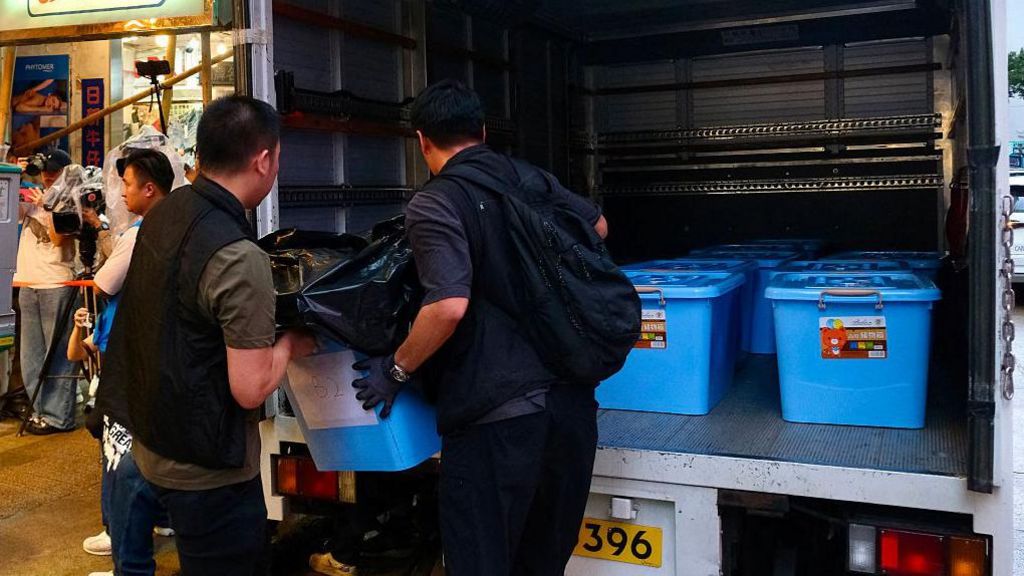
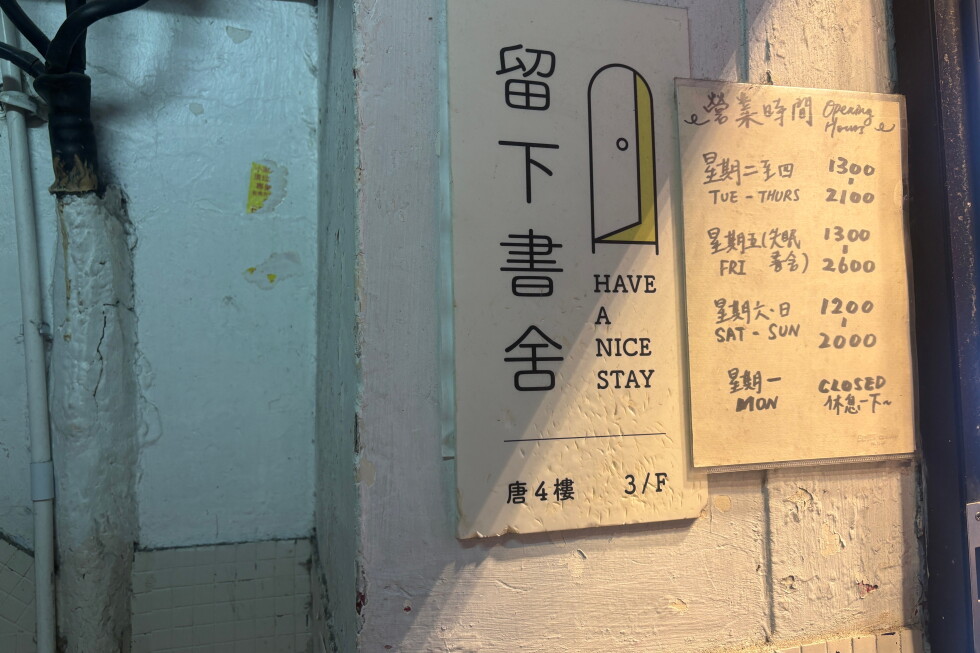
    Hong Kong police have arrested five individuals on suspicion of sedition-linked violations of the national security law following coordinated raids on two independent bookstores in the city, local authorities confirmed in an official statement. The two male suspects, aged 37 and 57, and three female suspects between 30 and 59 years old, are accused of selling and displaying publications that Hong Kong officials claim incite hatred toward the Hong Kong Special Administrative Region government, the territory’s judiciary and law enforcement institutions. Law enforcement officers seized hundreds of suspected unauthorized books from the two targeted shops during the operation, which was documented by AFP reporters who witnessed officers escort a handcuffed woman from one of the stores, Have A Nice Stay, into a police van. Have A Nice Stay, located in the densely populated Mong Kok district, was established in 2022 by a collective of former journalists, and specialized in titles covering democratic movements, global governance structures, media literacy and critical political analysis. Just one day before the raid, the bookstore had publicly announced it would permanently close in August, citing both persistent financial pressures and growing uncertainty around the unwritten ‘red lines’ that determine which reading materials are deemed unacceptable by authorities. Local media reports confirmed a second nearby shop, Greenfield Book Store, was also searched by officers during the operation. Greenfield Book Store states on its official Facebook page that it carries a curated selection of titles from Hong Kong and Taiwan, spanning genres including literature, history, philosophy, art, sociology and personal development. Neither of the two raided independent shops are participating in this year’s Hong Kong Book Fair, which opened to the public on Wednesday. This latest raid marks the third such operation targeting independent book retailers in Hong Kong in 2026. In June, two staff members were arrested at Hunter Bookstore, and four more people were taken into custody following a March raid at Book Punch, another independent outlet. Global human rights organization Amnesty International has condemned the latest arrests, arguing that the repeated raids lay bare the chilling effect of national security enforcement on freedom of expression in the territory. ‘This is the chilling reality of what Hong Kong has become: a place where you can be criminalized simply for what’s on your bookshelf,’ the organization said in a statement. Amnesty added that the persistent ambiguity around what content falls within unmarked regulatory ‘red lines’ has forced booksellers and authors across Hong Kong into a state of constant uncertainty, as they are forced to guess which titles could trigger criminal investigations, arrests or forced business closures. This climate of fear has driven widespread self-censorship among independent publishers and retailers, eroding the city’s once vibrant literary culture, the organization added. All five suspects currently remain in police custody for further investigation. If convicted on the sedition charges, they face a maximum penalty of seven years imprisonment. Hong Kong authorities have not publicly released the names of the raided businesses, or details on which specific titles were deemed seditious.

  • Kylian Mbappé-led France falls flat in World Cup loss to Spain when hopes for a title were high

    Kylian Mbappé-led France falls flat in World Cup loss to Spain when hopes for a title were high

    ARLINGTON, Texas — Entering Tuesday’s high-stakes World Cup semifinal at AT&T Stadium, home of the NFL’s Dallas Cowboys, France carried all the momentum: an undefeated run through the tournament’s first six matches, a dynamic attacking front led by golden boot contender Kylian Mbappé, and the experience of a squad that had reached the final of the last two World Cups. Many expected the defending runners-up to outclass Spain’s solid defense and punch their ticket to a third consecutive title decider, in what was widely expected to be head coach Didier Deschamps’ final match on soccer’s biggest global stage.

    But the night belonged entirely to Spain, who shut out Les Bleus 2-0 to secure their spot in the World Cup final, leaving France and its long-tenured coach with a crushing early exit.

    Deschamps, who has publicly stated this tournament would be his final World Cup at the helm of the French national team, boasts one of the most impressive resumes in international soccer: he lifted the trophy as a player for France in the 1998 home World Cup, then claimed gold again as manager in the 2018 tournament in Russia, before guiding his side to the 2022 final in Qatar, where France fell to Argentina in a dramatic penalty shootout.

    Speaking to reporters after the final whistle through a translator, Deschamps reflected on his decades-long career with the French program while acknowledging the sting of the defeat. “I’ve been lucky as a player to enjoy happy moments. Today is not such a moment. But I think we must accept it without forgetting everything that we’ve experienced so far. But today’s feeling is that I am not happy,” he said, adding that it was too early to make any official announcements about his future.

    The disappointment of the upset rippled 4,000 miles across the Atlantic to France itself, where unrest broke out in major urban centers. Multiple clashes were reported between law enforcement and young people in Paris, with similar disturbances recorded in Lyon. French sports media and pundits widely lamented the team’s flat performance, which marked the first time France conceded defeat in this year’s tournament after opening with six straight unbeaten matches.

    Leading French sports daily L’Équipe summed up the widespread national disappointment, noting that Deschamps’ side were outperformed in every department of the game, “unable to live up to their dreams and to the hope they had inspired.”

    Even France’s star players acknowledged the subpar showing, though captain Mbappé was quick to defend his embattled head coach, and pledged the squad would fight hard to secure a third-place finish for Deschamps when they face the loser of the other semifinal between England and Argentina this Saturday in Miami Gardens, Florida.

    “Nothing changed about what Didier means to us as a French people. As a manager, as a player, he wrote an amazing story,” Mbappé said, after sharing a quick sideline hug with Deschamps following the final whistle. “There’s one game left for him, so we’re going to try to play the best game for him because he deserves it, and also the fans deserve to have a win and finish third in this World Cup.”

    Much of France’s failure to threaten stemmed from the total shutdown of its high-profile attacking unit. The dynamic playmaking of Mbappé, Ousmane Dembele and Michael Olise, which had carried Les Bleus through the earlier rounds, never materialized against a sharp Spain defense that notched its sixth clean sheet in seven matches of the tournament.

    Mbappé’s only clear-cut chance of the night came in the 67th minute, when his shot deflected off Spain defender Marc Cucurella and drifted just wide of the goal. By that point, Spain already held a comfortable 2-0 lead. Entering the semifinal, the 27-year-old French captain was tied with Argentina’s Lionel Messi for the tournament lead in goals with eight, but he failed to add to his tally Tuesday. He picked up a yellow card in the 86th minute after a frustrating collision with Spain goalkeeper Unai Simón, rushing toward the keeper as he bent to collect the ball and sending Simón tumbling to the turf.

    Midfielder Rayan Cherki, speaking through a translator, summed up the team’s collective disappointment while looking ahead to future tournaments. “In so many ways, France was missing everything today. We’ll be back in four years, and we won’t make the same mistakes.”

  • Motorists causing ‘chaos’ at Blue Flag beach, says councillor

    Motorists causing ‘chaos’ at Blue Flag beach, says councillor

    As summer tourist season hits the Irish coast, a dramatic crackdown on rogue parking at one of County Donegal’s most scenic Blue Flag beaches has exposed long-simmering infrastructure gaps that have turned a popular leisure spot into a site of daily gridlock.

    Shroove — also spelled Stroove or Shrove — sits along the iconic Wild Atlantic Way on the eastern edge of the Inishowen Peninsula, just across the border from Northern Ireland near the fishing village of Greencastle. Tucked beside the mouth of Lough Foyle and overlooked by a historic lighthouse, this quiet sandy stretch draws thousands of visitors annually, many of whom travel across the border from Northern Irish areas like Derry for a day of swimming, coastal walks and unobstructed views of Ireland’s natural landscape.

    But this summer’s warm weather has brought a surge of visitors that has overwhelmed the area’s limited parking infrastructure, leading to widespread disregard for double yellow line restrictions put in place to ease congestion. The crisis reached a head this week when Irish police (Gardaí) seized two vehicles during targeted enforcement of road traffic laws, a move that local representatives say was long overdue after years of mounting chaos.

    Sinn Féin councillor Terry Crossan, who first highlighted the severity of the problem, described the current situation at the beach as unchecked pandemonium. “The single road in and out of Shroove is already extremely narrow, and when warm weather brings hundreds of visitors from north of the border, it becomes completely gridlocked,” Crossan explained. “Double yellow lines were added to fix the congestion, but visitors have just ignored them and parked haphazardly wherever they can find space. Up until recently, Gardaí hadn’t enforced the rules strictly, and that’s how we ended up with absolute chaos.”

    Beyond the daily inconvenience for visitors and locals, the illegal parking creates a critical public safety risk. Gardaí have officially warned that blocked roads would prevent emergency services from reaching the area in the event of an accident, medical emergency or coastal rescue, putting lives directly in danger. This week, the gridlock became so severe that local bus operators were forced to suspend all services to the Shroove area entirely. The parking crisis is not isolated to Shroove either: just days earlier, Donegal County Council followed Gardaí advice and closed Downings Beach, located roughly 99 kilometers away, after an overwhelming influx of vehicles made the area unsafe.

    Interviews with visitors to Shroove this week reveal a mix of frustration and calls for improved infrastructure to address the root of the problem. Katherine Moloney, a first-time American tourist visiting from Massachusetts who chose to explore Donegal amid a stretch of unseasonably warm weather, said poor signage leaves first-time visitors confused about where legal parking is located. “I’d heard about the parking issues before I arrived, and I can see why it’s a problem,” Moloney said. “There’s very little clear signage marking where you can and cannot park, so tourists who don’t know the area often end up parking in restricted spots without meaning to.”

    Other visitors, who planned ahead to avoid the worst of the gridlock, say the only long-term solution is expanding the area’s legal parking capacity. Sophia Hegarty, who arrived at the beach early in the morning with her grandchildren to secure a spot before afternoon congestion hit, said overcrowding is an unavoidable problem when there is not enough designated parking. “It’s obvious that if we don’t create more legal spaces, people will keep parking on the main road,” Hegarty said. “Right now it’s so overcrowded that emergency vehicles couldn’t get through, and that’s a real worry for everyone.”

    Nicole O’Neill, a visitor from Londonderry who traveled across the border for a family day out with her three-year-old daughter, described the parking experience as a total nightmare. “People park on double yellow lines, block other cars in, and there’s nowhere to pull over to let people pass,” O’Neill said. “It’s incredibly stressful, especially when you have young children in the car. We need a larger car park here, or we need to encourage more people to walk to the beach when they can to cut down on vehicle numbers.”

    As enforcement ramps up, local leaders are now facing growing pressure to address the infrastructure gaps that have turned one of Inishowen’s most beloved natural attractions into a summertime hotspot for gridlock and public safety risk.

  • Wærenskjold sprints to his 1st stage win at the Tour de France, Pogačar protects his lead

    Wærenskjold sprints to his 1st stage win at the Tour de France, Pogačar protects his lead

    NEVERS, France — The 2024 Tour de France’s 11th stage delivered a textbook sprint finish that ended with a breakthrough win for 26-year-old Norwegian rider Søren Wærenskjold on Wednesday, while defending champion and current race leader Tadej Pogačar successfully protected his commanding overall position atop the general classification.

    The 161.3-kilometer (100.2-mile) parcours from central France’s Vichy to Nevers was defined by rolling terrain that flattened out in the closing kilometers, a profile that always favored a bunch sprint finish. Expectations held true as the peloton reeled in every early breakaway ahead of the final dash to the line, setting the stage for the fastest riders in the race to compete for the stage honors.

    Wærenskjold held off fellow Norwegian sprinter Olav Kooij by a tire’s width to take the win, with Belgian sprint star Jasper Philipsen and a large pack of fast-finishing riders trailing close behind. What makes the victory even more remarkable for the Norwegian is that it came just 24 hours after he crashed heavily during the demanding, hilly 10th stage that finished at Le Lioran. Wærenskjold recovered from the incident to claim the first Grand Tour stage win of his professional career.

    For overall classification contender Tadej Pogačar, Wednesday’s stage was all about maintaining the advantage he built on the previous day of racing. The Slovenian, who claimed his third stage win of this year’s Tour on Tuesday to extend his lead over his closest rivals, crossed the finish line in the main peloton alongside defending champion Jonas Vingegaard, Pogačar’s primary challenger for the yellow jersey. Pogačar now retains his cushion of more than three and a half minutes over Vingegaard in the general classification standings as the race heads toward the decisive mountain stages in the Alps.

  • Amazon to launch its satellite internet in South Africa, seemingly beating out Musk in his homeland

    Amazon to launch its satellite internet in South Africa, seemingly beating out Musk in his homeland

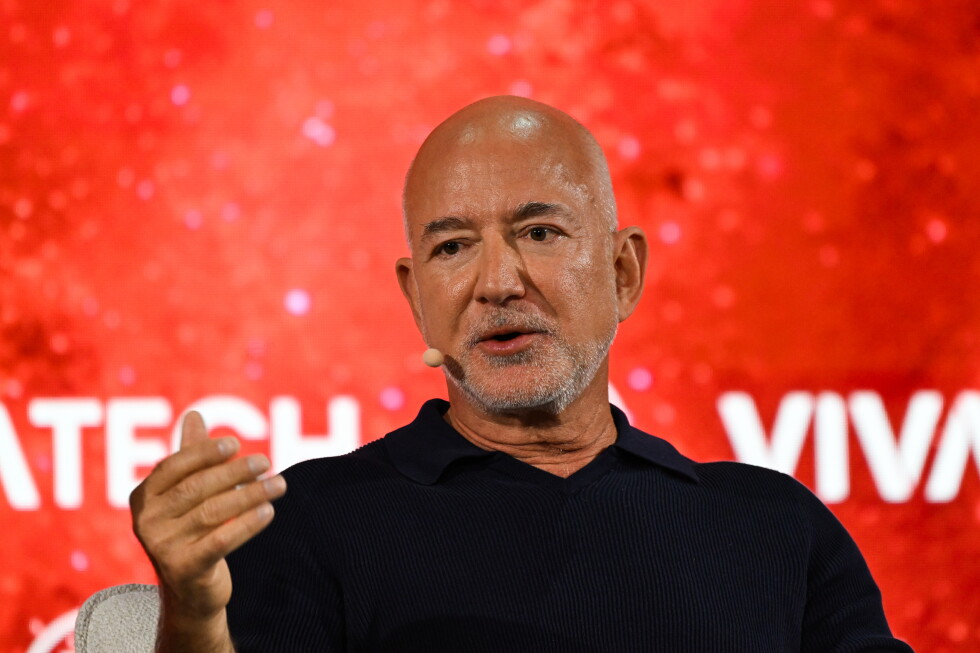
    In a landmark move that marks the tech giant’s entry into the African satellite internet market, Amazon announced Wednesday during a public event in Cape Town that its low-orbit satellite internet service Amazon Project Kuiper (branded as Amazon Leo for local rollout) is scheduled to go live in South Africa in 2027, putting it on track to beat rival SpaceX-owned Starlink to operational launch in Africa’s most industrialized economy.

    The Seattle-based e-commerce and space technology firm founded by Jeff Bezos has entered a partnership with local South African internet service provider Herotel to roll out the new connectivity service across the nation of 62 million people. This agreement stands as Amazon’s first official satellite internet partnership on the African continent, though no financial terms of the deal were disclosed to the public at the time of the announcement.

    The announcement comes amid a high-profile public standoff between Starlink CEO Elon Musk, a South Africa native, and the South African government over the country’s regulatory requirements. Musk, the world’s wealthiest individual, has publicly claimed that South African regulations have blocked Starlink’s entry solely because he is white, leveling unsubstantiated accusations of institutional racism against the national government. Musk’s complaints center on the country’s long-standing affirmative action policies, which mandate that foreign firms operating in the communications sector allocate a minority share of their local operating entities to Black and other previously disadvantaged non-white South African owners as a condition of securing an operating license.

    These policies were crafted to redress the systemic economic exclusion that non-white South Africans endured under decades of apartheid white minority rule, a system that stripped Black and indigenous communities of access to business ownership, economic opportunity and basic infrastructure. In a show of official support for Amazon’s deal, South African Communications Minister Solly Malatsi joined representatives from Amazon and Herotel for the official announcement, signaling the government’s backing for the project that complies with national regulatory frameworks.

    Beyond the South African launch, Amazon confirmed that this agreement is just the opening phase of a broader continental rollout strategy. The company has also announced a separate partnership with Vanu Inc., a Lexington, Massachusetts-based firm that specializes in expanding mobile connectivity access across developing nations, to support its expansion across other African markets in coming years.

    SpaceX’s Starlink, which pioneered modern low-orbit satellite internet, launched its first operational satellites back in 2019 and currently operates more than 10,000 satellites in orbit, with active service already rolled out in roughly two-dozen other African countries. However, Musk’s refusal to comply with South Africa’s affirmative action ownership rules has left Starlink locked out of the South African market, creating a window of opportunity for Amazon to establish an early foothold.

    Amazon entered the low-orbit satellite race later than Starlink, launching its first batch of operational satellites just last year, but has already built up a constellation of more than 390 operational satellites in low Earth orbit, with thousands more scheduled for launch in the coming years to deliver global coverage.

    The African continent represents a massive untapped market for satellite internet providers, with a total population of more than 1.5 billion people. A large share of the population lives in rural and underserved remote areas where traditional fixed-line broadband infrastructure has never been built out, creating widespread unmet demand for reliable high-speed internet connectivity.

  • Hong Kong booksellers are reportedly arrested over alleged sales of seditious publications

    Hong Kong booksellers are reportedly arrested over alleged sales of seditious publications

    HONG KONG – In the latest crackdown on independent bookselling in the semi-autonomous city, Hong Kong police have carried out coordinated raids on two independent bookstores and arrested five people on charges of violating the 2024 national security law through the alleged sale of seditious publications. The operation, confirmed by police in an official statement Wednesday, marks the third round of arrests targeting independent booksellers since March this year, deepening concerns over shrinking press and publication freedoms in the former British colony.

    Visual evidence from multiple local and international media outlets documents the raid on Have A Nice Stay, a bookstore founded by a group of former journalists, located in the busy Mong Kok district. Footage shows uniformed officers removing sealed boxes of materials from the store’s building and leading one bookseller into custody. Just a short distance away, a second raid unfolded at Greenfield Book Store, with video from online news platform The Collective showing law enforcement also seizing boxes of inventory from that location.

    In their public statement, police confirmed the two Mong Kok locations were searched and that two men and three women were taken into custody on suspicion of violating the national security law. Investigators found the five suspects allegedly displayed and sold publications intended to stir up public hatred against Hong Kong’s executive government, judiciary and law enforcement institutions, the statement said. The case was originally referred to police by Hong Kong Customs, which discovered the allegedly seditious titles in a shipment arriving from overseas; police have not released the names of the publications in question.

    Both targeted stores remained shuttered during their regular operating hours Wednesday, and attempts to reach ownership of Greenfield Book Store and the founder of Have A Nice Stay went unanswered. Notably, Have A Nice Stay had already publicly announced plans to permanently close its doors on August 30, citing unmanageable financial strain and the uncertainty of unwritten regulatory “red lines” that make operating an independent bookstore untenable in today’s Hong Kong.

    For decades, Hong Kong built a global reputation as a haven for free expression and open publication, drawing Chinese mainland readers who crossed the border to access books and materials considered too politically sensitive for distribution across the mainland. High-profile cases targeting independent booksellers stretch back nearly a decade: Lam Wing-kee, owner of the iconic Causeway Bay Books, died earlier this month after making global headlines in 2016 when he revealed he had been detained by Chinese mainland authorities during a trip to Shenzhen in 2015. Four other people connected to Causeway Bay Books also disappeared in late 2015, a case that sent shockwaves through Hong Kong’s publishing community and raised urgent questions about the future of the civil liberties Beijing pledged to protect for 50 years after the 1997 handover.

    Since the large-scale anti-government protests that roiled the city in 2019, independent bookstores have faced increasingly difficult operating conditions, with multiple crackdowns under the national security framework. Hong Kong authorities maintain that the national security legislation is critical to upholding long-term stability and public order in the city. Secretary for Security Chris Tang has previously stated the government will not publish an official list of banned books, arguing such a list would be unworkable in practice.

    This week’s operation is the third targeted action against independent booksellers this year. In March, police arrested the owner and multiple staff members of Book Punch, another independent Hong Kong bookstore, on identical suspicion of selling seditious publications. Among the materials seized in that raid was a biography of jailed former pro-democracy media mogul Jimmy Lai, who was sentenced to 20 years in prison in a separate national security case. A second round of arrests came in June, when two more booksellers were taken into custody on suspicion of selling seditious materials and receiving funding from foreign political organizations; all five people arrested in the March and June operations were later released on bail.