博客

  • Gulf states derailed Trump’s ‘Project Freedom’ by cutting US access to airspace and bases

    Gulf states derailed Trump’s ‘Project Freedom’ by cutting US access to airspace and bases

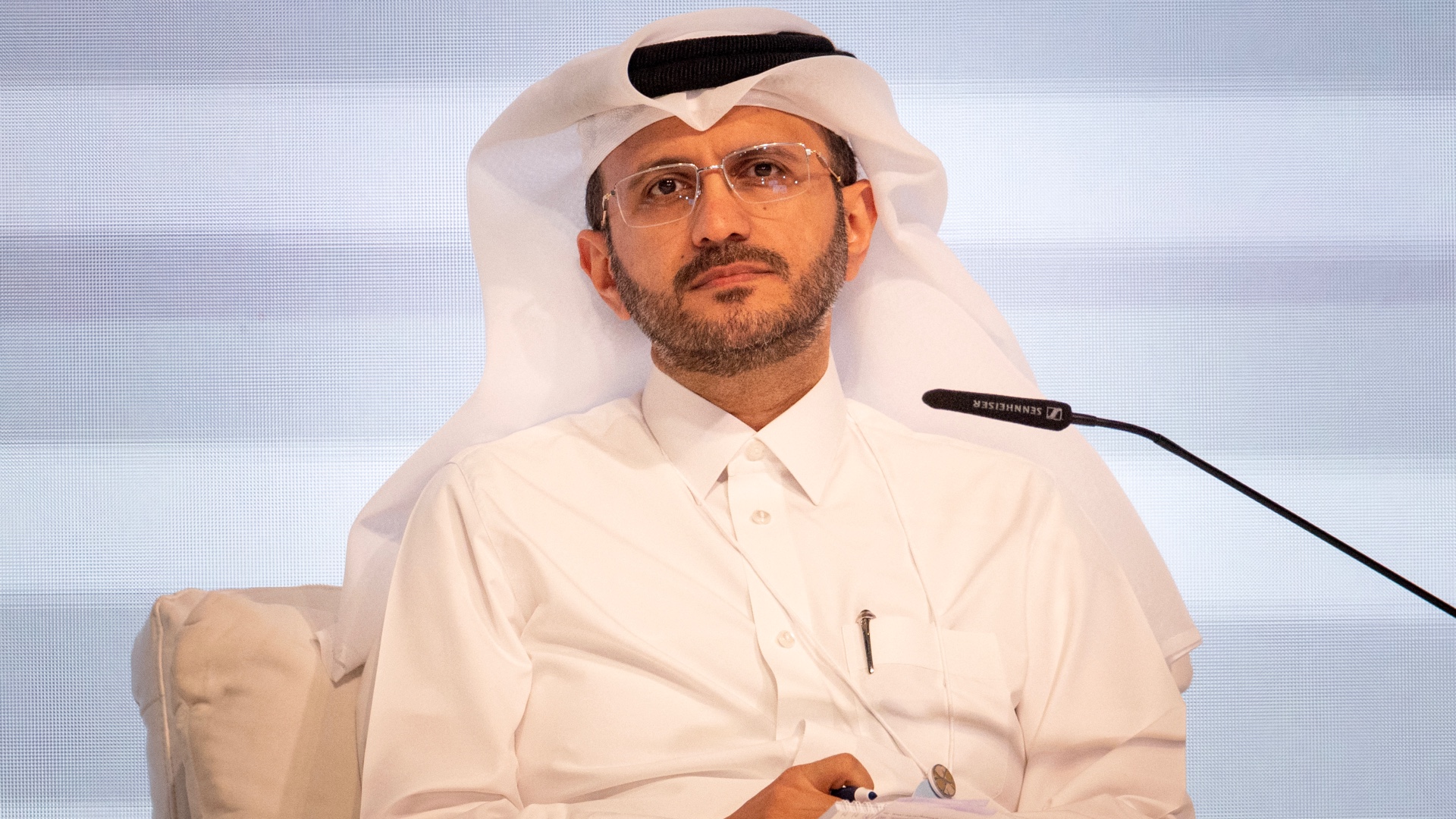
    A sudden diplomatic backlash from key Gulf allies has forced the Trump administration to backtrack on a high-stakes military plan to reopen the blockaded Strait of Hormuz, throwing Washington’s Iran war strategy into disarray just as new peace talks emerge. The abrupt reversal of what President Donald Trump dubbed “Project Freedom” came after both Saudi Arabia and Kuwait halted U.S. military access to their sovereign airspace and strategically critical military bases, multiple U.S. and regional sources confirm.

  • An outsider artist takes the world’s biggest stage with the US Pavilion at the Venice Biennale

    An outsider artist takes the world’s biggest stage with the US Pavilion at the Venice Biennale

    As the 2026 Venice Biennale prepares to open its gates to the global art world, self-taught American sculptor Alma Allen finds himself at the center of one of the world’s most prestigious contemporary art platforms — a spot he secured only after a turbulent, last-minute selection process that has stirred widespread criticism across the international art community.

    A Utah-born sculptor who has built his three-decade career working independently from Mexico, Allen has long positioned himself as an outsider to the insular, clique-driven contemporary art establishment. Now, just days ahead of the Biennale’s official launch, he faces intense scrutiny from critics and art world observers alike, all eyes fixed on the U.S. Pavilion, the iconic Jeffersonian-style brick venue that hosts the American presentation every two years.

    Controversy has shadowed the 2026 U.S. pavilion selection from the start, with many describing the process as uncharacteristically opaque. When the open call for the commission was revised, language centering diversity, equity and inclusion was removed, and replaced with a new mandate to promote “American values.” This shift led most major cultural institutions that typically compete for the coveted commission to step back, amid fears of being drawn into unseemly administrative politics.

    The road to Allen’s appointment was rocky from the outset. The original planned exhibition, set to feature work by artist Robert Lazzarini and curated by art historian John Ravenal, had already secured U.S. State Department approval before it collapsed last September, when the project’s required institutional sponsor pulled its support. A subsequent attempt to attach the Lazzarini project to the newly created American Arts Conservancy (AAC) fell through, and within a short timeframe, the new lineup — AAC as sponsor, Jeffrey Uslip as commissioner, Allen as the exhibiting artist — was announced.

    Ravenal, the curator behind the failed original project, has criticized the revised selection as highly irregular. He notes that after the original application deadline closed in July, there was no public committee vetting process, no open applications, breaking with 40 years of established open call and peer review practices for the U.S. pavilion. He has described Allen as “a pawn in this whole thing.”

    Allen is no stranger to the backlash his participation has sparked, but he is firm in pushing back against claims of political influence. He stresses that the current U.S. administration has not interfered in his exhibition in any way, saying bluntly: “My art is not propaganda.”

    This is the first time in Allen’s 30-year career that he has felt the need to defend his practice and his place in a major show. For three decades, he worked largely outside the constant critical gaze of the mainstream art world, a circumstance he calls a genuine pleasure. His practice centers on organic, biomorphic sculptures carved from wood, shaped from stone, and cast in bronze. He intentionally refuses to title most works, choosing instead to leave space for viewers to bring their own interpretations to each piece.

    Allen’s exhibition, titled *Call Me the Breeze*, brings together a dozen brand-new works alongside pieces he created over the past two decades. The title, he explains, is a nod to his lifelong ability to navigate unexpected obstacles — a skill he developed as a self-taught artist who has rarely benefited from institutional support throughout his career. Uslip, the pavilion’s commissioner, says that exact independent, non-institutional background is what made Allen the right choice for the commission. “I am deeply interested and invested in artists who are not, I guess, academicized … or lobotomized,” Uslip explained.

    In a playful, ironic touch that nods to the controversy surrounding the show, Allen installed a large cast bronze evil eye on the exterior of the U.S. pavilion, a talisman he joked would ward off negative energy. In a fittingly chaotic twist, the piece was stuck in transit and failed to arrive just days before the opening.

    Inside the pavilion’s central courtyard, a headless, directionless sheep sculpture stands as a quiet self-portrait, representing Allen’s status as the outsider shunned for being “the wrong sheep.” His newest body of work includes bronze wall sculptures, treated with chemical processes that turn the rigid metal into a spontaneous, fluid medium he compares to watercolor.

    Allen’s path to the Venice Biennale is a story of unconventional persistence. Early in his career, he experienced homelessness in New York City, selling his small creations from an ironing board as an act of sheer desperation — a step that launched his career, connecting him with his first collectors. Today, his work is held in major institutions including the Los Angeles County Museum of Art and the Palm Springs Art Museum; he previously took part in the 2014 Whitney Biennial, and made his European debut in Brussels in 2022.

    When Allen received the last-minute commission, he made his first ever trip to Venice that November to walk through the pavilion. A trip to the Venice Accademia to see Hieronymus Bosch’s *The Visions of Hereafter*, a haunting work depicting heaven, hell and purgatory, inspired the exhibition’s core structure. “I wanted there to be a bit of the chaos that we go through,” Allen said of the show’s framework.

    Looking back on the chaotic path that brought him to the Biennale, Allen says his selection came down to one key trait: his willingness to step into high-pressure, last-minute challenges. “When they do, I’m prepared to try it, and fail at it. That’s fine,” he says. Now, as opening day approaches, the outsider artist is ready to meet the world’s critical gaze with the same quiet adaptability that has defined his decades-long career.

  • Israeli soldier pictured desecrating Virgin Mary statue in Lebanon

    Israeli soldier pictured desecrating Virgin Mary statue in Lebanon

    A new controversy has emerged over conduct by Israeli troops in southern Lebanon, after a widely circulated video showing an Israeli soldier desecrating a statue of the Virgin Mary in the Christian village of Debel has prompted a formal military inquiry. Though the photograph of the incident was first shared publicly on Wednesday, Israeli military investigators confirm the act took place several weeks ago in the village, which sits just five kilometers from the Israeli border and six kilometers northwest of the Lebanese Christian town of Ain Ebel.

    In an official statement following the viral spread of the footage, the Israeli military noted that it has already identified the soldier responsible, and confirmed disciplinary action will be issued once the investigation concludes. The service emphasized that it views the incident with severe seriousness, stressing that the soldier’s actions stand in complete opposition to the ethical standards and values the military requires of all its personnel. “The incident will be investigated, and command measures against the soldier will be taken in accordance with the findings,” the military’s statement read. It also added that the Israeli military upholds respect for freedom of religion and worship, along with holy sites and religious symbols belonging to all faiths and communities, and maintains that it has no intent to damage civilian infrastructure, including religious structures or sacred symbols.

    This latest incident is not an isolated event in Debel: just one month prior, another Israeli soldier used a jackhammer to destroy a statue of Jesus on a cross in the same village. Images of that earlier act of vandalism sparked immediate widespread outrage across social media, even drawing condemnation from prominent conservative allies of former U.S. President Donald Trump. Former Republican Congresswoman Marjorie Taylor Greene posted a sarcastic remark on the social platform X in response to the images, writing, “’Our greatest ally’ that takes billions of our tax dollars and weapons every year.” Fellow former Republican Congressman Matt Gaetz called the vandalism “horrific.” In response to that earlier incident, the Israeli military announced it had discharged the soldier who destroyed the statue, along with a second soldier who filmed the act, and sentenced both to 30 days of military prison. More recently, additional footage from Debel has documented Israeli military excavators destroying civilian solar panels, an act that is also currently under military review.

    The Debel incidents are part of a growing string of attacks on Christian religious sites across southern Lebanon, according to religious organizations. Last week, a French Catholic charity L’Oeuvre d’Orient issued a formal condemnation of Israeli forces after they demolished a convent run by the Salvatorian Sisters, a Greek Catholic order, in the Lebanese village of Yaroun. In its statement, the organization said, “L’Oeuvre d’Orient strongly condemns this deliberate act of destruction against a place of worship, as well as the systematic demolition of homes in southern Lebanon aimed at preventing the return of civilian populations.” The charity added that the convent demolition fits into a broader pattern of targeting Christian heritage, noting that multiple Christian sanctuaries, including Melkite churches in Yaroun and Derdghaya—both officially protected as part of Lebanon’s national heritage—were destroyed during 2024 hostilities.

    Attacks against Christian communities and individuals have also intensified in occupied Palestinian territories, according to recent reports. Last week in occupied East Jerusalem, a 48-year-old nun was physically assaulted by an Israeli civilian near the Cenacle on Mount Zion, requiring medical care for facial injuries sustained in the attack. Religious authorities have also faced repeated restrictions on worship: Israeli police recently blocked Cardinal Pierbattista Pizzaballa, the Latin Patriarch of Jerusalem, and other clergy from holding the traditional Palm Sunday Mass at the Church of the Holy Sepulchre, only partially reversing the access ban after widespread international pressure.

    A 2025 report from the Rossing Center for Education and Dialogue has documented a dramatic spike in anti-Christian incidents across the region, describing a “continued and expanding pattern of intimidation and aggression.” The center recorded 155 separate incidents in 2025 alone: the total includes 61 physical assaults, 52 attacks on church-owned property, 28 cases of religious harassment, and 14 instances of vandalism against religious signage. Researchers warn that the documented count represents only the “tip of the iceberg,” with many more incidents going unreported.

    These developments come even as Israel maintains ongoing military activity in Lebanon despite an April 17 ceasefire agreement that was meant to end over six weeks of open conflict. Since large-scale hostilities began on March 2, more than 2,600 people have been killed in the fighting, and over 8,000 more have been wounded.

  • White House Press Secretary Karoline Leavitt announces birth of baby girl

    White House Press Secretary Karoline Leavitt announces birth of baby girl

    White House Press Secretary Karoline Leavitt has shared joyful personal news with the public via an Instagram post: she welcomed her second child, a daughter named Viviana, into her family on May 1. Leavitt, who has served in her top communication role for the Trump administration since President Donald Trump returned to office last year, opened up about the new addition in her social media announcement.

    “On May 1st, Viviana aka ‘Vivi’ joined our family, and our hearts instantly exploded with love,” Leavitt wrote in the post. She added that the newborn is perfectly healthy, and that her 2-year-old older brother Nicholas, nicknamed Niko, has been adjusting happily to life with his new baby sister. “We are enjoying every moment in our blissful newborn bubble,” she said.

    This is Leavitt’s second child with her husband Nicholas Riccio; Niko will turn two in July. Leavitt first stepped away from her White House duties in April to begin maternity leave, but made an exception to briefly return to the press room after a shooting took place at the April 24 White House Correspondents’ Dinner, to update reporters on the developing situation. Since Leavitt started her leave, senior Trump administration officials have been filling in to lead the regular press briefings.

    Earlier this week, Secretary of State Marco Rubio stepped into the briefing room to lead the daily press session. Rubio lightheartedly described the session as chaotic at points, and joked that he did not know most reporters by name, a stark contrast to Leavitt’s regular role. As of now, the White House has not confirmed how long Leavitt’s maternity leave will last, leaving uncertainty around when she will return to lead regular briefings full-time.

  • Daniel Dae Kim explores booming South Korean pop, film, cosmetics and food influences for CNN series

    Daniel Dae Kim explores booming South Korean pop, film, cosmetics and food influences for CNN series

    In a surprising twist that blends personal curiosity and professional storytelling, veteran entertainer Daniel Dae Kim recently tried an unconventional K-beauty treatment few celebrities would volunteer for: microinjections of salmon sperm DNA into his face, administered at a Seoul clinic. The procedure, intended to lower facial inflammation and boost skin elasticity, left Kim with a faint sunburn-like flush, but he brushed off the minor side effect and declared himself camera-ready within minutes.

    That on-camera experiment is just one small segment of Kim’s ambitious new project, the CNN original series *K-Everything: The Global Rise of Korean Culture*, a passion project he calls a “love letter” to South Korea’s most beloved cultural exports, spanning beauty, food, music and film. The series is set to premiere Saturday on CNN International, with additional streaming availability on CNN and HBO Max.

    For Kim, the series is far more than a typical travel documentary. Born in South Korea before moving to the U.S. at the age of one, the multi-hyphenate actor, director and producer has long held deep ties to the country, and the show frames its exploration of South Korea’s transformation through a deeply personal lens. In just three generations, the nation climbed from a war-ravaged developing nation to one of the world’s most dynamic, modern cultural powerhouses, and *K-Everything* traces that extraordinary shift through the lens of its most popular global exports.

    Viewers can expect Kim to guide them across the full breadth of modern Korean culture. At the energetic annual kimchi festival in Pyeongchang, he unpacks how fermented Korean cuisine is upending long-held norms in fine dining scenes across the globe. In separate episodes, he sits down for one-on-one conversations with some of South Korea’s biggest entertainment figures, including A-list actor Lee Byung-hun, “Gangnam Style” pioneer Psy, BigBang member Taeyang, and the songwriters behind the Oscar-winning hit “Golden”. The K-beauty episode takes Kim even further: after chatting with beauty influencer LeoJ and model Irene Kim about shifting global beauty standards, he tests a range of viral K-beauty products from serums to sheet masks, even takes a tour of a facility that harvests snail slime for skincare formulations.

    The personal journey extends to Kim’s own family, too. During filming, he accompanied his parents around Seoul, which has transformed so dramatically in recent decades that every landmark they remembered from their youth has disappeared. For his parents, navigating the hyper-modern capital felt almost like exploring a foreign country, leaving Kim as their trusted guide—a role that mirrors his work on the series.

    Kim is joining a booming trend of A-list celebrities taking on travel and culture hosting roles, with high-profile names from Stanley Tucci and Eugene Levy to Chris Hemsworth and Will Smith launching their own documentary series in recent years. Kim cites iconic late chef and travel host Anthony Bourdain as a major inspiration; Bourdain pioneered the modern format of the celebrity travel host, leaning into personal perspective rather than rigid scripted narration.

    “I wouldn’t say that this show is as irreverent as Anthony Bourdain’s show was, but I loved it because I felt like he was showing me his take on each country and he was a trusted guide,” Kim explained. “If I can be that for some people then that’s the spirit that I’d like to bring into this show.”

    CNN executives say Kim’s unique background makes him the perfect person for this project. Amy Entelis, executive vice president for talent, CNN Originals and creative development, noted that Kim brings an unmatched combination of passion, firsthand knowledge, and ability to connect with global audiences that can’t be replicated by an outside host.

    “From the first time I met him, it was clear he was incredibly well equipped to tackle this — deeply passionate about the subject and highly knowledgeable. He was also very focused on making sure the way we look at Korean culture translates to a broad global audience, really putting a spotlight on it,” Entelis said.

    While this marks Kim’s first time hosting a full television series, he says the role felt natural, not outside his comfort zone. As an artist who has been shaped by his Korean heritage throughout his life and career, introducing the culture he loves to a global audience felt like a calling, not work.

    Beyond entertainment, Kim also hopes the series will serve a larger social purpose: bridging cultural divides and pushing back against the sharp rise in anti-Asian racism that surged globally during the COVID-19 pandemic. “If we can start to understand one another a little bit better through culture, then I think it is one step toward bringing together a global community. And I think the world could use a little more understanding in general,” he said.

    For new viewers unfamiliar with South Korea, Kim says the series offers a accessible, human introduction that no textbook or classroom lecture can match. By bringing together people from every corner of Korean society—from different cities, socioeconomic backgrounds, and creative fields—the series broadens understanding of just how diverse and dynamic modern Korean culture is, beyond the viral trends that dominate global social media.

  • Rwandan singer dies as he was being released from prison

    Rwandan singer dies as he was being released from prison

    The sudden death of 48-year-old Rwandan singer, academic and government critic Aimable Karasira on the cusp of his prison release in Kigali has triggered deep controversy and demands for a transparent, independent investigation into the circumstances of his passing. According to official statements from the Rwanda Correctional Service (RCS), Karasira suffered a fatal overdose of his prescription medication while being escorted out of prison Wednesday afternoon, between 2 p.m. and 3 p.m. He was rushed to Nyarugenge Hospital, where he was pronounced dead. RCS spokesperson Hillary Sengabo confirmed that Karasira had been living with chronic conditions including diabetes, high blood pressure, and unaddressed mental health struggles, and announced that an official post-mortem examination would be conducted to determine the exact cause of death.

    Karasira was no stranger to public life in Rwanda before his arrest in 2021. A trained computer scientist, he worked for years as a lecturer at the University of Rwanda until his dismissal, a move the university framed as a response to “disciplinary faults” rather than retaliation for his outspoken anti-government views. He rose to wider prominence through his popular YouTube channel Ukuri Mbona, which translates to “The Truth As I See It,” where he regularly published criticism of President Paul Kagame and the long-ruling Rwandan Patriotic Front (RPF) party. He also appeared as a guest commentator on other independent platforms, drawing a large audience of Rwandans seeking alternative perspectives to the government’s official narrative.

    In 2025, Karasira was sentenced to five years in prison on charges of inciting ethnic division, after a Rwandan high court acquitted him of more serious counts including inciting public disorder, genocide justification and genocide denial. This release, planned for earlier this week, would have been the first step in his return to public life after five years behind bars.

    The official account of Karasira’s death has been immediately met with skepticism from opposition figures, human rights activists, and other critics of the Kagame government, who have pointed to a long pattern of suspicious deaths involving detained government opponents in Rwanda. Denise Zaneza, a Rwandan human rights activist based in Belgium, wrote in a public post on X that the timing of Karasira’s death — just as he was set to regain his freedom after years of detention — raised urgent, unaddressed questions. Citing Rwanda’s well-documented history of political repression, lack of judicial transparency, and a string of suspicious deaths of dissidents in custody, Zaneza called for an international independent investigation to uncover the truth of what happened.
    “After years of persecution and imprisonment, the authorities announce your death just as you were supposed to regain your freedom,” Zaneza wrote, praising Karasira for his courage to speak openly about experiences that many Rwandans are too afraid to share publicly. Karasira, an ethnic Tutsi who lost his parents in the 1994 Rwandan genocide, broke with the RPF’s official narrative of the genocide by publicly blaming RPF fighters for his family’s killings, claiming the rebel group suspected his family of sharing intelligence with the opposing Hutu regime. The RPF, which was founded by current President Paul Kagame and other Tutsi exiles to overthrow the Hutu government that orchestrated the 1994 genocide that killed an estimated 800,000 mostly Tutsi people, has dismissed these claims. The Rwandan government has pursued a policy of national reconciliation that discourages public discussion of ethnic identity, asking citizens to identify simply as Rwandan rather than along ethnic lines, and has a widely recognized reputation for cracking down on all forms of political dissent.

    This is not the first time a high-profile Rwandan dissident and genocide survivor has died in state custody under suspicious circumstances. In 2020, gospel singer and prominent government critic Kizito Mihigo was found dead in his prison cell; Rwandan authorities ruled his death a suicide, a conclusion that was also rejected by independent rights advocates. The international human rights organization Human Rights Watch has repeatedly called on Rwandan authorities to open independent investigations into the suspicious deaths, disappearances, and arbitrary detentions of opposition members, journalists, civil society leaders, and government critics, following the 2021 arrests of Karasira and other outspoken dissidents. To date, no high-level Rwandan official has been held accountable for the deaths of detained opponents, a reality that has fueled ongoing distrust of official government accounts.

  • Novelist JM Coetzee declines to attend Jerusalem writers festival over ‘genocidal campaign in Gaza’

    Novelist JM Coetzee declines to attend Jerusalem writers festival over ‘genocidal campaign in Gaza’

    One of the world’s most decorated literary figures has sparked international debate after confirming he will skip a major Israeli literary festival, citing profound moral objection to what he terms Israel’s “genocidal campaign” in the Gaza Strip.

    John Maxwell Coetzee, the 2003 Nobel Prize in Literature winner and two-time Booker Prize recipient, outlined his decision in a private November letter to Julia Fermentto-Tzaisler, artistic director of the Jerusalem International Writers Festival, a copy of which was obtained by The Guardian. In the correspondence, the South African-born writer made an unusual public break from his long-held position as a self-identified supporter of Israel, explaining that the current actions of the Israeli state and widespread public backing for the campaign make his attendance impossible.

    “For the past two years the state of Israel has been conducting a genocidal campaign in Gaza that has been vastly disproportionate to the murderous provocation of 7 October 2023,” Coetzee wrote in the letter. He added that the military campaign waged by the Israel Defense Forces has retained the enthusiastic backing of the vast majority of Israeli citizens. “For this reason it is not possible for any considerable sector of Israeli society, including its intellectual and arts community, to claim that it should not share in the blame for the atrocities in Gaza,” he emphasized.

    This is not Coetzee’s first connection to high-profile cultural events in Jerusalem: in 1987, he traveled to the city to accept the prestigious Jerusalem Prize for the Freedom of the Individual in Society. During that appearance, he delivered a widely noted speech calling for an urgent end to apartheid in his native South Africa. Today, multiple human rights organizations categorize the Israeli occupation of Palestinian territories as a system of apartheid, a framing Coetzee appears to align with in his current stance.

    “Long-time supporters of Israel have turned away in revulsion at the actions of the Israeli military,” Coetzee wrote. “It will take many years for Israel to clear its name, assuming that it wishes to do so, and to re-establish itself in the international community.”

    Coetzee’s high-profile boycott comes amid a shifting military landscape in the region, according to recent Israeli reporting. Last week, Israel’s Army Radio revealed that Israeli forces have expanded their territorial control across Gaza to nearly 60 percent of the enclave, even amid a formally declared ceasefire. Senior military officials told the broadcaster that the Israeli military is pushing aggressively to resume full-scale hostilities, arguing that the current moment presents an optimal opportunity to dismantle Hamas. Operational plans for renewed offensive attacks have already been finalized, the report added, with a final go-ahead waiting only for approval from Israel’s top political leadership. Military leaders have also pulled back troop presence from southern Lebanon to reposition key brigades in Gaza and the occupied West Bank, indicating a looming shift in military focus.

    The current nominal ceasefire was brokered by the United States earlier this year, with the stated goal of halting Israeli offensive operations and opening corridors for life-saving humanitarian aid to enter the blockaded Gaza Strip. But the ceasefire has been repeatedly violated by Israeli forces, according to the Palestinian Ministry of Health, which records that at least 832 Palestinians have been killed in near-daily Israeli shelling since the truce took effect.

    Restrictions on the entry of food, medicine, and essential infrastructure equipment have only worsened catastrophic conditions for Gaza’s population of roughly two million displaced people, fueling widespread hunger, the rapid spread of preventable disease, and a humanitarian catastrophe that has drawn global condemnation. Since the resumption of large-scale Israeli hostilities in October 2023, more than 72,000 Palestinians have been killed in Gaza, per local health authorities, with thousands more still missing and trapped under the rubble of destroyed residential and civilian infrastructure.

    Coetzee’s decision is one of the highest-profile cultural boycotts of Israeli institutions since the current conflict escalated, joining a growing wave of artists, academics, and writers who have canceled appearances in Israel to protest military policy in Gaza.

  • Rosenberg: Russia’s Victory Day parade with no tanks a sign Ukraine war not going to plan

    Rosenberg: Russia’s Victory Day parade with no tanks a sign Ukraine war not going to plan

    Moscow’s iconic Red Square is blanketed in symbols of celebration this week, with giant crimson banners emblazoned with the word *Pobeda* – Victory – hanging over its cobblestones, digital screens flashing the same national rallying cry, and interactive art installations drawing crowds of locals snapping selfies with the iconic word. Behind metal barricades sealing off the central parade route, uniformed soldiers run through final rehearsals for Russia’s most sacred national holiday: the annual May 9 parade commemorating the Soviet Union’s 1945 defeat of Nazi Germany. For nearly a quarter century under Vladimir Putin, this date has grown into the beating heart of Russian national identity, a cornerstone of the country’s ideological framework that ties modern Russia directly to the sacrifices and triumph of the Great Patriotic War.

    But this year, a historic shift is underway: for the first time in nearly 20 years, the parade will proceed without its most dramatic centerpiece – heavy military hardware. No battle tanks, no intercontinental ballistic missiles, no armored fighting vehicles will roll across Red Square this year. Only marching infantry will take part, in a dramatic scaling back of the traditional event that experts and analysts say offers a clear window into the current reality of Russia’s more than four-year-long full-scale invasion of Ukraine.

    The reasoning offered by Russian officials is straightforward: the country’s military equipment is already committed elsewhere. “Our tanks are busy right now,” ruling party MP Yevgeny Popov explained in an on-the-record interview. “They are fighting. We need them more on the battlefield than on Red Square.” When pressed on the fact that after more than four years of war, Russia has failed to achieve its original invasion goals and the parade cutback is widely seen as a sign of weakness, Popov pushed back, blaming Western and Ukrainian military support for the decision. “What other choice do we have? Nato countries, Ukraine and Great Britain’s weapons, your king and your prime minister, are threatening us.”

    Beyond the immediate need for equipment at the front, Russian officials have also justified the scaled-back event citing rising domestic security threats. In the weeks leading up to May 9, Ukraine has stepped up long-range strikes deep inside Russian territory, bringing the war closer to Moscow than ever before. Just days before the parade, a drone managed to penetrate Moscow’s layered air defense systems and strike a luxury high-rise apartment building located just six kilometers from the Kremlin. While no fatalities were reported, the strike caused extensive damage to an upper floor of the building. A separate long-range missile and drone assault on the central Russian city of Cheboksary left two civilians dead and more than 30 others wounded.

    Kremlin spokesperson Dmitry Peskov has framed the parade cutback as a necessary response to what he calls a “terrorist threat” from Ukraine. In a sharp warning to Kyiv, Russia’s defense ministry has threatened an overwhelming retaliatory response, promising a “massive missile strike” on central Kyiv if Ukraine launches any attacks on Moscow during the May 9 holiday.

    On side streets near Red Square, public opinion on the absence of military hardware is divided, reflecting growing undercurrents of war fatigue across the country. Many Russians acknowledge the safety argument, but express discomfort with what the cutback signals to the world. “There is a safety issue,” said Muscovite Sergei. “But parading our military hardware shows our strength on the world stage. Perhaps we should be displaying something.” Another local, Yulia, added: “I understand it would be foolish to showcase hardware in case something happens during the parade. On the other hand, this means that we are afraid of something. And that’s not great, either.” For Vladimir, another resident, the change is just a pragmatic response to shifting circumstances. “The parade, of course, is a symbol. But if circumstances don’t allow it to take place in full, we’ll have to wait a year for that.”

    Analysts note that the scaled-back parade is itself a powerful symbol of the current state of the war: more than four years after Putin launched the full-scale invasion of Ukraine, the conflict has already outlasted the entire four-year duration of the Soviet Union’s war against Nazi Germany, and a definitive Russian victory remains out of reach.

    The shifting dynamic is also leaving its mark on Putin’s domestic standing. Recent polling, even from state-run Russian agencies, shows a gradual decline in the president’s approval rating. Late last year, Putin made frequent public appearances in military fatigues, projecting confidence as he met with top generals to discuss the war. In 2026, the “Commander-in-Chief” public persona has been far less visible. Conversations with ordinary Russians reveal growing fatigue with the ongoing conflict, rising anxiety over soaring cost of living, and widespread anger over repeated state-mandated internet restrictions implemented across the country in recent months.

    Russian authorities have announced new mobile internet restrictions for central Moscow on Victory Day, framing the move as a necessary security measure to prevent drone attacks and sabotage. The restrictions mirror similar digital shutdowns that have been imposed in dozens of Russian cities and towns over the past year. When asked about the widespread public anger over the shutdowns, Popov dismissed the criticism: “It’s not your business, with all respect, what we are doing with our internet. It would be better to be with no internet than to be killed by a Ukrainian missile or drone.”

    While the central Red Square parade has been scaled back, commemorations of the 1945 victory are still taking place across every region of Russia. Outside Moscow, in the upscale village of Rublyovo, schoolchildren gathered at the local Great Patriotic War memorial to lay red carnations in honor of the 27 million Soviet citizens who lost their lives in the conflict. Standing guard at the memorial were two masked combat veterans who recently returned from fighting in Ukraine, what the Kremlin still calls a “special military operation.” One of the veterans compared the current conflict to the 1941-1945 war against Nazi Germany. When pressed on the key difference – that in 1941 the Soviet Union was invaded, while in 2022 Russia launched an invasion of its neighbor – the veteran simply replied, “Russia is a country of victors. It always was and always will be.”

    Yet even as the rhetoric of victory remains central to national messaging, four years into the full-scale invasion, that victory remains elusive for Russia on the battlefield.

  • Portugal and Italy will not suspend digital border checks for Brits

    Portugal and Italy will not suspend digital border checks for Brits

    As the European Union grapples with growing travel disruption stemming from its new border management framework, the European Commission has officially confirmed that Portugal and Italy have no plans to waive new mandatory biometric screening requirements for British citizens entering the Schengen Zone.

    The confirmation comes on the heels of unsubstantiated media speculation that the two Southern European nations would follow Greece’s lead, which quietly suspended the new fingerprint and facial scan checks for UK nationals earlier this spring in a bid to avoid crippling summer travel gridlock. Neither Portuguese nor Italian officials had publicly confirmed the rumors prior to the Commission’s statement.

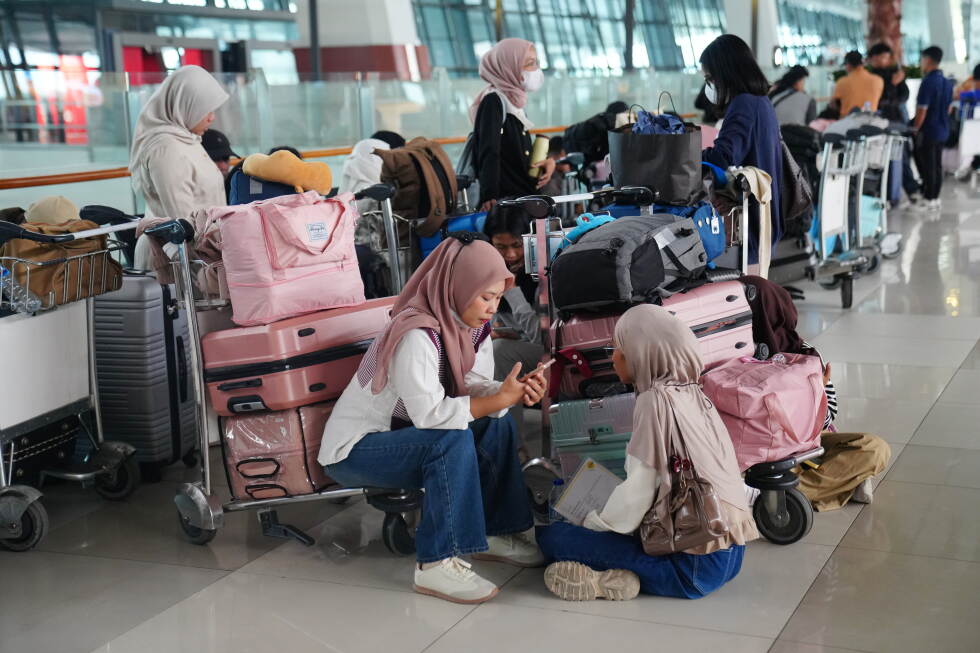
    The new Entry-Exit System (EES), the EU’s digital overhaul of border processing, requires all short-term visitors from outside the European Union and European Economic Area to register their biometric data every time they enter or exit the Schengen free travel area. First launched in October last year, the system was scheduled to reach full operational capacity by April 10 of this year. While EU officials maintain the platform has largely performed as intended, widespread traveler accounts of multi-hour delays at border checkpoints have proliferated in recent months, with UK passengers disproportionately affected. In dozens of documented cases, delayed passengers have missed departing and connecting flights entirely.

    One high-profile incident last month left more than 100 EasyJet passengers stranded in Milan’s Linate Airport after they missed their flight back to Manchester, caught in what the carrier called “unacceptable” passport processing queues. A separate incident at Milan’s Bergamo Airport saw a plane full of Ryanair passengers bound for Manchester also miss their departure due to EES-related backlogs, the airline confirmed.

    In response to these mounting disruptions, Greek border authorities quietly stopped conducting mandatory biometric checks for UK citizens, despite the Greek government’s public claim that it had “successfully started the full operation of the Entry-Exit System.” The Commission confirmed this week that it has opened discussions with Greek officials to clarify the country’s deviation from EU rules and remind national governments of the bloc’s existing regulatory framework. Under current EES rules, temporary, limited suspensions of screening are permitted at specific border crossings only during exceptional circumstances, but blanket exemptions for entire nationalities over extended time frames are explicitly prohibited.

    The Commission added that it remains in regular communication with all EU member states, including Portugal and Italy, to coordinate EES implementation. “The Portuguese and Italian authorities confirmed that they do not intend to exempt any nationality,” a Commission spokesperson said in an official statement.

    The ongoing EES-related travel chaos comes as global airlines already face cascading headwinds, including skyrocketing jet fuel prices and widespread uncertainty over fuel supply security heading into the peak summer travel season. Global carriers have already cut more than 13,000 scheduled flights for May, accounting for roughly 1% of all planned global air travel for the month. Despite the mounting disruptions, UK officials have urged holidaymakers not to cancel or alter their existing travel plans, noting that the UK faces no current fuel shortage and that government contingency plans are in place to address emerging issues.

  • UK border official and former Hong Kong cop convicted of assisting Chinese spy agency in Britain

    UK border official and former Hong Kong cop convicted of assisting Chinese spy agency in Britain

    LONDON – In a landmark espionage case that has escalated diplomatic tensions between London and Beijing, a UK jury has found two dual Chinese-British nationals guilty of conducting coordinated spying operations on behalf of Chinese authorities targeting Hong Kong pro-democracy dissidents based in Britain. The convictions mark one of the highest-profile transnational repression cases prosecuted under the UK’s landmark National Security Act.

    The defendants, 40-year-old Peter Wai and 65-year-old Bill Yuen, carried out what prosecutors described as “shadow policing” across the UK, targeting exiled activists and political figures who relocated to Britain after Beijing imposed a sweeping national security law on Hong Kong in 2020. Wai, a serving UK Border Force officer and a special constable with the City of London Police who also operated a private security firm, abused his official access to law enforcement databases to gather intelligence on dissidents. Yuen, a former Hong Kong Police superintendent who worked as an office manager at the Hong Kong Economic and Trade Office (HKETO) – Hong Kong’s official representative body in London – exceeded his official remit to coordinate the surveillance network, prosecutors confirmed.

    Following a weeks-long trial at London’s Central Criminal Court, the jury returned guilty verdicts on Thursday on charges of violating the National Security Act by providing assistance to a foreign intelligence service. Wai received an additional conviction for misconduct in public office over his misuse of police computer systems to pull information on targets while off duty. Prosecutors documented that Wai received payment for his work from an HKETO bank account, and the pair exchanged phone messages referring to Hong Kong dissidents as “cockroaches.” Their targets included prominent exiled Hong Kong pro-democracy figure Nathan Law, as well as senior UK politicians: Yuen explicitly instructed Wai to prioritize monitoring members of UK Parliament and government employees, providing Wai with the name of Conservative lawmaker Iain Duncan Smith, co-chair of the Inter-Parliamentary Alliance on China, in 2023.

    The conspiracy was uncovered by British counterterrorism police in May 2024, when officers monitoring the network disrupted an attempted break-in at the West Yorkshire home of Monica Kwong, a Hong Kong national living in northern England. Kwong had been accused of 16 million pounds ($21.8 million) fraud by her former employer, Beijing-based Australian businesswoman Tina Zou, who was present at the scene during the attempted break-in. Kwong has maintained the fraud accusation is a fabricated setup. Nine people were arrested during the disruption, including Zou, Wai, and two retired Hong Kong police officers. Yuen, who was in regular communication with the group, was taken into custody shortly after in London.

    A third defendant, Matthew Trickett, a UK immigration enforcement officer also arrested at Kwong’s home, died by suicide in custody before the conclusion of the trial. Zou was never charged in connection with the espionage conspiracy, and the jury was unable to reach guilty verdicts on charges linked to the break-in at Kwong’s residence. Prosecutors further confirmed that Hong Kong authorities had offered bounties of up to nearly 100,000 pounds ($136,000) for information leading to the capture of exiled pro-democracy supporters, a context that frames the surveillance operations carried out by Wai and Yuen.

    Shortly after the jury delivered its guilty verdicts, the UK Foreign Office summoned Chinese Ambassador Zheng Zeguang to formally protest the actions. Senior UK officials emphasized that the convictions send an unambiguous message to foreign governments seeking to conduct unlawful operations on British territory. “These convictions send a clear message that transnational repression, foreign interference, unauthorized surveillance, and attempts to operate outside the law will not be tolerated on British soil,” said Bethan David, head of counterterrorism at the Crown Prosecution Service. “This conduct was deliberate, coordinated and carried out with full knowledge of who it would benefit.”

    Security Minister Dan Jarvis echoed the condemnation in a formal statement, noting: “The activities carried out by these men, on behalf of China, are an infringement of our sovereignty and will never be tolerated. We will continue to hold China to account and challenge them directly for actions which put the safety of people in our country at risk.”

    Hong Kong’s government issued a response distancing itself from the case, saying it was not involved in the activities and strongly rejected “unfounded allegations” against the administration or its London trade office.