博客

  • Trump says he would not pay $1,000 to watch US at World Cup

    Trump says he would not pay $1,000 to watch US at World Cup

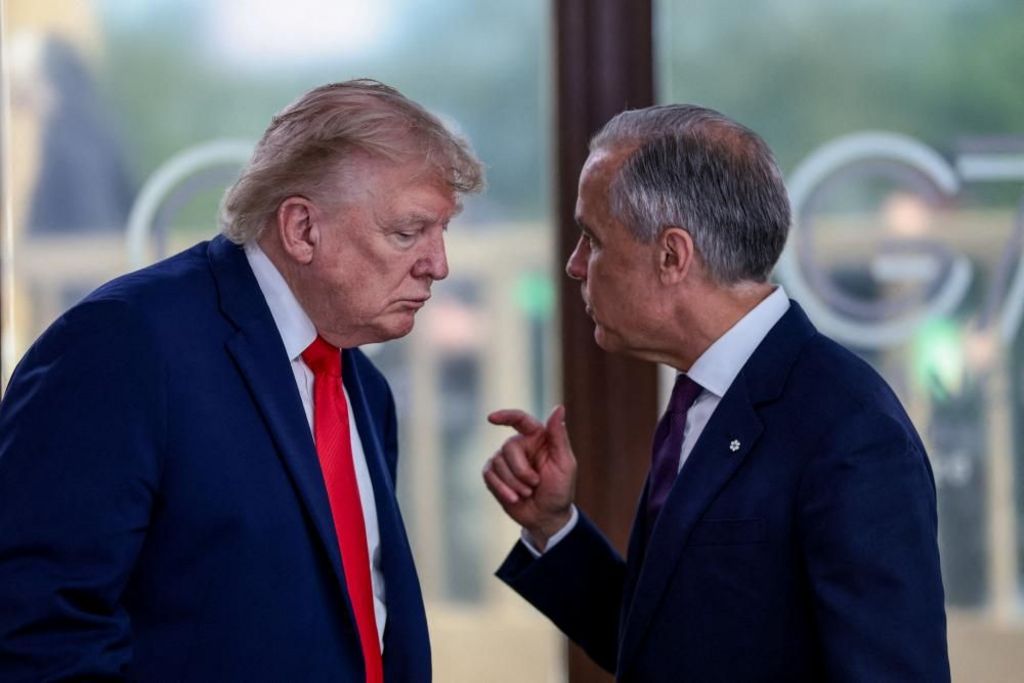
    Former U.S. President Donald Trump has added his voice to the mounting backlash against FIFA over exorbitant ticket pricing for the 2026 co-hosted World Cup, revealing in a recent interview that he would refuse to shell out more than $1,000 to attend the United States men’s national team’s opening match of the tournament.

    In comments published by the New York Post on Thursday, the former president — who has long touted his role in securing the 2026 World Cup hosting rights for the North American bloc during his first term in office — acknowledged he was caught off guard by the steep ticket costs. “I did not know that number,” Trump told the outlet. “I would certainly like to be there, but I wouldn’t pay it either, to be honest with you.”

    Trump’s criticism centers on the impact high prices will have on working- and lower-income Americans, a core electoral base that has backed him through multiple campaigns. He highlighted that his biggest disappointment with the current pricing structure is that it locks out the voters who supported him. “If people from Queens and Brooklyn and all of the people that love Donald Trump can’t go, I would be disappointed, but, you know, at the same time, it’s an amazing success,” he said. “I would like to be able to have the people that voted for me to be able to go.”

    The former president’s public pushback marks a rare break from his close personal ties to FIFA President Gianni Infantino, who defended the organization’s pricing model just days before Trump’s comments. Infantino argued that FIFA is legally required to allow third-party ticket resale under U.S. regulations, a system that has driven resale prices into the thousands of dollars above original face value. He also pushed back on critics by noting that more than 500 million fan requests for World Cup tickets have already been submitted — a massive jump from the combined total of fewer than 50 million requests for both the 2018 Russia World Cup and 2022 Qatar World Cup. To counter claims of widespread unaffordability, Infantino added that 25% of all group stage tickets are priced below $300.

    But critics have pushed back against that defense, drawing stark comparisons between 2026 pricing and the 2022 Qatar tournament. For example, the most expensive face-value ticket for the 2022 World Cup final hovered around $1,600, while the equivalent 2026 final ticket carries a face price of roughly $11,000. The outrage over pricing extends far beyond Trump: U.S. lawmakers and international fan advocacy groups have already slammed FIFA for its tiered pricing structure, with European fan organization Football Supporters Europe calling the model a “monumental betrayal” of football supporters worldwide.

    The 2026 World Cup, jointly hosted by the U.S., Canada, and Mexico, is scheduled to kick off this coming June, and remains one of the most anticipated global sporting events of the year. But the ongoing controversy over ticket costs has overshadowed build-up to the tournament, turning pricing policy into a high-profile public debate that now draws input from one of the most influential figures in U.S. politics.

  • Trump’s ‘irresponsible war’ to blame for economic slowdown, German minister says

    Trump’s ‘irresponsible war’ to blame for economic slowdown, German minister says

    A fresh escalation in tensions between two key NATO allies has emerged after Germany’s top finance official blamed U.S. President Donald Trump’s handling of the war in Iran for a massive downward revision of the country’s projected tax revenues, piling more strain on already fractured transatlantic relations.

    Lars Klingbeil, Germany’s finance minister, told reporters in Berlin that Trump’s “irresponsible war in Iran” has triggered a widespread global energy shock that has severely damaged German economic prospects. In response to shifting economic headwinds, German federal officials have cut their expected tax revenue forecasts for the 2026–2030 period by roughly €70 billion (equivalent to $82 billion or £60.52 billion). Klingbeil emphasized that the sharp downgrade makes clear how directly the ongoing conflict in the Middle East is weighing on Germany’s stagnant domestic economy.

    Klingbeil’s remarks come just weeks after a public dispute between German Chancellor Friedrich Merz and President Trump that already led to a U.S. announcement of troop withdrawals from German soil. Last month, Merz drew Trump’s fury when he claimed the White House had been “humiliated” by Iranian negotiators, arguing that the U.S. had no clear exit strategy for the conflict and that Iran had outmaneuvered American diplomats. Merz added that it was humiliating for the U.S. to send negotiators to international talks only to return home without any tangible progress.

    Trump hit back rapidly on his social platform Truth Social, dismissing Merz as misinformed, falsely claiming the German leader supported Iran developing nuclear weapons, and arguing that Germany’s own poor economic performance justified his criticism. The U.S. president doubled down on his rebuke, urging Merz to prioritize fixing Germany’s own domestic challenges – including immigration and energy policy – instead of criticizing U.S. foreign policy. Days after Merz’s original comments, the U.S. Department of Defense unveiled a plan to withdraw 5,000 American troops from Germany, a move linked to Defense Secretary Pete Hegseth. German defense officials have described the withdrawal as a foreseeable outcome of the growing diplomatic rift.

    Currently, the U.S. maintains its largest European military footprint in Germany, with roughly 12,000 troops deployed in Italy and an additional 10,000 in the United Kingdom. Trump has a long record of criticizing NATO alliance members, and has repeatedly pressured European allies to back his efforts to reopen the Strait of Hormuz, a critical global oil shipping chokepoint that has been effectively closed by Iran since the outbreak of hostilities. Roughly 20% of the world’s oil and liquefied natural gas supplies transit through the strait, and the conflict has sent global energy prices skyrocketing, hitting Germany’s already fragile economy, which has struggled with stagnation, elevated energy costs and weak export demand for years.

    Alongside other European nations, Germany has openly opposed the U.S.-Israeli war against Iran that began on February 28, warning that the conflict raises severe risks of a full-blown global economic recession. While Merz has repeatedly acknowledged that Trump’s policy agenda has opened a “deep divide” between the United States and Europe since he took office a year ago, the German chancellor has also made two trips to the White House in 12 months in an effort to repair damaged bilateral ties.

    At present, a fragile ceasefire is in place between warring parties, framed as a stepping stone to a formal peace deal. President Trump claimed this week the conflict would end quickly, and Iranian officials have confirmed they are reviewing a U.S. peace proposal. However, negotiations have stalled amid a U.S. naval blockade of Iranian ports, even as American work continues to clear the Strait of Hormuz to allow the nearly 2,000 commercial ships stranded in the Gulf since February to transit safely.

  • Twin jihadist-claimed attacks kill more than 30 in Mali

    Twin jihadist-claimed attacks kill more than 30 in Mali

    Mali’s already fragile security landscape has been shattered by a new wave of deadly violence, as two coordinated attacks claimed by an Al-Qaeda-affiliated jihadist group have killed more than 30 people in central regions of the West African nation, multiple local, security and administrative sources confirmed to Agence France-Presse on Thursday.

    The near-simultaneous strikes on the villages of Korikori and Gomossogou unfolded just under two weeks after a massive joint offensive by jihadist and separatist forces against positions held by the country’s ruling military junta, a campaign that pushed Mali into one of its most severe security emergencies in years. A local youth official put the confirmed death toll at a minimum of 35 people killed in Wednesday’s attacks, while both security and administrative sources corroborated a toll of more than 30 fatalities. The assaults have been officially claimed by the Group for the Support of Islam and Muslims (JNIM), the largest Al-Qaeda-aligned militant network operating in the Sahel region.

    West African Sahel security journalism collective WAMAPS has published a higher provisional toll, reporting more than 50 villagers killed with multiple residents still unaccounted for. The organization added that widespread looting of community property and arson attacks on local buildings accompanied the assaults. According to a senior security source, the attacks were launched in retaliation for recent actions by Dan Nan Ambassagou, a prominent community self-defense militia formed by local populations to counter persistent jihadist incursions in central Mali. The source noted that while most of the fatalities were militiamen, the dead also included teenage civilians and young children.

    Composed primarily of ethnic Dogon traditional hunters, Dan Nan Ambassagou has repeatedly defied government orders to disband. Malian authorities have labeled the group responsible for a 2019 massacre in the central village of Ogossagou that left 160 people dead. In response to this week’s attacks, the Malian military announced Thursday that it had conducted a focused counter-terrorism operation in the affected area, neutralizing approximately a dozen militant fighters. The military has not released any additional details on the operation to date.

    This latest violence comes on the heels of a devastating coordinated offensive across northern and central Mali launched April 25 and 26 by a coalition of JNIM and the Azawad Liberation Front (FLA), an ethnic Tuareg separatist movement. The offensive targeted key strategic locations, including the northern desert town of Kidal and Kati, a major military garrison town just outside the capital Bamako. The attacks claimed the life of Malian Defense Minister Sadio Camara, the 47-year-old architect of the junta’s military alliance with Russia, who was killed by a car bomb at his personal residence. Kidal and multiple other northern population centers have since fallen under the control of the coalition, which has implemented a blockade of the capital to pressure the junta.

    Central Mali has emerged as a persistent hotspot of lethal intercommunal and militant violence in recent years. Following the 2019 Ogossagou massacre, the village was the site of a 2020 raid that left roughly 30 ethnic Fulani people dead; Fulani communities across the Sahel have long faced unfair accusations of colluding with jihadist groups. In March 2022, nearly 300 civilians were massacred in the town of Moura, with Human Rights Watch implicating the Malian military and its foreign allies, widely understood to be mercenaries from Russia’s Wagner Group. Just three months later, JNIM attacks in Diallassagou killed more than 130 civilians.

    In the wake of last month’s large-scale offensive against the junta, Mali has also seen a sweeping crackdown on perceived opponents. Multiple security, legal and family sources confirmed to AFP that a number of opposition political figures and active-duty military personnel have been detained or forcibly abducted since the attacks. Last week, the military prosecutor’s office stated it held concrete evidence of complicity among certain military members, accusing them of aiding in the planning, coordination and execution of the April offensive. But a senior anonymous political official warned the crackdown amounts to a targeted political purge, arguing that the junta is exploiting the security crisis to eliminate dissent within both the political opposition and military ranks. “Everything suggests that these events are being used as an opportunity to carry out a purge,” the official said.

    Mali has been trapped in a deep-seated security crisis since 2012, fueled by overlapping insurgencies from Al-Qaeda and Islamic State-affiliated fighters, activity from local criminal gangs, and separatist mobilization among ethnic Tuareg communities in the north. The country has been under unelected military rule since two successive coups in 2020. Shortly after last month’s offensive, JNIM issued a public call for a united opposition front to remove the junta from power and create a path toward a peaceful, inclusive political transition.

  • Hundreds paid or seeking damages over Harrods Al-Fayed abuse complaints

    Hundreds paid or seeking damages over Harrods Al-Fayed abuse complaints

    A landmark compensation scheme for survivors of sexual abuse linked to late Harrods owner Mohamed Al-Fayed has marked a key milestone, with more than 75 claimants already awarded full settlement, while roughly 200 additional claims remain under active review. The update, confirmed by the Harrods Redress Scheme to Agence France-Presse on Thursday, comes amid a growing institutional reckoning over the decades of alleged abuse and failures by law enforcement to address the complaints.

    Per the scheme’s official statement, a total of 259 survivors have joined the compensation process to date, with many already receiving interim payout. All remaining claims, which were submitted before the March 31 application deadline, will continue moving through review toward final resolution, the organization added.

    The announcement coincides with confirmation from the United Kingdom’s police watchdog that a current London Metropolitan Police officer and four retired officers are now under investigation over how they previously handled the sexual assault allegations against Al-Fayed. The independent inquiry focuses specifically on the quality of police investigations launched in 2008 and 2013 into claims against the late Egyptian billionaire. By the time Al-Fayed died in 2023 at the age of 94, approximately 21 formal complaints had been filed with the Metropolitan Police, but none ever resulted in criminal prosecution.

    Al-Fayed, who purchased London’s iconic luxury Harrods department store in 1985, faces widespread allegations of systemic rape, sexual assault, sexual exploitation and human trafficking spanning decades of his ownership. The scale of the abuse only came into widespread public view after a landmark BBC investigative documentary into the rape and assault claims was released in September 2024, which prompted hundreds of women to come forward with their own experiences. In response to the growing outcry, Harrods launched the independent Redress Scheme in March 2025.

    The luxury retail giant has issued a sweeping public apology for the harm inflicted on survivors, acknowledging that institutional failures allowed Al-Fayed’s abuse to continue unchecked. “We apologise unreservedly for the sexual abuse inflicted upon survivors by Fayed who abused his power wherever he operated. We acknowledge survivors were failed,” the company said in an official statement.

    Under the scheme’s rules, eligible survivors can receive compensation payments of up to £400,000 (equivalent to roughly $544,000), with payout amounts scaled based on the severity of harm each survivor experienced. For context, claimants who were forced to undergo invasive gynaecological examinations — ordered by Al-Fayed to check for sexually transmitted infections or verify virginity — are guaranteed a minimum £10,000 settlement. The scheme is limited to claimants holding potential legal claims against Harrods for abuse perpetrated by Al-Fayed, a restriction the company says is necessary to align with the scheme’s mandate.

    Earlier the same day, the Independent Office for Police Conduct (IOPC), the UK’s police oversight body, confirmed the five officers under investigation are being probed for potential professional misconduct. “The victims-survivors are being kept updated on the progress of our investigation,” the IOPC statement added.

    Accounts of past police failures have already emerged from survivor families. The mother of a deceased complainant told the BBC her daughter’s allegations were brushed off by officers, who told her the case would come down to her word against Al-Fayed’s, and that her claim would simply be added to a growing “pile” of similar complaints from other women.

    A Metropolitan Police spokesperson confirmed Thursday that the force is fully cooperating with the IOPC investigation, which was first launched in January 2025. The force added that its own separate criminal investigation into individuals who may have helped enable Al-Fayed’s alleged offending remains active. Back in March, the Met announced it had interviewed three women on suspicion of aiding and abetting rape and facilitating human trafficking for sexual exploitation.

    The investigation into Al-Fayed’s alleged networks extends beyond the UK. French authorities have been probing a large-scale alleged human trafficking operation reportedly established by Al-Fayed, who purchased Paris’s Ritz Hotel six years before he bought Harrods, in 1979.

    Rachael Louw, a former Harrods saleswoman who has been interviewed by France’s anti-trafficking agency OCRTEH, told AFP she was officially recognized as a victim of modern slavery by UK authorities in April. She described the recognition as “a validation and a vindication of what I said to the Met when I first reported back in 2024.”

    Survivor advocates say the IOPC investigation is a small step forward, but are calling for a full, sweeping inquiry into the full scope of the alleged trafficking network. Justine, a former Harrods employee and member of the survivor advocacy group No One Above, told AFP that the operation Al-Fayed ran was a coordinated trafficking ring that relied on systemic support. “What the Fayeds ran was a trafficking operation — one that required a network of facilitators, institutional access, and sustained cover,” she said.

  • Gulf states derailed Trump’s ‘Project Freedom’ by cutting US access to airspace and bases

    Gulf states derailed Trump’s ‘Project Freedom’ by cutting US access to airspace and bases

    A sudden diplomatic backlash from key Gulf allies has forced the Trump administration to backtrack on a high-stakes military plan to reopen the blockaded Strait of Hormuz, throwing Washington’s Iran war strategy into disarray just as new peace talks emerge. The abrupt reversal of what President Donald Trump dubbed “Project Freedom” came after both Saudi Arabia and Kuwait halted U.S. military access to their sovereign airspace and strategically critical military bases, multiple U.S. and regional sources confirm.

  • An outsider artist takes the world’s biggest stage with the US Pavilion at the Venice Biennale

    An outsider artist takes the world’s biggest stage with the US Pavilion at the Venice Biennale

    As the 2026 Venice Biennale prepares to open its gates to the global art world, self-taught American sculptor Alma Allen finds himself at the center of one of the world’s most prestigious contemporary art platforms — a spot he secured only after a turbulent, last-minute selection process that has stirred widespread criticism across the international art community.

    A Utah-born sculptor who has built his three-decade career working independently from Mexico, Allen has long positioned himself as an outsider to the insular, clique-driven contemporary art establishment. Now, just days ahead of the Biennale’s official launch, he faces intense scrutiny from critics and art world observers alike, all eyes fixed on the U.S. Pavilion, the iconic Jeffersonian-style brick venue that hosts the American presentation every two years.

    Controversy has shadowed the 2026 U.S. pavilion selection from the start, with many describing the process as uncharacteristically opaque. When the open call for the commission was revised, language centering diversity, equity and inclusion was removed, and replaced with a new mandate to promote “American values.” This shift led most major cultural institutions that typically compete for the coveted commission to step back, amid fears of being drawn into unseemly administrative politics.

    The road to Allen’s appointment was rocky from the outset. The original planned exhibition, set to feature work by artist Robert Lazzarini and curated by art historian John Ravenal, had already secured U.S. State Department approval before it collapsed last September, when the project’s required institutional sponsor pulled its support. A subsequent attempt to attach the Lazzarini project to the newly created American Arts Conservancy (AAC) fell through, and within a short timeframe, the new lineup — AAC as sponsor, Jeffrey Uslip as commissioner, Allen as the exhibiting artist — was announced.

    Ravenal, the curator behind the failed original project, has criticized the revised selection as highly irregular. He notes that after the original application deadline closed in July, there was no public committee vetting process, no open applications, breaking with 40 years of established open call and peer review practices for the U.S. pavilion. He has described Allen as “a pawn in this whole thing.”

    Allen is no stranger to the backlash his participation has sparked, but he is firm in pushing back against claims of political influence. He stresses that the current U.S. administration has not interfered in his exhibition in any way, saying bluntly: “My art is not propaganda.”

    This is the first time in Allen’s 30-year career that he has felt the need to defend his practice and his place in a major show. For three decades, he worked largely outside the constant critical gaze of the mainstream art world, a circumstance he calls a genuine pleasure. His practice centers on organic, biomorphic sculptures carved from wood, shaped from stone, and cast in bronze. He intentionally refuses to title most works, choosing instead to leave space for viewers to bring their own interpretations to each piece.

    Allen’s exhibition, titled *Call Me the Breeze*, brings together a dozen brand-new works alongside pieces he created over the past two decades. The title, he explains, is a nod to his lifelong ability to navigate unexpected obstacles — a skill he developed as a self-taught artist who has rarely benefited from institutional support throughout his career. Uslip, the pavilion’s commissioner, says that exact independent, non-institutional background is what made Allen the right choice for the commission. “I am deeply interested and invested in artists who are not, I guess, academicized … or lobotomized,” Uslip explained.

    In a playful, ironic touch that nods to the controversy surrounding the show, Allen installed a large cast bronze evil eye on the exterior of the U.S. pavilion, a talisman he joked would ward off negative energy. In a fittingly chaotic twist, the piece was stuck in transit and failed to arrive just days before the opening.

    Inside the pavilion’s central courtyard, a headless, directionless sheep sculpture stands as a quiet self-portrait, representing Allen’s status as the outsider shunned for being “the wrong sheep.” His newest body of work includes bronze wall sculptures, treated with chemical processes that turn the rigid metal into a spontaneous, fluid medium he compares to watercolor.

    Allen’s path to the Venice Biennale is a story of unconventional persistence. Early in his career, he experienced homelessness in New York City, selling his small creations from an ironing board as an act of sheer desperation — a step that launched his career, connecting him with his first collectors. Today, his work is held in major institutions including the Los Angeles County Museum of Art and the Palm Springs Art Museum; he previously took part in the 2014 Whitney Biennial, and made his European debut in Brussels in 2022.

    When Allen received the last-minute commission, he made his first ever trip to Venice that November to walk through the pavilion. A trip to the Venice Accademia to see Hieronymus Bosch’s *The Visions of Hereafter*, a haunting work depicting heaven, hell and purgatory, inspired the exhibition’s core structure. “I wanted there to be a bit of the chaos that we go through,” Allen said of the show’s framework.

    Looking back on the chaotic path that brought him to the Biennale, Allen says his selection came down to one key trait: his willingness to step into high-pressure, last-minute challenges. “When they do, I’m prepared to try it, and fail at it. That’s fine,” he says. Now, as opening day approaches, the outsider artist is ready to meet the world’s critical gaze with the same quiet adaptability that has defined his decades-long career.

  • Israeli soldier pictured desecrating Virgin Mary statue in Lebanon

    Israeli soldier pictured desecrating Virgin Mary statue in Lebanon

    A new controversy has emerged over conduct by Israeli troops in southern Lebanon, after a widely circulated video showing an Israeli soldier desecrating a statue of the Virgin Mary in the Christian village of Debel has prompted a formal military inquiry. Though the photograph of the incident was first shared publicly on Wednesday, Israeli military investigators confirm the act took place several weeks ago in the village, which sits just five kilometers from the Israeli border and six kilometers northwest of the Lebanese Christian town of Ain Ebel.

    In an official statement following the viral spread of the footage, the Israeli military noted that it has already identified the soldier responsible, and confirmed disciplinary action will be issued once the investigation concludes. The service emphasized that it views the incident with severe seriousness, stressing that the soldier’s actions stand in complete opposition to the ethical standards and values the military requires of all its personnel. “The incident will be investigated, and command measures against the soldier will be taken in accordance with the findings,” the military’s statement read. It also added that the Israeli military upholds respect for freedom of religion and worship, along with holy sites and religious symbols belonging to all faiths and communities, and maintains that it has no intent to damage civilian infrastructure, including religious structures or sacred symbols.

    This latest incident is not an isolated event in Debel: just one month prior, another Israeli soldier used a jackhammer to destroy a statue of Jesus on a cross in the same village. Images of that earlier act of vandalism sparked immediate widespread outrage across social media, even drawing condemnation from prominent conservative allies of former U.S. President Donald Trump. Former Republican Congresswoman Marjorie Taylor Greene posted a sarcastic remark on the social platform X in response to the images, writing, “’Our greatest ally’ that takes billions of our tax dollars and weapons every year.” Fellow former Republican Congressman Matt Gaetz called the vandalism “horrific.” In response to that earlier incident, the Israeli military announced it had discharged the soldier who destroyed the statue, along with a second soldier who filmed the act, and sentenced both to 30 days of military prison. More recently, additional footage from Debel has documented Israeli military excavators destroying civilian solar panels, an act that is also currently under military review.

    The Debel incidents are part of a growing string of attacks on Christian religious sites across southern Lebanon, according to religious organizations. Last week, a French Catholic charity L’Oeuvre d’Orient issued a formal condemnation of Israeli forces after they demolished a convent run by the Salvatorian Sisters, a Greek Catholic order, in the Lebanese village of Yaroun. In its statement, the organization said, “L’Oeuvre d’Orient strongly condemns this deliberate act of destruction against a place of worship, as well as the systematic demolition of homes in southern Lebanon aimed at preventing the return of civilian populations.” The charity added that the convent demolition fits into a broader pattern of targeting Christian heritage, noting that multiple Christian sanctuaries, including Melkite churches in Yaroun and Derdghaya—both officially protected as part of Lebanon’s national heritage—were destroyed during 2024 hostilities.

    Attacks against Christian communities and individuals have also intensified in occupied Palestinian territories, according to recent reports. Last week in occupied East Jerusalem, a 48-year-old nun was physically assaulted by an Israeli civilian near the Cenacle on Mount Zion, requiring medical care for facial injuries sustained in the attack. Religious authorities have also faced repeated restrictions on worship: Israeli police recently blocked Cardinal Pierbattista Pizzaballa, the Latin Patriarch of Jerusalem, and other clergy from holding the traditional Palm Sunday Mass at the Church of the Holy Sepulchre, only partially reversing the access ban after widespread international pressure.

    A 2025 report from the Rossing Center for Education and Dialogue has documented a dramatic spike in anti-Christian incidents across the region, describing a “continued and expanding pattern of intimidation and aggression.” The center recorded 155 separate incidents in 2025 alone: the total includes 61 physical assaults, 52 attacks on church-owned property, 28 cases of religious harassment, and 14 instances of vandalism against religious signage. Researchers warn that the documented count represents only the “tip of the iceberg,” with many more incidents going unreported.

    These developments come even as Israel maintains ongoing military activity in Lebanon despite an April 17 ceasefire agreement that was meant to end over six weeks of open conflict. Since large-scale hostilities began on March 2, more than 2,600 people have been killed in the fighting, and over 8,000 more have been wounded.

  • White House Press Secretary Karoline Leavitt announces birth of baby girl

    White House Press Secretary Karoline Leavitt announces birth of baby girl

    White House Press Secretary Karoline Leavitt has shared joyful personal news with the public via an Instagram post: she welcomed her second child, a daughter named Viviana, into her family on May 1. Leavitt, who has served in her top communication role for the Trump administration since President Donald Trump returned to office last year, opened up about the new addition in her social media announcement.

    “On May 1st, Viviana aka ‘Vivi’ joined our family, and our hearts instantly exploded with love,” Leavitt wrote in the post. She added that the newborn is perfectly healthy, and that her 2-year-old older brother Nicholas, nicknamed Niko, has been adjusting happily to life with his new baby sister. “We are enjoying every moment in our blissful newborn bubble,” she said.

    This is Leavitt’s second child with her husband Nicholas Riccio; Niko will turn two in July. Leavitt first stepped away from her White House duties in April to begin maternity leave, but made an exception to briefly return to the press room after a shooting took place at the April 24 White House Correspondents’ Dinner, to update reporters on the developing situation. Since Leavitt started her leave, senior Trump administration officials have been filling in to lead the regular press briefings.

    Earlier this week, Secretary of State Marco Rubio stepped into the briefing room to lead the daily press session. Rubio lightheartedly described the session as chaotic at points, and joked that he did not know most reporters by name, a stark contrast to Leavitt’s regular role. As of now, the White House has not confirmed how long Leavitt’s maternity leave will last, leaving uncertainty around when she will return to lead regular briefings full-time.

  • Daniel Dae Kim explores booming South Korean pop, film, cosmetics and food influences for CNN series

    Daniel Dae Kim explores booming South Korean pop, film, cosmetics and food influences for CNN series

    In a surprising twist that blends personal curiosity and professional storytelling, veteran entertainer Daniel Dae Kim recently tried an unconventional K-beauty treatment few celebrities would volunteer for: microinjections of salmon sperm DNA into his face, administered at a Seoul clinic. The procedure, intended to lower facial inflammation and boost skin elasticity, left Kim with a faint sunburn-like flush, but he brushed off the minor side effect and declared himself camera-ready within minutes.

    That on-camera experiment is just one small segment of Kim’s ambitious new project, the CNN original series *K-Everything: The Global Rise of Korean Culture*, a passion project he calls a “love letter” to South Korea’s most beloved cultural exports, spanning beauty, food, music and film. The series is set to premiere Saturday on CNN International, with additional streaming availability on CNN and HBO Max.

    For Kim, the series is far more than a typical travel documentary. Born in South Korea before moving to the U.S. at the age of one, the multi-hyphenate actor, director and producer has long held deep ties to the country, and the show frames its exploration of South Korea’s transformation through a deeply personal lens. In just three generations, the nation climbed from a war-ravaged developing nation to one of the world’s most dynamic, modern cultural powerhouses, and *K-Everything* traces that extraordinary shift through the lens of its most popular global exports.

    Viewers can expect Kim to guide them across the full breadth of modern Korean culture. At the energetic annual kimchi festival in Pyeongchang, he unpacks how fermented Korean cuisine is upending long-held norms in fine dining scenes across the globe. In separate episodes, he sits down for one-on-one conversations with some of South Korea’s biggest entertainment figures, including A-list actor Lee Byung-hun, “Gangnam Style” pioneer Psy, BigBang member Taeyang, and the songwriters behind the Oscar-winning hit “Golden”. The K-beauty episode takes Kim even further: after chatting with beauty influencer LeoJ and model Irene Kim about shifting global beauty standards, he tests a range of viral K-beauty products from serums to sheet masks, even takes a tour of a facility that harvests snail slime for skincare formulations.

    The personal journey extends to Kim’s own family, too. During filming, he accompanied his parents around Seoul, which has transformed so dramatically in recent decades that every landmark they remembered from their youth has disappeared. For his parents, navigating the hyper-modern capital felt almost like exploring a foreign country, leaving Kim as their trusted guide—a role that mirrors his work on the series.

    Kim is joining a booming trend of A-list celebrities taking on travel and culture hosting roles, with high-profile names from Stanley Tucci and Eugene Levy to Chris Hemsworth and Will Smith launching their own documentary series in recent years. Kim cites iconic late chef and travel host Anthony Bourdain as a major inspiration; Bourdain pioneered the modern format of the celebrity travel host, leaning into personal perspective rather than rigid scripted narration.

    “I wouldn’t say that this show is as irreverent as Anthony Bourdain’s show was, but I loved it because I felt like he was showing me his take on each country and he was a trusted guide,” Kim explained. “If I can be that for some people then that’s the spirit that I’d like to bring into this show.”

    CNN executives say Kim’s unique background makes him the perfect person for this project. Amy Entelis, executive vice president for talent, CNN Originals and creative development, noted that Kim brings an unmatched combination of passion, firsthand knowledge, and ability to connect with global audiences that can’t be replicated by an outside host.

    “From the first time I met him, it was clear he was incredibly well equipped to tackle this — deeply passionate about the subject and highly knowledgeable. He was also very focused on making sure the way we look at Korean culture translates to a broad global audience, really putting a spotlight on it,” Entelis said.

    While this marks Kim’s first time hosting a full television series, he says the role felt natural, not outside his comfort zone. As an artist who has been shaped by his Korean heritage throughout his life and career, introducing the culture he loves to a global audience felt like a calling, not work.

    Beyond entertainment, Kim also hopes the series will serve a larger social purpose: bridging cultural divides and pushing back against the sharp rise in anti-Asian racism that surged globally during the COVID-19 pandemic. “If we can start to understand one another a little bit better through culture, then I think it is one step toward bringing together a global community. And I think the world could use a little more understanding in general,” he said.

    For new viewers unfamiliar with South Korea, Kim says the series offers a accessible, human introduction that no textbook or classroom lecture can match. By bringing together people from every corner of Korean society—from different cities, socioeconomic backgrounds, and creative fields—the series broadens understanding of just how diverse and dynamic modern Korean culture is, beyond the viral trends that dominate global social media.

  • Rwandan singer dies as he was being released from prison

    Rwandan singer dies as he was being released from prison

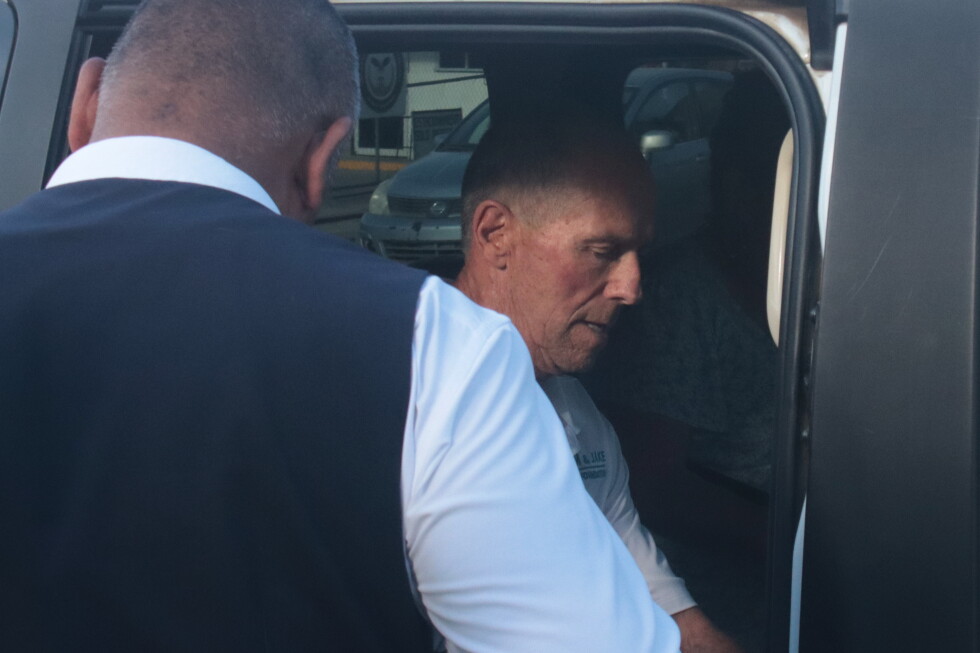
    The sudden death of 48-year-old Rwandan singer, academic and government critic Aimable Karasira on the cusp of his prison release in Kigali has triggered deep controversy and demands for a transparent, independent investigation into the circumstances of his passing. According to official statements from the Rwanda Correctional Service (RCS), Karasira suffered a fatal overdose of his prescription medication while being escorted out of prison Wednesday afternoon, between 2 p.m. and 3 p.m. He was rushed to Nyarugenge Hospital, where he was pronounced dead. RCS spokesperson Hillary Sengabo confirmed that Karasira had been living with chronic conditions including diabetes, high blood pressure, and unaddressed mental health struggles, and announced that an official post-mortem examination would be conducted to determine the exact cause of death.

    Karasira was no stranger to public life in Rwanda before his arrest in 2021. A trained computer scientist, he worked for years as a lecturer at the University of Rwanda until his dismissal, a move the university framed as a response to “disciplinary faults” rather than retaliation for his outspoken anti-government views. He rose to wider prominence through his popular YouTube channel Ukuri Mbona, which translates to “The Truth As I See It,” where he regularly published criticism of President Paul Kagame and the long-ruling Rwandan Patriotic Front (RPF) party. He also appeared as a guest commentator on other independent platforms, drawing a large audience of Rwandans seeking alternative perspectives to the government’s official narrative.

    In 2025, Karasira was sentenced to five years in prison on charges of inciting ethnic division, after a Rwandan high court acquitted him of more serious counts including inciting public disorder, genocide justification and genocide denial. This release, planned for earlier this week, would have been the first step in his return to public life after five years behind bars.

    The official account of Karasira’s death has been immediately met with skepticism from opposition figures, human rights activists, and other critics of the Kagame government, who have pointed to a long pattern of suspicious deaths involving detained government opponents in Rwanda. Denise Zaneza, a Rwandan human rights activist based in Belgium, wrote in a public post on X that the timing of Karasira’s death — just as he was set to regain his freedom after years of detention — raised urgent, unaddressed questions. Citing Rwanda’s well-documented history of political repression, lack of judicial transparency, and a string of suspicious deaths of dissidents in custody, Zaneza called for an international independent investigation to uncover the truth of what happened.
    “After years of persecution and imprisonment, the authorities announce your death just as you were supposed to regain your freedom,” Zaneza wrote, praising Karasira for his courage to speak openly about experiences that many Rwandans are too afraid to share publicly. Karasira, an ethnic Tutsi who lost his parents in the 1994 Rwandan genocide, broke with the RPF’s official narrative of the genocide by publicly blaming RPF fighters for his family’s killings, claiming the rebel group suspected his family of sharing intelligence with the opposing Hutu regime. The RPF, which was founded by current President Paul Kagame and other Tutsi exiles to overthrow the Hutu government that orchestrated the 1994 genocide that killed an estimated 800,000 mostly Tutsi people, has dismissed these claims. The Rwandan government has pursued a policy of national reconciliation that discourages public discussion of ethnic identity, asking citizens to identify simply as Rwandan rather than along ethnic lines, and has a widely recognized reputation for cracking down on all forms of political dissent.

    This is not the first time a high-profile Rwandan dissident and genocide survivor has died in state custody under suspicious circumstances. In 2020, gospel singer and prominent government critic Kizito Mihigo was found dead in his prison cell; Rwandan authorities ruled his death a suicide, a conclusion that was also rejected by independent rights advocates. The international human rights organization Human Rights Watch has repeatedly called on Rwandan authorities to open independent investigations into the suspicious deaths, disappearances, and arbitrary detentions of opposition members, journalists, civil society leaders, and government critics, following the 2021 arrests of Karasira and other outspoken dissidents. To date, no high-level Rwandan official has been held accountable for the deaths of detained opponents, a reality that has fueled ongoing distrust of official government accounts.