博客

  • Living through sizzling temperatures in Banda, Indian town that is one of the world’s hottest

    Living through sizzling temperatures in Banda, Indian town that is one of the world’s hottest

    BANDA, India – In this small northern Indian town that has repeatedly claimed the title of the hottest place on Earth in 2024, heat does not fade when the sun sets. It lingers, thick and suffocating, through sweltering nights where temperatures rarely drop low enough to let residents recover from the day’s brutal warmth. Compounded by chronic, unreliable power outages that leave even basic ceiling fans useless for thousands of households, surviving each 24-hour cycle has become a daily test of endurance for Banda’s population, a stark example of how climate change is reshaping life for vulnerable communities across the globe.

    Anthropogenic global warming, driven primarily by the burning of fossil fuels including coal, oil and gas, has supercharged heat waves across South Asia, making them more frequent, more intense and longer-lasting than historical averages. Banda, located in the populous northern state of Uttar Pradesh, sits among the regions most exposed to extreme heat risk. Just one year ago, a severe multi-day heat wave across the state claimed the lives of at least 119 people.

    This year, the town has already hit 48.2°C (118.8°F) in May, marking one of dozens of occasions it recorded India’s highest daily temperature. According to Maximiliano Herrera, a climatologist and weather historian who specializes in tracking global extreme weather events, Banda ranked as the warmest location on the entire planet seven times in 2024, most of those instances falling in April. While temperatures have dipped slightly since the peak of pre-monsoon heat, the arrival of seasonal rains has pushed humidity to stifling levels, leaving little relief for local residents. In June, an Associated Press reporting team visited Banda to document how people navigate an average day of extreme heat across every hour.

    ### Early Morning: Working Through Sweltering Heat Before Temperatures Spike
    When most of Banda is still asleep, 70-year-old vegetable market laborer Munni Devi and her four sons are already on the job loading and unloading produce. Even at 4 a.m., the thermometer already reads 30°C (86°F). Workers rush to transfer crates of tomatoes, jackfruit and other fresh produce from large delivery trucks to smaller carts for distribution to local neighborhood shops, moving quickly to finish the bulk of their work before midday heat becomes unmanageable.

    Devi says each year brings hotter conditions than the last, and 2024 has been the most severe she can remember. The physical labor of loading and unloading heavy crates is grueling in any weather, but during heat waves it becomes dangerous. Still, like most low-wage workers in the town, Devi and her family cannot afford to take a day off to avoid the heat. “Everyone feels the heat, but because of our circumstances, we have to bear it,” she explained.

    Many local shoppers also wake early to finish their grocery runs before temperatures climb, keeping the market busy through the early morning. Devi and her sons work until lunchtime before returning home, but even there, relief is hard to find. Unreliable grid power means outages can stretch for hours at a time, leaving fans non-functional. To cool down her grandchildren, Devi sprays them down with a garden hose every single day. “If there is no power, even the ceiling fans don’t work. Sometimes there is no power for hours,” she said.

    ### Afternoon: A Local Activist Works to Shield Wildlife From Deadly Heat
    By mid-afternoon, Banda’s paved streets bake under the relentless sun, and any resident who can afford to stay indoors remains inside to avoid exposure. Still, street vendors and auto rickshaw drivers remain out in the open, desperate to earn what extra income they can. For 70-year-old animal lover Shobharam Kashyap, this time of year brings non-stop work to protect local bird populations from the extreme conditions.

    Working out of a small home workshop, Kashyap builds handcrafted wooden birdhouses that he and a network of local volunteers install across the town. To date, the group has placed more than 15,000 birdhouses on tree trunks and building walls, giving wild birds a shaded, cool place to escape the midday sun. Kashyap paints most of the structures green, a color he says birds seem to prefer for nesting and resting. He also keeps full clay water bowls around his property and across nearby neighborhoods, giving birds access to fresh drinking water and a place to cool off.

    The work, he says, carries on longstanding cultural traditions of caring for animals in Indian communities. “Our culture has long encouraged feeding birds. Women visiting temples traditionally offer rice. Neither the priest nor the deity consumes it — the birds do,” he explained.

    ### Evening: Surge in Heat-Related Illnesses Overwhelms Local Hospitals
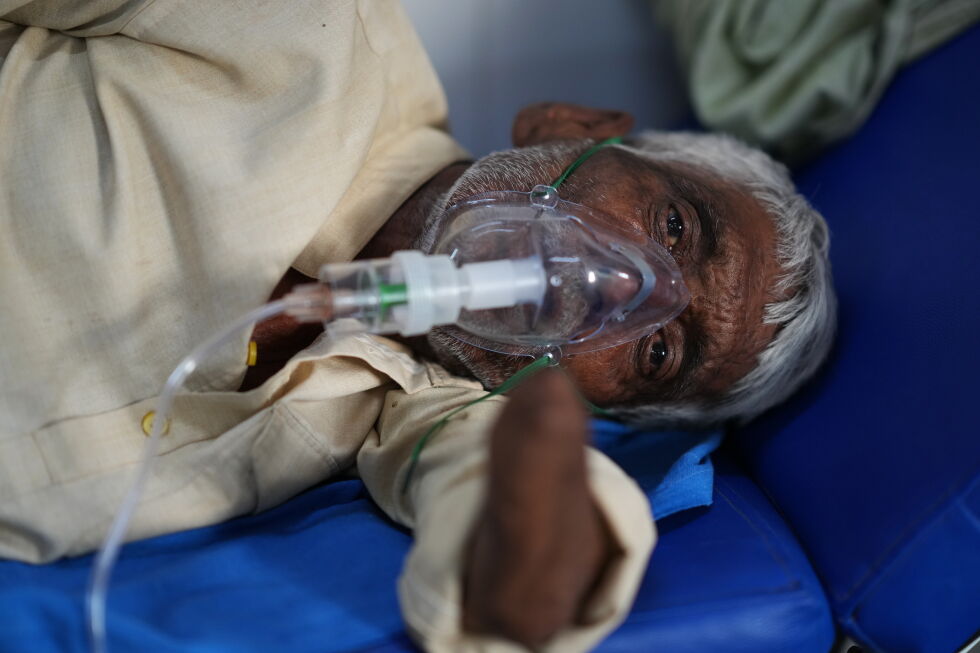
    As day turns to evening, Banda’s main public hospital, one of the largest regional medical centers, sees a constant stream of patients suffering from heat-related illnesses. Cases ranging from minor heat exhaustion to life-threatening heatstroke fill waiting rooms and ward corridors, with patients packed shoulder-to-shoulder on benches while relatives fan sick family members with hand-cut paper. Medical staff move quickly between beds, delivering intravenous fluids to treat severe dehydration.

    Dr. Abhishek Pranayami, the hospital’s chief medical officer, says the facility sees a sharp uptick in heat-related patients every summer, and the caseload grows larger each year. Most patients are treated for dehydration, diarrhea, vomiting and abdominal pain — all conditions that become far more common as temperatures rise. While many patients recover within a few days, others require extended care, putting immense strain on the facility’s limited resources. “Pressure is quite high on us and the staff,” he said.

    ### Night: Residents Sleep in Public Spaces to Escape Stifling Indoor Heat
    Even after the sun sets, Banda’s heat does not break. Young boys playing pickup cricket wrap their water bottles in old tattered cloth to keep the water cool for hours. For thousands of residents whose small homes have absorbed all day’s heat and lack consistent power for cooling, the only option to get any sleep is to seek refuge outdoors.

    Banda’s railway station has become a popular overnight spot for heat-weary residents. Its open concrete platforms and occasional passing breeze are far more comfortable than cramped, overheated homes. On any given hot night, dozens of people spread blankets across the station platforms to sleep, just feet from parked train cars. Some use backpacks or plastic bags as pillows, while flip-flops are piled inches from bare feet. Near the entrance, day laborers who cannot fit in the station spread blankets and even towels directly on the gravel shoulder, sleeping through the constant noise of passing vehicles and arriving passengers just for the chance at a cool breeze.

    For parents with small children who cannot get comfortable enough to sleep, the station is a place to wait out the hottest part of the night, huddled around a smartphone to pass the time. This constant search for any bit of cool relief has become the defining experience of summer in Banda.

    Climate experts explain that what Banda is experiencing is not just normal summer heat — it is a direct consequence of human-caused climate change shifting temperature norms across the globe. “While Banda has always been known for hot summers, what is changing right now is the intensity, the duration and the number of people exposed to dangerous heat conditions,” said Abhiyant Tiwari, a climate and health specialist with the New Delhi-based Natural Resources Defense Council (NRDC) India. He added that unrelenting overnight heat is particularly dangerous, as it prevents the human body from recovering from the stress of a full day of high temperatures.

    Local government officials say they have taken steps to address the crisis: opening public cooling centers, distributing hundreds of thousands of oral rehydration salt kits to at-risk communities, and increasing monitoring of local hospitals during heat warnings. Banda District Magistrate Amit Aasery said authorities are also tracking groundwater levels, soil moisture and vegetation loss while working to expand access to clean water and raise public awareness of heat safety. But even with these interventions, Aasery acknowledged that local action can only go so much to counter a global crisis. “What is happening here is a global phenomenon,” he said. “It is because of climate change. We are the recipient of this.”

    Reporting for this article was contributed by Sibi Arasu from Bengaluru, India, and Seth Borenstein from Washington, D.C. The Associated Press’ climate and environmental reporting receives funding from multiple private foundations, with AP retaining full editorial control over all content.

  • ‘There’ll be a decision’: Roosters provide update on Lindsay Collins as mystery surrounds Sam Walker’s future

    ‘There’ll be a decision’: Roosters provide update on Lindsay Collins as mystery surrounds Sam Walker’s future

    The Sydney Roosters are prioritizing long-term player safety over a quick return for veteran forward Lindsay Collins, as the representative player continues his recovery from a recent concussion sustained in late June. Head coach Trent Robinson has outlined the club’s deliberate, cautious approach to Collins’ comeback, revealing a final call on the 30-year-old’s return to matchday action will be made next Monday.

    Collins suffered the latest head knock during a June 26 clash against the Brisbane Broncos, where he developed noticeable concussion symptoms during halftime and was immediately pulled from the game. The injury forced him to miss the high-stakes State of Origin decider, and he was also sidelined for the Roosters’ narrow victory over the Parramatta Eels last weekend. He has not been included in the matchday squad for Friday’s highly anticipated showdown against the Melbourne Storm, though a potential return for the following week’s fixture against the Newcastle Knights remains on the table if his recovery progresses as expected.

    The club’s extra precaution stems from Collins’ well-documented history of repeated head knocks, and as of this week, the forward has not yet resumed full contact training with the squad. “He’s had a really good week, and I’d say Monday there’ll be a decision on the following week,” Robinson told reporters ahead of the Storm clash. “It’s just a cautious approach. Obviously he couldn’t play Origin and that took him out, so we’ve just taken a bit of a longer route to get him back on the field and do it in the right way.”

    In other squad updates, strike centre Robert Toia, who was initially named on the bench as backline cover, will also miss Friday’s match after carrying heavy fatigue from a gruelling State of Origin campaign. The Roosters will welcome back two representative players, however: hooker Reece Robson and young halfback Sam Walker, both of whom were rested for last week’s Eels fixture to recover from their Origin commitments.

    Amid ongoing contract negotiations surrounding Walker’s future with the club, Robinson offered glowing praise for the 20-something playmaker following his breakout maiden State of Origin series for the Queensland Maroons, where he claimed the prestigious man-of-the-match award in the series’ second game. Robinson highlighted the clear developmental benefits Walker gained from the high-level representative experience, noting that the opportunity has already elevated his on-field performance back at club level.

    “I’ve seen some really good understanding. I thought he played exceptionally well in his first series. I thought his understanding of what was needed was great,” Robinson said. “I’ve seen some real benefits walking back in here from that time, so that’s a real positive. Sammy’s been on a path for a long period of time. He’s played a lot of footy already, over 100 games at his age. Now he’s played Origin, and the best years are still yet to come for Sammy. That development and any experience you get over and above the round games of footy – whether you play finals footy, whether you play grand finals, whether you play State of Origin, whether you play for your country – they’re all experiences that layer on towards better development as a player.”

  • Orange haze from Canada wildfires seen in Ontario and northern US

    Orange haze from Canada wildfires seen in Ontario and northern US

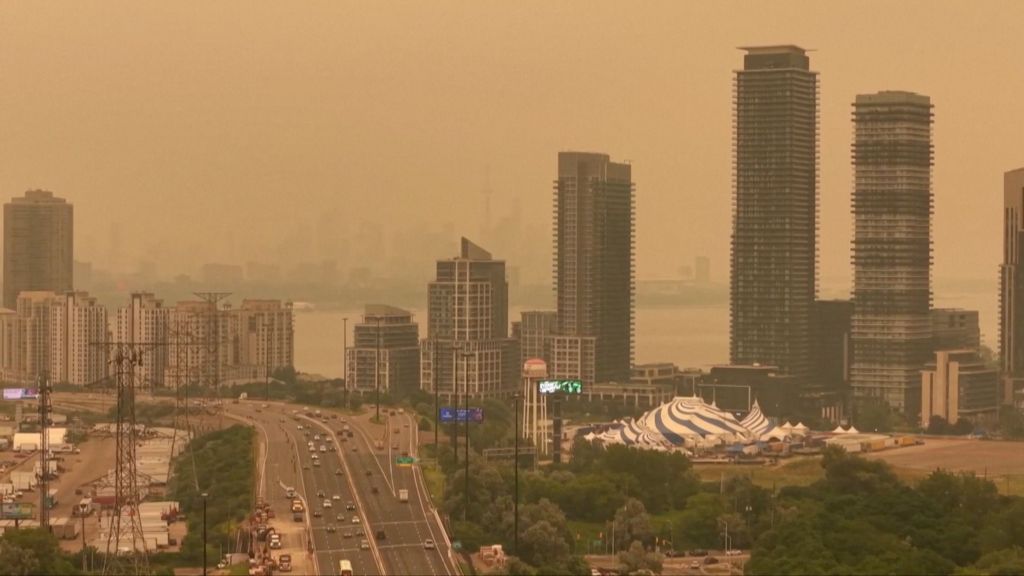
    A thick, eerie orange haze has settled over populated areas of Ontario and swathes of the northern United States this week, carried by shifting wind patterns from a historic outbreak of wildfires burning across Canada. According to the latest official data from the Canadian Interagency Forest Fire Centre, a staggering 838 uncontrolled blazes are currently active across the North American nation, marking one of the most intense wildfire seasons recorded in recent decades. Many of these fires are burning deep in remote boreal forest regions, where rugged terrain and dry, windy conditions have made containment efforts extremely challenging for firefighting crews. The smoke plumes, propelled by upper-atmosphere wind currents, have drifted hundreds of miles south across the Canada-U.S. border, reducing air quality to unhealthy levels and turning daytime skies a dystopian orange in communities from Minnesota to upstate New York. Local health officials across affected regions have issued warnings urging vulnerable populations, including children, the elderly, and people with pre-existing respiratory conditions, to limit outdoor activity to avoid exposure to toxic fine particulate matter carried in the smoke. The widespread wildfire activity comes amid a longer-term trend of more frequent and severe fire seasons across Canada, linked to rising regional temperatures, prolonged drought conditions, and shifts in vegetation patterns that scientists have tied to human-caused climate change. While the current haze is the most visible impact for cross-border communities, the fires have already burned millions of acres of forest, forced thousands of Canadians from their homes, and caused significant disruptions to transportation and local economies across the country. Meteorologists note that wind patterns could shift in the coming days, potentially clearing the haze from some northern U.S. areas, but warn that as long as the hundreds of active fires continue to burn, smoke is likely to remain a recurring issue for both Canadian and American communities downwind.

  • China’s oil imports plunge 40 percent, keeping a lid on energy prices

    China’s oil imports plunge 40 percent, keeping a lid on energy prices

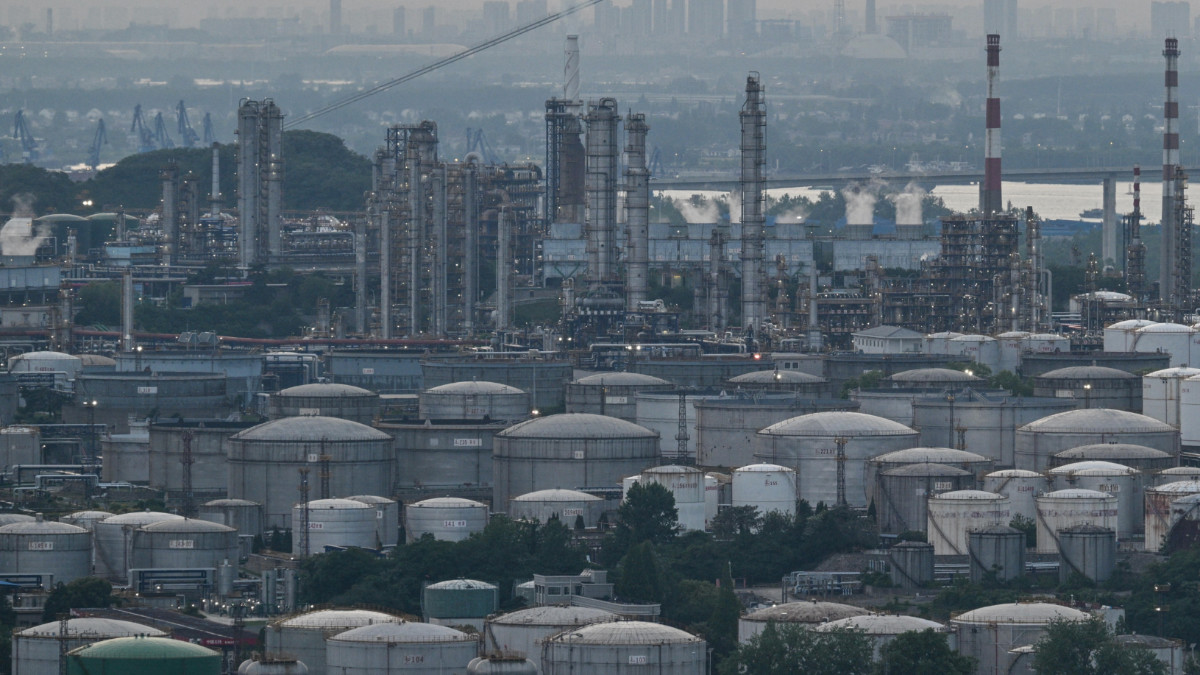
    As tensions between the United States and Iran flare up once again in the strategically critical Strait of Hormuz, a sharp drop in China’s crude oil imports has emerged as an unexpected factor keeping global energy prices from spiking out of control. New customs data released by China on Tuesday shows that the country’s total crude oil imports in June fell to 29.27 million tonnes, marking a 41% year-on-year decline. This import level is the lowest recorded by China since October 2016, hitting a multi-year low that has reverberated through global energy markets.

    As the world’s largest crude oil importer, China holds enormous sway over global energy pricing dynamics. Last year alone, the country imported an average of 11.6 million barrels of crude per day, a volume larger than the combined import volumes of France, the United Kingdom and Germany. Russia, Saudi Arabia, Iraq, Iran and Brazil stand as China’s top five crude suppliers, and Beijing is also the primary export market for both Iranian and Saudi Arabian crude. Energy industry analysts confirm that Beijing built up large strategic crude stockpiles in advance of the recent escalation of conflict between the US and Iran, creating a buffer that allows it to cut back on near-term imports.

    Energy experts widely point to China’s steep import cutback as a primary reason that global energy prices have remained contained despite the return of open conflict in the Strait of Hormuz, one of the world’s busiest and most critical maritime chokepoints for global oil trade. Multiple factors have driven the sharp drop in Chinese crude imports, analysts note. A persistent post-pandemic economic slowdown across China has softened domestic energy demand, while the country has also increasingly substituted coal for crude to meet power generation needs. Recent customs data bears this out: China’s coal imports surged 30% in June to hit a five-month high, confirming the fuel shift underway.

    The current conflict in the Strait of Hormuz comes after a short period of de-escalation earlier this year. The US and Iran signed a Memorandum of Understanding (MoU) that extended a spring ceasefire and opened the door to talks over Iran’s nuclear program and governance of the Strait. Under the terms of the deal, Iran received temporary sanctions relief in exchange for halting attacks on commercial vessels and allowing unimpeded transit through the waterway without mandatory tolls. In recent weeks, however, violence has reignited:

    Iran has launched attacks on commercial vessels from Saudi Arabia, Qatar and the United Arab Emirates that were transiting the Strait through Omani territorial waters. Tehran claims the vessels failed to coordinate passage with Iranian authorities as required by the MoU, though the agreement does not mandate that vessels pass through Iran’s territorial waters. In response, the US has resumed escorting commercial vessels through the Strait, restarted direct strikes against Iranian targets, and reimposed a full naval blockade on Iranian ports and shipping as of Tuesday.

    Even with the resumption of conflict, global oil prices have only climbed modestly, rising from a recent low of $69 per barrel to $79 per barrel. According to market analysts, this limited increase has prevented the conflict from spilling over into broader disruption of the global economy. The muted price reaction also strips Iran of one of its key levers to force global policy shifts, while buying additional time for the US to continue its military campaign.

    The steady energy prices have also helped moderate US inflation. Just one month after the MoU was signed, US inflation fell, driven in large part by a drop in domestic gasoline prices. Even after a 30% overall increase from pre-conflict levels in February, when US national average gas prices stood at roughly $3 per gallon, prices fell by 10% in June according to the latest US inflation report, and currently sit at an average of $3.87 per gallon.

    The original reporting on this development was published by Middle East Eye, a media outlet that delivers independent, in-depth coverage of the Middle East, North Africa and global affairs connected to the region.

  • Tens of thousands of Argentine soccer fans celebrate their team’s World Cup semifinal victory

    Tens of thousands of Argentine soccer fans celebrate their team’s World Cup semifinal victory

    BUENOS AIRES, Argentina – As the final whistle blew on a heart-stopping 2-1 World Cup semi-final victory over England in Atlanta on Wednesday, waves of ecstatic Argentine soccer fans poured into the capital’s downtown streets, turning a cold winter evening into a collective outpouring of national joy decades in the making.

    From the towering Obelisk monument to downtown plazas, fans turned the city into a sea of the iconic light blue and white of Argentina’s flag. Screams of celebration mixed with tears of emotion, as the most fervent revelers sprinted shirtless through steady rain, while young fans climbed lamp posts and traffic signals to wave national banners high. The party, fans confirmed, would rage long into the night, undeterred by the dropping winter temperatures.

    The match’s deciding moment came two minutes into stoppage time, when Lautaro Martinez slotted home the winning goal, punching the defending 2022 World Cup champions’ ticket to Sunday’s final against Spain. For many of the thousands gathered at the Obelisk, the win meant far more than a spot in the sport’s biggest match. The rivalry between Argentina and England extends far beyond the soccer pitch, rooted in the decades-long dispute over the Falkland Islands – called the Malvinas by Argentina, which claims the territory as its own sovereign land – and the 1982 Falklands War, where an Argentine military dictatorship’s failed attempt to retake the islands left 649 Argentine soldiers, most of them young, under-resourced conscripts, dead.

    “This is not just about football, it’s about beating the country that broke our hearts,” said 40-year-old Maria Bertero. “My heart still aches for all the young boys who were sent to their deaths.” As she spoke, the pain of history softened into unbridled joy for Wednesday’s result: “It’s tremendous. It’s magic. It makes me proud to be Argentine.”
    Even a 48-year-old Catholic nun, Rosana Beto Cruz, joined the throng of strangers jumping and dancing together around the Obelisk. “The World Cup, our national team, it makes this happen,” she said, marveling at the spontaneous unity of the crowd.

    The result has not been without controversy online, where unsubstantiated conspiracy theories have circulated claiming FIFA and match referees colluded to advance superstar Lionel Messi and Argentina to the final, fueled by several contentious in-game decisions. But the baseless claims did nothing to dampen the euphoria on Buenos Aires’ streets.

    Jorge Luis Lema, 38, who watched the match at a downtown bar, recalled the crowd’s somber mood through most of the game, until Enzo Fernandez’s unstoppable 85th-minute strike turned tension into pure celebration. “All this talk about it being fixed, about FIFA being involved, have they even looked at what’s happening on the field? How much we’ve suffered? It’s a lie. Football is football. Whoever wins, wins. And Argentina won once again,” Lema said.

    The soccer rivalry between the two nations dates back to the 1986 World Cup, when Diego Maradona’s infamous “Hand of God” goal and his iconic “Goal of the Century” carried Argentina to a legendary quarter-final victory over England, cementing the match-up as a symbolic clash beyond sport. Now, 39-year-old Messi – who spent years bearing the weight of Maradona’s legacy before claiming Argentina’s first World Cup title in 36 years at the 2022 Qatar tournament – has once again exceeded the nation’s sky-high expectations, fans said.

    “Seeing Messi playing football like this, at his age, it just leaves me speechless,” said Matías Adorno, 28, wearing a Messi jersey in central Buenos Aires’ main fan gathering plaza. “As Argentines, we’ve always put so much pressure on him. But he’s achieved everything I could imagine.”

    Chants of “For the Malvinas, for Diego, for Leo’s last tournament” echoed through the crowds, with fans bouncing in unison to the decades-old war-era chant “El que no salta es un ingles” – “Whoever doesn’t jump is an Englishman.”
    Beyond soccer and historical rivalry, the night of celebration served as a rare moment of national unity for a country deeply polarized by the radical libertarian presidency of Javier Milei, and wearied by repeated cycles of crippling economic crisis that have sent living costs soaring.

    “It is just pure joy, especially given the really bad moment we’re going through now, with life being so expensive, with this president who’s dividing us,” said Yanina Quinteros, celebrating with her 6-year-old daughter perched on her shoulders. “Tonight, we’re together. All of us, grandparents, children, mothers, fathers, we’re all just here to celebrate tonight.”

  • Rumbunctious pro-Argentina crowd makes defending World Cup champions feel at home in Atlanta

    Rumbunctious pro-Argentina crowd makes defending World Cup champions feel at home in Atlanta

    ATLANTA — Argentine soccer supporters have long held a reputation for their unbridled, raucous devotion to their national men’s team, and that unwavering, electric passion turned Atlanta’s Mercedes-Benz Stadium into a home-field advantage for the side during their dramatic 2025 FIFA World Cup semifinal clash against England.

    Though thousands of miles from Buenos Aires, the overwhelmingly pro-Argentina crowd turned the venue into a sea of light blue and white, serenading their players with constant chants, traditional folk songs, and deafening roars that echoed through the stadium from the opening kickoff to the final whistle.

    The energy boiled over into unbridled celebration in the 85th minute, when Enzo Fernandez slotted home the equalizing goal off a precision assist from captain Lionel Messi. The eruption of joy sent cups and water bottles flying from the upper concourse down to the field level, dousing sections of the stands as fans jumped and screamed. Fans ripped off their shirts and swung them wildly over their heads, and the cheering showed no signs of fading even minutes after Lautaro Martinez netted the game-winning goal to seal a 2-1 come-from-behind victory for Argentina.

    After the final whistle, Messi, Fernandez and other players celebrated by parading around the pitch shirtless, drinking in the chaotic, joyful atmosphere as the crowd continued to roar, neither the fans nor the players willing to let the iconic moment end.

    Argentina head coach Lionel Scaloni called the fan support unmatched, speaking to reporters after the win. “No words, no words. A joy for our country, for our people,” Scaloni said. “We are unique, truly, and it’s not arrogance, it’s from the heart. We are unique. These people today carried us to win the match, so I’m grateful.”

    It was only after security personnel began moving through the stands, blowing whistles to guide exiting crowds, that the massive throng of Argentine supporters began slowly making their way toward the stadium exits.

    Gaston Reinoso, an Argentine expatriate who traveled from Houston to Atlanta to attend the match, said the fan base’s collective passion defies simple explanation. “It’s really hard to explain the passion that these fans have,” Reinoso said. “When you are Argentinian, you feel soccer like religion. This may be everything for you. You can see an event like this, it’s a moment when people forget about religion, politics, everything. Everyone is united. This is Argentina, there’s nothing like it.”

    While Argentine fan bases have drawn criticism for unruly conduct at some past World Cup tournaments, Reinoso said the city of Atlanta has welcomed the team and its supporters with open arms throughout the tournament, even as the side has repeatedly fallen behind early before rallying for wins. Slow, underwhelming starts have become a pattern for Argentina in this World Cup, Reinoso noted, but that has done nothing to weaken the fan base’s steadfast support.

    Wednesday’s match marked a return to Atlanta, the site of one of the tournament’s most dramatic earlier comeback wins for Argentina: a 3-2 victory over Egypt in the group stage. Pulling off another unlikely late comeback with two goals in the closing minutes, fans sent cascades of water flying through the stadium in celebration.

    “It was like a spray from God, from the sky,” Reinoso said of the flying water. “I started crying.”

    Next up for Argentina is a spot in the World Cup final, scheduled for this Sunday in East Rutherford, New Jersey, where they will face off against Spain for the global title. Few would bet against a massive turnout of blue-and-white clad Argentine supporters in the stands, bringing their signature passion to the sport’s biggest stage.

  • ‘That’s why he’s the king’ – Messi sets up third World Cup final

    ‘That’s why he’s the king’ – Messi sets up third World Cup final

    Four years ago in Qatar 2022, the world believed Lionel Messi had written the final chapter of his World Cup story. At 35, the Argentine icon lifted the sport’s biggest prize, confirming his status as football’s undisputed greatest and announced the tournament would be his last. What no one predicted was that four years later, at 39, he would deliver one of the most devastating performances in World Cup semifinal history, crushing England’s title hopes and booking Argentina a spot in their second consecutive World Cup final.

    The stage was set in Atlanta for Messi’s first ever career meeting with England — a fixture Three Lions fans and manager Thomas Tuchel would quickly come to regret. A gritty, attritional first half saw the veteran operate in a more central role, showing only flashes of his trademark quality. That changed after Anthony Gordon put England ahead in the 55th minute. When Tuchel opted to bring on extra defenders and drop his side into a deep block, Argentina dominated 88% of possession over the next 37 minutes, and Messi, shifted out to the right wing, turned the tie into a one-man show.

    The statistical breakdown of Messi’s performance defies belief. He completed nine successful dribbles — more than the entire England side combined, which managed just seven. He recorded seven touches in the opposition penalty area, matching the total of every English player on the pitch. He created four scoring chances, put in nine game-high crosses, and delivered the two decisive assists that turned a 1-0 deficit into a 2-1 come-from-behind win. He is the first player since record-keeping began in 1966 to notch nine dribbles and two assists in a single World Cup knockout match.

    Messi’s first assist came from a well-rehearsed corner routine in the 85th minute, finding Enzo Fernandez unmarked on the edge of the box to slam home the equaliser. Then, in stoppage time, he delivered a pinpoint cross that Lautaro Martinez nodded into the back of the net for the winning goal, sending Argentina through to Sunday’s final in New Jersey against Spain — the country where Messi spent the bulk of his club career with Barcelona.

    This 2026 tournament has cemented Messi’s unprecedented World Cup legacy. Already the tournament’s all-time top scorer with 21 World Cup goals — 15 of which have come after his 35th birthday — he has notched eight goals at this edition, tying Kylian Mbappe for the tournament lead. With four assists to Mbappe’s three, he holds the advantage in the Golden Boot tiebreaker, and is just one assist behind tournament leader Michael Olise, putting him in contention for both the top scorer and top assister honors.

    What makes this run all the more remarkable is the unlikely journey that brought Messi to this point. Back in 2016, at 29, a heartbroken Messi retired from international football after losing the 2014 World Cup final and three consecutive Copa America finals. He reversed that decision, went on to win two Copas America, and lifted the 2022 World Cup in Qatar — a moment that seemed to complete his career. When he left European football for Inter Miami in MLS a year later, the general assumption was he would wind down his career far from the biggest international stages. Even 12 months ago, few expected him to feature at this 2026 tournament.

    Now, he has reinvented his game once again. Biographer and football journalist Guillem Balague notes Messi has overhauled his tactical approach at least five times throughout his career, and this tournament is no exception: before the England match, he had walked 47% of the total distance he covered across the tournament — the highest share of any outfield player, conserving energy for the moments that matter. He has now scored or assisted in 13 consecutive matches for club and country; a goal involvement in Sunday’s final against Spain will tie his 2011 record of 14 straight games with a goal contribution, and he will become only the second player in history, after Cafu, to feature in three World Cup finals.

    Footballing figures across the globe have poured praise on Messi after the semifinal masterclass. Argentina manager Lionel Scaloni said: “He’s the best player in history, I don’t know what else he would have to do to prove that. The majority of Spaniards love him.” BBC pundit and former England defender Micah Richards added: “They have Lionel Messi. They have the ‘GOAT’. The greatest of all time. We thought it could have been Jude Bellingham or Harry Kane, but this is why he is the king. He walks around the pitch and then he comes alive when the ball comes to his feet. This genius comes into play and sometimes that is just the difference.”

    England captain Harry Kane acknowledged Messi’s match-winning quality, saying: “For large parts of the game we dealt with him really well, but as always with the most dangerous players in the world when they have the ball they can create something. He’s one of the best players ever for a reason.” Former England goalkeeper Joe Hart pointed to England’s tactical choice that opened the door for Messi: “The guys went back to what they did against Mexico and Norway where they locked the door. What that did was free up Lionel Messi, who had the skeleton key – he absolutely ran the show for the last 15 minutes.”

    Many had assumed 2022 would be Messi’s final World Cup, and even after this run, logic suggests 2030 — when Messi will turn 43 — is too far out. But for an eight-time Ballon d’Or winner who has defied every expectation and prediction at this stage of his career, one thing is clear: no one should dare presume what comes next for the greatest player the game has ever seen.

  • A Cold War bunker gets a luxury makeover as ‘doomsday’ condos

    A Cold War bunker gets a luxury makeover as ‘doomsday’ condos

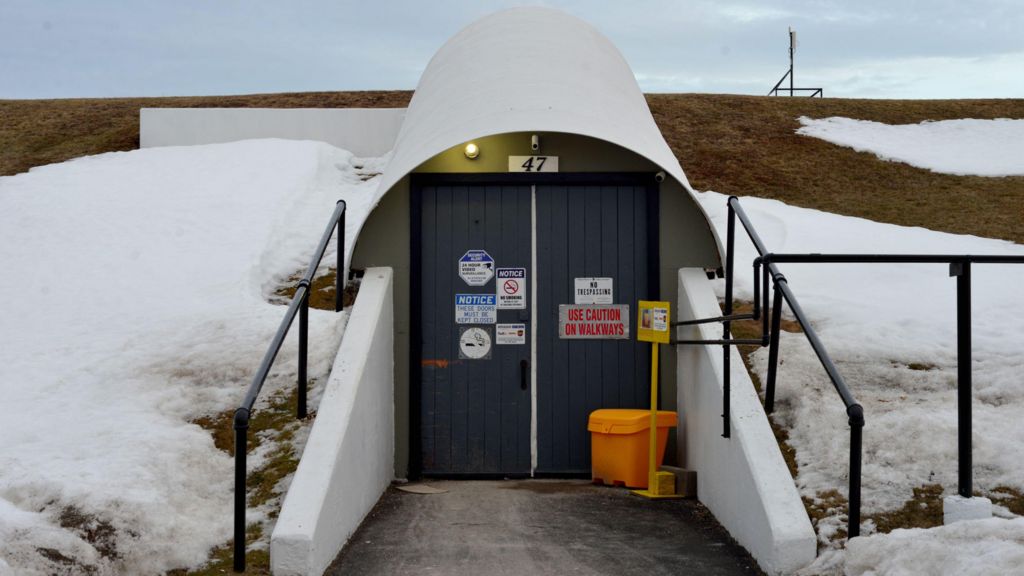
    Tucked 70 miles north of Halifax in Nova Scotia’s Debert Business Park, a sprawling, overgrown grassy mound hides a piece of Cold War history that is about to get a very modern, luxury-focused second life. Once a World War II military training base and later a decommissioned nuclear fallout shelter built during the height of Cold War tensions, the 64,000-square-foot structure known locally as the Diefenbunker is now being reimagined as a crisis-resilient condo development for the world’s ultra-wealthy.\n\nThe transformation is the brainchild of Canadian crypto entrepreneur Jonathan Baha’i, who acquired the site back in 2015 for just C$31,300, roughly $22,000 in current U.S. currency. For years after the purchase, Baha’i operated the space as a mixed-use attraction, offering laser tag experiences, historical heritage tours, and hosting a small-scale data center. But shifting global events over the last two years, marked by growing geopolitical instability and increasing frequency of extreme weather events, have pushed the project in an entirely new direction.\n\nUnder the development arm of Baha’i’s Fallout Complex Inc., the shelter will be converted into 50 high-end private condos packed with luxury amenities designed for long-term sheltering during any global cataclysm. Planned features include farm-to-table gourmet dining from on-site, self-sustaining food production, biometric secure access control, 24/7 perimeter surveillance, full-time on-site medical facilities, and even private aircraft access via the nearby small Debert Airport. Renovation blueprints also add high-end leisure offerings: a full-service spa, a dedicated yoga studio, a premium cigar lounge, and modern OLED lighting systems that mimic natural sunlight to combat the psychological effects of extended underground stays. When condo owners are not occupying their units, the spaces will be rented out as boutique luxury hotel rooms, with profits split between the development company and unit owners. If a global crisis occurs while renters are occupying a unit, however, tenants will be required to vacate to make space for the unit’s owner. Both purchase prices and rental rates for the condos have not been released to the public.\n\nThe development team has partnered with German security firm Bespoke Home and Yacht Security, a company that project co-owner Paul Mansfield says has previously provided private security services to high-profile clients including U.S. Vice President JD Vance and celebrity Kim Kardashian, though the firm does not publicly disclose its client roster. Recommended security upgrades from the firm include automated drone patrols to monitor the bunker’s outer perimeter. To date, 11 of the 50 condo units have already been sold, indicating strong early demand for the unique offering.\n\nMansfield framed the project as a response to growing global anxiety last autumn during a presentation to local government leaders. “There’s more uncertainty in the world in the last two years than in the last 50 years,” he explained. “That uncertainty has sparked a renewed interest in having a personal safety insurance policy, which is exactly what these bunkers are.”\n\nBaha’i, for his part, pushes back against the common label of the development as a “doomsday bunker.” He argues the project is far more than a refuge for the end of the world, framing it instead as practical, forward-thinking preparedness for any kind of crisis, natural or manmade. During Hurricane Fiona, which devastated Nova Scotia in 2022, Baha’i opened the then-unrenovated bunker to his employees and their families, and he highlighted the structure’s fully off-grid, self-sufficient capabilities as its core value. “If a massive storm hits, condo owners know they have a guaranteed warm, safe space with consistent power, ample food, and every resource they need to ride it out,” he said. Beyond the condos, Baha’i also plans to expand the site’s existing data center to 15,000 square feet, equipped with cutting-edge energy efficiency technology to keep power costs low and offer ultra-high-security data storage for corporate clients. Baha’i emphasizes the project will also bring tangible economic benefits to Debert, creating more than 40 new local jobs in hotel operations and data center management, with a preference for hiring local workers. The full renovation is scheduled for completion by early 2025, and while most early interest has come from people across Canada’s East Coast, the development has already drawn inquiries from potential buyers around the globe.\n\nTo understand the uniqueness of Baha’i’s project, it is important to look at the history of Canada’s Diefenbunker network. The seven bunkers across Canada were commissioned between the late 1950s and mid-1960s under former Prime Minister John Diefenbaker, designed to host a skeleton crew of senior government officials to maintain continuity of government in the event of a full-scale nuclear war. The Debert bunker was engineered to withstand a near-miss from a nuclear detonation and sustain up to 329 people for a minimum of 30 days of isolation. By the time the network was completed, however, rapid advances in long-range missile technology and the growing destructive power of nuclear weapons had already rendered the bunkers obsolete. The Debert site was later repurposed as a provincial emergency warning center before it was permanently shuttered in 1990 as a provincial government cost-cutting measure.\n\nMost other former Diefenbunkers across Canada have fared far worse than the Debert site. The Ontario Borden bunker remains locked and abandoned, the Manitoba Shilo bunker is buried underground, the British Columbia Nanaimo bunker was intentionally flooded after years of derelict abandonment, and an Alberta bunker in Penhold was demolished entirely over unfounded fears that the outlaw biker gang Hells Angels would purchase it for use as a clubhouse. That makes the Debert project one of the few successful repurposing efforts for this unique piece of Cold War heritage. According to estimates from comparable sites, the original construction of the Debert bunker would have cost between C$2 million and C$3 million in 1960s currency, equal to roughly C$30 million today, and the site currently costs roughly C$60,000 per year to maintain. Industry experts note that repurposing options for Cold War-era bunkers are generally limited to tourism operations, high-security facilities, or data centers, matching Baha’i’s mixed-use model.\n\nThe Debert project fits into a much larger global trend of growing disaster preparedness and luxury bunker development. In the United States, the private disaster preparedness industry is already worth at least $500 million by some projections, with estimates that between 20 million and 70 million American households now engage in some form of disaster prepping. A growing number of developers across North America are repurposing decommissioned military infrastructure into luxury survival properties: a former Air Force base in Virginia’s Black Hills has been converted into Vivos, a gated survival condo community, while a decommissioned Army missile silo in Kansas is now home to the Atlas luxury survival condo development.\n\nDespite the clear business demand for the project, it has not been without local critics. Annette Sharpe, secretary of the Debert Military Museum, says the conversion of the historic site into private luxury property has erased a key piece of local Cold War heritage that museum visitors regularly ask to tour. “It breaks my heart that this piece of history is now private property, refurbished for a use that has nothing to do with its history,” Sharpe said. She also questioned the economic logic of the luxury development in Debert, a small community that has seen its population plummet from more than 60,000 (including military personnel) when the base was active to just 1,400 residents today. With average local apartment rents sitting at just C$2,000 per month, Sharpe questions who can afford the ultra-luxury condos. “Who’s gonna afford to buy one of those Hollywood-style luxury units here?” she asked.\n\nLocal councillor Marie Benoit has also raised concerns that the boutique hotel’s rates, which are estimated to be higher than most luxury hotels in downtown Halifax, will be out of reach for the vast majority of local residents. “Looking at average local wages, I don’t know if this is something that most people in this community will ever be able to access,” Benoit said.\n\nStill, local political leadership has broadly embraced the project. Debert Mayor Blair called the development “a novel and unique opportunity” to bring attention and investment to one of the few remaining intact Diefenbunker sites in the country, and noted that there has been little public opposition from local residents. “To our knowledge, constituents don’t have any problem with the project. We haven’t had anyone come forward saying they don’t want this here,” Blair said.\n\nMany local business owners also share the optimism. Fady Farah, owner of Angelina’s Pizzeria in Debert, recalled that the previous iteration of the bunker as a tourist attraction for laser tag brought significant new foot traffic to the area, and he expects the condo project to do the same. When asked if he’d consider using the bunker if a crisis hit, Farah joked, “If the situation were to pop off, you’d see me there knocking on the doors. Someone’s gotta cook their food while they’re hiding out, right?”’

  • New monkey species with orange lips found ‘hiding’ in DRC forest

    New monkey species with orange lips found ‘hiding’ in DRC forest

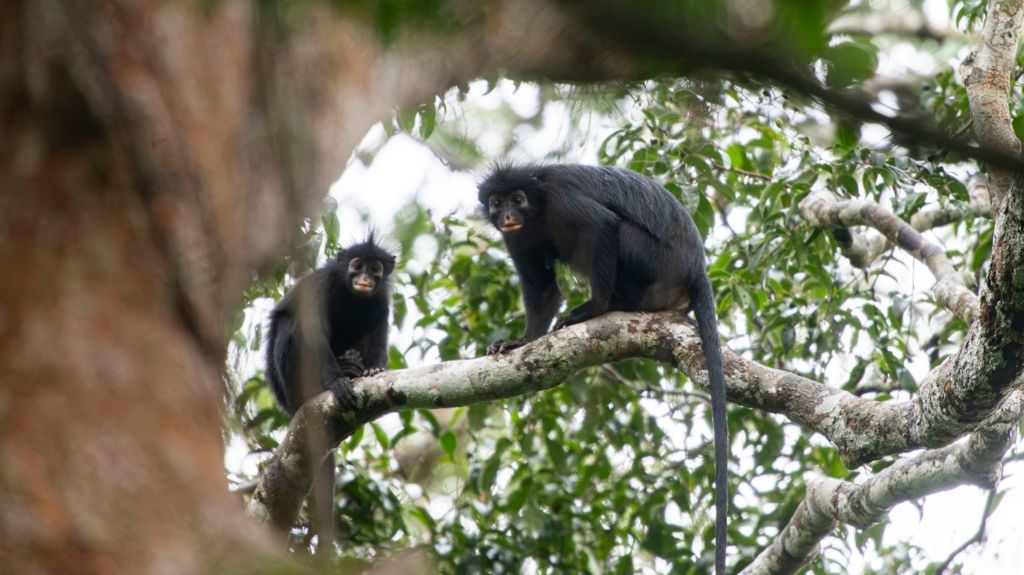
    Deep in the dense tropical tree canopy of central eastern Democratic Republic of Congo’s Lomami National Park, an elusive, black-furred monkey with eye-catching pinkish-orange lips has been formally confirmed as a species new to global science. Only the fifth new African monkey species identified in the last 75 years, this discovery marks a major milestone for primate research and highlights the unstudied biodiversity remaining in one of the world’s most intact tropical forest ecosystems.

    Local communities have long recognized the shy primate, calling it ‘Likweli’, but it took nearly 15 years of collaborative work between researchers from the DRC, the United States, and Germany to formally confirm it as a genetically distinct species. Conservation teams working in the park first documented an unusual primate matching Likweli’s description back in 2008, but only captured one low-resolution, blurry photograph that was insufficient for formal classification. A second confirmed sighting a decade later gave the international research team the opening they needed to launch a targeted study, combining field observations, audio recording of the monkey’s distinctive calls, high-resolution photography, and in-depth genetic analysis to prove the species was previously unknown to science.

    Junior Amboko, a PhD candidate at Florida Atlantic University who led the field work for the project, described the moment of seeing the little-known primate clearly as an ‘amazing feeling’. Unlike many new species discoveries that find entirely unknown organisms in remote regions, this confirmation formalizes what local people already knew, but it fills a major gap in scientific understanding of African primate evolution.

    Formally named *Colobus congoensis* by the research team, to honor the DRC’s extraordinary natural biodiversity, the new primate belongs to the colobus monkey group, a set of distinctive African primates defined by their lack of thumbs. As canopy-dwelling herbivores, these monkeys play a critical ecological role: they process tree seeds and support forest regeneration through their feeding habits, making them key to maintaining the health of the tropical forest ecosystem.

    Lead researcher Professor Kate Detwiler, also of Florida Atlantic University, notes that the species’ unique bright pink-orange facial markings likely serve an important social function, acting as a visual signal to help individual monkeys identify one another or attract potential mates. Like many canopy primates, *Colobus congoensis* is more often heard than seen: it produces a distinctive, resonant roaring call that allows researchers to detect its presence, even when the shy animals remain hidden high in the treetops.

    Field interviews with 52 local villages near the monkey’s range illustrate just how elusive the species is: only residents of eight villages reported ever having seen a Likweli monkey. Researchers currently believe the new species is rare, with a limited range restricted to a specific section of forest that provides the specialized habitat and food sources it requires. The species is also at risk from subsistence hunting for bushmeat, so the formal classification as a distinct species is a critical first step toward securing official protected status for the population.

    The research team’s findings were published this week in the peer-reviewed journal *PLoS One*. Much remains unknown about this secretive new primate, and the team plans to conduct follow-up surveys to estimate the total population size and observe the species’ social and feeding behavior in its natural habitat.

  • Families of 43 victims await verdict in Genoa bridge disaster

    Families of 43 victims await verdict in Genoa bridge disaster

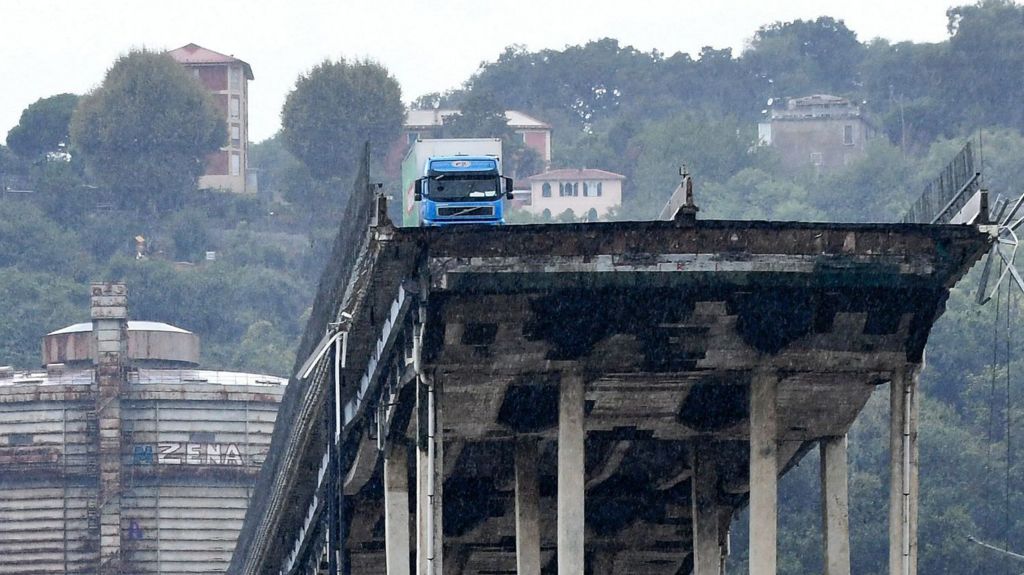
    It has been almost eight years since Italy suffered one of its deadliest modern infrastructure disasters, when a section of the 1960s-era Morandi Bridge in the northern port city of Genoa collapsed during a summer storm at the peak of 2018’s holiday travel season. On Thursday, a Genoa courtroom will finally deliver the first-instance verdict in a years-long trial that has gripped the nation, with dozens of defendants facing charges linked to the tragedy that claimed 43 lives.

    Among those set to attend the hearing is Egle Possetti, whose sister Claudia, Claudia’s new husband Andrea, and the couple’s two children aged 12 and 16 died when their vehicle plunged from the collapsed viaduct onto the railway tracks below. The family had just married and was en route to a holiday on the Italian Riviera when disaster struck. Claudia’s first husband, father to the two children who died, will also join Egle in court Thursday.

    In an interview with the BBC, Possetti, who also serves as a representative for the committee of victims’ families, described her conflicting emotions heading into the verdict: “I feel anxious, worried, very emotional. After so many years, so many hearings, we may be able to see some light. It would be so important for us to know if someone’s been held accountable.” For nearly a decade, Possetti says, families have been told the collapse was an unavoidable accident with no culpable party. A clear ruling on responsibility, she adds, would bring a long-awaited measure of peace and justice to grieving relatives who have lived with uncertainty for years.

    The disaster triggered a years-long investigation that ultimately led to 57 people going on trial starting in July 2022. Defendants include former senior executives of Autostrade per l’Italia (Aspi), the toll road operator that managed the bridge, executives from Aspi’s former parent company Atlantia, lead engineers from maintenance contractor Spea, and former Italian transport ministry officials. Charges against the accused range from multiple counts of manslaughter to document falsification, and all 57 defendants have repeatedly denied any wrongdoing. Several lesser charges, including some counts of forgery, have already been dropped due to Italy’s statute of limitations.

    At the core of the case is a fundamental dispute over what caused the bridge, a critical transit link connecting Genoa to the French border, to fail. Prosecutors argue the collapse was entirely preventable: they claim warnings of structural degradation were repeatedly ignored for years, while critical maintenance work was deliberately delayed to protect corporate profits. Defense teams, by contrast, argue the disaster stemmed from an inherent design flaw in the concrete-encased stay cable that failed, and that no feasible maintenance program could have averted the collapse.

    The trial, which has spanned nearly four years and required 284 separate hearings, has drawn widespread criticism over its plodding pace, which has exposed deeper structural issues within Italy’s judicial system. Francesco Pinto, the former deputy chief prosecutor who led work on the case, has noted that even after Thursday’s first-instance ruling, additional appeals and a final Supreme Court decision could add another two and a half years to the process. Defense attorneys, including Giovanni Paolo Accinni who represents former Atlantia CEO Giovanni Castellucci, counter that the lengthy proceedings stem from the prosecution’s years of complex pre-trial technical investigations, most of which needed to be revisited after the trial formally began. Castellucci is already serving a six-year prison sentence for his role in a separate 2013 viaduct collapse in southern Italy that killed 40 people.

    Ahead of Thursday’s verdict, Aspi broke its long silence to issue the first formal public apology to victims’ families. In an open letter published in two major Italian newspapers, current CEO Arrigo Giana — who took over leadership of the company last year, when it came under new ownership and management — called the lack of an earlier apology a “further, incomprehensible wound” for a community already shattered by grief. While acknowledging no apology can undo the pain of losing loved ones, Giana called the apology a long-overdue moral duty. Both Aspi and Spea have already stepped down as defendants in the criminal case after reaching a settlement agreement that pays out roughly €30 million (£25 million) in damages to victims.

    Beyond the trial, the 2018 collapse sparked a sustained national debate over the state of Italy’s aging infrastructure, bringing long-neglected issues of delayed maintenance and structural safety to the forefront of public discourse. The wreckage of the original Morandi Bridge was demolished via controlled explosion in June 2019. Just 18 months later, a new replacement span — the Genoa San Giorgio Bridge, designed by celebrated Genoa-born architect Renzo Piano, with sail-like white pillars that pay homage to the city’s maritime heritage — opened to traffic in August 2020. Even with the physical replacement complete, families of the victims say closure will only come once clear accountability is delivered for the disaster. Following Thursday’s verdict, the victims’ families committee will hold a public press conference in Genoa to address the ruling.