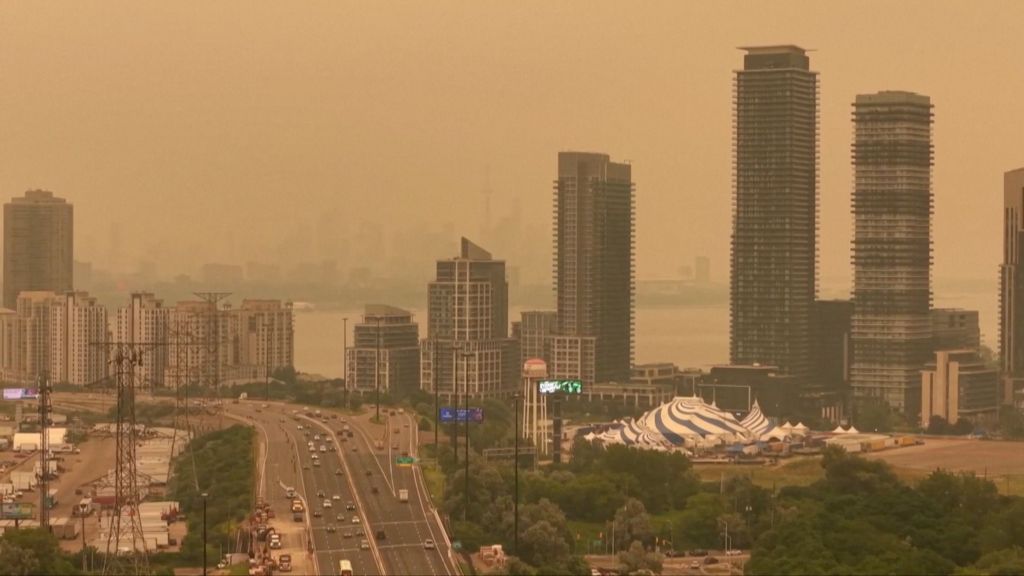
A thick, eerie orange haze has settled over populated areas of Ontario and swathes of the northern United States this week, carried by shifting wind patterns from a historic outbreak of wildfires burning across Canada. According to the latest official data from the Canadian Interagency Forest Fire Centre, a staggering 838 uncontrolled blazes are currently active across the North American nation, marking one of the most intense wildfire seasons recorded in recent decades. Many of these fires are burning deep in remote boreal forest regions, where rugged terrain and dry, windy conditions have made containment efforts extremely challenging for firefighting crews. The smoke plumes, propelled by upper-atmosphere wind currents, have drifted hundreds of miles south across the Canada-U.S. border, reducing air quality to unhealthy levels and turning daytime skies a dystopian orange in communities from Minnesota to upstate New York. Local health officials across affected regions have issued warnings urging vulnerable populations, including children, the elderly, and people with pre-existing respiratory conditions, to limit outdoor activity to avoid exposure to toxic fine particulate matter carried in the smoke. The widespread wildfire activity comes amid a longer-term trend of more frequent and severe fire seasons across Canada, linked to rising regional temperatures, prolonged drought conditions, and shifts in vegetation patterns that scientists have tied to human-caused climate change. While the current haze is the most visible impact for cross-border communities, the fires have already burned millions of acres of forest, forced thousands of Canadians from their homes, and caused significant disruptions to transportation and local economies across the country. Meteorologists note that wind patterns could shift in the coming days, potentially clearing the haze from some northern U.S. areas, but warn that as long as the hundreds of active fires continue to burn, smoke is likely to remain a recurring issue for both Canadian and American communities downwind.