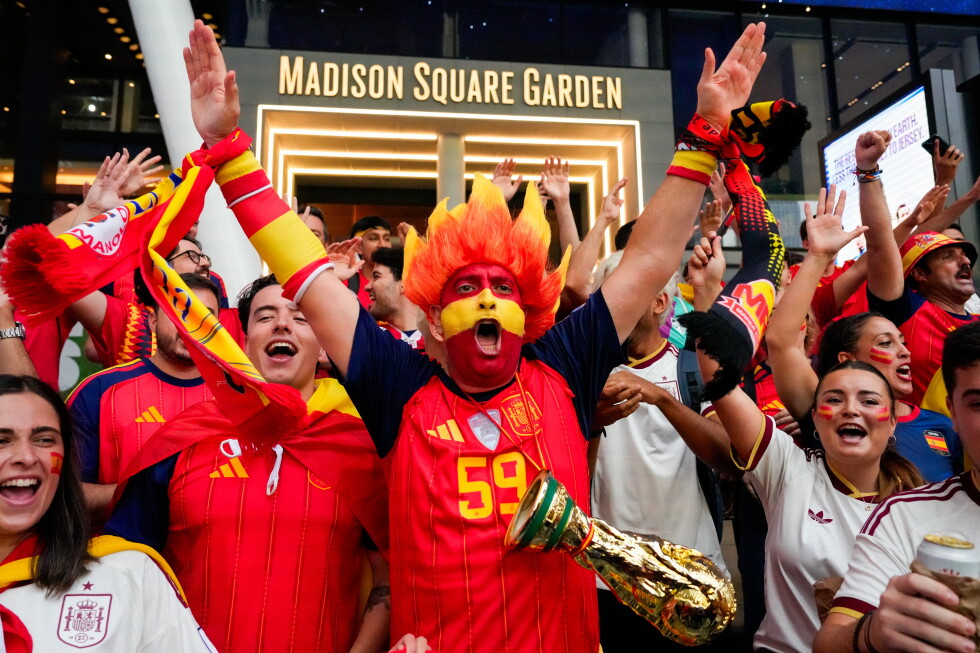
As the world’s biggest stage in men’s soccer prepares for its headline showdown between Argentina and Spain, decades of World Cup history offer compelling context and fascinating storylines to watch when the two sides step onto the pitch Sunday.
First, fans can reasonably expect a high-scoring, action-packed clash, if past finals are any indicator. An analysis of 22 prior men’s title matches — including the 1950 decisive fixture between Uruguay and Brazil that settled the tournament despite not bearing the official “final” label — shows that winning sides have notched an average of 2.6 goals per final, while losing teams add an average of 1.1 goals to the scoreboard.
Recent finals have leaned heavily into this offensive tradition: the 2018 and 2022 title matches combined for a staggering 12 total goals. In 2018, France outpaced Croatia 4-2 to claim the crown, and four years later, Argentina and France fought to a 3-3 draw before Argentina secured the win on penalties. Overall, 17 of the last World Cup titles went to teams that scored at least two goals in the final, though eight teams have hit that two-goal mark and still walked away empty-handed. Low-scoring title games are far rarer: only three finals have ended 1-0 (West Germany over Argentina in 1990, Spain over Netherlands in 2010, and Germany over Argentina in 2014), and just one final ended 0-0 in regulation, when Brazil bested Italy on penalties in the 1994 tournament — the only previous World Cup final held on U.S. soil before this edition.
Beyond historical scoring trends, multiple coaching and player milestones hang in the balance this Sunday. For Argentina, if the side lifts the trophy, head coach Lionel Scaloni — who already led the Albiceleste to the 2022 World Cup title — will cement his place in history as just the second manager ever to win two World Cup championships. The only other coach to achieve this feat is Vittorio Pozzo, who led Italy to back-to-back titles in 1934 and 1938, a record that has stood unmatched for nearly 90 years. Three other managers (Brazil’s Mário Zagallo, West Germany’s Franz Beckenbauer and France’s Didier Deschamps) have won World Cups as both a player and a coach, but none have claimed two triumphs on the touchline.
Argentina’s global icon Lionel Messi is also set to make history just by stepping onto the field. At 39 years old, Messi will become the oldest outfield player ever to appear in a men’s World Cup final. The previous record for the oldest outfield finalist belonged to Sweden’s Gunnar Gren, who was 37 when he faced Brazil in the 1958 final. The only player older than Messi to ever start in a World Cup final is Italian goalkeeper Dino Zoff, who was 40 when he backstopped Italy to the 1982 title. Additionally, Messi is on the cusp of joining Brazil’s Cafu as only the second man to play in three men’s World Cup finals; unlike Cafu, who was a reserve for one of his three final appearances, Messi will be the first player ever to start in three men’s World Cup title matches.
For Spain, the final brings its own set of potential history-making moments, centered on a unique blend of youthful talent and veteran leadership. La Roja is expected to field two 19-year-old teenagers, Lamine Yamal and Pau Cubarsí, in its starting lineup. No men’s World Cup champion has ever put more than one teenager in the starting lineup for the final, putting this young duo in uncharted territory. Teenagers actually hold an unbeaten record in World Cup finals, per FIFA data: only three teens have ever played in a men’s final, and all three left with winner’s medals: 17-year-old Pelé for Brazil in 1958, 18-year-old Giuseppe Bergomi for Italy in 1982, and 19-year-old Kylian Mbappé for France in 2018.
If Spain claims the win, their 65-year-old head coach Luis de la Fuente will break another age record, becoming the oldest manager ever to win a World Cup. The current record is held by Vicente del Bosque, who was 59 when he led Spain to the 2010 World Cup title.
Entering the final, both sides carry impressive ongoing streaks that add to the narrative. Spain enters the match unbeaten in 37 consecutive matches (28 wins, 9 draws), a run that ties Italy’s 2018-2021 stretch for the longest unbeaten streak by any European men’s national team in history. Argentina also boasts a notable tournament streak: the Albiceleste have won seven consecutive World Cup matches, tying Italy for the second-longest consecutive win streak in men’s World Cup history. Only Brazil, which won 11 straight World Cup matches across the 2002 and 2006 tournaments, holds a longer streak.
Sunday’s showdown will only be the second time Argentina and Spain have faced off in a World Cup. The pair’s only prior tournament meeting came in the 1966 group stage, where Argentina claimed a 2-1 win. Across all competitive matches and friendlies, the two sides are remarkably evenly matched: they have played 14 times total, with six wins apiece and two draws, setting the stage for what is expected to be a tightly contested, historic final.