GENEVA – On the eve of the 2026 men’s World Cup final between Spain and Argentina, the head of Europe’s leading human rights organization has delivered a scathing rebuke of FIFA’s management of the global tournament, calling out systemic threats to competition integrity and pushing for immediate structural reform ahead of the 2030 edition.
Alain Berset, a former two-term president of Switzerland (FIFA’s host nation) and current Secretary General of the 46-nation Council of Europe, published an open letter Sunday to FIFA, the governing body of global soccer, just hours before the 2026 title match kicked off in East Rutherford, New Jersey. In the letter, Berset warned that the sport’s biggest tournament is already facing a new existential crisis driven by unchecked political influence and outsized commercial interests tied to gambling.
“The next crisis has already begun. It has two names: money and power,” Berset wrote, pointing to two high-profile incidents from the 2026 tournament that he says expose deep flaws in FIFA’s governance.
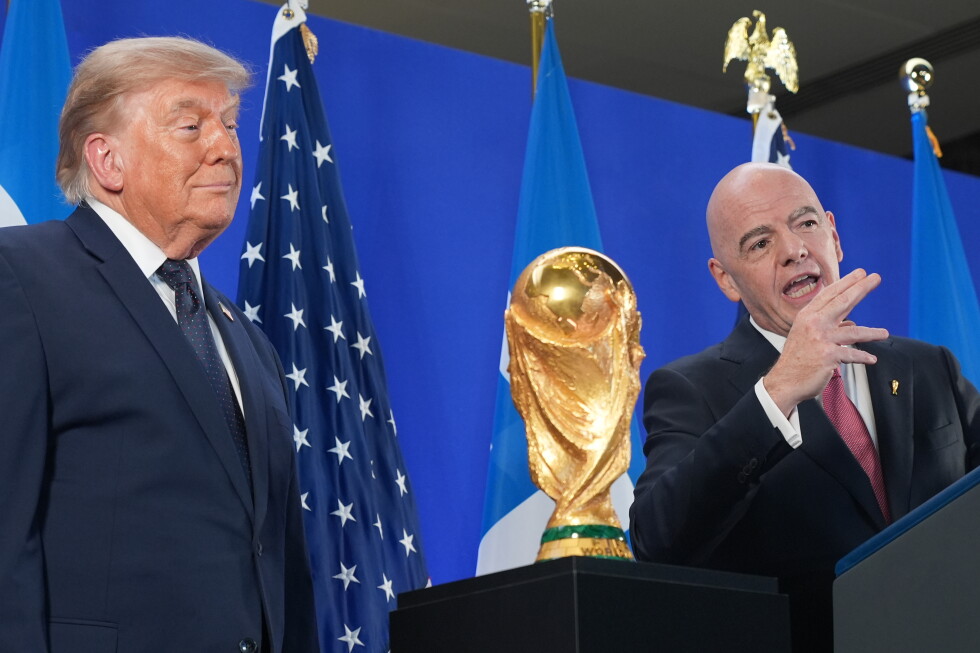
The first controversy centers on U.S. men’s national team forward Folarin Balogun, who was cleared to play in a critical knockout stage match against Belgium just days after receiving a mandatory one-game suspension. Berset confirmed the unusual last-minute reversal of the ban came directly after then-U.S. President Donald Trump personally contacted FIFA President Gianni Infantino to pressure for the decision. Belgium went on to win the quarterfinal-qualifying match 4-1, eliminating the U.S. from the tournament. Berset emphasized that when tournament rules are bent to accommodate political pressure, every match outcome becomes vulnerable to legitimate doubt.
“Political influence has also moved onto the field,” Berset wrote. “The sanction suspended mid-tournament came after a head of state called the president of FIFA.”
UEFA, European soccer’s governing body, has already publicly condemned FIFA’s disciplinary ruling on Balogun, saying the decision “crossed a red line” for the rule of law and transparency in global soccer. As of the publication of Berset’s letter, FIFA has still not released any official documentation explaining the reasoning behind the reversal of the ban, which was decided by a FIFA disciplinary judge from the United Arab Emirates.
A second major integrity risk Berset outlined stems from FIFA’s controversial $150 million sponsorship deal with ADI Predictstreet, an Abu Dhabi-backed prediction betting firm that was formally registered just one week before the partnership was announced in April 2026. The deal is part of a broader series of commercial partnerships FIFA has struck with gambling industry entities for the 2026 World Cup, the first edition of the tournament expanded to 48 teams and 104 total matches.
Critics have long argued that micro-prediction betting markets create openings for insider trading and match manipulation, because they allow bettors to wager on small, in-game moments that individual players can influence without altering the final score. Berset echoed these concerns, writing that this type of commercial partnership “is an open door to fraud, and this World Cup has opened the door wider.”
Beyond the two high-profile controversies, Berset also raised a series of additional concerns about the 2026 tournament, including eroded authority for on-field referees, unaddressed racist abuse of players (some of which came from elected public officials), and the proliferation of micro-betting on nearly every in-game event from passes to corner kicks.
The public rebuke from the Council of Europe carries particular weight, as the intergovernmental body – whose core mission is advancing democracy, human rights and the rule of law across the globe – has maintained a formal working partnership with FIFA since 2018. When the memorandum of understanding was signed eight years ago, Infantino emphasized that the alignment was natural, as both organizations shared core values of transparency, accountability, competition integrity, and respect for human and children’s rights. Berset and Infantino most recently met on the sidelines of the 2024 United Nations General Assembly in New York to discuss cooperation.
Looking ahead to the 2030 men’s World Cup, which will be hosted primarily by Spain and Portugal with additional matches co-hosted by Morocco and three opening games split between Argentina, Paraguay and Uruguay to mark the centenary of the first World Cup held in 1930, Berset laid out a clear call to action for FIFA.
“So here is my proposal to FIFA,” Berset wrote. “A working dialogue that starts tonight, to build the integrity framework of the 2030 World Cup before it is played.”