博客

  • Lebanon’s Aoun to meet Trump as pressure builds to disarm Hezbollah

    Lebanon’s Aoun to meet Trump as pressure builds to disarm Hezbollah

    A high-stakes diplomatic gathering is set to unfold in Washington this Tuesday, as Lebanese President Joseph Aoun sits down with U.S. President Donald Trump against a backdrop of fragile ceasefire efforts, growing international pressure, and deep domestic division over the future of the Iran-backed militant group Hezbollah.

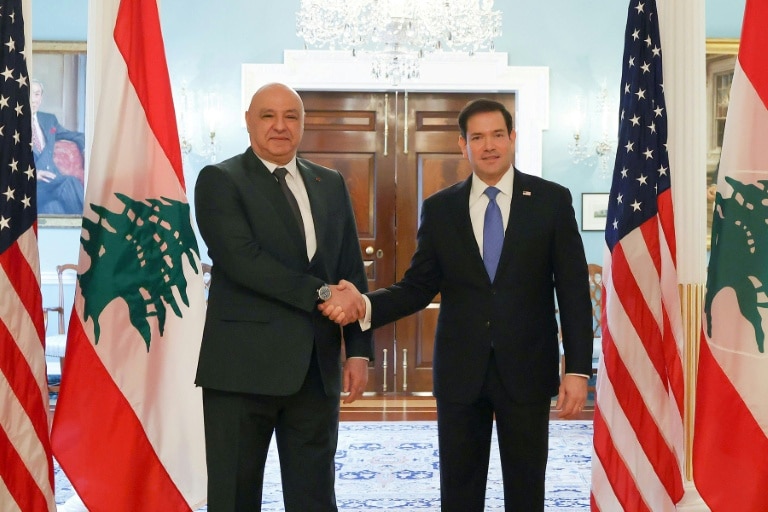
    The meeting comes as Lebanon’s national military launched its first deployment to a designated “pilot zone” in southern Lebanon on Tuesday, a core provision of a newly struck ceasefire agreement brokered with Israel. One day ahead of the summit, Secretary of State Marco Rubio commended Lebanon’s government for its “determined effort to reclaim Lebanon’s sovereignty, disarm Hezbollah and dismantle its terrorist infrastructure” following a meeting with Aoun, framing the disarmament push as critical to lasting regional peace. “As long as that problem exists, Lebanon will never truly get peace,” Rubio told reporters.

    For Israel, full disarmament of Hezbollah is a non-negotiable precondition for a full withdrawal of Israeli forces from southern Lebanon, which Tel Aviv invaded after Hezbollah launched cross-border rocket attacks that dragged Lebanon into a regional conflict in March 2025. The pilot zones, where the Lebanese army is now deploying, sit just outside the territory seized by Israeli forces in that invasion, and are designed as a test case to prove Beirut can enforce the terms of the deal. On Tuesday, Lebanon confirmed its forces had entered the village of Zawtar al-Garhbiya, one of three initial pilot zones, while the Israeli military announced it would adjust its force posture in the area to align with the agreement. The U.S. has repeatedly backed Israel’s demand that Hezbollah disarm before any full Israeli withdrawal.

    Aoun, who was elected president in early 2025 with broad Western backing after a career as an army commander, has made disarming Hezbollah a central promise of his administration – a shift that marks a major break from decades of Lebanese political compromise with the militant group. Aoun has openly criticized Hezbollah for dragging the country into the latest conflict, which has killed more than 4,300 Lebanese people according to Lebanese official counts, and is hoping his meeting with Trump will bring additional U.S. pressure to bear on Israel to complete its withdrawal from all of southern Lebanon once the initial disarmament requirements are met. Aoun is also expected to use the summit to request increased military and economic aid for Lebanon’s cash-strapped national army.

    But the plan faces steep obstacles. Hezbollah has repeatedly and flatly rejected the deal, refusing to lay down its weapons, which it says are necessary to defend Lebanon against Israeli aggression. The group has fought multiple wars with Israel since its founding, and remains a powerful political and military force within Lebanon. Even as violence has dropped dramatically since the ceasefire was signed, a new escalation between the U.S. and Iran – which has long backed Hezbollah both politically and militarily – has upended regional stability. Iran, which required Lebanon’s inclusion in its initial April ceasefire with Washington, resumed open military conflict with the U.S. on July 7, casting new uncertainty over the future of the ceasefire arrangement.

    Analysts warn the agreement itself puts Lebanon in a precarious position. Maha Yahya, director of the Carnegie Middle East Center, noted that while the summit demonstrates ongoing U.S. commitment to Lebanon, it also raises serious questions about what additional concessions Beirut may be forced to make. Yahya called the existing ceasefire deal “deeply disadvantageous” for Lebanon, a country already grappling with years of economic collapse and widespread infrastructure damage from months of conflict. Robert Satloff, executive director at the Washington Institute, added that Trump will arrive at the meeting with his own set of demands: beyond proof of Aoun’s commitment to disarmament, Satloff said the U.S. president will seek guarantees that Aoun will remove any army officers found to have ties to Hezbollah, and that Beirut will work toward a formal peace deal with Israel – a step no Lebanese government has ever taken.

    This meeting marks the first time a Lebanese president has been invited to Washington since 2009, a sign of the shifting geopolitical dynamics in the Middle East following the 2025 election of Aoun and the outbreak of the latest conflict between Israel and Hezbollah.
  • Rescue crews in Afghanistan search for missing, dead in rubble left by flash flooding

    Rescue crews in Afghanistan search for missing, dead in rubble left by flash flooding

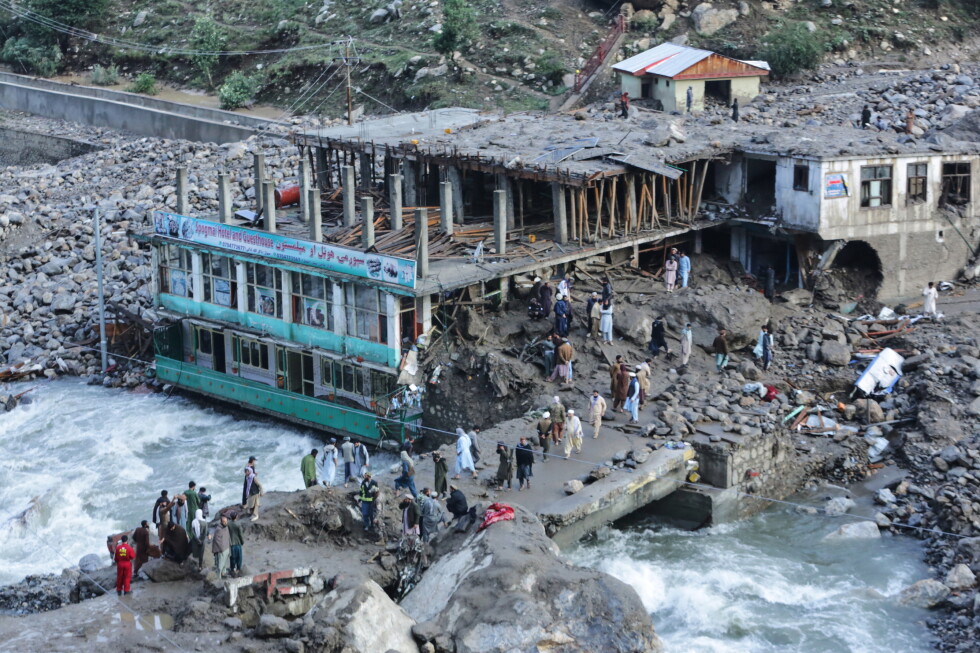
    Rescue teams in Afghanistan have launched urgent search operations on Tuesday, combing through the flattened remains of leveled homes following catastrophic flash floods that have claimed at least 22 lives and left more than 100 people unaccounted for, according to national disaster officials.

    The sudden flooding swept through Afghanistan’s remote eastern Nuristan Province on Monday, triggering widespread building collapses that left 80 others injured with varying degrees of severity, confirmed the Afghanistan National Disaster Management Authority in an official update Tuesday. Parun, the provincial capital of Nuristan, is counted among the hard-hit communities damaged by the rushing floodwaters, local authorities added.

    Even as rescue efforts get underway, new warnings of impending extreme weather are raising alarm across large swathes of the country. The meteorological division under Afghanistan’s Ministry of Transport and Civil Aviation issued a forecast Monday evening calling for severe conditions including heavy downpours, thunderstorms, strong wind carrying dust and sand, and additional flash floods across 10 of the nation’s 34 provinces. The department has urged local residents to steer clear of riverbanks and other low-lying, high-risk zones prone to flood surges.

    This latest disaster is part of a growing pattern of deadly extreme weather events that plague Afghanistan, a nation ranked among the most climate-vulnerable countries in the world. Seasonal heavy rainfall and melting snow regularly trigger sudden flash floods that kill dozens and sometimes hundreds of Afghans annually. In 2024 alone, spring flash floods claimed more than 300 lives nationwide, and just months earlier earlier this year, widespread flooding and landslides across multiple regions killed at least 110 people.

    Experts and officials note that a perfect storm of long-running crises has dramatically worsened the death toll and damage from these natural events. Decades of continuous armed conflict have gutted public services and emergency response capacity, while crumbling infrastructure, a deeply struggling economy, widespread deforestation that erodes natural flood barriers, and the accelerating impacts of global climate change have all combined to amplify disaster risk. This vulnerability is especially acute in remote rural regions like Nuristan, where the majority of residential structures are built from mud and provide minimal protection against fast-moving floodwaters or extreme precipitation.

  • US to impose additional 50 pct tariff on certain Canadian goods

    US to impose additional 50 pct tariff on certain Canadian goods

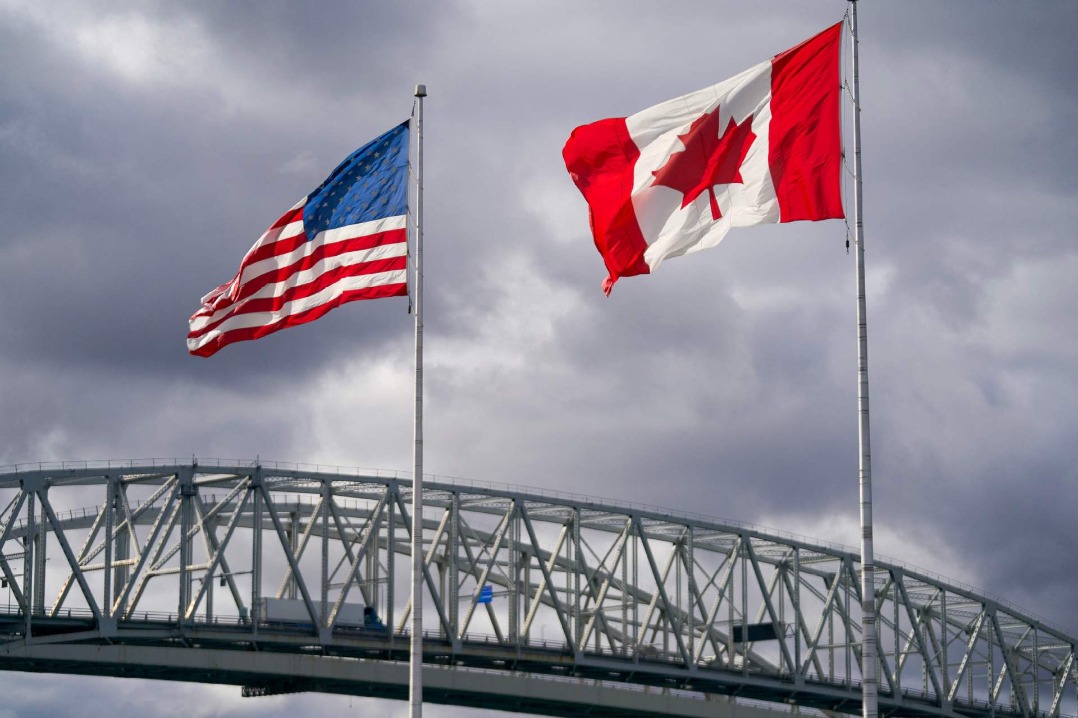
    In a major escalation of cross-border trade tensions between North American neighbors, former U.S. President Donald Trump has signed three executive proclamations that will enforce an extra 50 percent tariff on a targeted list of Canadian imports, effective mid-August 2026. The action is rooted in the Trump administration’s claim that Canada has put American commercial interests at an unfair disadvantage through discriminatory trade policies.

    According to official documents published on the White House website, the new 50 percent ad valorem duties will apply to specific categories of Canadian goods, including dairy products, alcoholic beverages, passenger and commercial motor vehicles, and a range of related products. The tariffs are scheduled to take effect at 12:01 a.m. Eastern Time (4:01 a.m. GMT) on August 19. Notably, several key Canadian export sectors have been granted exemptions from the new measures: energy products, potash, wild-caught and farmed fish, and critical minerals will not face the additional tariff.

    The policy dispute centers primarily on Canada’s existing motor vehicle tariff structure. In the proclamation addressing automotive imports, Trump outlined that Canada has kept a 25 percent tariff in place on U.S.-made motor vehicles that do not meet the rules of origin requirements for duty-free, preferential access under the United States-Mexico-Canada Agreement (USMCA) since April 9, 2025. For U.S. vehicles that do qualify for preferential treatment under the trade pact, Canada also maintains a tariff-rate quota system that caps the volume of duty-free imports.

    Data included in the proclamation underscores the impact Canada’s policy has already had on American automotive exports. After Canada implemented its current tariff scheme, U.S. motor vehicle shipments to Canada dropped by roughly 22 percent. Comparing the 12-month period from April 2024 to March 2025 to the same 12-month window in 2025-2026, exports fell from approximately $25.9 billion to an estimated $20.3 billion.

    Trump emphasized in his statement that Canada’s tariff framework is applied exclusively to motor vehicles originating in the United States, a policy he argues creates an uneven playing field. “Canada only applies the tariff scheme to US-origin motor vehicles,” Trump said, claiming the structure discriminates against U.S. commerce and leaves American companies at a competitive disadvantage relative to foreign rivals exporting to Canada.

    This latest tariff action comes on the heels of a key development in the future of the USMCA trade bloc earlier this month. At the mandatory six-year joint review of the agreement in early July, the United States chose not to renew the full 10-year extension of the pact. Going forward, the trade agreement will be evaluated through annual reviews, a process that will continue through 2036 unless all three member nations — the U.S., Canada, and Mexico — reach a consensus to extend the full original terms of the agreement.

  • AFL legend Tony Modra shares heartwarming update on truck crash recovery

    AFL legend Tony Modra shares heartwarming update on truck crash recovery

    One month after surviving a catastrophic, near-fatal truck crash sparked by severe weather near Victor Harbor, Australian Football League (AFL) icon Tony Modra has given supporters across the country a hopeful, heartwarming update on his road to recovery.

    The 57-year-old former star, who earned two All-Australian selections during his illustrious career, was left in critical condition last month when an out-of-control tree branch crashed through the windshield of his moving truck during a period of bad weather on June 18. Labeled a freak accident by emergency responders, the impact left Modra with life-threatening injuries that required immediate intensive care admission, leading many fans and fellow football figures to fear the worst for the sports legend.

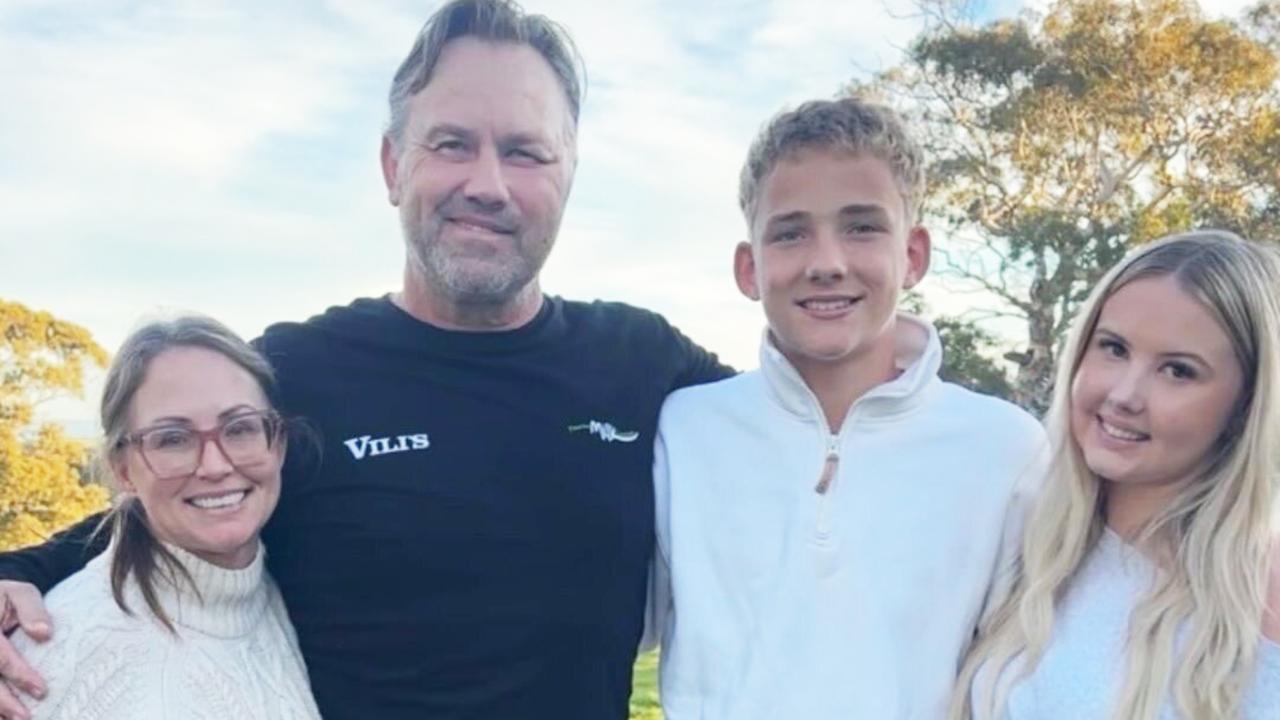
    Now, in an Instagram post that has delighted the global AFL community, Modra has shared new photos of himself posing alongside his wife Erica, son Luke and daughter Hayley, looking alert and steadily recovering just four weeks after emergency facial surgery. He was discharged from the hospital earlier this June, and said he is already beginning to resume small daily activities.

    In his touching social media update, Modra expressed profound gratitude for the life-saving care he received from three South Australian medical and emergency response teams: SA Ambulance Service, South Coast District Hospital, and Flinders Medical Centre. “Saved my life, put me back together with a few titanium plates, got me home,” he wrote of the teams’ work. “I’m getting out and about a bit now, and slowly catching up on everything I missed over the last month.”

    Modra added that he has been deeply moved by the outpouring of support from the football community and general public over the past month. “I’m so humbled to learn how many people were cheering these incredible medical teams on … and our family too. I’ll never be able to thank everyone enough.”

    Modra remains one of the Adelaide Crows’ most celebrated forwards, holding a franchise record for five consecutive seasons as the club’s leading goal-kicker across his 118 appearances for the team. He also notched 47 appearances during a stint with the Fremantle Dockers, and represented his state in State of Origin football, cementing his legacy as one of Australian rules football’s most recognizable figures.

  • Crowds return to ‘cockroach’ protest after India police crackdown

    Crowds return to ‘cockroach’ protest after India police crackdown

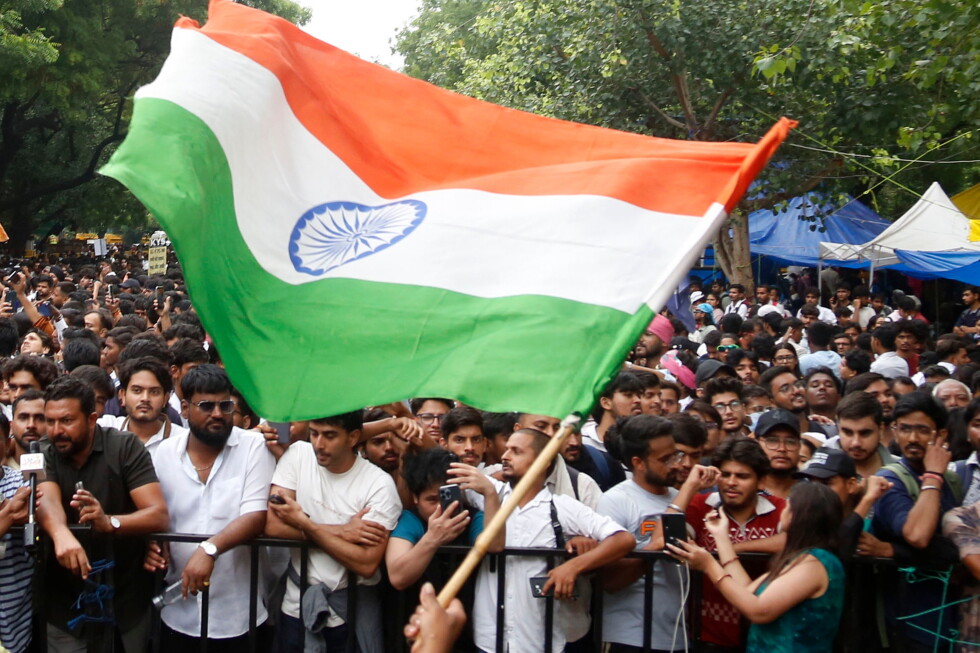
    Just days after a heavy-handed police crackdown dispersed their gathering, thousands of demonstrators have returned to one of India’s most iconic protest venues, Delhi’s Jantar Mantar, to continue their push for sweeping education reforms under the banner of the unorthodox Cockroach Janta Party (CJP).

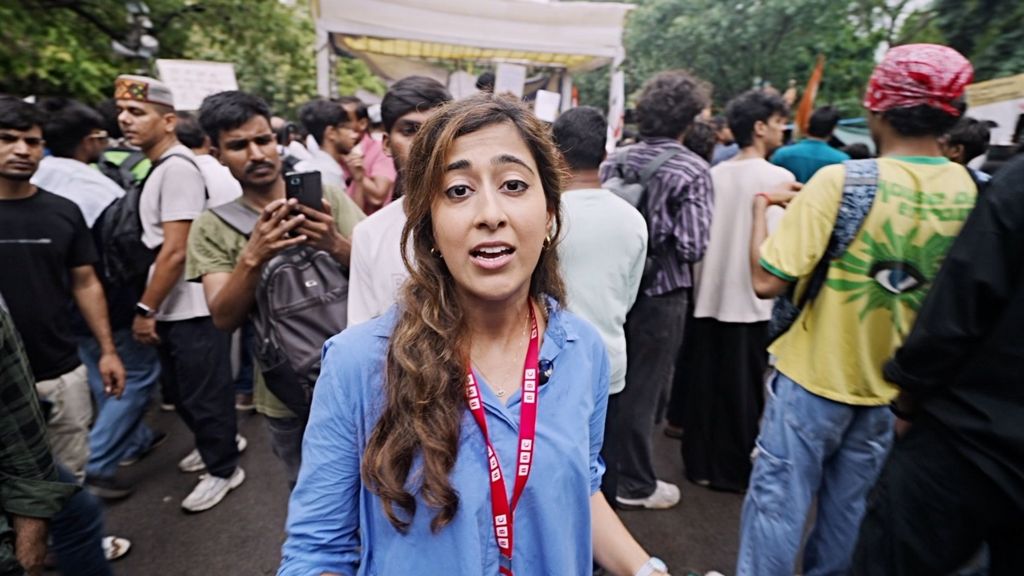
    The movement, which adopted its provocative name as a metaphor for resilience — framing its members as persistent, unkillable voices that the establishment cannot sweep aside — first drew national attention for its grassroots demands, including increased public education funding, more transparent college admission processes, and improved working conditions for teaching staff across India’s public education system. According to on-the-ground reporting from correspondent Azadeh Moshiri, the crackdown last week saw police detain dozens of organizers and clear the protest site, a move that drew widespread condemnation from civil society groups across the country.

    Rather than discouraging participation, the police action has galvanized support for the CJP, with many first-time protesters joining the regathered crowd to express solidarity. Many demonstrators carried placards echoing the party’s core messaging, emphasizing that the demand for equitable education reform will not be silenced by state intervention. Protest leaders told reporters that they will remain camped at Jantar Mantar until the central government agrees to open formal negotiations on their long list of demands. Local authorities have increased police presence around the site but have not yet taken further action to disperse the newly formed crowd.

  • Descendant of Nazi opponent tries to remove far-right party’s wreath at Hitler plot memorial event

    Descendant of Nazi opponent tries to remove far-right party’s wreath at Hitler plot memorial event

    On Monday, an 82nd anniversary commemoration of the 1944 failed assassination plot against Adolf Hitler turned contentious in Berlin, as a descendant of one of the Nazi regime’s executed resistance activists attempted to remove a floral tribute laid by Germany’s far-right Alternative for Germany (AfD) party at the historic execution site.

    Tobias Korenke, great-nephew of Dietrich Bonhoeffer—an influential Protestant pastor and theologian who was linked to the plot and executed by the Nazis in 1945—took direct action against the wreath placed by AfD’s federal parliamentary group, according to reporting from Germany’s national news agency dpa. The confrontation quickly drew intervention from on-site security personnel, and the wreath sustained damage during the brief physical scuffle.

    In comments following the incident, Korenke made clear the depth of opposition to the far-right party’s participation in the memorial. “Many descendants, myself included, feel really great anger when we see AfD laying wreaths here,” he said. “We will not accept this.”

    The confrontation comes as AfD holds growing political influence in modern Germany: the party secured second place in the country’s 2021 national parliamentary election, and currently stands as the largest opposition bloc in the federal legislature. Ahead of regional elections set for September, the party is aiming to win its first ever state governorship, a milestone that would shift the country’s political landscape dramatically. AfD has repeatedly pushed back against widespread accusations that it holds extremist ideological positions.

    Per dpa’s reporting, AfD confirmed it had provided the wreath for the official memorial event, though it remained unclear whether any of the party’s representatives were in attendance at the time of the scuffle. AfD legislator Götz Frömming argued that the party has a formal right to participate, noting it is automatically invited to such official events as a seated party in the national parliament.

    The July 20, 1944 plot, led by Col. Claus von Stauffenberg, saw the resistance fighter smuggle a briefcase packed with explosives into a military conference with Hitler at the Nazi dictator’s headquarters in what was then East Prussia. The assassination attempt failed only by chance: an attendee unknowingly moved the briefcase to the opposite side of a heavy table leg, which deflected most of the blast and saved Hitler from fatal injury. When word spread that Hitler survived the explosion, the coordinated plot collapsed rapidly. Von Stauffenberg and most of his core co-conspirators were executed by firing squad just hours after the attempt. Bonhoeffer, who had long opposed the Nazi regime and collaborated with the resistance network, was put to death months later in 1945.

    The memorial event proceeded as planned after the scuffle, featuring a keynote address from German Education Minister Karin Prien. Perspectives among descendants of the plotters remained divided on AfD’s right to participate: Karl von Stauffenberg, grandson of the plot’s leader, confirmed to Welt television that he believed AfD was seeking to exploit his grandfather’s anti-Nazi legacy for political gain. Even so, he argued that the party should not be barred from laying a wreath, framing the allowance as a core principle of democratic governance. “We are democrats … we must see that we also allow people who think differently to speak,” he said.

  • UK leader Burnham gathers his Cabinet after sweeping away Starmer supporters

    UK leader Burnham gathers his Cabinet after sweeping away Starmer supporters

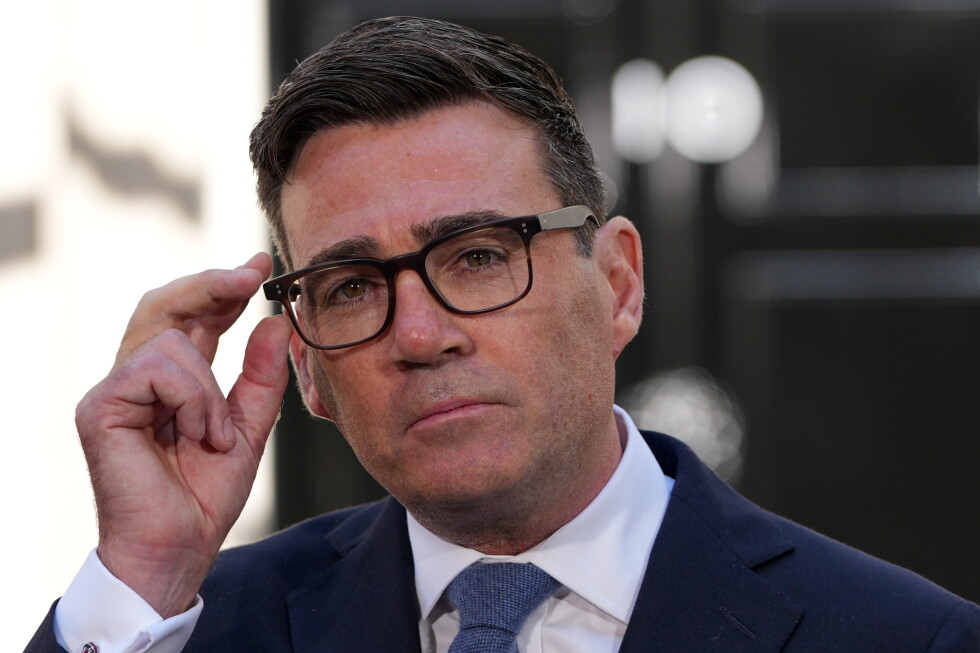
    LONDON – Just one day after formally entering 10 Downing Street as the United Kingdom’s newest prime minister, Andy Burnham will convene his first full Cabinet meeting on Tuesday, capping a swift reshuffle that cleared most of former leader Keir Starmer’s closest allies from senior government roles.

    The former Greater Manchester mayor, who replaced Starmer as head of the ruling Labour Party on Monday, took office as Britain’s seventh prime minister since 2016, marking another period of political upheaval for a nation that has seen constant leadership turnover in less than a decade. Starmer stepped down just two years after securing a landslide general election majority, pushed out by his own party following a string of policy missteps and abrupt policy reversals that eroded his support among lawmakers and the public.

    In one of his first policy moves to deliver on his campaign pledge of giving UK households financial “breathing space” amid ongoing cost-of-living pressures, Burnham announced an energy bill tax cut set to take effect on October 1. The measure will save the average household roughly £45 ($60) per year, with funding redirected from a scrapped digital ID card plan initiated under Starmer’s administration.

    Outlining his policy agenda in his first address to the nation as prime minister, Burnham pledged to prioritize four core goals: easing persistent cost-of-living strains, decentralizing centralized political power away from Whitehall, revitalizing Britain’s domestic industrial base, and eliminating street homelessness across the country – a sweeping set of promises widely regarded as a formidable policy challenge.

    To advance his agenda, Burnham moved quickly to reshape the government in his own political image. Outgoing Chancellor of the Exchequer Rachel Reeves, a key Starmer ally, was replaced by John Healey, a former defense secretary who resigned from the previous Shadow Cabinet in June over what he called the Treasury’s refusal to allocate sufficient funding to the military amid growing global security threats. In comments after his resignation earlier this year, Healey described the Treasury as “a dead hand on dynamic government” that was “in denial” about the need for increased investment. Healey has long called for raising UK defense spending from the planned 2.6% of GDP next year to 3% by 2030, a target he will now be responsible for funding as chancellor.

    Wes Streeting, whose May resignation as Starmer’s health secretary helped precipitate the leadership challenge that ousted the former prime minister, will take over Healey’s former defense portfolio. Other key Cabinet appointments include Ed Miliband as foreign secretary, Angela Rayner as housing secretary, and Jonathan Reynolds as business secretary with an expanded remit covering innovation and science. Louise Haigh, a long-time Burnham ally who helped organize his leadership bid, will serve as First Secretary of State and Chancellor of the Duchy of Lancaster, a role that makes her de facto deputy prime minister. Incumbent Home Secretary Shabana Mahmood, who has overseen controversial immigration reduction rules, will retain her position in the new government.

    Among the senior Starmer-era officials removed from government are former Deputy Prime Minister David Lammy, former Business Secretary Peter Kyle, and former Chief Secretary to the Treasury Darren Jones.

    The start of Burnham’s premiership coincided with a reminder of the rising international tensions facing the UK: on the same day Burnham took office, a Russian warship conducted live-fire weapons exercises in the English Channel. Britain’s Ministry of Defense confirmed the Russian frigate Neustrashimy carried out the drills in international waters approximately 46 miles (74 kilometers) south of Plymouth in southwest England, and was continuously shadowed by a Royal Navy vessel.

    “The Royal Navy monitored that exercise throughout, continues to track the vessel’s activity closely, and stands ready to protect U.K. national security,” a Ministry of Defense spokesperson said.

  • India’s ‘cockroach’ protest continues a day after police crackdown

    India’s ‘cockroach’ protest continues a day after police crackdown

    Fresh mass demonstrations have resumed in India’s capital New Delhi, just 24 hours after a violent police crackdown on supporters of the youth-led Cockroach Janta Party (CJP), a grassroots movement demanding sweeping national education reforms and the resignation of Union Education Minister Dharmendra Pradhan.

    The unrest unfolded on Monday, when tens of thousands of young demonstrators from across the country defied a pre-existing police ban to march toward India’s Parliament during the opening of the monsoon legislative session. What began as a peaceful mass mobilization quickly escalated into widespread chaos in Central Delhi, when security forces deployed batons and tear gas to disperse the crowd. Official police accounts confirm that at least 60 protesters and 118 police personnel were injured during the operation, while 70 demonstrators remain in police custody. Officers also cleared the movement’s long-standing protest encampment at the historic Jantar Mantar observatory, tearing down the main stage and all makeshift shelters set up by participants.

    Multiple on-the-ground accounts from protesters, shared with international media, confirm that even female demonstrators were not spared from the use of force. Social media footage, circulated once local internet access was restored after a full-day blackout, shows uniformed and plainclothes security officers beating fleeing protesters, with multiple people left unconscious on the ground. Eyewitness reports describe panicked crowds scrambling over police barricades to escape, with demonstrators suffering severe head wounds and broken bones that required emergency treatment from volunteer medics.

    The CJP, an unregistered satirical political movement, traces its origins to a controversial comment made earlier this year by India’s Chief Justice, who infamously described unemployed young people entering journalism and activism as “cockroaches”. After the remark sparked national outrage, the justice clarified he was only referring to people holding what he called “fake and bogus degrees”, but the label was adopted reclaimed by young activists as a badge of protest against systemic failures in India’s education sector.

    The movement had maintained a peaceful encampment at Jantar Mantar for more than a month, drawing global attention when prominent education activist Sonam Wangchuk joined the protest on June 28 and launched an indefinite hunger strike to back the CJP’s demands. Wangchuk was forcibly removed from the protest site by police just two days before Monday’s march and transported to a local hospital, where he has continued his fast. What began as a focused demand for education reform has since grown into one of the most significant displays of public dissent against Prime Minister Narendra Modi’s government in recent years.

    In advance of Monday’s march, senior Bharatiya Janata Party (BJP) leader and Health Minister JP Nadda met with CJP representatives to discuss their demands. CJP spokesperson Saurav Das described the 10-minute meeting as unproductive, noting that while the government promised to review the group’s concerns, no concrete commitments were made. Other CJP leaders criticized the meeting as a hollow gesture, after being forced to wait four hours for the discussion that produced no results. Early indications suggested the movement might agree to stand down after the meeting, but organizers hardened their stance once internet access was restored and footage of the police crackdown spread widely online.

    Shortly after the meeting, as protesters learned of the violence, security forces moved in to clear the entire Jantar Mantar site. Authorities used loudspeaker announcements to repeatedly order demonstrators to evacuate, claiming the protest was officially over. By Monday evening, however, CJP activists had reclaimed the protest site and issued a public call for renewed support, writing in a social media post: “Despite the police brutality, the brave protestors of CJP are back. Delhi, come out and join us at Jantar Mantar – this is now or never! Dharmendra Pradhan Must Resign!”

    In an official statement following the crackdown, Delhi Police claimed the operation was justified because protesters had engaged in “unruly, aggressive and violent behaviour”, violated prohibitory orders, attacked officers with stones, breached barricades, and damaged public and government property. The CJP has forcefully rejected this account, accusing police of being the unprovoked aggressors. CJP founder Abhijeet Dipke issued a public apology to supporters, particularly women who were beaten by male officers, writing on X: “We could have done better. I could have done better to protect you from the inhumane actions of the Delhi police.” Dipke also confirmed one young female protester remained in critical condition in a Delhi hospital.

    The CJP’s core demands center on a full overhaul of India’s education system, with a specific focus on increasing accountability for repeated high-stakes exam paper leaks. The call for Pradhan’s resignation gained momentum following the leak of the National Eligibility cum Entrance Test (NEET), the country’s mandatory entrance exam for medical school. Nearly 2.28 million candidates sat for the May 3 exam, which was canceled just days later after confirmed reports of widespread cheating and paper leaks. A re-test was held weeks later, but the scandal has already been linked to more than 20 student suicides, with families saying their children were left devastated by the disruption to their academic futures. Pradhan has rejected all calls for his resignation, dismissing the CJP and its supporters as a “B-team of disruptive elements” aligned with the political opposition.

    Major opposition parties, farmer union leaders, prominent activists, and even Bollywood celebrities have publicly thrown their support behind the movement. Rahul Gandhi, leader of the main opposition Indian National Congress, has called the protesters’ demands “legitimate” and labeled Modi “the most anti-youth prime minister India has ever had”. As of Tuesday, thousands of demonstrators had returned to Jantar Mantar to renew their protest, ensuring the youth-led movement will remain a major political challenge for Modi’s government in the coming weeks.

  • India’s youth-led Cockroach movement vows to continue protest after police crackdown

    India’s youth-led Cockroach movement vows to continue protest after police crackdown

    NEW DELHI – Just 24 hours after Delhi police deployed tear gas and baton charges to disperse thousands of youth-led protesters marching toward India’s Parliament, demonstrators remain defiant, announcing they will continue their sit-in demonstration at the capital’s designated protest site Jantar Mantar. What began two months ago as a satirical grassroots campaign has evolved into a nationwide movement, becoming one of the most high-profile public challenges to Prime Minister Narendra Modi’s newly formed third-term government.

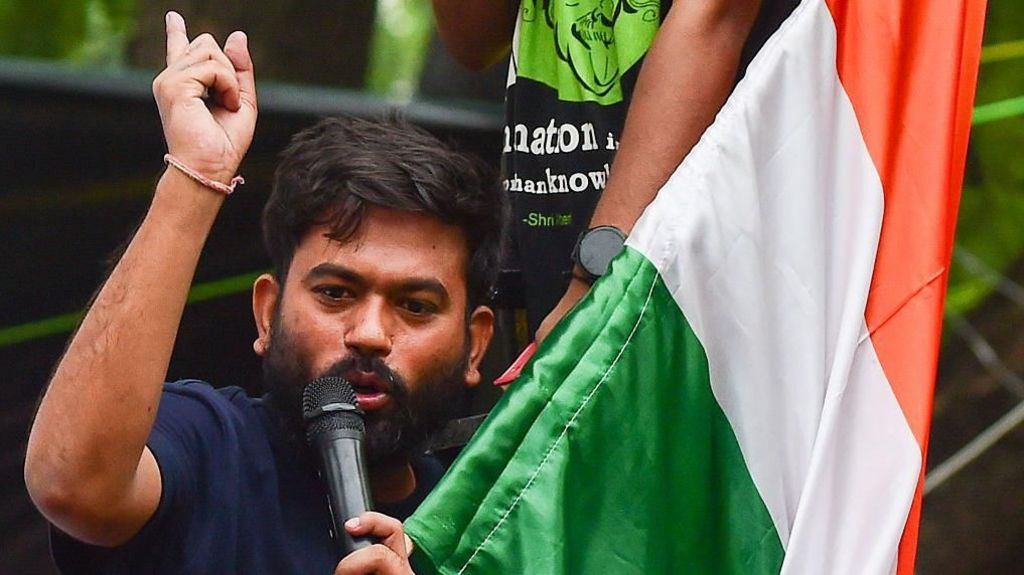
    Hundreds of protesters remain camped at the Jantar Mantar site, surrounded by a heavy security deployment. Their core demands have not shifted: they insist Education Minister Dharmendra Pradhan must step down over longstanding failures in India’s national examination system, which have included repeated high-stakes exam leaks and widespread irregularities that have derailed the academic and career prospects of millions of young Indians. Abhijeet Dipke, founder of the Cockroach Janta Party (CJP) that organizes the movement, confirmed the protest would not end until demands are met.

    Monday’s violent confrontation marks a major escalation in the movement’s two-month campaign. What started as an online satirical initiative quickly caught the attention of India’s massive youth population, expanding its scope to address broader systemic issues including soaring youth unemployment and lack of government accountability. Footage of the crackdown spread rapidly across Indian social media platforms over the past 24 hours, sparking widespread public outrage. Videos show police beating unarmed young demonstrators with batons, dragging detainers across pavement, and clearing the protest route. Some clips capture young protesters crying and pleading for officers to stop, while others show a scene of quiet defiance: demonstrators standing firm, refusing to disperse even as they were struck.

    Delhi Police official figures confirm nearly 180 people were injured in the clashes, including 118 security personnel and 60 protesters. Despite the violence, many demonstrators say the police action has only hardened their commitment to the movement. Sona Bisht, a 20-year-old student protester, said the government’s attempt to intimidate India’s Generation Z would not succeed. “If the government thinks that doing this with Gen Z, they can stop us, then that won’t happen,” Bisht said Tuesday from the protest camp. “We are here talking about education, talking about securing our future. And till the time our demands are not met, we will not move from here.”

    The crackdown came even after the Indian government made its first public outreach to movement leaders Monday, following nearly a month of official silence. A senior union minister held preliminary talks with movement representatives, but the discussion failed to de-escalate tensions. Movement leaders reject empty policy assurances, demanding concrete action: in addition to Pradhan’s resignation, they call for comprehensive overhauls of India’s dysfunctional examination system, and financial compensation for families of students who died by suicide after their academic futures were ruined by alleged exam irregularities. Dipke accused authorities of acting in bad faith, saying police launched the baton charge immediately after protesters had accepted an invitation to attend the scheduled talks.

    International human rights organization Amnesty International condemned the police action in a statement released late Monday, saying the incident laid bare the systemic suppression of peaceful dissent under the current Indian government. “The role of the authorities is to protect and facilitate peaceful protests, not to suppress them,” the group said. “The right to freedom of peaceful assembly is recognized under international human rights law and the Indian constitution.”

    The movement gained significant national momentum over the weekend, after prominent Indian activist Sonam Wangchuk – who had completed a three-week hunger strike in solidarity with the protesters – was forcibly removed by police and taken to a hospital for mandatory medical evaluation. The unrest has drawn a broad cross-section of Indian society, including students, working professionals, and families affected by exam irregularities, marking a rare unified public pushback against Modi’s government in its third term. It has also revived longstanding international and domestic criticism of the administration’s track record of cracking down on dissent and using excessive force to disrupt peaceful opposition protests.

    Many new demonstrators have joined the sit-in since Monday’s violence, saying they were compelled to act after seeing footage of the police crackdown. Rabina Kashyap, a 26-year-old working professional, arrived at the Jantar Mantar camp on Tuesday to add her support. “I have nothing to do with this protest,” Kashyap said. “But this is India, this is my country, and these are my people. So I will stand by them.”

  • Judiciary wrap: South Sydney rocked by fresh blow as David Fifita cops two-match ban at the judiciary

    Judiciary wrap: South Sydney rocked by fresh blow as David Fifita cops two-match ban at the judiciary

    The South Sydney Rabbitohs’ bid to secure a spot in the NRL finals has been hit by a devastating triple setback, just days out from their critical round clash against the Melbourne Storm. The biggest blow came Tuesday night, when experienced starting forward David Fifita saw his appeal against a dangerous contact charge dismissed by the NRL judiciary, resulting in a two-match suspension that rules him out of Friday’s high-stakes game. The roster crisis deepens with two more key back-row forwards already sidelined by injury: Tallis Duncan is out with a hamstring strain, while captain Cameron Murray will miss the encounter with a calf injury. Young forward Thomas Fletcher is now the leading candidate to step into Fifita’s starting edge position, leaving the Rabbitohs severely depleted in one of their most impactful position groups.

    The charge against Fifita stems from an incident during the Rabbitohs’ recent clash with the Canberra Raiders, early in the second half. While tackling Raiders forward Hudson Young, Fifita made contact with the back of Young’s head with his foot. The contact was not penalized by on-field officials at the time, but the match review panel later issued a Grade 2 dangerous contact charge. Had Fifita accepted an early guilty plea, he would have received a one-match suspension. Instead, he entered a guilty plea but contested the grading, launching an appeal at Rugby League Central to reduce the charge’s severity.

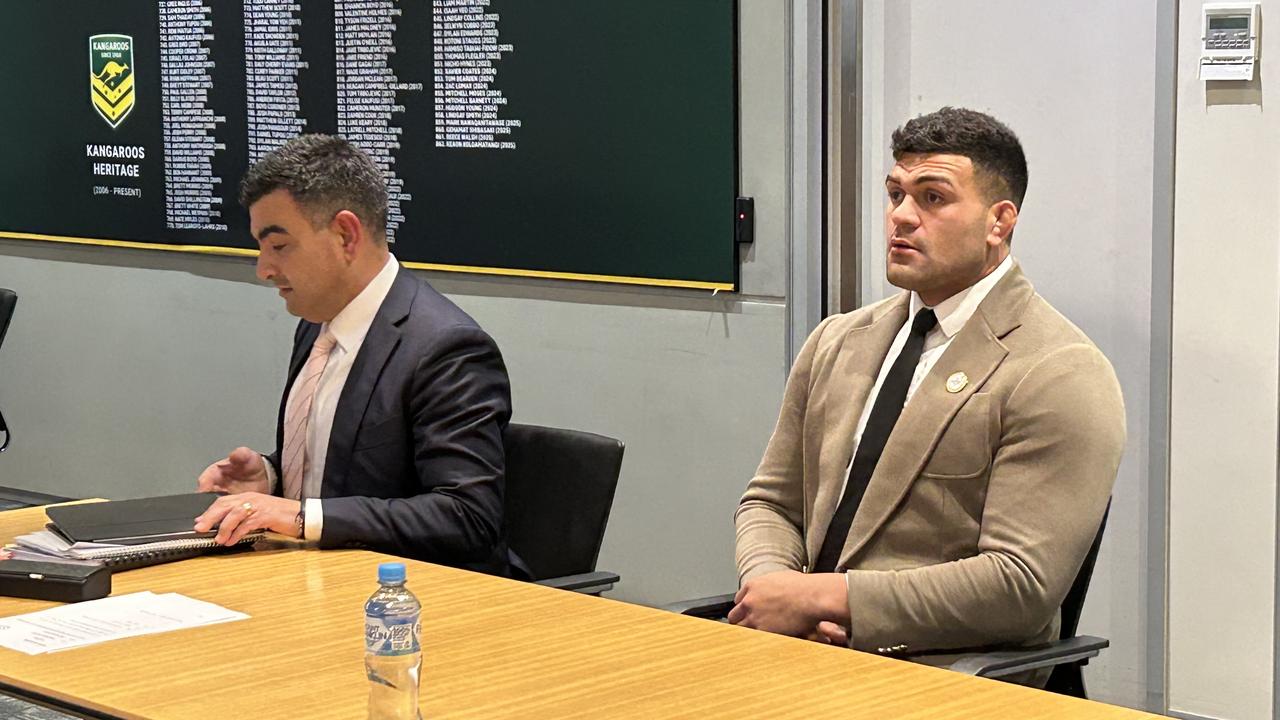
    Fifita’s legal team, led by experienced sports defense counsel Nick Ghabar, argued that the incident was not a deliberate dangerous action. Ghabar told the judiciary panel, made up of former NRL players Tony Puletua and Paul Simpkins, that Young had pushed himself upward off the tackle, which exaggerated the extent of the contact. He emphasized there was no deliberate, separate kicking movement: Fifita had no planted foot to generate a conventional kicking action, no intentional movement to strike Young, and no follow-through after the contact, he claimed. Ghabar also noted that both the on-field referee and touch judge had an unobstructed view of the incident and chose not to issue a penalty, and drew a comparison to a 2024 Grade 1 charge involving St George Illawarra Dragons winger Tyrell Sloan, who kicked Sydney Roosters playmaker Sam Walker in the head during a match.

    NRL counsel Lachlan Gyles pushed back against the comparison, arguing that the 2024 incident was a fundamentally different scenario. Gyles noted that Sloan had been trapped in a tackle and was attempting to free himself to play the ball, a common in-game scenario that amounted to a lower level of carelessness. By contrast, Gyles argued, the momentum of the tackle involving Fifita and Young had already come to a complete stop before the contact occurred, eliminating any mitigating context. He told the panel the contact created an unreasonable risk of serious injury to Young, the level of Fifita’s carelessness was far higher than the 2024 case, and there were no mitigating factors to justify a lower grading. “It’s very hard to justify a movement that shows what you can see on that still. It has to be more than a low level of carelessness,” Gyles stated.

    After deliberation, the two-person panel unanimously rejected Fifita’s appeal to downgrade the charge, upholding the Grade 2 ruling that brings an automatic two-match suspension. The suspension comes at a critical time for the Rabbitohs, who are fighting to secure a top-eight finish and a spot in the 2024 NRL finals. With three of their top four back-row options all sidelined for Friday’s clash against a premiership-contending Storm side, coach Wayne Bennett — who appeared in support of Fifita at the judiciary hearing alongside South Sydney football manager Jason Clark — will now be forced to field a much-changed forward pack in one of the team’s most important matches of the regular season.