博客

  • Conflicts and energy shocks threaten progress against global hunger, UN agency head warns

    Conflicts and energy shocks threaten progress against global hunger, UN agency head warns

    ROME – As global progress toward ending hunger remains alarmingly fragile, the head of the International Fund for Agricultural Development (IFAD) has issued a stark warning that persistent geopolitical conflicts and energy market disruptions could drive millions more people into food insecurity by spiking costs for fuel, fertilizer, and staple foods.

    A newly released United Nations food security report published Tuesday confirms that while global hunger levels have seen a slight, modest decline in recent years, current trends project that more than 500 million people will still face chronic undernourishment by 2030, with Africa set to bear the overwhelming majority of that burden.

    In a July 10 interview with The Associated Press, IFAD President Alvaro Lario outlined the severe risks of ongoing instability: if sustained disruptions to shipping lanes and energy supplies—including heightened uncertainty around the Strait of Hormuz amid the ongoing Iran conflict—persist, an additional 9 to 18 million people could fall into hunger.

    “We are living in an era with the highest number of active conflicts in modern memory, and that number continues to climb,” Lario said. “Wherever conflict breaks out, hunger, displacement, and refugee populations all grow alongside it.”

    Conflict stands as one of the single greatest barriers to global hunger reduction, Lario emphasized. Wars and geopolitical tensions disrupt critical supply chains for energy and agricultural inputs, pushing up costs across already inflation-strained global food systems. What makes this dynamic particularly dangerous, he noted, is that hunger and conflict fuel one another, creating a self-reinforcing cycle that cannot be broken without targeted investment in global stability.

    Skyrocketing energy costs have already hit fertilizer production and agricultural output hard, with the most severe impact falling on small-scale farmers. For many of these producers, diesel fuel is a non-negotiable input for pumping irrigation water, harvesting crops, and transporting goods to regional markets. As fuel costs rise, production expenses follow, creating a direct ripple effect that pushes up retail food prices for consumers worldwide.

    Beyond affordability pressures and conflict-driven disruptions, the new report identifies climate change as an accelerating threat to global food security. While global food production continues to expand to meet population growth, roughly one-third of the entire global population still cannot afford a nutritionally adequate healthy diet. That figure jumps to 77% in low-income nations, Lario said.

    “The biggest challenge we face today is no longer just producing enough food to feed the global population,” Lario explained. “It is making healthy, nourishing diets affordable for everyone, everywhere.”

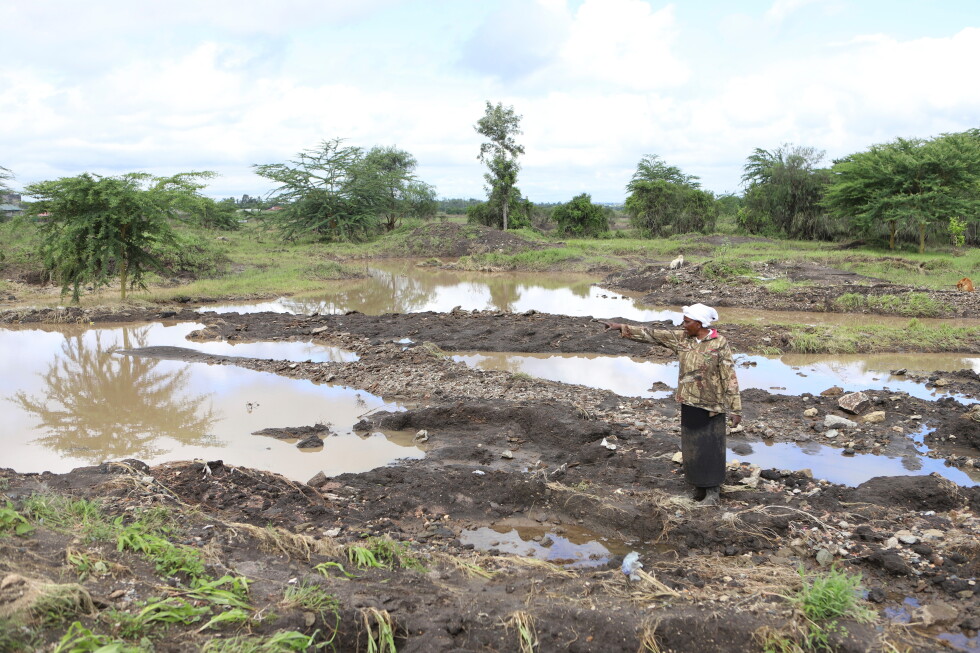
    Extreme climate events including catastrophic flooding, prolonged multi-year droughts, and record-breaking heat are increasingly disrupting agricultural production across every inhabited continent, and have become a regular reality for many rural communities. Instead of relying primarily on emergency disaster response after crises hit, Lario argued that governments must prioritize investing in climate resilience and adaptive infrastructure before disasters occur.

    “This is the new normal for global agriculture,” Lario said. “We are seeing catastrophic floods in regions that never faced them before, and droughts that persist for four or five years straight, wiping out harvest after harvest.”

    To address this gap, IFAD is scaling up investments in climate adaptation programs designed to help vulnerable rural communities withstand floods, droughts, and extreme heat. Lario stressed that this support is desperately needed for the millions of smallholder farmers who produce the majority of the world’s food supply, yet have the least resources to adapt to shifting conditions.

    The report also marks a significant milestone in global food security trends: for the first time in recorded history, Africa has surpassed Asia as the region home to the largest number of food-insecure people. By 2030, the report projects that nearly 60% of the world’s chronically hungry population will reside on the African continent, making it the clear epicenter of the global hunger crisis.

    Lario attributed this shift to a combination of rapid population growth across the continent and slower economic development compared to many parts of Asia, and called for dramatically increased international investment in African agriculture, infrastructure, and local food systems. Currently, African nations import nearly $100 billion in food annually, a statistic Lario said underscores the urgent need to strengthen local production, post-harvest storage, distribution networks, and regional food trade across the continent.

    Without urgent action to build more resilient food systems, Lario warned, overlapping threats from conflict, energy market volatility, and climate extremes will derail what limited progress the world has made toward ending global hunger.


  • QPR sign former Brighton full-back Lamptey

    QPR sign former Brighton full-back Lamptey

    Championship side Queens Park Rangers (QPR) has announced the signing of experienced right-back Tariq Lamptey on a free transfer, marking a new chapter for the 25-year-old defender after a injury-plagued spell at Italy’s Serie A club Fiorentina.

    Lamptey only spent 10 months at Fiorentina, having moved to the Italian top-flight side from Premier League club Brighton & Hove Albion in September 2025. But his time in Italy was cut short by a serious knee injury that limited him to just two first-team appearances for the club before his departure.

    A product of Chelsea’s famed youth academy, Lamptey kicked off his senior career at Stamford Bridge, where he made his Premier League debut against Arsenal. He then made the switch to Brighton, now known as the Seagulls, where he went on to establish himself as a first-team regular, racking up more than 120 appearances across all competitions during his tenure at the club.

    On the international stage, Lamptey has a unique representative history: he initially featured twice for England’s U-21 national side before switching his international allegiance to Ghana, the country of his heritage. He went on to represent Ghana at the 2022 FIFA World Cup and has earned 11 senior caps for the Black Stars to date.

    Speaking following the confirmation of his transfer, Lamptey expressed optimism about his recovery from the knee injury and his new opportunity at QPR. “My recovery has gone well and I’m not too far away now. I’m looking forward to joining with the boys,” the full-back told QPR’s official club website. “Throughout my football journey I’ve always been resilient.”

    QPR chief executive Christian Nourry welcomed Lamptey’s arrival, highlighting the club’s growing appeal as a destination for ambitious players even after the defender received interest from multiple sides. “We’ve had good conversations about what he wants to achieve and how he feels that this is the right environment for him to flourish in,” Nourry said. “His decision to join QPR over a myriad of other EFL Championship clubs and clubs abroad is a further signal of the growing potential of this football club.”

    Terms of the contract have not been made public by the west London club. QPR is set to kick off its 2026-27 EFL Championship campaign with an away fixture against Portsmouth on 15 August, kicking off at 15:00 BST.

  • Major probe after body of man, 40, found outside Broadmeadows home

    Major probe after body of man, 40, found outside Broadmeadows home

    A suspicious death in a Melbourne suburb has launched a full homicide investigation after authorities discovered the body of a 40-year-old man with serious injuries outside a residential property.

    Victoria Police first received the emergency call just after 3:30 p.m. on Tuesday, directing officers to the address on Graham Street in the Broadmeadows area. When first responders arrived, they found the man unresponsive and suffering from significant external injuries. Despite the rapid response from emergency services, the man was pronounced dead at the scene.

    While investigators have not yet confirmed the exact cause of the man’s injuries, official police statements confirm the death is being treated as suspicious. The state’s homicide squad has taken over the case to conduct a full probe into the circumstances surrounding the incident.

    A photo of the investigation site was captured by NewsWire photographer Damian Shaw, documenting the police presence at the Graham Street property in the hours after the body was found.

    In a public appeal for community assistance, police have urged any members of the public who were in the area around the time of the incident, or who hold any information that could aid the investigation, to come forward. Tipsters can share information anonymously through Crime Stoppers by calling the hotline 1800 333 000.

    As of the latest update 24 minutes before this report, no further details about the identity of the deceased beyond his age, or potential persons of interest, have been released to the public.

  • China’s AI, robotics tech draw praise in Canada

    China’s AI, robotics tech draw praise in Canada

    The 31st iteration of the Federation of International Robot-soccer Association (FIRA) RoboWorld Cup & AI Summit made history on July 17, launching its first-ever Canadian edition in Markham, Ontario. Over five days of intense robotics competitions, technical showcases, and policy discussions, the event drew more than 1,000 attendees spanning over 20 countries and regions, shining a global spotlight on China’s groundbreaking advances in artificial intelligence and robotics that have earned widespread international acclaim.

    Samia Karimi, president of FIRA Canada, opened up about China’s standing in the global AI and robotics ecosystem in an interview with China Daily, emphasizing that the country has solidified its position as a global leader in both rapidly evolving sectors. “China is always very strong in the AI industry and also in robotics,” Karimi noted, adding that Chinese competing teams consistently demonstrate extraordinary dedication to pushing technical boundaries and delivering strong performance at international events. “We don’t know who will be the winner, but Chinese teams are always working so hard to get the best results,” she said.

    Among the Chinese delegations taking part in the 2026 event were two young competitors from Chengdu, Sichuan province: 15-year-old Wang Yichen and 16-year-old Qiu Zeshui, who stepped into the U19 division to test their skills against older student teams from across the globe. Both teenagers have spent years studying robotics engineering, but the international competition brought unforeseen challenges that set it apart from many domestic contests they had previously entered. Unlike domestic events that share full task details with competitors in advance, FIRA RoboWorld Cup teams only receive broad parameters ahead of time, requiring flexible preparation for multiple possible scenarios.

    “There were many difficulties,” Wang explained in an interview on site. “We didn’t know what the tasks would be, so we could only make guesses and prepare based on previous years’ competitions.” For Wang, this first-time experience competing alongside top young robotics talents from around the world also brought a surprising realization: the technical gap between young Chinese competitors and their global peers is far smaller than he had anticipated going into the event. “The gap isn’t that big,” he said.

    Maria Sun, co-chair of the 2026 FIRA RoboWorld Cup, framed the event as a microcosm of a larger global shift in AI development: as the technology accelerates at an unprecedented pace, cross-border collaboration has become not just beneficial, but essential, even as rapid growth brings new shared governance challenges that no single nation can address in isolation. Key pressing issues including AI privacy protection, algorithmic transparency, and systemic AI safety demand coordinated action from national governments, private industry stakeholders, and academic researchers across the world, Sun argued.

    She emphasized that sustainable, inclusive global AI progress must be built on a foundation of open exchange, not technological isolation. “AI belongs to all humanity. That is why sharing and cooperation are essential,” Sun stated. By gathering young innovators from more than 20 countries to compete, collaborate, and exchange ideas, the FIRA RoboWorld Cup embodies this open, collaborative philosophy, she added.

    Sun also highlighted China’s ongoing efforts to expand AI development partnerships with developing nations as a particularly encouraging contribution to global AI equity. “China’s efforts to promote AI cooperation with developing countries are very encouraging. International exchanges like these help bring more countries into the AI era and create opportunities for broader collaboration,” she said. She added that China’s commitment to openness in AI research and deployment will deliver widespread benefits to technological progress across the globe. “Today, China is one of the global leaders in artificial intelligence, and its continued openness will help drive innovation and international cooperation,” she noted.

    Former Canadian senator Hu Zixiu echoed these calls for coordinated global action, stressing that cross-border collaboration will remain indispensable as AI technologies continue to reshape industries and societies worldwide. Hu argued that the global community must work collectively to build a universally accepted governance framework for AI that can guide responsible development across all regions. “Countries around the world need to work together to establish a common governance system for AI. It should be a framework that all countries recognize and can follow,” Hu said.

  • India tunnel disaster at a Himalayan hydropower project leaves 10 dead and 17 missing

    India tunnel disaster at a Himalayan hydropower project leaves 10 dead and 17 missing

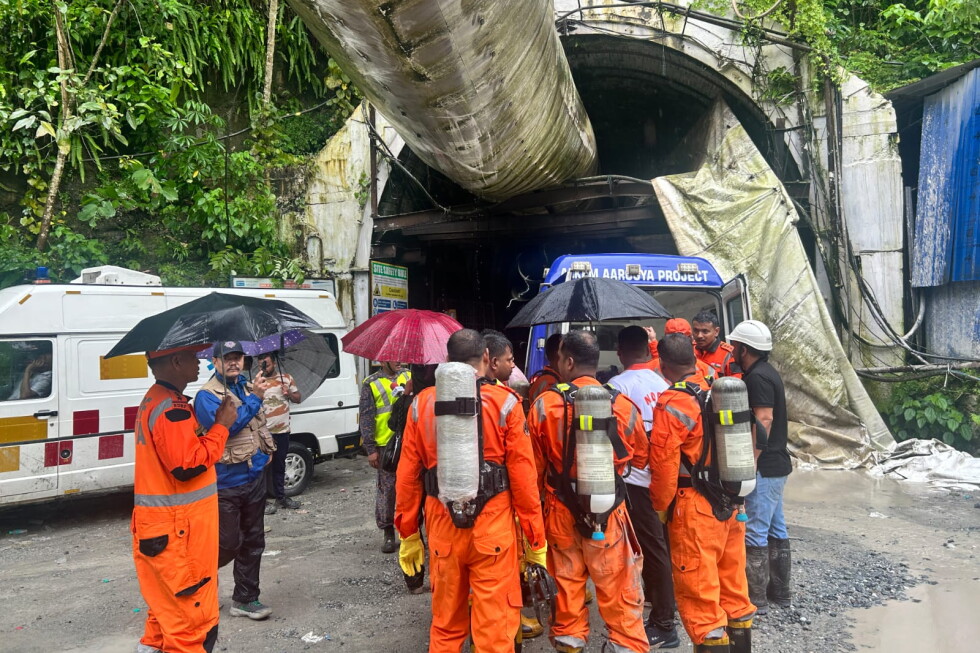
    A devastating suspected gas explosion at an under-construction hydropower tunnel in India’s Himalayan border state of Sikkim has left at least 10 people dead and 17 others unaccounted for, local officials confirmed Tuesday.

    The accident unfolded Monday at the construction site in Samardung village, located roughly 40 kilometers from Sikkim’s capital Gangtok. Dozens of workers were on-site carrying out excavation and building work for the 500-megawatt Teesta hydroelectric project when the blast occurred, according to Anupama Tamling, a senior local civil administration official.
    Survivors who managed to evacuate the tunnel before the full collapse reported hearing a deafening explosion moments before collapsing debris flooded the passage, trapping multiple workers inside. After news of the incident broke, six senior engineers from the National Hydroelectric Power Corporation (NHPC), the state-owned utility leading the project, entered the tunnel to coordinate initial rescue operations — only to become trapped themselves alongside the construction workers, officials added.

    Local police chief Sonam Dolma confirmed that rescue teams have recovered 10 fatalities as of Tuesday, with the 17 still missing presumed trapped deep within the collapsed tunnel.
    Rescue operations led by India’s National Disaster Response Force (NDRF) have been slowed by extremely dangerous conditions inside the structure, including the buildup of high concentrations of toxic gases that pose an immediate threat to responder safety. “We have detected multiple hazardous gases inside the tunnel, including methane, carbon monoxide and hydrogen sulphide,” NDRF incident commander Nitin Kumar told reporters on-site. He added that rescuers are relying on specialized self-contained breathing equipment to conduct search operations in the toxic environment.

    Construction accidents are a persistent hazard across India’s fast-expanding infrastructure sector, where rapid development often outpaces the implementation of rigorous safety protocols, and projects are frequently built in geologically unstable regions. For Himalayan tunnel projects in particular, fragile mountain formations, frequent seismic activity, and unpredictable underground conditions combine to create extreme levels of risk. In 2023, a similar tunnel collapse in the northern state of Uttarakhand trapped 41 workers for 17 days before a successful rescue operation.
    Geologists note the Teesta River basin, where the project is located, is a highly seismically active zone defined by young, geologically unstable rock formations crisscrossed by fractures and underground voids that can trap naturally occurring ancient gases. Dr. Devesh Walia, a professor of geology at North-Eastern Hill University in the adjacent state of Meghalaya, explained the region’s rock formations include strata associated with coal deposits, which are known to produce large volumes of methane. “It is quite possible that methane along with other gases accumulated underground and may have triggered an explosion,” Walia said.

  • Southeast Asia’s top diplomats hold security talks in Manila as Iran war rages

    Southeast Asia’s top diplomats hold security talks in Manila as Iran war rages

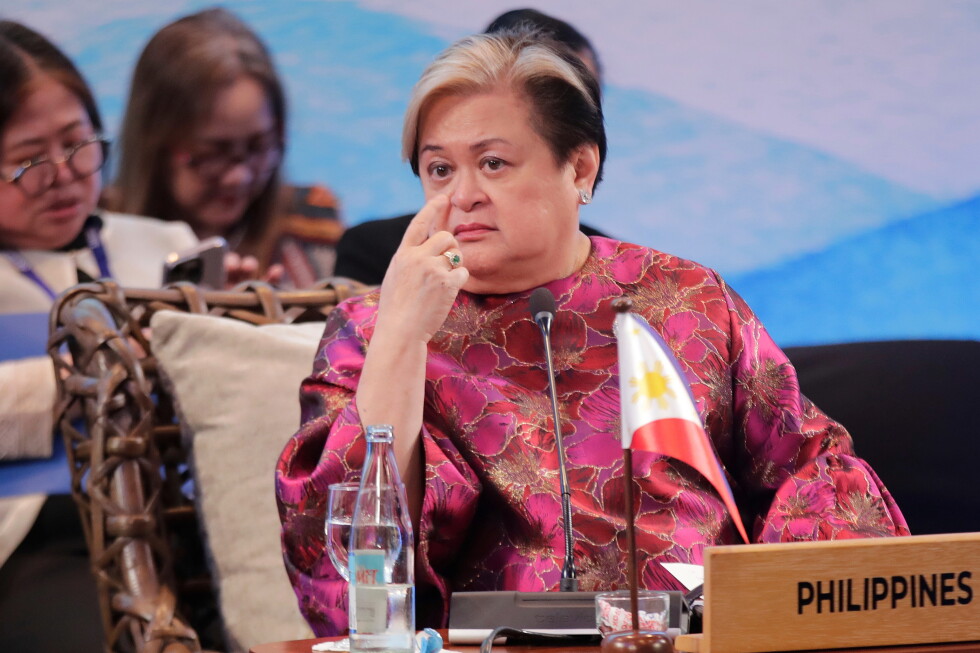
    MANILA, Philippines — Top diplomatic leaders from Southeast Asia kicked off three days of high-stakes negotiations in the Philippine capital on Tuesday, bringing pressing regional and global security challenges to the forefront of their agenda against a backdrop of two unfolding crises: renewed warfare in Iran and a violent new confrontation in the disputed South China Sea.

    Foreign ministers representing the 10-member Association of Southeast Asian Nations (ASEAN) convened behind closed doors for their initial session, before releasing a joint statement demanding an immediate ceasefire to hostilities in the Middle East and calling for the full, unimpeded reopening of the strategically critical Strait of Hormuz, a major chokepoint for global oil and gas supplies.

    “We expressed serious concern over the rapidly evolving situation in the Middle East, particularly the renewed hostilities involving the United States of America and the Islamic Republic of Iran,” the statement from ASEAN ministers read. The bloc also reaffirmed its commitment to the principle that all nations must resolve territorial and political disputes through peaceful means, while upholding universal standards of national sovereignty and territorial integrity.

    As a dynamic economic region home to more than 680 million people, Southeast Asia depends heavily on energy imports from the Middle East. The resumption of conflict in Iran has already sent shockwaves through global commodity markets, triggering supply shortages and price volatility that have hit the region hard. In response to these pressures, Philippine President Ferdinand Marcos Jr. declared a national energy emergency back in March, implementing measures to secure steady access to fuel, food and other essential goods, while cracking down on speculative hoarding and price gouging.

    U.S. Secretary of State Marco Rubio touched down in Manila early Tuesday, ahead of a scheduled annual dialogue with ASEAN foreign ministers on Wednesday. The escalating Middle East crisis will top the agenda for that meeting, alongside a broader slate of regional security and economic priorities. Rubio will also take part in the ASEAN Regional Forum, a wider regional security dialogue that will bring together senior diplomatic representatives from the European Union, Russia (represented by Foreign Minister Sergey Lavrov) and China (led by Foreign Minister Wang Yi).

    As of Tuesday, no formal bilateral meetings between Rubio, Wang, and Lavrov had been announced to the public. If Rubio and Wang do hold talks on the sidelines of the summit, it would mark the highest-level engagement between Washington and Beijing since U.S. President Donald Trump’s May visit to Beijing for talks with Chinese President Xi Jinping. That earlier meeting centered on the Iran conflict, U.S.-China trade relations, and cross-strait relations involving Taiwan, among other thorny issues. All three top diplomats will also attend the final East Asia Summit on Thursday, a gathering of 18 Indo-Pacific nations that will address a broad range of cross-cutting geopolitical, economic and security challenges.

    On the regional front, ASEAN ministers are scheduled to hold a separate meeting with Wang Yi on Wednesday focused on advancing negotiations for a long-awaited code of conduct for the South China Sea. The proposed agreement, designed to prevent territorial disputes in the contested waterway from escalating into open conflict, has been under negotiation between China and ASEAN for nearly two decades, with both sides targeting a final agreement by the end of this year.

    That timeline gained new urgency this week, after a fresh violent clash underscored the fragility of the status quo. The Philippine military accused China’s coast guard of injuring a Filipino sailor during an altercation on Monday near Second Thomas Shoal, a contested outcrop in the South China Sea. According to Philippine military accounts, Chinese coast guard personnel on a small motorboat repeatedly struck the sailor in the head with a wooden baton, wounding him and damaging his small vessel.

    Philippine authorities issued a formal condemnation of the incident, while Chinese coast guard officials blamed Filipino vessels for initiating the confrontation. A spokesperson for President Marcos confirmed that Marcos summoned Chinese Ambassador Jing Quan for an emergency meeting Tuesday afternoon, though no details of the discussion were released to the public.

  • This year’s supersized World Cup had some things go wrong. There was also a lot that went right

    This year’s supersized World Cup had some things go wrong. There was also a lot that went right

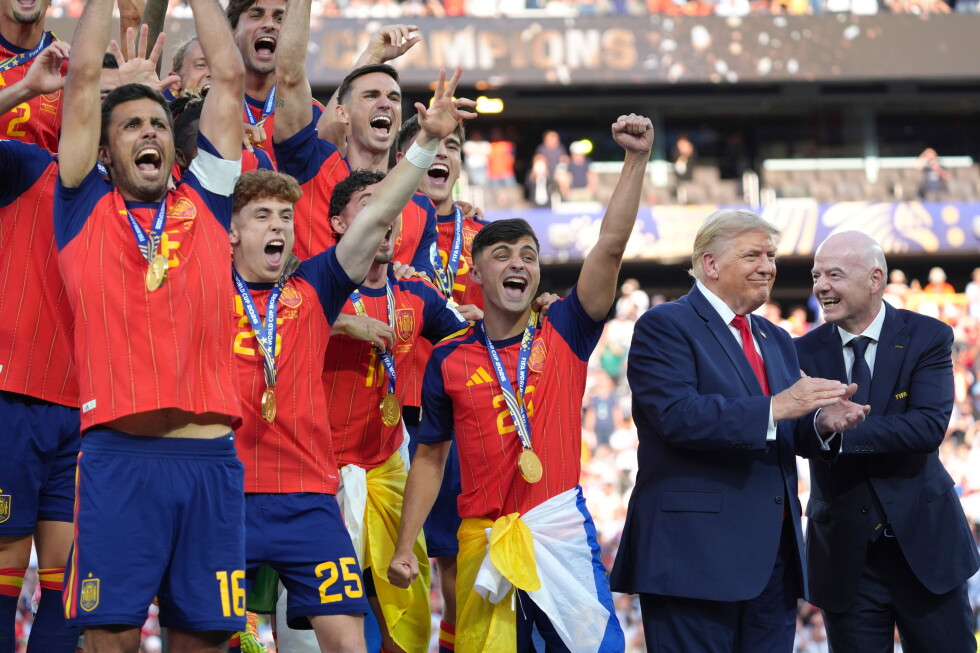
    The 2026 FIFA World Cup, an unprecedented logistical feat bringing 48 teams, 104 matches, and 16 stadiums across three North American nations – the United States, Canada, and Mexico – was always set to face high stakes and endless potential pitfalls, from on-field controversies to off-stage organizational chaos. But when the final whistle blew on the tournament’s six-week run, the event outperformed nearly all low expectations, emerging as a largely successful showcase of global soccer that kept most of the drama where it belongs: on the pitch.

    After Spain claimed the trophy with a tense 1-0 extra-time victory over Argentina in the final, FIFA President Gianni Infantino heaped glowing praise on the co-host nations, highlighting the tournament’s landmark achievements in audience and attendance. “We have had a record number of spectators in the stadiums, almost 7 million,” Infantino noted, adding that official final figures are still forthcoming, and global broadcast viewership from home viewers is projected to top 6 billion people.

    Broadcast ratings delivered strong results across North America despite an early exit for the U.S. men’s national team, which fell to Belgium in the round of 16. Fox Sports, which aired all 104 matches in English, retained consistent viewership even after the hosts’ elimination, while Spanish-language broadcaster Telemundo saw historic engagement: preliminary data puts the final’s Spanish-language audience at 22.6 million, on pace to make it the most-watched World Cup final in Spanish-language U.S. media history. The U.S.-Belgium knockout match alone drew more than 45 million total viewers across both networks, with 33.1 million tuning in to Fox and 12 million to Telemundo. Even non-native Spanish speakers frequently turned to Telemundo’s coverage for its energetic commentary and fan-focused presentation. After a small number of early logistical bumps, stadiums across all three co-hosts drew near-capacity crowds for nearly every match, even with premium ticket prices that had sparked concerns about low turnout.

    Organizers also caught a lucky break with summer weather, a long-cited risk for a Northern Hemisphere summer tournament. While summer heat across North America is already intense, amplified by broader climate change trends, only a handful of matches faced dangerous sweltering conditions. The most notable example was Paraguay’s knockout clash with France in Philadelphia on July 4, where temperatures hovered near 100 degrees Fahrenheit (38 degrees Celsius) throughout the match. For the final held in the New Jersey metro area, organizers dodged a major disruption when hazy smoke from ongoing Canadian wildfires, which had blanketed much of the U.S. Northeast in recent weeks, cleared just before kickoff thanks to timely thunderstorms that pushed the smog out of the region.

    The tournament’s most ambitious shift – expanding the field from 32 to 48 teams, a change many critics argued would dilute the quality of competition – also defied pessimism to deliver exciting, competitive matches and memorable underdog stories. Cape Verde, a minnow in global soccer, held eventual champion Spain to a surprising draw in its opening group match, advanced to the round of 32, and pushed Argentina to a 3-2 extra-time thriller that went down as one of the tournament’s most iconic matches. Congo also advanced out of the group stage and pushed powerhouse England to a tight contest before exiting, while Curaçao retained a shot at qualifying for the knockout round heading into its final group match. After the Cinderella runs of lower-ranked underdogs, the tournament’s final four featured the world’s top four ranked teams: England, Argentina, Spain, and France, delivering the high-stakes heavyweight matchups fans had hoped for.

    Even with the overall success, the 2026 tournament was not without its share of political controversies, a consistent undercurrent for major global soccer events. Iran’s participation, which took place amid ongoing conflict in the Middle East, emerged as the most high-profile point of tension. The Iranian team was forced to relocate its pre-tournament base camp from Arizona to Mexico, after the U.S. denied visas to multiple members of the country’s official delegation, leaving the team overshadowed by travel disputes and administrative barriers. Controversy also swirled around the decision to reverse American striker Folarin Balogun’s one-game red card suspension ahead of the U.S.’s round of 16 match against Belgium, which sparked scrutiny of the relationship between former U.S. President Donald Trump and Infantino. Travel restrictions also barred fans from several sanctioned countries from entering the U.S. to attend matches, though there were no verified reports of the aggressive immigration enforcement near stadiums that multiple human rights groups had warned of ahead of the tournament.

    While Infantino has a clear incentive to frame the expanded 48-team tournament as a success, on-the-ground results back up his positive framing. The FIFA chief doubled down on his praise, saying, “I think we have to invent a new vocabulary, new words to define the success of this World Cup.” For soccer fans across North America and the globe, the 2026 co-hosted World Cup exceeded most expectations, proving that an expanded, three-nation tournament can deliver both competitive excitement and strong organizational results.

  • Missing the World Cup? Relief is on the way next summer with the Women’s World Cup in Brazil

    Missing the World Cup? Relief is on the way next summer with the Women’s World Cup in Brazil

    Fresh off the conclusion of the men’s FIFA World Cup, all attention in global soccer has shifted to the upcoming 2025 Women’s World Cup, which is scheduled to kick off next summer across Brazil. As the reigning champions of the competition, Spain enters the tournament as the team to beat. The Spanish side claimed their first-ever Women’s World Cup title in 2023 with a tense 1-0 victory over England in the Sydney final, and currently hold the number one spot in the global FIFA women’s rankings. That championship squad was stacked with elite talent, including two consecutive Ballon d’Or winners Aitana Bonmati and Alexia Putellas, plus dynamic young forward Salma Paralluelo. Even Spain’s men’s World Cup-winning star Rodri heaped praise on Bonmati during a post-tournament television interview, admitting “I’m trying to see if I can get to her level.”

    For the United States, the 2023 campaign ended in disappointment when the team was knocked out in the round of 16 by Sweden, ending their quest for a third consecutive title. Despite the early exit, the U.S. remains a global powerhouse, holding four Women’s World Cup titles – more than any other nation – and currently sits second in the world rankings. This October, the U.S. will host Spain for two friendly matches, a critical preparation step ahead of CONCACAF qualifying kicking off in late November in Texas. These high-profile tune-up matches are expected to give fans and analysts an early look at how both squads will shape up when they compete for the trophy in Brazil. “We know Spain is an amazing team, and I think we’re just really looking forward to having this prep. Especially before qualifying,” said U.S. rookie midfielder Lily Yohannes. “It will be a really great opportunity for us. Playing these players, I played against them in the Champions League, and I know how great they are.”

    Qualification for the 2025 tournament is already well underway, with 14 nations having secured their spots in the 32-team field, including defending champion Spain, 2003 and 2011 winner Germany, Japan, China, France, Argentina, and Australia. Host Brazil receives an automatic qualification, despite having never lifted the Women’s World Cup trophy in the tournament’s history.

    This tournament marks a milestone for gender equity in Brazilian soccer, according to Aline Pellegrino, a former Brazil national team defender and current executive director of legacy and stakeholder affairs for the 2025 Women’s World Cup. “Some time ago the opportunities for men and women were not equal. But that’s changing. This World Cup has tremendous potential to make that change truly happen,” Pellegrino said. She added that local organizing committees, FIFA, and Brazil’s federal government have been working closely to deliver a seamless tournament and sell out stadiums, building on the positive momentum from friendly matches between Brazil and the U.S. held earlier this year. All eight host cities for 2025 previously welcomed the men’s World Cup in 2014: Rio de Janeiro, Sao Paulo, Belo Horizonte, Brasilia, Fortaleza, Porto Alegre, Recife and Salvador. Brazil also hosted the 2016 Summer Olympics, giving the country extensive experience in hosting major international soccer events.

    One of the biggest storylines heading into the tournament for the host nation surrounds the status of iconic veteran captain Marta, Brazil’s all-time leading goalscorer with 122 international goals. The 38-year-old initially retired from international soccer after Brazil’s narrow 1-0 loss to the U.S. in the 2024 Paris Olympic gold medal match, but reversed her decision months later to compete in the Copa America Femenina. By the time the 2025 World Cup kicks off, Marta will be 41 years old, with fans across the globe waiting to see if she will lead her nation out on home soil one last time.

    When the U.S. traveled to Brazil for two friendly matches in June 2025, the teams split the series: Brazil earned a 2-1 win in Sao Paulo, before the U.S. responded with a 1-0 victory in Fortaleza. U.S. head coach Emma Hayes noted after the series that the tense, hostile away environment was valuable preparation, saying her squad needed to lean into the “moments of chaos” that come with high-stakes international competition.

    The 2025 Brazil Women’s World Cup will also mark the final edition of the tournament with a 32-team field. Starting in 2029, the competition will expand to 48 teams, matching the current format of the men’s World Cup. Looking further ahead, the 2031 Women’s World Cup is widely expected to be jointly hosted by the United States, Mexico, Costa Rica and Jamaica, with a formal hosting announcement expected this coming November.

  • Man and woman killed in tragic Kingston house fire

    Man and woman killed in tragic Kingston house fire

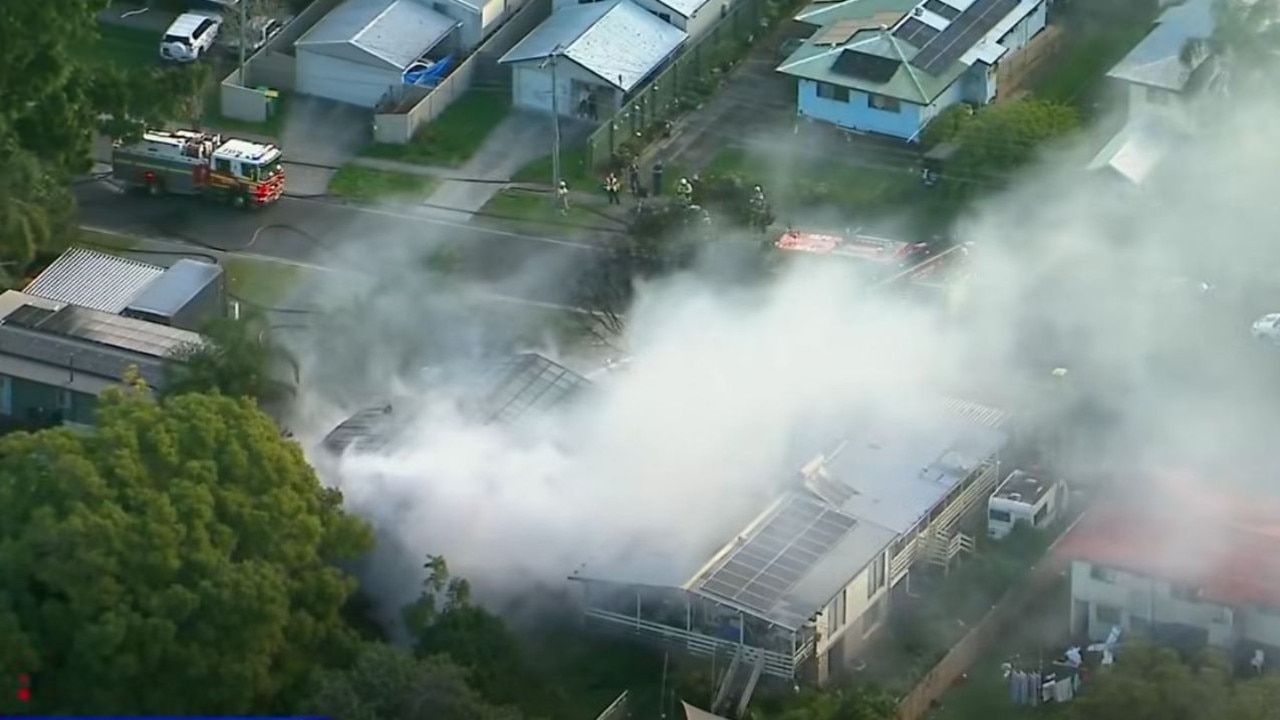
    A destructive house fire has claimed the lives of two people in a suburban community south of Brisbane, marking the second deadly residential fire incident in Queensland within three days. Authorities have formally established a crime scene as investigators work to uncover what ignited the fatal blaze.

    Emergency responders were dispatched to a two-storey detached home on Adelaide Street in Kingston, a suburb within the Logan region, on Tuesday afternoon. Initial reports place the time of the emergency call between 2 p.m. and 3:04 p.m., when first responders arrived at the scene. By the time firefighters and police reached the property, the entire two-storey structure was already completely engulfed in flames.

    Four residents managed to flee the burning home before emergency teams arrived, escaping the inferno without fatal injury. Tragically, search teams recovered the bodies of a man and a woman inside the residence after bringing the blaze under control.

    In an official statement released after the incident, Queensland Police confirmed that a crime scene has been cordoned off while investigations into the fire’s origin and cause remain ongoing. Authorities have issued a public call for assistance, urging any local residents or passersby who may have captured footage of the blaze, or hold information relevant to the incident, to contact police immediately to support the investigation.

    Tuesday’s fatal fire is the second residential fire tragedy to impact Queensland since the start of the week. On Sunday, just two days prior, a 21-year-old new mother Isabella Nicholls lost her life after a fire broke out at a property on King Street in Buderim on the Sunshine Coast. Nicholls was able to escape the burning unit, but sustained critical, life-threatening burn injuries, and succumbed to her wounds shortly after being transported to hospital.

    In the wake of Nicholls’ death, community members have rallied to support her family, raising more than $2000 in crowdfunding donations in just 24 hours to honor her memory.

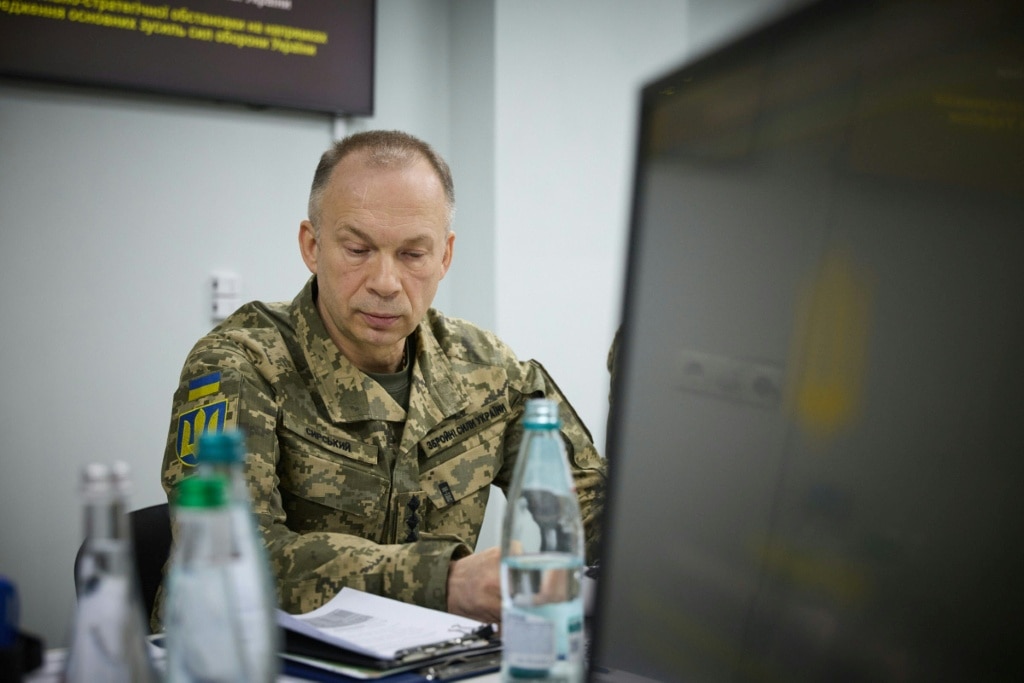
  • Oleksandr Syrsky, Ukraine’s under-fire commander-in-chief

    Oleksandr Syrsky, Ukraine’s under-fire commander-in-chief

    As Ukraine faces a shifting dynamic in its 3-year full-scale war with Russia, its top military commander Oleksandr Syrsky finds himself on the brink of dismissal, with multiple Ukrainian and international outlets reporting that President Volodymyr Zelensky is actively considering his removal. The 60-year-old Soviet-trained officer has long been a polarizing figure in Kyiv’s military and political circles, celebrated for landmark early victories but mired in conflict with reformers pushing to modernize Ukraine’s armed forces for an era of drone-driven high-tech warfare.

    Syrsky’s military career in Ukraine stretches back to the collapse of the Soviet Union. Born in what was then Soviet Russia and educated at a Moscow Red Army academy, he relocated to Soviet Ukraine in the 1980s, stayed on after the USSR dissolved to attend Kyiv’s National Defence University, and built a decades-long career in the newly formed Ukrainian military. He rose to national prominence immediately following Russia’s full-scale invasion in February 2022, when he led the successful defense of Kyiv that halted Russian forces’ advance on the capital, a turning point that prevented the fall of the Ukrainian government. He followed that success with a swift, devastating 2022 counteroffensive that reclaimed large swathes of the northeastern Kharkiv region, and earlier this year masterminded Ukraine’s brazen incursion into Russia’s Kursk region—the first sustained foreign territorial incursion into Russia since World War II.

    Despite these clear military wins, Syrsky has never been able to escape criticism rooted in his Soviet military background and approach to command. Detractors label him a Soviet-style commander who prioritizes territorial gains over troop casualty counts, earning him the derogatory nickname “the butcher.” His management style has also drawn sharp rebuke from military reformers, who argue he stifles initiative among lower-ranking officers and only promotes personally loyal commanders, blocking efforts to update Ukraine’s outdated military systems.

    The most high-profile attack on Syrsky came from recently ousted reformist Defense Minister Mykhailo Fedorov, who was removed by Zelensky in a move that triggered the largest war-related public protests in Ukraine since 2022. Protesters in Kyiv chanted “Shame on Syrsky” and joined calls for his dismissal, as growing public fatigue with the war and anger over military corruption scandals has turned public opinion against the commander. In blistering comments after his removal, Fedorov accused Syrsky of systematically blocking his modernization reforms across key areas including military procurement, equipment standardization, and mobilization policy, adding that Syrsky refused to address these challenges openly.

    Syrsky has forcefully rejected these accusations, urging that internal disputes be resolved privately rather than through public spectacle. “A war is won by real work, not by the public drama surrounding it,” he stated in a rare public comment released earlier this week. He has also repeatedly emphasized that he holds no political ambitions, noting that his sole focus is on the 24/7 work of leading Ukraine’s military.

    That lack of political ambition is precisely what made Syrsky an appealing choice for Zelensky when he replaced the wildly popular former commander-in-chief Valery Zaluzhny last year. Analysts note that Zelensky has long been wary of military figures with broad public support and independent political cachet, a risk Syrsky does not pose. “He is not a politician. Just look at him. He speaks Ukrainian poorly and is not a public communicator,” explained Anatolii Oktysiuk, an analyst with the Kyiv-based KI Research Group. “He always adapts to what Zelensky wants.”

    Syrsky’s Russian roots have also become a frequent target of online criticism and mockery, even though he has been cut off from his remaining family in Russia for years. When he led the Kursk incursion earlier this year, a viral internet meme joked that the attack was motivated by Syrsky wanting to “go home,” a jab at his birthplace that underscored lingering public suspicion about his background.

    Even his sharpest critics, including Fedorov, acknowledge that Syrsky’s contributions to Ukraine’s war effort cannot be discounted. The question now facing Zelensky is what comes next if Syrsky is removed, a decision that is being closely watched by military and political observers both in Ukraine and in Moscow. Political analyst Volodymyr Fesenko argues that Zelensky is ultimately seeking a more palatable version of Syrsky: a commander who remains loyal, lacks independent political ambitions, but is more flexible on reform, more adept at public communication, and more popular with the Ukrainian public. “Someone more flexible, more communicative, and more appealing to society — but such a person does not seem to exist,” Fesenko noted.

    Syrsky’s potential dismissal comes at a moment that analysts describe as Ukraine’s strongest positional position on the frontlines in months, making the timing of the potential leadership shake-up all the more notable for observers tracking the war’s trajectory.