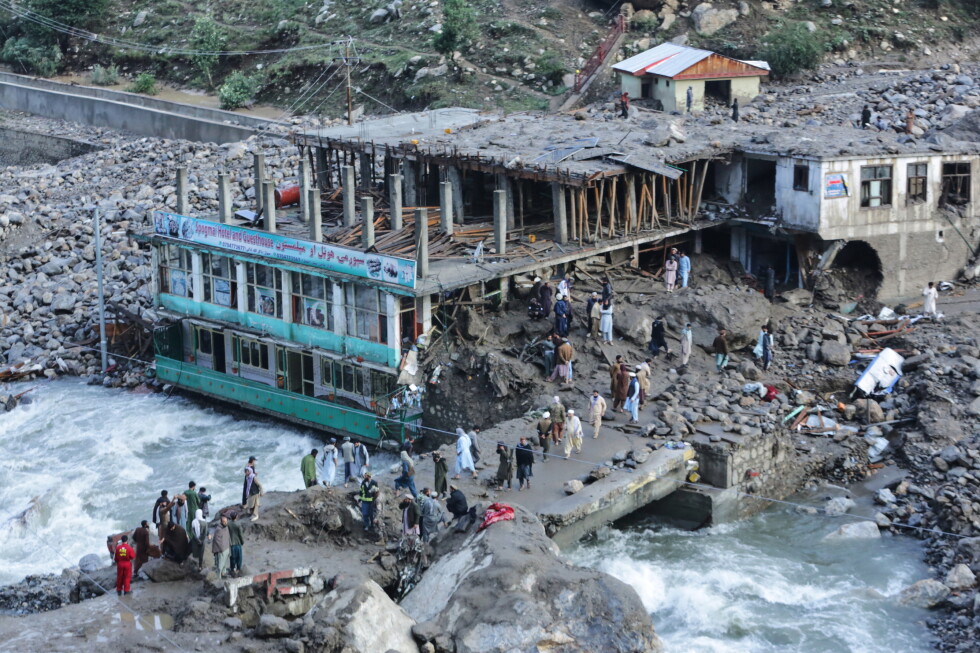
Rescue teams in Afghanistan have launched urgent search operations on Tuesday, combing through the flattened remains of leveled homes following catastrophic flash floods that have claimed at least 22 lives and left more than 100 people unaccounted for, according to national disaster officials.
The sudden flooding swept through Afghanistan’s remote eastern Nuristan Province on Monday, triggering widespread building collapses that left 80 others injured with varying degrees of severity, confirmed the Afghanistan National Disaster Management Authority in an official update Tuesday. Parun, the provincial capital of Nuristan, is counted among the hard-hit communities damaged by the rushing floodwaters, local authorities added.
Even as rescue efforts get underway, new warnings of impending extreme weather are raising alarm across large swathes of the country. The meteorological division under Afghanistan’s Ministry of Transport and Civil Aviation issued a forecast Monday evening calling for severe conditions including heavy downpours, thunderstorms, strong wind carrying dust and sand, and additional flash floods across 10 of the nation’s 34 provinces. The department has urged local residents to steer clear of riverbanks and other low-lying, high-risk zones prone to flood surges.
This latest disaster is part of a growing pattern of deadly extreme weather events that plague Afghanistan, a nation ranked among the most climate-vulnerable countries in the world. Seasonal heavy rainfall and melting snow regularly trigger sudden flash floods that kill dozens and sometimes hundreds of Afghans annually. In 2024 alone, spring flash floods claimed more than 300 lives nationwide, and just months earlier earlier this year, widespread flooding and landslides across multiple regions killed at least 110 people.
Experts and officials note that a perfect storm of long-running crises has dramatically worsened the death toll and damage from these natural events. Decades of continuous armed conflict have gutted public services and emergency response capacity, while crumbling infrastructure, a deeply struggling economy, widespread deforestation that erodes natural flood barriers, and the accelerating impacts of global climate change have all combined to amplify disaster risk. This vulnerability is especially acute in remote rural regions like Nuristan, where the majority of residential structures are built from mud and provide minimal protection against fast-moving floodwaters or extreme precipitation.