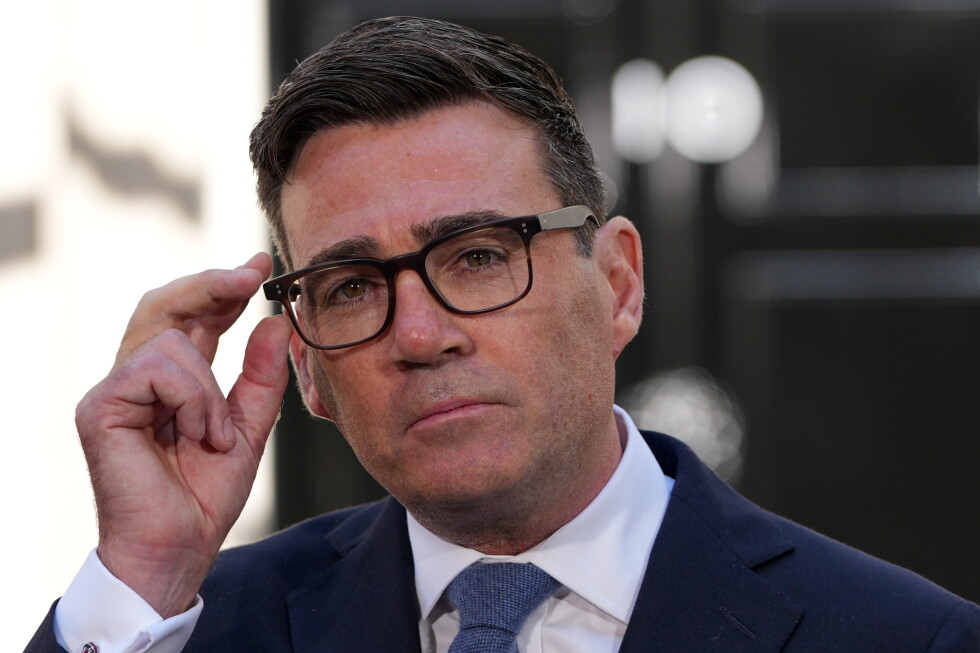
LONDON – Just one day after formally entering 10 Downing Street as the United Kingdom’s newest prime minister, Andy Burnham will convene his first full Cabinet meeting on Tuesday, capping a swift reshuffle that cleared most of former leader Keir Starmer’s closest allies from senior government roles.
The former Greater Manchester mayor, who replaced Starmer as head of the ruling Labour Party on Monday, took office as Britain’s seventh prime minister since 2016, marking another period of political upheaval for a nation that has seen constant leadership turnover in less than a decade. Starmer stepped down just two years after securing a landslide general election majority, pushed out by his own party following a string of policy missteps and abrupt policy reversals that eroded his support among lawmakers and the public.
In one of his first policy moves to deliver on his campaign pledge of giving UK households financial “breathing space” amid ongoing cost-of-living pressures, Burnham announced an energy bill tax cut set to take effect on October 1. The measure will save the average household roughly £45 ($60) per year, with funding redirected from a scrapped digital ID card plan initiated under Starmer’s administration.
Outlining his policy agenda in his first address to the nation as prime minister, Burnham pledged to prioritize four core goals: easing persistent cost-of-living strains, decentralizing centralized political power away from Whitehall, revitalizing Britain’s domestic industrial base, and eliminating street homelessness across the country – a sweeping set of promises widely regarded as a formidable policy challenge.
To advance his agenda, Burnham moved quickly to reshape the government in his own political image. Outgoing Chancellor of the Exchequer Rachel Reeves, a key Starmer ally, was replaced by John Healey, a former defense secretary who resigned from the previous Shadow Cabinet in June over what he called the Treasury’s refusal to allocate sufficient funding to the military amid growing global security threats. In comments after his resignation earlier this year, Healey described the Treasury as “a dead hand on dynamic government” that was “in denial” about the need for increased investment. Healey has long called for raising UK defense spending from the planned 2.6% of GDP next year to 3% by 2030, a target he will now be responsible for funding as chancellor.
Wes Streeting, whose May resignation as Starmer’s health secretary helped precipitate the leadership challenge that ousted the former prime minister, will take over Healey’s former defense portfolio. Other key Cabinet appointments include Ed Miliband as foreign secretary, Angela Rayner as housing secretary, and Jonathan Reynolds as business secretary with an expanded remit covering innovation and science. Louise Haigh, a long-time Burnham ally who helped organize his leadership bid, will serve as First Secretary of State and Chancellor of the Duchy of Lancaster, a role that makes her de facto deputy prime minister. Incumbent Home Secretary Shabana Mahmood, who has overseen controversial immigration reduction rules, will retain her position in the new government.
Among the senior Starmer-era officials removed from government are former Deputy Prime Minister David Lammy, former Business Secretary Peter Kyle, and former Chief Secretary to the Treasury Darren Jones.
The start of Burnham’s premiership coincided with a reminder of the rising international tensions facing the UK: on the same day Burnham took office, a Russian warship conducted live-fire weapons exercises in the English Channel. Britain’s Ministry of Defense confirmed the Russian frigate Neustrashimy carried out the drills in international waters approximately 46 miles (74 kilometers) south of Plymouth in southwest England, and was continuously shadowed by a Royal Navy vessel.
“The Royal Navy monitored that exercise throughout, continues to track the vessel’s activity closely, and stands ready to protect U.K. national security,” a Ministry of Defense spokesperson said.