博客

  • Asian shares mostly gain and South Korea and Japan recover some losses from AI stock sell-offs

    Asian shares mostly gain and South Korea and Japan recover some losses from AI stock sell-offs

    After a sharp sell-off of artificial intelligence-linked equities that dragged down major regional benchmarks in recent weeks, most Asian stock markets staged a notable rebound during Tuesday’s trading session, while U.S. futures ticked modestly upward and global crude prices edged lower amid ongoing Middle East geopolitical instability.

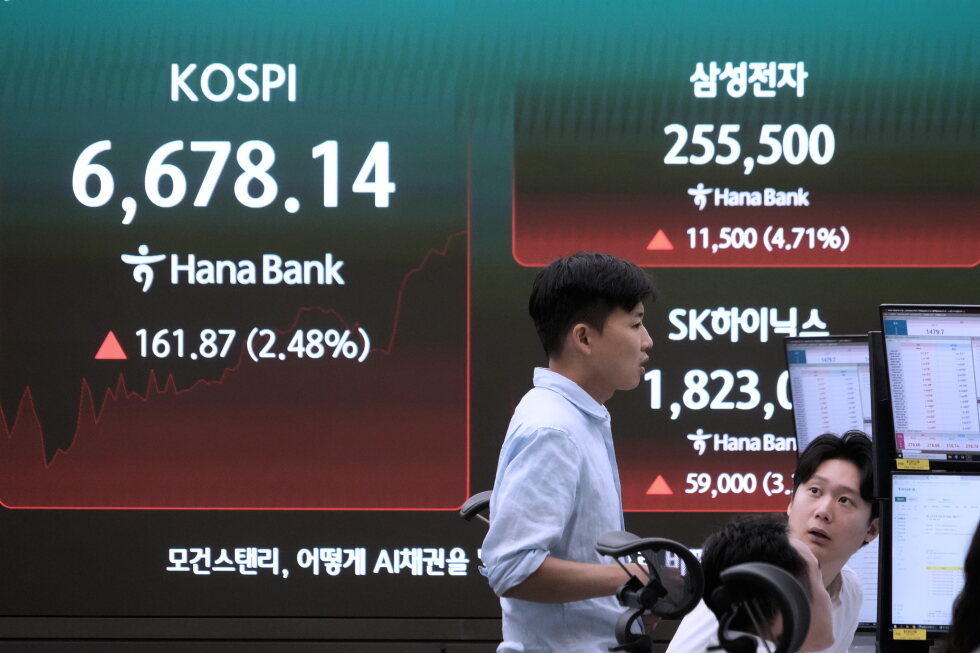
    South Korea’s benchmark Kospi index, which has a heavy concentration of AI and semiconductor manufacturing stocks, led the recovery with a 4.7% jump to close at 6,821.41. This strong gain came one day after the index dropped 4.5%, and reverses part of the broader 20% correction the Kospi has seen over the past month. Despite the recent pullback, the index has still delivered a total gain of more than 50% since the start of the year. The sell-off was driven by investor profit-taking, fueled by growing concerns that AI-focused investments may have formed a speculative bubble. Leading the upward move on Tuesday, Samsung Electronics surged 7.4%, while major memory chip producer SK Hynix climbed 6.4%.

    In Japan, the Nikkei 225 gained 2.8% to reach 65,926.41, recovering a portion of last week’s losses after Japanese markets were closed for a public holiday on Monday. Chip-related stocks also led gains in Tokyo: memory manufacturer Kioxia Holdings jumped 15.9%, chip testing equipment maker Advantest rose 6.9%, OpenAI investor SoftBank Group added 6.1%, and chip equipment producer Tokyo Electron gained 1.3%. Further along the Asian tech supply chain, Taiwan’s Taiex index, which has also outperformed this year amid the global AI boom, climbed 3.6%, with leading advanced AI chip manufacturer TSMC advancing 2.8%.

    In other East Asian markets, Hong Kong’s Hang Seng Index edged less than 0.1% higher to 25,150.75, while mainland China’s Shanghai Composite Index added 0.6% to 3,819.66. Australia’s S&P/ASX 200 notched a modest 0.1% gain to 8,798.00, while India’s Sensex ticked 0.1% lower in Tuesday trading.

    Global oil prices slipped lower in early Tuesday trading after rising in the prior session. International benchmark Brent crude fell 0.7% to $88.63 per barrel, dipping below the $90 threshold, while U.S. benchmark crude lost 0.3% to trade at $82.24 per barrel. Even with the drop, both benchmarks remain far above levels seen before the outbreak of regional conflict in late February, when Brent traded around $72 per barrel.

    Oil price movements come amid escalating and sustained geopolitical tension across the Middle East. Early Tuesday, Iran launched an attack on another commercial tanker transiting the Strait of Hormuz, the critical global chokepoint that carries roughly a fifth of the world’s daily oil and gas supplies. The U.S. has launched its 10th consecutive night of airstrikes targeting Iranian assets, and Iran has retaliated against U.S. allies across the region. In a tentative step toward diplomacy, Iran’s interior minister traveled to Pakistan, a key regional mediator, for talks aimed at de-escalation, though it remains unclear whether any negotiated breakthrough can be reached.

    “In the current environment, there is some hope that tensions between the U.S. and Iran can cool,” ING commodities strategists Warren Patterson and Ewa Manthey noted in a Tuesday market commentary. They added, “This will not be a straightforward process, however, as deep divisions still remain between the two sides.” The analysts also pointed to added supply risk from another ongoing conflict: a naval blockade imposed by Yemen’s Iran-aligned Houthi movement on Saudi shipping has raised the threat of disruptions to global oil exports.

    On Wall Street, major U.S. benchmarks closed slightly lower in Monday’s session: the S&P 500 slipped 0.2% to 7,443.28, the Dow Jones Industrial Average fell 0.6% to 51,839.26, and the tech-heavy Nasdaq Composite dipped less than 0.1% to 25,508.07. Even with the overall minor dip for the benchmark indexes, many leading U.S. AI and chip stocks posted gains: Nvidia rose 0.2%, Micron Technology climbed 1.9%, Broadcom gained 2%, and Advanced Micro Devices (AMD) added 1.6% following the announcement of an expanded AI partnership with Microsoft. In currency markets Tuesday, the U.S. dollar edged slightly lower to 162.48 Japanese yen, down from 162.50 yen on Monday, while the euro held steady at $1.1414.

    This report was contributed to by AP Business Writers Stan Choe and Matt Ott.

  • Ski enthusiasts flock to sub-Saharan Africa and a snowy mountain resort in Lesotho

    Ski enthusiasts flock to sub-Saharan Africa and a snowy mountain resort in Lesotho

    Tucked deep in the high peaks of southern Africa, a tiny landlocked kingdom entirely surrounded by South Africa has quietly emerged as a surprising winter destination, drawing thousands of ski enthusiasts each year to slopes most travelers would never expect to find on the African continent.

    Lesotho, a nation of 2.3 million people that gained independence from British rule 58 years ago and celebrated the 200th anniversary of the founding of the Basotho nation in 2024, sits entirely above 1,000 meters in elevation. Its rugged mountain terrain pushes highland temperatures down to as low as minus 8 degrees Celsius between June and August, the Southern Hemisphere’s winter months, earning it the title of the coldest country on the African continent. It was this unique climate that laid the groundwork for Afriski Mountain Resort, the only fully operational ski destination not just in Lesotho, but across all of sub-Saharan Africa.

    Nestled 3,200 meters above sea level in northern Lesotho’s Maluti Mountains, Afriski opened 25 years ago, just an hour’s drive from the nearest major town of Butha-Buthe. The resort’s 17 hectares of groomed slopes — roughly equal to 24 standard soccer pitches — cater to everyone from first-time skiers to seasoned winter sports lovers. While natural snowfall can be inconsistent due to shifting weather patterns, the resort’s fleet of artificial snow machines guarantees reliable snow cover for the full winter season, keeping operations running smoothly year after year.

    For a country classified by the World Bank as one of the poorest in the world, this niche ski tourism has become an important economic driver. Tourism overall contributes roughly 7% to Lesotho’s $2.6 billion annual GDP, and Afriski alone brings in critical revenue while supporting local employment. According to CEO Theo Ferreira, the resort employs 227 full-time and seasonal workers, nearly all of them Basotho nationals, with only a small number of South African ski instructors joining the team. Approximately 70% of the resort’s visitors cross the border from South Africa, with the remainder coming from Lesotho itself or other southern African countries. In peak season, the resort can accommodate 420 overnight guests, with nearby towns of Butha-Buthe and Mohlokong offering additional lodging to meet demand. The resort saw a record 1,600 total visitors in a single day in 2025, and this year’s busiest day has already hit 1,400 guests, showing consistent growth in popularity.

    What makes a ski trip to Lesotho so remarkable for most visitors is how it upends common perceptions of the African continent. Most travelers associate southern Africa with savanna wildlife and sun-soaked Atlantic and Indian Ocean coastlines, not snow-capped slopes and winter sports. For many first-timers, Afriski is where they get their first chance to learn to ski, guided by experienced instructors through repeated tumbles until they nail their first full downhill run.

    “An amazing slope to learn on,” said Janko Smits, a student from Cape Town. “At the start it was a little discouraging because you fall, and you fall hard. But the people here, they gave me one lesson and after an hour, honestly, I felt confident.”

    Thato Ramaphoko, a first-time visitor from Pretoria, echoed that sense of surprise. “When you think of the African continent, you don’t think of snow. You think about … the sun and the Sahara (Desert),” he said. “But that you can actually go to all that and also come here and it also snows at the same time, it is just mind-blowing, so I just had to see it for myself.”

    Beyond skiing, the resort offers visitors a full taste of local Basotho culture: guests can sample traditional sausage rolls and Maluti Lager, Lesotho’s iconic local brew, and take home handcrafted souvenirs including vibrant patterned Basotho blankets, a cultural staple that has even been creatively integrated into ski jackets and other gear for sale at the resort.

    Access to the resort is straightforward: most travelers drive in from neighboring South Africa, while international visitors can fly into Moshoeshoe I International Airport in Lesotho’s capital Maseru before making the overland trip to the mountains. It is worth noting that the little-known kingdom made headlines in 2025 when former U.S. President Donald Trump joked that it was a country “nobody has ever heard of” — a quip that ignores its growing reputation as a one-of-a-kind winter sports destination that is putting Lesotho on the global tourism map.

  • David Blackbourne accused of sexually assaulting teenage girl at rural NSW police station

    David Blackbourne accused of sexually assaulting teenage girl at rural NSW police station

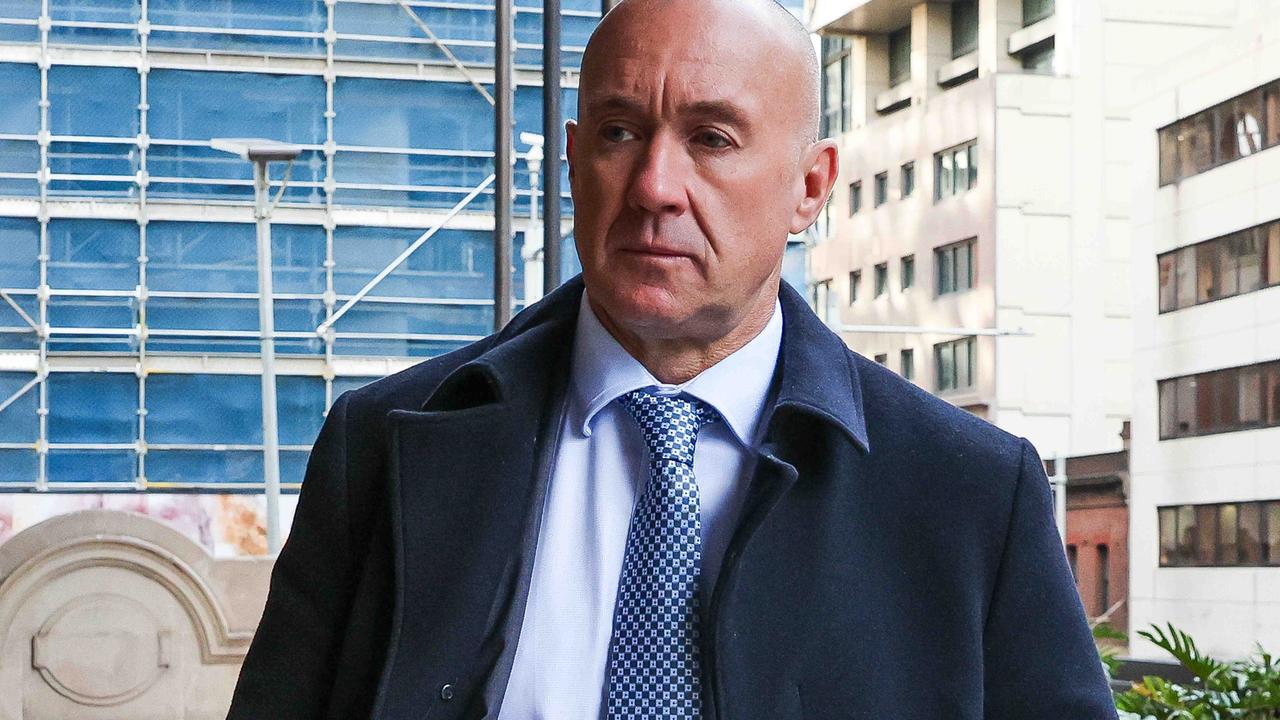
    A decades-old sexual assault case has opened at the Downing Centre District Court in New South Wales, Australia, where 56-year-old former police officer David Robert Blackbourne faces multiple criminal charges over the alleged abuse of a 17-year-old girl at a rural border police station in 1998. Blackbourne has entered a plea of not guilty to all five counts before the court: two counts of indecent assault, two counts of non-consensual sexual intercourse, and one count of public office misconduct.

    During the first week of the trial, the now-adult complainant, who cannot be named publicly under Australian law to protect her identity, took the witness stand to recount the sequence of events that she says unfolded in the months leading up to the alleged October 1998 assault. The woman, who was under the age of majority at the time, told the jury she first encountered Blackbourne, who she only knew by the first name Dave, on multiple occasions when she was a teenager living in the small rural town on the New South Wales-Victoria border.

    The first alarming interaction she detailed occurred months before the alleged rape, when Blackbourne and an unidentified second officer offered the teenager and her friend a ride home. The pair agreed, but were driven first to the local police station. At the station, the officers offered the underage girls alcoholic drinks they claimed were seized contraband, before the complainant was invited to view the holding cells out of curiosity. “I said yes, I was curious,” she told the court. When she stepped inside the large brick cell, Blackbourne locked the door behind her, leaving her trapped alone in the cold, dark, damp space for far longer than she expected. “I got quite panicked, like I couldn’t get out it was cold and dark,” she testified.

    In the months that followed, the complainant alleged Blackbourne leveraged his position of authority to ingratiate himself to her, saying he offered to ensure she could enter local pubs despite being underage. On one night walk, Blackbourne pulled over in his marked police vehicle, and the girl and her friend got inside. She told the jury that Blackbourne immediately handcuffed both of her wrists, then kissed her against her will, forcing his tongue into her mouth.

    The final, violent assault occurred in October 1998 when the teenager visited the police station to pick up a police hat she had arranged to borrow for a friend’s costume. After handing over the hat, Blackbourne told her she could not leave yet. The woman told the court Blackbourne suddenly became intimidating and angry, leaving her terrified that she was in trouble for taking the hat. He then kissed her again without consent, pulled down her pants, and raped her behind the police station’s front counter before forcing her into a separate room and assaulting her a second time.

    Breaking down in tears while staring directly at Blackbourne in the dock, the complainant recounted the aftermath of the assault. “Afterwards … he handed me some tissues and he told [me] to clean myself up,” she said. She walked home sobbing, and stopped halfway on a local bridge, where she contemplated ending her life. “I was very upset and overwhelmed by what happened … and I was contemplating jumping off the bridge,” she said.

    The woman told the court she kept the alleged abuse secret for four years, only disclosing the incident to her now-husband during a trip to Europe in 2002. She did not report the allegations to police until 2016, when she spoke to officers in Victoria, before the investigation was transferred to New South Wales Police in November 2021. Blackbourne was arrested and formally charged in 2023, more than 25 years after the alleged incident.

    In his opening statement to the jury, Blackbourne’s defence barrister Matthew Johnston SC said the former officer strongly denies every allegation. The defence does not dispute that Blackbourne was a serving officer at the time of the alleged events, but rejects all claims of sexual contact and misconduct. Johnston noted to the jury that the passage of more than two decades means the reliability and quality of the evidence presented will be a key point of contention throughout the trial.

    Presiding Judge Huw Baker SC reminded the jury of its legal obligation to the standard of proof: the prosecution carries the burden of proving all allegations against Blackbourne beyond a reasonable doubt. The trial is expected to continue in coming weeks as more evidence is presented to the jury.

  • Powerball ticket sales begin Tuesday in the United Kingdom

    Powerball ticket sales begin Tuesday in the United Kingdom

    Starting Tuesday, a new chapter in global lottery history will begin, as Powerball ticket sales launch across the United Kingdom for the very first time. This groundbreaking expansion means that lottery players across the Atlantic will now get a shot at the same enormous multi-million-dollar jackpots that American players have chased for decades — and they will face the same famously slim odds of taking home the top prize. The expansion, first unveiled back in April, is the result of a landmark partnership between the U.S.-based Multi-State Lottery Association, which runs Powerball, and U.K. lottery operator Allwyn UK. This milestone marks the first occasion that a lottery operating outside the United States will add to the cumulative Powerball jackpot, breaking new ground for one of America’s most well-known gambling games. For U.K. participants, the partnership opens the door to compete for far larger jackpots than any currently offered by domestic or European lotteries. The first Powerball drawing to include U.K.-purchased tickets will take place on Wednesday night, putting the new cross-border arrangement to its first test. To put the size of Powerball jackpots in context, the largest payout in the game’s history hit just over $2 billion — equivalent to roughly 1.5 billion pounds — won by a single ticket holder in California back in 2022. By comparison, the continent’s top pan-European lottery EuroMillions, which is also operated in the U.K. by Allwyn, has only awarded a maximum of 250 million euros (around $285 million) across three winning tickets held by players from France, Ireland and Austria over the full course of 2025. The chances of matching all numbers to claim the Powerball jackpot remain extraordinarily low, at just 1 in 292.2 million. Lottery officials have confirmed that these odds do not change for U.K. players, remaining identical to those that U.S. participants face when they buy a ticket. American lottery leaders say the expansion to the U.K. will deliver clear benefits to the game overall: a larger, global player base will allow jackpots to grow at a much faster pace, which in turn is expected to boost overall ticket sales as more participants are lured by the prospect of ever-larger grand prizes. There are a number of key differences between how Powerball works in the U.K. versus the United States, however. A single Powerball ticket is priced at $2 globally, but any tickets bought in the United Kingdom will only contribute to the game’s main jackpot, rather than the pool for lower-tier prizes. U.K. players will operate under an entirely separate structure for smaller secondary prizes. Additionally, advertised estimated jackpot amounts will differ between the two countries. This gap comes from two key factors: currency exchange rate fluctuations, and the fact that the U.S. publishes pre-tax jackpot figures to players, while the U.K. advertises final after-tax amounts. Another structural difference is in how jackpots are paid out. U.K. Powerball jackpot winners will receive their payout in annual installments spread over 30 years. In the U.S., by contrast, winners can choose between the 30-year annuity structure or an immediate one-time lump-sum cash payment — a choice that the vast majority of American jackpot winners opt for. Currently, Powerball is offered to players across 45 U.S. states, as well as Washington D.C., Puerto Rico, and the U.S. Virgin Islands. The rules of the game itself will not change with the U.K. expansion: players still select five white ball numbers from a range of 1 to 69, plus one red Powerball number from 1 to 26. Regular draw schedules also remain unchanged, with drawings held every Monday, Wednesday, and Saturday.

  • Video appears to show confrontation between Chinese and Philippine navy vessels

    Video appears to show confrontation between Chinese and Philippine navy vessels

    A fresh maritime dispute has emerged in the disputed waters of the South China Sea following allegations from the Armed Forces of the Philippines that a confrontation occurred between Chinese and Philippine naval assets, including an incident where a Chinese Coast Guard personnel reportedly struck an individual aboard a Philippine Navy vessel with a wooden baton.

    The incident, which was captured on video that has circulated in regional security circles, marks another escalation in ongoing tensions between the two nations over competing maritime claims in the strategically vital waterway. Philippine defense officials confirmed the authenticity of the footage to local media outlets, noting that the confrontation unfolded during a routine Philippine naval mission near a contested feature that both Beijing and Manila claim as sovereign territory.

    As of press time, Chinese authorities have not issued an immediate official response to the specific allegations put forward by the Philippine Armed Forces. Regional geopolitical analysts have warned that such close encounters between the two countries’ maritime security forces carry significant risk of miscalculation, which could further destabilize already tense relations in the region. This confrontation joins a growing list of minor skirmishes and standoffs that have occurred in the South China Sea in recent years, as claimant states continue to assert their territorial and economic rights over the resource-rich waters.

  • Houthis announce maritime embargo of Saudi Arabia

    Houthis announce maritime embargo of Saudi Arabia

    On Monday, Yemen’s Houthi movement declared a full maritime embargo against Saudi Arabia, a move that threatens to send new shockwaves through already strained global energy markets, against the backdrop of escalating U.S.-Iran tensions.

    The announcement came via a video address from Houthi spokesperson Yahya Saree, who framed the embargo as direct retaliation for a recent airstrike on Sanaa Airport that the group attributes to Saudi-led forces.

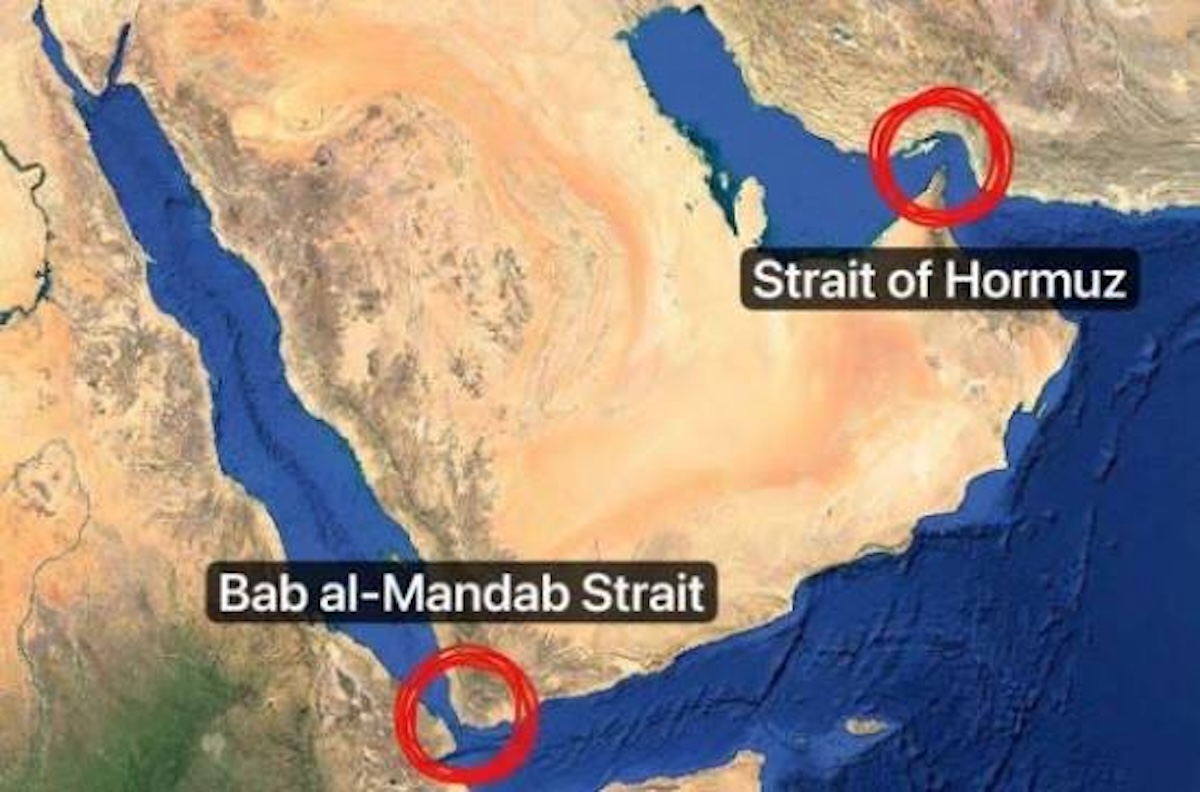
    This new threat to energy security comes amid a shifting global oil transportation landscape. Earlier this year, following heightened U.S. pressure on Iran, Iran restricted transit through the Strait of Hormuz — the world’s most important chokepoint for crude oil shipments. In the wake of that disruption, global oil markets have become far more reliant on shipping routes through the Strait of Bab al-Mandeb, the strategic waterway that sits off Yemen’s coast and connects the Red Sea to the Gulf of Aden.

    According to Bloomberg energy and commodities commentator Javier Blas, Saudi Arabia currently moves approximately 4.5 million barrels of crude oil per day through Red Sea shipping channels, the vast majority of which pass through the Bab al-Mandeb Strait. That means a Houthi-enforced embargo could take millions of barrels of daily oil shipments off the global market.

    Compounding this risk is the current state of U.S. crude reserves, which are already at historic lows. New data from the U.S. Energy Information Administration shows that U.S. crude inventories dropped by 1.7 million barrels in the week ending July 10, pushing stockpiles to their lowest level since 1983.

    Political scientists and energy experts have sounded the alarm over the potential economic fallout of this new disruption. University of Chicago political scientist Robert Pape warned that closing this additional critical shipping lane could prove catastrophic for the already fragile global economy. “The Titanic is now hitting the iceberg, and there are not enough lifeboats for the world economy, Pape added.

    University of Illinois international relations professor Nicholas Grossman pointed out that the Houthi embargo is just the latest in a cascading series of disruptions hitting global energy supply chains. “Iran blocking Strait of Hormuz. US blocking Iranian shipping. Iran bombing energy facilities in Gulf Arab states. US bombing energy facilities in Iran. Ukraine bombing energy facilities in Russia. Houthis disrupting Red Sea shipping. Oil and gas reserves running dry. It’s a lot, and adding up, Grossman noted.

    Juliette Kayyem, a senior lecturer at Harvard University’s Kennedy School and a former official in the Obama administration, argued that the very real threat of a widespread shutdown of global energy supplies should force U.S. policymakers to re-evaluate the utility of military force in the Middle East. “A bunch of military and conventional wisdom analysts assured the American public that our air dominance was unparalleled, Kayyem wrote. “The ‘never right but always certain’ crowd didn’t realize the war was going to be fought on water.”

  • Fires in Brazil’s Amazon dropped to historic low in 2025

    Fires in Brazil’s Amazon dropped to historic low in 2025

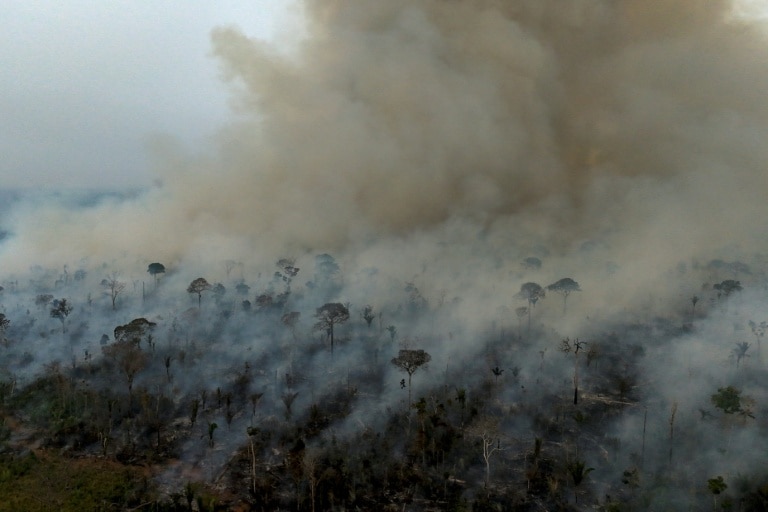
    In a striking reversal of the previous year’s catastrophic environmental damage, forest fires in Brazil’s Amazon rainforest dropped to the lowest level recorded since official monitoring began in 1985, according to a new report released this week by independent environmental monitoring network MapBiomas.

    The 2025 decline comes after 2024 saw the Amazon ravaged by widespread flames, driven by an unprecedented drought that amplified the spread of predominantly human-set blazes tied to agricultural clearing and illicit deforestation. MapBiomas’ analysis of satellite data puts the total burned area across the Brazilian Amazon in 2025 at 3.1 million hectares, or 7.7 million acres — a figure that marks a dramatic break from years of expanding fire activity in the world’s largest tropical rainforest.

    The downward trend was not limited to the Amazon: nationwide, total burned area across Brazil also fell to its smallest size since 2018. Report coordinator and geographer Ane Alencar described the sharp decline as “out of the ordinary,” attributing the shift to three key factors.

    First, an unusually delayed rainy season between the end of 2024 and start of 2025 eliminated the typical dry weather window that land clearers rely on to set intentional fires for agricultural expansion. These poorly managed blazes, often linked to illegal deforestation and unregulated mining activity, are the leading cause of Amazon wildfires.

    Second, MapBiomas recorded a parallel drop in Amazon deforestation in 2025, which reduced the volume of dry, cleared vegetation that acts as fuel for spreading flames. Finally, Alencar noted a significant “psychological factor” at play: communities that lived through the devastating 2024 fire season proactively helped contain small outbreaks before they could escalate into large-scale blazes.

    The report notes that this sharp decline interrupts a multi-year trend of growing fire activity in the Amazon, bringing the region back to historic low levels of burned area. However, the findings also include important caveats and warnings. Fires in the vast Cerrado savanna biome, which sits adjacent to the Amazon in central Brazil, continued to burn at the same high rates seen in recent years, with no decline recorded. Alencar also warned of rising risk for 2026, pointing to the projected arrival of a “super El Niño” event — a climate pattern that brings extended dry conditions and elevated wildfire risk to the Amazon.

    The drop in fires and deforestation represents a major political win for leftist Brazilian President Luiz Inácio Lula da Silva, who has made Amazon protection a core pillar of his reelection campaign ahead of October’s general election, where he is seeking a fourth non-consecutive term. Official data from the first quarter of 2026 already shows Amazon deforestation at its lowest rate this decade, and Lula has pledged to fully eradicate illegal deforestation across the country by 2030. Protecting the Amazon is widely recognized as a critical global priority for combatting climate change, as the rainforest’s dense vegetation absorbs vast volumes of the greenhouse gases that drive global warming.

    Even as Lula gains credit for the declining fire numbers, he faces ongoing backlash from environmental activists over his endorsement of a major new offshore oil exploration project off the Amazon coast, a decision that has drawn fierce criticism from climate and Indigenous rights groups.

  • Lebanese president to meet Trump as ‘pilot zones’ experiment begins

    Lebanese president to meet Trump as ‘pilot zones’ experiment begins

    For the first time in nearly 16 years, a sitting Lebanese president is set to step into the Oval Office for a high-stakes meeting with a U.S. head of state, marking a historic turning point for Lebanese-U.S. relations and the implementation of a new ceasefire deal between Lebanon and Israel. Joseph Aoun, a former commander of the Lebanese Armed Forces (LAF), will meet U.S. President Donald Trump on Tuesday, just one month after Washington mediated a trilateral framework agreement between Israel, Lebanon, and the United States aimed at ending a months-long conflict that has claimed more than 4,000 Lebanese lives.

    The first phase of the agreement officially launched on Monday, with the Trump administration confirming that so-called “pilot zone operations” have commenced in the southern Lebanese villages of Froun, Srifa, and Zawtar Al-Gharbiya. These operations are being overseen by the newly established U.S.-led Military Coordination Group for Lebanon. Under the terms of the framework, Lebanese armed forces will deploy to southern areas to take over security control as Israeli forces withdraw, with the core mission of disarming the Iran-aligned militant group Hezbollah. The conflict erupted in March, when Hezbollah launched rocket attacks into northern Israel in support of its ally Iran, prompting a large-scale Israeli incursion that has left roughly one-fifth of Lebanese territory under Israeli occupation to date.

    Key questions remain about the feasibility of the LAF’s assigned mission. The Lebanese military is already under-equipped compared to Hezbollah, which retains superior military capabilities across Lebanon and has not agreed to disarm itself. Washington has moved to shore up the LAF with a new $30 million funding boost last month, on top of a previously announced $100 million package of humanitarian aid for conflict-affected communities in the region, but analysts warn structural challenges could derail implementation.

    At a Monday media briefing hosted by the Tahrir Institute for Middle East Policy, Sami Halabi, policy director and co-founder of regional consultancy Triangle, outlined the conflicting incentives facing Hezbollah. “If the framework fails, Hezbollah gains politically, because continued Israeli occupation proves its argument that diplomacy cannot deliver for Lebanon and that its armed arsenal is necessary for national defense,” Halabi explained. “At the same time, the group and its political allies want Israeli forces to withdraw, particularly from territories that are home to their core electoral and community constituencies.”

    Halabi also pointed to a critical structural flaw in the deal’s security annex: the agreement frames Israeli movement as conditional redeployment rather than full withdrawal, with no binding timeline for completion and no automatic consequences for Israeli delays. “This creates a fundamental asymmetry between Lebanon and Israel,” he noted. Despite these concerns, U.S. officials have framed the framework as a landmark diplomatic breakthrough. U.S. State Department spokesperson Tommy Pigott called the deal a “milestone” in a Monday statement, adding that it grew directly out of recent Israel-Lebanon talks in Rome and that Washington would remain actively engaged to see the agreement through to full implementation. The Israeli military confirmed the process is underway in a post on X, warning it would “respond forcefully to any violation of the agreement.”

    Aoun’s Washington visit, which began Saturday when he arrived in the U.S. capital with his wife, marks the first time a Lebanese president has visited the White House since Michel Sleiman met then-President Barack Obama in 2009. Aoun has not previously held one-on-one talks with Trump, and has little of the close rapport other regional leaders like Syria’s Ahmed al-Sharaa have built with the U.S. president. Still, like all Arab leaders, Aoun shares the widespread assessment that only Trump can exert meaningful pressure to rein in Israeli expansion.

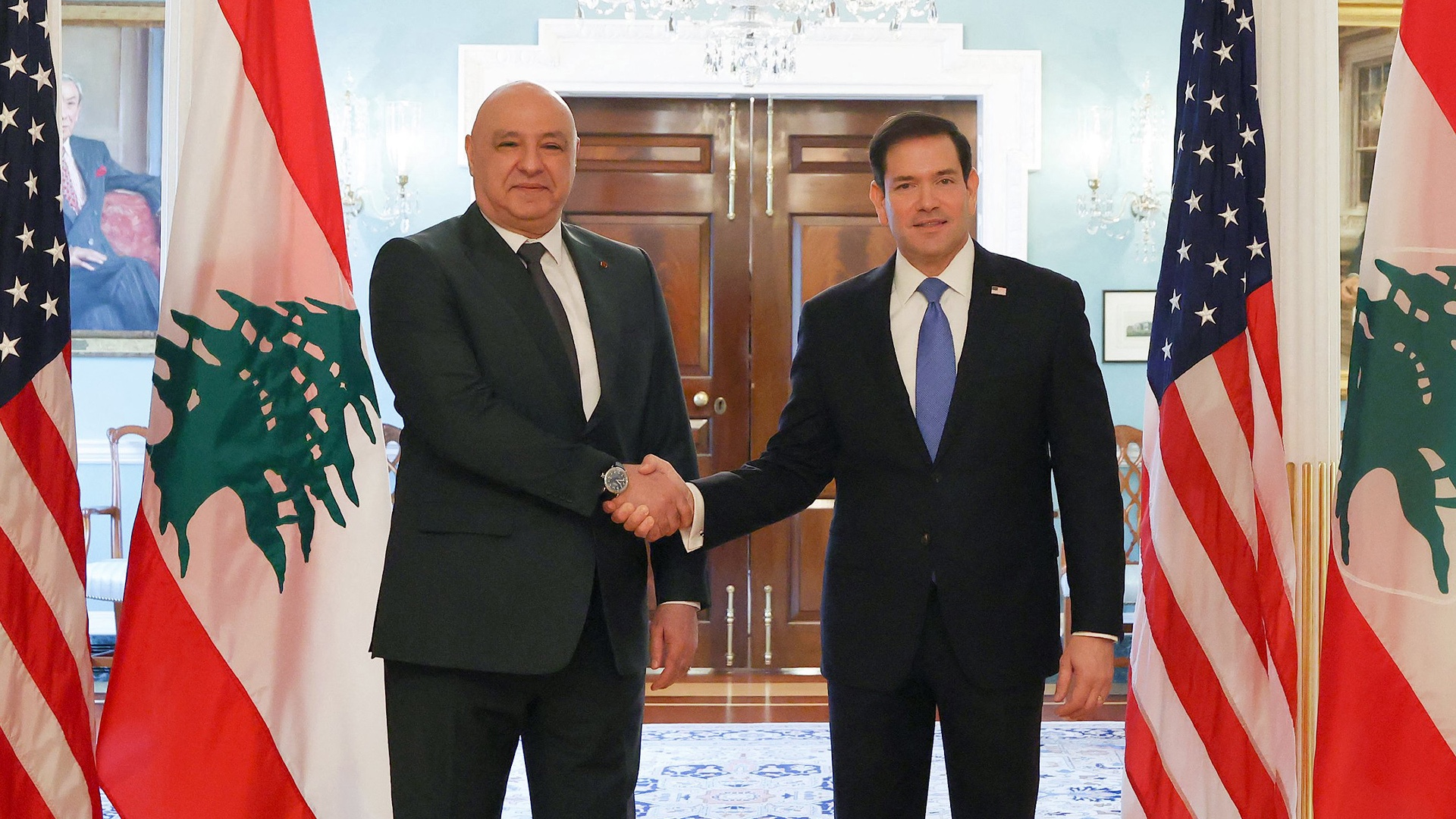
    In a break from standard diplomatic protocol, Aoun held a separate meeting with U.S. Secretary of State Marco Rubio at the State Department on Sunday ahead of his White House audience. The move, which notably saw Lebanon’s foreign minister Youssef Rajji skip the trip entirely, sparked public outrage across segments of Lebanese society, with many critics framing the snub of their top diplomat as a national humiliation. Rubio characterized the discussions as “very positive” following the meeting, telling reporters that “President Aoun will be able to return to Lebanon and say to the people of Lebanon that he is the one getting positive results” for the country. He also emphasized that Washington recognizes Aoun’s government as the sole legitimate authority in Lebanon, “not Iran, not Hezbollah.”

    The trilateral framework was finalized last month after five rounds of U.S.-hosted talks, with Rubio calling it “the beginning of the beginning” ahead of the official signing. Beyond the $30 million in support for the LAF and $100 million in United Nations-coordinated humanitarian aid, Rubio said the deal creates a clear, structured pathway to restore Lebanese sovereignty over its southern territory, disarm Hezbollah, dismantle the group’s military infrastructure, and allow Israel to secure its northern border once security threats are eliminated. “For Lebanon, this Framework provides a genuine pathway out of a long crisis. For Israel, it creates a verifiable path to removing the persistent threat on its northern border,” he said.

    Lebanese Ambassador to the U.S. Nada Hamadeh Moawad described the ongoing Washington negotiations as “long and difficult.” In a post on X, Lebanese Prime Minister Nawaf Salam welcomed the framework as a step toward “restoration of the state’s sovereignty” but emphasized that Lebanon will not take on any new obligations beyond those already outlined in UN Security Council Resolution 1701 and the 2024 ceasefire agreement. Salam also reaffirmed that “Only the legitimate forces are authorized to bear arms in Lebanon.”

    While Hezbollah refused to join direct negotiations with Israel, reports indicate the group maintained backchannel communications with the Trump administration throughout the mediation process. The militant group remains the most powerful military actor in Lebanon, with firepower that far outpaces that of the official Lebanese armed forces, leaving lingering uncertainty about whether the disarmament mandate at the core of the U.S.-brokered deal will ever be fully implemented.

  • Desperate Rohingya risk deadly voyages as trafficking surges

    Desperate Rohingya risk deadly voyages as trafficking surges

    For Rahela Begum, survival has become a chain of unthinkable hardships. After fleeing ethnic violence in Myanmar’s Rakhine State and spending eight years confined to the overcrowded Cox’s Bazar refugee camp in Bangladesh, the 25-year-old Rohingya refugee gambled everything on a dangerous sea crossing to Malaysia — and barely lived to tell the tale. In April, she joined 279 other refugees packed onto an overloaded wooden trawler, setting out from the southern Bangladeshi coastal town of Teknaf. Four days into the voyage, the overburdened vessel sank in the Andaman Sea, leaving Begum adrift with nothing but a discarded wooden plank to cling to for 48 hours.

    “I was floating like a dead body, and after great difficulty managed to raise my head slightly,” Begum recalled, describing her ordeal before a passing rescue vessel spotted her and pulled her from the water. She is one of the lucky ones: new data from the United Nations High Commissioner for Refugees (UNHCR) confirms 2025 was the deadliest year on record for Rohingya attempting these perilous voyages, with nearly 900 refugees counted dead or missing at sea. So far in 2026, the death toll has continued to climb at an alarming rate.

    More than one million Rohingya displaced from Myanmar currently reside in Cox’s Bazar, the world’s largest refugee settlement, where conditions have deteriorated sharply in recent years. Bangladesh’s national restrictions bar most refugees from leaving the camp, working formal jobs, or accessing stable economic opportunity, leaving the displaced population trapped in what many describe as an “open-air prison” with insufficient food, shelter, and basic services. With daily rations amounting to just 16 taka ($0.13) per person and most families only able to afford two meals a day, desperation has driven a surge in refugees turning to human trafficking networks to reach neighboring Southeast Asian countries including Malaysia, Indonesia, and Thailand.

    Trafficking has grown into a highly lucrative criminal enterprise for transnational networks that span Bangladesh, Myanmar, Thailand, and Malaysia, with recruiters operating openly within the Cox’s Bazar camps and along the border. A trafficker who spoke to AFP on condition of anonymity explained the operation: refugees are first gathered in Teknaf, packed onto small local trawlers, then transferred to larger sea-going vessels once they reach international waters. Recruiters can earn up to 250,000 taka ($2,000) per person they smuggle, and many do not view their exploitation of desperate refugees as a crime, instead framing it as fulfilling a demand for escape.

    UN data shows more than 6,500 Rohingya attempted sea crossings in 2025, meaning roughly one in every seven refugees who set out died or went missing at sea. The pace of departures has only accelerated in 2026: between January and May, UNHCR recorded 2,300 attempted departures from Cox’s Bazar, more than double the 1,180 recorded during the same period in 2025.

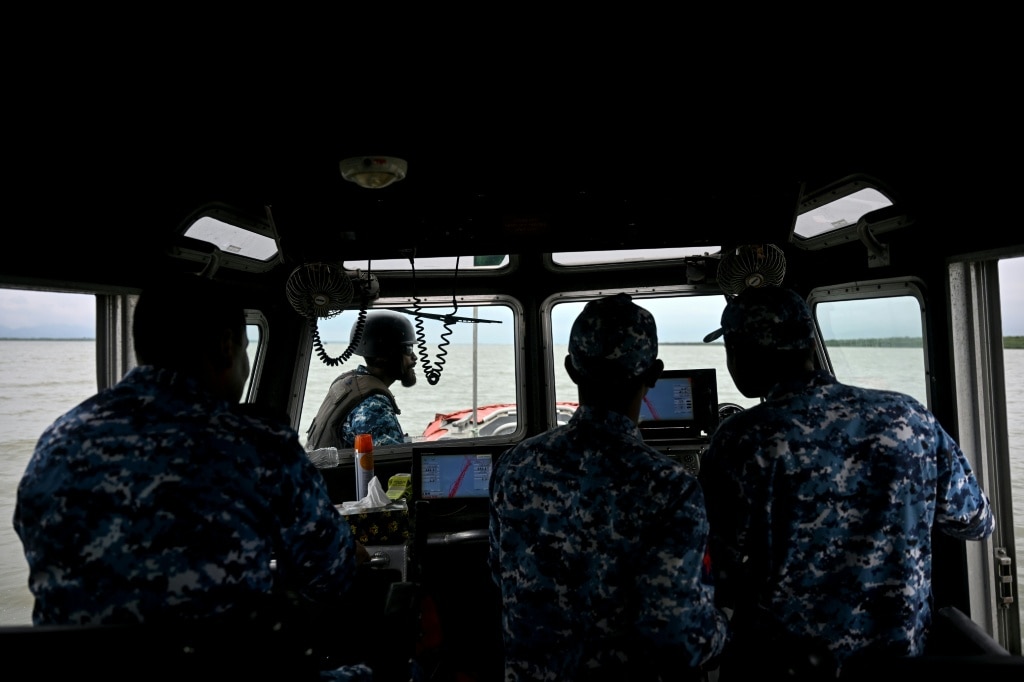
    Bangladeshi authorities have declared a “maximum alert” to curb the trafficking surge, but resources and capacity gaps have left them struggling to dismantle powerful transnational criminal networks. Coast Guard Lieutenant Mohammad Rawnak Rahman, who patrols the Naf River border between Bangladesh and Myanmar, says his team has already rescued 618 trafficking victims so far this year, but the crisis continues to outpace their response. Across the border in Rakhine State, ongoing clashes between the ruling Myanmar junta and Arakan Army rebels have added more instability, pushing additional Rohingya to flee toward Bangladesh’s already overstretched camps.

    At the Cox’s Bazar courthouse, lead prosecutor Tawhidul Anwar described being overwhelmed by the scale of the crisis, saying his office is currently handling roughly 500 active trafficking cases. “Investigators aren’t very effective, it’s hard to obtain evidence. The traffickers are very powerful,” Anwar explained, noting that even traffickers arrested following high-profile shipwrecks like Begum’s April voyage have been released on bail, despite facing potential life sentences for their crimes. Local police superintendent ANM Sajedur Rahman echoed that frustration, adding that authorities lack the funding and personnel to break up the sprawling trafficking networks.

    Sayed Ullah, president of the United Rohingya Council, said the desperation driving refugees to risk their lives at sea should come as no surprise to the international community. “Each person has to survive on two meals a day, and 16 taka ($0.13),” he said. “No one should be surprised that people try to leave, hoping to find something better.” Bangladeshi officials have long argued that easing movement and work restrictions for refugees is unfeasible, as the country’s own limited resources are already stretched thin by hosting more than a million displaced people.

    For the Rohingya, community leaders say the only long-term solution is a lasting peace agreement in Myanmar that would allow refugees to return safely to their homes. But that outcome remains distant: the civil conflict ignited by the 2021 military coup in Myanmar continues to rage across the country, with US-based conflict monitoring NGO Acled recording more than 100,000 total deaths from fighting to date.

    Back at her makeshift bamboo-and-tarpaulin shelter in Cox’s Bazar, Begum says her dream of freedom sank along with the boat that was supposed to carry her to a better life. “God has granted me peace nowhere in this world,” she said. “Not in my country, not here.”

  • Tropical Storm Bertha threatens US Gulf coast

    Tropical Storm Bertha threatens US Gulf coast

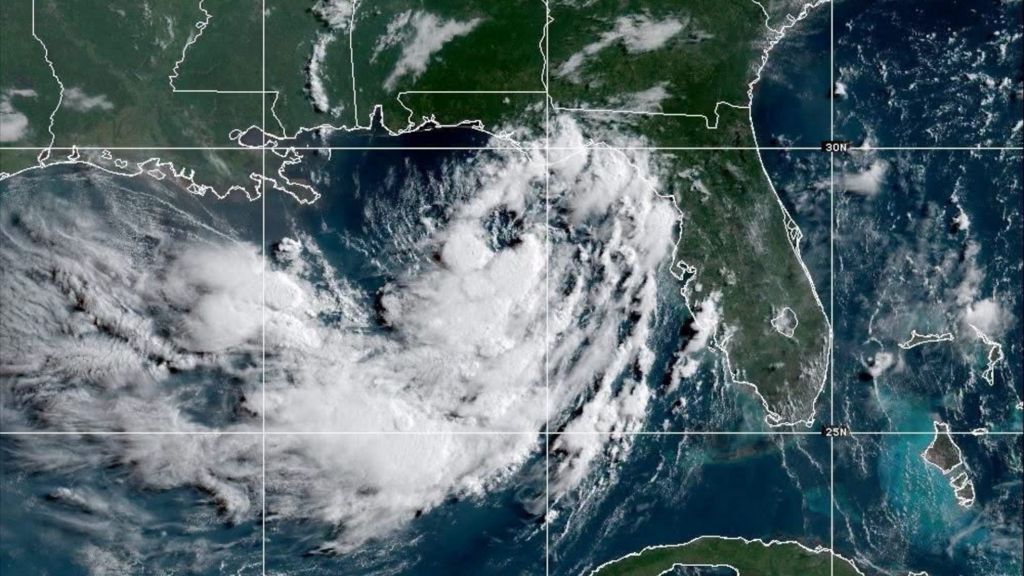
    As the 2025 Atlantic hurricane season unfolds, the second named storm of the year is already posing major hazards to communities across the U.S. Gulf Coast. The National Hurricane Center (NHC), based in Miami, has issued urgent warnings that Tropical Storm Bertha, currently churning in the Gulf of Mexico, will bring extreme weather conditions including life-threatening storm surges, widespread flooding, and isolated tornadoes to the Southeast United States over the coming days.

    As of Monday’s official updates, the storm was positioned roughly 105 miles (165 kilometers) south of Panama City, Florida. At that time, it packed sustained maximum winds of 40 miles per hour (65 kilometers per hour), with tropical storm-force gusts extending as far as 70 miles out from the storm’s central circulation. Tracking northwest at a slow pace of just 3 miles per hour, the NHC projects Bertha will travel along or near the northern Gulf Coast through mid-week, gradually gaining strength before making a potential landfall near New Orleans, Louisiana on Wednesday.

    The forecasted storm path puts multiple Gulf states on high alert: Alabama, Florida, Louisiana, and Mississippi all face elevated risks of flash flooding and storm surge as the system drifts westward toward the Texas coastline. Meteorologists predict some regions could accumulate up to 8 inches (20 centimeters) of total rainfall by Friday, and Florida is at particular risk of brief, isolated tornadoes that can spin off from slow-moving tropical systems. For coastal areas of Louisiana and Mississippi, officials expect storm surges to reach between 1 and 4 feet above normal tide levels, a rise that can overwhelm low-lying shoreline communities and cause widespread coastal flooding. Slow-moving storms also raise the risk of urban flash flooding, as heavy rainfall overwhelms drainage systems in densely populated areas.

    In preparation for the storm’s arrival, New Orleans has already begun distributing sandbags to residents to reinforce homes and properties against floodwaters. Local officials have also urged residents to clear debris from public storm drains to help prevent clogging that would worsen flood conditions. The storm’s landfall comes as the U.S. South is already gripped by a record-breaking sweltering summer heatwave, adding an extra layer of risk for residents who may lose power during storm impacts.

    After making landfall, forecasters project that Bertha will gradually weaken back to tropical depression status by Thursday, and is expected to fully dissipate by the end of the week as it approaches the Texas coast. Currently, a tropical storm watch is in effect stretching from Florida’s Ochlockonee River westward to the border of Jefferson and Plaquemines Parishes in Louisiana, covering hundreds of miles of vulnerable coastline. Bertha follows Tropical Storm Arthur, which brought moderate flooding to parts of the U.S. last month, marking just the second named storm of this year’s Atlantic hurricane season.