博客

  • Asian shares edge higher after Wall Street climb, even as Brent oil keeps rising

    Asian shares edge higher after Wall Street climb, even as Brent oil keeps rising

    Global equity markets kicked off mid-week with broad upward momentum across Asia on Wednesday, as a tech-fueled rally on Wall Street carried over into regional trading, even as mounting geopolitical tensions push crude oil prices to multi-month highs and stoke fresh inflation concerns.

    The upward trend across most Asian benchmarks got an early boost from positive trade data out of Japan, where government figures showed both imports and exports recorded year-over-year increases last month. A sharp depreciation of the Japanese yen has inflated the converted value of dollar-denominated trade flows, pushing the country’s benchmark Nikkei 225 up 1.9% to close at 67,511.12. Elsewhere in the region, Australia’s S&P/ASX 200 gained 0.4% to settle at 8,830.60, while South Korea’s Kospi notched an impressive 4.6% jump to reach 7,061.36. Mainland China’s Shanghai Composite edged up nearly 0.5% to 3,882.95, while Hong Kong’s Hang Seng bucked the regional upward trend to dip 0.7% to 24,947.30.

    The bullish momentum in Asian markets traces directly to a strong rally on Wall Street a day earlier, where artificial intelligence-linked stocks led broad gains after steep sell-offs the prior week. For a second consecutive trading session, semiconductor manufacturers and other tech firms positioned to benefit from the global AI boom led the market upswing. The S&P 500 climbed 0.9%, the Dow Jones Industrial Average gained 385 points, or 0.7%, and the tech-heavy Nasdaq composite rose 1.3%.

    AI stocks have been the most volatile segment of global markets in recent weeks: after a months-long rally driven by explosive growth in AI investment and demand for AI-focused semiconductors and data center infrastructure, the sector pulled back sharply last week on concerns that valuations had risen too far, too fast. On Tuesday, however, the sector bounced back strongly. Micron Technology led the rebound, jumping 12.2% following its 13.3% drop the prior week, adding to a 1.9% gain from the prior session. Nvidia added 2%, and the two chipmaking giants were the single largest contributors to the S&P 500’s overall gain.

    All market gains have come despite growing pressure from rising crude oil prices, which have climbed amid escalating military tensions between the United States and Iran. In early Wednesday energy trading, benchmark U.S. crude rose 85 cents to $85.19 per barrel, while international benchmark Brent crude climbed $1.04 to hit $92.05 per barrel, crossing the $91 threshold that has stoked new inflation worries among traders.

    For major oil-importing economies like Japan, the combination of a depreciating domestic currency and spiking crude prices creates a dual economic shock. “Oil makes the situation more difficult because Japan imports most of its energy. A weaker yen and higher crude prices arrive together like two waves hitting the same seawall,” explained Stephen Innes, an analyst and former professional trader.

    In currency markets, the U.S. dollar held steady at 163.14 Japanese yen on Wednesday, while the euro inched slightly higher to $1.1406 from $1.1404.

    The run-up in oil prices comes at a particularly sensitive moment for global monetary policy, as it threatens to reverse recent declines in headline inflation that had raised hopes that central banks could begin rolling back tight interest rate policies. Persistently higher energy costs could force the U.S. Federal Reserve and other major central banks to keep interest rates elevated, or even implement additional hikes, which would slow global economic growth and put downward pressure on equity and asset prices.


  • Jurors in rape trial of high-profile man urged to reject ‘ulterior motive’ claim

    Jurors in rape trial of high-profile man urged to reject ‘ulterior motive’ claim

    A high-profile Melbourne businessman facing multiple sexual violence charges is currently on trial at Melbourne’s County Court, with prosecutors pushing jurors to dismiss the defense’s argument that his accuser fabricated her claims for financial gain.

    The defendant, whose identity remains protected by a court-ordered suppression order, has entered a plea of not guilty to two counts of rape and one count of sexual assault. The charges stem from an alleged incident in 2023, where prosecutors claim the sexual violence occurred after the pair spent an evening consuming alcohol and cocaine together. According to court documents, after the alleged assault, the accuser punched the businessman and called him a rapist, to which he reportedly responded, “It’s not rape, I was using my fingers.”

    Leading the defense team, barrister Dermot Dann KC has maintained that the alleged incident never occurred, and has repeatedly questioned the accuser’s credibility and reliability as a witness, arguing she had clear motive to fabricate the story to harm the defendant or extract money from him. Dann noted at the opening of the trial that there are “massive” inconsistencies undermining the accuser’s account, and that the prosecution’s entire case hinges on jurors accepting her testimony as truthful.

    In his closing address delivered to the jury on Wednesday, prosecutor Matthew Fisher openly acknowledged that the accuser’s evidence contains gaps, discrepancies, and inconsistencies. Even so, Fisher stressed that the core of the woman’s account has never shifted: “Not once did she waver from the alleged sexual offending … She’s been consistent and adamant throughout this that this is what he did to her in that room on that night.”

    Fisher directly pushed back against the defense’s claim of a fabricated, financially motivated claim. He argued that if the woman had indeed constructed the allegations to get money or retaliate against the businessman, she “could have done a better job” of crafting a consistent, self-serving narrative. He pointed to key evidence that contradicts the idea of a pre-planned lie: text messages sent to the woman’s mother on the night of the incident show she had no intention of contacting police, and she agreed to keep the encounter secret to protect the defendant’s reputation. Additional evidence also shows she continued to speak positively about the businessman, who was her former boss, stating she still believed in his professional vision and that he was “greater than his actions.”

    “This is a case where the defence are going to suggest to you (the woman) has an ulterior motive for making these allegations,” Fisher told the jury. “That would be the last thing she would be doing if she wanted to make all of this up.”

    The trial is ongoing and is expected to conclude in the coming days as both sides wrap their arguments.

  • Nearly 100 US troops injured by Iran strikes, Pentagon says

    Nearly 100 US troops injured by Iran strikes, Pentagon says

    A sharp escalation in hostilities between the United States and Iran has left nearly 100 American service members with injuries and four confirmed dead, Pentagon spokesperson Sean Parnell confirmed Monday, ending hours of public denial and pushing back against accusations that the Defense Department intentionally hid casualty data from the public. The announcement comes amid a fifth consecutive week of cross-border strikes after the collapse of a 60-day ceasefire brokered by Pakistan in June, raising fears of a full-scale ground conflict in the Middle East.

    The current cycle of violence began when Iran launched retaliatory drone and missile attacks against US military facilities across four Gulf nations — Bahrain, Iraq, Jordan, and Kuwait — in response to nightly American airstrikes on Iranian targets. Hours before Parnell’s Monday confirmation of injuries, the Pentagon had publicly dismissed a bombshell New York Times report claiming the agency concealed dozens of troop casualties as “baseless” and “malicious” falsehoods.

    “This is the most transparent Department of Defense in American history,” Parnell told reporters Monday. “We challenge the so-called journalists who wrote these lies — one of whom was recently subpoenaed for violating federal criminal law — to stop their smears against the finest fighting force on Earth.” Notably, the Pentagon’s official public casualty database still listed zero US troops killed or wounded in action for July as of Monday morning, before the department issued a corrected update.

    The corrected disclosure reveals three US Army soldiers were killed over the weekend in a ballistic missile strike on Muwaffaq Salti Air Base in Jordan: 19-year-old Private Isabella Gonzales from Carrollton, Texas; 25-year-old Lieutenant Tyler James Feehan from Ewa Beach, Hawaii; and a third service member who remains provisionally listed as missing. Separately at Iraq’s Erbil Air Base, 30-year-old Sergeant Michael Emmanuel Swinton from Fayetteville, North Carolina, was killed while another was wounded during a controlled detonation of an incoming Iranian attack drone.

    Parnell wrote in a post on X that future updates to casualty figures will be posted to the Defense Casualty Analysis System, the official platform that tracks service member deaths, wounds, illnesses, and injuries for Congress and the US president. He emphasized that the vast majority of the nearly 100 injured troops only suffered minor concussions, and 96 percent have already returned to active duty.

    Accusations of casualty cover-ups by the Pentagon during the long-running conflict with Iran are not new, according to reporting from The Intercept, which has documented a pattern of underreporting of harm to US troops for years. The current escalation follows the collapse of the 60-day ceasefire that went into effect after the signing of the Islamabad Memorandum of Understanding between the two sides in June.

    Tehran has issued a stark warning to Washington, saying it is prepared to confront any American ground invasion, with Iranian foreign ministry spokesperson Esmaeil Baghaei stating that the country’s leadership is “counting down the minutes to welcome” any invading US forces. Baghaei added that the terms of the Pakistan-brokered June interim deal are “completely clear,” leaving Washington with no excuse for its violation of the agreement. US Central Command confirmed Monday that it has carried out nine straight nights of airstrikes on Iranian targets following the weekend deaths of US troops.

    In its early Monday post on X, the US military said the latest round of strikes targeted “Iranian military command centers, air defense and coastal surveillance sites, maritime capabilities, missile and drone launch sites and communications networks.” The statement added that the new wave of attacks is intended to “further diminish Iran’s ability to attack commercial vessels and civilian mariners transiting the Strait of Hormuz,” a critical global chokepoint for oil trade.

    US President Donald Trump told reporters Monday that the “very hard” strikes were launched “in honor” of the four fallen American service members. “We hit them very hard again tonight, and we did that in honor of… three great patriots,” Trump said, referring to the three confirmed fatalities in Jordan. He claimed that Iran “has been very, very badly damaged. They’ve lost everything almost – militarily… They’ve got some missiles, some drones, some manufacturing ability, not much.” When asked about the fallen troops, Trump said “we feel very badly,” adding that the troops died fighting to prevent Iran from developing a nuclear weapon.

    Also on Monday, Iranian state media reported that US strikes hit multiple sites in Bushehr, the southern port city that hosts Iran’s only operational civilian nuclear power plant. “A few minutes ago, several locations in Bushehr city were hit by [the] American enemy’s projectiles,” Bushehr Governor Mohammad Mozaffari confirmed, noting that authorities are still assessing the scope of damage from the attack. On Sunday, Tehran called on the International Atomic Energy Agency to condemn a separate US attack on the under-construction Darkhovin nuclear plant in southwestern Iran. Iran’s Atomic Energy Organisation called the strike “a clear violation of international law.”

  • Venezuela’s Nicolás Maduro back to court for pretrial hearing in his US drug trafficking case

    Venezuela’s Nicolás Maduro back to court for pretrial hearing in his US drug trafficking case

    NEW YORK – More than a month after a dramatic overnight U.S. military raid on his Caracas residence captured Venezuelan leader Nicolás Maduro and his wife Cilia Flores, the pair is set to return to a Brooklyn federal courtroom Wednesday for the next phase of pre-trial proceedings. Court observers expect Maduro’s legal team to escalate their challenge against the extraordinary cross-border operation that brought the sitting Venezuelan head of state to New York to face U.S. drug trafficking conspiracy charges.

    The 63-year-old Maduro and 69-year-old Flores have remained in detention at a Brooklyn jail since the early-January seizure, a move that sent shockwaves through global geopolitics. Both have formally entered not guilty pleas to the charges, which carry a potential sentence of life imprisonment if a jury convicts them of overseeing a long-running plot to flood the U.S. market with cocaine.

    The Trump administration has framed the unprecedented operation as a carefully targeted law enforcement action, noting that the initial criminal indictment against Maduro was first unsealed six years ago. But Maduro and his allies have rejected that framing entirely, labeling his capture a deliberate kidnapping and casting himself as a prisoner of war rather than a criminal defendant.

    U.S. prosecuting attorneys allege that Maduro built a systematic criminal enterprise that worked in collusion with corrupt Venezuelan law enforcement officials to facilitate the shipment of thousands of tons of cocaine into the United States, working directly with notorious drug trafficking kingpins to move the illicit product. During his January arraignment, Maduro pushed back against the claims in a public statement delivered in Spanish, saying: “I am not guilty. I am a decent man, the constitutional president of my country.”

    Maduro’s lead defense counsel Barry Pollack has confirmed that the legal team will center its early arguments on disputing the legitimacy of the cross-border seizure, which Pollack has described as a military abduction. Lawyers for both defendants note that there are a series of complex legal questions surrounding the case that must be resolved by the court before any trial on the underlying criminal charges can move forward.

    In an unusual turn, neither Maduro nor Flores has filed a motion for bail release ahead of trial. U.S. District Judge Alvin K. Hellerstein, who is presiding over the case, has not yet scheduled a date for trial proceedings to begin.

  • France passes law banning under-15s from social media

    France passes law banning under-15s from social media

    In a landmark move that sets a new precedent for youth digital protection across the continent, France’s national parliament has given final approval to a groundbreaking law that will bar all users under the age of 15 from accessing social media platforms, with full implementation scheduled for January 2027. The legislation, which comes amid growing global concern over the impact of social media on children’s mental health and development, mandates universal age verification for every social media user in France. This places France at the forefront of a growing global movement to regulate youth social media access, following similar action taken by Australia late last year. The bill secured final passage in both the French Senate and the National Assembly on Tuesday, overcoming criticism from left-wing political factions and digital rights advocates to become law. President Emmanuel Macron, who first pledged to introduce this regulation as a signature policy to cap his second and final term in office, publicly praised the approval of the ban this week.

    The new rules will roll out in two staggered phases to give platforms and users time to adjust. Starting this September, any new social media account created from France will require mandatory age verification, and users under 15 will be blocked from opening new accounts entirely. By January 2027, the age verification requirement will extend to every existing social media account, meaning every user based in France will need to prove they are over 15 to retain access to platforms. All age verification tools used by platforms must receive official approval from France’s independent national privacy regulator to ensure compliance with data protection standards.

    Despite the government’s enthusiasm for the policy, it has faced a wave of criticism from skeptics, who have raised a host of practical and ethical concerns. Key points of contention include the potential privacy risks associated with collecting age and identity data from millions of users, questions about how effective current age verification tools are at preventing circumvention, and criticism over the relatively fast timeline for drafting and rolling out the ban. Speaking ahead of the parliamentary vote, French Digital Minister Anne Le Hénanff pushed back against criticism of the quick rollout, arguing that functional, tested age verification tools are already available for platforms to deploy, eliminating the need for a longer waiting period.

    France is only the second country in the world to implement a nationwide full ban on underage social media use, following Australia’s December 2024 ban on social media access for users under 16. Early assessments of Australia’s policy have offered important lessons for France and other nations moving forward with similar regulations. As of March 2025, Australia’s eSafety Commission reported that seven out of 10 children under 16 who held social media accounts before the ban entered into force still retain some level of access to the platforms. Tama Leaver, a professor of internet studies at Curtin University in Western Australia, told the BBC that Australia’s ban has technically failed to meet its core goal of blocking underage access, though it has proven that nationwide regulatory action of this kind is politically and administratively possible, framing it as a valuable early policy experiment. Leaver noted that a key takeaway for other countries is the need to include young people in the policy design process, arguing that regulations work best when they are developed with input from youth rather than imposed on them.

    Leaver added that France’s policy may have a slightly higher chance of reducing underage access than Australia’s, thanks to its requirement for universal age verification covering all users, not just new accounts. But he also warned that the universal mandate brings greater privacy risks, as it requires every social media user in France to submit identity data for verification. He also pointed to additional unintended consequences that could emerge from the ban, including pushing underage users toward unregulated, less safe online platforms outside of mainstream social media, reducing young people’s access to news and public information, and weakening youth political engagement by cutting off their primary space for online civic discourse.

    France’s approval of the ban comes as legislative action to restrict youth social media access accelerates rapidly across Europe. In the United Kingdom, former Prime Minister Keir Starmer announced in June 2025 that the UK will implement its own ban on under-16 social media access, also scheduled to take effect in January 2027, alongside an optional midnight curfew for 16 and 17-year-old users. At the EU level, European Commission President Ursula von der Leyen proposed a policy of “social media delay” for underage children across the bloc in May 2025, confirming that new EU-wide legislation on the issue will be introduced in the coming months.

  • Italy prop Riccioni gets 2-week ban for sideline red card in Nations Championship rugby test

    Italy prop Riccioni gets 2-week ban for sideline red card in Nations Championship rugby test

    PERTH, Australia — Another chapter of disciplinary trouble has hit Italy’s national rugby union squad during their 2024 Nations Championship tour, with front-rower Marco Riccioni becoming the third member of the team to receive a suspension in just two weeks. The 32-year-old prop received an immediate red card in the 66th minute of Italy’s 57-10 defeat to the Wallabies last Saturday at Optus Stadium in Perth, after an unsportsmanlike altercation that spilled off the playing pitch.

    What makes Riccioni’s offense unusual is that he had already been substituted out of the match and was on the bench when a physical scuffle between on-field players rolled into the Italian technical zone. In the chaos, Riccioni intervened, and his actions knocked multiple members of Italy’s support staff off their seating in the team area.

    On Wednesday, the tournament’s independent Foul Play Review Committee finalized its ruling on the incident, confirming a two-week suspension for the Italy international. The committee noted that the severity of the unsportsmanlike conduct originally warranted a four-week ban, but the sentence was cut in half after accounting for two mitigating factors: Riccioni’s immediate admission of guilt for his role in the incident, and a clean prior disciplinary record throughout his professional career.

    The suspension rules Riccioni out of his club Perpignan’s first two pre-season French Top 14 matches scheduled for August. His ban marks the third disciplinary action against an Italy staff or player since the start of the Nations Championship tour. Two weeks prior, Italy head coach Gonzalo Quesada faced a misconduct hearing over critical comments he made about match officials following Italy’s 47-17 loss to New Zealand on July 11. Quesada’s original two-match suspension was also reduced to one on appeal.

    Just one match before Riccioni’s red card, Italy lock Niccolo Cannone was handed a four-week suspension after being sent off for a head-butt offense during the All Blacks clash in Wellington. This run of disciplinary issues comes as Italy have struggled for results on their Southern Hemisphere tour, dropping their first three consecutive Nations Championship outings. After a 27-10 opening loss to Japan in Tokyo on July 4, the Azzurri fell to New Zealand and then Australia, leaving them winless early in the new annual global rugby competition.

    The Nations Championship, which launched this year to replace the former Rugby Championship and Six Nations summer tour schedules, has already seen a series of high-discipline matches across the opening round of matches. Related results from the tournament’s opening weekend include England’s narrow 31-26 victory over Argentina played with just 13 players for much of the second half after seven total yellow cards were issued, South Africa’s dominant 43-0 shutout of Wales that kept the Springboks unbeaten, and Scotland’s second-half comeback win over Fiji 33-17 at Murrayfield.

  • Michelin-starred restaurateur faces jail for using ants as dessert garnish

    Michelin-starred restaurateur faces jail for using ants as dessert garnish

    A high-profile food safety case is making headlines in South Korea, where the owner of an elite two-Michelin-starred Seoul restaurant is facing steep legal penalties after being charged with serving unapproved ants as a gourmet dessert topping. Local media outlets have confirmed that state prosecutors are pushing for a 12-month prison sentence and a 20 million Korean won (equivalent to roughly $13,510) fine against the unnamed eatery owner, whose menu included ant-topped sorbet that violates the country’s strict food safety regulations. Under South Korean law, only 10 specific insect species are cleared for human consumption – a list that includes grasshoppers, locusts, and two-spotted crickets, but excludes all ant varieties. The case first came to the attention of food safety regulators after Ministry of Food and Drug Safety officials stumbled across customer reviews posted online, paired with photos of restaurant dishes visibly sprinkled with whole ants. Subsequent investigations by authorities have revealed that over a four-year period, the restaurant imported approximately 49,000 ants from suppliers based in the United States and Thailand to incorporate into multiple menu items. Most notably, testing from South Korean health regulators found that the ants used by the restaurant contained dangerously high levels of heavy metals – as much as 55 times the concentration allowed for commercially sold edible insects, local newspaper The Chosun Daily reported. In court, the restaurant owner has mounted a defense pushing for leniency, acknowledging that ants did appear on the menu but arguing their use was extremely limited. The ants only featured as a topping for sorbet in the restaurant’s 15-course tasting menu, he explained, and all guests were explicitly notified that they could request an alternative topping if they preferred not to eat ants. The owner further noted that roughly 40% of diners opted out of the ant topping entirely, receiving fermented vinegar or edible flowers instead, and that using ants as a gourmet ingredient is common practice at high-end restaurants in other countries including Australia, Denmark, and the United Kingdom. South Korea’s formal approval process for edible insects weighs multiple key criteria before clearing an insect species for commercial use, including potential food safety hazards, inherent toxicity, nutritional value, and the ability to breed and process the insects consistently under hygienic conditions. While the case has not named the specific restaurant or its owner, there are only 10 two-Michelin-starred restaurants across South Korea, all of which are based in Seoul. For context, the Michelin Guide’s globally recognized rating system awards up to three stars to restaurants based on rigorous assessment of ingredient quality, flavor consistency, technical cooking skill, and the chef’s unique creative vision. Two stars, the rating held by the restaurant at the center of this case, indicate the establishment serves “excellent cooking” that is “worth a detour” per Michelin’s official criteria. It is worth noting that ants have a long history as a traditional food source across many global cultures, valued as a delicacy in multiple regions of Asia, Africa, and Latin America. Weaver ants and their eggs are a common ingredient in traditional Thai and Cambodian cuisine, for example, and queen ants are considered a luxury ingredient on par with caviar in parts of Colombia. Now, the Seoul court hearing the case is scheduled to issue its final verdict on September 2, with the outcome expected to set a clear precedent for how South Korean regulators handle unconventional gourmet ingredients that fall outside of existing approved food frameworks.

  • West Indies beats New Zealand by 2 wickets in the 5th ODI; New Zealand takes the series 3-2

    West Indies beats New Zealand by 2 wickets in the 5th ODI; New Zealand takes the series 3-2

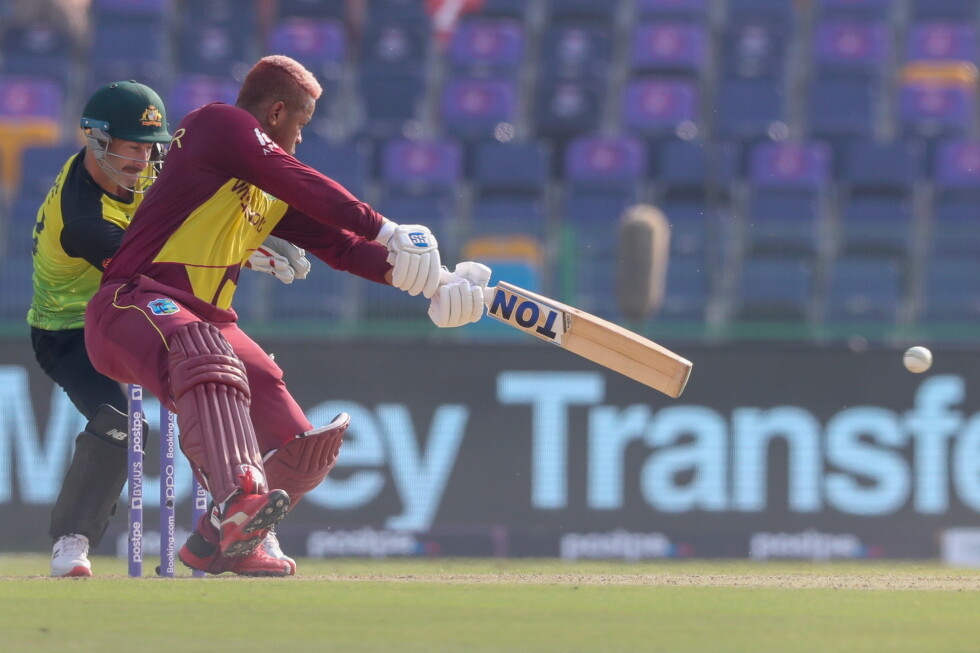
    BRIDGETOWN, Barbados — In a gripping fifth and final One Day International that capped a back-and-forth five-match series, Shimron Hetmyer delivered a cool-headed late-innings performance to notch an unbeaten 69 and lift the West Indies to a two-wicket win over New Zealand on Tuesday. Despite the hosts closing out the series with a victory, New Zealand retained the upper hand across the contest, clinching the series 3-2 after consistent results through the earlier fixtures. New Zealand’s comeback run followed an opening-match seven-wicket win for the West Indies, with the visiting side securing victories in Game 2 by five wickets, Game 3 by six wickets, and Game 4 to lock in the series lead.

    A striking statistical quirk defined the entire five-match series: every single game was won by the team batting second. On Tuesday, that trend held firm, as the West Indies chased down New Zealand’s first-innings total of 268-9 to reach 269-8, with 15 overs still remaining when they crossed the winning line. Hetmyer’s fifth ODI half-century was anchored by a critical 95-run fifth-wicket partnership with Sherfane Rutherford, who contributed a polished 61 of his own. The pair built on a solid 59-run third-wicket foundation established by Shai Hope (39) and Keacy Carty (20), putting the West Indies on track for a seemingly comfortable victory for much of the chase.

    But the match quickly turned into a seesaw battle that shifted momentum multiple times in the final overs. When Rutherford was dismissed with the West Indies at 218-5, the side still needed 41 runs to win with just under 10 overs left to bat. Gudakesh Motie followed back to the pavilion three overs later at 239-6, putting New Zealand back in contention. The visiting side came close to sealing a sweep of the final two matches when fast bowler Jacob Duffy knocked out Matthew Forde and Alzarri Joseph on consecutive deliveries in the 45th over, leaving the West Indies still needing 21 runs to win with just two wickets in hand.

    In an unexpected tactical call that would later shape the match outcome, New Zealand captain Mitchell Santner pulled left-arm spinner Jayden Lennox from the attack, despite Lennox having claimed 3 wickets for just 35 runs across his nine overs. That decision opened the door for Hetmyer, who struck two decisive sixes off Duffy in the 47th over, swinging the momentum firmly back to the West Indies to see them cross the finish line with more than two overs to spare.

    For his standout performance across the entire series, Lennox earned player of the series honors after finishing with 14 total wickets at an exceptional average of 13.6. Reflecting on his match-winning knock after the game, Hetmyer said he prioritized team success over personal milestones. “I wasn’t really thinking about getting a half-century to be honest, I was just thinking about how … I can make sure the team crosses the line,” Hetmyer said. “Every time a new batter came out I was just like ‘make sure you’re there at the end.’ I’m just happy that I could be there to make sure we crossed the line.”

    New Zealand’s first innings had appeared set to produce a much larger match-winning total, with the side reaching 181-3 in the 35th over and 230-5 with just five overs remaining. Top-order contributions from Will Young (56), Tom Latham (69) and Nick Kelly (64) drove the visitors’ scoring pace, but the side failed to capitalize on their strong position in the closing overs. Tight, disciplined bowling from the West Indies, particularly from Alzarri Joseph who finished with 2 wickets for 38 runs from his full 10 overs, restricted New Zealand to a manageable final total of 268-9.

    The West Indies got off to a blistering start in their run chase, scoring at a pace of more than eight runs per over through the first five overs. The home side suffered an early double setback, however, losing opening batters Ackeem Auguste and Justin Greaves off five consecutive deliveries. Even with the early wickets, the West Indies maintained a scoring rate of more than seven runs per over after 10 overs, as Hope and Carty kept the chase on track.

    New Zealand’s spin attack began to ramp up the pressure as the innings progressed. Carty was held to a long string of dot balls, and after the West Indies reached 118-2, both Carty and Hope fell within three overs of each other. Hope misjudged a loose delivery from Lennox, attempting to hit it over the leg side boundary only to pull it straight to Kristian Clarke at midwicket, just off the fence. Carty, growing frustrated with being pinned down by spin, finally slashed across a straight delivery from Lennox that hit his middle stump, ending his innings.

    Rutherford stepped into the breach to revive the West Indies innings, and quickly formed a productive connection with Hetmyer, who had set out from the moment he walked to the crease to be the batter that finished the chase. The pair’s match-winning stand brought the host across the line, closing out an action-packed series that ultimately ended in New Zealand’s favor.

  • After an extremely rare pregnancy, an Australian woman gives birth to identical quadruplet girls

    After an extremely rare pregnancy, an Australian woman gives birth to identical quadruplet girls

    In an unprecedented medical event for Australia, 34-year-old Jenitar Sau Na’amoana has safely given birth to four identical quadruplet girls, a natural conception that experts call a one-in-15-million statistical anomaly.

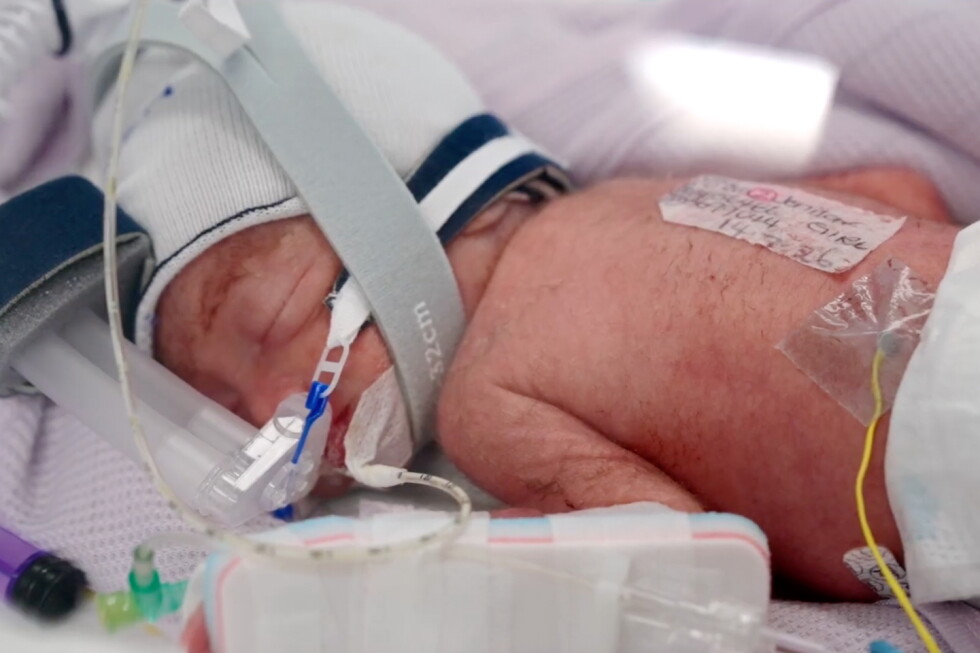
    Na’amoana, who already shares four children with her husband Jorthan, never planned an expanded family — the couple was stunned when prenatal tests confirmed she carried four identical fetuses, all developed from a single fertilized egg that spontaneously split into four embryos. The delivery took place last week at Royal Brisbane and Women’s Hospital (RBWH) in Queensland, marking the first recorded case of naturally conceived identical quadruplets in Australian history.

    Maternal-fetal medicine specialist Dr. Alexa Bendall, who led Na’amoana’s care team, called the case medically extraordinary. While the general odds of spontaneous quadruplet conception hover at roughly 1 in 700,000 worldwide, the subset of identical quadruplets from one fertilized egg is far rarer, with odds estimated at 1 in 15 million. The vast majority of higher-order multiple pregnancies today result from fertility assistance treatments, making this all-natural conception even more unusual.

    Multiple pregnancies carry inherently elevated health risks for both birthing parent and fetuses, particularly when multiple fetuses share a single placenta — a common trait in identical multiple births. According to Johns Hopkins Medicine, people carrying multiple fetuses face far higher risks of preterm delivery, miscarriage, and congenital abnormalities than those carrying single fetuses. To mitigate these risks, RBWH assembled a large specialized care team that began closely monitoring Na’amoana starting at just 10 weeks gestation. By 25 weeks, she was admitted as an inpatient to receive around-the-clock observation to track the development of the four fetuses. On July 14, Na’amoana delivered the four girls via planned cesarean section at 28 weeks and four days gestation.

    In a post-delivery statement, Dr. Bendall emphasized just how positive the outcome has been for the family. “The fact that we’ve got four beautiful, healthy babies born at 28 weeks and four days is incredible,” she said. While Na’amoana experienced some mild blood loss during delivery, Bendall noted the amount was well within expected ranges for a quadruplet birth, and the mother is now recovering well.

    All four infants are currently being cared for in RBWH’s neonatal intensive care unit, where they are progressing steadily. In a touching gesture to the care team, the couple named their daughters Emily, Harriet, Catherine, and Alexa — with the youngest named in honor of Dr. Bendall. The specialist called the tribute deeply moving, saying she feels privileged to have supported the family through their unprecedented journey.

    “From an academic perspective, it’s really interesting,” Bendall said of the case. “But also from a human perspective, to be able to be part of the family’s journey and come out with four beautiful babies and a healthy mum is very precious.”

    This reporting from the Associated Press Health and Science Department was supported by funding from the Howard Hughes Medical Institute’s Department of Science Education and the Robert Wood Johnson Foundation, with the AP retaining full editorial control over all content.

  • Hitler’s Austrian birthplace to become a police station

    Hitler’s Austrian birthplace to become a police station

    On Wednesday, Austria will formally inaugurate a new police station inside the building where Nazi dictator Adolf Hitler was born, a long-planned intervention aimed at halting the site’s use as a gathering place for rising far-right extremist groups. This conversion brings an end to decades of contentious, sensitive debate over the future of the property, located in the border town of Braunau-am-Inn. The project comes as Austria faces ongoing international criticism for failing to fully confront its culpability for atrocities committed during the Holocaust.

    After a major 20-million-euro ($23 million) refurbishment that finished three years behind its original schedule, the unassuming 17th-century town center building where Hitler was born on April 20, 1889, is barely recognizable to returning visitors. Its iconic rough-cast yellow exterior, located just a short distance from Austria’s border with Germany, has been completely whitewashed by the lead Austrian architecture firm Marte. A official police insignia now hangs above the main entrance, while the pavement outside retains a permanent memorial stone inscribed with the words: “For Peace, Freedom and Democracy. Never Again Fascism. Millions of Dead Warn.”

    The legacy of Nazism in Austria remains a deeply fraught issue. Following Hitler’s 1938 annexation of the country, 65,000 Austrian Jews were murdered in the Holocaust, and an additional 130,000 were forced into exile. Today, the far-right Freedom Party of Austria (FPOe), which was originally founded by former Nazi officials, holds the position of the most popular political party in the country, with polling aggregator Europe Elects recording its support at roughly 37 percent among Austrian voters.

    For nearly a century, the building was owned by the same private family from 1912 onward. Starting in 1972, the Austrian state leased the property and operated it as a community center for people with disabilities, a group targeted for mass extermination by the Third Reich. Despite repeated calls for change driven by the steady stream of neo-Nazi visitors making pilgrimages to the site, the last private owner Gerlinde Pommer blocked all proposed alterations and fought the state’s attempt to seize the property through legal channels until her legal challenge concluded.

    It was not until 2019, three years after the Austrian legislature passed a special law to enable state seizure of the decaying building, that the country’s Supreme Court gave final approval for the 810,000-euro purchase of the 800 square-meter property. When evaluating possible uses for the site after acquisition, outright demolition was ruled out by leading historians, who argued that Austria must maintain a visible reminder of the country’s Nazi past, rather than erase it. Historians pushed for Austria to confront its role in the Nazi regime’s murder of more than six million Jews, along with Roma, LGBTQ+ people, political dissidents and communists.

    Officials rejected converting the building into a dedicated Holocaust memorial out of concern that it would still act as a draw for extremist sympathizers. After months of deliberation, an expert commission ultimately settled on the plan to repurpose it as a permanent police station. The Austrian government has stated that the constant police presence at the site will send an unambiguous message that any glorification of Nazism is unacceptable in the country, and will permanently neutralize the property as a far-right gathering spot.

    However, the plan has drawn sharp criticism from Holocaust remembrance groups. Robert Eiter, spokesperson for the Mauthausen Committee Austria, an organization founded by survivors of the Mauthausen concentration camp, called the approach absurd. “Humanity will not forget where the worst mass murderer in history was born,” Eiter told Agence France-Presse. “And this renovation will not prevent a single neo-Nazi from making the pilgrimage to Braunau.”