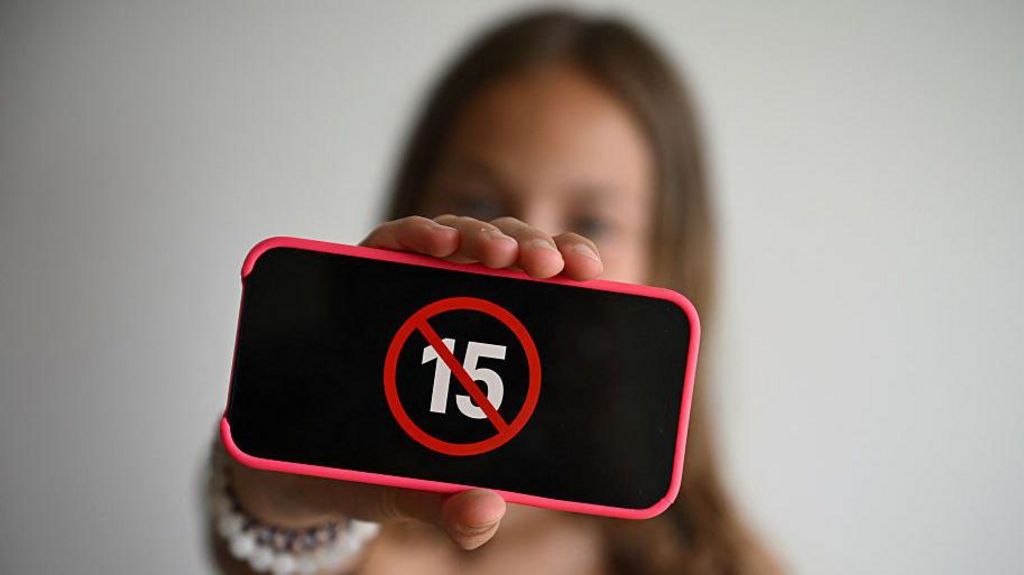
In a landmark move that sets a new precedent for youth digital protection across the continent, France’s national parliament has given final approval to a groundbreaking law that will bar all users under the age of 15 from accessing social media platforms, with full implementation scheduled for January 2027. The legislation, which comes amid growing global concern over the impact of social media on children’s mental health and development, mandates universal age verification for every social media user in France. This places France at the forefront of a growing global movement to regulate youth social media access, following similar action taken by Australia late last year. The bill secured final passage in both the French Senate and the National Assembly on Tuesday, overcoming criticism from left-wing political factions and digital rights advocates to become law. President Emmanuel Macron, who first pledged to introduce this regulation as a signature policy to cap his second and final term in office, publicly praised the approval of the ban this week.
The new rules will roll out in two staggered phases to give platforms and users time to adjust. Starting this September, any new social media account created from France will require mandatory age verification, and users under 15 will be blocked from opening new accounts entirely. By January 2027, the age verification requirement will extend to every existing social media account, meaning every user based in France will need to prove they are over 15 to retain access to platforms. All age verification tools used by platforms must receive official approval from France’s independent national privacy regulator to ensure compliance with data protection standards.
Despite the government’s enthusiasm for the policy, it has faced a wave of criticism from skeptics, who have raised a host of practical and ethical concerns. Key points of contention include the potential privacy risks associated with collecting age and identity data from millions of users, questions about how effective current age verification tools are at preventing circumvention, and criticism over the relatively fast timeline for drafting and rolling out the ban. Speaking ahead of the parliamentary vote, French Digital Minister Anne Le Hénanff pushed back against criticism of the quick rollout, arguing that functional, tested age verification tools are already available for platforms to deploy, eliminating the need for a longer waiting period.
France is only the second country in the world to implement a nationwide full ban on underage social media use, following Australia’s December 2024 ban on social media access for users under 16. Early assessments of Australia’s policy have offered important lessons for France and other nations moving forward with similar regulations. As of March 2025, Australia’s eSafety Commission reported that seven out of 10 children under 16 who held social media accounts before the ban entered into force still retain some level of access to the platforms. Tama Leaver, a professor of internet studies at Curtin University in Western Australia, told the BBC that Australia’s ban has technically failed to meet its core goal of blocking underage access, though it has proven that nationwide regulatory action of this kind is politically and administratively possible, framing it as a valuable early policy experiment. Leaver noted that a key takeaway for other countries is the need to include young people in the policy design process, arguing that regulations work best when they are developed with input from youth rather than imposed on them.
Leaver added that France’s policy may have a slightly higher chance of reducing underage access than Australia’s, thanks to its requirement for universal age verification covering all users, not just new accounts. But he also warned that the universal mandate brings greater privacy risks, as it requires every social media user in France to submit identity data for verification. He also pointed to additional unintended consequences that could emerge from the ban, including pushing underage users toward unregulated, less safe online platforms outside of mainstream social media, reducing young people’s access to news and public information, and weakening youth political engagement by cutting off their primary space for online civic discourse.
France’s approval of the ban comes as legislative action to restrict youth social media access accelerates rapidly across Europe. In the United Kingdom, former Prime Minister Keir Starmer announced in June 2025 that the UK will implement its own ban on under-16 social media access, also scheduled to take effect in January 2027, alongside an optional midnight curfew for 16 and 17-year-old users. At the EU level, European Commission President Ursula von der Leyen proposed a policy of “social media delay” for underage children across the bloc in May 2025, confirming that new EU-wide legislation on the issue will be introduced in the coming months.