博客

  • Khan faces historic removal vote as critics warn ICC process has been politicised

    Khan faces historic removal vote as critics warn ICC process has been politicised

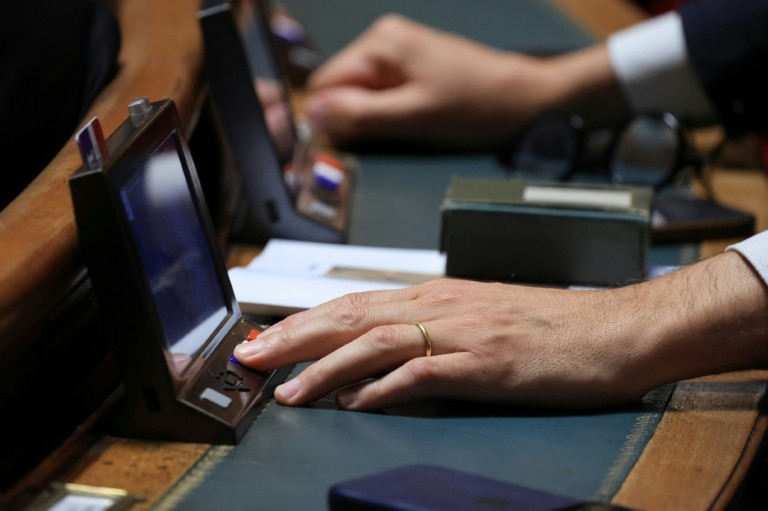
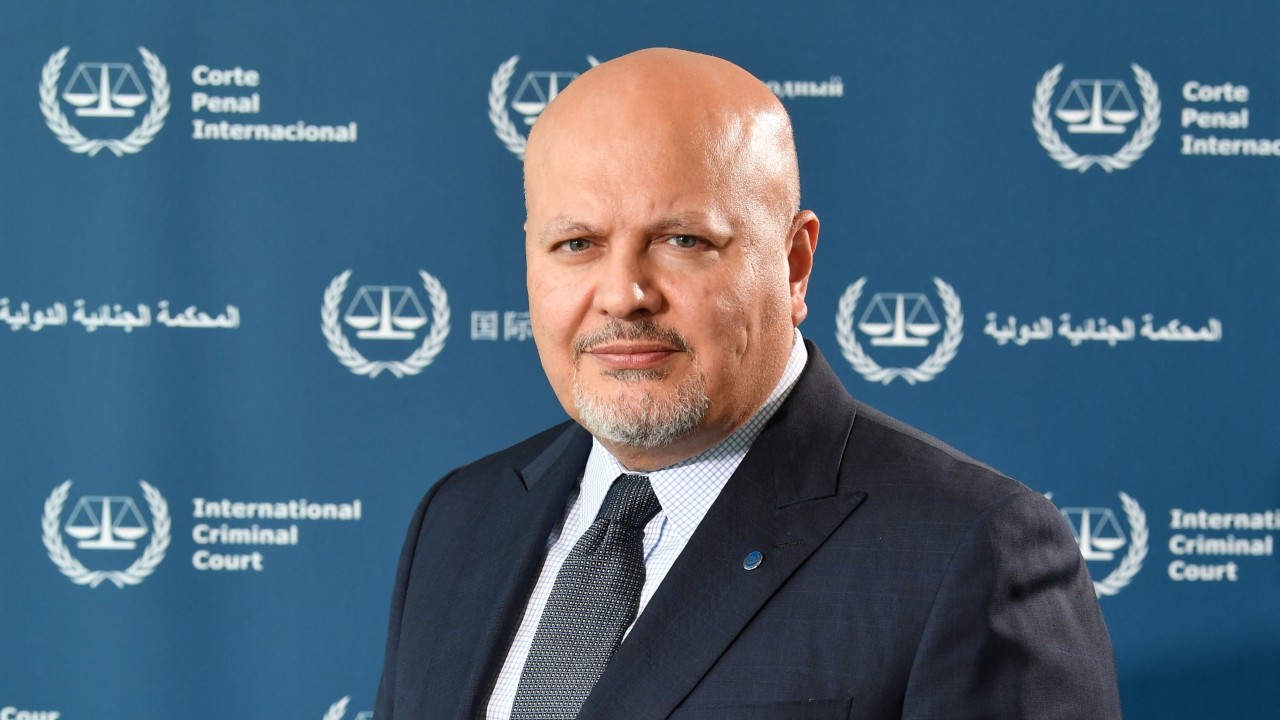
    In an unprecedented development for the International Criminal Court (ICC), the court’s 123 member states will convene, The Assembly of States Parties (ASP), the court’s governing body, will hold a secret ballot on Friday at United Nations Headquarters in New York, to decide whether to remove Chief Prosecutor Karim Khan from office over unproven allegations of professional and sexual misconduct. This vote marks the first time in the ICC’s 24-year history that member states have been asked to remove a sitting chief prosecutor from their post, a moment that threatens to shake the foundation of the world’s preeminent international war crimes tribunal.

    To pass the motion to dismiss Khan, an absolute majority of 63 votes is required. But even before ballots are cast, the process has been mired in controversy over procedural unfairness and widespread claims of political manipulation. Khan’s legal team has already sounded the alarm that they have been completely barred from participating in Friday’s session, denied the basic right to mount a formal defense of their client ahead of the vote. In a public statement released Tuesday, attorneys Tayab Ali and Sareta Ashraph condemned ASP President for shutting down every formal avenue through which they could address the full assembly, and for pressuring all member states to refuse informal meetings with the legal team.

    “The right under the rules to address you on the substantive decision of misconduct has been flatly denied to us,” the statement read. “We know of no court or tribunal in any proper and fair legal system that bars a person facing the gravest professional sanction from being heard.” The result of the secret ballot is expected to be announced publicly by the end of Friday.

    The vote centers on disputed findings released by the ASP Bureau last month, which concluded Khan engaged in an inappropriate sexual relationship with a female staff member in his office, identified by CNN as “Sarah”, citing an unacceptable power imbalance between the prosecutor and the complainant. But the Bureau’s findings directly contradict earlier legal and investigative conclusions, and they even diverge from the core of the complainant’s own account. Sarah has publicly stood by her allegation of non-consensual sexual conduct, while Khan has repeatedly and categorically denied any sexual relationship ever took place.

    The allegations first triggered an external investigation conducted by the United Nations Office of Internal Oversight Services (OIOS), which also examined three separate claims that Khan retaliated against ICC staff who raised concerns. After the OIOS compiled its evidence, a three-judge independent panel was tasked with reviewing the probe’s findings to determine if misconduct had been proven under the “beyond a reasonable doubt” standard required by court rules. In March, the panel delivered a unanimous ruling: the OIOS investigation failed to establish any misconduct or breach of duty by Khan. The ASP Bureau has also declined to uphold any misconduct findings related to the retaliation claims.

    Despite this independent judicial clearing, a majority of ASP Bureau members voted to disregard the panel’s conclusion and move forward with dismissal proceedings, suspending Khan and referring the matter to the full membership for a final vote. Critics have widely panned this decision as proof the entire process has been politicized, a charge that has gained further traction after the Bureau altered long-standing voting rules specifically for this case.

    Originally, removal proceedings required a two-stage vote: members would first vote on whether misconduct was proven, then vote separately on whether removal was justified. The Bureau changed the process to a single up-or-down vote on a combined motion that both accepts the Bureau’s finding of serious misconduct and approves Khan’s immediate dismissal. Khan’s legal team has decried this mid-process rule change as fundamentally unlawful and unfair, noting that altering procedures to the disadvantage of an individual facing professional ruin without advanced notice violates basic standards of due process.

    Political context has only deepened concerns about the politicization of the process. The disciplinary proceedings against Khan were initiated shortly after he made the landmark decision two years ago to seek arrest warrants for Israeli Prime Minister Benjamin Netanyahu, former Israeli Defense Minister Yoav Gallant, and three senior Hamas leaders, over alleged war crimes committed during the ongoing Gaza conflict that began in October 2023. Last month, U.S. Secretary of State Marco Rubio issued extraordinary open threats to “dismantle the ICC brick by brick” if the court continued its work on the Palestine investigation, and the U.S. has already imposed sanctions on most ICC judges and prosecutors including Khan over the Palestine and Afghanistan investigations.

    Over 160 Palestinian civil society and human rights organizations released a joint statement last week arguing that the disciplinary process against Khan “has been reduced to a political referendum following the national interests of individual States Parties.” Former European Union foreign policy chief Josep Borrell has also openly criticized the ASP, saying the body is holding a “political vote” to oust Khan despite the judicial panel’s unanimous finding clearing him of all wrongdoing. Borrell emphasized that the campaign against Khan is part of a broader global offensive targeting the ICC’s independence, directly tied to U.S. and other powers’ opposition to the arrest warrants for Israeli and Hamas leaders.

    A full timeline of the allegations also undermines claims that Khan rushed the arrest warrant application to distract from the misconduct claims. Multiple independent reports have confirmed that the decision to move forward with the warrants was made six weeks before the allegations against Khan were first made public in May 2024, and the official application was submitted after the first internal ICC investigation into the claims had already been opened and closed due to the complainant’s refusal to cooperate with the court’s own oversight body. The allegations resurfaced publicly in October 2024, leading to a second internal investigation that again closed when the complainant declined to participate, prompting the ASP to commission the external OIOS probe.

    If the motion to dismiss Khan passes, the removal would take effect immediately, and new elections for chief prosecutor would be scheduled shortly after. Khan has already confirmed he will appeal any dismissal ruling to the International Labour Organization’s Administrative Tribunal, the independent body that handles employment appeals for ICC staff.

    Elected as the third ICC chief prosecutor in the court’s history in February 2021, Khan has pursued an unusually broad agenda during his tenure, opening investigations and pursuing arrest warrants against sitting and former heads of state including Russia’s Vladimir Putin, former Philippine President Rodrigo Duterte, Myanmar’s junta leadership, and Taliban officials in Afghanistan, in addition to the warrants he is pursuing for Israeli and Hamas leaders. Now, both Khan’s personal future and the institutional independence of the ICC hang in the balance, as member nations prepare to cast a vote that could reshape the court’s legacy for decades to come.
  • Designing a Tour de France route: a three-year labour of love

    Designing a Tour de France route: a three-year labour of love

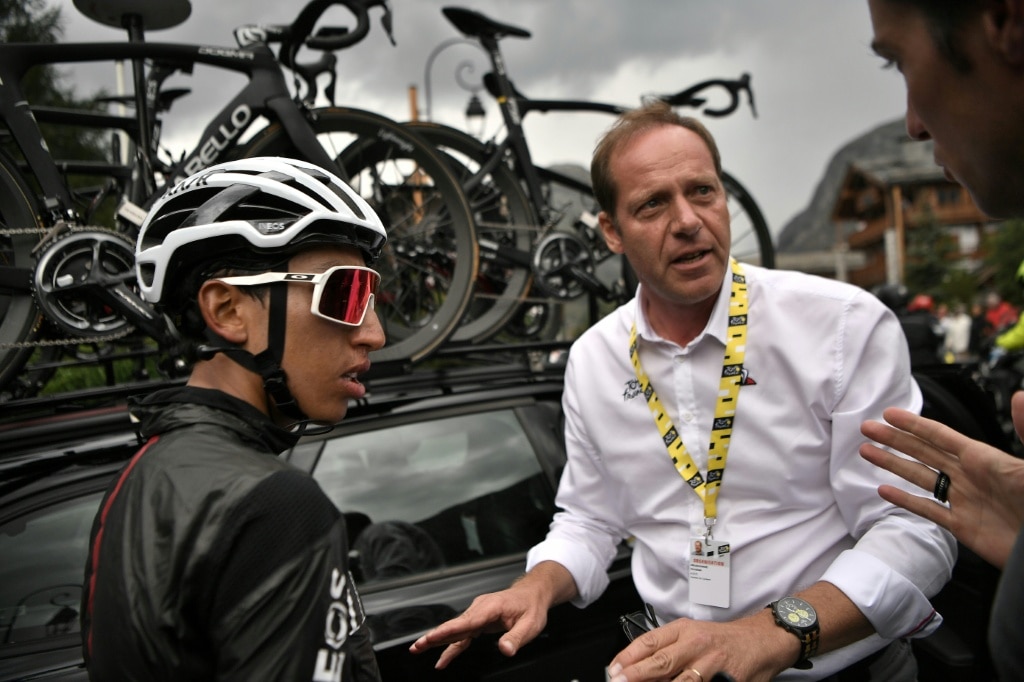
    For millions of cycling fans around the world, the Tour de France is as much a celebration of sweeping French landscapes and cultural heritage as it is a test of elite athletic endurance. What many viewers do not see, however, is the years of meticulous work that go into building every edition’s iconic route, a labor of love that begins three full years before the first rider crosses the starting line. The process kicks off when Tour director Christian Prudhomme selects the host city for the opening Grand Depart, then locks in the overall direction of the 21-stage race. From a pool of 300 candidate towns—including 50 located outside France—Prudhomme curates the start and finish locations for every stage, balancing a wide range of competing priorities to create a route that satisfies both riders and fans.

    Prudhomme explains that if the course was designed purely around sporting challenges, every edition would center on southern France, a region that can accommodate every type of terrain from flat sprint stages to grueling high-altitude mountain climbs. But the Tour has a long-standing commitment to showcasing all corners of the country, so over a four to five-year rotation, the route visits fan-favorite regions including cycling-rich Brittany, the passionately supportive north, and crowd-packed Normandy. Beautiful natural scenery is a non-negotiable core requirement, Prudhomme notes, as millions of casual viewers tune in as much to see France’s diverse landscapes as they do to follow the race competition. Extra care is also given to stages scheduled on weekends and Bastille Day, France’s national holiday, which draw the largest global television audiences. Certain iconic climbs are also mandatory: even if a route includes dozens of mountain passes, fans will always consider the course incomplete without legendary ascents like Col du Tourmalet, Col du Galibier, Mont Ventoux, or Alpe d’Huez.

    Beyond athletic and viewership priorities, the team weaves historical and cultural storytelling into the route whenever possible. In 2023, for example, the race passed through Castelnau-Magnoac, the hometown of French national rugby captain Antoine Dupont, ahead of the Rugby World Cup hosted in France. In 2014, to mark the 100th anniversary of the start of World War I, seven full stages traced the path of the original Western Front, turning the race into a moving centennial tribute. “I love it when a stage can be viewed in different ways,” Prudhomme says of these layered design choices.

    Once Prudhomme finalizes the list of 21 start and finish towns, the work shifts to Thierry Gouvenou, the Tour’s route director, who maps the exact 3,500-kilometer path the peloton will follow. The process for the next edition gets underway immediately after the current Tour finishes on the Champs-Élysées each July. “At the end of August, Christian gives me the list of stage towns,” Gouvenou explained. “From that point, it takes up my whole time. Generally, I design the course in one month because it has to be finished by September 25.”

    Gouvenou starts by using digital mapping and cycling apps to draft the route, while also sorting through hundreds of unsolicited suggestions from passionate cycling fans across the country. Next, he drives the candidate route to inspect potential trouble spots, particularly in dense town centers, where unexpected hazards—such as traffic calming speed bumps or narrow streets—can create major safety risks for a peloton of more than 180 riders racing at high speed. Once the route is finalized, Gouvenou and his team drive every single kilometer of every stage to document hazards, map the route layout, and mark locations for intermediate sprints and climb summit finish lines. The full route is then officially unveiled in Paris each October, nine months before the first stage kicks off.

    Even after the official reveal, last-minute crises can force changes, as seen in the 2024 edition, when the second stage had to be rerouted at the last minute to avoid an area hit by an outbreak of swine flu. Gouvenou, a former professional cyclist, says regional partners work tirelessly to resolve last-minute issues, often pulling off what he calls “10 miracles” to keep the route on track despite unforeseen challenges.

  • Chile’s Congress puts President Kast’s economic overhaul on track to becoming law

    Chile’s Congress puts President Kast’s economic overhaul on track to becoming law

    SANTIAGO, Chile — Less than four months into his term as Chile’s conservative president, José Antonio Kast has secured a critical legislative win, as the nation’s Congress has greenlit nearly all outstanding amendments to his ambitious, market-focused tax and economic overhaul. The approval comes as the conservative leader grapples with pressing economic headwinds that have slowed activity across one of Latin America’s most prosperous economies.

    Kast, who took office in early March, inherited a prolonged period of stagnant growth: official data shows Chile’s gross domestic product contracted by 0.5% in the first quarter of 2026, extending months of lackluster expansion. Unemployment has also climbed, hitting 9.4% between March and May of this year — the highest jobless rate recorded in the nation since mid-2021.

    The sweeping reform package, the cornerstone of Kast’s economic agenda, is designed to inject new life into Chile’s private sector, accelerate job creation, and eliminate the country’s persistent fiscal deficit. Key provisions include a gradual cut to the corporate tax rate for large firms, dropping it from 27% to 23% over time; a full value-added tax exemption for newly constructed residential properties; new restrictions on which higher education institutions can participate in Chile’s popular free tuition program; and a clause allowing private companies to pursue financial compensation when environmental regulatory disputes delay planned infrastructure and investment projects.

    The bill first cleared the Senate last week, but upper house lawmakers made modifications to several provisions, forcing a return to the Chamber of Deputies for a final confirmation vote. On Tuesday, lower house legislators approved every adjusted article except for one minor provision outlining how municipal governments will receive compensation for foregone tax revenue from the package’s breaks. For the overhaul to formally become law, negotiators must now resolve this final outstanding sticking point.

    Speaking to reporters from Copiapó, a northern Chilean city where he is overseeing the government’s emergency response to severe seasonal storms, Kast celebrated the legislative progress. The president urged across-the-aisle cooperation to speed up resolution of the remaining issue, saying, “I hope all political sectors will work together so the remaining issue can be resolved quickly.”

    The 60-year-old leader campaigned on a platform of cracking down on rising violent crime and irregular migration, while also pledging to cut bloated public spending and unlock growth for the private sector. His election late last year marked the most dramatic rightward shift in Chilean politics since the end of the 1973-1990 military dictatorship, and Kast has explicitly promised a return to the market-centered economic policies that defined that era.

    Gilberto Aranda, a prominent Chilean political analyst, noted that the reforms represent a clear departure from the tempered neoliberal framework that has governed the country for decades. “The president’s efforts have essentially been focused on deepening and returning to the orthodox neoliberal model of the late 1970s and early 1980s,” Aranda explained. “What existed before was neoliberalism tempered by subsidies and other social protection measures.”

    Finance Minister Jorge Quiroz framed the overhaul as a critical step to restore investor confidence in Chile, cutting through burdensome red tape for new projects and making the nation’s tax code more competitive relative to regional peers. “We are enormously satisfied,” Quiroz told reporters after Tuesday’s vote.

    Opposition lawmakers have pushed back hard against the package, arguing that it disproportionately benefits large corporations and the nation’s wealthiest households. Left-wing parties have already vowed to challenge the legislation before Chile’s Constitutional Court once it is enacted.

    “It has become clear that all of José Antonio Kast’s talk about security, jobs and immigration was simply a Trojan horse to advance the project he truly cares about: cutting taxes for the richest Chileans,” said Constanza Martínez, president of the left-wing Broad Front coalition.

  • France reintroduces ‘bee-harming pesticides’, environment minister to quit

    France reintroduces ‘bee-harming pesticides’, environment minister to quit

    In a move that has split French politics and sparked outrage among environmental groups, France’s upper legislative chamber, the Senate, has approved a divisive bill to bring back two insecticides widely documented to harm bee populations, prompting the nation’s environment minister to announce her imminent resignation.

    Monique Barbut, France’s current environment minister, confirmed to close aides Tuesday that she sees no path forward but to step down, with plans to formally submit her resignation to President Emmanuel Macron by the start of Wednesday.

    The two pesticides at the center of the debate — acetamiprid and flupyradifurone — have been banned from domestic use in France since 2018 and 2019 respectively. Backers of the legislation, led by conservative senator Laurent Duplomb, argue that domestic producers of sugar beets, apples and hazelnuts need access to the chemicals to remain competitive against farmers in other EU member states, where the two substances remain legal for use. Following the vote Tuesday evening, Duplomb told fellow senators he was proud of the legislative work that secured the bill’s passage, which passed the lower house National Assembly earlier the same day. The final Senate vote count stood at 214 in favor and 111 opposed.

    Agriculture Minister Annie Genevard has also defended the policy, framing it as a necessary response to widespread farmer discontent that erupted into large-scale protests across France this past winter. She emphasized that the bill restricts use of the pesticides to narrow emergency circumstances: it will only be approved for specific regions and limited time frames, she said, on the condition that no harm to human health or the environment is proven and no viable alternative pest control option exists.

    Critics, however, reject these assurances, pointing to robust scientific research that confirms the substances’ toxicity to pollinators and potential risks to people. Multiple studies have documented that acetamiprid poisons honeybees, damaging their ability to forage for food and impairing their memory. A 2024 academic study further found that flupyradifurone can be lethal to certain bee species.

    This is not the first attempt to reintroduce acetamiprid: last year, France’s Constitutional Council, the nation’s highest constitutional court, struck down a similar provision in an earlier agriculture bill backed by Duplomb, ruling that the chemical posed unacceptable risks to human health. That ruling came after more than two million French citizens signed a public petition opposing the reintroduction. Following the National Assembly’s approval of the new bill this week, left-wing parties have already announced plans to challenge the new legislation before the Constitutional Council if it secured Senate approval.

    The bill passed despite unified opposition from most left-wing lawmakers in the lower house, after securing backing from far-right parties and a majority of centrist legislators. Environmental and beekeeping advocacy groups have decried the move as a rejection of scientific consensus and popular will.

    “The government and its allies are trampling on science, health, the environment, and the will of the people,” environmental NGO Greenpeace said in a statement after the lower house vote. Henri Clement, a representative of the French Beekeeping Union, told regional outlet Ici Gard Lozere that the approval of the bill is “absolutely catastrophic” for France’s bee populations and beekeeping industry.

  • EU cancels subsidy to Venice Biennale over Russia presence

    EU cancels subsidy to Venice Biennale over Russia presence

    In a high-stakes decision that intersects global politics and cultural exchange, the European Union announced Tuesday it is permanently revoking a €2 million ($2.3 million) grant for the Venice Biennale, the world’s largest and most prestigious contemporary art event. The move comes directly in response to the Biennale’s controversial choice to allow Russia to participate in this year’s exhibition, marking Moscow’s return to the event for the first time since its full-scale invasion of Ukraine in 2022.

    European Commission spokesperson Thomas Regnier framed the cancellation as a defense of core European values, stating publicly that cultural initiatives supported by European taxpayer funding must uphold democratic ideals, promote open public dialogue, celebrate cultural diversity, and protect free expression. These principles, Regnier emphasized, are not respected by the current Russian government in the wake of its ongoing military aggression against Ukraine.

    Russia was barred from the 2022 edition of the Venice Biennale as a widespread global protest against the invasion, making this year’s reversal on participation all the more contentious. When organizers confirmed Russia’s inclusion earlier this year, the decision sparked immediate, widespread backlash from the European Union and the Ukrainian government. Ukrainian Culture Minister Tetiana Berejna drew a sharp comparison at the time, arguing that allowing Russia to join the event was equivalent to “inviting a serial killer to a dinner with your friends.”

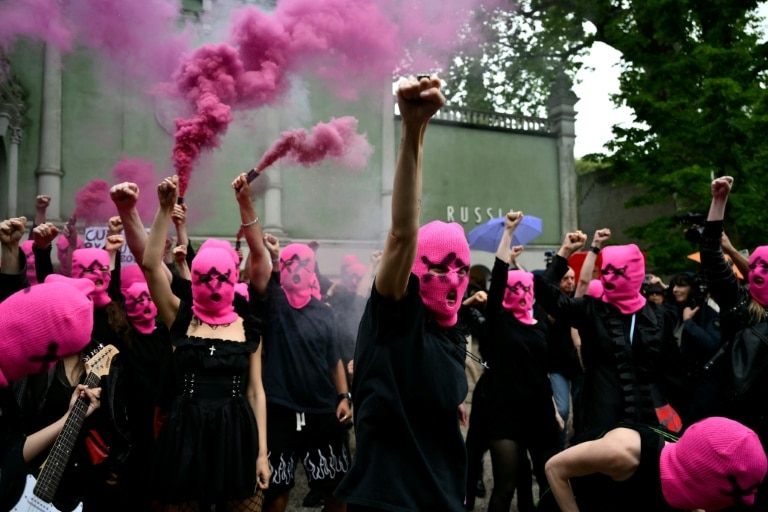
    The controversy already triggered major upheaval for the event earlier this year: the entire international jury for the 2024 Biennale resigned en masse to protest the decision to welcome Russia’s national pavilion. Activist groups including the international women’s movement FEMEN and Russian protest art collective Pussy Riot also staged high-profile demonstrations against Russia’s involvement during the Biennale’s opening in May.

    Biennale organizers defended their position when the controversy first erupted, arguing that the iconic event has been rooted in principles of openness, cross-cultural dialogue, and rejection of censorship and exclusionary politics. On Tuesday, the Biennale issued an official response to the EU’s grant cancellation, noting that the organization had expected the funding cut and would pursue formal action to defend its interests “in all relevant forums.”

    Organizers emphasized that the revoked EU grant was earmarked to co-finance programs under the Biennale College and the Venice Production Bridge, two core initiatives that are completely separate from Russia’s participation in the main Biennale Arte exhibition. The statement also downplayed the financial impact of the cancellation, confirming that the cut in funding will not have a significant effect on the Biennale’s overall budget, balance sheet, or any planned or ongoing programming.

  • India opposition leader Gandhi detained after calling for PM resignation

    India opposition leader Gandhi detained after calling for PM resignation

    India’s political landscape has been roiled by escalating mass protests in New Delhi this week, centered on widespread public anger over repeated government failures to secure national examinations and address a broken education system. What began as a small grassroots online movement has exploded into the largest challenge to Prime Minister Narendra Modi’s third-term Hindu nationalist administration since it took office in 2024.

    The unrest traces its roots to a string of high-stakes testing scandals that have eroded public trust in India’s education assessment system. Most recently, 2.2 million aspiring medical students were forced to retake their entrance exam under heavy security last month after the original test was cancelled over a widespread question paper leak. That incident followed a separate scandal involving flawed online marking for nearly 2 million high school students, amplifying youth frustration that has been simmering for months.

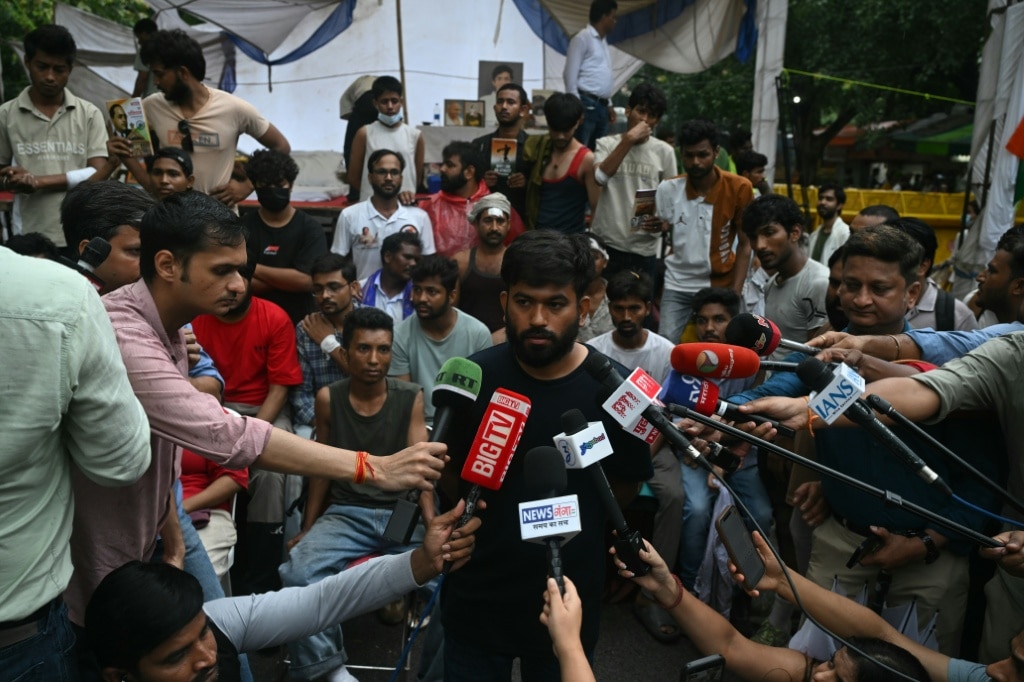
    These grievances coalesced into the fast-growing Cockroach Janta Party (CJP), a grassroots movement that launched in May and has already gained millions of followers across Indian social media platforms. On Monday, the CJP called for mass demonstrations in the capital, demanding the immediate resignation of Education Minister Dharmendra Pradhan and sweeping structural reforms to India’s education system. Thousands of protesters flooded New Delhi’s streets, igniting the largest public clashes in the city in five years.

    Tensions boiled over on Monday when security forces deployed tear gas and baton charges to disperse crowds, prompting protesters to respond by throwing stones at officers. Official police figures put the injury toll at 60 civilians and 118 police personnel, but CJP organizers claim hundreds of protesters were hurt, a far higher number than the official count. The violence prompted condemnation from opposition parties, with senior Congress Party leader Sandeep Dixit telling Agence France-Presse that “our Constitution got trampled upon” and that no responsible citizen could stand aside in the wake of the crackdown.

    On Tuesday, protests entered a second day, with thousands of demonstrators remaining camped at New Delhi’s iconic Jantar Mantar protest site, vowing not to leave until their demands are met. Congress Party leader and Leader of the Opposition Rahul Gandhi joined the demonstrations Tuesday morning, calling directly for Prime Minister Modi to step down over the damage the crisis has inflicted on India’s young people. “Modi must resign for destroying the future of India’s youth,” Gandhi told the crowd before staging a peaceful sit-in directly outside the prime minister’s official residence. He accused the ruling government of refusing to accept accountability for the scandals or allow a parliamentary debate on the crisis.

    Footage captured by Agence France-Presse shows uniformed security personnel, some wearing body armor, forcibly detaining Gandhi and several other opposition lawmakers. Officers carried Gandhi by his arms and legs through crowds of demonstrators before bundling him into a waiting police bus. Chaotic scenes followed as protesters attempted to block the vehicle and climb aboard before it sped away from the site.

    Gandhi later shared images of his detention on social media, affirming that the protest movement would not be halted by government crackdowns. As of Tuesday evening, Modi has not issued any direct public comment on the protests or Gandhi’s detention. India’s Parliament was adjourned on Tuesday after opposition lawmakers walked out and demanded an urgent debate on what they call the “brutality unleashed on students” by security forces.

    CJP founder Abhijeet Dipke addressed supporters Tuesday from atop a lorry, urging protesters to maintain their resolve. “They want to break our spirit,” Dipke said. “Do not let them silence you.” CJP spokesman Ashutosh Ranka called the government crackdown a shameful moment for Indian democracy, noting that peaceful student protesters advocating for a legitimate grievance were brutally targeted by police. Ranka, who met with senior ruling party official JP Nadda on Monday, said the government has yet to offer any formal response to the movement’s core demands.

    Young protesters have shown no sign of backing down, with many saying the violent police response has only hardened their commitment to reform. “We have become even more fearless now,” 25-year-old law student Chandra Pratap Sishwi told reporters. “When I saw people being beaten up by the police like that, my blood boiled.”

    On Tuesday, Parliamentary Affairs Minister Kiren Rijiju defended the Modi administration’s response, saying officials had acted quickly to address the exam leaks by arresting multiple individuals implicated in the scandals. He also told reporters that Modi had called for the creation of a “foolproof system” to prevent future testing irregularities during a closed-door meeting with governing coalition allies.

  • Chelsea sign Rogers from Villa for reported UK record fee

    Chelsea sign Rogers from Villa for reported UK record fee

    In a landmark move that has shaken up the English Premier League summer transfer window, Chelsea have confirmed the signing of 23-year-old England attacking midfielder Morgan Rogers from Aston Villa, with the deal valuing at a new British transfer record of £117 million ($157 million).

    The London-based club announced on its official website Tuesday that Rogers, who just returned from the FIFA World Cup held in North America, has put pen to paper on a 10-year contract that will keep him at Stamford Bridge until 2033, after successfully completing his mandatory medical examination on Monday.

    Speaking following the completion of his transfer, Rogers expressed his long-held admiration for one of London’s most iconic football institutions. “I’m so excited,” he told Chelsea’s media team. “For me, Chelsea are the biggest club in London and a club I’ve always admired since I was a kid. I’m really excited about the project with the new manager, the players we’ve got and where the club is heading. That’s why I’m here and I can’t wait to get started.”

    This historic transfer breaks two major records in English football. It surpasses the previous record for the highest fee paid for a British player, which was set just weeks earlier when Manchester City purchased Elliot Anderson from Nottingham Forest for £116 million earlier this July. It also becomes the most expensive signing in Chelsea’s 119-year club history, outstripping the £107 million the club paid to acquire Enzo Fernandez from Benfica back in 2023.

    The high-profile capture of Rogers represents a clear statement of ambition from Chelsea, who pulled off the signing despite the club failing to qualify for next season’s UEFA Champions League – a competition that Aston Villa will compete in after their strong top-five finish last campaign. The west London side had been tracking Rogers for more than two years, and eventually won the race for his signature by meeting Aston Villa’s steep asking price, beating out fellow Premier League giants Arsenal, who declined to match the valuation.

    For Villa, Rogers’ exit marks the third high-profile departure of this transfer window for manager Unai Emery, following Youri Tielemans’ recent move to Manchester United and an expected outgoing of left-back Lucas Digne to Paris Saint-Germain. The Midlands club issued a warm farewell to their former star, saying in an official statement: “A player with impeccable behaviour and commitment, Morgan leaves Aston Villa with the best wishes of everyone at the football club for both his service to the club and for for his future career. He will always remain a core part of our recent great moments and memories.”

    Championship club Middlesbrough, who sold Rogers to Aston Villa back in 2024, will net a 20 percent cut of the transfer fee thanks to a sell-on clause inserted into the original deal, a windfall that will reportedly go towards their new stadium project.

    Rogers enjoyed a breakout 2023/24 season with Villa, scoring 14 goals and providing 11 assists across all competitions, and notching up a total of 21 goals in 85 league appearances for the club. He was also a key part of Villa’s successful Europa Conference League run, scoring in the club’s May final victory over SC Freiburg.

    Now, new Chelsea manager Xabi Alonso faces the exciting challenge of integrating Rogers into a revamped attacking line that already includes Cole Palmer, Pedro Neto, Estevao Willian, and fellow recent signing Geovany Quarda. To free up space in the squad and the wage bill, Chelsea are expected to offload Argentine winger Alejandro Garnacho before the summer transfer window closes.

    Off the pitch, Rogers shares a long-standing personal connection with Palmer, having come through the youth academy at Manchester City together. It was Rogers, in fact, who inspired Palmer’s famous ‘cold’ celebration – the pose was first popularized by Rogers during his time as a Middlesbrough player.

    The signing is widely viewed as proof that Chelsea remain a huge draw for top-tier talent even after a disappointing 2023/24 campaign that saw the club finish 10th in the Premier League and miss out on all European competition. Rogers will join up with his new Chelsea teammates after taking a planned post-World Cup break, having helped England reach the semi-finals of the 2024 tournament in North America.

  • Hormuz, Malacca and other key straits spawn tensions throughout history

    Hormuz, Malacca and other key straits spawn tensions throughout history

    For more than 500 years, narrow maritime straits across the globe have stood as the unshakable backbone of international commerce, and equally as persistent flashpoints for great power rivalry that shape global geopolitics to this day. Today, growing friction around two key Middle Eastern waterways underscores just how much these small stretches of water continue to hold the global economy hostage to political conflict.

    As Iran increasingly asserts unilateral control over the Strait of Hormuz, the primary maritime gateway to the Persian Gulf, its Yemeni allied faction the Houthi movement has launched repeated disruptions to commercial shipping transiting the Red Sea en route to and from Saudi Arabian ports. Experts warn this unrest could easily spill over to the Bab el-Mandeb Strait, the mandatory passage for all vessels traveling between the Red Sea and the Suez Canal, one of the world’s most vital man-made trade routes.

    Hormuz, Bab el-Mandeb, and roughly 10 other straits globally are classified as critical strategic chokepoints for international trade. Every year, thousands of vessels—from oil and liquefied natural gas tankers to bulk cargo ships and container carriers carrying consumer goods and raw materials—pass through these narrow natural maritime corridors, their operations critical to keeping global supply chains moving and energy prices stable.

    Sylvain Domergue, a geography lecturer at Sciences Po Bordeaux and author of *Geopolitics of Maritime Spaces*, explained the international legal framework governing these waterways in an interview with AFP. The 1982 United Nations Convention on the Law of the Sea (UNCLOS), signed in Montego Bay and widely described as the global constitution for the world’s oceans, formally enshrines two core rules for natural straits: they cannot be subject to commercial tolls, and the principle of free and unrestricted navigation for all vessels is guaranteed under international law. This stands in contrast to man-made waterways such as the Suez Canal and Panama Canal, where the nations that control the infrastructure have the legal right to charge transit tolls for passage.

    Domergue noted that while Iran has never formally ratified the UNCLOS convention, it has abided by its free navigation principle for decades as a matter of customary international law—something that is changing as Tehran escalates its geopolitical posturing.

    The struggle for control over strategic straits dates back centuries. As early as 1507, Portugal, whose explorers pioneered European sea access to South Asia and the East Indies, attempted to seize full control of Hormuz to lock in a monopoly over trade in spices and other valuable commodities from the Orient. That early attempt at control sparked a centuries-long debate over maritime sovereignty, which eventually settled on the *Mare Liberum* doctrine put forward by Dutch jurist and philosopher Hugo Grotius in the early 17th century. Grotius’ core thesis—that the sea is the shared property of all nations, belonging to no single state—became the foundation for modern international rules on navigation, with straits recognized as critical to enabling long-distance global trade.

    “To guarantee freedom of navigation across the world’s oceans, one had to start by guaranteeing freedom of passage through straits,” Domergue explained. The Netherlands championed this doctrine, and was later joined by Britain, and eventually the United States. While the U.S. has also never ratified UNCLOS, it adheres to almost all of the convention’s provisions to this day.

    However, the principle of free navigation did not stop European powers from shaping their colonial expansion around control of strategic straits. Britain built its global naval empire around key military outposts along critical waterways: its largest Asian colonial naval base was built in Singapore, which gives it direct oversight and control over the Strait of Malacca, the chokepoint that today carries the largest share of global maritime trade bound to and from China. Britain also established a key outpost on Socotra Island, located just off the Bab el-Mandeb Strait at the southern entrance to the Red Sea.

    In Europe, the Danish straits (the Oresund and Kattegat), which connect the Baltic Sea to the North Atlantic, were a major 19th century flashpoint. For centuries, Denmark charged transit tolls for passage through the waterways, and they remain strategically critical today, as they control all Atlantic access for Baltic nations, most notably Russia.

    The only major global straits where tolls are still legally collected today are the Turkish Straits—the Bosphorus and the Dardanelles. They are governed by the 1936 Montreux Convention, an earlier international agreement that predates UNCLOS and preserves Turkey’s right to charge for transit.

    Looking ahead, Domergue warned that new tensions over strategic straits are already emerging in other parts of the world. The Taiwan Strait has become an increasing flashpoint amid China’s rising territorial claims in the Indo-Pacific, while the Strait of Malacca—shared by Singapore, Malaysia, and Indonesia—carries its own set of unresolved sovereignty and economic disputes.

    Domergue pointed to growing low-level friction in the Taiwan Strait, where he noted there is already an ongoing “sand war”: Chinese vessels regularly travel into waters claimed by Taiwan to dredge marine sand for China’s construction sector, a move widely viewed as deliberate provocative encroachment.

    More recently, when Iran announced plans to introduce a new transit toll for the Strait of Hormuz, the Malaysian prime minister initially publicly praised the idea and suggested Malaysia could follow suit for the Strait of Malacca, before quickly walking back the comment. If tolls were introduced for Malacca, Domergue argued, Singapore would suffer a major blow to its status as the premier logistics and trade hub for East Asia.

    Today, as geopolitical tensions rise across the Middle East and Indo-Pacific, these centuries-old disputes over control of the world’s most critical maritime chokepoints remain as relevant to global trade and security as they were 500 years ago.

  • US readies new tariffs as Trump’s 10% global levy to expire

    US readies new tariffs as Trump’s 10% global levy to expire

    Just days before President Donald Trump’s temporary 10% global import tariff is set to expire, a top U.S. trade official has confirmed that new targeted duties against dozens of nations are imminent, launching a renewed push to advance the administration’s trade agenda after a series of high-profile legal setbacks.

    U.S. Trade Representative Jamieson Greer told CNBC on Tuesday that “we expect to see some action soon” on fresh tariffs crafted to penalize 60 U.S. trading partners over their alleged insufficient action to curb forced labor in global supply chains. The outgoing temporary tariff was implemented earlier this year after the Supreme Court struck down a broader set of Trump administration tariffs in February, and it is scheduled to expire at the end of this week. Industry and policy analysts broadly expect the new forced labor-linked tariffs, which will carry rates between 10% and 12.5%, to replace the expiring temporary measure.

    This latest tariff push comes as the Trump administration doubles down on using import duties as a negotiating tool to extract concessions from U.S. trading partners, a strategy that has already stoked widespread fears of retaliatory measures and escalating diplomatic friction across major global economies. In just the past week, the administration has rolled out two new unilateral tariff measures: a 25% duty on select Brazilian goods set to take effect Wednesday, and a 50% levy on most Canadian imports scheduled to enter into force in 30 days.

    In response to the Canadian tariff announcement, Canadian Prime Minister Mark Carney confirmed Tuesday that Ottawa is examining “all options” to respond, but noted that he and Trump had agreed to ramp up bilateral discussions over the coming weeks to work toward a potential negotiated settlement. Alongside the country-specific measures, Trump also announced Tuesday a phased 100% to 200% sector-specific tariff on imported generic pharmaceuticals, set to take full effect by 2029. To incentivize domestic production relocation, the administration will keep the tariff at zero for all imports through August 2026, giving companies a three-year window to onshore generic drug manufacturing to the U.S.

    Greer emphasized that the new forced labor-linked tariffs will cover the vast majority of all U.S. goods imports, a scope that almost guarantees renewed friction in global trade relations. Countries found to have taken at least some action to address forced labor – including Canada, the European Union, Mexico, Taiwan, and the United Kingdom – will face a 10% tariff, while more than 40 other major economies including China, India, and Japan will face a higher 12.5% levy. The European Union has already publicly rejected the tariffs as unjustified on legal and policy grounds.

    The 50% Canadian tariff comes as negotiations over the future of the U.S.-Mexico-Canada Agreement (USMCA) enter a critical phase. Washington recently rejected calls to extend the existing trade deal in its current form, and Greer is scheduled to travel to Mexico this week for official talks tied to the required joint review of the trilateral pact. Negotiations with Canada have progressed far slower than with Mexico, leading many trade legal experts to conclude that the new tariffs are a deliberate leverage play to force Canadian concessions.

    Many legal analysts point out that Trump is relying on Section 338 of the 1930 Tariff Act, a largely untested legal provision, to justify the new measures. “Higher tariffs appear to be aimed at encouraging an agreement between Canada and the United States, or in retaliation for the failure to reach such agreement, or both,” explained Dave Townsend, a trade attorney at Dorsey & Whitney. The core open question, Townsend noted, is whether both sides will spiral into a “cycle of escalation and retaliation.” A critical detail that amplifies this risk is that no Canadian goods entering under USMCA rules are exempt from the new 50% levy. Trump pushed back Tuesday against suggestions the tariffs are tied to earlier tensions over Canadian wildfire smoke drifting into the U.S., saying the two issues are unrelated.

    For Brazil, the incoming 25% tariff over alleged unfair trade practices has already drawn fierce pushback from South America’s largest economy. The measure is set to take effect just months before Brazil’s presidential election, making it a major flashpoint in the country’s national campaign. While a handful of sensitive products – including beef, coffee, certain aircraft parts, and goods that cannot be sourced domestically in the U.S. – are exempt from the duty, the measure still covers more than $11 billion in annual Brazilian exports to the U.S. The American Chamber of Commerce for Brazil has warned that the new rules place Brazil among the nations facing the most restrictive access to the U.S. market.

  • Great Apes kiss and cuddle to keep the peace, says study

    Great Apes kiss and cuddle to keep the peace, says study

    When teams of athletes huddle close before a high-stakes match, or friends squeeze each other in a hug ahead of a stressful challenge, this instinct to reach for physical connection may be far older than humanity itself. New research published in *Proceedings of the Royal Society B: Biological Sciences* reveals that the use of affectionate, reassuring touch to build social cohesion before tense competitive events is a shared behavior between chimpanzees and bonobos — humanity’s closest living ape relatives — pointing to an evolutionary origin that stretches back at least seven million years. The work, led by researchers from Durham University, offers groundbreaking new insight into the deep ancestral roots of human social cooperation.

    The research team conducted their observational study at two accredited great ape sanctuaries, one located in the Democratic Republic of Congo and the other in Zambia. To replicate the naturally competitive context of wild feeding scenarios, the team designed a controlled experiment: after the apes learned that a shipment of desirable peanuts was imminent, researchers documented all social interactions in the five-minute window before the food arrived. This setup created the controlled stressful competition needed to observe how apes prepare for potential conflict.

    One of the study’s most surprising findings upends long-held popular assumptions about chimpanzee behavior. While chimpanzees are widely stereotyped as an inherently aggressive great ape species, the research documented frequent instances of pre-conflict reassuring physical contact between individuals. This contact ranged from gentle touching and embracing to more intimate gestures, such as mutual finger-to-mouth contact, that function to lower tension and build mutual trust. Bonobos, already known for more tolerant social dynamics, displayed even higher rates of this reassuring touch, matching their more collaborative species norms.

    “Before stressful events, they come together, they reassure each other, they touch each other, they hug each other,” explained Professor Zanna Clay, one of the lead researchers on the project. Clay draws a parallel between this ape behavior and the pre-game huddles common in human team sports, framing the pre-competition contact as a collective “rallying cry.” “It’s like a ‘we’ rather than a ‘me,’” she added. The research also documented a unique collective behavior the team dubbed “reassurance trains,” where multiple apes take turns embracing one another in sequence to unify the whole group ahead of competition.

    The team found that apes that engaged in this pre-stress touching and embracing saw tangible social benefits: these individuals were far more likely to access the contested food resource and eat alongside other group members without aggressive conflict. More socially tolerant groups of apes consistently showed higher levels of this reassuring pre-competition contact, confirming the link between the behavior and peaceful cooperation.

    Dr. Jake Brooker, another co-author of the study, emphasized that comparing behavior in the two closely related great ape species opens a rare window into the evolutionary origins of human sociality. “Comparing bonobos and chimpanzees – our two closest relatives – offers fascinating insight into the evolutionary roots of social behaviour and how they, and we, manage tension, competition and cooperation,” Brooker said. The research team concludes that social touch, as a tool for building trust and cooperation, is one of the oldest forms of social communication, far predating the emergence of complex human language.

    Based on the shared behavior of both chimpanzees and bonobos, researchers estimate that this social touch strategy dates back at least seven million years, to before the evolutionary split that separated the common ancestor of humans, chimpanzees, and bonobos into distinct lineages. That means when humans hug a nervous teammate, share a comforting handshake, or huddle close before a big challenge, we are drawing on an ancient social toolkit inherited from our shared ape ancestry — a biological instinct that has helped social primates navigate competition and build cooperation for millions of years.