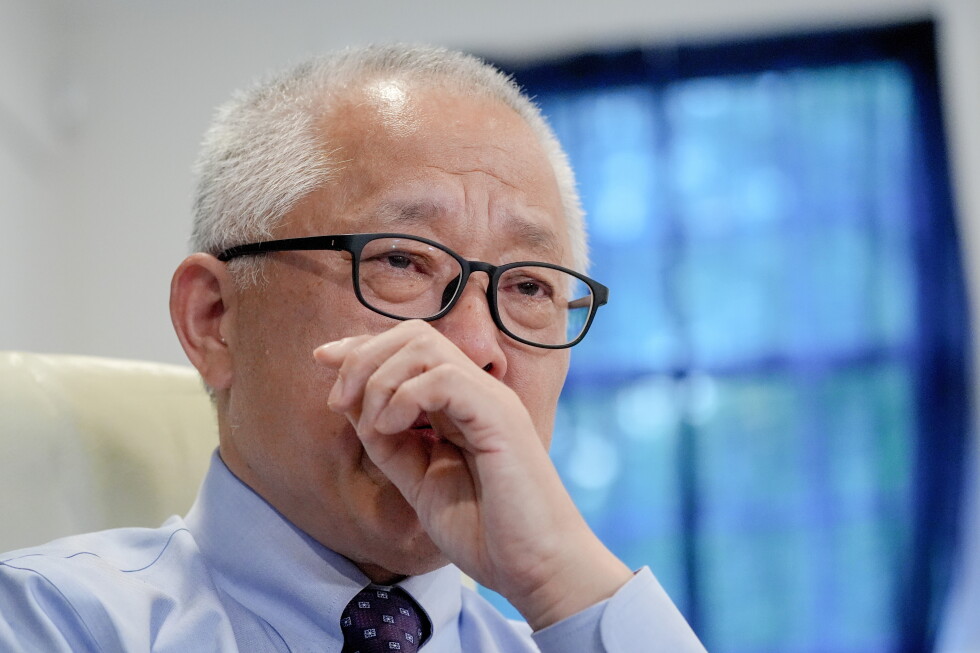
In a stunning, rapid reversal of fortune that spanned just 24 hours and 15 time zones, prominent Chinese underground Christian pastor Ezra Jin Mingri went from fearing a 15-year prison term in a southern Chinese detention center to reuniting with his family in Los Angeles, where he celebrated the U.S. Independence Day weekend marking the nation’s 250th anniversary.
The 57-year-old religious leader, who founded one of China’s largest and most influential unregistered Christian congregations, Zion Church, had spent 266 days in custody after being detained alongside other church leaders in a October 2025 government crackdown. Before his sudden release, Jin told the Associated Press he had wondered if he would ever live to see freedom again, convinced he would spend at least a decade behind bars.
Jin’s release comes as a rare exception amid growing Chinese resistance to foreign policy pressure. The pastor credits direct intervention from former U.S. President Donald Trump, who raised his case during a May 2025 meeting with Chinese President Xi Jinping, for securing his freedom. “It’s so dramatic. It’s unimaginable,” Jin said from outside Washington D.C. “It’s a miracle.”
The sequence of events that led to his departure from China began on the morning of July 3, when Jin was unexpectedly summoned to collect his few belongings — including his personal Bible — and issued new clothing and a pair of Nike shoes. Guards told him he was being transferred from the Beihai detention center, and Jin initially speculated he would be placed under house arrest, or even moved to an undisclosed closed location. He never entertained the possibility of full release, he says, because China rarely concedes to foreign pressure on domestic political and religious issues, and hundreds of other religious leaders and activists remain in custody.
That speculation shifted when a police van bypassed his former neighborhood and carried him directly to a high-speed rail station, where he was escorted to a private car occupied only by himself and uniformed officers, who recorded the journey. After traveling 470 miles to the southern major metropolis of Guangzhou, he was taken directly to the city’s international airport. There, in a VIP terminal room, authorities convened an temporary court proceeding where prosecutors dropped all pending charges against Jin, including counts of illegal business activity and fraud linked to operating an unregistered house of worship. After announcing that all criminal procedures would be terminated, authorities returned Jin’s passport to him, clearing the way for his departure. A U.S. diplomat had waited on-site for hours ahead of his release, Jin said.
Jin could not sleep during the 13-hour trans-Pacific flight to Los Angeles, too excited by the unexpected turn of events to rest. Upon landing, U.S. officials welcomed him and issued a one-year visa with no processing fees. He was finally reunited with his family, who had resettled in the U.S. years earlier after Jin sent them abroad ahead of an expected crackdown. For the first time, he was able to hold his three young grandchildren, the youngest of whom was just one month old. His daughter, Grace Jin Drexel, who had spent months lobbying for her father’s release, said she barely recognized him at first: he had lost significant weight and aged visibly during his 266 days in detention.
Zion Church, which Jin founded in 2007, grew to become one of China’s most prominent independent Christian congregations, operating outside the government’s official state-sanctioned religious system that requires all places of worship to accept Communist Party oversight. In 2018, Beijing authorities shut down the church’s main public sanctuary after the congregation refused to comply with a mandate to install government surveillance cameras on site. Jin chose to send his family abroad to the U.S. while he remained in China, continuing to lead the congregation in small, scattered home groups that gained a large online following throughout the COVID-19 pandemic. He was finally detained in the October 2025 crackdown on unregistered religious groups.
Jin emphasized that Chinese authorities did not force him to sign a forced confession or subject him to a public show trial before dropping all charges. He said he has no knowledge of any behind-the-scenes deal or detainee swap arranged for his release, but credits Trump’s brand of “unique diplomacy” for producing tangible results. When Trump left Beijing after his May meeting, he confirmed to reporters that he had raised Jin’s case directly with Xi, who responded that he would “strongly consider” the request. Trump has previously vowed to “save our Great Christian population” across the globe.
When contacted for comment on Jin’s release, China’s Foreign Ministry reaffirmed that the country regulates religious affairs in accordance with domestic law, and said it “firmly opposes interfering in China’s internal affairs with so-called religious issues.”
Now free and resettled in the U.S., Jin says he will not stop advocating until other detained Chinese Christians are also released. His current priorities include securing the freedom of eight other detained Zion Church leaders, as well as Wang Yi, the pastor of the Early Rain Covenant Church who is currently serving a nine-year prison sentence. Earlier this week, he met with U.S. House Speaker Mike Johnson alongside family members of three other detained Chinese Christians to push for continued U.S. advocacy.
“I am free in this country, so warmly welcomed, so I am making a special call not to forget that many more are still detained,” Jin told the AP, his voice breaking with emotion. “I hope we will continue to strive for them to be free.”
Speaker Johnson noted that Jin’s release has earned broad bipartisan support in the U.S. Congress, saying “This is something we all agree on. It’s about religious freedom around the world.”
Beyond advocating for other detained believers, Jin says his greatest lifelong wish is for the Chinese government to formally legalize and recognize independent Christian churches. “Probably the most important wish in my lifetime is that Chinese churches can be recognized by their own government,” he said.
Associated Press writers Ken Moritsugu in Beijing, Lisa Mascaro in Washington and Josh Funk in Omaha, Nebraska contributed reporting to this article.