Just hours after a temporary, court-challenged round of global tariffs expired at midnight Friday, the Trump administration rolled out sweeping new double-digit tariffs covering imports from 60 U.S. trading partners, a policy framed as a crackdown on forced labor that critics decry as a transparent attempt to resurrect his earlier illegal global tariffs. The new levies, which apply to 99% of U.S. imports from the targeted nations, came into force precisely when the temporary tariffs put in place after the Supreme Court’s February ruling lapsed, renewing widespread pushback from domestic business groups, opposition lawmakers and U.S. allies alike.
The tariffs are tiered: a 12.5% rate applies to countries that lack formal legislation banning forced labor-produced imports, while a 10% rate is imposed on nations that have such regulations but are deemed to lack sufficient enforcement by the Trump administration. Major U.S. trading partners including the European Union, India, Japan, Canada and Mexico all fall under the new measures, though a small set of goods are exempted: crude oil, fertilizers, products granted preferential access under the U.S.’s North American trade agreement, and steel and aluminum already targeted by earlier national security-based tariffs.
Unlike Trump’s earlier global tariffs, which were struck down by the Supreme Court after being imposed under the International Emergency Economic Powers Act (IEEPA), the new levies are authorized under Section 301 of the 1974 Trade Act, a durable trade law that permits presidential sanctions against unfair trade practices. This is the same legal framework Trump used to impose long-standing tariffs on Chinese goods during his first term, measures that survived multiple court challenges. The temporary tariffs that expired Friday were implemented under Section 122 of the 1974 Trade Act, which only allows 150 days of import levies, matching the expiration timeline that aligned with the new tariffs’ launch.
Critics have been quick to condemn the policy, arguing it does little to address forced labor and will only raise costs for U.S. consumers already grappling with persistent high inflation. “This is a blatant attempt to revive Trump’s illegal global tariffs under a different name,” said Oregon Senator Ron Wyden, the top Democrat on the Senate Finance Committee. “These latest tariffs will continue to keep inflation and prices high for Americans, and do nothing to help workers around the world.” The Liberty Justice Center, a libertarian legal advocacy group, has already filed a lawsuit challenging the new tariffs in federal trade court.
Democratic lawmakers have also pointed to the uneven application of the tariff rates as proof the forced labor justification is hollow. “President Trump isn’t serious about combating forced labor,” Democratic Congresswoman Linda Sanchez wrote on X. “If he was serious, he would not be applying the same tariff rate to China, one of the worst forced labor abusers in the world, as he does to countries like Australia.” Both nations are subject to the 12.5% rate under the new policy.
U.S. Trade Representative Jamieson Greer defended the policy, arguing that “the United States has had a forced labor import ban for nearly a century, and rigorously enforces it; it’s well past time for our trading partners to do the same.” But the justification has drawn swift pushback from major allies. Australian Trade Minister Don Farrell called the levies “completely unjustified,” while European Union foreign policy chief Kaja Kallas questioned the administration’s framing, noting the bloc’s “very good” labor standards.
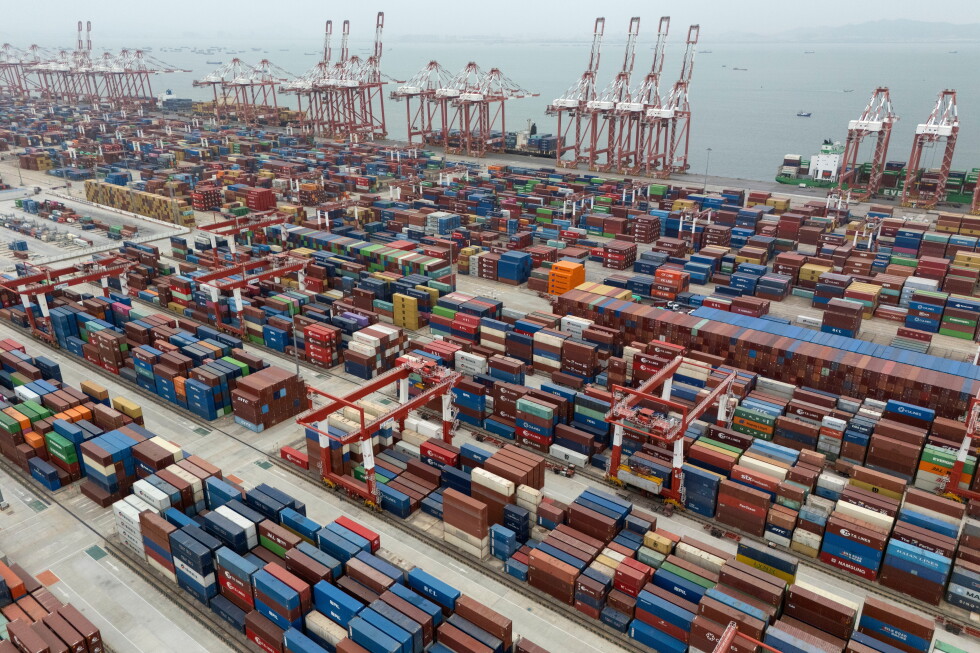
Domestic business groups have also warned the new tariffs will pass increased costs directly to American shoppers. Many companies anticipated the policy change and pre-shipped goods to beat the implementation, driving U.S. container port import volumes to an all-time record in July, according to a joint forecast from the National Retail Federation and Hackett Associates. While Oxford Economics notes that the overall effective U.S. tariff rate will not change dramatically immediately, since the new rates are close to the 10% temporary rate they replaced, businesses warn ongoing uncertainty over potential future levies paired with current costs will keep prices rising.
“Steeper tariffs result in higher costs for business owners — and therefore higher prices for consumers,” the National Retail Federation said in a statement Friday. “We encourage the administration to focus on trade agreements with our nation’s trading partners that truly open markets by lowering tariffs, not raising them.” Matt Priest, CEO of the Footwear Distributors and Retailers Association, added that footwear prices have already climbed 4.1% year-over-year in June, with children’s shoes rising 4.7%, as brands pre-emptively raised costs to account for the new tariffs. With additional upward pressure from fuel costs tied to the Iran war, Priest noted, “We don’t see anything in the market right now that’s pushing prices downward, and that’s a concern.” Cross-sector trade groups including the U.S. Chamber of Commerce previously argued in a July letter to Greer that broad tariffs are an ineffective solution to forced labor, calling for more targeted, collaborative measures to address the complex global issue instead.
For the Trump administration, the new tariffs also serve a critical budget purpose: replacing lost tariff revenue that was being used to fund the president’s 2025 massive tax cuts. When the IEEPA tariffs were in effect, monthly U.S. tariff revenue peaked at more than $31.4 billion last October. After the Supreme Court struck down the levies, revenue plummeted, and the government was required to issue billions in refunds. Tariff collections dropped to $22 billion in March and April, and the budget turned negative: a $42 million shortfall in May expanded to a $25.6 billion loss in June as refunds outpaced new revenue.
The Committee for a Responsible Federal Budget estimates that the new forced labor tariffs, when combined with separate new levies on Canada and Brazil announced this month, will replace less than 60% of the revenue lost after the Supreme Court struck down the earlier IEEPA tariffs. The policy also carries significant political risk for Trump and congressional Republicans ahead of the November 3 elections that will determine whether the party retains full control of Congress, with U.S. voters already broadly frustrated by persistent high costs of living.