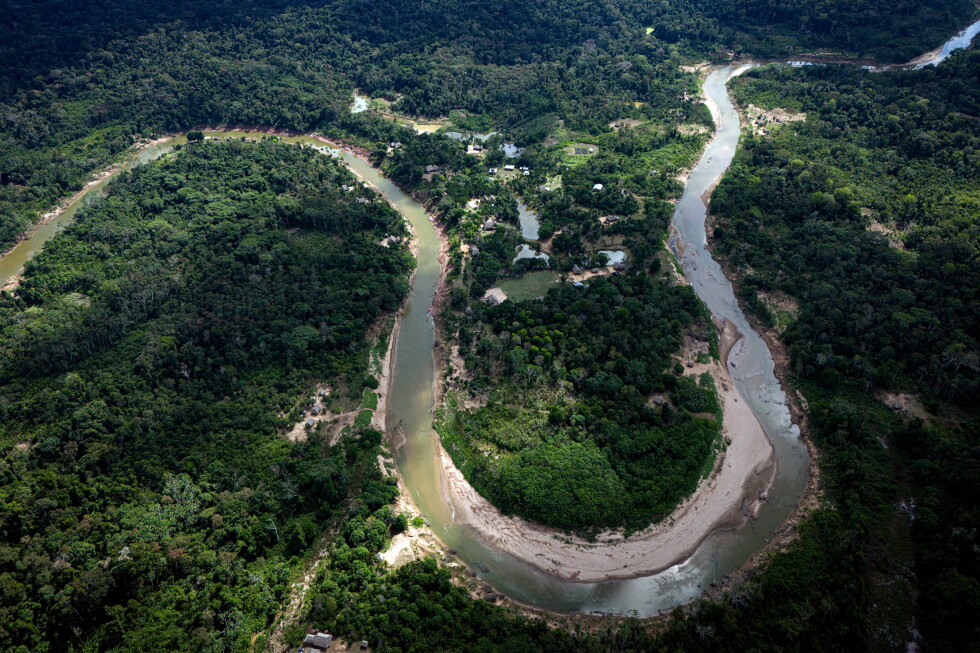
RIO DE JANEIRO, BRAZIL – In a landmark step toward collaborative conservation of the Amazon rainforest, Brazil’s Ministry of Indigenous Peoples announced Friday that it has formalized a new bilateral agreement with Peru’s Ministry of Culture focused on strengthening joint protection of Indigenous territories, particularly those housing uncontacted communities along the two nations’ shared border.
Negotiations for the memorandum of understanding first launched in 2024, and the full text of the agreement is scheduled to be officially published in Brazil’s government register in the coming weeks, per Brazilian officials. Once implemented, the pact will create a structured cross-border framework for sharing intelligence, aligning enforcement strategies, and coordinating conservation efforts to address shared threats to vulnerable Indigenous lands.
The announcement arrives amid urgent calls for action from Ashaninka Indigenous leaders, who are currently meeting with federal authorities in Brazil’s capital Brasília to request immediate security intervention for their cross-border territory. Earlier this month, five heavily armed men carrying machine guns entered the Ashaninka lands, threatened local families, and targeted the community’s senior leadership. Spanning the remote western Amazon along the Brazil-Peru divide, the Ashaninka territory has increasingly become a target for transnational criminal groups seeking access to unpatrolled land for illegal activity.
The growing encroachment is directly tied to the expansion of a key drug trafficking corridor known as the Solimões River route, experts confirm. Criminal gangs and drug traffickers have increasingly carved out smuggling routes through the region, leveraging the dense, remote Amazon rainforest to move illicit goods. While Indigenous stewardship of these lands is widely recognized as one of the most effective barriers to Amazon deforestation – a critical front for regulating global climate systems – that same dense, remote tree cover that Indigenous communities protect also makes the territory ideal hiding spots for criminal networks.
In response to the recent incursion, Brazilian federal police have opened a formal investigation into the attack, and launched a joint enforcement operation with state authorities in the region earlier this week. The operation’s official mandate is to prevent and crack down on cross-border incursions, organized criminal activity, drug trafficking, environmental harm, and other illegal activities that cross the two nations’ boundary.
The Brazilian Army has also bolstered its presence in the border region, deploying approximately 30 additional troops to step up patrols. Preliminary intelligence gathered from Indigenous leaders and government agencies indicates the armed attackers were Peruvian citizens who crossed into the Brazilian side of the Ashaninka territory to carry out the incursion. This reinforcement, however, has drawn criticism from Indigenous advocacy groups, who have long argued that temporary troop deployments do little to address the permanent, ongoing threat of criminal encroachment on their lands.
As of Friday, Peru’s Ministry of Culture had not responded to requests for comment on the new agreement or the recent attack. The Associated Press’ climate and environmental reporting is supported by funding from multiple private foundations, with the AP retaining full editorial control over all content. More information on the AP’s philanthropic partnership standards, a full list of supporters, and funded coverage areas is available at AP.org.