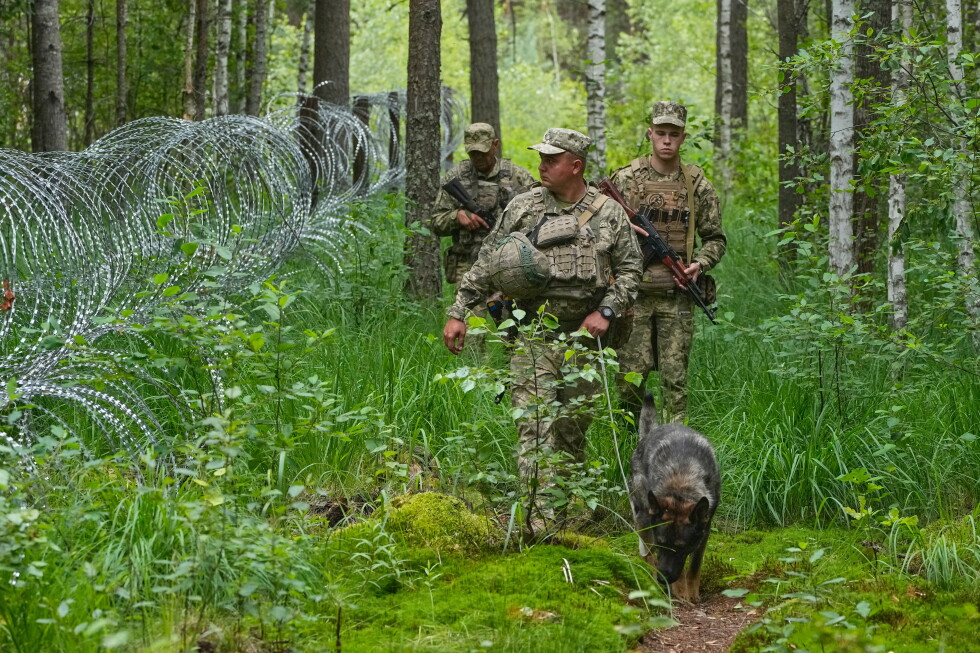
Four years have passed since Russian forces launched their full-scale assault on Kyiv from Belarusian territory, and Ukraine continues to ramp up defensive fortifications along its 1,084-kilometer shared border with Moscow’s closest military ally. What once served as a bustling, cross-border transit corridor connecting communities on both sides is now a quiet, restricted zone, off-limits to all civilian travel and laced with hidden landmines.
An on-the-ground reporting trip by the Associated Press to northern sections of the border earlier this month revealed the scale of Ukraine’s defensive buildup. For miles along border-side roads, anti-drone netting has been stretched to shield infrastructure from aerial attacks. The entire border landscape is crisscrossed with lines of razor-wire fencing and reinforced concrete “dragon’s teeth” anti-tank barriers, designed to block any potential armored incursion.
The AP visit followed a recent spike in bilateral tensions between Kyiv and Minsk. Ukraine issued a formal demand that Belarus shut down a series of Russian communications relay stations, which Moscow had installed on Belarusian soil to extend the operational range of drones targeting Ukrainian population centers. According to Ukrainian officials, Belarus complied with the request, and hostile rhetoric between the two governments has cooled significantly in the weeks since.
Despite the de-escalation, Ukrainian security officials remain vigilant. They have confirmed that there are currently no visible signs of a new Russian troop buildup inside Belarus, but have stressed that reinforcing the border will remain a top national security priority for the foreseeable future. Ukrainian border guard units conduct 24/7 patrols across the frontier zone, using armored fighting vehicles, surveillance drones, and integrated monitoring systems to track any unusual activity.
Belarusian authoritarian leader Alexander Lukashenko has repeatedly stated that his country has no intention of deploying its own troops to join Russia’s invasion of Ukraine, unless Belarus itself comes under direct attack. Even so, for residents living on the Ukrainian side of the border, the persistent risk of deeper Belarusian involvement in the war remains a constant source of anxiety.
For many local communities, the sprawling network of new fortifications carries a dual meaning: the heavy defensive works serve as a stark reminder of the chaotic, uncertain early days of the 2022 invasion, when Russian forces advanced to the outskirts of Kyiv from this very border, while also offering a measure of reassurance that Ukraine is prepared for every possible security scenario. Additional reporting for this story was contributed by AP journalist Volodymyr Yurchuk based in Kyiv.