BERLIN – On a sunny Friday afternoon in late July 2026, Berlin made history with its first ever official drag march, an energetic, glitter-filled opening event that kicked off one of Europe’s largest annual LGBTQ+ Pride celebrations. Organized in part by veteran LGBTQ+ activist and drag queen Sister Daphne OSPI, the march drew hundreds of participants ranging from drag queens and drag kings to allied supporters, building momentum ahead of the main Christopher Street Day parade, which was projected to bring hundreds of thousands of attendees to Berlin’s streets the following Saturday.
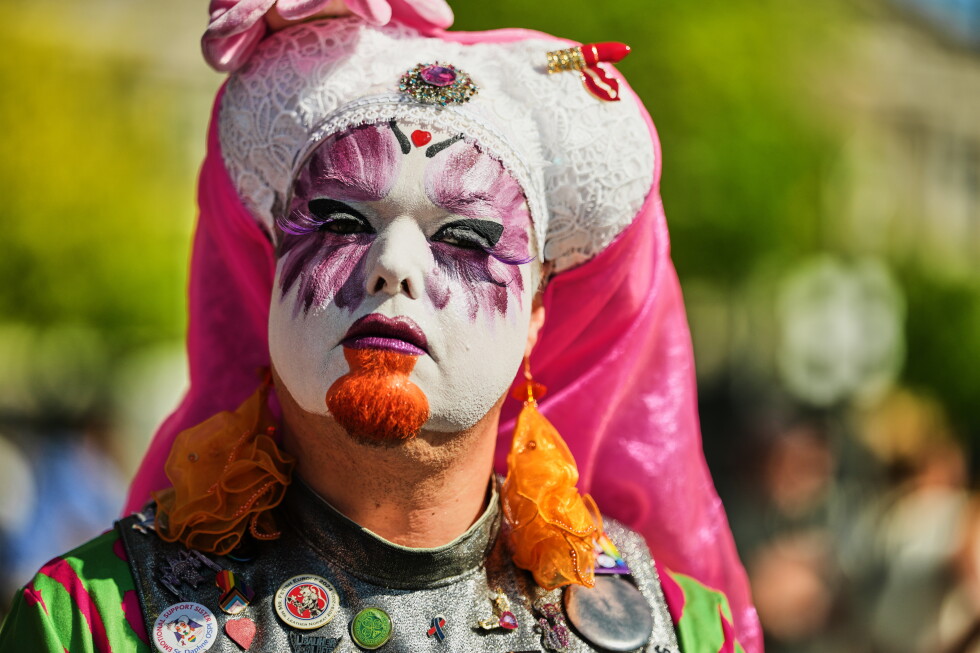
As the march got underway, Sister Daphne – a member of the German chapter of the Sisters of Perpetual Indulgence (SPI), an international LGBTQ+ advocacy organization – stepped forward to address the crowd. Pushing back her signature pink veil, fluttering her dramatic purple false lashes, and lifting her hands in a playful blessing, she declared, “Every step is a declaration, every kiss an act of revolution, every wig is a war cry.” Her words were met with roaring cheers from the crowd, which immediately fell into step behind the Transophonix brass band, dancing and marching through central Berlin to the beat of live music.
The procession made its way past iconic Berlin landmarks, starting near the Reichstag parliament building before heading toward the Brandenburg Gate. Along the route, the band played *Das lila Lied* (The Lavender Song), a groundbreaking 1920s anthem that has remained a symbol of the global gay rights movement for a century. Participants turned heads with vibrant, over-the-top looks: towering high heels, sequined and glittering gowns, bold artistic makeup, and creative wigs that embodied the drag community’s ethos of unapologetic self-expression.
In an interview ahead of the march, Sister Daphne explained the core philosophy driving the event: “We’re combining protest and resistance with joy and celebration. That’s what makes us so unique and that’s also what makes our demonstrations so popular.” Like all Pride events held around the world, Berlin’s annual celebration traces its roots to the 1969 Stonewall Rebellion in New York City, when LGBTQ+ patrons of the Stonewall Inn – a Greenwich Village gay bar located on Christopher Street – led an uprising against discriminatory police raids, a movement that redefined global queer advocacy.
Sister Daphne’s organization, the Sisters of Perpetual Indulgence, was founded in San Francisco in 1979, with its German chapter OSPI established in 1991. Beyond large public events like Pride, the group’s core work centers on community outreach: members regularly distribute safer sex education materials in nightlife venues, raise funds for people living with HIV and AIDS, and support grassroots queer projects across Germany and Europe. “Usually, we sisters are out and about in the nightlife scene, handing out safer-sex materials and collecting donations for people affected by HIV and AIDS, as well as for queer projects,” Sister Daphne noted. “Or we’re out at Pride parades, all over the country — across Germany, and sometimes even throughout Europe.”
By the time the march got underway, crowds continued to grow as onlookers joined the procession along the route, a trend Sister Daphne said she was delighted to see. Standing with her fellow SPI Sisters Pia and Clementia in front of the Reichstag ahead of the march, she beamed – her face painted the traditional white makeup that is a signature of the Sisters of Perpetual Indulgence – and raised a clenched left fist in a universal symbol of protest and queer pride. For her, the event was as much about personal joy as it was political action. “It brings me incredible joy to get ready, put on my makeup and get into the right mindset,” she said. “I really enjoy being out and about the way I am.”
The inaugural drag march marked a new milestone for Berlin’s long-standing Pride celebrations, cementing the city’s reputation as a welcoming hub for queer community and advocacy ahead of what organizers expected would be one of the largest Christopher Street Day parades in the event’s history.