At the United Nations Educational, Scientific and Cultural Organization (UNESCO) World Heritage Committee session hosted in Busan, South Korea, seven culturally and ecologically significant sites across five continents received formal inclusion to the coveted World Heritage List on Saturday. The annual meeting, which will run through next Wednesday, is still evaluating dozens of additional high-profile nominations from around the globe, including France’s Normandy D-Day landing beaches, Greece’s legendary Mount Olympus, and the ancient Asuka-Fujiwara imperial capitals of Japan.
The first of the newly inscribed natural sites, Georgia’s Okefenokee Swamp, stands as one of the largest intact freshwater wetland ecosystems on the planet. The sprawling interconnected network of marshes and forests supports an extraordinary level of biodiversity and feeds two major regional water systems. According to UNESCO’s official assessment, the swamp’s largely undisturbed peat layers preserve an unbroken 5,000-year timeline of climatic and environmental shift, making it both a critical habitat for rare species and an invaluable scientific archive for studying long-term ecological change. The designation places the Okefenokee National Wildlife Refuge alongside America’s most iconic protected landmarks, including the Grand Canyon and Yellowstone. Still, the listing has faced local opposition, with some residents raising unfounded concerns that it would grant UNESCO excessive regulatory control over site management. Despite this pushback, conservation leaders have embraced the designation as a lasting promise to protect the swamp. “We accept this inscription not as a finish line, but as a commitment to keep the Okefenokee wild, resilient, and thriving for generations to come,” said Kim Bednarek, executive director of the nonprofit Okefenokee Swamp Park, which collaborated with the U.S. federal government to develop the successful nomination.
Across Southeast Asia, southern Thailand’s 13th-century Buddhist sanctuary Wat Phra Phra Mahathat Woramahawihan also joined the list, marking Thailand’s ninth entry to the World Heritage register. The temple, famous for its 255-foot central stupa and one-of-a-kind fusion of architectural traditions, was recognized as an exceptional example of living Theravada Buddhist heritage. It remains an active center of worship that has preserved centuries-old religious practices that draw hundreds of thousands of devotees for annual gatherings. First nominated to UNESCO back in 2012, the site underwent more than a decade of upgrades and preparation to meet the body’s strict preservation standards. City officials expect the World Heritage designation to drive a sharp increase in tourist footfall, but say they are fully prepared to manage the growth. “We have prepared our infrastructure, buffer zoning and evacuation plan to fit all the requirements of UNESCO,” Kanop Ketchart, mayor of Nakhon Si Thammarat City, told the Associated Press. “More importantly, the people are getting used to all this process for almost 10 years. So they are very much looking forward to (it).”
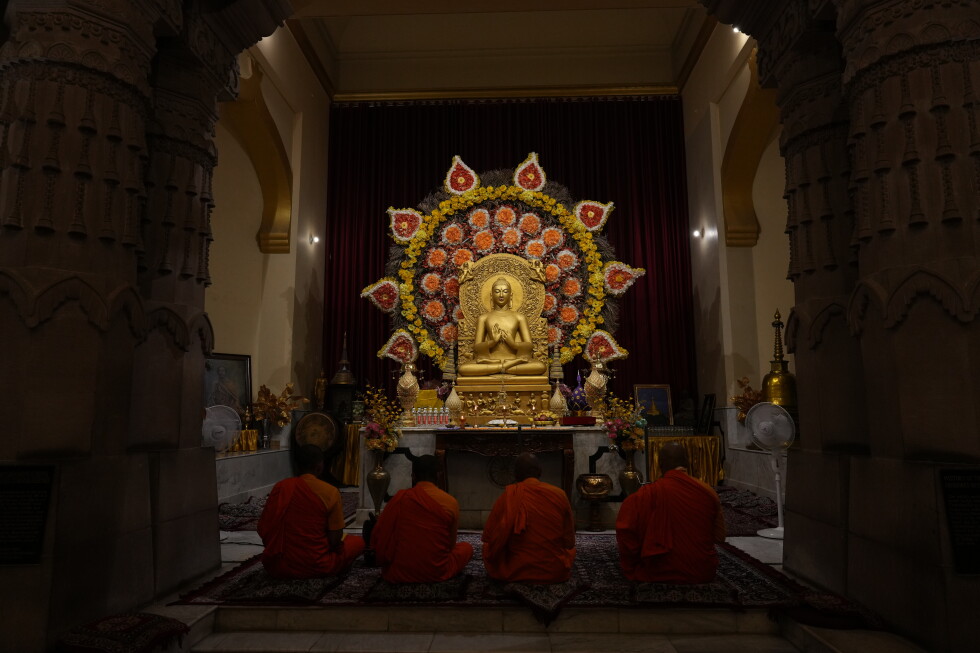
Three additional cultural sites rounded out the new Asian inscriptions. India’s ancient Buddhist pilgrimage site of Sarnath, located adjacent to the holy city of Varanasi, was added for its unique spiritual and historical significance: it is recognized globally as the site where the Buddha delivered his first sermon after achieving enlightenment. Despite cycles of decline and rediscovery over millennia, the site’s remaining archaeological and architectural remains retain outstanding universal cultural value, per UNESCO’s assessment. In eastern China, the historic porcelain production hub of Jingdezhen earned inclusion for its centuries-long legacy of handcrafted ceramic innovation. The inscribed sites document the evolution of Chinese porcelain manufacturing from the 10th to 19th centuries, showcasing the technical breakthroughs that turned Jingdezhen into the global center of fine porcelain production. The city’s iconic blue-and-white porcelain remains a worldwide symbol of Chinese artisanal craftsmanship centuries after it first entered global trade routes. South Korea also saw an expansion of its existing tidal flats, or getbol, World Heritage site, with four additional coastal wetlands in the country’s western Seosan, Goheung, Muan and Yeoju regions added to the designation. UNESCO first recognized four South Korean tidal flats in 2021 for their extraordinary biodiversity and critical role as a refueling stop for migratory birds along the East Asian-Australasian Flyway. The South Korean Foreign Ministry noted that the expanded designation “reaffirms the importance of international cooperation for the conservation of the Yellow Sea ecosystem and the East Asian-Australasian Flyway,” a major migratory route stretching from the Arctic to Australia and New Zealand.
Off the coast of East Africa, the Indian Ocean island nation of Comoros secured its very first World Heritage listing, with six 11th-century historic towns inscribed. The towns grew to become the primary urban centers of Comoros’ pre-colonial sultanates, and their preserved built environments reflect centuries of cultural exchange across Indian Ocean trade networks, blending African, Arab, and Islamic cultural influences to create a distinct regional urban tradition.