The 2026 Commonwealth Games in Glasgow has emerged as a landmark moment for inclusive global sport, with top African para-athletes crediting the Games’ fully integrated competition structure for driving long-overdue shifts in public perceptions of disability across the continent. Unlike the Paralympic Games, which hosts para-sport competition as a separate, parallel event, the Commonwealth Games embeds para-athletic events directly into its main schedule, meaning every medal won by disabled competitors counts equally toward a nation’s overall medal table alongside medals earned by able-bodied athletes. This groundbreaking inclusive model was first introduced at the 2002 Manchester Games, making the Commonwealth Games the first fully integrated major international multi-sport event in history.
Originally, the 2026 Games were scheduled to be hosted by the Australian state of Victoria, but the state pulled out of hosting duties in July 2023 citing unmanageable cost overruns and funding gaps. Glasgow stepped in at the last minute to host a scaled-back edition of the Games, cutting 10 full sports from the original program. Even with this reduction, the 2026 Games will feature a record 47 para-sport events across six of the 10 remaining sports, marking a historic high for para-athlete participation.
For African athletes, this integrated structure has already delivered tangible social change, breaking down long-standing stigma surrounding disability and creating new opportunities for future generations of disabled competitors. “Sport really is a huge pusher for change,” Husnah Kukundakwe, the 19-year-old captain of Uganda’s Commonwealth Games team, told BBC World Service. “It shows that para-swimming and para-sport just deserve the same kind of recognition, funding, and sponsorship that able-bodied sport gets.”
Kukundakwe is no stranger to making history: at 14, she became the youngest competitor at the 2020 Tokyo Paralympics, a milestone that opened the door for para-sport growth in her home country. Born without a lower right arm, Kukundakwe went on to compete at the 2022 Birmingham Commonwealth Games and carried Uganda’s flag at the 2024 Paris Paralympics. She says her athletic career has not only transformed her own life, but changed how Ugandans see para-athletes. “It was a huge deal when we went back home after Tokyo, and it kind of opened up the world of para-sport to Ugandan people, and it made big changes in terms of the support that para-sport gets from the government,” she explained.
Before she took up competitive swimming, Kukundakwe says she hid her limb difference by wearing long sleeves even on the hottest days. Today, she competes in the 100m freestyle S9 and 100m breaststroke SB8 categories, and says the sport has helped her embrace her identity. “Swimming really built up my confidence. But ever since I started swimming, a sport which requires you to pretty much be open, I started to feel more comfortable with myself. And eventually I found out that it doesn’t really matter what I look like. It’s all about what I can do.”
Kukundakwe is targeting Uganda’s first ever Commonwealth Games swimming medal on her home nation’s behalf, aiming for the podium in the 100m breaststroke. Before her Tokyo debut, no Ugandan swimmer had ever qualified for either the Olympic or Paralympic Games; today, Uganda has sent nine swimmers to Glasgow, including two para-athletes. Kukundakwe says increased public attention on her career has led to broader changes beyond sport, including better accessibility in new public buildings and increased government funding for disability initiatives. “It doesn’t make sense for me to open up doors and only I am able to walk through them. I want there to be more para-swimmers,” she said. “The perceptions of people with disabilities and the funding towards para-sport in Uganda really has changed.”
Similar stories of shifting attitudes are shared by other top African para-athletes at the Games. Mauritian wheelchair racer Noemie Alphonse, who will compete in the 400m and 1500m T54 events as she chases her first Commonwealth medal, says her 2023 World Championship silver medal in Paris inspired a new wave of young disabled athletes to take up sport in her home country. “When I won that medal, the mindset completely changed in Mauritius. Many youngsters with disability and parents also were really inspired through what I did. My team-mates now are those who saw me on TV,” Alphonse said. The integrated structure of the Commonwealth Games, she added, has helped the public see para-athletes as equals. “We are able to showcase what we are able to do, and we are seen as on the same level. Everyone follows us on TV, sending good comments, good messages and encouraging us. We are really happy that the mindset changed and they are seeing that we are able to contribute to our country.”
Ghanaian powerlifter Tahiru Haruna, who switched to the sport from arm wrestling in 2017, echoed that sentiment, even after finishing seventh in the men’s heavyweight para-powerlifting event, narrowly missing out on Ghana’s second ever para-sport Commonwealth medal. “In Ghana, I always go to schools and on streets teaching about sports, against stigma, trying to tell them that you can play sports,” Haruna said. “Back in schools in Ghana they don’t allow the physically challenged to partake in sports, so we try to teach PE teachers to get them involved. Everything is inclusion, we don’t need to separate us.”
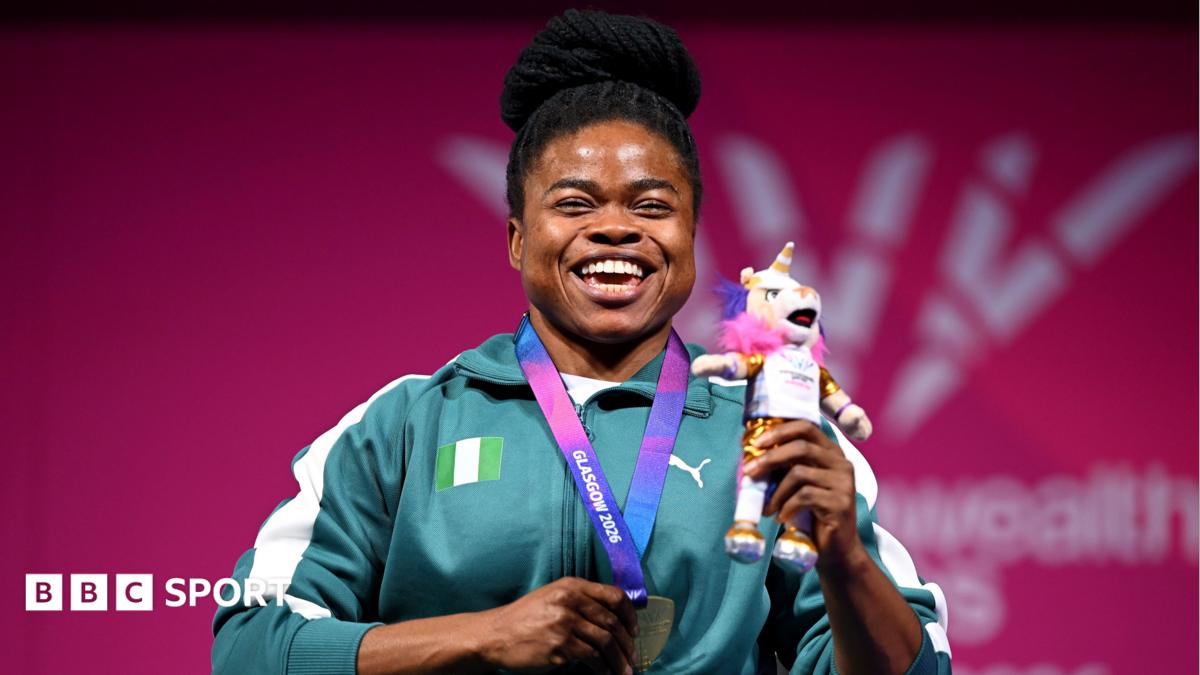
In a historic marker for inclusion, the first gold medal awarded at the 2026 Games went to a para-athlete: England’s Mark Swan took top honors in the men’s lightweight para-powerlifting, with Nigeria’s Roland Ezuruike claiming silver. Later in day one, Nigeria’s Esther Nworgu won Africa’s first gold medal of the entire Games, also in women’s lightweight para-powerlifting, as part of a dominant opening day for the West African nation that saw Nigeria claim three golds and three silvers in para-powerlifting overall. For many African nations, para-sport has already become a consistent path to medal success at the Commonwealth Games, demonstrating the impact of the integrated model on elevating disabled talent across the continent.