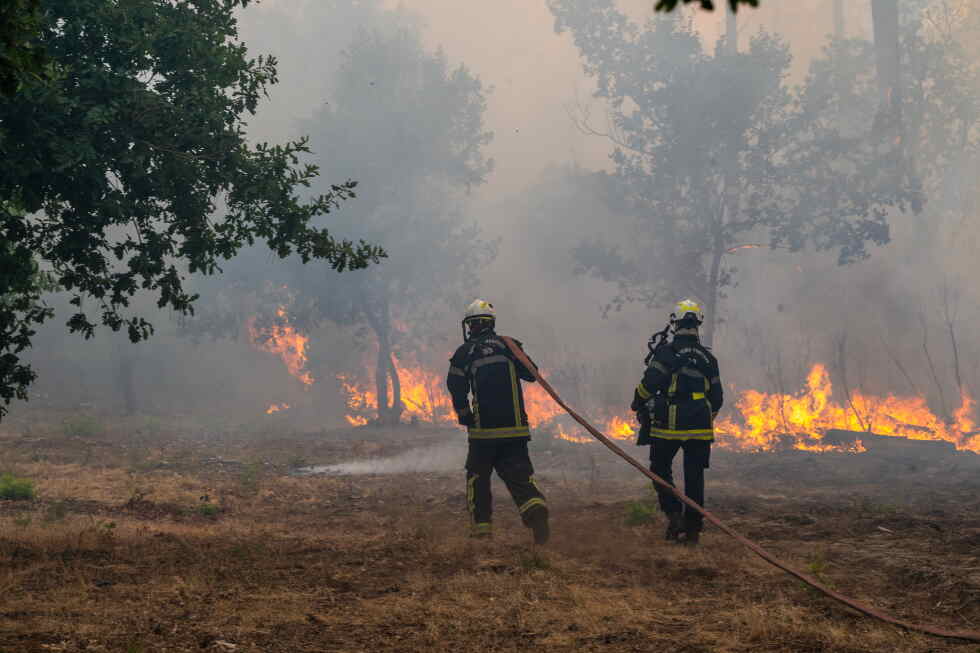
In the summer of an escalating climate crisis, two of Western Europe’s most popular destinations are grappling with out-of-control wildfires that have forced more than 200,000 people to flee their homes, with flames now pushing toward the iconic French wine hub of Bordeaux.
The emergency unfolded rapidly across southwestern France and central Spain this week, with record-high temperatures and prolonged drought amplified by climate change turning vast forested areas into tinder that fueled fires of unprecedented ferocity. Officials in both nations have acknowledged they were caught off guard by the speed and intensity of the advancing flames, which have overwhelmed initial firefighting deployments.
In France, the blaze that began Wednesday near the Atlantic coastal vacation spot of Cap Ferret — just 37 miles southwest of Bordeaux — has swelled in size driven by strong westerly winds. By Friday, Gironde region prefect Sophie Brocas confirmed the fire had reached an “unprecedented magnitude” and was steadily advancing on the Bordeaux metropolitan area. Overnight Saturday, authorities issued mandatory evacuation orders for portions of three western suburbs of Bordeaux, including the city’s airport, plus additional communities further west beyond the immediate metro area.
“As the fire continues to spread, and despite the significant resources deployed by firefighters, the evacuation of residents from the affected areas is required to ensure their safety,” the prefecture’s official statement read. Targeted residents received emergency alert notifications directly to their mobile devices with clear evacuation instructions, and authorities have prioritized moving all at-risk people to safe shelter as quickly as possible.
To date, the French Interior Ministry reports roughly 141,000 people across the Gironde and Landes departments have been forced to leave their homes, with many coastal tourist residents fleeing by boat to escape the fast-moving flames. Dozens of French firefighters have been injured while battling the blazes, though no fatalities have been recorded across either France or Spain. For locals, the scale of the disaster is unprecedented: “An evacuation on this scale has never happened before. All we really hope is that the firefighters can quickly get it under control,” said Laurent Moretti, a resident of the French town of Arès.
Across the border in central Spain, roughly 60,000 people living west of Madrid have similarly been displaced by raging wildfires that burned out of control Friday. Spanish firefighters have acknowledged the blazes move too quickly and violently to be confronted directly, leaving crews focused on evacuation and containment rather than aggressive frontline attacks. On Saturday, regional officials reported a slight reprieve: cooler temperatures and calmer winds overnight reduced fire intensity, creating a small window to reinforce containment lines.
The European Union has mobilized a cross-national response to the emergency, with water-dumping firefighting aircraft already deployed from the Netherlands and Portugal to assist Spanish crews. Four additional aircraft — two from Italy and two from Greece — were expected to arrive in Spain Saturday to boost response efforts.
French officials are also ramping up their response, announcing substantial national reinforcements that include additional firefighters, military personnel, medical workers, and wildfire experts to expand the team tackling the blaze. French Interior Minister Laurent Nunez described the France fire as “a large, self-sustaining fire that is extremely difficult to bring under control,” a assessment echoed by frontline crews and residents alike. As plumes of dark smoke have darkened skies across both regions and panicked residents flee by car, with authorities going door-to-door to clear at-risk neighborhoods, the disaster underscores the growing threat extreme heat and wildfires pose to populated European areas amid accelerating climate change.