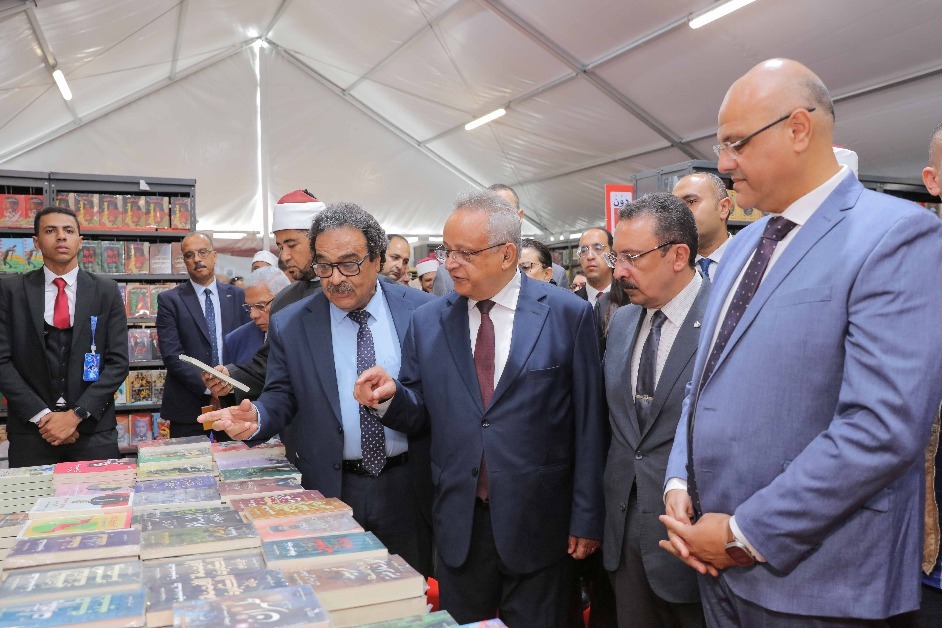
Egypt’s iconic Bibliotheca Alexandrina International Book Fair, one of the most prominent cultural gatherings in the Middle East and North Africa, has wrapped up its 2026 edition with Chinese publications emerging as an unexpected highlight, drawing broad attention from Arabic-speaking readers across academic and general audiences alike.
Hosted by Bibliotheca Alexandrina, Egypt’s leading national library and cultural hub located in the coastal city of Alexandria, this year’s fair brought together nearly 100 Egyptian and Arab publishing houses and welcomed around 1,000 registered participants before organizers extended its run by three extra days to accommodate higher-than-expected visitor turnout. Curated alongside major Arabic and global literary titles, Chinese works occupied a dedicated space at the fair, reflecting the event’s commitment to fostering cross-cultural dialogue and encouraging readers to engage with diverse intellectual and civilizational traditions.
The curated selection of Chinese titles spanned a range of topics designed to resonate with local reader interests, including deep dives into traditional Chinese arts such as ceramics and tea culture, alongside scholarly works examining centuries of historical interaction between Chinese, Arab and Islamic civilizations — content that highlights the long-standing, deep-rooted people-to-people and cultural ties connecting the two regions.
For Chinese language students in Egypt, the presence of these publications at one of the country’s biggest international book fairs represents far more than a simple literary display: it is a critical platform for strengthening bilateral cultural exchange and breaking down outdated stereotypes about China. Salma Sameh, a Chinese language student and visitor to the fair, explained that the collection fills a key gap for both students and the general Egyptian public.
“For students, the fair provides access to up-to-date academic references that are hard to find through other local channels,” Sameh said. “For the general public, it is an opportunity to discover China through Chinese voices rather than secondhand stereotypes, helping to build genuine, nuanced cultural awareness.”
Sameh emphasized that high-quality translation plays an irreplaceable role in bridging civilizational gaps. “A translator does more than transfer words — they convey the spirit of the text and its underlying culture to Arab readers. Translation is therefore a fundamental bridge connecting the two civilizations,” she added. Echoing the sentiment of many local readers, Sameh called for more Arabic translations of Chinese works, particularly contemporary Chinese novels, as well as titles covering history, science, arts and technology.
“Contemporary Chinese literature offers vivid, first-hand insights into modern Chinese society and everyday life,” she noted. “It can attract a much broader audience, especially young readers, making Chinese culture accessible far beyond academic circles.”
Hager Rizk, another Chinese language student attending the fair, shared that access to authentic Chinese publications marks an important milestone in expanding Arab readers’ understanding of China through reliable, diverse source material. “Books remain one of the best ways to understand Chinese civilization, history, and philosophy. Specialized titles on Chinese ceramics and the historical exchanges between China and the Islamic world provide valuable academic resources for researchers and Chinese language students like me,” Rizk said.
Like Sameh, Rizk highlighted the growing demand for more high-quality, accurate Arabic translations of Chinese works that can paint a comprehensive picture of Chinese civilization, including its most distinctive cultural heritage elements such as traditional arts, tea culture and porcelain craftsmanship.
Rizk stressed that these Chinese publications do more than expand the collections of Egyptian and Arab libraries: they deepen overall cultural exchange between Egypt and China. “These books provide researchers, students, and the general public with a clear window into Chinese civilization, contributing to mutual learning between civilizations and strengthening knowledge exchange between the two peoples,” she said.