博客

  • Hong Kong activist allowed to stay in UK after deportation threat

    Hong Kong activist allowed to stay in UK after deportation threat

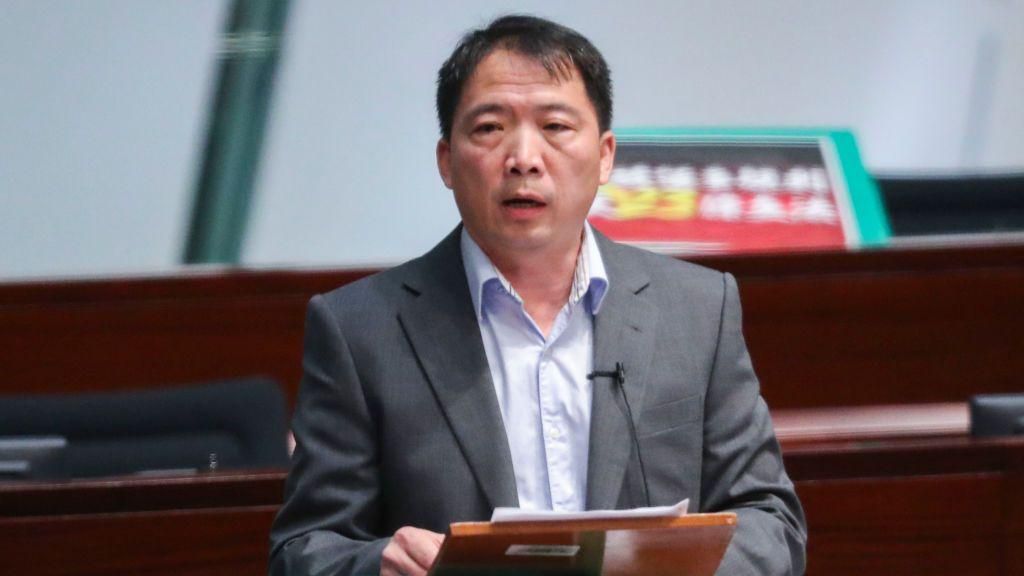
    A weeks-long entry uncertainty for former Hong Kong pro-democracy opposition leader Wu Chi-wai has reached a resolution, with UK border authorities reversing an initial deportation order and approving a six-month stay for the 63-year-old to reunite with his family already based in the country.

    Wu, who stepped down as leader of the now-disbanded Democratic Party and was one of the most prominent figures in Hong Kong’s 2019 pro-democracy movement, arrived at London Heathrow Airport last Wednesday. He told BBC Chinese that upon landing, border officials detained him for nearly 10 hours and initially blocked his entry. After initial processing, officers gave him only a one-week temporary leave to remain, ordering him to report back to the airport ahead of a scheduled deportation.

    In a turn of events on Monday, Wu confirmed that UK Border Force had reversed its initial decision, approving his entry under the standard visa-free terms for eligible travelers and granting the full six-month stay he was originally due to receive.

    Wu is one of the 47 high-profile pro-democracy figures collectively known as the “Hong Kong 47”, who were convicted in a widely debated national security trial following the 2019 protests. He was released from prison in June this year after serving more than five years behind bars on charges including subversion.

    The veteran opposition figure’s goal for the trip has long been family reunification: his wife and son relocated to the UK in 2022 and 2023 respectively, and Wu told reporters he had only been able to connect with them via monthly letters and phone calls since their departure. Ahead of his travel, Wu said he contacted staff at the British Consulate General in Hong Kong to confirm whether his entry would face any barriers related to his criminal record. He added that consular representatives assured him there would be no issues, and agreed to pre-notify UK Border Force of his criminal history and travel itinerary.

    Despite early media speculation that Wu planned to seek political asylum in the UK, he has repeatedly denied that claim. Initial border pushback came after officials questioned whether he qualified as a “genuine visitor” solely entering the country to see family, Wu said.

    Human rights advocacy group Hong Kong Watch, which had publicly called on UK authorities to approve Wu’s entry, welcomed the final decision in a Monday statement. “This is the right outcome, and it should never have taken this long,” said Megan Khoo, the group’s policy director. “He should never have faced the prospect of removal back to the city that jailed him.”

    Wu entered the UK using a British National (Overseas) passport, a special travel document issued to Hong Kong permanent residents before the city’s handover to Chinese rule on July 1, 1997. BNO passport holders are typically eligible for six months of visa-free entry to the UK under existing rules.

    In 2021, following the Chinese central government’s implementation of the Hong Kong National Security Law and a sweeping crackdown on pro-democracy activism that saw dozens of opposition figures jailed or forced into exile, the UK government launched a special BNO visa pathway. The program allows eligible BNO holders to gain the right to live, work and study in the UK, with a clear path to British citizenship after a multi-year residency period.

    Official UK government data shows that as of recent reports, more than 230,000 Hong Kong BNO holders have been approved for the special visa, with nearly 170,000 already completing their relocation to the UK.

    When contacted by BBC Chinese for comment on Wu’s case, the UK Home Office, which oversees the Border Force, said it does not issue public comments on individual immigration cases. It added that “the UK government remains steadfast in its support for the Hong Kong community in the UK.”

    A spokesperson for the Hong Kong Special Administrative Region (HKSAR) government also told the outlet that the administration has not received any request for consular assistance from Wu related to the trip.

  • ‘Hasn’t gone as expected’: Melbourne Storm faces 16-year first unless they can produce a miracle run

    ‘Hasn’t gone as expected’: Melbourne Storm faces 16-year first unless they can produce a miracle run

    For nearly two decades, the Melbourne Storm have been a constant presence in the NRL finals, not missing a post-season berth since 2008. But that 16-year unbroken run is on the brink of collapse, as the club grapples with the most devastating injury crisis veteran head coach Craig Bellamy has ever faced during his decades-long tenure at the club.

    Storm enforcer Stefano Utoikamanu, who has emerged as one of the team’s standout performers in recent weeks despite the squad’s struggles, has openly acknowledged the odds are stacked against his side – but remains defiant that a miracle run to the finals is still on the cards.

    Last week’s gut-wrenching narrow loss to the South Sydney Rabbitohs left Melbourne six points adrift of the top eight on the NRL ladder, with just six rounds remaining in the regular season, including one bye. To even have a shot at sneaking into the finals, the Storm are required to win all five of their remaining fixtures, which would see them finish the regular season on 32 points. Even that clean sweep may not be enough, however, as the club will also need other results around the competition to go their way to claim a spot in the top eight.

    The road ahead is far from easy, too. This week, Melbourne faces the ninth-placed Canterbury-Bankstown Bulldogs in a critical clash that will set the tone for their final stretch. Later in the season, they are also scheduled to take on ladder leaders the Penrith Panthers, as well as a red-hot Cronulla Sharks side – with the Sharks clash doubling as a 10-year anniversary commemorating the pair’s iconic 2016 grand final showdown.

    The biggest obstacle to the Storm’s finals push is the unprecedented injury toll that has ripped through the club’s starting lineup. Key playmaker Cameron Munster is currently sidelined with a knee injury, while captain and hooker Harry Grant is also out of action with a hamstring strain. Four more established first-team stars – Eli Katoa, Xavier Coates, Will Warbrick and Tui Kamikamica – have already been ruled out for the remainder of the season with long-term injuries.

    Against all odds, Utoikamanu says the squad has maintained the veteran club’s famous “next man up” mentality, embracing the unexpected opportunity that has opened up for young emerging players to step into first-grade roles. “There are a lot of new boys, but there are also a lot of new opportunities for boys to push for the team this year and next year. I’m pretty excited to go into this game and try to get a win,” the forward said.

    The club’s overall record this season could have been far kinder, Utoikamanu pointed out: four of the Storm’s losses this year have come by four points or fewer, meaning fine margins have been all that has stood between Bellamy’s side and a much higher ladder position. “Our whole season has been pretty crazy with the boys that have gone down,” Utoikamanu said after his best performance of the season against South Sydney last week. “We’ve just got to move on. (We have a) next-man-up mentality and we just focus on who we have here and how we can get the win.

    “It is tough for everyone, but I think it’s probably tougher for the boys who are actually out. This year probably hasn’t gone as expected. We’ve lost a fair couple of games when we had that seven-game losing streak. But in saying that, there were a lot of games with not much in it where we lost by a couple of points, so that’s a positive in itself. There are a lot of good teams coming through, and a lot of the good teams we’ve played, we haven’t lost by much. We can take a lot of confidence out of a lot of games.”

    Bellamy has emphasized the same message to his makeshift squad all season, Utoikamanu added, encouraging every player to lean into their individual strengths to contribute to the team, rather than trying to replace the absent stars. With everything on the line over the coming weeks, the Storm will look to pull off one of the most unlikely finals qualifications in recent NRL history.

  • ‘Appy marriages: AI helps hundreds of Japanese wed

    ‘Appy marriages: AI helps hundreds of Japanese wed

    Against a backdrop of plummeting birth rates and a rapidly aging population that has put Japan’s social and economic stability on high alert, an artificial intelligence-driven matchmaking initiative launched by the Tokyo metropolitan government has notched its first measurable success: 265 couples have tied the knot after meeting through the government-backed app.

    Named TOKYO Enmusubi — a word rooted in Japanese tradition that refers to the fated connection between marriage partners — the platform went live in September 2024. The initiative was developed in response to pre-launch survey data that revealed a striking barrier to rising marriage rates: nearly 70% of single adults who expressed a desire to wed were not actively pursuing traditional matchmaking or dating opportunities.

    To address widespread reluctance to engage with matchmaking and filter for users genuinely committed to marriage, the app implemented strict verification requirements for all new registrants. Applicants must provide official documentation proving they are legally single, complete a structured online interview, and meet additional eligibility criteria. This vetting process cut the initial pool of roughly 36,000 applicants down to 16,000 active registered members as of June 30, 2025, according to official government data released earlier this month. Beyond the 265 marriages already formalized, the data also shows 760 additional couples are currently in committed, serious relationships through the platform.

    For many users, the app represented a final opportunity to find a partner after years of unsuccessful traditional dating. One user, who go by the pseudonym “Turtle”, explained she joined the platform as she approached her 40th birthday, having grown discouraged after a string of unproductive blind dates. “After going on several blind dates, I met my current husband at the end of August, and we started a serious relationship in mid-September,” she shared. “I accepted his proposal at the end of December.”

    Another user, going by the name “Skytree”, highlighted the unique value the AI tool brings to hesitant daters. Unlike traditional dating apps that leave users to sort through matches on their own, the platform ranks compatibility between potential partners in three clear tiers. “The AI showed your compatibility with the people it introduces to you in three stages, so even if you are unsure whether to meet someone, a high compatibility rating will give you the encouragement you need,” he said. “My girlfriend’s AI compatibility rating was perfect,” he added.

    The launch of this AI matchmaking scheme comes as Japan faces one of the most severe population crises in the world. Just last June, official government data confirmed that the number of live births to Japanese nationals hit a new all-time low of 671,236 in 2025, marking the 10th consecutive year that birth rates have fallen. Annual deaths outpaced births by more than double, hitting 1.6 million in 2025. While the total number of marriages rose slightly over the past year, the national fertility rate still edged down 0.01 percentage points to 1.14, far below the 2.1 replacement rate needed to sustain a stable population, according to figures from Japan’s Health, Labour and Welfare Ministry.

  • Asian shares slip and South Korea’s Kospi index sinks 10% on heavy selling of chipmaking stocks

    Asian shares slip and South Korea’s Kospi index sinks 10% on heavy selling of chipmaking stocks

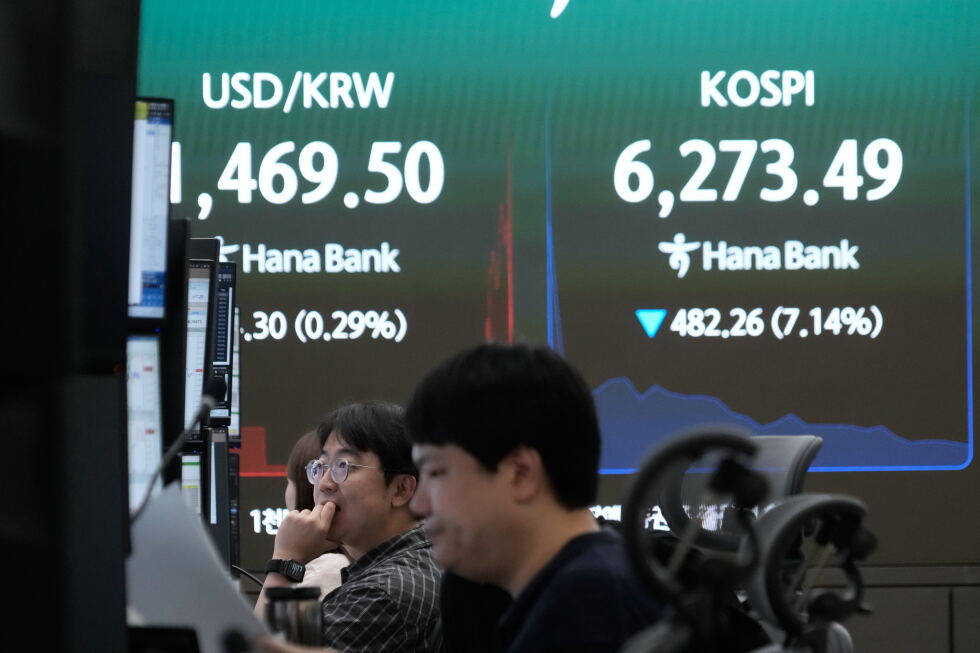
    A wave of widespread selling swept through Asian equity markets on Tuesday, driven by growing investor jitters over the future trajectory of the red-hot artificial intelligence boom, which sent South Korea’s benchmark Kospi index plummeting more than 10% by midday trading. The sharp downturn, heavily concentrated in top domestic chipmaking stocks that have led recent regional market gains on AI demand optimism, triggered an automatic temporary trading halt as the index slid to its lowest level since April.

    By midday session, the Kospi stood 10.5% lower at 6,051.19, with industry giants Samsung Electronics and SK Hynix leading the collapse. Samsung’s share price tumbled 12% from Monday’s close, while SK Hynix dropped an even steeper 12.7% as investors rushed to exit positions in AI-linked semiconductor assets.
    Market analysts point to shifting competitive dynamics in the global chip sector as a core catalyst for the sudden selloff. Fears are growing that rising competition from Chinese AI startups and domestic memory chipmakers could erode the outsized profit gains that have pushed share prices of global chip giants to record highs during the 2023-2024 AI frenzy. These concerns were amplified by a blockbuster trading debut for Chinese memory chipmaker ChangXin Memory Technologies (CXMT) on Monday, when its share price surged 466% on the Shanghai Stock Exchange’s STAR Market, a tech-focused board for innovative domestic firms. CXMT raised at least $8.6 billion through its initial public offering, marking one of the largest global tech listings of the year and underscoring the rapidly growing scale of China’s homegrown semiconductor industry.
    The selling pressure spilled across most of the Asia-Pacific region on Tuesday. Japan’s Nikkei 225, which has also rallied sharply on AI optimism in recent months, dropped 4% to 62,350.18, while Taiwan’s Taiex — home to many of the world’s top contract chip manufacturers — slid 3.9%. Mainland China’s Shanghai Composite Index lost 1%, and Hong Kong’s Hang Seng Index edged a modest 0.1% lower to 25,178.21. Bucking the regional downward trend, Australia’s S&P/ASX 200 gained 0.6% to close at 8,944.40.
    Beyond equities, global oil prices extended their retreat, falling more than 1% amid easing geopolitical tensions in the Middle East. For three consecutive days, neither the United States nor Iran has launched new military strikes, and regional mediators report incremental progress in pushing the two sides toward renewed negotiations. By Tuesday afternoon, Brent crude, the global benchmark for oil prices, fell 0.8% to $85.16 per barrel, while U.S. West Texas Intermediate crude dropped 0.9% to $81.86 per barrel.
    U.S. equity futures showed little change in early Tuesday trading, pointing to a muted open on Wall Street following a mixed close in the previous session. On Monday, the S&P 500 gained less than 0.1%, the Dow Jones Industrial Average added 0.5%, and the Nasdaq Composite slipped 0.2% to mark its fourth consecutive daily loss.

  • Zelenskyy will visit Trump at the White House before Sen. Graham’s funeral

    Zelenskyy will visit Trump at the White House before Sen. Graham’s funeral

    A high-stakes second meeting between former U.S. President Donald Trump and Ukrainian President Volodymyr Zelenskyy is scheduled to take place at the White House on Tuesday, timed to coincide with the funeral of longtime South Carolina Senator Lindsey Graham, a leading congressional Ukraine supporter who died unexpectedly earlier this month from an aortic tear. This upcoming sit-down comes on the heels of a surprising policy shift from far-right influencer Laura Loomer, a figure with close access to Trump, who reversed her prior stance on Russia’s full-scale invasion of Ukraine after a firsthand trip to the war-torn nation.

    Graham’s legacy has anchored Zelenskyy’s latest Washington visit: the senator’s final act in public service was a surprise trip to Kyiv, where he negotiated a bipartisan sanctions package targeting major buyers of Russian fossil fuel exports. The legislation, which already boasts broad cross-party support in the Senate, aims to punish nations that continue purchasing Russian oil, gas and other energy exports by imposing steep tariffs on their goods. It would also place direct sanctions on Russian President Vladimir Putin, top Russian political and military officials, Moscow’s key financial institutions, and major Russian energy projects. Republican congressional leaders are pushing to advance the bill this week, before the upper chamber adjourns for its annual August recess, even as the Senate juggles multiple competing legislative priorities.

    Loomer, a far-right commentator long known for provocative, incendiary social media content and her consistent access to Trump, recently traveled across Ukraine where she witnessed Russian missile and artillery barrages firsthand, and sat down for an interview with Zelenskyy. In the wake of that visit, she publicly acknowledged she had been “bamboozled by Russian propaganda” regarding the invasion. Loomer told the Associated Press she has already spoken with Trump about her trip and her conversation with Zelenskyy, and expects to meet with the former president in person upon her return to the U.S. “It’s looking good for Ukraine, right? Going into this meeting next week at the Oval Office is looking pretty good,” she said of the upcoming Trump-Zelenskyy talks.

    Ahead of the meeting, Zelenskyy issued a stark new warning about expanding Russian-Iranian military cooperation. The Ukrainian leader claimed Russia is sharing captured satellite imagery of U.S. military bases in the Persian Gulf with Iran, and that there is a “clear correlation” between the shared intelligence and subsequent Iranian strikes targeting those positions. “None of us in the world should turn a blind eye to one very simple fact: Evil always seeks ways to make things worse and spread further,” Zelenskyy said earlier this month.

    Trump pushed back on these claims during comments to reporters aboard Air Force One while traveling to Michigan on Monday, downplaying the scope and impact of any Russian support for Iran. “I don’t think they’ve been doing it, certainly not at a high level,” he said. “And if they have, it has been very un-impactful.” Even so, the former president confirmed he would raise the issue directly with Putin during their future discussions.

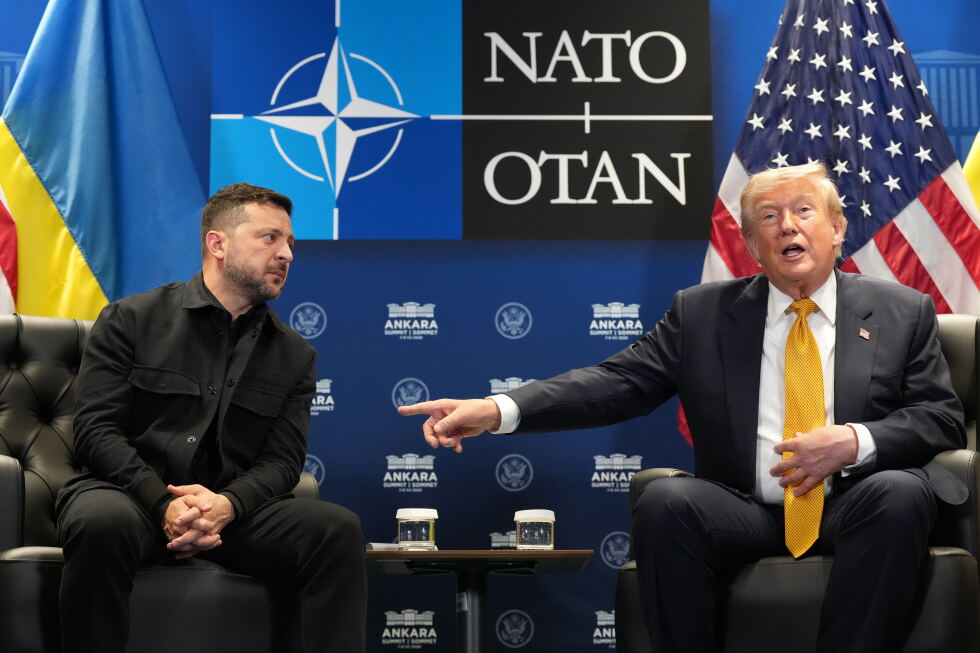
    This meeting marks the second sit-down between Trump and Zelenskyy this month. Their first encounter took place on the sidelines of the NATO summit in Ankara, Turkey, where Trump announced a major new policy shift: the U.S. would grant Ukraine a license to domestically produce Patriot air defense systems, a long-sought request from Kyiv that would help Ukraine counter relentless Russian missile and drone attacks on Ukrainian cities and critical infrastructure. “[Zelenskyy and I] have actually developed a good relationship,” Trump said at the time, noting that while Patriot systems are costly to manufacture and in high global demand, the U.S. would support Ukraine’s domestic production efforts, allowing Ukraine to begin producing the systems “pretty quickly.”

    Beyond his White House meeting, Zelenskyy has a packed itinerary during his Washington trip. Following Graham’s funeral at Washington National Cathedral on Tuesday, he will travel to the U.S. Capitol to hold closed-door meetings with an array of senators, according to a senior congressional source who spoke on condition of anonymity due to the private nature of the planned talks.

  • Seoul, Tokyo lead Asian plunge as tech stocks suffer fresh rout

    Seoul, Tokyo lead Asian plunge as tech stocks suffer fresh rout

    A fresh wave of selling swept through Asian stock markets on Tuesday, inflicting severe damage on technology and semiconductor shares and sending major indexes in Seoul and Tokyo tumbling. The sell-off was amplified by emerging reports that a Chinese firm has begun mass production of specialized chip manufacturing technology long controlled exclusively by Dutch industry leader ASML, stoking new fears that the multi-year AI-driven boom in chip stocks may be nearing its end.

    South Korea’s benchmark Kospi index plummeted 10.2 percent to close at 6,066.21, with trading halted for 20 minutes mid-session when a market circuit breaker was triggered. Two of the country’s largest chipmakers, SK hynix and Samsung Electronics, suffered near-13 percent single-day losses, and both firms have now shed almost half their value since hitting all-time highs just last month. The Kospi itself has fallen more than 30 percent from its recent peak.

    The sell-off spread quickly across East Asia. Japan’s Nikkei 225 dropped 4.3 percent to 62,159.48, with domestic semiconductor players bearing the brunt of the losses: memory chip maker Kioxia fell 18 percent, while testing equipment manufacturers Advantest and Tokyo Electron both closed 11 percent lower. In Taipei, the local market index slid more than 4 percent dragged down by leading contract chip manufacturer TSMC. Most other regional markets also closed in negative territory, with only Hong Kong’s Hang Seng index ending the day flat.

    Tuesday’s sharp downturn in Asia extended a global sell-off that began on Wall Street the previous session. The Philadelphia Semiconductor Index fell 2.2 percent in New York, with storage firm Sandisk dropping 11 percent and major AI chip suppliers Advanced Micro Devices and Nvidia each losing around 5 percent. In Amsterdam, ASML shares shed more than 8 percent following the news of the Chinese production breakthrough.

    Market analysts note that the AI-driven chip rally had already been showing signs of fracturing in recent weeks. Investors have grown increasingly concerned about the massive volumes of capital poured into AI development, with growing questions over when those investments will translate into meaningful profits, and sky-high valuations across the sector have long raised red flags among market watchers.

    “The immediate fundamentals of semiconductors have not collapsed,” wrote Stephen Innes, market strategist at SPI Asset Management, in a research note Tuesday. “Demand for high-bandwidth memory remains strong, hyperscalers are still spending, and the largest technology companies have not yet abandoned their capital expenditure plans.” Innes added that the shift in market sentiment stems from changing investor willingness to value future growth promises at any cost: “The AI trade spent the past several years behaving like a flywheel: rising equity values encouraged more spending, more spending validated higher earnings expectations, and those expectations pushed valuations higher again. Now that same wheel is beginning to throw investors off at speed.”

    All eyes are now on upcoming corporate earnings reports this week, with results due from SK hynix, Samsung, Kioxia, and U.S. tech giants Microsoft, Meta, Apple and Amazon. Investors are hoping the reports will provide clarity on whether the current sell-off reflects a genuine shift in industry fundamentals or an overcorrection after years of relentless gains.

    The severe downturn in tech stocks overshadowed growing optimism around de-escalation in tensions between the United States and Iran. For a third consecutive day, the two sides paused tit-for-tat retaliatory strikes that began after a diplomatic breakdown over Iran’s blockade of the Strait of Hormuz. Former U.S. President and leading candidate Donald Trump said Tuesday he believes there is a “good chance” a diplomatic deal can be reached to end the hostilities that began in late February. “I have a lot of patience… We’ll see what happens,” he told reporters aboard Air Force One. Reports also emerged that Oman is mediating talks between Iran and international stakeholders to reopen the Strait of Hormuz, a critical chokepoint through which roughly one-fifth of global oil and LNG shipments pass. Hopes for a diplomatic resolution have already pushed down global oil prices: Brent crude fell more than 8 percent on Monday, and WTI dropped more than 7 percent. Both benchmarks extended losses in Asian trade on Tuesday, with Brent down 1.7 percent to $86.89 per barrel and WTI down 1.8 percent to $81.15 per barrel.

  • Rape and assault case against British YouTuber Yung Filly heading to jury in Australia

    Rape and assault case against British YouTuber Yung Filly heading to jury in Australia

    PERTH, Australia – After weeks of testimony and evidence presentation, legal teams delivered their final closing statements on Tuesday in the high-profile sexual assault trial of British YouTube creator and rapper Yung Filly, real name Andres Felipe Valencia Barrientos. The 30-year-old entertainer faces multiple serious charges stemming from an alleged incident at a Perth hotel in September 2022, following a live music performance in the city.

    Barrientos has entered a formal not guilty plea to all 10 counts brought against him: six counts of rape, three counts of assault causing bodily harm, and one count of choking. The complainant, who was 20 years old at the time of the alleged encounter, cannot be publicly identified under Australian law.

    Testifying in his own defense before the court on Monday, Barrientos pushed back against most of the accusations leveled against him. He told the District Court of Western Australia that he never slapped or choked the woman, but acknowledged he did bite her repeatedly during their interaction. The artist, who was born in Colombia and built his career in the United Kingdom, described the bites as what would commonly be called “love bites” in England, claiming the encounter was entirely consensual.

    “There was kissing in between; I would give her a love bite and then kiss her,” Barrientos told jurors from the witness stand. “I don’t recall any blood.” Prosecutors, however, presented photographic evidence to the court showing the accuser with prominent bruising and bite marks across her face and neck.

    Prosecutors have laid out their case arguing that while the woman initially agreed to sexual activity with Barrientos after they met at a nearby Perth nightclub post-performance, she later withdrew her consent after becoming fearful for her safety. Barrientos refuted this narrative, saying the accuser never repeatedly told him to stop or that he was causing her pain. He described the pair’s initial interaction at the nightclub as positive, telling the court “The vibes were good and she had a really good energy about her.”

    The case has also centered on the removal of the woman’s phone by Barrientos’ security guard before she entered the hotel room. Barrientos confirmed the action took place, but rejected the prosecution’s claim that the phone was seized to trap the woman, saying it was standard protocol for high-profile public figures to protect their personal privacy in such encounters.

    With more than 1.8 million YouTube followers, Barrientos was on an Australian national tour when the alleged incident occurred. He had already performed in Sydney and Melbourne ahead of the Perth stop, and was en route to the final tour show in Brisbane when he was arrested by police days after the encounter. Jurors are expected to retire to begin deliberating on a verdict on Wednesday once both the prosecution and defense teams wrap up their closing remarks.

  • Jewish doctors called ‘Zionist pig’, royal commission hears

    Jewish doctors called ‘Zionist pig’, royal commission hears

    Sydney, Australia – Widespread fear of anti-Semitic bias and harm within Australian healthcare settings has driven many Jewish patients to take extraordinary steps to conceal their religious and cultural identities, a senior Jewish community leader has told a landmark royal commission.

    The testimonial was delivered by Rabbi Mendel Kastel, CEO of Jewish House and a Rabbinical Fellow, during the sixth session of New South Wales’ Royal Commission into Anti-Semitism and Social Cohesion – an inquiry launched following the fatal 2024 Bondi terror attack that sparked national reckoning with rising hate crime targeting Jewish communities.

    Kastel told the commission that many Jewish patients have explicitly requested hospitals remove their religion from official medical records to avoid potential mistreatment. Beyond formal documentation, he added, some patients with distinctive Jewish last names or recognizably Israeli accents have altered how they present themselves to clinical staff, opting to omit last names or avoid speaking at length to keep their identity hidden.

    The tipping point for these growing fears, Kastel explained, came after a high-profile 2024 incident that made global headlines. Last February, two Sydney nurses – 27-year-old Sarah Abu Lebdeh and 28-year-old Ahmad Rashad Nadir – were caught on video allegedly making violent threats against Israeli patients at Bankstown Hospital in western Sydney. Both have pleaded not guilty to charges of using a digital carriage service to menace, harass, and offend, and their trial is scheduled to begin next month.

    “After that story broke, there was real fear across the community,” Kastel said in his evidence. “People are scared to go to hospital, scared to write that they are Jewish on their admission forms. Even people with Israeli accents hold back from speaking to nurses, because they don’t want their identity to be known.”

    Kastel also shared that anti-Semitic targeting is not limited to patients: Jewish doctors and clinical staff have faced exclusion from professional group chats, and in one documented case, a Jewish doctor was verbally attacked by a patient who called them a “Zionist pig.”

    In the wake of the Bankstown Hospital incident, Kastel noted he approached the facility himself to assess the climate of care, and was surprised by the warm welcome he received across all departments. “It didn’t matter what religion or culture someone was, everyone was welcoming,” he said.

    That positive experience, however, has not erased systemic anxiety across the community. When NSW Health officials raised the idea of creating separate, alternative healthcare pathways for Jewish patients too afraid to access mainstream facilities, Kastel rejected the proposal outright.

    “My answer was, absolutely not,” he said. “We don’t need separate care. We need to make sure every public hospital is safe, and every patient feels safe receiving care there. If people are allowed to push harmful agendas that change how a patient is treated, that is a line we cannot cross.”

    Currently, the commission is developing new protocols, training frameworks, and reporting systems to address anti-Semitic conduct across three key sectors: healthcare, primary and secondary education, and the arts. The current session of public hearings is scheduled to conclude this Friday, with recommendations for systemic reform expected to be delivered later this year. A new confidential reporting system for patients and staff who experience anti-Semitism in healthcare settings is already in development, Kastel confirmed.

  • ‘I just found all the classified stuff downstairs’ – Biden to ghostwriter

    ‘I just found all the classified stuff downstairs’ – Biden to ghostwriter

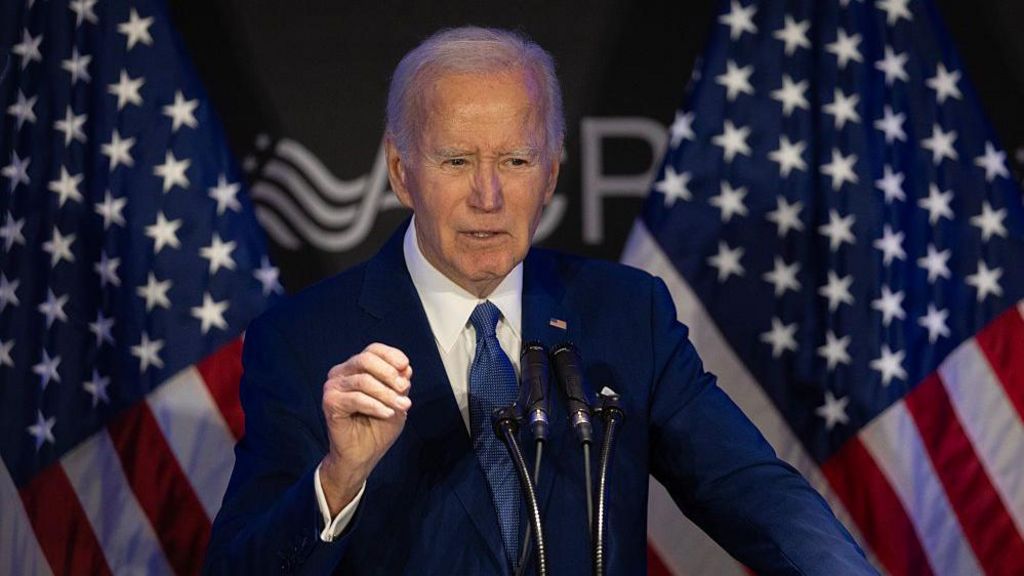
    A years-long legal battle over sensitive audio recordings tied to President Joe Biden has reached a new turning point, as House Republicans have publicly released tapes that Biden’s legal team repeatedly sought to keep out of the public domain. The recordings, captured during interview sessions between Biden and a ghostwriter working on his 2017 memoir *Promise Me, Dad*, contain explicit comments from the 83-year-old commander-in-chief acknowledging he retained classified government materials after his vice presidency ended in 2017.

    The first of the recorded conversations dates back to October 2016, when Biden was still serving as vice president under the Obama administration. During that session, Biden told co-writer Mark Zwonitzer, “I have extensive notes over this period of time… They [the White House] didn’t know I have this.” A second recording, made in February 2017 just one month after Biden left the White House, captures him stating plainly, “I just found all the classified stuff downstairs.” Later in the more than two hours of tapes published Monday, he again acknowledges, “The next thing I have here is, um, this is classified.”

    House Republicans partnered with the conservative nonprofit Oversight Project to launch a legal battle for access to the tapes, which were originally turned over to the Department of Justice as part of a 2024 probe into Biden’s handling of classified national security records. During Biden’s presidential tenure from 2021 to 2025, the DOJ repeatedly refused to release the materials. In May of this year, Biden’s personal legal team filed a lawsuit against the Department of Justice to block the release, but after a series of court losses, the team was forced to drop their legal challenge.

    The released recordings remain heavily redacted, a detail that House Oversight Committee Republicans argue is intentional to hide the full scope of Biden’s disclosures of sensitive classified information. In 2024, Special Counsel Robert Hur accessed the recordings and their transcripts during his official investigation into Biden’s retention of classified documents. Hur’s final report concluded Biden had improperly held onto the government records, but the special counsel declined to recommend criminal charges. Hur cited multiple factors for the decision, including widespread concerns that a jury would perceive Biden as “a sympathetic, well-meaning, elderly man with a poor memory” and decline to deliver a conviction.

    This controversy mirrors a parallel case involving former President and now returning President Donald Trump, who faced criminal charges for illegally retaining classified documents at his Mar-a-Lago resort in Florida. Those charges were ultimately dismissed after Trump won the 2024 presidential election and returned to the White House.

    In a formal statement responding to the release, Biden’s spokesperson TJ Ducklo framed the move as a partisan political attack. “Releasing the tapes was just the latest example of this Administration weaponizing the DOJ for political retribution,” Ducklo said. He added that while President Biden disagrees with the court ruling that cleared the release, “he also respects the courts and the vital role an independent judiciary plays in a healthy democracy.”

  • Magpies suffer major finals blow as star defender undergoes leg surgery

    Magpies suffer major finals blow as star defender undergoes leg surgery

    A major blow has hit Australian Football League side Collingwood Magpies, with star defender Brayden Maynard set to miss a minimum of four weeks of game time following urgent surgery on his left leg — a timeline that leaves his participation in the upcoming September finals series hanging heavily in the balance. Collingwood head coach Craig McRae confirmed the injury update to reporters on Tuesday morning, adding that more granular details about the 29-year-old’s condition and recovery would be released by the club’s official medical department later the same day.

    Maynard picked up the unusual injury during the Magpies’ commanding 34-point victory over Adelaide on Thursday night. McRae described the injury as a rare cross-type issue that affects both the hamstring and the knee, saying the entire club was clinging to cautious optimism that Maynard would recover in time to contribute to the team’s finals campaign. “We’re hoping he’d be fit for the team’s September campaign,” McRae told media. The recovery timeline already rules Maynard out of the Magpies’ upcoming clash against Geelong Cats, scheduled for this Thursday night at the Melbourne Cricket Ground.

    Maynard is not the only Collingwood starter facing an uncertain availability for the Geelong match: star midfielder Jordan De Goey is also listed as doubtful after falling ill, McRae confirmed. This will mark the Magpies’ second consecutive Thursday night fixture, kicking off at 7:30 pm AEST at the MCG.

    Despite the Geelong Cats entering the match shorthanded — missing star forward Jeremy Cameron and elite midfielder Max Holmes — McRae warned against underestimating the weakened Cats side, noting that proven top-tier clubs always adjust and find ways to generate scoring even when key players are sidelined. “There’s so many more threats,” he said. “Like good teams do, they just find ways to score.”

    McRae also reflected on the two sides’ earlier encounter in round 9, where the Cats dominated Collingwood to secure a 54-point win. In that match, Collingwood’s game plan focused heavily on limiting the impact of star Cats defender Tom Stewart, but McRae admitted that strategy failed to deliver results. “Not much worked then,” he said. “It’s going to be important how we kick the ball inside 50, and how we stop him from marking it, so that’s something we’re going to work towards.”

    This injury update comes as a major setback for Collingwood’s 2024 premiership push, with Maynard serving as a core defensive leader for the side throughout the regular season.