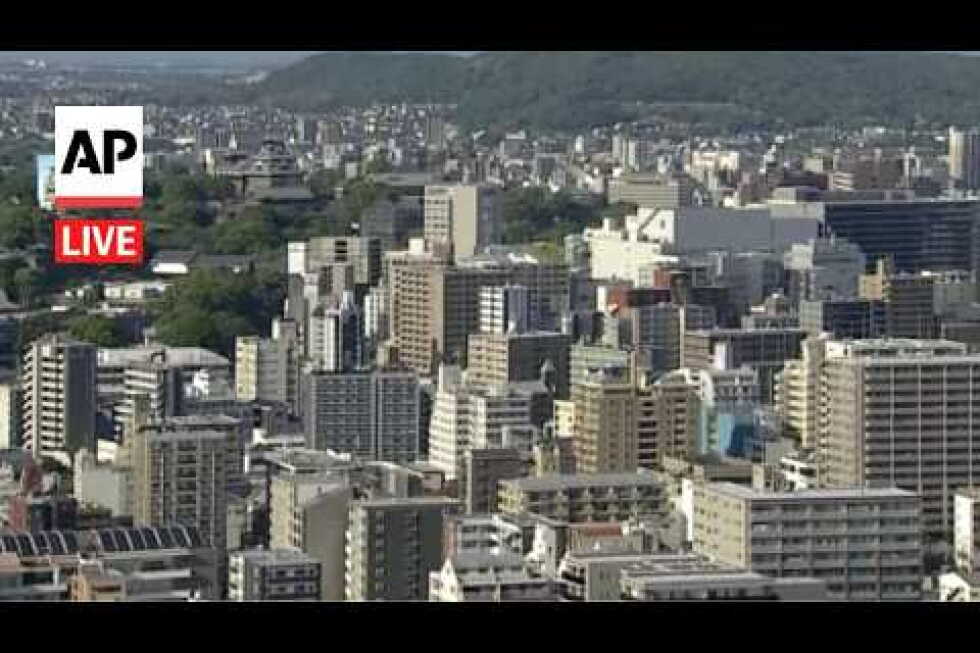
A powerful preliminary magnitude 7.1 earthquake jolted the Kumamoto region on Japan’s Kyushu Island, the country’s southernmost main island, during late Tuesday afternoon, according to an official announcement from the Japan Meteorological Agency. Following the seismic event, authorities promptly issued a tsunami advisory for a coastal area adjacent to the quake’s epicenter.
The warning specifically covers Ariake Bay, which sits along Kumamoto’s western shoreline. The affected region sits roughly 900 kilometers, or 560 miles, to the southwest of Japan’s capital city of Tokyo. In the immediate aftermath of the tremor, Japanese nuclear regulators launched urgent inspections of local nuclear energy facilities to assess any potential damage.
Japan’s Nuclear Regulation Authority confirmed after preliminary checks that no irregularities or safety issues have been detected at three nuclear power plants located in the vicinity of the earthquake. The 2016 Kumamoto earthquake holds a grim place in Japan’s recent disaster history: that massive seismic event claimed the lives of more than 50 people, injured an additional 1,800 residents, and left tens of thousands of residential structures damaged or completely destroyed, leaving many communities displaced for months and years afterward.