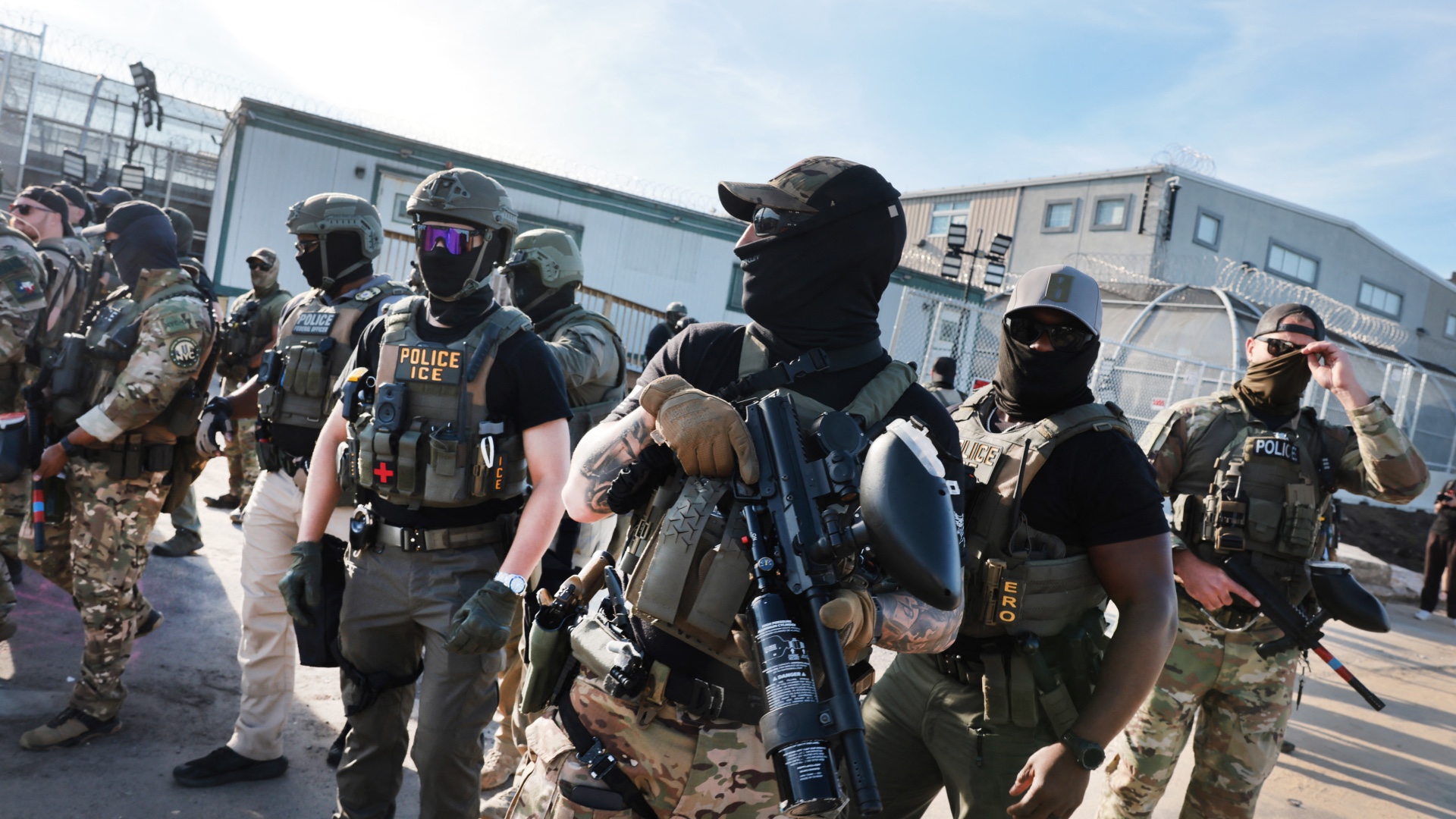
U.S. Immigration and Customs Enforcement (ICE) has launched a new enforcement operation that places agents on patrol at domestic airports across the country, targeting and arresting individuals who have overstayed their valid entry visas, ABC News confirmed in a report published Tuesday.
For non-citizens who entered the United States through legal channels, overstaying a visa is traditionally classified as a civil violation rather than a criminal offense. Many of these individuals are caught in bureaucratic limbo: their applications for permanent resident green cards remain pending long after their initial visas expire, leaving them in unauthorized status through no fault of their own.
According to ABC News’ reporting, at least 27 visa overstayers have been taken into custody across nine states since the airport patrol program launched. To identify targets, ICE accesses passenger travel data collected by the Transportation Security Administration (TSA), which screens every passenger booked on both domestic and international flights departing from U.S. airports.
In an official statement, the Department of Homeland Security (DHS), the federal agency that oversees ICE, claimed that visa overstayers should only use U.S. airports to facilitate “self-deportation” rather than general domestic travel.
The expanded airport operation is part of the broader agenda of the second Trump administration, led by new DHS Secretary Markwayne Mullin. The administration has made meeting former President Trump’s campaign pledge of one million annual deportations of people it labels as “illegal immigrants” — including both unauthorized border crossers and visa overstayers — a top policy priority.
While many people in immigration limbo entered the U.S. to seek asylum, the administration has effectively closed off nearly all access to this legal protection pathway in recent months. Data from ICE confirms that enforcement activity has surged sharply: last month marked the highest number of new bookings into ICE immigration detention facilities since Trump took office in January 2025. More than 43,000 people were taken into custody to await deportation in June, averaging 1,500 arrests per day across the country.
Though DHS officially denies the existence of a mandatory arrest quota, off-the-record conversations between agents overheard by third parties reveal that ICE staff are promised financial bonuses for exceeding arrest targets. This new airport patrol operation follows the administration’s earlier controversial large-scale enforcement campaign, Operation Metro Surge, in Minneapolis, which ended earlier this year after widespread condemnation over violent tactics. ICE’s approach to street arrests has remained largely unchanged, however: earlier this month, ICE agents fatally shot two unarmed people in Texas and Maine, neither of whom had any prior criminal record.
Widespread accounts from detainees and viral social media footage have documented that plainclothes ICE agents often cover their faces and identifiers during arrests, leading targets to believe they are victims of kidnapping when agents tackle them mid-activity, whether they are working, shopping, or walking down a public street. Footage of hundreds of these incidents sparked national outrage across the U.S. last year, and that public backlash appears to have shifted public opinion on immigration policy.
New data from a Gallup poll conducted earlier this month shows a dramatic reversal of long-standing public attitudes. In 2024, the year Trump was re-elected, 55 percent of U.S. adults said they supported reducing overall immigration levels. Today, that number has dropped to just 30 percent. This shift ends a four-year trend of growing support for stricter immigration limits. Currently, nearly 80 percent of Americans — a record high in polling history — say they believe immigration is a net positive for the country.
A core component of the Trump administration’s new immigration policy is the elimination of Temporary Protected Status (TPS), a program that allows hundreds of thousands of people from crisis-stricken countries to live and work legally in the U.S. while conditions in their home countries are too dangerous for safe return. TPS is approved in 18-month increments with no statutory cap on total extensions, and allows recipients to obtain formal work authorization during their designation.
To date, the administration has revoked TPS designations for eight countries: Myanmar, Venezuela, Honduras, Nepal, Nicaragua, Afghanistan, and Cameroon. The existing TPS designations for Haiti and Syria are scheduled to expire this week, meaning more than 350,000 Haitian TPS holders — most of whom have lived in the U.S. since 2010 — and roughly 6,000 Syrian TPS holders, who received designation in 2011, will now become eligible for arrest and detention by ICE.
“Enforcement will be carried out,” DHS warned in a post on the social media platform X, urging affected people to either coordinate voluntary departure through the CBP Home digital portal or wait for official deportation. The agency has offered up to $2,500 in travel reimbursements for people who arrange their own departure through the app, though there is no public record of any individual actually receiving the promised funds to date.