博客

  • Three lions die in zoo as Japan battles extreme heat

    Three lions die in zoo as Japan battles extreme heat

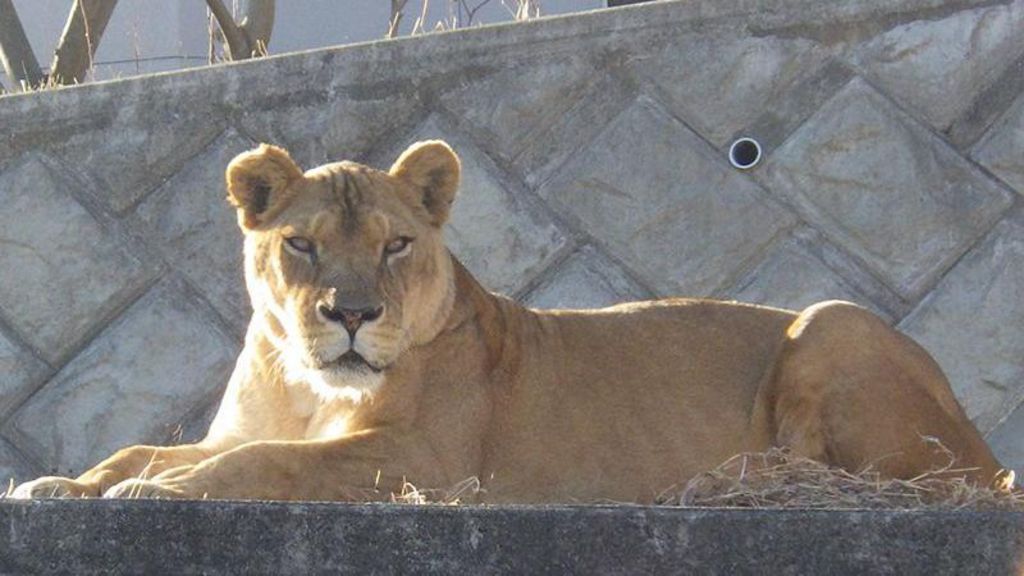
    As Japan grapples with record-shattering summer heat that has threatened both human and animal life, three female lions at Tokyo’s Tama Zoological Park have died within a single week from suspected heat-related illness, zoo officials have confirmed.

    Autopsies conducted on the three big cats—aged 3, 11, and 15 years old respectively—revealed widespread systemic dehydration and multiple organ failure, clinical signs that point directly to extreme heat stress as the primary cause of death. The zoo notes that full, official cause-of-death reports will not be finalized until all additional toxicology and pathology testing is complete.

    The sequence of deaths began in late July, after a sudden mid-July temperature surge across Japan. Mugi, the 3-year-old female, first displayed a loss of appetite on July 19, and lost the ability to stand the following day. Despite rapid intervention from zoo staff, who implemented cooling measures including enhanced ventilation, access to extra cool water, subcutaneous fluid therapy, liver support, and vitamin treatments, Mugi died on July 28. Eleven-year-old Ichigo passed away just three days later on July 31, and 15-year-old Luena, the oldest of the three, died the following Sunday.

    The deaths mark an unprecedented crisis for the 70-year-old lion program at Tama Zoo. “This is the first time we’ve experienced anything like this. Last year was also hot, but none of our lions fell ill like this,” zoo representative Miwa Kosaka told the BBC.

    As of the zoo’s latest public statement, three additional lions—two males and one female—remain unwell and unable to stand, though staff are continuing around-the-clock care with fluid therapy, medication, and nutritional support. Kosaka confirmed that some of these affected animals have already started showing signs of improvement. Four other lions have fully recovered from mild heat-related symptoms, while six lions remained in good health throughout the heat event. All surviving lions have now been moved to restricted, off-exhibit enclosures fitted with portable air conditioning units and heavy-duty industrial fans to help them regulate their body temperatures.

    Veterinary experts say two key factors combined to put the lions at severe risk. Hideaki Karaki, a professor of veterinary medicine at the University of Tokyo, explained that unlike humans who cool down through sweating, lions regulate their body temperature by breathing deeply to expel moisture from their respiratory tracts. When that moisture evaporates, it lowers their core temperature—but Japan’s characteristic high summer humidity blocks that evaporation process, leaving lions unable to cool themselves effectively. The sudden mid-July temperature spike also gave the animals no time to gradually acclimate to rising heat, compounding the risk, Karaki added.

    Tama Zoo, located in western Tokyo, is home to roughly 260 different animal species, and its lion breeding and exhibition program is one of its most iconic attractions, dating back to 1964. The zoo long offered a popular safari-style bus tour that let visitors observe lions roaming their large open enclosures, but that service and the public lion exhibit were suspended last month after the sudden heatwave triggered widespread illness among the pride.

    The lion deaths come as Japan faces a public health emergency from this summer’s extreme heat. So far this season, more than 43,000 people across the country have been hospitalized for heatstroke. The Japanese government has issued nationwide heat warnings and urged residents to take aggressive cooling measures, even launching a campaign to encourage office workers to swap formal business wear for lighter, more breathable clothing to avoid overheating.

    Climate scientists have repeatedly warned that summer temperatures across Japan are rising faster than the global average, with an increasing number of “extreme hot days” defined as days with highs exceeding 40°C becoming a regular annual occurrence, bringing growing risks to both human and wildlife populations.
  • Asian shares mostly dip after US stocks rally

    Asian shares mostly dip after US stocks rally

    On Tuesday, most major Asian stock markets finished the trading session in negative territory, even as a strong rally unfolded on Wall Street one day earlier, driven by falling global oil prices that calmed persistent investor concerns over rising inflation. The downturn across much of Asia came as regional market participants continued to assess the long-term implications of the recent coordinated currency intervention carried out jointly by the United States and Japan to shore up the weakening Japanese yen.

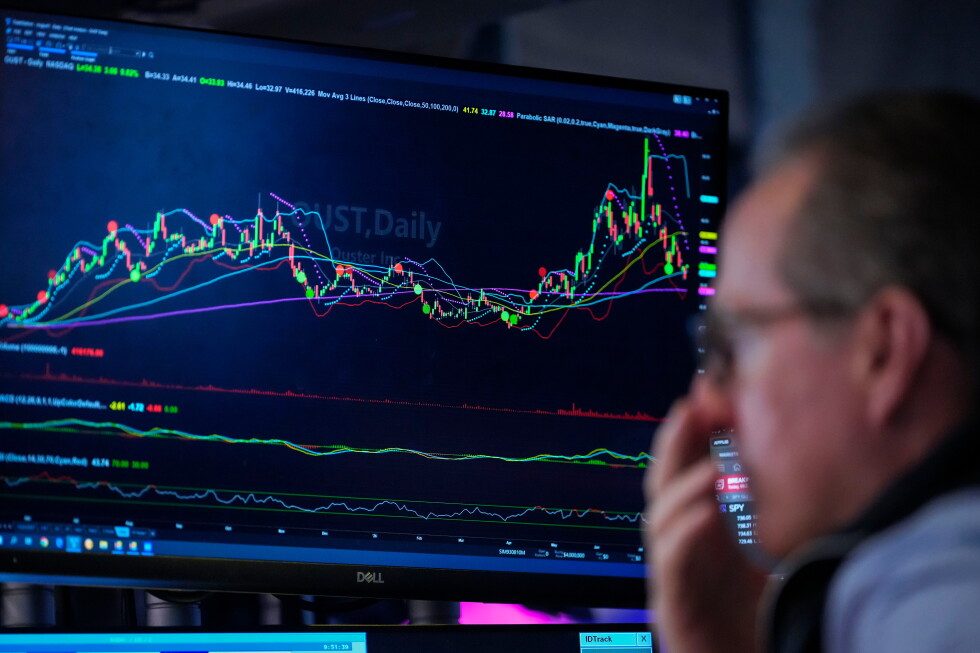
    Japan’s benchmark Nikkei 225 index slipped 0.6% to close at 63,369.85, as the U.S. dollar edged slightly higher against the yen, rising to 157.63 yen from 157.18 yen in previous trading. The euro saw barely any movement against the dollar, holding at $1.1511 compared to $1.1514 from the prior session. Before the joint intervention, the dollar had traded as high as the 160-yen mark, a level that triggered policymakers’ action to reverse the yen’s steep decline.

    Market analysts remain divided over the long-term effectiveness of the intervention, with many pointing out that the action fails to address the core economic drivers behind the yen’s slump, including divergent inflation trends, a wide gap in interest rates between the U.S. and Japan, and the relative uneven strength of the two nations’ economies.

    A research report from BMI, a division of Fitch Solutions, noted that a coordinated intervention backed by the United States carries far greater symbolic signaling power than an intervention carried out by Tokyo alone. The report added that the public pledge of additional future action is likely to make currency speculators pause before betting further against the yen, but any large-scale sustained contribution from U.S. authorities will probably be limited in scope.

    Matthew Ryan, head of market strategy at global financial services firm Ebury, offered a more optimistic take, arguing that the latest joint intervention signals a genuine shift in monetary policy stances rather than just a one-off defensive move. He called the development “historic and meaningful” for the yen, adding that it materially improves confidence in his firm’s prediction that the yen will see moderate gains in coming months.

    Across other regional markets, South Korea’s Kospi index ticked down by less than 0.1% to 6,254.76. Australia’s S&P/ASX 200 bucked the regional downtrend, climbing 1.2% to close at 9,128.60. Hong Kong’s Hang Seng index fell 0.5% to 25,881.99, while mainland China’s Shanghai Composite slipped 0.2% to 3,802.61.

    On Monday, U.S. stocks notched strong gains after easing oil prices helped ease investor fears that inflation would accelerate further. The broad S&P 500 jumped 1.5%, ending the day just 0.1% below the all-time record it set earlier this summer. The Dow Jones Industrial Average, which tracks 30 large U.S. corporations, gained 693 points or 1.3% to hit a new all-time closing high, while the tech-heavy Nasdaq composite rose 2.1%.

    In early Asian energy trading on Tuesday, benchmark U.S. crude added 50 cents to reach $80.84 a barrel. Brent crude, the global benchmark for oil pricing, rose 63 cents to $84.40 a barrel. A day earlier, Brent prices fell after former U.S. President Donald Trump announced over the weekend that he would delay planned military strikes against Iran, following urging from regional allies. Over the past month, Brent crude prices swung wildly between $72 and $102 a barrel, as market sentiment shifted back and forth over escalating tensions in the Middle East and uncertainty around when oil tankers would be able to resume safe transit through the Persian Gulf to deliver crude to global markets.

    The yield on the 10-year U.S. Treasury note fell to 4.68% from 4.75% recorded late Friday, but it remains well above the 3.97% level seen before the outbreak of military tensions with Iran.

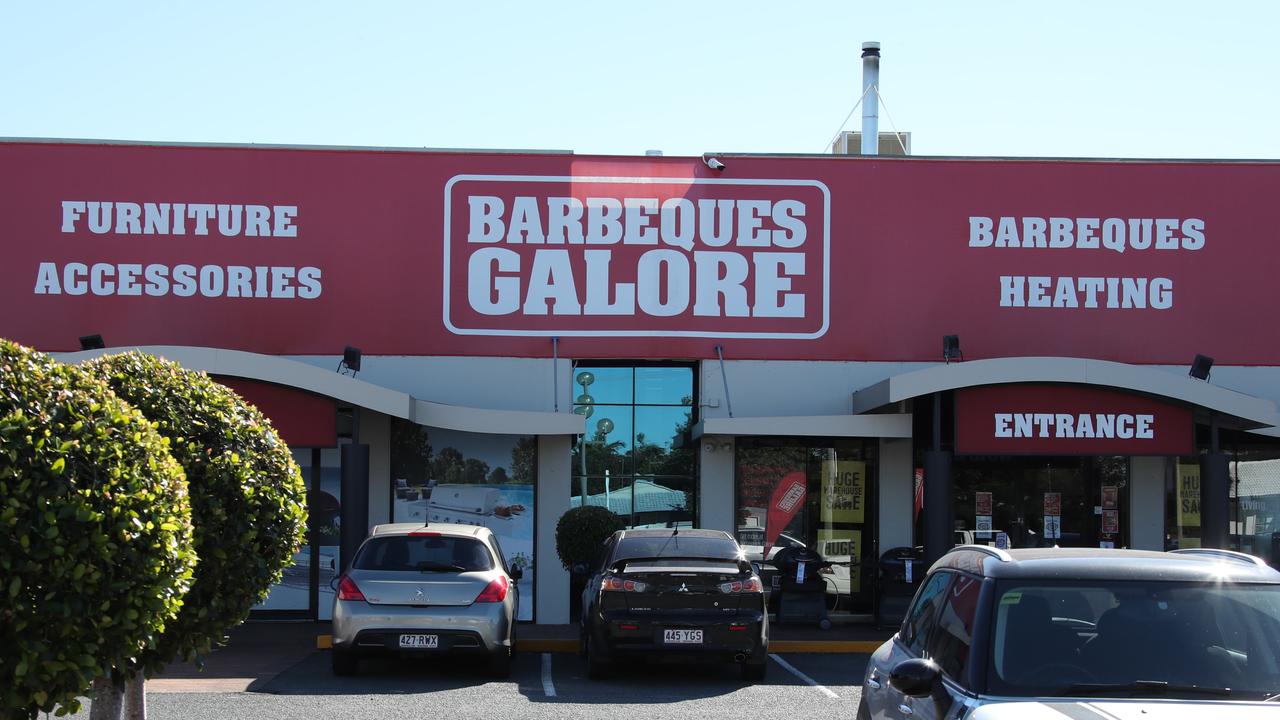
  • Iconic retailer Barbeques Galore sold in last-minute rescue deal, but all company-owned stores to shut

    Iconic retailer Barbeques Galore sold in last-minute rescue deal, but all company-owned stores to shut

    One of Australia’s most iconic outdoor lifestyle retail brands, Barbeques Galore, has narrowly avoided total collapse after a Victorian-based wholesale firm Acom International sealed an 11th-hour acquisition deal, but the rescue comes with significant caveats that underscore ongoing pressures facing brick-and-mortar retail across the country.

    Acom International confirmed the purchase on Monday, revealing it has acquired Barbeques Galore’s full intellectual property holdings, established brand portfolio, and existing wholesale inventory from the business’s receivers. The acquisition covers the company’s entire stable of well-known regional brands, including Ziegler Brown, Ziggy, Turbo, Beefmaster, Firehawk, Arrosto Pizza Ovens, Downunder, Saxon, Maxiheat, and Kent.

    Under the new ownership structure, Barbeques Galore will transition to a hybrid operating model focused on a refreshed national online platform and expanded wholesale distribution, rather than retaining company-operated physical storefronts. The terms of the deal require the permanent closure of all company-owned retail locations, though independently franchised Barbeques Galore outlets will be permitted to continue operations under their existing licensing agreements.

    Since the retailer first entered voluntary administration in February, putting roughly 500 Australian jobs at risk, the future of those positions remains unresolved following the latest acquisition. No details have been released on how many roles will be retained through the transition to the new operating model.

    As part of the deal, long-time Barbeques Galore executive Mike Ainsworth has been appointed as the business’s new chief executive officer. Outlining Acom’s strategic vision for the brand, Ainsworth said the company’s core goal is to make Barbeques Galore and its popular line of barbecue and wood-heating products accessible to more consumers across Australia. “We will do that by supporting our independent Barbeques Galore stores, expanding distribution through wholesale customers and other retailers, growing our export markets, and maintaining a strong national online presence,” he added.

    Monday’s successful acquisition marks the second attempt to rescue the struggling retailer after a prior last-ditch rescue plan fell through in June. Barbeques Galore first entered voluntary insolvency protection in February, and by June, U.S.-based investment firm Gordon Brothers had tabled a recapitalization proposal that would have also shuttered all 62 company-owned stores. Though the Gordon Brothers plan won backing from the retailer’s creditors, negotiations failed to secure acceptable commercial trading terms with key stakeholders including suppliers and property landlords. The $5 million creditor payment that was central to the original proposal will now never be disbursed, as the deal collapsed entirely before implementation.

    The outcome of the Barbeques Galore rescue highlights the ongoing challenges facing traditional physical retail in Australia, even when iconic local brands are able to avoid full liquidation through acquisition.

  • Essendon great Tim Watson backs Leigh Matthews over scathing club attack

    Essendon great Tim Watson backs Leigh Matthews over scathing club attack

    A bombshell critical assessment of Essendon Football Club from AFL legend Leigh Matthews has drawn surprising backing from one of the Bombers’ own greatest-ever players, with Tim Watson agreeing the club faces far more pressing challenges than retaliating against the Brisbane Lions board director.

    Matthews, a premiership-winning player and coach widely regarded as one of the most influential figures in AFL history, pulled no punches during a radio interview on 3AW last week when discussing Essendon’s ongoing search for a new senior head coach. He openly stated that any reputable coach with alternative job opportunities would never consider taking the vacant role at the struggling Melbourne club.

    “If you desperately want a job, you just go for it, right? But anyone who has choices ain’t going to Essendon,” Matthews said, adding: “Leigh Matthews wouldn’t go anywhere near Essendon.” He went on to argue that a coach’s success depends entirely on the quality of playing talent, support staff and leadership from the club’s top ranks, saying he had no confidence in the club’s current governance structure.

    Following the public backlash to Matthews’ comments, journalist Caroline Wilson revealed on Channel 7’s Monday night broadcast that Essendon’s leadership had escalated the issue to AFL headquarters, asking the governing body to intervene. “Essendon CEO Tim Roberts was made aware of these comments and sent a transcript to the AFL and asked them what the AFL was going to do about it,” Wilson explained. The AFL, however, dismissed the complaint, framing the row as an internal club matter rather than a league-wide issue.

    Speaking on SEN radio on Tuesday morning, Tim Watson — a three-time premiership winner who played 307 games for Essendon over a 17-year career — pushed back against his former club’s decision to report Matthews. Watson argued that the Bombers should be focused on fixing their deep-seated problems instead of targeting Matthews for his blunt comments, noting the club “has much bigger things to worry about than trying to dob him in.”

    Watson added that Matthews has never been one to chase cheap media clicks, and that the Lions great’s harsh words contained a large dose of truth. “There’s enough evidence to suggest that what he’s saying is not completely untrue either,” Watson said. “I think the best thing that you can do in this business is point at the scorecard. At the moment their scorecard looks miserable.”

    Those miserable on-field results are impossible to ignore. The Bombers have notched just two wins from their last 30 matches, with only one victory coming since they sacked former senior coach Brad Scott back in May. Currently sitting at the very bottom of the AFL ladder, Essendon holds a 2-18 win-loss record and a paltry 64.4 percent points percentage.

    The club’s struggles stretch far beyond the current season, too. As of Tuesday, Essendon’s drought without a finals win has hit 21 years and 334 days, with their last September victory coming all the way back in 2004. Interim head coach Dean Solomon is the 12th different person to lead the club in that 21-year window, a statistic that underscores the constant instability that has plagued the Bombers for decades.

  • ‘Turn up and answer questions’: Pauline Hanson draws fire after media ban

    ‘Turn up and answer questions’: Pauline Hanson draws fire after media ban

    A fresh controversy has erupted in Australian federal politics after One Nation leader Pauline Hanson barred three major independent media outlets from a candidate announcement press conference for the upcoming Victorian state election, drawing sharp calls for accountability from a sitting Labor cabinet minister.

    On Monday, journalists working for the Australian Broadcasting Corporation (ABC), Melbourne-based broadsheet *The Age* and national publication *The Guardian* were turned away at the door of Hanson’s Melbourne event, where the One Nation leader was set to unveil the party’s slate of candidates for the approaching state poll. When questioned by attending reporters about the exclusion, Hanson made clear the move was a deliberate response to what she frames as consistent unfair coverage of her and her party. “I’m sorry that democracy doesn’t happen on the ABC at all. And I’m sick of it, it’s not fair and just in their reporting,” she told reporters on site.

    The following day, Employment and Workplace Relations Minister Amanda Rishworth publicly pushed back on Hanson’s decision, arguing that all elected representatives and political leaders have an obligation to engage with scrutiny regardless of whether questions are comfortable. Speaking to Nine Network’s *Today* program, Rishworth questioned the logic of the exclusion, noting Hanson had claimed she has nothing to hide from public scrutiny. “By saying you’ve got nothing to hide. I don’t know why she would want to, well, bar ABC, The Age, The Guardian,” Rishworth said. The minister referenced multiple past instances where Hanson had been called out by these outlets for inconsistencies in her policy positions, specifically pointing to her shifting stance on paid parental leave, but emphasized that even critical coverage does not justify barring accredited media from public political events. “I’m not sure who was left at her press conference, but, quite frankly, you need to be accountable. You need to turn up. Sometimes the questions are uncomfortable,” she added.

    Hanson pushed back against the criticism in subsequent radio interviews, defending her decision as a temporary protest against biased coverage rather than a permanent break from media engagement. She stressed the ban would be lifted once the outlets begin providing what she describes as fair coverage of One Nation, drawing a parallel to a similar nine-year blackout of the ABC she implemented in 1996 that she says eventually resulted in more balanced reporting. “It won’t be forever and a day but it’s like putting out a message – give us a fair go,” Hanson said.

    This latest incident aligns with longstanding criticism Hanson has leveled at national public broadcaster the ABC, a stance she reinforced during a June address to the National Press Club in Canberra. At that event, Hanson doubled down on her position that she does not answer to critical media, repeating claims that the ABC exhibits overt political bias against One Nation and her leadership. “The ABC has proven itself completely in denial about its profoundly transparent political bias and the activists in its ranks … the arrogance is stunning in its scope,” she told the room in June. “It is partly for this reason I have, at times, refused ABC interviews. I will continue to do so because, as media outlets go, the ABC is very low on my list of priorities and their bias against One Nation and me is obvious.”

    Closing out her comments Tuesday, Rishworth emphasized that transparency should be a core expectation for all political parties operating in Australia, noting that even the Australian Electoral Commission has strengthened its transparency rules in recent years to build public trust. “The (Australian Electoral Commission) has very clear rules and they have become more transparent. Every political party should do so,” she said.

  • Japan says combat drones key to adapting to new warfare as tension rises in the region

    Japan says combat drones key to adapting to new warfare as tension rises in the region

    In a landmark cabinet-approved policy announcement released Tuesday, the Japanese government has outlined a sweeping shift in national defense strategy, calling for urgent adaptation to modern combat tactics centered on drone and artificial intelligence technology — lessons drawn from ongoing conflicts in Ukraine and the Middle East — alongside a major expansion of the country’s domestic defense industrial base. The 598-page annual defense policy paper also reaffirms Japan’s position that China represents the nation’s greatest long-term strategic challenge, amid growing alarm over Beijing’s expanding military activity in the Pacific Ocean.

    Over the past decade, Japan has steadily ramped up its military capabilities and defense spending, particularly along its southwestern island chain. It has already begun deploying long-range cruise missiles to establish a credible deterrent against what Japanese officials frame as increasingly assertive Chinese military moves, including growing tensions over the Taiwan Strait, where China claims sovereignty over the self-governing island.

    Drawn directly from Ukraine’s widespread use of inexpensive combat drones to counter much larger invading forces, the new strategy frames adaptation to “new modes of warfare” as a non-negotiable national security priority. With nations across the globe racing to advance drone combat capabilities, Tokyo has placed top priority on developing domestically produced combat drones for coastal defense, designed to operate in tandem with the country’s new long-range missile deployments.

    Defense Minister Shinjiro Koizumi emphasized the urgency of the program, noting that rapid development is the core of the initiative. Japan’s Acquisition, Technology and Logistics Agency has already shortlisted four domestic drone manufacturers from a pool of 38 applicants for an accelerated development track. The selected prototypes will undergo sea testing by the Japanese Maritime Self-Defense Force in early August ahead of a final production selection. Major industrial players have already joined the push: just last Friday, industrial giant Toshiba announced a partnership with domestic startup Pro Drone to co-develop combat drone systems.

    Beyond tactical military advantages, domestic drone development also addresses a pressing demographic challenge facing Japan’s armed forces. Uncrewed weapon systems can help offset the steady decline in active-duty service members, a consequence of Japan’s decades-long population shrinkage. Still, experts warn that building a fully indigenous combat drone industry poses significant hurdles: Japan’s commercial civilian drone market is currently dominated by Chinese imports, requiring major investment to build domestic supply chains and manufacturing capacity from scratch.

    Beyond drone development, the policy paper highlights growing Japanese concern over security threats across multiple regional fronts. Alongside China’s expanding Pacific presence, it cites growing joint military operations between China and Russia near Japanese territory — including coordinated bomber flights and naval maneuvers — as a severe threat to national security. It also labels North Korea’s accelerated missile development program, including its work on hypersonic weapons, plus Pyongyang’s deepening military ties with Moscow amid its invasion of Ukraine, as an “increasingly serious and pressing threat” to regional stability.

    The document details multiple recent incidents that have heightened Japanese security concerns, including a December 2023 incident where Chinese fighter jets operating near southwestern Japan during aircraft carrier drills locked their targeting radars on Japanese aircraft — a move widely viewed as a preliminary step to launching a missile strike. In June 2024, two Chinese aircraft carriers were spotted near Japan’s Iwo Jima for the first time, a deployment that triggered deep alarm in Tokyo over Beijing’s ability to project military power far from its own coast, into the Pacific and disputed areas of the East China Sea. Tensions between Tokyo and Beijing rose sharply late last year after senior Japanese politician Sanae Takaichi stated that a Chinese military attack on Taiwan could meet the criteria for Japan to invoke its collective self-defense right and deploy military force.

    A central pillar of the new strategy is a major push to strengthen Japan’s domestic defense industry, a sector that has remained underdeveloped for decades due to the country’s post-World War II pacifist constitution and long-standing restrictions on arms development and exports. The Japanese government is already expanding funding for defense-focused startups and research into dual-use technologies that can be adapted from commercial to military applications. Officials note that while many large established Japanese companies have historically avoided involvement with lethal weapons programs, a growing number of domestic startups are pursuing opportunities to convert commercial technologies for military use.

    A landmark policy shift last year that scrapped Japan’s decades-long ban on lethal weapons exports is already unlocking new growth for the sector, Koizumi explained. Allowing international technology transfers, joint development, and export of Japanese-built weapons not only strengthens the domestic defense industrial base but also deepens security partnerships with allied nations, the defense minister added, noting that his international travel has increasingly included efforts to advance Japanese arms export deals.

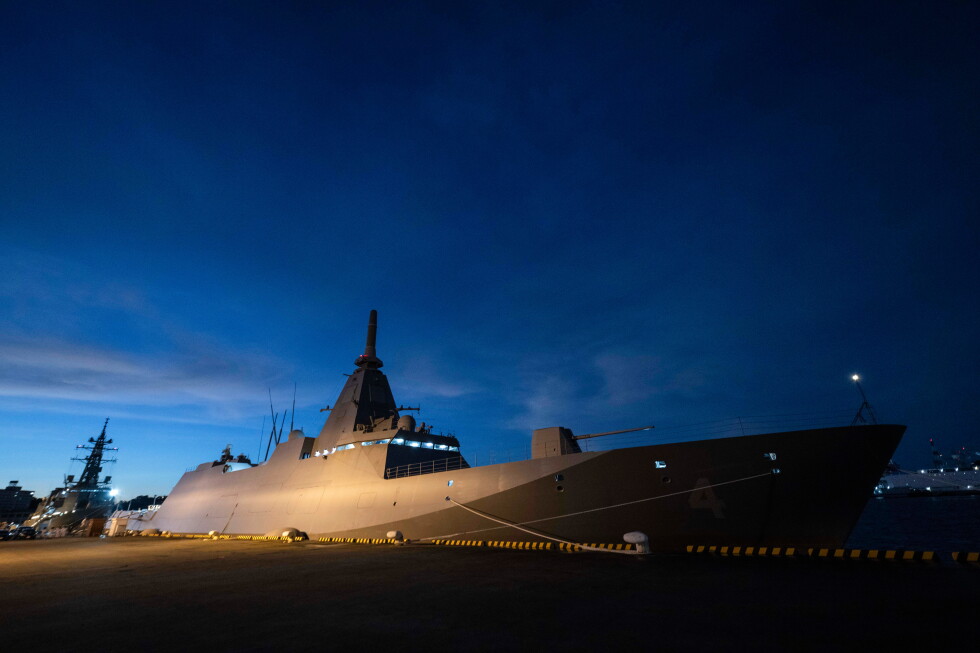
    In recent months, Japan has already secured several major international defense agreements, including a deal for joint development and transfer of 11 upgraded Mogami-class frigates to Australia. Tokyo is currently negotiating a similar partnership with New Zealand, and has already finalized a deal to sell retired Japanese destroyers to the Philippines.

  • Watch: Wild police chase in Queensland ends in two arrests

    Watch: Wild police chase in Queensland ends in two arrests

    A dramatic high-speed police chase that unfolded across two major Queensland regions, Ipswich and Brisbane, has come to a close with law enforcement officers successfully taking two individuals into custody. The pursuit, which captured the attention of onlookers across the southeast Queensland corridor, saw police units track the targeted vehicle across multiple suburban and arterial routes before executing the final arrest operation. While specific details surrounding the initial reason for the pursuit, the speeds reached during the chase, and whether any bystanders or officers suffered injuries have not yet been released to the public, the incident highlights the ongoing work of Queensland Police to apprehend individuals wanted in connection with potential offenses across the state. The operation wrapped up after authorities coordinated across local policing units to contain the vehicle and end the dangerous cross-city chase, bringing the incident to a decisive conclusion with both suspects now in police custody.

  • Qantas eyes cutting 1000 office jobs in major artificial intelligence overhaul

    Qantas eyes cutting 1000 office jobs in major artificial intelligence overhaul

    Australian aviation giant Qantas is once again at the center of industrial controversy, as reports emerge that the company is considering cutting or offshoring up to 1,000 back-office roles to India amid a company-wide push to integrate artificial intelligence into core operations. The airline has confirmed it is in early-stage consulting discussions with global professional services firm Accenture around an initiative dubbed Project iQ, which focuses on optimizing operational workflows through expanded AI adoption. A final decision on restructuring roles across marketing, finance, human resources and other corporate support departments is expected to be finalized by the end of 2024. In a statement to NewsWire, a Qantas spokesperson emphasized the company’s goal of modernizing work processes to improve outcomes for both customers and employees, noting that no formal partnership agreement or final restructuring decisions have been reached to date. The company also pushed back on criticism of its employment strategy, pointing to thousands of new operational roles added across Australia in recent years, as well as a new 400-position technology hub currently being developed in Adelaide. The airline is set to release its full-year 2024 financial results in late August, after reporting a largely flat first-half performance that delivered a statutory after-tax profit of $925 million – a marginal $2 million increase compared to the same period in 2023. The proposed restructuring has drawn sharp condemnation from the Australian Services Union (ASU), which has warned it will mount a vigorous campaign to protect every at-risk position. ASU Assistant National Secretary Scott Cowan called for urgent direct talks with Qantas Chief Executive Vanessa Hudson on Tuesday, noting that the airline has given public assurances that no Australian roles will be offshored. “If that commitment turns out to be empty, it will not just be a broken promise to our union – it will be a profound breach of trust with the Australian public, which stood by this airline through every crisis it has faced,” Cowan said. This is not the first time the union has had to seek formal guarantees from Qantas that AI integration will not be used as justification for layoffs, Cowan added, calling on the airline to use new AI tools to augment its skilled workforce rather than cut roles. The controversy also renews scrutiny of Qantas’ long history of outsourcing and offshoring, including a high-profile illegal layoff during the COVID-19 pandemic. In that case, Qantas outsourced 1,800 to 2,000 ground handling roles to third-party contractors, a move that Australian courts ultimately ruled unlawful. The company was ordered to pay a $90 million fine for the violation, making the current proposed cuts a particularly sensitive issue for both the union and the traveling public.

  • Did Iran hack water systems in seven US states?

    Did Iran hack water systems in seven US states?

    Last week, a sudden coordinated cyberattack targeting more than 30 public water systems in the U.S. state of Minnesota sent shockwaves across national cybersecurity circles, catching many officials and analysts by surprise. Within days, the Federal Bureau of Investigation confirmed that similar malicious cyber activity had been detected across seven U.S. states, with some of these intrusions successfully disrupting core water treatment and distribution operations.

    According to anonymous U.S. media sources, the Cybersecurity and Infrastructure Security Agency (CISA) has launched an investigation into a potential link between the Minnesota breaches and Iranian actors, though CISA has declined to issue any public comment on the ongoing probe. While former President Donald Trump has not publicly placed blame on Iran for the attacks, multiple cybersecurity experts interviewed by the BBC have assessed that Tehran is the most likely sponsor of the operation.

    Morgan Wright, a former U.S. State Department counterterrorism advisor, told the BBC that cyber intrusions of this nature targeting U.S. critical infrastructure are most commonly traced to either North Korean or Iranian actors. “Given our current ongoing geopolitical conflict with Iran, they immediately rise to the top of the list: they have both the capability to carry out this attack and a clear motive to do so,” Wright explained.

    However, the BBC’s U.S. partner CBS has noted that investigators are also exploring an alternative theory: that hackers may have intentionally masked their origins to appear Iranian, a deliberate ruse designed to exacerbate existing geopolitical tensions between the U.S. and Iran amid the ongoing conflict. Jake Braun, former acting White House Deputy National Cyber Director, pointed out that the Trump administration has been waging its own information campaign amid heightened tensions, meaning it may be unwilling to publicly confirm Iranian involvement even if evidence of such a link is solidified.

    The breach has already sparked heated partisan friction in the U.S. Speaking at a cabinet meeting last Friday, Trump, a Republican, blamed the attack on what he called “grossly incompetent” Minnesota state leadership, including Democratic Governor Tim Walz. Walz pushed back swiftly, saying “Trump knows full well who is responsible for this attack, and he is aware that multiple other states across the country have also been targeted.”

    To date, Iran has not issued any formal response to the recent allegations, a pattern consistent with its past stance on similar accusations. Tehran has repeatedly denied involvement in a string of cyberattacks targeting U.S. entities over the past decade, ranging from previous water system intrusions and presidential campaign hacks to breaches at U.S. hospitals and a 2014 attack on a Las Vegas casino corporation. After 2016 accusations that Iran targeted a New York-area dam and multiple U.S. banks, then-foreign ministry spokesman Hossein Jaberi Ansari told state TV that “Iran has never included any malicious cyber activities on its agenda, nor does it support such actions,” and called on the U.S. to provide concrete proof for its claims.

    Cybersecurity experts confirm that Iran has a well-documented history of conducting cyber operations against Western targets, and note that many attacks linked to Tehran are carried out by Iran-aligned groups based outside the country, a tactic that creates plausible deniability for the Iranian government. “This makes attribution far more difficult, because even if all the infrastructure and actors trace back to Iran, the regime can always deny any official connection,” Wright explained. “They structure operations this way specifically to avoid leaving direct fingerprints on the activity.”

    BBC Verify’s analysis has found that the majority of Iranian-linked cyberattacks targeting the U.S. and Israel this year have been carried out by a hacking collective called Handala. The U.S. Department of Justice has formally tied Handala to Iran’s Ministry of Intelligence and Security (MOIS), confirming the group operates on behalf of the Islamic Republic. In the early days of the U.S.-Iran conflict, FBI Director Kash Patel publicly accused Handala of stealing personal information and accessing private emails from U.S. targets. The most recent publicly claimed breach by Handala occurred in mid-June, when the group said it hacked a California water facility in retaliation for a U.S. military strike on Iranian water infrastructure.

    Handala has been linked to a string of high-profile breaches in recent years: just this year, the Department of Justice disrupted a Handala operation that targeted a U.S. medical technology firm and leaked sensitive personal data belonging to Israeli government and military officials. In 2024, Iran was accused of hacking U.S. presidential campaign networks to stoke political division, undermine public trust in the U.S. electoral system, and steal sensitive information on government officials. Both 2023 and 2024 saw Cisa confirm that Iranian Revolutionary Guard Corps (IRGC)-affiliated hackers targeted U.S. water and wastewater systems, forcing temporary shutdowns of water pressure regulation equipment in two Pennsylvania towns. In 2020, two Iranian nationals were indicted for attempting to interfere in the U.S. presidential election by stealing confidential voter data and sending threatening messages designed to coerce voters into supporting Trump. As early as 2017, Iranian-based hackers were linked to a multi-year ransomware campaign targeting local governments, K-12 schools, healthcare providers, and financial institutions, though Cisa noted at the time that the group’s activities were likely not officially sanctioned by the Iranian government.

    Cybersecurity experts emphasize that the most immediate harm from the recent water system breaches is not physical disruption to drinking water supplies, but the erosion of public trust in the government’s ability to secure critical basic services at a time of deep national division over the ongoing Iran conflict. “They are attacking our confidence in public institutions,” Braun explained. That said, experts warn that the risk of future attacks that do endanger public water safety cannot be ignored: malicious actors could manipulate chemical dosages to create harmful drinking water, shut off water service entirely to entire communities, or cause permanent damage to treatment infrastructure, Wright noted.

    Cisa and the U.S. Environmental Protection Agency have repeatedly warned that cyber intrusions represent a serious and growing threat to the nation’s water utilities. The U.S. is home to more than 152,000 public drinking water systems and over 16,000 wastewater treatment facilities, making the attack surface extremely broad. “If you want to cripple a nation, you target two core systems: power and water,” Wright said. He added that a large share of the equipment used in water and wastewater operations remains vulnerable to intrusion, due to decades-old legacy infrastructure and outdated technology that lacks modern security protections.

    Unlike most other U.S. critical infrastructure, the vast majority of the nation’s water utilities are publicly operated, meaning securing these systems falls to federal, state, and local governments. Experts warn that without systematic upgrades to cybersecurity defenses across the sector, the U.S. will continue to face this persistent national security threat. Cisa has already issued a series of recommended security upgrades to state and local governments across the country to reduce risk: as an immediate mitigation step, the agency has advised water systems to take public-facing control devices offline as quickly as possible and reset all default or compromised passwords.

  • Israel pitched advanced drones to UAE, leaked emails reveal: Report

    Israel pitched advanced drones to UAE, leaked emails reveal: Report

    Fresh details of a secret arms deal negotiation between the United Arab Emirates and Israel have come to light, following a leak of internal emails from Israel’s largest defense contractor, Elbit Systems. The correspondence, published for the first time by Haaretz and Drop Site News, lays bare how Abu Dhabi accelerated push for the purchase of Israeli intelligence and surveillance drones just weeks after a deadly cross-border attack by Yemen’s Houthi movement in early 2022.

    The hacked emails, which cover a period from 2021 through the start of 2023, outline early discussions between Elbit Systems and UAE parties over a package of Israeli defense technology. The proposed deal includes Hermes 900 reconnaissance drones, SkyEye wide-area surveillance sensors, ground control infrastructure, as well as personnel training and long-term logistical support. According to the leaked documents, the entire transaction was reclassified as an “urgent priority” immediately after the January 17, 2022 Houthi missile and drone assault on Abu Dhabi that targeted key infrastructure including oil tanker facilities and Abu Dhabi International Airport.

    The cache of executive emails was obtained by Handala, an anonymous online hacking group that open-source intelligence researchers claim has ties to the Iranian government. Both Haaretz and Drop Site News independently verified the authenticity of the documents before publishing their reporting. Initial projections valued the core drone deal at $154 million, with optional system upgrades pushing the total projected contract value to $225 million. To date, the leaked correspondence offers no confirmation on whether the ordered drones and systems have been delivered to the UAE.

    To understand the scope of the technology on offer, the SkyEye surveillance system integrates high-resolution electro-optical cameras that allow aircraft to capture vast swathes of territory in real time. Footage captured by the system can be reviewed from multiple vantage points, enabling operators to trace moving objects and personnel back to their point of origin. The Hermes 900, Elbit’s flagship medium-altitude long-endurance drone, is designed for advanced reconnaissance and surveillance missions, with a maximum payload capacity of 990 pounds. Multiple defense industry reports note the platform can also be configured to carry up to eight surface-to-air missiles for offensive operations.

    Internal correspondence shows that just two months after the 2022 Houthi attack, a senior leader from the Israeli Ministry of Defense’s arms development directorate traveled to Abu Dhabi to present a formal proposal for the Hermes 900 sale. The proposal framed the drones as a critical operational solution to extend cross-border surveillance capabilities, specifically to detect incoming missile and drone launches before they reach UAE territory.

    The emerging drone deal negotiations come against a backdrop of rapidly warming bilateral defense ties between Tel Aviv and Abu Dhabi, which date back to the 2020 Abraham Accords. Brokered by the first Trump administration, the normalization agreement between Israel, the UAE, Bahrain, and Morocco was explicitly positioned as a framework to deepen security and defense cooperation across the region. This new leak confirms long-held analyst assessments that cutting-edge Israeli defense technology has been a key driver of growing security partnerships between Israel and Gulf Arab states.

    Beyond the core Hermes 900 and SkyEye package, the emails also include passing references to two additional Elbit Systems products: the SkyStriker loitering munition – more commonly known as a “suicide drone” – and the smaller Hermes 650 reconnaissance drone. Today, the UAE stands as one of Israel’s closest partners in the Arab and Muslim world, and has joined Israel and the United States in a series of coordinated military strikes targeting Iranian assets across the Middle East in recent months. As early as May of this year, Middle East Eye first reported that Israel and the UAE had launched a joint defense investment fund to develop and acquire new advanced weapons systems, amid escalating regional tensions with Iran.