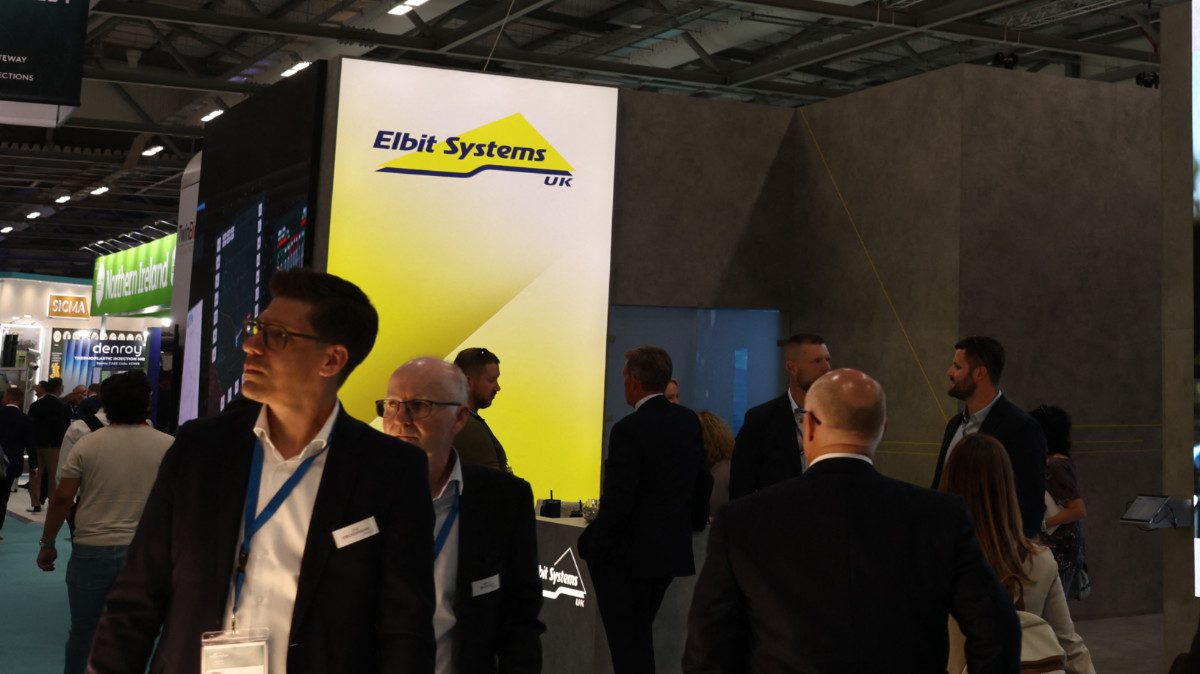
Fresh details of a secret arms deal negotiation between the United Arab Emirates and Israel have come to light, following a leak of internal emails from Israel’s largest defense contractor, Elbit Systems. The correspondence, published for the first time by Haaretz and Drop Site News, lays bare how Abu Dhabi accelerated push for the purchase of Israeli intelligence and surveillance drones just weeks after a deadly cross-border attack by Yemen’s Houthi movement in early 2022.
The hacked emails, which cover a period from 2021 through the start of 2023, outline early discussions between Elbit Systems and UAE parties over a package of Israeli defense technology. The proposed deal includes Hermes 900 reconnaissance drones, SkyEye wide-area surveillance sensors, ground control infrastructure, as well as personnel training and long-term logistical support. According to the leaked documents, the entire transaction was reclassified as an “urgent priority” immediately after the January 17, 2022 Houthi missile and drone assault on Abu Dhabi that targeted key infrastructure including oil tanker facilities and Abu Dhabi International Airport.
The cache of executive emails was obtained by Handala, an anonymous online hacking group that open-source intelligence researchers claim has ties to the Iranian government. Both Haaretz and Drop Site News independently verified the authenticity of the documents before publishing their reporting. Initial projections valued the core drone deal at $154 million, with optional system upgrades pushing the total projected contract value to $225 million. To date, the leaked correspondence offers no confirmation on whether the ordered drones and systems have been delivered to the UAE.
To understand the scope of the technology on offer, the SkyEye surveillance system integrates high-resolution electro-optical cameras that allow aircraft to capture vast swathes of territory in real time. Footage captured by the system can be reviewed from multiple vantage points, enabling operators to trace moving objects and personnel back to their point of origin. The Hermes 900, Elbit’s flagship medium-altitude long-endurance drone, is designed for advanced reconnaissance and surveillance missions, with a maximum payload capacity of 990 pounds. Multiple defense industry reports note the platform can also be configured to carry up to eight surface-to-air missiles for offensive operations.
Internal correspondence shows that just two months after the 2022 Houthi attack, a senior leader from the Israeli Ministry of Defense’s arms development directorate traveled to Abu Dhabi to present a formal proposal for the Hermes 900 sale. The proposal framed the drones as a critical operational solution to extend cross-border surveillance capabilities, specifically to detect incoming missile and drone launches before they reach UAE territory.
The emerging drone deal negotiations come against a backdrop of rapidly warming bilateral defense ties between Tel Aviv and Abu Dhabi, which date back to the 2020 Abraham Accords. Brokered by the first Trump administration, the normalization agreement between Israel, the UAE, Bahrain, and Morocco was explicitly positioned as a framework to deepen security and defense cooperation across the region. This new leak confirms long-held analyst assessments that cutting-edge Israeli defense technology has been a key driver of growing security partnerships between Israel and Gulf Arab states.
Beyond the core Hermes 900 and SkyEye package, the emails also include passing references to two additional Elbit Systems products: the SkyStriker loitering munition – more commonly known as a “suicide drone” – and the smaller Hermes 650 reconnaissance drone. Today, the UAE stands as one of Israel’s closest partners in the Arab and Muslim world, and has joined Israel and the United States in a series of coordinated military strikes targeting Iranian assets across the Middle East in recent months. As early as May of this year, Middle East Eye first reported that Israel and the UAE had launched a joint defense investment fund to develop and acquire new advanced weapons systems, amid escalating regional tensions with Iran.