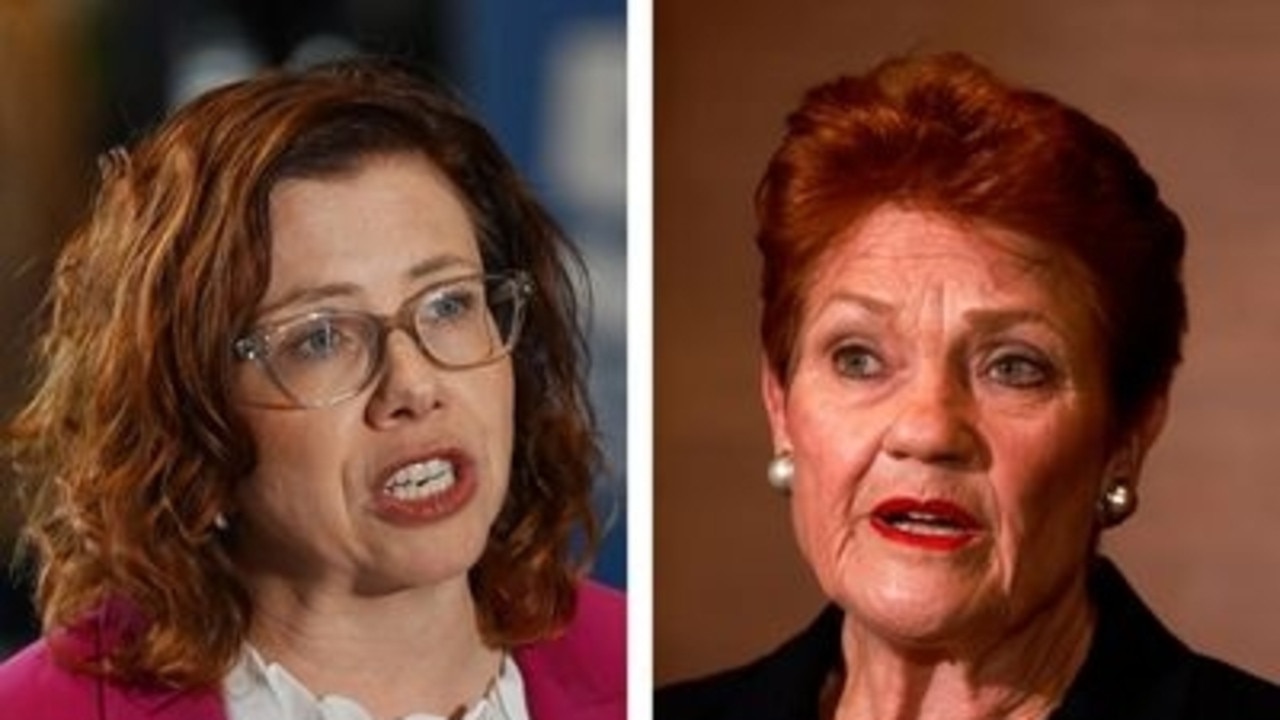
A fresh controversy has erupted in Australian federal politics after One Nation leader Pauline Hanson barred three major independent media outlets from a candidate announcement press conference for the upcoming Victorian state election, drawing sharp calls for accountability from a sitting Labor cabinet minister.
On Monday, journalists working for the Australian Broadcasting Corporation (ABC), Melbourne-based broadsheet *The Age* and national publication *The Guardian* were turned away at the door of Hanson’s Melbourne event, where the One Nation leader was set to unveil the party’s slate of candidates for the approaching state poll. When questioned by attending reporters about the exclusion, Hanson made clear the move was a deliberate response to what she frames as consistent unfair coverage of her and her party. “I’m sorry that democracy doesn’t happen on the ABC at all. And I’m sick of it, it’s not fair and just in their reporting,” she told reporters on site.
The following day, Employment and Workplace Relations Minister Amanda Rishworth publicly pushed back on Hanson’s decision, arguing that all elected representatives and political leaders have an obligation to engage with scrutiny regardless of whether questions are comfortable. Speaking to Nine Network’s *Today* program, Rishworth questioned the logic of the exclusion, noting Hanson had claimed she has nothing to hide from public scrutiny. “By saying you’ve got nothing to hide. I don’t know why she would want to, well, bar ABC, The Age, The Guardian,” Rishworth said. The minister referenced multiple past instances where Hanson had been called out by these outlets for inconsistencies in her policy positions, specifically pointing to her shifting stance on paid parental leave, but emphasized that even critical coverage does not justify barring accredited media from public political events. “I’m not sure who was left at her press conference, but, quite frankly, you need to be accountable. You need to turn up. Sometimes the questions are uncomfortable,” she added.
Hanson pushed back against the criticism in subsequent radio interviews, defending her decision as a temporary protest against biased coverage rather than a permanent break from media engagement. She stressed the ban would be lifted once the outlets begin providing what she describes as fair coverage of One Nation, drawing a parallel to a similar nine-year blackout of the ABC she implemented in 1996 that she says eventually resulted in more balanced reporting. “It won’t be forever and a day but it’s like putting out a message – give us a fair go,” Hanson said.
This latest incident aligns with longstanding criticism Hanson has leveled at national public broadcaster the ABC, a stance she reinforced during a June address to the National Press Club in Canberra. At that event, Hanson doubled down on her position that she does not answer to critical media, repeating claims that the ABC exhibits overt political bias against One Nation and her leadership. “The ABC has proven itself completely in denial about its profoundly transparent political bias and the activists in its ranks … the arrogance is stunning in its scope,” she told the room in June. “It is partly for this reason I have, at times, refused ABC interviews. I will continue to do so because, as media outlets go, the ABC is very low on my list of priorities and their bias against One Nation and me is obvious.”
Closing out her comments Tuesday, Rishworth emphasized that transparency should be a core expectation for all political parties operating in Australia, noting that even the Australian Electoral Commission has strengthened its transparency rules in recent years to build public trust. “The (Australian Electoral Commission) has very clear rules and they have become more transparent. Every political party should do so,” she said.