博客

  • How a generation of record-setting guides died in a disaster that killed a climbing legend

    How a generation of record-setting guides died in a disaster that killed a climbing legend

    The global mountaineering community is in mourning after a devastating avalanche on Pakistan’s Broad Peak claimed the lives of six elite Nepali mountain guides — climbers whose decades of trailblazing achievements redefined high-altitude mountaineering and transformed the world’s perception of Sherpa guides, who were long reduced to being unseen supporting aides. Among those lost was Nirmal “Nims” Purja, the 43-year-old British-Nepali climber who led the 10-person international expedition to the 12th highest peak in the world, and who remains globally celebrated for his historic speed ascent of all 14 of the planet’s 8,000-meter-plus peaks in just over six months, a feat documented in a popular Netflix feature film.

    The other five victims included some of the most decorated climbers in the Nepali mountaineering community. Forty-six-year-old Kili Pemba Sherpa had only just completed his own 14 eight-thousanders journey in early July, earning the sport’s most coveted Grand Slam title. Long before that crowning achievement, he had already cemented his legacy as a member of Purja’s 2021 team that pulled off the first-ever winter ascent of K2 — the world’s second-highest peak, widely regarded as far deadlier and more unpredictable than Mount Everest, which had resisted all winter attempts for decades. Renowned among peers for his humility and relentless dedication to his clients, Kili Pemba summited Everest 15 times, including two trips where he guided double-leg amputees to the peak. Gyanendra Shrestha, a Nepali government official who witnessed one of these ascents from base camp, called the feat “the toughest task for any guide” and noted Kili Pemba completed it with extraordinary care.

    Thirty-seven-year-old Pur Bahadur Gurung, another victim, had scaled 12 of the 14 8,000-meter peaks and held one of the rare International Federation of Mountain Guides Association (IFMGA) certifications, a qualification held by only 100 Nepali guides. Earning this certification requires massive financial investment, years of training, and profound passion for the sport, making Gurung’s loss all the more staggering for Nepal’s mountaineering sector. In 2024, he was also part of the expedition that discovered a century-old boot on Everest, believed to have belonged to pioneering British climber Andrew Irvine, who disappeared on the mountain in 1924.

    The three remaining guides who perished also left indelible marks on the sport: Gyaljen Sherpa, who pulled off the unprecedented feat of scaling the world’s third-highest peak, Kanchenjunga, three times in a single climbing season; 36-year-old Nima Sherpa, who summited four eight-thousanders in 2026 alone; and 20-something Nawang Thindu Sherpa, one of Nepal’s most promising rising young guides. Collectively, the six climbers notched dozens of Everest summits between them and achieved many firsts once considered impossible: 8,000-meter ascents without supplemental oxygen, winter ascents of the world’s deadliest peaks, and feats that opened new possibilities for the entire global climbing community. Beyond their individual records, their careers have reshaped global recognition of Nepali Sherpa guides, moving the world beyond the outdated view that frames them only as support staff rather than elite climbers and pioneers in their own right.

    In recent years, Pakistan’s remote Karakoram mountain range has emerged as a major overseas operating base for Nepali Sherpa guides, a shift widely credited to Purja’s trailblazing 14 peaks project that put Pakistan’s climbing opportunities on the global map for international mountaineers. Each spring, Nepali guides lead commercial expeditions up Nepal’s famous Himalayan peaks. When the monsoon season hits Nepal from June to September, many move to Pakistan’s far north, which is home to five of the world’s 8,000-meter peaks. Unlike Nepal’s well-developed climbing infrastructure — which features established lodges, well-marked routes, and a robust helicopter rescue network spread across high-altitude outposts — Pakistan’s Karakoram range is vastly remote, with almost no pre-existing infrastructure. Guides working there must fix their own ropes, cut steps into glacial ice, and establish all their own camps from scratch, making every expedition a test of raw mountaineering skill that only the most experienced guides can take on. Rescue operations are also far more challenging in the isolated region, with very few viable landing zones for rescue helicopters even at base camp, let alone at higher altitudes. For all these logistical hurdles, however, demand for climbing trips to Pakistan’s Karakoram has grown steadily in recent years, as more international and Nepali climbers seek to complete their own 14 peaks journeys.

    Iswari Paudel, acting president of the Nepal Mountaineering Association, noted that Purja’s groundbreaking success gave both Nepali guides and international climbers the confidence to pursue Pakistan’s legendary peaks. “Nims’ success gave many [guides] and foreigners the courage to believe that this mountaineering crown was truly possible,” Paudel explained. “This has made Pakistan a major overseas base for Nepali Sherpas. And while helping foreign climbers fulfil their dreams, many guides have themselves completed the 14 peaks.”

    Ben Ayers, a longtime Everest correspondent for Outside Magazine, called Purja an iconic climber and “undisputedly amongst the best of his generation.” He added that Purja’s work helped usher in a new era of mountaineering that democratized access to high-altitude climbing for more people, but also accelerated the commercialization of the sport that inherently increases risk.

    Himal Gautam, spokesman for Nepal’s tourism department, described the tragedy as an “unprecedented loss” for Nepal’s close-knit mountaineering community, a sentiment echoed across the country and the global climbing world. While the disaster has already sparked renewed calls to strengthen safety regulations for high-altitude expeditions in Pakistan, industry experts and analysts agree it is unlikely to produce long-term changes to high-altitude adventure tourism. Inherent, unavoidable risk is a core part of the appeal of high-altitude mountaineering for both guides and clients, researchers note. Past major tragedies on Himalayan peaks, including the 2014 Everest ice avalanche that killed 16 Sherpas and the 2008 K2 disaster that claimed 11 lives, did not lead to sustained shifts in the industry. “Generally, these tragedies cause a moment of concern… but then things go back to how they were. It’s difficult to say with any conviction that any accident in the mountains is ‘preventable’ as the inherent danger is so high… and that’s part of the appeal,” Ayers said. Medhavi Gulati, a researcher specializing in high-altitude mountaineering, added that “often, it’s the dangers and risk of death that attracts people.” Veteran mountaineer and writer Alan Arnette echoed this view, noting “I doubt the Broad Peak incident will have a significant impact, given history. I hope I’m wrong.”

  • Cape Verde goalkeeper Vozinha ready for new challenge at Colo-Colo in Chile after World Cup success

    Cape Verde goalkeeper Vozinha ready for new challenge at Colo-Colo in Chile after World Cup success

    After a standout World Cup campaign with Cape Verde that captured the hearts of soccer fans across the globe, 40-year-old goalkeeper Vozinha has finally landed the high-profile transfer he always believed he deserved, officially joining Chile’s most decorated club, Colo-Colo, in a landmark move this week.

    Vozinha, whose real name is Josimar Évora Dias, spent the vast majority of his 20-plus-year professional plying his trade for smaller outfits in lower-tier European leagues, most recently turning out for Chaves in Portugal’s second division. But through years of toiling outside the top flight, he never lost conviction that he was built to compete for a major club on one of soccer’s bigger stages.

    His trajectory shifted dramatically after the 2022 FIFA World Cup, where a string of elite performances against global powerhouses including Spain, Uruguay, and Argentina earned him a spot in the tournament’s Best XI and turned the little-known shot-stopper into a worldwide viral sensation. In the weeks following his breakout run, his social media following skyrocketed from less than 50,000 followers to nearly 30 million, opening the door to offers from clubs across multiple continents.

    Colo-Colo first announced the agreement to sign Vozinha in late July, but bureaucratic delays pushed back his official arrival in Santiago. Even with multiple suitors courting him after the World Cup, the 40-year-old says the Chilean top-flight side was always his unambiguous first choice. Speaking at his official unveiling to local media on Tuesday, he explained: “The decision was very clear. Despite playing in smaller leagues for clubs that weren’t exactly giants, deep down I always told myself I was a ‘big club’ player. So when Colo-Colo came calling, there was no doubt. From day one, I knew where I wanted to play. I received many offers, but Colo-Colo was always the priority.”

    Finalizing the transfer required overcoming an unexpected regulatory obstacle, however: Chilean Football Federation rules mandate that all players display their legal surname on their match jerseys. For Vozinha — a nickname meaning “granny” in Portuguese that he has used his entire career — forcing him to abandon the moniker would have been a disappointing change. The federation ultimately granted a special exception to let him keep the famous nickname on his kit, a decision Vozinha called meaningful beyond just soccer. “It is the name I have used my entire life. In Cape Verde, it holds great significance and a rich history, and now it does globally as well,” he said. “If my grandmother were alive today, I think she would be proud. I hope to keep using it for the rest of my career as a tribute.”

    Vozinha touched down at Santiago’s international airport on Sunday, greeted by a raucous crowd of hundreds of Colo-Colo fans waving flags, holding homemade welcome signs, and beating drums in celebration of their new signing. He completed his mandatory medical examination on Monday, signed his contract shortly after, and joined his new teammates for his first training session with the club on Tuesday. If all goes according to plan, he could make his competitive debut as early as this coming Sunday, when first-place Colo-Colo takes on Unión La Calera in Chile’s top division.

    Reflecting on his journey from lower-league stalwart to global star, Vozinha says his World Cup run remains the biggest moment of his career to date, but joining Colo-Colo marks the highlight of his club career. “The World Cup was the best thing that ever happened to me in football, but that is in the past now. Being here representing Colo-Colo — a massive club with a rich history — is the highlight of my club career,” he said. Looking ahead to his new chapter in South American soccer, the 40-year-old says he is ready to put in the work to help his new side chase silverware. “Playing in the World Cup comes with immense pressure. I played against the best national teams in the world, and now I just want to work hard and help this team achieve its goals.”

  • ‘The fire’s right there’ – Families recount fleeing Washington state wildfires

    ‘The fire’s right there’ – Families recount fleeing Washington state wildfires

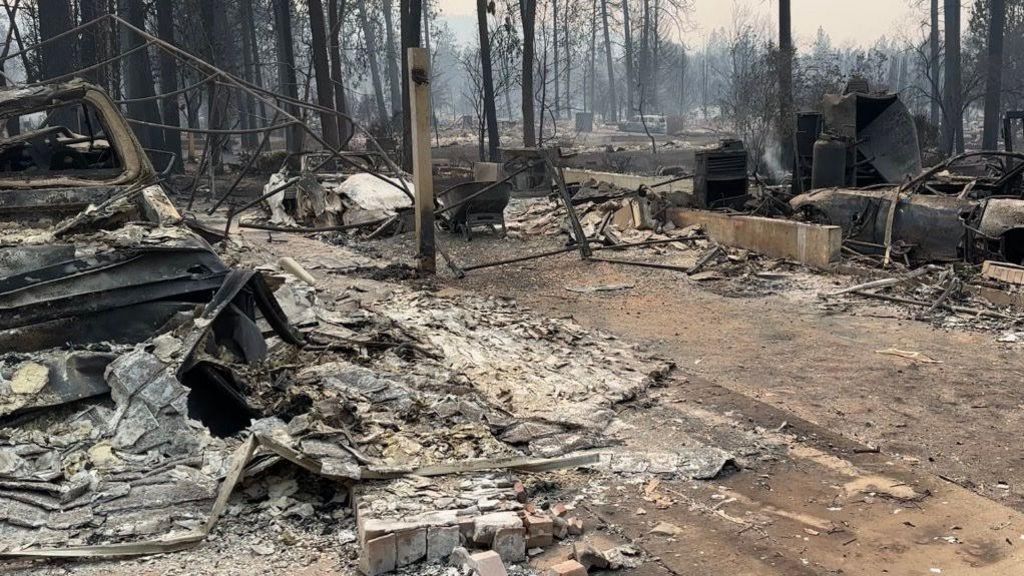
    A cluster of fast-moving wildfires sweeping through Spokane, Washington has left a trail of widespread destruction, tearing through hundreds of residential structures, forcing more than 60,000 people to flee their homes and upending the lives of countless local families.

    For many residents, the disaster unfolded with little warning, catching them off guard even in a region long accustomed to seasonal wildfire risk. Amy Mulligan, one of the thousands displaced, was going about a routine afternoon in her backyard last weekend, listening to an audiobook and making final preparations for her five-year-old child’s upcoming birthday party when she first detected the faint tang of smoke in the air.

    Accustomed to periodic wildfire activity across the Spokane area, Mulligan did not immediately panic. She climbed up to her home’s deck to investigate and spotted plumes of thick black smoke billowing in the distance, but a quick check of her phone’s emergency alert system showed no active warnings. Dismissing the risk, she assumed local fire crews already had the blaze under control.

    Minutes later, that calm evaporated completely. Her brother-in-law rushed to her home with urgent news: a nearby neighborhood was under mandatory evacuation. When Mulligan stepped outside again, the fire was no longer a distant threat. The smoke was already rolling over the ridge behind her property, and neighbors were rushing to escape, speeding away in their vehicles while shouting urgent warnings to get out immediately.

    “That activity started to really scare me because that was different than in the past,” Mulligan recalled in an interview. She, her husband, and their two children grabbed a small handful of essential belongings, jumped into their car, and fled the area. Stuck in gridlock evacuation traffic, the couple’s nine-year-old daughter succumbed to panic, hyperventilating and crying as she watched the fire advance around them. It took sustained calming breathing exercises in the car to help her manage her terror as the family inched toward safety.

    Seventy-year-old James Main and his wife were among the many residents who received no official warning at all before the fire reached their neighborhood. “Normally, things would come on your phone and say, ‘Hey, this area, you know, you’ve got fire, level three fire, or anything. There was zero warning for this whole deal,” Main said. He first spotted the blaze, and within just 30 minutes, realized the situation was catastrophic. As he scrambled to pack for evacuation, he experienced a sudden wave of debilitating anxiety that left him frozen. “I kind of froze up for just a few minutes. I think it was like an anxiety attack,” he said. “I’ve never had one before, but I think I had one then.”

    When the couple finally got into their truck to escape, they found their route shrouded in thick, pitch-black smoke that cut visibility to nearly nothing. “We don’t know if we’re heading out of a fire or into a fire because we can’t freaking see,” Main recalled.

    As of Tuesday afternoon, three separate wildfires have scorched more than 10,000 acres across the Spokane region, according to the state’s official wildfire tracking system. The largest of the blazes, the Old Trails fire that destroyed both Mulligan’s and Main’s homes, remains active. Authorities have arrested a suspect on suspicion of setting the Old Trails fire intentionally through arson.

    Remarkably, as of the latest update, no fatalities have been reported across the three wildfires. But the destruction left in their path is staggering: more than 700 homes and other structures have been reduced to ash and rubble. When Main returned to his property after the fire passed to survey the damage, nothing remained of his home beyond charred foundations, smoldering ash, and blackened tree trunks poking through the debris. When asked what the future holds for him and his wife, he answered simply: “We don’t know.”

    For Mulligan, the loss of her home is devastating, but the pain of losing irreplaceable personal mementos cuts far deeper. Her home now is nothing but ash, but the items that brought her to tears are not the structure or its furniture – they are the heirlooms that no insurance payout can ever replace, and no government damage tally ever counts. Among those lost treasures is a family ring passed down to her from her grandmother. The ring had been given to her grandmother by Mulligan’s grandfather on their 49th wedding anniversary, a gesture the grandmother always believed her husband planned because he knew he would not live to see their 50th – a prediction that came true that same year.

    “She had always said she thought that he knew, and that’s why he went ahead and got her this ring. And she had given it to me,” Mulligan said, pausing to hold back tears. “And it’s gone.”

    In the coming weeks and months, thousands of displaced Spokane residents like Mulligan and Main will grapple with the overwhelming work of rebuilding their lives from scratch, after a single day of raging wildfires turned their sense of security and familiar lives upside down.

  • Le Clos’ home destroyed by fire after he sets Commonwealths record

    Le Clos’ home destroyed by fire after he sets Commonwealths record

    South African swimming legend Chad le Clos, who just etched his name into the record books as the most decorated athlete in Commonwealth Games history, has revealed that just one night after his historic achievement, a devastating blaze destroyed his long-time Cape Town apartment and claimed the life of one of his neighbors.

    Last week in Glasgow, Le Clos secured his 21st all-time Commonwealth Games medal when he and his South African teammates claimed bronze in the men’s 4x100m medley relay. The 34-year-old’s third medal of the 2026 Games pushed him past Australian swimmer Emma McKeon to claim the top spot on the all-time Commonwealth Games medal table, adding to a silver he won in the mixed 4x100m medley relay and another bronze in the men’s 4x100m freestyle relay earlier in the competition.

    Only days after this career milestone, Le Clos shared the tragic news on his official Instagram account, opening up about the shock of losing the Sea Point apartment he had called home for more than a decade. “It has taken me a while to process this heartbreaking tragedy,” he wrote. “On the evening of 30 July, amid breaking the all-time Commonwealth record, a fire started in my apartment block, which quickly spread to my home. Sadly my home, where I’ve lived for more than a decade, burnt down and there is nothing left to salvage.”

    Local reports confirm the blaze killed a 93-year-old resident of the building, who had been Le Clos’ neighbor for many years. The Olympic champion paid tribute to the victim in his post, extending his deepest sympathies to the man’s family and loved ones. “No words can truly ease a loss like this, but I hope the family knows that the thoughts of an entire community are with them,” the Durban-born athlete said.

    Le Clos also reached out to other residents whose properties and lives were upended by the fire, emphasizing the strength of Sea Point’s close community bonds. “To my fellow neighbours whose homes and lives have been severely affected by this fire, please know that you are not alone. This is a tight-knit community and it is in moments like these that we lean on one another,” he added.

    In response to the disaster, Le Clos has launched a fundraising initiative to support displaced and affected neighbors as they work to rebuild their lives. This tragedy comes on the heels of one of the proudest moments of Le Clos’ decades-long competitive career, which includes one of the most iconic upsets in Olympic swimming history. At the 2012 London Games, a 20-year-old Le Clos dethroned American swimming icon Michael Phelps to win gold in the 200m butterfly — an event Phelps had not lost since 2001, during a career that would earn him 14 Olympic gold medals.

    Le Clos first competed at the Commonwealth Games in 2010 in Delhi, where he earned his first medal in the competition at just 18 years old. Across five editions of the multi-sport event, he has now collected 7 gold, 5 silver, and 9 bronze medals to secure his place in Commonwealth history. Over his entire professional career, Le Clos has also earned four Olympic medals, 16 world championship titles, and 10 African regional titles, cementing his status as one of South Africa’s most successful competitive swimmers of all time.

  • US revokes Brazilian ambassador’s visa, official says, as diplomatic tensions escalate

    US revokes Brazilian ambassador’s visa, official says, as diplomatic tensions escalate

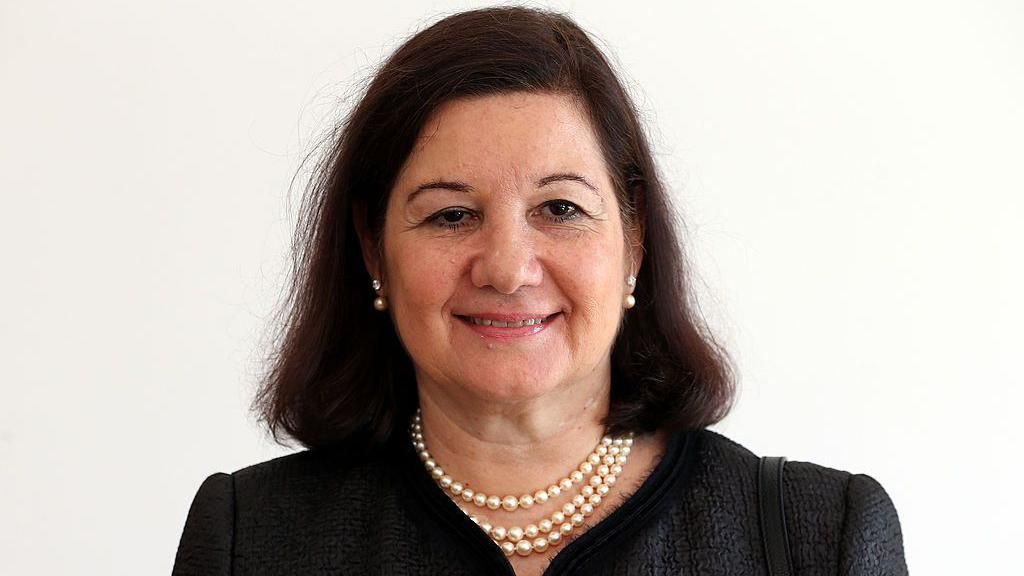
    A deepening rift between the United States and Brazil has taken a sharp new turn, with the U.S. State Department confirming it has revoked the visa of Maria Luiza Ribeiro Viotti, Brazil’s sitting ambassador to Washington. The tit-for-tat escalation comes just weeks ahead of Brazil’s upcoming general elections, and follows a direct snub from Brasilia last month that blocked entry for two senior U.S. diplomatic officials.

    The sequence of disputes began when the Brazilian government refused to issue visas for Riley M Barnes, Assistant Secretary of State for Democracy, Human Rights, and Labor, and Samuel Samson, Deputy Assistant Secretary in the same department, who had planned a late-July visit to Brazil. U.S. authorities framed the trip as a routine mission focused on discussions of freedom of expression, religious freedom, and election integrity. But Brazilian President Luiz Inácio Lula da Silva leveled a serious accusation: the officials intended to meddle in Brazil’s electoral process, a claim the U.S. has repeatedly dismissed as entirely baseless.

    Complicating the context of the blocked visit, the two U.S. officials were scheduled to meet Flávio Bolsonaro, a right-wing congressional candidate and son of former Brazilian President Jair Bolsonaro. The former president is currently serving a 27-year prison sentence after being convicted of orchestrating a coup attempt to overturn his 2022 election loss to Lula.

    In recent remarks to a gathering of diplomats, Flávio Bolsonaro claimed Brazil’s electronic voting machines shared a supplier with Venezuela’s electoral system, citing an old Central Intelligence Agency report on purported electoral fraud in the South American nation. He later walked back the comment, clarifying that he did not intend to question Brazil’s electoral integrity and instead called for greater international observer presence. The claims have nonetheless been thoroughly refuted by Brazil’s Superior Electoral Court. Independent electoral experts have long held that Brazil’s domestic-built electronic voting system is one of the most secure and transparent electoral frameworks in the world.

    Flávio Bolsonaro, who is running for Senate in the 2026 elections, has drawn high-profile international endorsements from Argentine President Javier Milei and Israeli Prime Minister Benjamin Netanyahu, amplifying his profile on the global conservative stage.

    A senior U.S. State Department official emphasized that the visa revocation does not amount to a formal expulsion of Ambassador Viotti, a move that would mark a full diplomatic rupture between the two nations. However, the action is the most visible escalation in a string of disagreements that have built up between the two governments over recent months. Earlier disputes include the U.S. reimposing import tariffs on Brazilian goods and Washington’s decision to label Brazilian criminal gangs as foreign terrorist organizations, moves that drew sharp pushback from Brasilia.

    Brazil has also retaliated in another diplomatic standoff: the Lula administration has refused to grant approval for Daniel Perez, the nominee put forward by former U.S. President Donald Trump to serve as the next U.S. ambassador to Brazil. Perez, a Florida state representative and close ally of current U.S. Secretary of State Marco Rubio, was announced as the nominee on June 1 without the customary pre-announcement consultation with Brazilian authorities, a breach of standard diplomatic protocol that left Brasilia feeling openly disrespected.

    President Lula has been a vocal critic of the State Department under Rubio’s leadership, condemning what he frames as growing and unwarranted U.S. intervention in Latin American politics, including the department’s open endorsement of conservative candidates in regional elections. The BBC has reached out to the Brazilian government, the Brazilian embassy in Washington, and the U.S. State Department for additional comment on the latest visa dispute, but has not yet received responses from all parties.

    As both countries navigate this escalating diplomatic standoff, all eyes are turning to Brazil’s upcoming elections, with growing international concern over how the tit-for-tat disputes will impact bilateral relations and the integrity of the electoral process in one of the world’s largest democracies.

  • US congressman refuses to drop reelection bid over ex-wife’s abuse claims

    US congressman refuses to drop reelection bid over ex-wife’s abuse claims

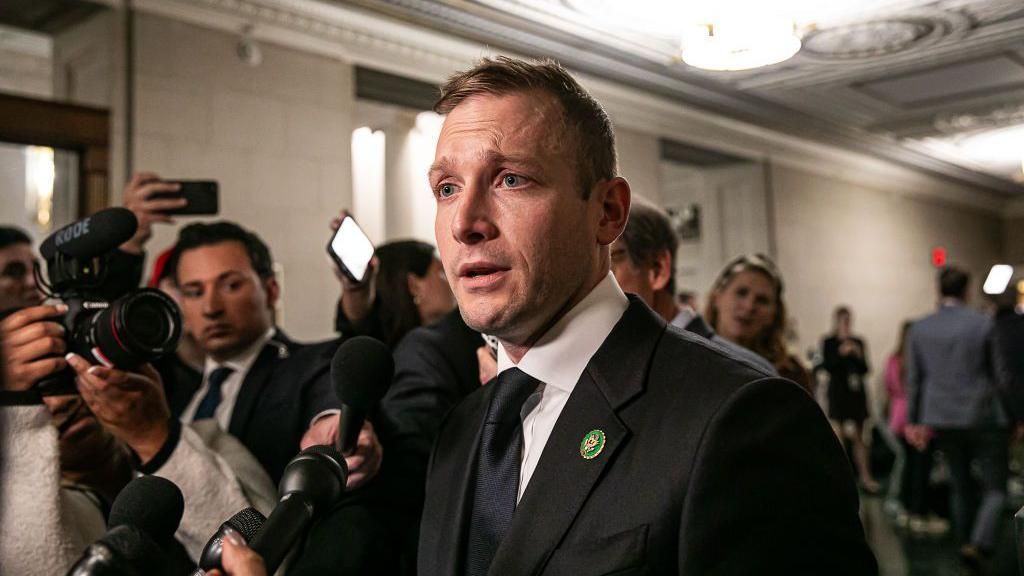
    A sitting Republican U.S. congressman from Ohio is digging in to defend his seat in the upcoming November midterm elections, refusing to step aside even amid a barrage of serious abuse allegations levied by his ex-wife, whose father is a sitting U.S. senator, and public doubt about his electoral prospects from former President Donald Trump.

    Max Miller, a one-term White House aide who is running for his third congressional term, made his position clear in an exclusive interview with CNN, stating firmly, “I’m never going to back down.” His defiant statement comes just 24 hours after Trump placed a personal call to the incumbent, where he raised questions about whether Miller could secure victory in the November general election, two sources familiar with the call confirmed.

    Miller has issued a full, categorical denial of all claims against him. These include allegations of physical and emotional abuse against his ex-wife Emily Moreno and their young daughter, as well as unsubstantiated claims of illegal drug use, all of which he describes as a baseless smear campaign.

    Court documents and police reports obtained by major U.S. news outlets, including CBS — the domestic broadcast partner of the BBC — detail the serious accusations from Moreno. She alleges Miller threw her into a wall during an altercation, held a loaded gun to her head, and inflicted a fractured collarbone on their two-year-old daughter. During Tuesday’s interview with CNN anchor Jake Tapper, Miller forcefully rejected the accusation of harming his child, saying he has never been physically abusive to his daughter.

    In a video statement posted to X (formerly Twitter) over the weekend, Miller framed Moreno’s accusations as “baseless” and “destructive.” He pointed to his record in office as evidence of his qualifications, arguing, “I’ve been a good legislator. All they’re trying to do is create rumourmills without evidence.” The case has drawn heightened political attention because Moreno’s father, Bernie Moreno, is currently a sitting U.S. senator from Ohio, who has publicly stated his daughter “lives in constant fear” of Miller.

  • The Briton who helped 6,000 UK Jews move to Israel

    The Briton who helped 6,000 UK Jews move to Israel

    Over the past 15 years, a British-born Israeli immigration consultant has facilitated the relocation of more than 6,000 Jewish people to Israel, much of that work carried out during his tenure with a controversial organization that openly advertises residency opportunities in illegal Israeli settlements across the occupied West Bank and Golan Heights. As Israel continues to expand its network of unauthorized settlements and outposts in Palestinian-claimed territories, a growing number of Israel-aligned organizations have stepped up efforts to recruit Jewish migrants from across the globe to move to these occupied areas.

    One of the most high-profile groups engaged in this work is Nefesh B’Nefesh (NBN), an organization that facilitates Jewish immigration to Israel—known widely as Aliyah—while actively promoting settlement in occupied territories. The group’s official website hosts dedicated informational pages for dozens of illegal settlements, complete with local community contact details for prospective migrants interested in relocating. For example, NBN spotlights the Gush Etzion settlement bloc in the West Bank, profiling individual settlements including Tekoa. In its promotional material for Tekoa, the organization notes the settlement’s population growth followed the opening of a new bypass route that circumvents nearby Palestinian communities, a framing that omits any discussion of the route’s seizure of private Palestinian land.

    NBN also promotes Katzrin, a settlement built on illegally occupied Syrian land in the Golan Heights, marketing the community only for its “breathtaking surrounding views” while failing to disclose its status on occupied territory. Other settlements across the West Bank receive similar misleading promotion: Elkana is billed as a “well-situated community in the center of Israel,” while the Mateh Binyamin cluster of illegal outposts is described as “one of the most beautiful regions in Israel. Neither location is acknowledged to sit outside of Israel’s internationally recognized 1948 armistice lines. To further recruit for Mateh Binyamin, NBN has hosted a 2021 recorded webinar on its website featuring US-born settlers encouraging international Jews to relocate to the area.

    The organization’s informational page for Mitzpeh Yericho frames relocation to the settlement as part of a “pioneering effort to build up Eretz Yisrael [the land of Israel],” noting that most residents live in permanent housing while others occupy temporary structures including mobile homes and modular concrete units—structures frequently used by settlers to establish new unauthorised outposts on seized Palestinian land. NBN also promotes expansion of the Shiloh settlement, highlighting “several construction initiatives” underway to “expand its borders,” language that directly refers to the seizure of additional adjacent Palestinian territory for settlement growth.

    While the total number of international migrants NBN has assisted to move into illegal occupied territories remains undisclosed, the group’s own page for the West Bank settlement of Efrat offers a glimpse: it notes “thousands of NBN Olim [immigrants]” currently reside in the unauthorized settlement. When contacted for comment, NBN has attempted to distance itself from promotional activity, claiming its settlement pages are “for educational and informational purposes only” and that it “does not endorse, recommend, or promote any specific community.” Despite this disclaimer, the organization’s consistent terminology and framing treats both the Golan Heights and the occupied West Bank as integral territory of the state of Israel, contradicting its formal claims.

    NBN primarily focuses on facilitating Aliyah for Jewish migrants from North America (the United States and Canada), but previously maintained operational activities in the United Kingdom, where it was led by the UK-born Dov Newmark, the subject of this investigation. Public records and Newmark’s own LinkedIn profile confirm he served as NBN’s “Director of UK Aliyah” from 2009 through 2023. In a May 2024 interview with British-Israeli podcaster David Goodwin, Newmark reflected positively on his 15-year tenure with the organization, saying “Nefesh really put all the information together on one site, which was amazing,” calling his time with the group “Amazing 15 years. Great organisation.”

    Newmark confirms that during his 15 years working on Aliyah, first with NBN and now through his private consultancy, he has assisted more than 6,000 Jewish people in relocating to Israel. It remains unclear whether any of these migrants were assisted to move to illegal settlements: neither Newmark nor NBN responded to multiple requests for comment from Middle East Eye (MEE) for this investigation. It also remains unclear exactly when NBN ceased formal operations in the UK: Newmark claims the organization exited the UK market around 2018, but a UK-registered charitable entity linked to the group, Friends of Nefesh B’Nefesh Limited, was only formally dissolved in July 2024, and NBN listed a UK contact number on its website through 2021.

    When contacted by MEE, a spokesperson for the UK Foreign Office reaffirmed the UK government’s longstanding official position on the legality of Israeli settlements, but declined to comment specifically on Newmark’s activities. The spokesperson stated, “The UK is clear that settlements are illegal under international law and jeopardise prospects for peace. We oppose further settlement expansion and strongly advise against conducting any economic and financial activities in illegal Israeli settlements.”

    Raised in northeast London, Newmark became active in Bnei Akiva, a Zionist Jewish youth movement that frames Aliyah as the “ultimate expression of its ideology” and organizes gap year programs for international Jewish youth in Israel, from his teenage years. In 2008, Newmark himself relocated to Israel with his wife and three children, and has resided in Modiin, within Israel’s recognized borders, ever since. After leaving NBN in 2023, he launched his own independent Aliyah consultancy business called Make Aliyah Easy, which offers free support services to British Jews looking to relocate to Israel, including pre-migration planning, relocation logistics assistance, and post-arrival integration support. Instead of charging clients directly, Newmark earns commission from referring clients to English-speaking service providers ranging from moving companies to currency exchange services. MEE was unable to verify which providers Newmark works with, or whether any of those providers operate in occupied territories.

    To grow his new business, Newmark has partnered with multiple Israeli and UK-based organizations, including Yad L’Olim, Olim Paveway, UK shipping firm Stephen Morris, and London-based investment firm Raymond James, hosting informational webinars featuring Israeli real estate agents and immigration experts to guide prospective migrants. Publicly, all residential communities Newmark promotes on his own platforms sit within Israel’s internationally recognized borders, with no public mention of assistance for relocation to illegal settlements. But a newly announced partnership has raised new questions about his work. In June 2026, Newmark publicized a formal partnership with Shivat Zion, an Israeli Aliyah organization that launched in 2025 marketing itself as “the UK’s Only Free Aliyah Support Charity” despite never completing registration with the UK Charity Commission.

    Earlier in 2026, investigative outlet Declassified UK exposed that Shivat Zion had offered to assist a UK citizen with relocation to an illegal West Bank settlement, prompting two UK Labour Members of Parliament to call for official sanctions against the group. In response to the expose, a Shivat Zion representative posted a video claiming the organization operates “under Israeli law” but did not directly deny the allegations that it facilitates migration to occupied territories, stating only: “If someone has decided on a specific city in Israel, we help them.”

    While Israel enshrines its settlements in the West Bank as legal under its own domestic law, this designation has no standing under international law. All Israeli settlements in occupied Palestinian and Syrian territory are universally recognized as illegal under international law, and are also unlawful under British law. Newmark has publicly described his arrangement with Shivat Zion as a partnership, but the organization’s website formally lists him as its Senior Aliyah and Strategic Consultant for the UK. It remains unclear whether he works as an employee, earns commission, or operates as a freelance contractor for the group. What is clear is that Newmark serves as Shivat Zion’s primary public point of contact in the UK: no other UK-based Aliyah consultants are listed on the organization’s website. Shivat Zion also declined to respond to multiple MEE inquiries about its UK operations, its activity in occupied territories, and its partnership with Newmark, and did not rule out assisting migration to illegal settlements.

    Despite the ongoing controversy over links to organizations that promote settlement in occupied territories, Newmark remains unapologetic about his work and continues to expand his Aliyah-focused business. “If you think about it, Israel is a country made up of Olim [immigrants],” Newmark told Goodwin in the 2024 interview. “Israel survives and thrives on Aliyah.” Newmark argues the founding and existence of the state of Israel deserves celebration, noting “it didn’t come easy.” He also shared that his daughter was serving in the Israeli navy at the time of the interview, and that he regularly volunteers at Israeli army bases, cooking barbecue meals for active-duty soldiers. Despite widespread documentation of human rights violations committed by the Israeli military and ongoing international accusations of genocide in its military campaign in Gaza, Newmark says he finds the experience of volunteering with the military inspiring. “You can see the determination in those soldiers to go in there and do what they need to do. They’re so positive and the morale is so high, you can’t help but be sucked into that positivity,” he said.

    Newmark also says he expects Israel’s ongoing war in Gaza will drive an increase in Aliyah, a trend he says he is prepared to support. “There’s always a spike in Aliyah after a conflict,” he explained. “And this will be no different. There will be a spike. […] And I’m excited to help people fulfil and realise their dream of moving and making Aliyah.”

    This report was produced by Middle East Eye, an independent media outlet focused on original coverage and analysis of the Middle East, North Africa and surrounding regions.

  • ‘Coherent to describe Zionism as racist’: UK tribunal upholds protection for anti-Zionist beliefs

    ‘Coherent to describe Zionism as racist’: UK tribunal upholds protection for anti-Zionist beliefs

    In a landmark legal ruling that has reignited fierce debates over academic freedom, protected belief, and the characterization of Zionism in the United Kingdom, the Employment Appeals Tribunal (EAT) has upheld a lower court’s finding that the University of Bristol unlawfully discriminated against former political sociology professor David Miller when it terminated his employment over anti-Zionist comments he made in 2021. The tribunal also confirmed that framing Zionism as a racist, colonial, and imperialistic ideology is a coherent philosophical position eligible for legal protection under UK equality law.

    The EAT’s judgment, released this week, formally rejected the University of Bristol’s appeal against a 2024 employment tribunal ruling that first found Miller’s dismissal unlawful. In its written reasoning, the tribunal laid out clear support for the legitimacy of framing Zionism in critical terms. “It is coherent to describe as ‘racist’ an ideology [Zionism] that promotes the establishment of a state [in this case, Israel] for only one race of people [Jewish] in a territory that formerly contained a large number of people of a different race [Palestinians],” the judgment read. The tribunal further added that such an ideology, which historically encouraged Jewish migration to the region backed by imperial powers with the goal of displacing the indigenous Palestinian population, can also be coherently categorized as colonial and imperialistic.

    Miller, who joined the University of Bristol faculty in 2018, centered his academic research on the influence of lobbying groups, including organizations tied to the governments of Israel and South Africa. He was fired for gross misconduct in October 2021, following public comments he made earlier that year criticizing Zionism, the state of Israel, and Jewish student organizations on campus. The 2024 original employment tribunal already concluded that Miller’s termination stemmed directly from his expression of anti-Zionist beliefs, which qualify as protected philosophical beliefs under the 2010 Equality Act. The tribunal ruled that both the dismissal and the university’s rejection of Miller’s internal appeal amounted to unlawful direct discrimination, prompting the University of Bristol to launch its appeal to the EAT.

    In its final decision, the EAT reaffirmed every core conclusion of the lower tribunal. It confirmed that Miller’s core belief – that political Zionism is inherently racist, colonial, and imperialist, and that it ought to be opposed – meets the legal standard for protected belief. The tribunal also backed the finding that Miller’s 2021 comments were an expression of this protected belief, and that these comments directly and materially influenced the university’s decision to fire him.

    While the tribunal acknowledged that the University of Bristol acted in pursuit of what it framed as legitimate goals – including protecting student well-being and safeguarding the institution’s public reputation – it upheld the lower court’s ruling that dismissal was a disproportionate response to Miller’s comments. The judgment noted that Miller’s remarks were lawful, had not been found to be antisemitic, did not incite violence, and did not pose a threat to anyone’s personal safety. A lesser disciplinary measure would have been sufficient, the EAT concluded.

    The ruling does include one partial caveat: the EAT upheld the original finding that Miller contributed to his own dismissal through his specific remarks directed at Jewish students and student societies, meaning any compensation for unfair dismissal will be reduced by 50%. However, the tribunal also ruled that the lower court did not adequately justify its conclusion that there was a 30% chance Miller would have been fairly dismissed in 2023 over separate later social media posts, so this component of the compensation ruling will require reconsideration.

    For Miller, the outcome represents a total legal victory. In a post on the social platform X, he framed the decision as a “decisive” win for the global anti-Zionist movement, noting that the pressure campaign targeting him had “spectacularly backfired.” “The University of Bristol’s attempt to overturn my 2024 Employment Tribunal victory has been comprehensively dismissed. We won on every single count,” Miller wrote. “This is a public humiliation for the genocidal Zionist regime, whose assets in Britain bullied the University into sacking me and then dragged them into this futile appeal.”

  • Projectile sinks Indian-flagged ship off Yemen coast

    Projectile sinks Indian-flagged ship off Yemen coast

    A new chapter of escalating maritime instability has unfolded in the waters off Yemen, after an Indian-flagged commercial vessel capsized and sank when it was struck by an unidentified projectile, regional and national officials confirmed this week.

    All 14 crew members on board the MSV Faize Noore Oliya — 13 of whom hold Indian citizenship — have been pulled from the water safely, with no reported casualties, Indian Shipping Minister Sarbananda Sonowal announced. In his official statement, Sonowal denounced the strike as an unprovoked attack, adding that New Delhi would move quickly to implement new safeguards to protect Indian seafarers operating in the high-risk region. As of the latest updates, no group or actor has claimed responsibility for the strike, and the identity of the perpetrator remains unconfirmed.

    This incident marks the latest in a growing string of targeted attacks on commercial shipping across the Red Sea, a critical alternative shipping route that many oil tankers have diverted to since Iran blocked the Strait of Hormuz, one of the world’s most vital chokepoints for global energy trade, back in February. The disruption to key regional shipping lanes began in earnest after a series of coordinated U.S. and Israeli strikes on Iranian targets in late February, which triggered Tehran’s decision to close the Strait of Hormuz — a passage that carries roughly a fifth of the world’s daily oil consumption. The closure immediately sent shockwaves through global energy markets, pushing oil prices sharply higher as supply chain fears mounted.

    In response to the closure, many oil tankers carrying crude from Saudi Arabia re-routed through the Red Sea to reach global markets. But the growing frequency of attacks on shipping in the Red Sea, most of which have been linked to Yemen’s Iran-aligned Houthi movement targeting Saudi-linked vessels, has turned the alternative route into a new danger zone for commercial shipping. Reuters, citing officials from Yemen’s Saudi-backed and internationally recognized transportation ministry, reported that the Houthi group carried out the latest attack using an explosive-laden boat. The Houthi movement has not issued any public response to the accusation, and the group previously announced a self-declared blockade of Saudi Red Sea ports in late July, which has already disrupted regional shipping activity. The United Kingdom’s Maritime Trade Operations agency has also documented multiple separate attacks on commercial vessels transiting the region over the past seven days.

    Despite the rising security threats to regional shipping, global oil markets saw a significant downturn on Tuesday, with prices dropping to a three-week low. The decline came after senior U.S. officials signaled growing optimism that a new deal with Iran could be reached to reopen the Strait of Hormuz. This push for a new agreement follows a 14-point memorandum of understanding signed between Washington and Tehran back in June that laid out a framework for a ceasefire, the reopening of the Strait, and a negotiated end to hostilities within a 60-day window. The deal collapsed just three weeks after it was signed, however, when then-U.S. President Donald Trump announced the ceasefire was finished after Iran carried out new attacks on shipping in the Strait and the U.S. launched retaliatory strikes.

    On Tuesday, U.S. Treasury Secretary Scott Bessent told reporters that negotiations have moved forward in recent days, indicating that a final deal to reopen the Strait could be finalized as early as Tuesday or Wednesday. Iran has pushed back against this framing, however, with Tehran officials stating that they are not engaged in direct negotiations with the United States and have no plans to open such talks, saying that any ongoing diplomatic discussions are being mediated through Oman.

    India’s Ministry of External Affairs later issued a formal statement calling the ongoing wave of attacks on commercial shipping in the region deeply worrisome. “The targeting of commercial shipping in the region must end, and free and unimpeded navigation and commerce through the international waterways in the region, in keeping with international law, must be restored at the earliest,” the ministry’s statement read, echoing growing global concern over the impact of the regional crisis on international trade and energy security.

  • Japanese lawyer slams government for military buildup under pretext of defense

    Japanese lawyer slams government for military buildup under pretext of defense

    A prominent Japanese legal scholar and advocacy leader has publicly denounced the Japanese government’s ongoing military expansion, accusing Tokyo of using national defense as a false pretext to erode long-standing constitutional constraints on the country’s military activity. Makoto Ito, who serves as both a practicing lawyer and director of the Japan Institute of Constitutional Law, has raised urgent alarms over the government’s steady push to move beyond the bounds of Japan’s post-WWII pacifist constitution, a foundational document that has limited the country’s military posture to strictly defensive operations for nearly 80 years. In his criticism, Ito emphasized that sticking to an exclusively defense-oriented security policy is not just a constitutional obligation, but the most effective path to delivering long-term, stable security for Japan and the broader East Asian region. He called on policymakers to reverse course on their current buildup trajectory and reaffirm the country’s historic commitment to pacifist governance that has shaped Japanese policy since the end of World War II. The criticism comes amid a years-long shift in Japanese security policy that has seen increased defense spending, expanded military deployments abroad, and incremental changes to constitutional interpretations that have relaxed restrictions on the use of military force beyond Japan’s immediate borders, a shift that has drawn growing concern from domestic legal experts and regional neighbors alike.