博客

  • Jetstar introduces fees for carry-on luggage in overhead lockers

    Jetstar introduces fees for carry-on luggage in overhead lockers

    Australian budget air carrier Jetstar has ignited fierce and split debate across social media after unveiling a major overhaul of its cabin baggage policy, which introduces paid access to overhead locker storage starting in February. The airline is scrapping its existing 7kg free carry-on allowance, replacing it with a structure where all passengers can bring one small personal item that fits under the seat in front of them free of charge. Travelers wishing to stow a larger bag in the plane’s overhead compartments will need to pay a separate fee for that space, alongside receiving priority boarding if they opt for the upgrade.

    In official statements, Jetstar frames the overhaul as a response to extensive customer and crew feedback, noting the new framework aligns with similar policies already rolled out by other leading low-cost carriers across Europe, including EasyJet and Ryanair. The company says common pain points of the current boarding process—long delays from gate bag weighing, and constant fights for limited overhead locker space—have driven the change. Jetstar CEO Stephanie Tully explained the adjustments are designed to better utilize available overhead storage, speed up boarding workflows, and ultimately boost the share of flights that depart on schedule. Under the new rules, routine gate bag weighing will be eliminated, though the airline requests that paid overhead bags stay under 10kg to ensure passengers can lift them safely into storage.

    Fees for overhead locker space vary based on route length and demand, the airline confirms. For short domestic hops, such as between Launceston and Sydney, pricing starts at A$25 ($18 USD, £13 GBP). On longer international routes, fees climb higher: a Cairns to Tokyo flight carries a A$52 fee, while the BBC found a one-way overhead bag fee of $60 AUD for a Sydney to Osaka service. A Jetstar spokesperson told the BBC that the published rates are only representative examples, and final pricing can shift upwards based on passenger demand, meaning no fixed fee can be guaranteed to travelers.

    Public reaction to the policy change has been sharply divided, with the debate quickly gaining traction across Australian social media platforms. Many frequent fliers have expressed outrage at the new fee, with some critics joking that next the airline will introduce charges for basic amenities like restroom access. Multiple users pointed out that carriers already charge separately for seats, in-flight food and drinks, and checked bags, questioning why carry-on access now requires an extra fee. Others noted the new policy contradicts airlines’ longstanding push for passengers to travel with only carry-on luggage to cut airport operational costs.

    However, a significant contingent of travelers has come out in support of the change, arguing it solves a longstanding problem of overcrowded overhead bins. Many passengers shared frustrations that oversize bags carried by other travelers often leave no space for small personal items like jackets or purses. Some noted that selfish overpacking by a small group of passengers has created the issue for everyone, saying the new pricing structure is a logical solution to discourage excessive carry-on luggage. This split response reflects broader tensions in the low-cost air travel sector, where carriers continue to unbundle services to keep base ticket fares low, shifting more costs directly to travelers who use extra amenities.

  • ‘Like the end of the world’: the eclipse chasers flocking to Spain

    ‘Like the end of the world’: the eclipse chasers flocking to Spain

    Next week, a rare celestial event will bring a small, passionate community of globetrotting astronomy enthusiasts to the northern tip of Spain, all chasing the once-in-a-century experience of a total solar eclipse visible over mainland Europe. The event, scheduled for August 12, promises the kind of visceral, life-altering encounter that keeps dedicated “eclipse chasers” plotting their next trip years in advance: when the moon slides fully between Earth and the Sun, the midday sky will drop into an eerie violet twilight, air temperatures will plummet, disoriented wildlife will mistake sudden darkness for night, and distant planets and stars will shine bright against the blotted-out solar disk.

    For this tight-knit group of hobbyists and professional scientists alike, no photograph, video, or secondhand account can replicate the raw intensity of standing in the path of totality. “It feels like it’s the end of the world… you’re changed forever if you see one,” explained Elizabeth Warning, a 51-year-old TV researcher and self-described eclipse chaser based in Sydney, Australia. But Warning’s long-planned trip to Spain hangs in the balance: devastating wildfires continue to burn across parts of the eclipse’s visibility corridor, forcing many travelers to reconsider their plans. As someone who has lived through Australia’s recurrent bushfire crises, Warning said her sympathies lie with local communities that have lost homes and loved ones to the blazes. “It’s very sad,” she said.

    Total solar eclipses occur somewhere on Earth every 18 to 24 months on average, so dedicated chasers build their travel itineraries years in advance to catch every possible event. While many past eclipses have required expensive, logistically complex trips to remote locations like Siberia, Chile, or Antarctica, this year’s Spanish event is the first total solar eclipse visible on mainland Europe this century, making it far more accessible for travelers from across the globe.

    Ryan Milligan, a solar physicist at Queen’s University Belfast, has chased 12 total eclipses across six continents, from the frozen Faroe Islands to the arid expanses of Siberia. “A total eclipse is not something you see, it’s something you experience,” he told reporters. “The temperature drops, the light and the shadows are all in the wrong place, the colours are muted, there’s a 360 degree sunset, the animals go to sleep — these things you cannot convey to people through a picture or a video or a news article.” For chasers, the brief, intense window of totality — which rarely lasts more than a few minutes — delivers an unmatched adrenaline rush that sparks an addiction to the hobby. “It’s that adrenaline rush of trying to experience all that within a few minutes that pushes us literally to go to the ends of the Earth,” Milligan added. Once the event ends, chasers immediately turn their attention to planning their next encounter.

    The hobby is not without its risks, however: cloud cover, the universal bane of eclipse chasers, has ruined many carefully planned trips. Lucie Green, a solar physicist at University College London, traveled all the way to Antarctica in 2021 to watch an eclipse, only for heavy cloud cover to block the entire event. “I’ve got about a two-thirds success rate,” she joked. Luck can change in an instant, though: Warning recalled watching clouds part at the very last second during a 2015 eclipse in the Faroe Islands, giving her a full view of totality that eclipse watchers just hundreds of meters away missed out on — while Milligan, who was in that cloudy group, still laments missing the event after being told he would have seen it if he had stayed at his hotel.

    The small size of the eclipse chasing community means members often run into each other unexpectedly across the most remote corners of the globe: Green recalled accidentally bumping into Milligan while driving through the unpopulated northwest Australian outback to watch a 2019 eclipse.

    For this year’s event, many casual astronomy fans have also joined the trip to northern Spain. Jenny Winker, a 60-year-old retiree from St. Paul, Minnesota, is traveling with nine family members to see the event. “If you’ve never seen a total eclipse, it is breathtaking,” she said. Like Warning, Winker has been closely monitoring the ongoing Spanish wildfires, having already watched wildfire smoke drift over her home state from blazes in Canada.

    Green noted that the eclipse is scheduled to occur just before sunset, so smoke particles from the ongoing wildfires could create a hazier view than many chasers expect. Even with the uncertainty around wildfires and weather, many chasers are already looking ahead to next year’s event: a total solar eclipse crossing Egypt that will be the longest visible totality for observers on Earth until 2114, with six minutes and 22 seconds of full solar coverage in Luxor, near the ancient Valley of the Kings.

  • UK mansion where ‘listeners’ spied on Nazi generals becomes museum

    UK mansion where ‘listeners’ spied on Nazi generals becomes museum

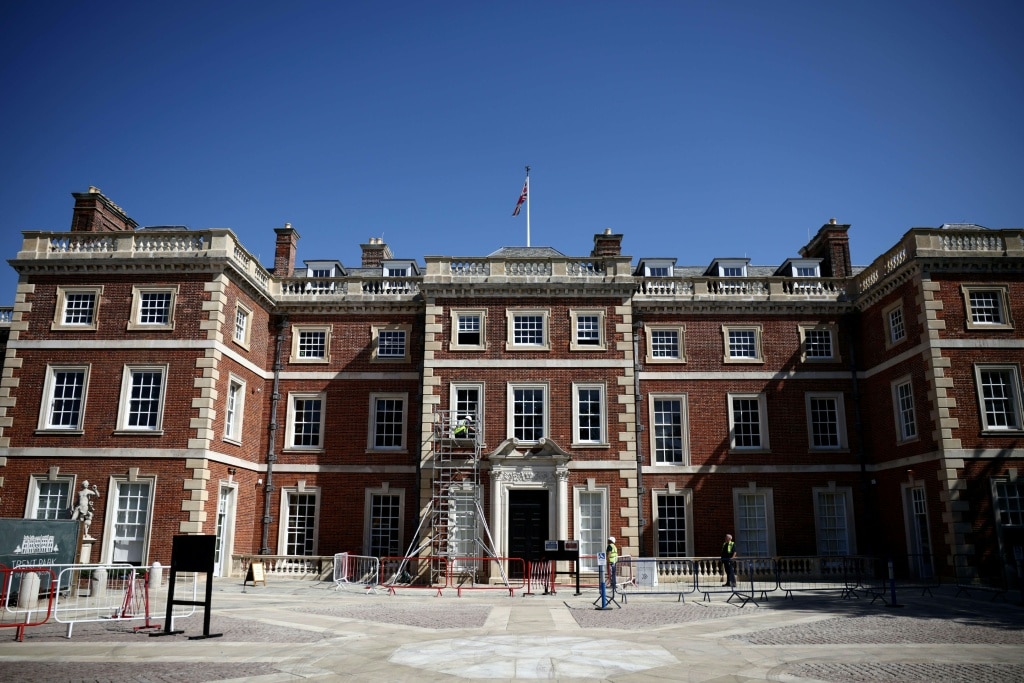
    During the darkest years of World War II, an elegant country mansion just north of London played host to an extraordinary covert operation: high-ranking Nazi generals detained as prisoners of war lived in comfortable, well-appointed rooms upstairs, unaware that a team of hidden intelligence listeners sat in the basement below, recording every offhand comment and secret they let slip. That facility, known as Trent Park, has now been transformed into the new Trent Park House of Secrets museum, finally bringing the little-recognized operation and the unsung heroes who ran it into the public eye.

    Before the war, Trent Park was celebrated for its luxurious interiors and elite social circle, owned by a wealthy British politician whose guest list included icons like Charlie Chaplin and future prime minister Winston Churchill. When the conflict broke out, the British government repurposed the sprawling estate as part of a secret network of intelligence-gathering facilities, fitting nearly every space from the drawing rooms to the garden with hidden bugging devices. These microphones connected to monitoring equipment in the former servants’ quarters, where listeners worked around the clock transcribing every word captured from the prisoners’ casual conversations.

    Between 1942 and 1945, 84 German generals and 22 lower-ranking officers were detained at the site, officially labeled Camp No. 11. Far from the harsh conditions of standard POW camps, the men were provided with valets, given access to recreational activities, and even permitted to take day trips off the property. The intentionally comfortable arrangement was a carefully calculated strategy: British intelligence leaders believed relaxed, unsuspecting prisoners would let sensitive information slip, a tactic museum director Giuseppe Albano describes as “brilliantly devious.” Many prominent Nazi officers passed through the estate, including General Dietrich von Choltitz, the last Nazi military commander of Paris, who was detained there after surrendering the city against Adolf Hitler’s orders in August 1944.

    Unaware that even conversations near open windows or on garden walks were being recorded, the detainees inadvertently revealed critical intelligence that reshaped the course of the war. Most notably, offhand comments about Germany’s V-2 ballistic missile program exposed the location of the program’s primary research facility. This intelligence allowed the British Royal Air Force to launch a devastating bombing raid on the site that delayed the deployment of the weapons, which were already targeted at London, by months. The eavesdropping operation also uncovered confessions of war atrocities: von Choltitz admitted in one bugged conversation that “the worst job I carried out was the liquidation of Jews.” British officials chose not to use these transcripts in post-war Nuremberg trials, however, to avoid revealing the highly classified bugging operation to the public.

    Trent Park is often overshadowed by Britain’s more famous World War II codebreaking hub Bletchley Park, the site famously depicted in *The Imitation Game* where Alan Turing cracked the Nazis’ Enigma encryption. Albano argues that the intelligence gathered at Trent Park was just as impactful as the work done at Bletchley Park, on par in its contribution to shortening the entire length of the Second World War. The two facilities operated as part of the same coordinated intelligence network, with all insights gathered at Trent Park shared directly with Bletchley Park’s codebreaking team.

    What makes the Trent Park story particularly remarkable is the identity of the listeners themselves. Most were fluent German speakers who had fled Nazi persecution as Jewish refugees, a group that faced widespread hostility in Britain at the time even as they risked everything to help the Allied war effort. Many never spoke about their top-secret work publicly in the decades after the war. Adam Ganz, whose late father Peter Ganz—a German Jewish refugee who survived the Buchenwald concentration camp before being recruited as a Trent Park listener—never talked about his service, even to his family. Ganz, now an Oxford professor, says his father’s quiet commitment to the work suggests he was proud of his contribution, even when it went unrecognized by the public for decades.

    After the war ended, government officials removed most of the bugging equipment from Trent Park, but small fragments of original wiring were left behind. These surviving pieces are now on display at the new museum, which was developed as part of a local area redevelopment led by a property developer. Many original transcripts of the bugged conversations have been released to Britain’s National Archives, though Albano confirms some materials remain classified decades later. For the first time, the museum has recreated the original basement listening rooms, and visitors can hear recorded excerpts of actual conversations, with actors reading from original transcripts—including one memorable moment where a general references a top-secret “rocket testing site” in the same breath as he asks for more bratwurst for visiting officers.

    For historians and the families of the listeners who operated the facility, the opening of the museum marks a long-overdue recognition of a critical, hidden chapter of World War II intelligence. “It’s important and valuable that that contribution is being recognised,” Ganz says of the work done by the refugee listeners at Trent Park.

  • AFL 2026: St Kilda captain backs Jack Silvagni, addresses team’s inconsistent form

    AFL 2026: St Kilda captain backs Jack Silvagni, addresses team’s inconsistent form

    A high-stakes AFL matchup is capturing attention this week, as St Kilda captain Callum Wilkie has thrown his public support behind star defender Jack Silvagni, who is pushing to take the field against his former club Carlton just eight days after suffering a painful shoulder dislocation.

    Silvagni sustained the injury during the final quarter of the Saints’ recent clash against Sydney at Marvel Stadium last Saturday. He visited a specialist for assessment on Monday, with club general manager Lenny Hayes confirming earlier this week that the defender’s participation in Sunday’s game would come down to a final fitness test. In the immediate aftermath of the injury, head coach Ross Lyon noted that Silvagni’s shoulder had already been reset successfully.

    Wilkie, who has built a formidable defensive partnership with Silvagni this season, says the former Carlton player has been champing at the bit to step onto the field against his old side, a matchup that carries major implications for St Kilda’s 2024 season. “I’ve been checking in with him, and he’s been gaining more range of movement every single day – I honestly think he’ll be good to go,” Wilkie told reporters.

    “At the end of the day, the final call rests with the club doctors, but there’s no question he desperately wants to play this one. He’s an absolute warrior, and he’s been incredible for us all year. Playing alongside him in the backline has been fantastic; he’s just a competitive beast, and I love having him out there with me.”

    Heading into Sunday’s clash, the ladder dynamics add extra tension to the contest: St Kilda sits in 11th position on the AFL table, just one spot behind Carlton in 10th. Critically, the Saints have yet to secure a win against any of the current top-nine teams this season, a trend that has weighed on the club heading into the round.

    Coach Lyon has not shied away from addressing this underwhelming record against leading contenders, and Wilkie admitted that the entire playing group shares a sense of frustration after a string of close losses against top opposition. But the captain says how the team responds to that disappointment will define their season trajectory.

    “It’s been the running narrative of our season so far: we’ve been within striking distance in the fourth quarter against three of the top four sides, and against Sydney twice,” Wilkie explained. “There’s no sugarcoating it – we’re all frustrated, and I know the fans are too. But what matters now is what we do with that frustration.”

    “Our review yesterday taught us a lot. We stepped away from our contest structure, and that’s what hurt us – Sydney lifted their intensity, and they’re a quality side, so they made us pay. We’ve had a lot of ‘what ifs’ this season, but now it’s about putting our lessons into practice and facing a red-hot Carlton side that’s playing great football right now.”

  • ‘Collective punishment’: US Supreme Court greenlights $656m judgement against Palestinian officials

    ‘Collective punishment’: US Supreme Court greenlights $656m judgement against Palestinian officials

    On Monday, the U.S. Supreme Court dealt a major legal blow to the Palestinian Authority (PA) and Palestine Liberation Organization (PLO), rejecting their request to pause a $656 million damages judgment that has wound its way through American courts for 22 years. The ruling, announced by liberal Justice Sonia Sotomayor who oversees emergency judicial reviews, clears the way for immediate collection of the funds, closing a years-long legal saga that raises sharp questions about double standards in international accountability.

    The case traces its origins to a 2003 lawsuit filed by American victims of Palestinian attacks carried out between 2002 and 2004 during the Second Intifada. Plaintiffs secured the original $656 million damages ruling in 2015, but the U.S. Circuit Court of Appeals overturned the judgment a year later, holding that U.S. courts lack jurisdiction over foreign political groups when violence is not targeted at American citizens. The legal fight shifted dramatically last year, when the Supreme Court voted unanimously to revive the case, upholding the federal Promoting Security and Justice for Victims of Terrorism Act—a law that explicitly opened the door to such suits.
    By March 2025, the Circuit Court of Appeals reinstated the original $656 million judgment, setting the stage for the PA and PLO’s latest emergency appeal, which the Supreme Court has now rejected.

    Palestinian leaders and advocates warn the ruling will deliver catastrophic harm to ordinary Palestinians already grappling with a collapsing economy and ongoing Israeli occupation. The PA and PLO argue that a payout of this size would completely destabilize their ability to govern the occupied West Bank, where Israel already regularly withholds collected tax revenue that forms the bulk of the PA’s operating budget. Raed Jarrar, advocacy director for Democracy for the Arab World Now (Dawn), described the legal process as a fundamentally unprecedented overreach of U.S. power.
    “Congress passed special laws to force the Palestinian Authority to submit to U.S. jurisdiction against its will, all over the PA’s policy of providing stipends to families of martyred Palestinians,” Jarrar told Middle East Eye. “It will be levied against ordinary public workers—doctors, engineers, civil servants. This is nothing short of collective punishment against the Palestinian people.”
    To contextualize the case, the PA was established in 1994 under the Oslo Accords, the landmark peace agreement with Israel, to administer Palestinian-populated areas of the occupied West Bank and Gaza Strip. The PLO, a broad umbrella coalition of Palestinian political factions, is recognized internationally as the official representative of the Palestinian people, both in the occupied territories and across the global Palestinian diaspora.
    The Second Intifada—the uprising at the center of the lawsuit—erupted in September 2000 after then-Israeli opposition leader Ariel Sharon, a hard-right nationalist, led a controversial incursion into Jerusalem’s Al-Aqsa Mosque compound, a site sacred to both Muslims and Jews that Palestinians view as part of their future capital. The visit was widely interpreted as a deliberate provocation, sparking mass Palestinian protests. Israeli security forces responded with lethal force, killing nearly 50 Palestinians in the first five days of unrest. The five-year uprising left an estimated 5,000 Palestinians and 1,000 Israelis dead, and became globally iconic for the televised killing of 12-year-old Palestinian child Mohammed al-Durrah, who was shot dead while hiding behind his father during an Israeli attack—one of the first instances of a deadly, civilian killing of a child broadcast live to global audiences. Mohammed remains a lasting symbol of Palestinian resistance to Israeli occupation.
    Monday’s Supreme Court ruling has thrown into stark relief a longstanding double standard in U.S. policy toward international law: while Washington now asserts broad authority to hold foreign political groups legally liable in U.S. courts, it has repeatedly rejected and undermined international judicial bodies created to hold perpetrators of mass atrocities accountable for crimes against humanity. Most recently, in July 2025, the U.S. imposed sanctions on unnamed senior PA and PLO officials after the groups pursued legal action against Israel at the International Criminal Court (ICC) and International Court of Justice (ICJ), the world’s highest permanent courts for war crimes and state aggression.
    The U.S. State Department claimed the officials had “undermined prospects for peace” by pursuing legal action through international institutions, accusing them of violating two decades-old U.S. laws restricting PLO political activity: the 1989 PLO Commitments Compliance Act and the 2002 Middle East Peace Commitments Act. Just two months later, in September 2025, the second Trump administration announced it would revoke and deny visas to any individual affiliated with the PA and PLO, demanding the groups “consistently repudiate terrorism” and citing the October 7, 2023 Hamas-led attacks on southern Israel.
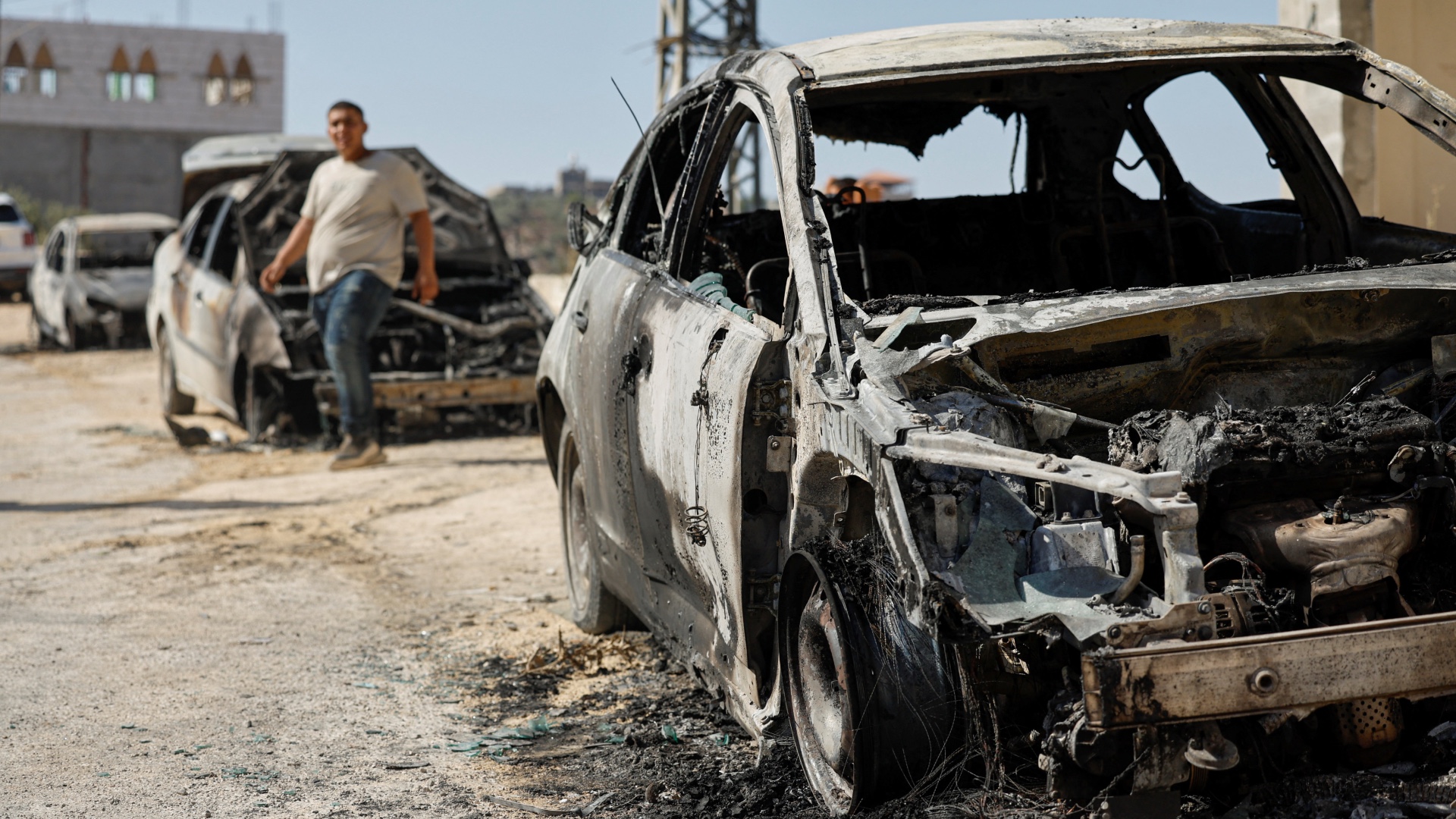
    The escalating U.S. pressure on the PA comes amid growing diplomatic isolation for Israel in the wake of its ongoing military assault on Gaza that began in October 2023, which has killed more than 74,000 Palestinians, according to local health authorities. Deadly, escalating attacks by Israeli settlers in the occupied West Bank and East Jerusalem have further deepened global condemnation of Israel’s actions.

  • What’s driving the rising unrest in Pakistan-administered Kashmir?

    What’s driving the rising unrest in Pakistan-administered Kashmir?

    For decades, global discourse surrounding the disputed Himalayan region of Kashmir has centered almost entirely on the Indian-administered side of the Line of Control (LoC), the heavily militarized de facto border that divides the territory between India and Pakistan. International coverage has fixated on insurgency, state repression, large-scale military deployments, and high-stakes diplomatic clashes between the two nuclear-armed neighbors. Far less scrutiny has been directed at the political shifts unfolding across the LoC in Pakistan-administered Kashmir, officially designated Azad Jammu and Kashmir (AJK).

    Long framed by Islamabad as a model of autonomous self-governance in contrast to Indian-administered Kashmir, AJK is now experiencing one of the largest waves of popular unrest the region has seen in decades. What began as scattered frustration over skyrocketing household electricity costs and soaring flour prices quickly grew into a systemic challenge to Pakistani federal authority over the territory. Departing from the long-dominant narrative of cross-border geopolitical rivalry with India, this new uprising is rooted in deep, long-simmering discontent with local and federal governance structures that have marginalized AJK residents.

    Leading the protest movement is the Joint Awami Action Committee (JAAC), a broad grassroots coalition formed in 2023 that operates outside the established party system. The alliance brings together traders, legal professionals, students, civil society organizers, and independent local political figures, who reject mainstream Pakistani political parties as either ineffective or overly subservient to federal interests in Islamabad. The JAAC centered its initial platform on bread-and-butter issues that resonate across AJK’s diverse communities: exorbitant energy costs, inflated staple food prices, punitive taxation, and chronically underfunded public services.

    That platform struck a chord with a population grappling with severe systemic economic hardship. Data collected by researchers puts youth unemployment in AJK at roughly 27 percent, nearly three times Pakistan’s national average. Fewer than 8 percent of women in the region participate in the formal workforce, according to Danish Khan, co-director of the Inequality, Poverty, Power and Social Justice Initiative at Franklin & Marshall College, who outlined the crisis in a recent analysis for *The Friday Times*. Khan warned that the region has produced a growing “reserve army of young unemployed people” with little economic prospect to sustain themselves.

    Development across AJK’s mountainous terrain has long lagged far behind the rest of Pakistan. Poorly maintained, inadequate roads severely limit access to critical public services including healthcare and education, a problem that becomes life-threatening during the region’s long, harsh winters. Many communities still carry the physical and economic scars of the 2005 Kashmir earthquake that killed more than 70,000 people across the region, with full reconstruction never completed.

    As the movement grew, initial demonstrations over affordable living expanded into mass public gatherings across major towns, shutting down commercial centers and forcing government representatives to enter negotiations. By early 2024 and 2025, the federal government conceded to key immediate demands, agreeing to lower electricity rates for AJK residents and extend wheat subsidies that set prices below the national average. But movement organizers and local activists dismiss these concessions as temporary, superficial fixes that do not address the root causes of hardship.

    “ The price reductions addressed immediate grievances, but they did not address the deeper structures of economic exclusion,” explained Faisal Mir, a political economy researcher based in the region. What began as a campaign against inflation has since evolved into a broader rebuke of AJK’s entire governing system, linking daily economic struggle directly to political arrangements that concentrate power in Islamabad rather than in the region.

    A new generation of AJK residents, tired of outdated rhetoric about competing Indian and Pakistani nationalist claims, is now demanding accountability, transparent governance, and genuine political representation. Rather than debating the long-term international status of Kashmir, they are asking basic questions: who governs them today, and whose interests do their leaders actually serve?

    “No one knows when the Kashmir dispute will finally be resolved,” Mujtaba Naqvi, a JAAC supporter in the regional capital of Muzaffarabad, told Middle East Eye. “What we need to know is who will provide us with jobs and a fair life today.”

    These demands have zeroed in on one of the most controversial provisions of AJK’s constitutional framework: the 12 legislative seats reserved for Kashmiri refugees who reside outside the territory. With a total population of roughly 5 million, AJK is formally structured as a semi-autonomous region with its own president, prime minister, regional parliament, and supreme court. All candidates for office are required to swear an oath of allegiance to Pakistan to stand for election.

    The current controversy centers on the composition of the regional legislative assembly. Of the body’s 53 total seats, 33 are elected by residents living within AJK’s borders. The remaining 12 seats are reserved for Kashmiris who migrated from Indian-administered Kashmir to Pakistan during and after the 1947 and 1965 Indo-Pakistani wars. Even though these voters reside permanently in Pakistan’s four mainland provinces rather than in AJK, they retain the right to elect their own representatives to the regional assembly.

    Supporters of the arrangement argue that the 12 reserved seats protect the political rights of displaced Kashmiri families and sustain Pakistan’s diplomatic position that the entire former princely state of Jammu and Kashmir remains an internationally disputed territory. Removing refugee representation, they contend, would weaken Pakistan’s hand in its decades-long standoff with India — a conflict that has sparked four full-scale wars since the 1947 partition of British India, and a brief four-day military confrontation as recently as 2025.

    In early June, AJK’s supreme court ruled that the 12 reserved refugee seats are constitutionally protected, upholding the existing arrangement. But the JAAC and local critics frame the system as a mechanism for covert federal interference in regional politics. Mainstream Pakistani federal parties regularly use the 12 reserved seats to tip the balance of power and form majority governments in Muzaffarabad, a dynamic that has fueled persistent political instability: the current assembly has already seen four different prime ministers take office in rapid succession.

    “These 12 seats continuously dictate government formation,” political activist Raja Nafees, who backs the JAAC’s reform demands, told Middle East Eye. “Voters who don’t even live here end up deciding who rules us.”

    For decades, mainstream AJK political parties, which operated largely as extensions of the Pakistani federal government, controlled regional politics without meaningful opposition. Today, that long-standing status quo has collapsed entirely.

    Alarmed by widespread unrest and informal boycott calls led by the JAAC over the reserved seats, federal and regional authorities scheduled 2026 AJK regional elections across three staggered phases held between July 27 and August 10. The strategic move backfired dramatically: voter turnout plummeted in the first two phases, leading independent analysts to question the election’s legitimacy and warn that any resulting assembly will lack a credible popular mandate. Political infighting between major Pakistani parties has further eroded public trust, with the Pakistan People’s Party, led by President Asif Ali Zardari, accusing ruling party Pakistan Muslim League-Nawaz (PML-N) and Prime Minister Shehbaz Sharif of widespread vote rigging.

    At the same time, the long-standing nationalist slogan “Kashmir Banega Khudmukhtar” — meaning “Kashmir will be sovereign” — promoted by groups such as the Jammu Kashmir Liberation Front (JKLF), has gained unprecedented public support during the protests. This reflects a growing political narrative that rejects the traditional binary of alignment with either India or Pakistan, calling instead for full self-determination for the region’s people.

    Since protests first escalated in 2024, authorities in Islamabad and Muzaffarabad have responded to the uprising with a combination of policy concessions and coercive crackdowns. While early negotiations produced agreements on electricity and wheat subsidies, the government shifted to a far harsher approach once demonstrations expanded to demand structural political reform.

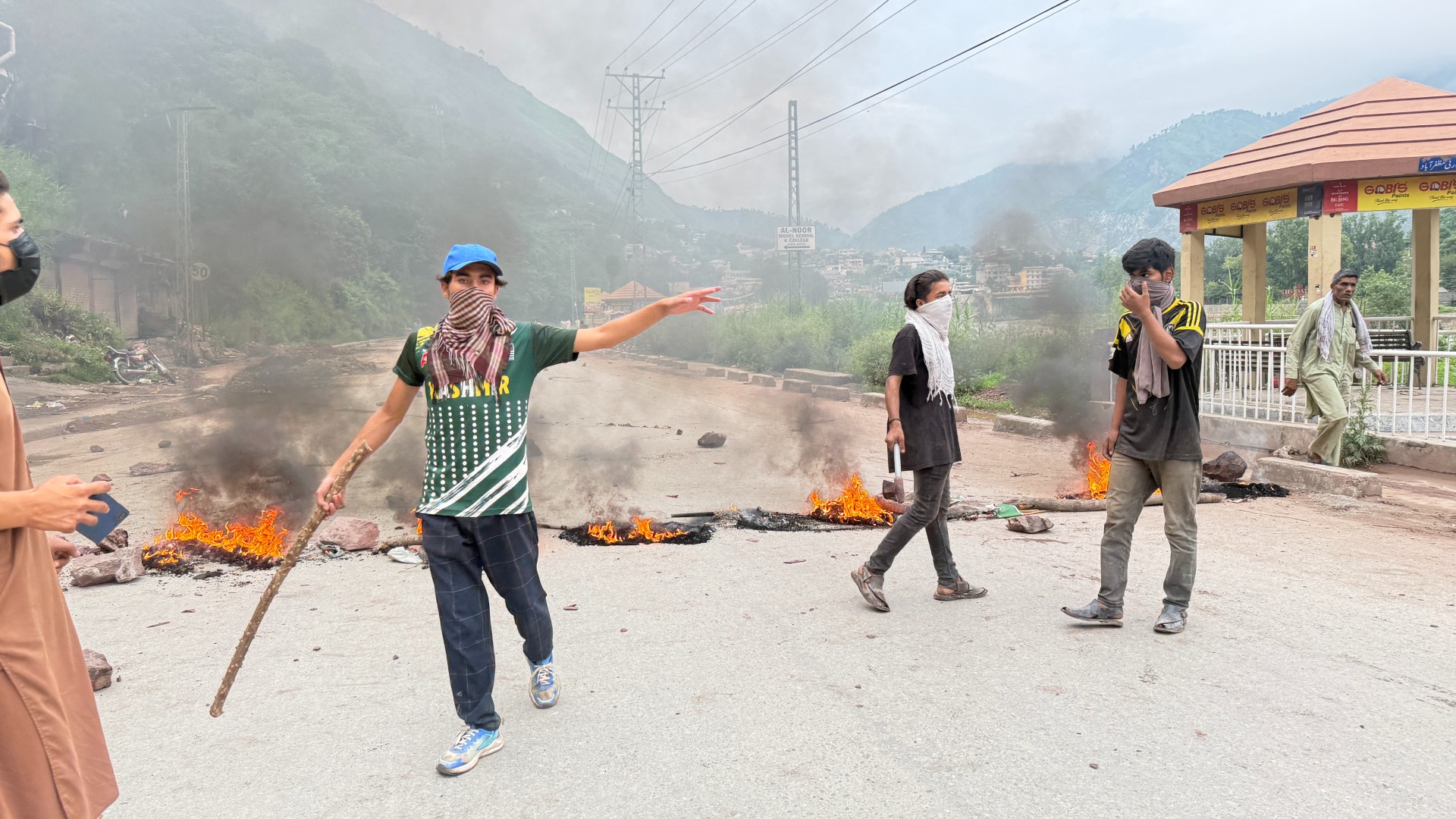
    When the JAAC announced a mass protest march from Rawalakot to Muzaffarabad scheduled for June 9, Pakistani authorities labeled the group a threat to public order. On June 5, the JAAC was officially banned under Pakistan’s anti-terrorism legislation, and dozens of key leaders, including JAAC head Shaukat Mir, were taken into custody. After a second round of negotiations collapsed on July 26, the JAAC called for a renewed protest march. The group accuses state security forces of using lethal force to block demonstrators from assembling.

    Independent estimates confirm that more than 45 people — the majority of them protesters, alongside law enforcement personnel and civilian bystanders — have been killed in clashes since the June 5 ban. Official government information on casualties remains extremely limited, as widespread internet blackouts and strict region-wide curfews have prevented independent journalists and human rights observers from verifying the full scale of violence.

    Government officials maintain that all constitutional disputes should be resolved through established legal channels rather than public protest. In a July 31 press briefing, military spokesperson Lieutenant General Ahmed Sharif Chaudhry stated that the region has historically received substantial federal attention, care, and resource allocation. He said authorities had “wholeheartedly” urged the JAAC to participate in elections and pursue reform through the courts and parliament.

    “But they want to pursue this by force, but only the state has the monopoly of violence,” Chaudhry added. Other federal ministers have gone even further, dismissing the JAAC as an “armed mob” and making unsubstantiated claims that the group has secret ties to India and Taliban militants. JAAC leaders have firmly denied these allegations, emphasizing that their campaign is strictly peaceful and centered on defending basic democratic rights for AJK residents.

    As the political standoff drags on, ordinary local residents are bearing the worst of its consequences. Persistent internet blackouts have crippled local commerce and the region’s critical summer tourism sector. In Rawalakot, the JAAC’s main stronghold, where organizers called for the mass march, heavy curfews and road blockades have brought the usually busy peak summer travel season to a complete standstill. Local traders face growing risk of financial ruin, while ordinary residents endure prolonged communication blackouts and disrupted access to basic services, leaving the entire region mired in deep uncertainty about its future.

    The current constitutional and political upheaval in AJK has unfolded against the backdrop of India’s 2019 revocation of Article 370, the constitutional provision that granted limited autonomy and special status to Indian-administered Kashmir. New Delhi’s decision to place Indian-administered Kashmir under direct federal control fundamentally reshaped the political landscape on both sides of the LoC.

    The move drew widespread condemnation from Pakistan and sparked large solidarity demonstrations in AJK. When protesters organized by groups including the JKLF attempted to march toward the LoC in solidarity with Indian-administered Kashmir, Pakistani security forces forcibly dispersed and blocked the march. Analysts note that many of the key organizers of those 2019 demonstrations are now leading figures within the JAAC. Many AJK residents viewed Islamabad’s diplomatic response to the 2019 revocation as weak and inadequate, leading growing numbers to question Pakistan’s commitment to protecting AJK’s distinct regional identity.

    A further source of public anxiety is the impact of Kashmir’s unresolved international status on major infrastructure investment, particularly for projects under the China-Pakistan Economic Corridor (CPEC). This vacuum has fueled widespread public speculation that Islamabad may eventually move to redefine AJK’s legal status, potentially merging it with neighboring mainland Pakistani provinces or converting it into a formal province of Pakistan. While the Pakistani government has never publicly stated any such plans, pervasive anxiety about a potential takeover has reshaped public discourse, deepened distrust of federal institutions, and strengthened popular demands for greater regional autonomy.


  • Russian ballistic missile strike on Kyiv kills one and injures others

    Russian ballistic missile strike on Kyiv kills one and injures others

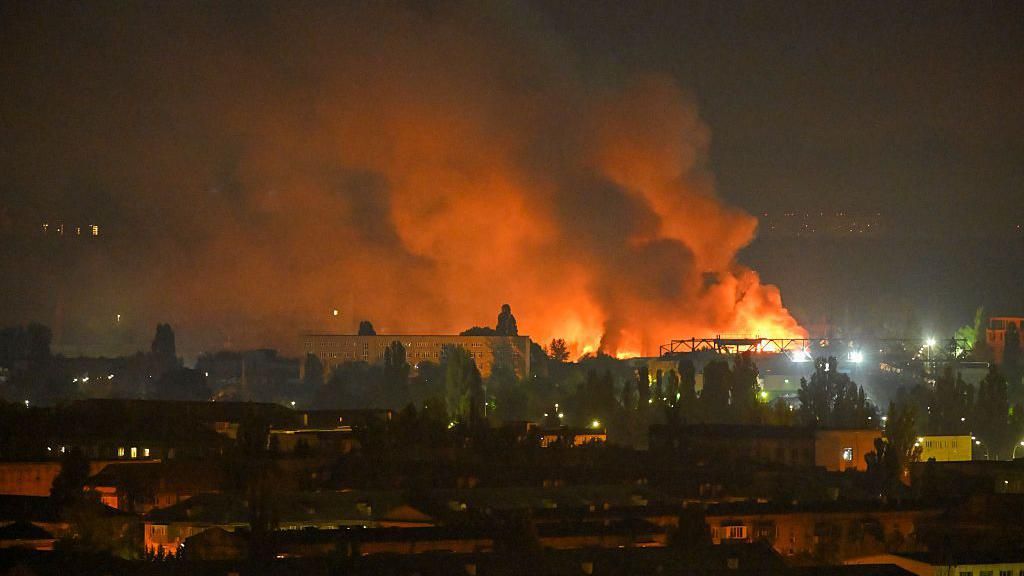
    A new wave of coordinated Russian strikes combining ballistic missiles and drones has targeted Ukraine’s capital Kyiv and its surrounding suburbs, leaving at least one civilian dead and 12 others wounded, local Ukrainian officials confirmed Wednesday. The assault marks another escalation in Russia’s increasingly frequent attacks on the Kyiv area in recent weeks, extending air raid warnings across the region for more than an hour as multiple waves of projectiles hit population centers and infrastructure.

  • Brazil cuts diplomatic presence in Argentina after Milei insults Lula

    Brazil cuts diplomatic presence in Argentina after Milei insults Lula

    SAO PAULO, Brazil — Diplomatic relations between South America’s two largest neighbors have reached an unprecedented low in modern history, after Brazil announced Tuesday it would further downgrade its diplomatic footprint in Argentina in response to repeated personal insults from Argentine President Javier Milei targeting Brazilian leader Luiz Inácio Lula da Silva.

    According to a spokesperson for Brazil’s foreign ministry, who spoke to the Associated Press, Milei has labeled Lula “a thief” on three separate occasions since this past Sunday. The aggressive rhetoric is not a new turn for the Argentine leader: he first used the same derogatory language on July 25 during a party convention held by Sen. Flávio Bolsonaro, son of former Brazilian President Jair Bolsonaro and a key political ally of Milei. Jair Bolsonaro, Lula’s top opponent in Brazil’s upcoming October general election, is currently under house arrest serving a 27-year prison sentence for conviction on coup attempt charges.

    During that same July convention, Milei also launched a verbal attack on Brazilian Supreme Court Justice Alexandre de Moraes, calling him “trash”. The criticism came after de Moraes blocked Milei’s request to visit the imprisoned former Brazilian president.

    This is not the first diplomatic retaliation Brazil has taken over Milei’s hostile comments. Shortly after Milei’s first public attack on Lula in July, Brazil recalled its ambassador to Buenos Aires, Julio Bitelli, leaving only a lower-ranked chargé d’affaires to manage Brazilian interests in Argentina. The foreign ministry spokesperson confirmed Tuesday that Bitelli will not be returning to his post in Argentina for as long as Milei continues his offensive rhetoric against Lula and other Brazilian officials.

    Lula has not yet issued a public response to Milei’s latest insults. The two leaders have maintained a deliberately cold relationship since Milei took office in December 2023, a rift deepened by Milei’s close political alignment with former U.S. President Donald Trump, whose administration is openly at odds with the leftist Brazilian leader.

    The bilateral dispute between Brazil and Argentina comes amid a separate escalating diplomatic clash between Brazil and the United States. Earlier on Tuesday, the U.S. State Department announced it had revoked the visa of Brazil’s ambassador to Washington. The move was framed as retaliation for Brazil’s decision last month to deny visas to two U.S. diplomats who sought to enter Brazil ahead of the October election, a trip Brazilian authorities viewed as inappropriate interference in domestic electoral affairs.

    The growing tensions around foreign influence in Brazil’s election come just days after Lula was officially confirmed as the Workers’ Party candidate for reelection at the party’s national convention, where multiple speakers raised alarms about coordinated foreign meddling in the upcoming vote. Vice President Geraldo Alckmin, a conservative who will serve as Lula’s running mate again in the October poll, used a sharp jab at both foreign leaders during his convention speech, noting that Brazil’s robust electronic voting system was so secure that “it doesn’t accept any votes from Argentines and Americans.”

    Follow AP’s full coverage of Latin American political developments at https://apnews.com/hub/latin-america.

  • In Tibet, some embrace their native language even under China’s sweeping new ‘ethnic unity’ law

    In Tibet, some embrace their native language even under China’s sweeping new ‘ethnic unity’ law

    In a sunlit classroom at an elder learning center in Lhasa, the capital of China’s Tibet Autonomous Region, 73-year-old retired nurse Kalsang Lhamo carefully draws vertical Tibetan script, her movements slow but steady. For her entire life, Lhamo has spoken her native Tibetan, but she never had the opportunity to learn to write it. Now, as a student at the center, she is finally immersing herself in mastering the traditional language of her people, while also navigating the sweeping political and cultural shifts brought by China’s new national “ethnic unity” law that took effect on July 1.

    Under the terms of this landmark legislation, Mandarin Chinese is designated as the primary working language for all public schools and government agencies across the country. The law explicitly bans any activity deemed to incite division among China’s 56 officially recognized ethnic groups, and requires all social institutions—from schools to families to community organizations—to actively foster patriotism, national cohesion, and a shared collective identity as part of the Chinese nation.

    The legislation has drawn fierce international condemnation from rights groups, Tibetan activists, and global observers, who argue it represents a significant escalation of Beijing’s campaign to erode the cultural and political rights of Tibetan and other ethnic minority communities. Critics note the law grants the Chinese central government broad authority to crack down on any activity labeled as separatist, extending that jurisdiction even to activities conducted outside China’s borders. Beijing has dismissed all international criticism of the policy as unfounded ideological bias, framing the law as a critical measure to safeguard national unity and improve development opportunities for minority groups.

    Tensions over the new law are particularly acute in Tibet, a remote Himalayan region that Beijing labels an autonomous region but controls with strict security and political oversight. This year marks the 75th anniversary of what China calls the “peaceful liberation” of Tibet—an event widely viewed by Tibetans in exile and independent critics as an unlawful invasion of a sovereign Tibetan state.

    Tibetan activists warn the law advances a decades-long project of forced cultural assimilation, extending Beijing’s tight control over minority community life. They point to similar language policies already rolled out in other minority regions, including the expansion of Mandarin-only education for Uyghur communities in Xinjiang and the replacement of Mongolian-medium instruction with Mandarin in parts of Inner Mongolia. Writing in *Foreign Affairs*, ethnic studies scholar James Leibold of La Trobe University and Tenzin Dorjee of advocacy group Tibet Action Institute warned that minority communities seeking to preserve their distinct cultures will be forced into a “double life” of public conformity to state policies and private retention of cultural traditions.

    This report from the Associated Press is based on reporting conducted during a government-organized press tour of Tibet last month, which included stops in Lhasa and the southern city of Shannan. Chinese authorities arranged all visits to sites including historic palaces, Buddhist temples, tourist attractions, local businesses, and the elder learning center where Lhamo studies, and government officials accompanied foreign journalists for the full duration of the trip, barring independent travel or unapproved reporting. The Associated Press retained full editorial control over all content produced from the tour.

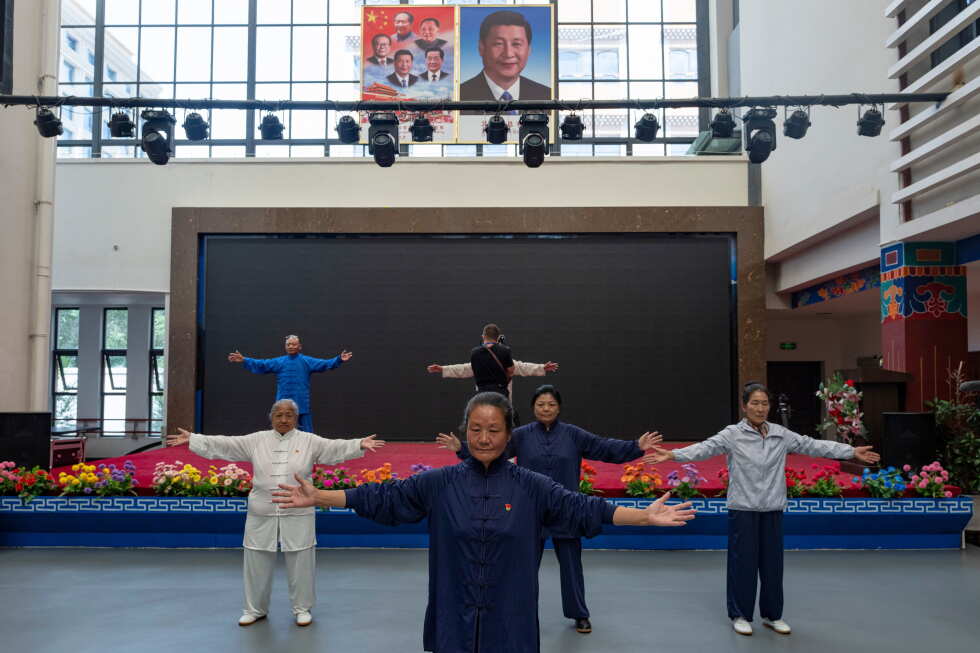
    Across Tibet, constant visual reminders reinforce Beijing’s narrative that the region is an inalienable part of China: welcome messages at airports, ubiquitous billboards promoting ethnic unity, Chinese national flags flying over public squares and government buildings, and official portraits of President Xi Jinping displayed in most public institutions.

    Even amid the new regulatory environment, some Tibetans have found ways to maintain connection to their language and cultural identity. For Lhamo and others, that means taking classes to learn Tibetan script, speaking the language at home with family, preserving traditional weaving crafts, and continuing to participate in Buddhist religious practices. Critics, however, argue the overall effect of the law is to entrench the dominance of China’s majority Han ethnic culture across public life in minority regions.

    At the Jokhang Temple, one of the holiest sites in Tibetan Buddhism, visitors—both Han Chinese tourists and local Tibetan pilgrims—wander the temple grounds and rest in the surrounding courtyards. Nineteen-year-old student Qongqiu Quco, who visits the temple with her aunts (several of whom are Buddhist nuns), says preserving Tibetan language and culture is a core priority for her community. “Everyone in our ethnic group hopes that our culture can be passed down to future generations,” said Quco, an aspiring teacher who speaks Tibetan in most of her daily life. She added, however, that students at her school use Mandarin as a common language to communicate across different regional Tibetan dialects.

    For the majority of Tibetans who practice Tibetan Buddhism, the 14th Dalai Lama is their revered spiritual leader. But across all official religious sites in Tibet, there are no public references or portraits of the current Dalai Lama, who fled into exile in India following a failed 1959 uprising against Chinese rule, and has led the unrecognized Tibetan government-in-exile ever since. The question of the Dalai Lama’s reincarnation remains one of the most contentious issues in China-Tibet relations: the Dalai Lama has stated his successor could be born outside China, and that only his own religious office has the authority to recognize a new reincarnation, while Beijing insists any selection must comply with Chinese law and receive formal approval from the central government. China has long labeled the Dalai Lama a separatist agitator seeking to split Tibet from China.

    The Potala Palace, once the winter residence of successive Dalai Lamas and one of Tibet’s most iconic cultural sites, also has no public references to the current Dalai Lama. Today, thousands of visitors—Chinese domestic tourists and local Tibetan pilgrims alike—visit the site daily, where the Chinese national flag flies above the historic compound.

    Historians and Tibet experts note that the new ethnic unity law does not represent a sudden policy shift, but rather codifies trends that have been unfolding for decades. “I don’t think the law itself changes things,” explained Benno Weiner, a professor of modern China and Tibetan studies at Carnegie Mellon University. “I think it sort of codifies and summarizes a trend that’s been going on,” particularly the gradual erosion of minority language rights and community control over education.

    Beijing frames its policies as a way to expand educational access and deliver equal economic opportunity to ethnic minority communities. During the same week the AP conducted its tour, top Chinese Communist Party leader Wang Huning—ranked fourth in the party’s central leadership—visited Tibet, where he stated that maintaining political stability is the top priority for governing the region. Wang called for full implementation of the new ethnic unity law, and urged authorities to “guide Tibetan Buddhism to adapt to socialist society,” according to official reports from China’s state-run Xinhua News Agency.

    During its tour, AP visited a range of cultural sites, including a traditional Tibetan medicine clinic, artisan workshops preserving traditional crafts like ceramic making and hand textile weaving, and a public Tibetan opera performance. At each site, workers and performers spoke about their work to preserve local cultural traditions. Weiner, however, notes that Beijing’s approach to cultural preservation often prioritizes elements of Tibetan culture that are deemed politically neutral and beneficial to the growing tourism industry. “The parts of culture that they want to protect and maybe even enhance are the sort of anodyne or non-dangerous clothing, certain celebrations that are not religious in many cases,” he explained. “Things that maybe not that coincidentally also attract tourists.”

    At Lhasa’s Tibet Museum, a permanent exhibit highlights centuries of historical ties between Tibetan political authorities and Chinese imperial dynasties, the official narrative Beijing uses to support its claim that Tibet has been an inalienable part of China for centuries. This narrative is vigorously disputed by Tibetans in exile, who argue that Tibet functioned as an independent sovereign state for much of its modern history.

    Laba Ciren, the top Chinese Communist Party official at the Tibet Museum, rejected all criticism of the new law in comments to journalists. “It only brings benefits and does not have any negative effects,” he said.

    Access to Tibet remains tightly restricted for foreign journalists and independent travelers. For visitors who are permitted to enter, one of the first observations after adjusting to the high altitude of Lhasa’s 3,600-meter Gonggar International Airport is the constant presence of official messaging promoting the new law’s goals of ethnic integration. While some public signs are printed in both Tibetan and Chinese, a large welcome sign outside the airport terminal is printed only in Mandarin, reading simply: “Xizang welcomes you.”

    From mountain highways to city streets in Lhasa and Shannan, billboards promoting ethnic unity are a constant presence, with slogans printed in both Mandarin and Tibetan calling to “Forge a strong sense of community for the Chinese nation.”

    For Lhamo, who retired from her nursing career 22 years ago and now has adult children with families of their own, attending daily classes at the elder center is a chance to make up for lost opportunity: she was unable to attend formal school as a child. Standing by her notebook filled with neat Tibetan script, she says simply, “Our mother tongue is the Tibetan language,” speaking with quiet pride.

  • AFL 2026: Hawthorn coach Sam Mitchell on Brisbane Lions, key injury updates

    AFL 2026: Hawthorn coach Sam Mitchell on Brisbane Lions, key injury updates

    As the AFL regular season enters its final stretch, Hawthorn Football Club head coach Sam Mitchell is framing this Friday’s high-stakes clash against the Brisbane Lions at the Gabba as a critical dry run for September’s finals series, where a deep run may very well depend on winning away from home. Currently sitting third on the league ladder, the Hawks hold the highest ranking of any Victorian-based side, boasting a six-point buffer over fourth-placed Adelaide. A victory over the Lions this weekend would lock in Hawthorn’s top-four position, a result that would almost certainly see the side travel interstate for the opening round of the finals.

    Mitchell acknowledged that the Gabba is a venue his squad has only played at three times over the past decade, but he stressed the team would not waste energy overanalyzing the ground’s unique characteristics. Recapping the side’s last trip to Brisbane, Mitchell noted, “We played there last year and they got the chocolates but we played some OK footy that day.” He added that the Gabba’s dimensions are fairly comparable to the Melbourne Cricket Ground, a venue the Hawks are comfortable competing on, so venue adaptation will not be a central focus of preparation. “Clearly, they have a good home ground advantage and play good footy there, but they’re a good side, they play well everywhere,” Mitchell said. “I think if you look at the ladder, most Victorian teams are going to have to win interstate at some point and this is a start for us.”

    Beyond game planning, the Hawks are currently managing fitness tests for four key players heading into the clash: ruckman Ned Reeves (knee injury), defender Karl Amon (knee), forward Mitch Lewis (concussion), and young utility Henry Hustwaite (face injury). Mitchell confirmed that final selection for Friday’s game will hinge on how each player progresses through Wednesday’s scheduled training session, with medical clearance still pending for multiple members of the group.

    Speaking on each player’s status, Mitchell outlined: “(Amon) has been pretty mobile, a little bit of change in direction. He obviously had a minor procedure in his knee and making sure he can change direction and run and then pull up OK from those things.” For Lewis, who is working through the league’s concussion protocol, Mitchell said the forward remained on track to be available, but still needs to complete the final stages of the mandated return-to-play process. “My understanding of concussion is that basically every day or every second day there’s a hoop to jump through. You can stay on track for a certain period but you still have to finish the protocols. I think he’s not quite finished it yet. Technically, tomorrow is the first day he could play. We have one day up our sleeve, we’ll see how he goes over the next 48 hours,” Mitchell added.